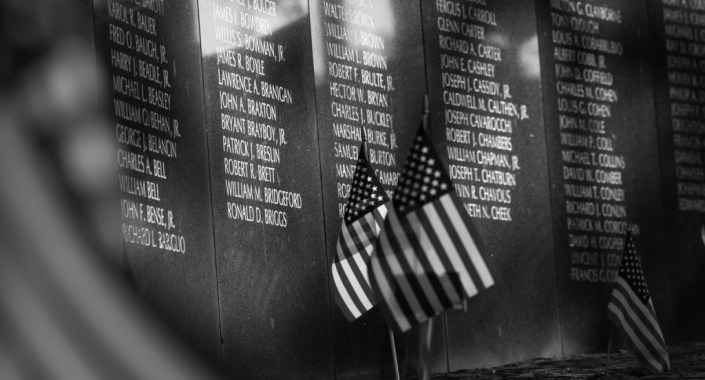
On this day in 1964, Congress approved the Gulf of Tonkin Resolution, effectively entering the U.S. into a conflict that still affects us to this day. This resolution, brought about by the questionable Gulf of Tonkin Incident (also referred to as the USS Maddox incident), gave President Johnson the legal justification for sending U.S. troops to Vietnam, under the guise of assisting a country under the treat of communist aggression.
“The resolution marked the beginning of an expanded military role for the United States in the Cold War battlefields of Vietnam, Laos and Cambodia. By 1964, America’s ally, South Vietnam, was in serious danger of falling to a communist insurgency. The insurgents, aided by communist North Vietnam, controlled large areas of South Vietnam and no amount of U.S. military aid and training seemed able to save the southern regime. During the presidencies of Dwight D. Eisenhower and John F. Kennedy, hundreds-and then thousands-of U.S. military advisers had been sent to South Vietnam to train that nation’s military forces. In addition, hundreds of millions of dollars in military and economic assistance had been given to South Vietnam. The administration of President Lyndon B. Johnson made the decision that only direct U.S. military intervention in the conflict could turn the tide. However, Johnson was campaigning in the presidential election of 1964 as the “responsible” candidate who would not send American troops to fight and die in Asia. In early August, a series of events occurred that allowed Johnson to appear statesmanlike while simultaneously expanding the U.S. role in Vietnam. On August 2, North Vietnamese torpedo boats attacked an American destroyer in the Gulf of Tonkin. Johnson responded by sending in another destroyer. On August 4, the two destroyers reported that they were under attack. This time, Johnson authorized retaliatory air attacks against North Vietnam. He also asked Congress to pass the Gulf of Tonkin Resolution. This resolution declared, “The United States regards as vital to its national interest and to world peace the maintenance of international peace and security in Southeast Asia.” It also gave Johnson the right to “take all necessary measures to repel any armed attack against the forces of the United States and to prevent further aggression.” The House passed the resolution by a unanimous vote. The vote in the Senate was 88 to 2. Johnson’s popularity soared in response to his “restrained” handling of the crisis. The Johnson administration went on to use the resolution as a pretext to begin heavy bombing of North Vietnam in early 1965 and to introduce U.S. combat troops in March 1965. Thus began a nearly eight-year war in which over 58,000 U.S. troops died. In a wider sense, the Gulf of Tonkin Resolution can be considered America’s Cold War policy toward all of Southeast Asia at the time. The resolution was also another example of the American government’s less than candid discussion of “national security” matters during the Cold War. Unspoken during the Congressional debate over the resolution was the fact that the commanders of the U.S. destroyers could not state with absolute accuracy that their ships had actually been attacked on the night of August 4, nor was any mention made of the fact that the U.S. destroyers had been assisting South Vietnamese commandos in their attacks on North Vietnamese military installations. By the late 1960s, the tangle of government deceptions and lies began to unravel as public confidence in both Johnson and the American military effort in Vietnam began to erode.”
[My father was in college from 1963 to 1967 and was in the ROTC. I was born at the beginning of his senior year. He came very, very close to going to Vietnam as a 2LT. He became more and more disturbed by reports and stories of what was actually happening over there. The young men that had graduated before him and entered combat…weren’t coming home. Many of the officers that he had started out with during his early years with the ROTC…weren’t coming back. The ones that did manage to return spoke of a “war without direction or purpose” and horrible “death traps”. My father had a crisis of faith, in a way. As a 2LT in the Army, he would have been an officer that could, potentially, send other young men under him to their deaths. If friends were telling him that the purpose of the war was not completely understood, how could he, in good conscience, participate. He took his concerns to his ROTC CO. That conversation devolved into a shouting match, complete with threats. My father resigned his ‘impending’ commission, despite the protestation of an older officer, stating that “Men like you, we need. We need the common sense approach and conscience you display. You would be a voice of reason and strength that could steady the others.” He would hear none of it. He turned in his uniforms, graduated…and never looked back. My father is still alive, today, because of his decision not to participate. He was never sent a draft card. ~Vic
Addendum: My father passed away on August 25, 2022]
On this day in 1964, Congress approved the Gulf of Tonkin Resolution, effectively entering the U.S. into a conflict that still affects us to this day. This resolution, brought about by the questionable Gulf of Tonkin Incident (also referred to as the USS Maddox incident), gave President Johnson the legal justification for sending U.S. troops to Vietnam, under the guise of assisting a country under the treat of communist aggression.
“The resolution marked the beginning of an expanded military role for the United States in the Cold War battlefields of Vietnam, Laos and Cambodia. By 1964, America’s ally, South Vietnam, was in serious danger of falling to a communist insurgency. The insurgents, aided by communist North Vietnam, controlled large areas of South Vietnam and no amount of U.S. military aid and training seemed able to save the southern regime. During the presidencies of Dwight D. Eisenhower and John F. Kennedy, hundreds-and then thousands-of U.S. military advisers had been sent to South Vietnam to train that nation’s military forces. In addition, hundreds of millions of dollars in military and economic assistance had been given to South Vietnam. The administration of President Lyndon B. Johnson made the decision that only direct U.S. military intervention in the conflict could turn the tide. However, Johnson was campaigning in the presidential election of 1964 as the “responsible” candidate who would not send American troops to fight and die in Asia. In early August, a series of events occurred that allowed Johnson to appear statesmanlike while simultaneously expanding the U.S. role in Vietnam. On August 2, North Vietnamese torpedo boats attacked an American destroyer in the Gulf of Tonkin. Johnson responded by sending in another destroyer. On August 4, the two destroyers reported that they were under attack. This time, Johnson authorized retaliatory air attacks against North Vietnam. He also asked Congress to pass the Gulf of Tonkin Resolution. This resolution declared, “The United States regards as vital to its national interest and to world peace the maintenance of international peace and security in Southeast Asia.” It also gave Johnson the right to “take all necessary measures to repel any armed attack against the forces of the United States and to prevent further aggression.” The House passed the resolution by a unanimous vote. The vote in the Senate was 88 to 2. Johnson’s popularity soared in response to his “restrained” handling of the crisis. The Johnson administration went on to use the resolution as a pretext to begin heavy bombing of North Vietnam in early 1965 and to introduce U.S. combat troops in March 1965. Thus began a nearly eight-year war in which over 58,000 U.S. troops died. In a wider sense, the Gulf of Tonkin Resolution can be considered America’s Cold War policy toward all of Southeast Asia at the time. The resolution was also another example of the American government’s less than candid discussion of “national security” matters during the Cold War. Unspoken during the Congressional debate over the resolution was the fact that the commanders of the U.S. destroyers could not state with absolute accuracy that their ships had actually been attacked on the night of August 4, nor was any mention made of the fact that the U.S. destroyers had been assisting South Vietnamese commandos in their attacks on North Vietnamese military installations. By the late 1960s, the tangle of government deceptions and lies began to unravel as public confidence in both Johnson and the American military effort in Vietnam began to erode.”
[My father was in college from 1963 to 1967 and was in the ROTC. I was born at the beginning of his senior year. He came very, very close to going to Vietnam as a 2LT. He became more and more disturbed by reports and stories of what was actually happening over there. The young men that had graduated before him and entered combat…weren’t coming home. Many of the officers that he had started out with during his early years with the ROTC…weren’t coming back. The ones that did manage to return spoke of a “war without direction or purpose” and horrible “death traps”. My father had a crisis of faith, in a way. As a 2LT in the Army, he would have been an Officer that could, potentially, send other young men under him to their deaths. If friends were telling him that the purpose of the war was not completely understood, how could he, in good conscience, participate. He took his concerns to his ROTC CO. That conversation devolved into a shouting match, complete with threats. My father resigned his ‘impending’ commission, despite the protestation of an older officer, stating that “Men like you, we need. We need the common sense approach and conscience you display. You would be a voice of reason and strength that could steady the others.” He would hear none of it. He turned in his uniforms, graduated…and never looked back. My father is still alive, today, because of his decision not to participate. He was never sent a draft card. ~Victoria]
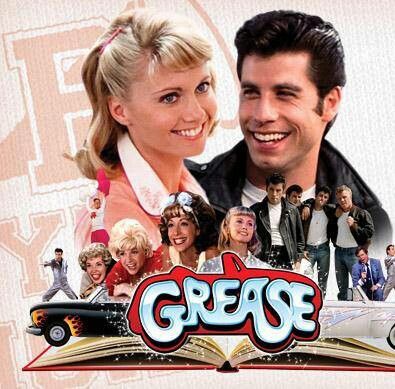
It’s Flick Friday. The number one movie 40 years ago, today, is…Grease! I was 11 years old when it was released. I was such an Olivia Newton-John fan. I begged my mom to buy me the album soundtrack. I nearly wore it out. I still have it to this day. And, I remember those shoes… I was headed to seventh grade that year and ALL the girls had to have a pair of the Candies that ‘Sandy’ made famous. Can you imagine a bunch of tween girls in the late 70s trying to change classes, going up and down stairs…in ‘Sandy’s Candies’? Oh, my…
I STILL love this movie. What wonderful memories… ~Vic
During a visit to America, Australian Sandy meets Danny Zuko at the beach and falls in love. She is heartbroken when summer ends [as] she has to return home and their last kiss on the beach is a very emotional one. But, fate lends a hand — her parents decide to stay in America and she finds herself attending the same school as Danny.
Photo Credit: jewelwpg.com
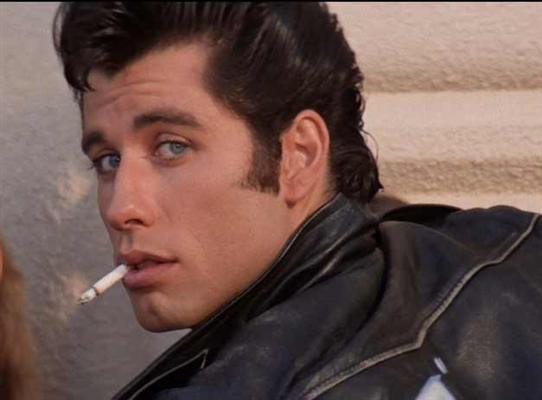
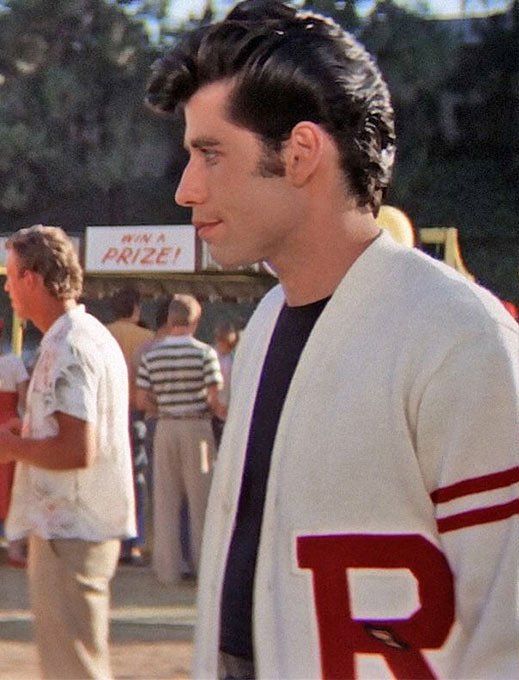
But, Danny at school is different from Danny at the beach. He is the leader of the T-Birds, a black leather-clad gang and has a reputation to keep up. He can’t be seen to fall in love with just one chick! Sandy is upset and seeks solace with some new friends she has made – a girls’ club called The Pink Ladies. But, her prim and proper virginal ways do not fit in and she soon finds herself almost alone. A change must be made. Does she attempt to get her man by turning him into a jock? Or must she get rid of her “Sandra Dee” image?
“”GREASE,” the film version of the still-running Broadway musical show, is not really the 1950’s teen-age movie musical it thinks it is but, a contemporary fantasy about a 1950’s teen-age musical—a larger, funnier, wittier and more imaginative-than-Hollywood movie with a life that is all its own. Somewhat in the manner of “Close Encounters of the Third Kind,” which recalls the science-fiction films of the 50’s in a manner more elegant, and more benign, than anything that was ever made then, “Grease” is a multimillion-dollar evocation of the B-picture quickies that Sam Katzman used to turn out in the 50’s […].
Photo Credit: pinterest.com
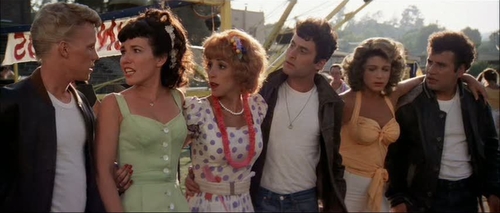
The gang at old Rydell High, which is the universe of “Grease,” is unlike any high school class you’ve ever seen except in the movies. For one thing, they’re all rather long in the tooth to be playing kids who’d hang around malt shops. For another, they are loaded with the kind of talent and exuberance you don’t often find very far from a musical stage.
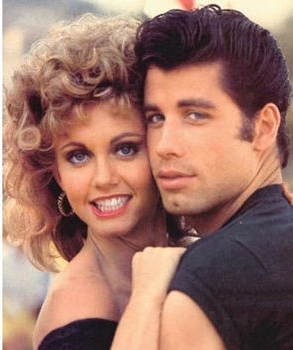
Olivia Newton-John, the recording star in her American film debut, is simultaneously very funny and utterly charming as the film’s ingénue […]. She possesses true screen presence as well as a sweet, sure singing voice […]. John Travolta […], a not-so-malevolent gang-leader, is better than he was in “Saturday Night Fever.” I’m still not sure if he’s a great actor but, he’s a fine performer with the kind of energy and humor that are brought to life by the musical numbers.
It’s to the director’s credit that the musical numbers slip in and out of reality mostly with hugely comic effect. Let me emphasize, then, that “Grease” stands outside the traditions it mimics. Its sensibility is not tied to the past but, to a free-wheeling, well informed, high-spirited present.”
Trivia Bits:
♦ Rizzo’s hickeys were real. Stockard Channing said in an interview that Jeff Conaway insisted on applying them himself.
♦ “Hopelessly Devoted to You” was written and recorded after the movie had wrapped.
Photo Credit: express.co.uk
♦ Elvis Presley turned down the role of The Guardian Angel in the ‘Beauty School Drop-Out’ scene.
♦ Due to a zipper breaking, Olivia Newton-John had to be sewn into the trousers she wears in the last sequence (the carnival at Rydell).
♦ Jeff Conaway was so infatuated with Olivia Newton-John, he was tongue-tied whenever she was around. He later married Olivia’s sister, Rona Newton-John.
♦ Danny’s blue windbreaker at the beginning of the film was intended as a nod to Rebel Without a Cause.
♦ Jamie Donnelly had prematurely grey hair, which she dyed black to play Jan. Her hair grew really quickly, so her roots had to be coloured in daily with a black crayon.
♦ Rydell High is a reference to teen idol Bobby Rydell who had a million selling hit with “Swingin’ School” in 1960.
♦ The “blonde pineapple” line was improvised by Barry Pearl.
♦ Olivia Newton-John insisted on a screen test for the role of Sandy. She was concerned that she didn’t have the acting skills and would look too old to be a high school student. The part was originally meant for Susan Dey, who turned it down on her manager’s advice.







 Cosmic-Observation