jimmy carter
Throwback Thursday: Sverdlovsk Anthrax Leak 1979

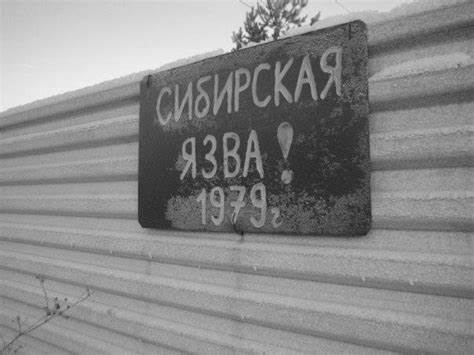
Forty-one years ago, today, spores of anthrax were accidentally released from a Soviet military research facility near the city of Sverdlovsk, Russia (now Yekaterinburg/Ekaterinburg).
On April 2, 1979, there was an unusual anthrax outbreak, which affected 94 people and killed at least 64 of them, in the Soviet city of Sverdlovsk, roughly 850 miles east of Moscow. The first victim died after four days. [T]he last one died six weeks later. The Soviet government claimed the deaths were caused by intestinal anthrax from tainted meat, a story some influential American scientists found believable. However, officials in the Carter Administration suspected the outbreak was caused by an accidental release of anthrax spores from a suspected Soviet biological weapons facility located in the city (Military Compound 19). The US believed that the Soviet Union was violating the Biological Weapons Convention signed in 1972 and made their suspicions public. But, the Soviets denied any activities relating to biological weapons and, at numerous international conferences, tried to prove their contaminated meat story. It wasn’t until thirteen years later, in 1992, that President Boris Yeltsin admitted, without going into details, that the anthrax outbreak was the result of military activity at the facility. [Russia] allowed a team of Western scientists to go to Sverdlovsk to investigate the outbreak. The team visited Sverdlovsk in June 1992 and August 1993 […].
Although the KGB had confiscated hospital and other records after the incident, the Western scientists were able to track where all the victims had been at the time of the anthrax release. Their results showed that on the day of the incident, all the victims were clustered along a straight line downwind from the military facility. Livestock in the same area also died of anthrax. After completing their investigation, the team concluded the outbreak was caused by a release of an aerosol of anthrax pathogen at the military facility. But, they were unable to determine what caused the release or what specific activities were conducted at the facility.
“Clogged filter, I removed it. Replace the filter”. [A] reminder on a piece of paper left [by a] factory worker […] to his mate when he went home on Friday evening…
Colonel Nicholas Cheryshev, shift supervisor at the plant, […] was in a hurry to go home and, for some unknown reason, was not aware of the lack of filter. In the end, the workers on the night shift, finding entries in the log window, quietly launched [the] equipment. [For] more than three hours, the plant was [throwing], into the air [of] the night sky of […] Sverdlovsk, portions [of] dried culture of anthrax. When the lack of bio-security was discovered, production was urgently stopped, […] the filter [replaced] and [they], quietly, continued working.
It was an accident at a clandestine biological weapons lab that allowed deadly anthrax spores to contaminate Sverdlovsk’s air, as evidence unearthed later would show. Over the years, as DNA sequencing technology has improved, scientists have been piecing together more and more information about the anthrax strain.
This facility has not been closed. It just went underground…literally. ~Vic
Sources & Additional Reading
Sverdlovsk Anthrax Leak (Adam Smith Institute)
1979 Anthrax Leak (PBS: Frontline)
How DNA Evidence Confirmed A Soviet Cover-Up (The Atlantic)
The Tragedy of Sverdlosk-19 (Weapon News)
Biohazard Book (Wikipedia)
Sverdlovsk Anthrax Leak (Wikipedia)
Throwback Thursday: Three Mile Island 1979

Forty years ago, today, the Three Mile Island Nuclear Generating Station in eastern Pennsylvania suffered a partial meltdown in its second reactor. Located in the Londonderry Township on a sandbar in the Susquehanna River, the station has two different units. TMI-1 (commissioned September 2, 1974) is owned by Exelon Generation and TMI-2 (commissioned December 30, 1978) is owned by FirstEnergy Corp.
From The History Channel:
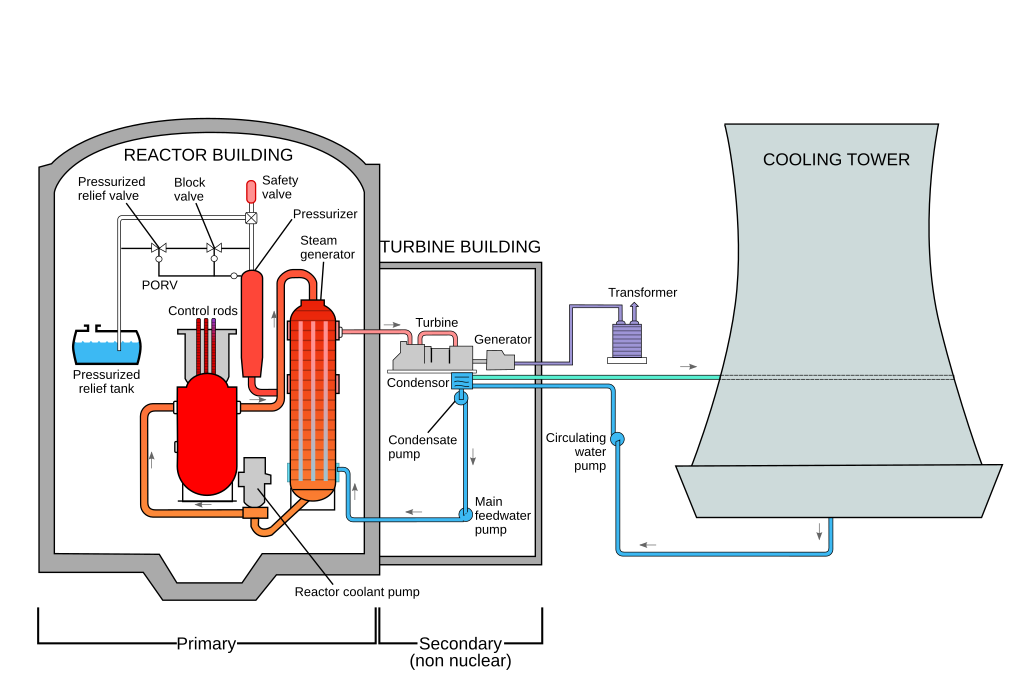
At 4:00am EST on March 28, 1979, the worst accident in the history of the U.S. nuclear power industry begins when a pressure valve in the Unit-2 reactor at Three Mile Island fails to close. Cooling water, contaminated with radiation, drained from the open valve into adjoining buildings and the core began to dangerously overheat.
After the cooling water began to drain out of the broken pressure valve […] emergency cooling pumps automatically went into operation. Left alone, these safety devices would have prevented the development of a larger crisis. However, human operators in the control room misread confusing, and contradictory readings, and shut off the emergency water system. The reactor was also shut down but, residual heat from the fission process was still being released. By early morning, the core had heated to over 4,000 degrees, just 1,000 degrees short of meltdown. In the meltdown scenario, the core melts and deadly radiation drifts across the countryside, fatally sickening a potentially great number of people.
As the plant operators struggled to understand what had happened, the contaminated water was releasing radioactive gases throughout the plant. The radiation levels, though not immediately life-threatening, were dangerous and, the core cooked further as the contaminated water was contained and precautions were taken to protect the operators. Shortly after 8:00am EST, word of the accident leaked to the outside world. The plant’s parent company, Metropolitan Edison, downplayed the crisis and claimed that no radiation had been detected off plant grounds but, the same day, inspectors detected slightly increased levels of radiation nearby as a result of the contaminated water leak. Pennsylvania Governor Dick Thornburgh considered calling an evacuation.
Finally, at about 8:00pm EST, plant operators realized they needed to get water moving through the core again and restarted the pumps. The temperature began to drop and pressure in the reactor was reduced. The reactor had come within less than an hour of a complete meltdown. More than half the core was destroyed or molten but, it had not broken its protective shell and no radiation was escaping. The crisis was apparently over.
Two days later, however, on March 30, a bubble of highly flammable hydrogen gas was discovered within the reactor building. The bubble of gas was created two days before when exposed core materials reacted with super-heated steam. On March 28, some of this gas had exploded, releasing a small amount of radiation into the atmosphere. At that time, plant operators had not registered the explosion, which sounded like a ventilation door closing. After the radiation leak was discovered on March 30, residents were advised to stay indoors. Experts were uncertain if the hydrogen bubble would create further meltdown or possibly a giant explosion and, as a precaution Governor Thornburgh advised “pregnant women and pre-school age children to leave the area within a five-mile radius of the […] facility until further notice.” This led to the panic the governor had hoped to avoid. Within days, more than 100,000 people had fled surrounding towns.
On April 1, President Jimmy Carter arrived […] to inspect the plant. Carter, a trained nuclear engineer, had helped dismantle a damaged Canadian nuclear reactor while serving in the U.S. Navy. That afternoon, experts agreed that the hydrogen bubble was not in danger of exploding. Slowly, the hydrogen was bled from the system as the reactor cooled.
From Wikipedia:
The accident crystallized anti-nuclear safety concerns among activists and the general public and, resulted in new regulations for the nuclear industry. It has been cited to have been a catalyst to the decline of a new reactor construction program, a slowdown that was already underway in the 1970s. Cleanup started in August 1979 and officially ended in December 1993 with a total cleanup cost of about $1 billion.
Exelon has been operating Unit 1 at […] a loss since 2015. On May 30, 2017, the company said it would consider ceasing operations at [the unit] in 2019 due to high costs of operating the plant, unless there was government action. Unit 2, which has been dormant since the accident in 1979, is still owned by FirstEnergy and it is estimated to close in 2036.
Wayback Wednesday: Speed Law 1974

Forty-five years ago, today, President Richard Nixon signed The Emergency Highway Energy Conservation Act which created the National Maximum Speed Law, prohibiting speed limits higher than 55 miles per hour (90 km/h). If states wished to receive any federal funds for highway repair, they were forced to comply.
The legislation was created in an effort to conserve gasoline after the OPEC oil crisis embargo started the previous October. This oil shock had its roots in two issues:
(1) The US pull-out of the Bretton Woods Accord, detaching the dollar from the price of gold, depreciated the currency and oil producers lost money.
(2) Nations supporting Israel during the Yom Kippur War were targeted.
The embargo ended in March of 1974 but, the price of oil had quadrupled by then. The Strategic Petroleum Reserve started in 1975 as a second response. The Department of Energy in 1977 and the National Energy Act of 1978 followed via President Jimmy Carter.
The Speed Limit Law was made permanent by President Gerald Ford via the Federal-Aid Highway Amendments of 1974.
All speed limit controls were lifted with the National Highway System Designation Act of 1995 via President Bill Clinton on November 28, 1995.
Wayback Wednesday: Loma Prieta Earthquake 1989

Photo Credit: heavy.com
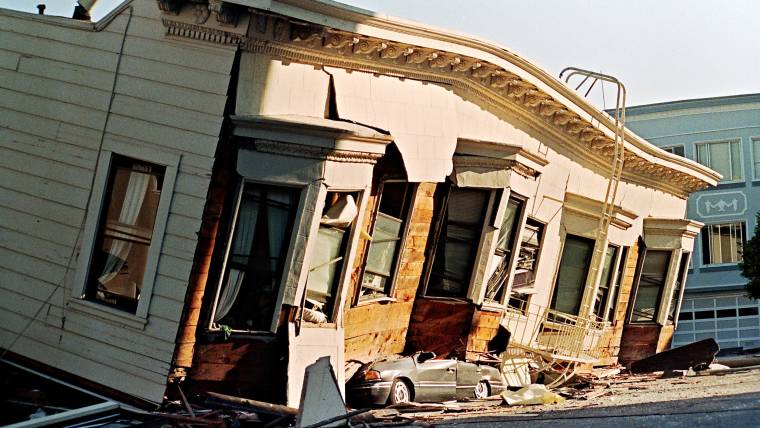
In 1989, at 5:04pm local time in California, a 6.9-7.1 magnitude earthquake struck an area nearly 10 miles northeast of Santa Cruz on the Loma Prieta segment of the San Andreas Fault. The epicenter was in The Forest of Nisene Marks State Park. Named for the Loma Prieta Peak in the Santa Cruz Mountains, the effects and damage covered Santa Cruz County, Monterey County, the San Francisco Peninsula, the ‘Frisco Bay and across the bay in Oakland. There were 3,700+ injuries and 63-67 deaths (depending upon what article you read) and $5-$6 billion dollars in damage. The earthquake disrupted Game 3 of the 1989 World Series.

Photo Credit: huffingtonpost.com
Other October 17 history:
1814…..The London Beer Flood kills eight people. (Yes, this actually happened.)
1931…..Al Capone goes to prison for tax evasion. (Addendum: There seems to be confusion on the specific date of his conviction. Time Magazine, The NYTimes and the History Channel say the 17th. The FBI says the 18th. Pick one…)
1973…..OPEC imposes the oil embargo as punishment for assisting Israel during the Yom Kippur War. (Remember those gas lines, anyone?)
1979…..President Jimmy Carter signs into law the Department of Education Organization Act, creating the U.S. Department of Education and renaming the Department of Health, Education & Welfare to the U.S. Department of Health & Human Services. (Because the government wasn’t big enough, already…)
2018…..Canada just legalized cannabis for recreational use…today!
 Cosmic-Observation