The Treaty of Union is the name usually, now, given to the agreement which led to the creation of the new state of Great Britain [.] [It stated] that England, which already included Wales, and Scotland were to be “United into one Kingdom by the name of Great Britain[.]” At the time it, was more often referred to as the Articles of Union. The details of the treaty were agreed on [July 22], 1706 and separate Acts of Union were then passed by the parliaments of England and Scotland to put the agreed articles into effect. The political union took effect on [May 1], 1707.
Queen Elizabeth I of England and Ireland, last monarch of the Tudor dynasty, died without issue on [March 24], 1603 and the throne fell at once […] to her first cousin twice removed, James VI of Scotland, a member of House of Stuart and the only son of Mary, Queen of Scots. By the Union of the Crowns in 1603, he assumed the throne of the Kingdom of England and the Kingdom of Ireland as King James I. This personal union lessened the constant English fears of Scottish cooperation with France in a feared French invasion of England. After [the] union, the new monarch, James I and VI, sought to unite the Kingdom of Scotland and the Kingdom of England into a state which he referred to as “Great Britain”. Nevertheless, Acts of Parliament attempting to unite the two countries failed in 1606, 1667 and 1689.
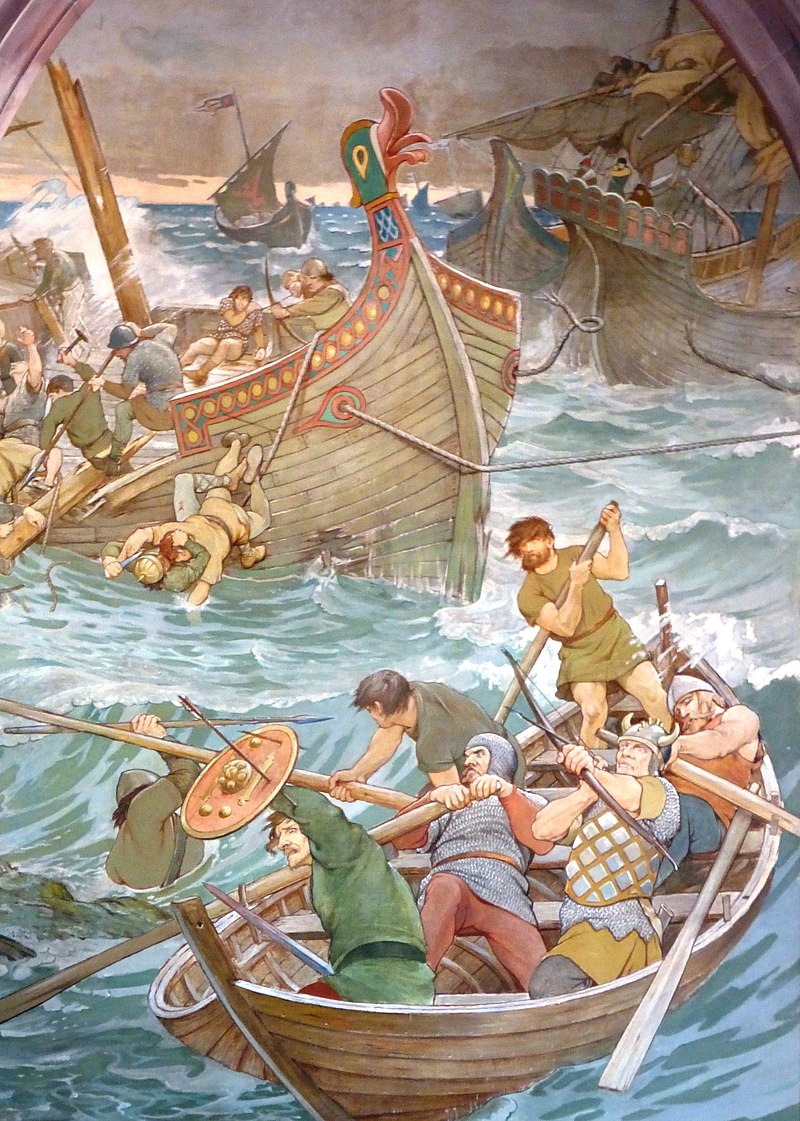
The Battle of Largs was an indecisive engagement between the kingdoms of Norway and Scotland, on the Firth of Clyde near Largs, Scotland. The conflict formed part of the Norwegian expedition against Scotland in 1263, in which Haakon Haakonsson, King of Norway, attempted to reassert Norwegian sovereignty over the western seaboard of Scotland. Since the beginning of the 12th century, this region had lain within the Norwegian realm, ruled by magnates who recognised the overlordship of the Kings of Norway. In the mid-13th century, two Scottish kings, Alexander II and his son, Alexander III, attempted to incorporate the region into their own realm. Following failed attempts to purchase the islands from the Norwegian king, the Scots launched military operations. Haakon responded to the Scottish aggression by leading a massive fleet from Norway, which reached the Hebrides in the summer of 1263. By the end of September, Haakon’s fleet occupied the Firth of Clyde, and when negotiations between the kingdoms broke down, he brought the bulk of his fleet to anchor off The Cumbraes.
On the night of September 30, during a bout of stormy weather, several Norwegian vessels were driven aground on the Ayrshire coast, near present-day Largs. On October 2 , while the Norwegians were salvaging their vessels, the main Scottish army arrived on the scene. Composed of infantry and cavalry, the Scottish force was commanded by Alexander of Dundonald, Steward of Scotland. The Norwegians were gathered in two groups:
the larger main force on the beach and a small contingent atop a nearby mound.
The advance of the Scots threatened to divide the Norwegian forces, so the contingent on the mound ran to rejoin their comrades on the beach below. Seeing them running from the mound, the Norwegians on the beach believed they were retreating, and fled back towards the ships. There was fierce fighting on the beach, and the Scots took up a position on the mound formerly held by the Norwegians. Late in the day, after several hours of skirmishing, the Norwegians recaptured the mound. The Scots withdrew from the scene and the Norwegians re-boarded their ships. They returned the next morning to collect their dead. With the weather deteriorating, Haakon’s fleet sailed to Orkney to overwinter.
The Battle of Largs has been romanticised by [some] later historians as a great Scottish victory but, it only involved a small part of the Norwegian fleet. [Another] saga described the Norwegian campaign as a triumph [but], in reality, it had not achieved anything […]. With his fleet and forces intact, Haakon planned to continue to campaign after spending the winter in Orkney but, he was unexpectedly taken ill and, died there before he had the chance to resume operations. The campaign had started too late and the Scottish king had successfully prolonged negotiations to his own advantage. With Haakon’s death, his successor, Magnus Haakonarson, King of Norway, signed the Treaty of Perth three years after the battle (July 2, 1266), leasing Scotland’s western seaboard to Alexander III in return for a yearly payment. This lease became permanent but, the Kingdom of Scotland eventually stopped paying the Norwegian crown for the islands when Norway became distracted by civil wars.




 Cosmic-Observation