computer history museum
Throwback Thursday: World Wide Web 1993

And, the world was never the same. ~Vic
On April 30, 1993, four years after publishing a proposal for “an idea of linked information systems,” computer scientist Tim Berners-Lee released the source code for the world’s first web browser and editor. Originally called Mesh, the browser that he dubbed WorldWideWeb became the first royalty-free, easy-to-use means of browsing the emerging information network that developed into the internet as we know it today.
Berners-Lee was a fellow at CERN, the research organization headquartered in Switzerland. Other research institutions like the Massachusetts Institute of Technology and Stanford University had developed complex systems for internally sharing information and Berners-Lee sought a means of connecting CERN’s system to others. He outlined a plan for such a network in 1989 and developed it over the following years. [He] wrote and published the first web page, a simplistic outline of the WorldWideWeb project, in 1991. Simple Web browsers like Mosaic appeared a short time later and, before long, the Web had become by far the most popular system of its kind.
The creation and globalization of the web is widely considered one of the most transformational events in human history.
Additional Reading & Sources:
The Birth of the Web (CERN)
World Wide Web Launches (The History Channel)
World Wide Web (Wikipedia)
Computer History Museum
Wayback Wednesday: Apple Computers 1976
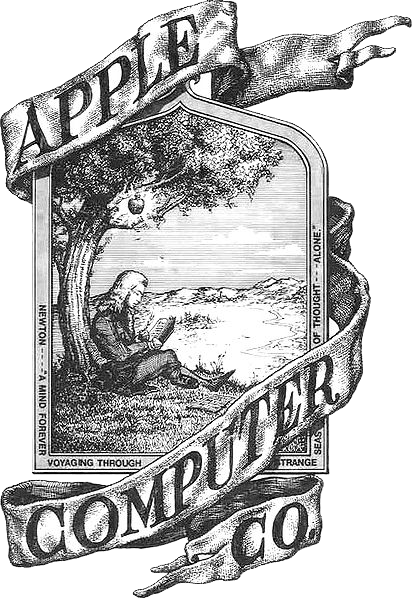
Isaac Newton under an apple tree.
Image Credit: wikimedia.org & wikipedia.org
Forty-four years ago, today, the Apple Computer Company was founded by Steve Jobs, Steve Wozniak and Ronald Wayne, though Wayne sold his share back within 12 days. Headquartered in Cupertino, California, it grew from the “two Steves” into a multinational company. Jobs and Wozniak met in 1971 via mutual friend Bill Fernandez. Their partnership began with autodidact Wozniak’s blue boxes build and Jobs salesmanship. Jobs split the blue box profits with Wozniak.
Wozniak designed a video terminal and, new microcomputers, such as the Altair 8800 and the IMSAI, inspired [him] to build a microprocessor into his video terminal and have a complete computer. [He] designed computers on paper, waiting for the day he could afford a CPU. When MOS Technology released its 6502 chip in 1976, Wozniak wrote a version of BASIC for it, then began to design a computer for it to run on. When Jobs saw Wozniak’s computer, which would later become known as the Apple I, he was immediately interested in its commercial potential.

Computer History Museum
Photo Credit: wikipedia.org & wikimedia.org
Initially, Wozniak intended to share schematics of the machine for free but, Jobs insisted that they should, instead, build and sell bare printed circuit boards for the computer. Jobs eventually convinced Wozniak to go into business together and start a new company of their own. According to Wozniak, Jobs proposed the name “Apple Computer” when he had just come back from Robert Friedland’s All-One Farm in Oregon. Jobs told Walter Isaacson that he was “…on one of my fruitarian diets…” when he conceived of the name and thought “…it sounded fun, spirited and not intimidating…plus, it would get us ahead of Atari in the phone book.”
The information on Apple, Jobs & Wozniak is extensive. This post is a mere highlight of its beginnings. I won’t be reinventing the wheel, here. I will say, though, that the very first computer I ever programmed on in 1983, using BASIC, was an Apple II. ~Vic
 Cosmic-Observation