I got lucky, today and found a Friday The 13th movie that had nothing to do with Jason or Camp Crystal Lake. Ninety years, ago, Friday The Thirteenth was released in the UK, at some point in November of 1933. The movie opened in New York on May 14, 1934. Curiously, this movie seems more science-fiction than spook. ~Vic
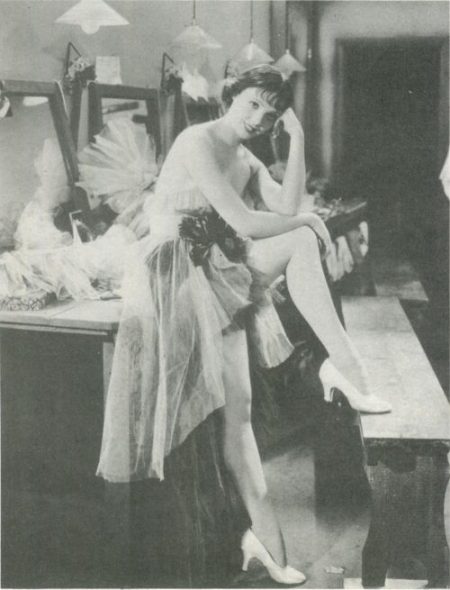
Jessie Matthews as Millie
Photo Credit: IMDb & Amazon
It is pouring with rain at one minute to midnight on Friday the thirteenth and the driver of a London bus is peering through his blurred windshield as his vehicle sails down an empty road. Suddenly, lightning strikes and a vast crane above topples into the path of the oncoming bus. Then, Big Ben begins to wind backwards. Time recedes and we discover the lives of all of the passengers, and the events that brought them to that late-night bus journey, from the con man with a hundred pound cheque to the businessman’s distraught elderly wife. Time flows on, inevitably, to the crash and past it, as some live and some die.
IMDb Storyline
The complicated lives of twelve people travelling on a bus are traced up to the point when the bus crashes into a shop, killing two of the passengers.
BFI Screen Online
In London, near midnight, as a rain storm rages, several people travel across the city on a bus. Of the passengers, one elderly woman seems anxious and upset, a young man who has just been robbed by a pickpocket gratefully accepts money for his fare from another passenger, another man boasts of his knowledge of art, and a young woman angrily destroys a photo of a man. When a lightning strike causes the bus to crash, each passenger recalls what brought them on the ill-fated journey.
Rotten Tomatoes Movie Info
After a London bus crash leaves two people dead and several injured, the clock is turned back twenty-four hours to show the lives of the bus passengers, how they happened to be on that bus at that time, and the effect of the crash upon their lives.
In a New York hotel, the body of Steven Humbolt is discovered and Chief Inspector Decker Dawes is called to investigate. After a brief inspection of Humbolt’s belongings, Dawes and Sergeant Meed determine that Humbolt had fifteen wives, three of whom…Sybilla Crum, a well-known reformer, wealthy Carol Arnold, and Ruby Cotton…live in New York. Dawes first questions the still devoted Sybilla, then quizzes Jason Getty, a florist who had sent Humbolt a funeral wreath hours before his death was discovered. While Meed checks out Getty’s lead that the wreath was ordered in Philadelphia, Dawes interrogates Carol Arnold. Carol tells Dawes that Humbolt had robbed, and deserted her, after three weeks of marriage and, that, a year later, she had received a letter from South America informing her of his demise. Just after Carol had married wealthy Gregory Arnold, Humbolt contacted her with blackmail demands but, according to Carol, she never saw him before his murder. Although Dawes doubts Carol’s story, he leaves her to talk to a chemist about a broken glass globe that was found near Humbolt’s body.
Image Credit: imdb.com
The chemist reveals that the globe, a Helmholtz Resonator, contained a lethal dose of hydrocynanic acid gas that was released when the glass was broken. Once Dawes determines that the globe came from Philadelphia, he demonstrates how a radio performer known as The Electric Voice, whose fiancée is Ruby Cotton, could have broken the globe during a broadcast. Dawes arrests The Voice and Ruby but, returns to question Carol, who he discovers is hiding a child she had by Humbolt. Then, Dawes receives a message from Sybilla about a clue she unearthed at Humbolt’s funeral. While at Sybilla’s home, Dawes discovers that florist Getty is impersonating the reformer and that he is wearing a pair of gloves similar to a pair Humbolt was wearing in his coffin. Suspicious, Dawes orders Humbolt’s coffin exhumed, which causes Getty, who needed the gloves to hide his amputated fingers, to panic. [He] confesses that he killed Sybilla and had used The Electric Voice’s broadcast to kill Humbolt out of revenge for stealing his wife in Australia. After thwarting Getty’s escape attempt, Dawes telephones Carol, who is divorcing [Gregory] Arnold and proposes that they leave for Europe together.
Disclamer:
The Internet Movie Database (IMDB) and Wikipedia state that this film was released July 15, 1934. The American Film Institute (AFI) and Turner Classic Movies (TCM) state that it was released June 1, 1934. I have no way of verifying either. I also can’t find any video clips. ~Vic
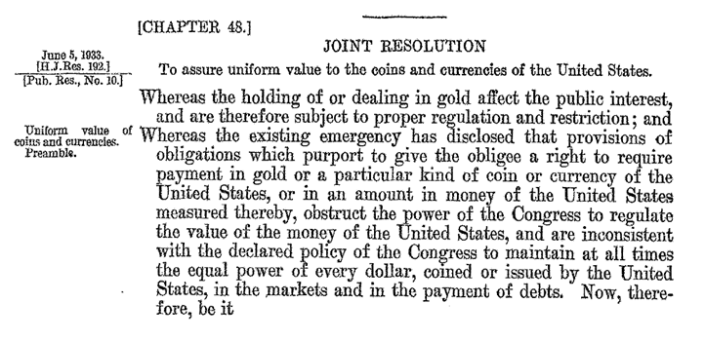
On June 5, 1933, the United States went off the gold standard, a monetary system in which currency is backed by gold, when Congress enacted a joint resolution nullifying the right of creditors to demand payment in gold. The United States had been on a gold standard since 1879 […] but, bank failures during the Great Depression of the 1930s frightened the public into hoarding gold […].
Soon after taking office in March 1933, Roosevelt declared a nationwide bank moratorium in order to prevent a run on the banks by consumers lacking confidence in the economy. He also forbade banks to pay out gold or to export it. According to Keynesian economic theory, one of the best ways to fight off an economic downturn is to inflate the money supply. And, increasing the amount of gold held by the Federal Reserve would in turn increase its power to inflate the money supply. Facing similar pressures, Britain had dropped the gold standard in 1931 and Roosevelt had taken note.
On April 5, 1933, Roosevelt ordered all gold coins and gold certificates in denominations of more than $100 turned in for other money. It required all persons to deliver all gold […] owned by them to the Federal Reserve by May 1 for the set price of $20.67 per ounce. In 1934, the government price of gold was increased to $35 per ounce, effectively increasing the gold on the Federal Reserve’s balance sheets by 69 percent. This increase in assets allowed the Federal Reserve to further inflate the money supply.
After the bombing of Pearl Harbor, President Franklin D. Roosevelt called Dec. 7, 1941, “A date that will live in infamy.” When it comes to the US monetary system, June 5, 1933, should share that ignoble title because that date marks the beginning of a slow death of the dollar.
Roosevelt signed Executive Order 6102 […] touted as a measure to stop hoarding but, was, in reality, a massive confiscation scheme. Even in the heat of Roosevelt’s confiscation scheme, government troops did not break into people’s homes… Ironically, all the gold actually collected by the Treasury was willfully surrendered in a wave of misguided patriotism, while many ‘law-breakers’ simply kept their gold.
The purpose of Roosevelt’s executive order was to remove constraints on inflating the money supply. The Federal Reserve Act required all notes have 40% gold backing [but], the Fed was low on gold and up against the limit. By increasing its gold stores, the Fed could circulate more notes.
Roosevelt’s [actions] in 1933 set off a dollar devaluation that continues to this day. In 1913, prices were only about 20% higher than in 1775 and around 40% lower than in 1813, during the War of 1812. Whatever the mandates of the Federal Reserve, it is clear that the evolution of the price level in the United States is dominated by the abandonment of the gold standard in 1933 and the adoption of fiat money, subsequently. One hundred years after its creation, consumer prices are about 30 times higher than what they were in 1913.
In 1964, the minimum wage stood at $1.25. To put it another way, a minimum wage worker earned five silver quarters for every hour worked. Today, you can’t even buy a cup of coffee with those five quarters [but], the melt-value of those five silver quarters, today, stands close to $15! Roosevelt’s moves, culminating in the June 5 congressional resolutions, initiated a process of monetary deformation that led straight to Nixon’s abomination at Camp David, Greenspan’s panic at the time of the 1998 Long-Term Capital Management crisis and, the final destruction of monetary integrity and financial discipline during the BlackBerry Panic of 2008.
The legacy of June 5, 1933 continues today. The dollar continues to devalue. That means over the long-term, the price of gold in US dollars will almost certainly continue to rise.
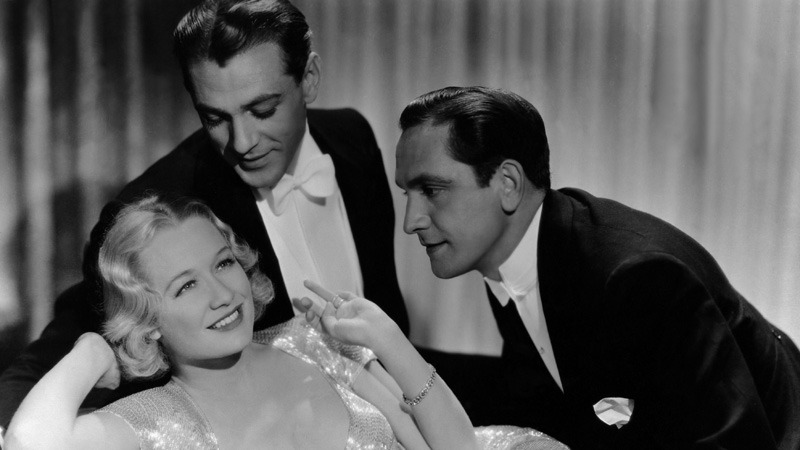
Two Americans sharing a flat in Paris, playwright Tom Chambers and painter George Curtis, fall for free-spirited Gilda Farrell. When she can’t make up her mind which one of them she prefers, she proposes a “gentleman’s agreement”: She will move in with them as a friend and critic of their work but, they will never have sex. When Tom goes to London to supervise a production of one of his plays, leaving Gilda alone with George, how long will their gentleman’s agreement last?
Trivia Bits:
♦ Gary Cooper spoke fluent French and was able to use it for the first time in this film.
♦ Lubitsch [then] asked Douglas Fairbanks Jr. to play George, and he accepted but, he contracted pneumonia just before filming was to start and he was replaced by Gary Cooper.
♦ Writer Ben Hecht and producer-director Ernst Lubitsch retained only one line from the original play by Noël Coward: “For the good of our immortal souls!”
♦ Considerable censorship difficulties arose because of sexual discussions and innuendos, although the Hays Office eventually approved the film for release. However, it was banned by the Legion of Decency and was refused a certificate by the PCA for re-release in 1934, when the production code was more rigorously enforced.




 Cosmic-Observation