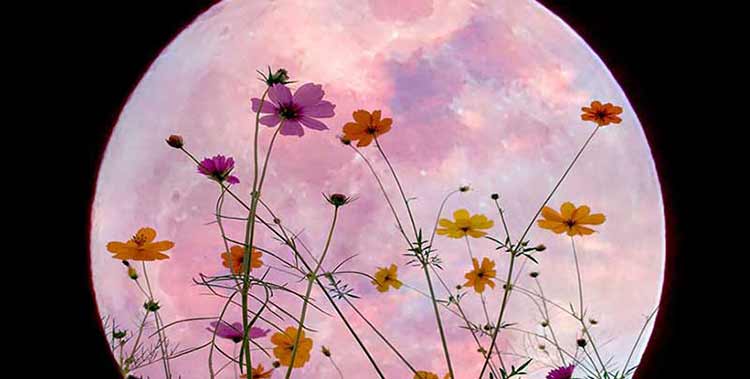
May is most notable for being the turning point in the year where temperatures rise and a vast variety of flowers come into full bloom, letting the world break out into a riot of color. As such, May’s full moon has come to be known as the Full Flower Moon. The Anishnaabe tribe also called it the Blossom Moon. In Northern America, you can expect to see flowers such as bluebells, sundrops, violets and so on, as well as lush greenery to go with the blossoms. The Apache and Lakota peoples named May’s full moon the Green Leaves Moon, while the Mohawk tribe called it the Big Leaf Moon. The Arapaho referred to this Full Moon as “when the ponies shed their shaggy hair”. But, there is one specific plant that’s very important during the May season and it is, in fact, not a flower.
Image Credit: Moon Giant
This plant is corn, an important staple food for Northern American peoples. According to the Algonquin tribes, May’s full moon is the Corn Planting Moon. For Native American tribes, this is the perfect time for them to start preparing the fields for farming and sowing the seeds saved up from last year. Appropriately, the Abenaki culture refers to May’s full moon as the Field Maker Moon, while the Haida tribe calls it the Food Gathering Moon. Apart from corn, other foods such as beans, squash and potatoes are planted during this time. The Cherokee tribe called May’s full moon the Anisguti Moon or the Planting Moon and would, traditionally, perform a Corn Dance during this period to encourage a fruitful corn harvest.
Due to the rising temperatures, the Full Flower Moon is also a time of heightened fertility. This is a good time for women to bear children in a warm, safe environment that would increase the chance of their survival. That’s why May’s full moon is also named Mother’s Moon or Milk Moon which could refer to breastfeeding or to the milking of cows. The latter interpretation is based off the Old English name Rimilcemona, or the Month of Three Milkings referring to how this was a period where cows could be milked up to three times daily.
Is there such a thing as Moon devils?
In other parts of the world, the Full Flower Moon is better known as Vesak or Buddha Day, the most significant celebration for Buddhists all around the world. On the first full moon of May, Buddhists commemorate the birth, enlightenment and passing of the Buddha. Devout practioners are encouraged to renew their intention to adhere to sacred Buddhist principles as well as refrain from all forms of killing and violence, including eating meat. Celebrations include giving charity to the poor, disabled and otherwise marginalized groups in society. Depending on your location, you may witness the spectacular practice of releasing thousands of caged birds into the air as a symbolic gesture of liberation, though this tradition is illegal in countries such as Singapore because it may cause harm to local ecosystems.
Image Credit: almanac.com
Pagans, on the other hand, associate the Full Flower Moon with the element of fire and, thus, often celebrate it by lighting bonfires and engaging in other magical fire rituals to bring prosperity. Powerful colors for the Full Flower Moon include fiery colors like red, yellow and orange. This is a good time to tend your garden and let the seeds you’ve planted blossom, both literally and metaphorically. Cultivate your passions and desires, encourage them to burst forth into bloom and you will be rewarded with abundance in various forms in your life.
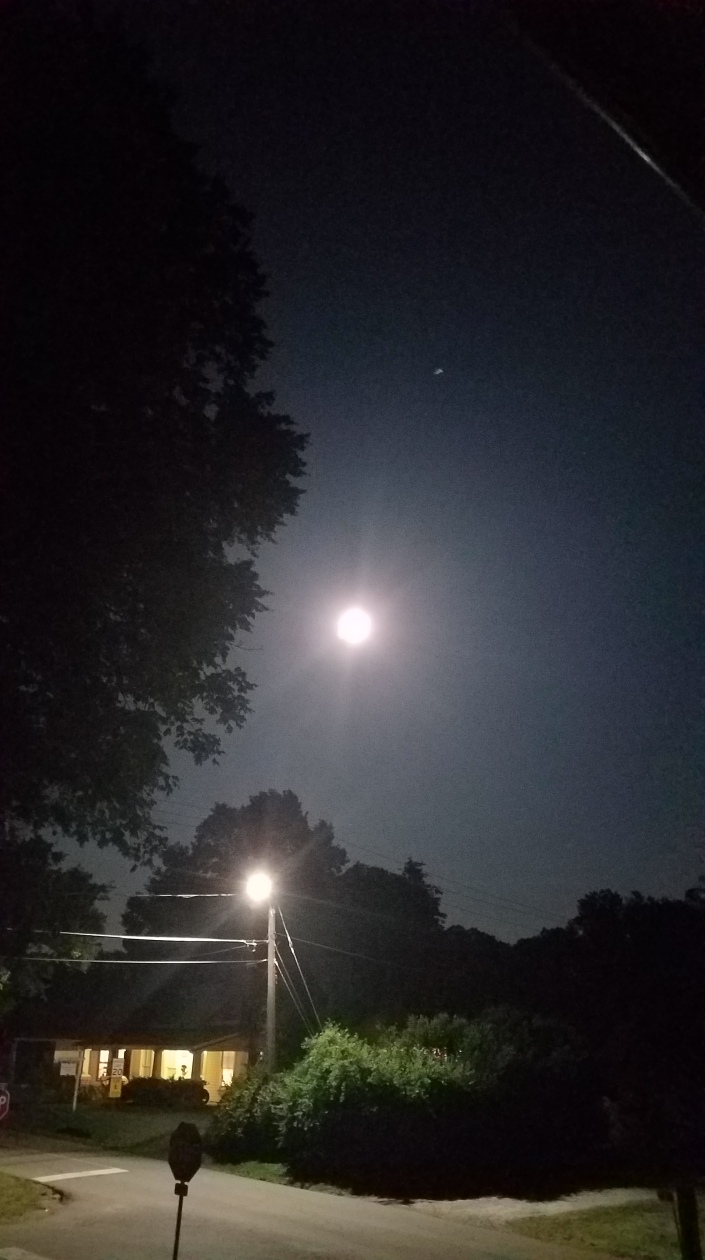
This Flower Moon is also a Seasonal Blue Moon and 100% illumination occurred at 5:11pm EDT. Howl for me! ~Vic
Ok. So. No full moon pix for today. *sigh* We have been inundated with storms…again. We were bombarded with tornado warnings for five hours. An area just south of town close to I-40 was damaged. I am so glad it’s over.
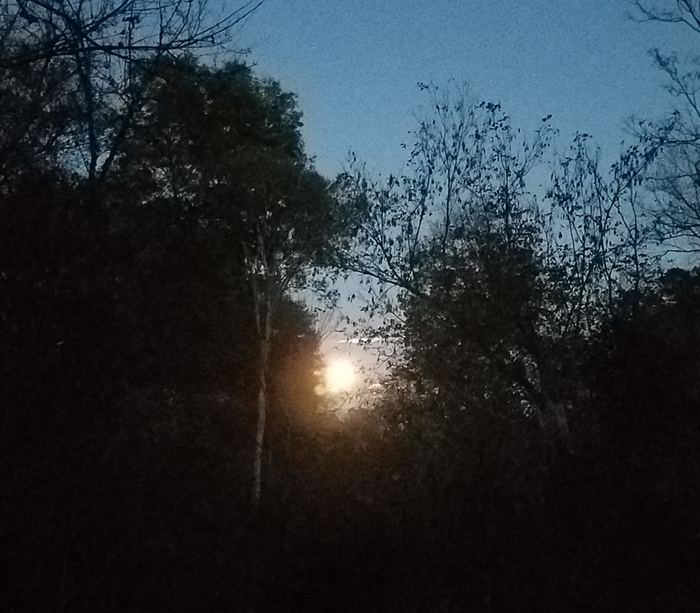
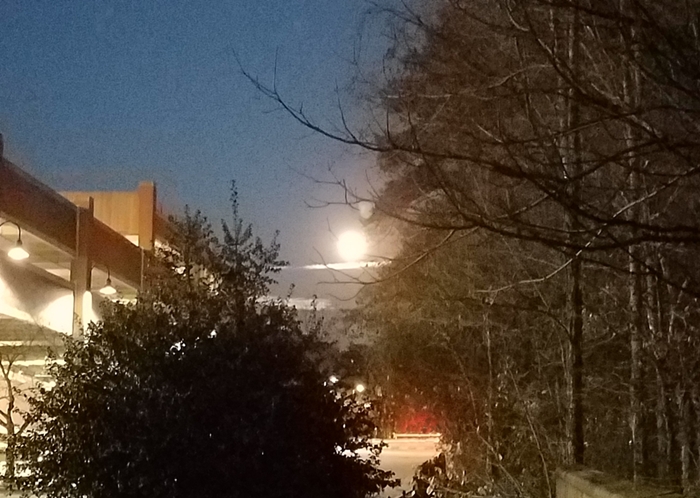
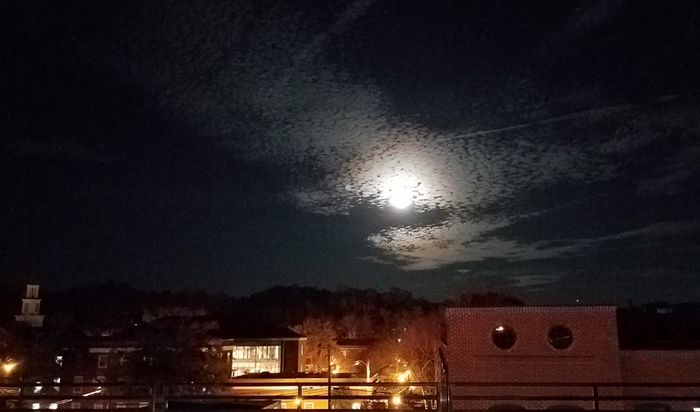
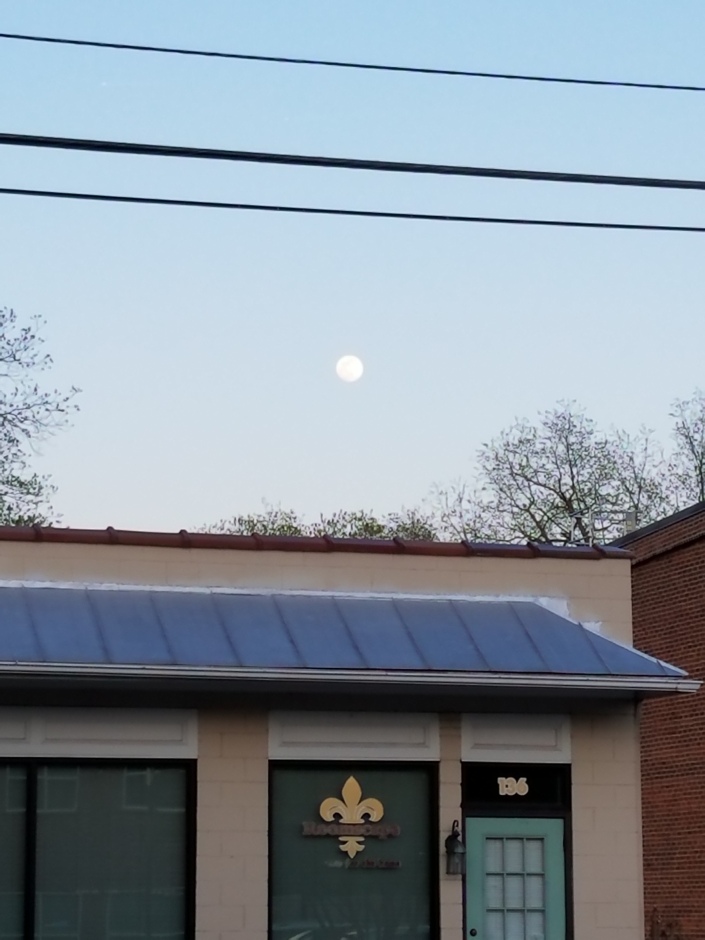
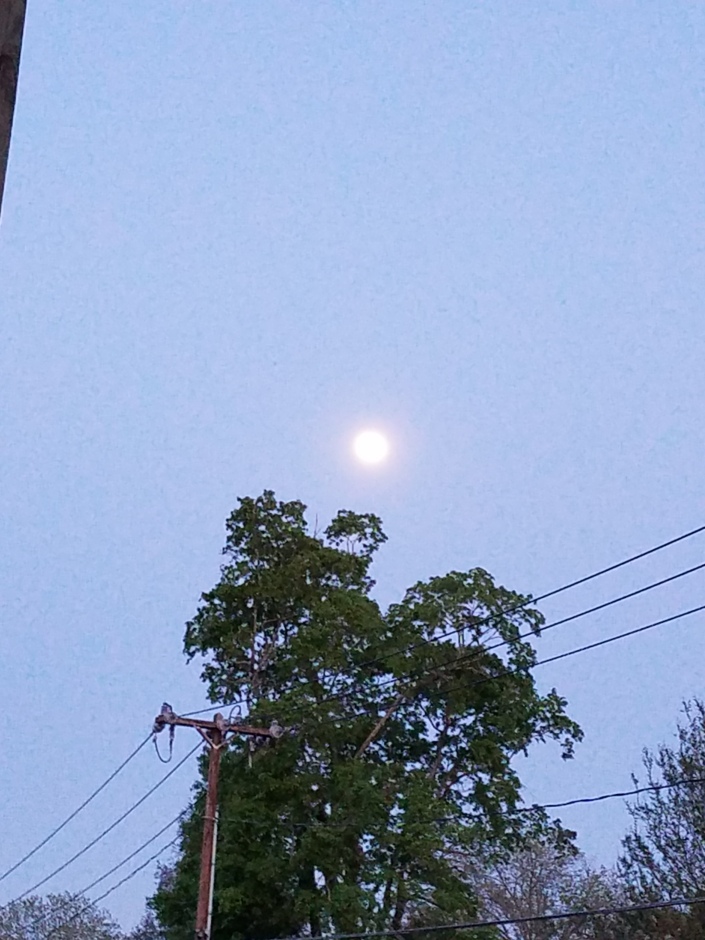
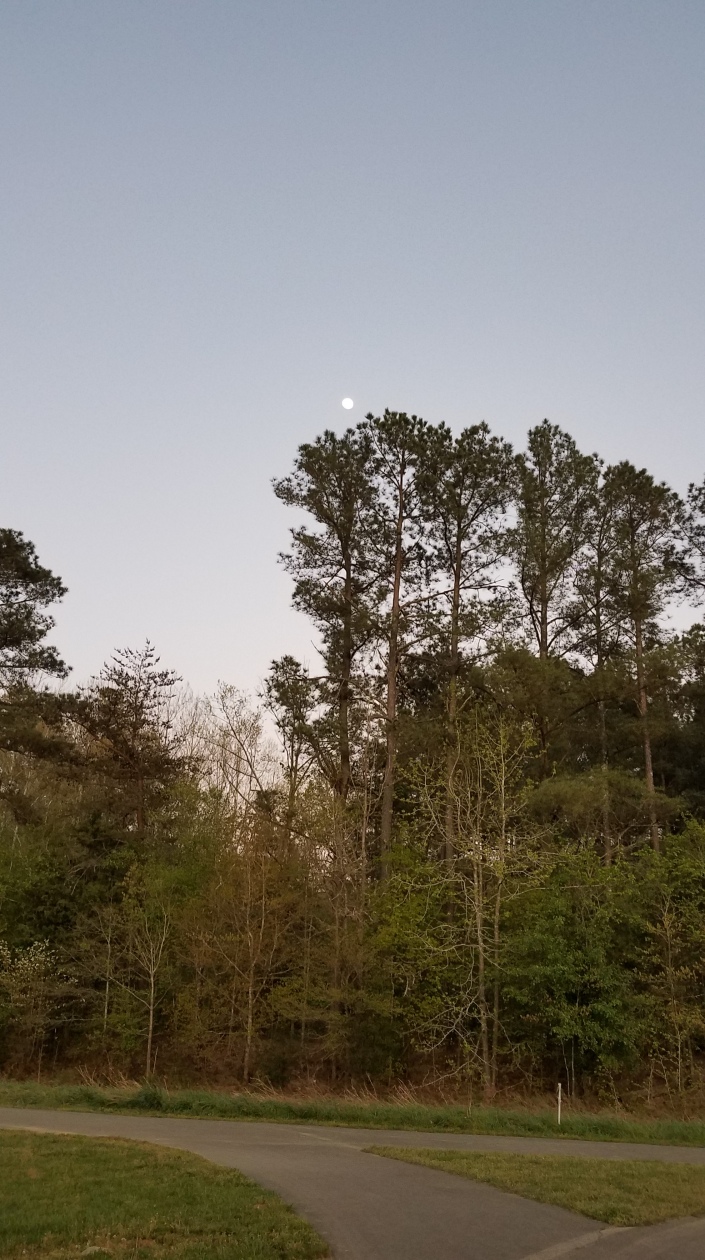
That being said, I do have some shots of the waxing gibbous moon from April 28, 2018. I suspect I had the same problem during that full moon on April 29 (8:58pm EDT)…bad weather. I also have some waxing gibbous shots from April 16.
Howl for me! ~Vic
Pink Moon 2019 was at 100% illumination at 7:12am EDT.
April’s full moon is widely known as the Full Pink Moon, even though it doesn’t actually turn pastel pink as the name suggests. The Full Pink Moon’s name comes from the abundance of moss phlox, a common little pink flower that typically begins to spread across the ground in early spring. With that said, this creeping phlox is not the only thing that begins blooming during the Full Pink Moon.
In many Native American tribes, April’s full moon is associated with the bustling life and vibrant growth of spring. In Sioux culture, it’s named after the sprouting of red grass. The Comanche tribe called it the New Spring Moon and, both the Tlingit and Sioux tribes referred to it as the Budding Moon, after the new plants that begin to bud and sprout during spring. The Cherokee tribe even called it the Flower Moon (though that name is also sometimes used to refer to May’s full moon) and celebrated it for the growth of useful medicinal plants and magical herbs.
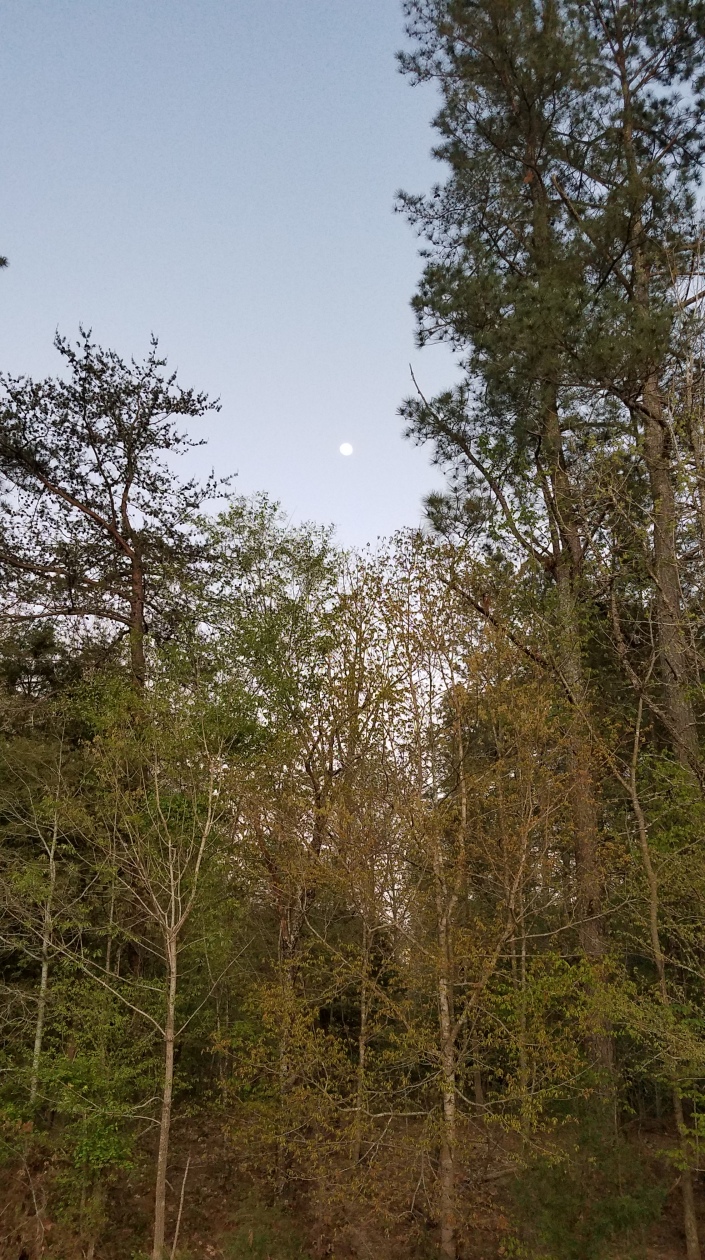
Walking back home.
At the same time, April is a time when rivers and streams begin to fully thaw. Accordingly, the Shoshone tribe named April’s full moon the Full Melting Moon and the Arapaho tribe called it the Moon Where Ice Breaks in the River. It was also known as the Fish Moon because of the fish that would begin to swim upstream during this time. The Cherokees believed that flowing water was under the control of a spirit called the Long Man and would perform rituals to honor him during the Full Pink Moon. An example of a ritual like this was the Knee Deep Dance, based off the movements of the Water Frog. The Assiniboine tribe also called April’s full moon the Frog Moon.
Water is not the only thing that starts to flow during the Full Pink Moon. This is also the time where maple sap begins to flow in earnest, marking the true beginning of the incredibly important sugar-making season. The Abenaki tribes called April’s full moon the Sugar Maker Moon, and the Ojibwe called it the Sugarbush Moon. The Ojibwe tribe would journey north to their spring camps to tap maple syrup and engage in spear fishing. Maple syrup was integral to Ojibwe culture. Not only was it a crucial method of seasoning all their foods (they did not have access to salt at that time) but, it also symbolized harmony within the community and with the forces of nature around them.
Gold Park
Waxing Gibbous
04-16-2019
The Full Pink Moon also holds religious significance in other cultures. For example, in Islāmic communities around the world, April’s full moon is celebrated as Bara’at Night, also known as the Night of Innocence. Muslims offer up prayers, asking God to absolve dead ancestors of their sins. They also prepare sweet desserts such as halwa or zarda and give it out to children, the needy and other members of their community. Meanwhile, Christians call it the Paschal Moon and celebrate the first Sunday after April’s full moon as Easter Sunday. It’s possible that the reason why the Easter Bunny brings eggs is because April’s full moon is also known as the Egg Moon, given that animals such as geese begin mating and laying eggs in spring.
While April is known for its showers and ever-warming temperatures, it is also known as a month when spring flowers begin to show up. The name came from the herb moss pink or wild ground phlox which is one of the earliest widespread flowers of the spring. As the name infers, the flowers are pink in color, thus the name for April’s full Moon. But no, the Moon itself won’t be turning pink.
Tribes kept track of the seasons by giving distinctive names to each recurring full Moon. Full Moon names were applied to the entire month in which each occurred. There was some variation in the full Moon names but, in general, the same ones were consistent among regional tribes. European settlers followed that custom and created some of their own names.
Other names for this month’s celestial body include the Full Sprouting Grass Moon, the Egg Moon and, among coastal tribes the Full Fish Moon, because this was the time that the shad swam upstream to spawn.



 Cosmic-Observation