The B-47 bomber was on a simulated combat mission from Homestead Air Force Base in Florida. It was carrying a single 7,600-pound bomb. At about 2:00am EST, an F-86 fighter collided with the B-47. The F-86 crashed after the pilot ejected from the plane. The damaged B-47 remained airborne, plummeting 18,000 feet from 38,000 feet when [the pilot] regained flight control. The crew requested permission to [drop] the bomb in order to reduce weight and prevent the bomb from exploding during an emergency landing. Permission was granted and the bomb was jettisoned at 7,200 feet […]. The crew did not see an explosion when the bomb struck the sea. They managed to land the B-47 safely at […] Hunter Air Force Base. The pilot, a Colonel Howard Richardson, was awarded the Distinguished Flying Cross after this incident.
Some sources describe the bomb as a functional nuclear weapon but, others describe it as disabled. If it had a plutonium nuclear core installed, it was a fully functional weapon. If it had a dummy core installed, it was incapable of producing a nuclear explosion but, could still produce a conventional explosion. […] The Air Force maintains that its nuclear capsule, used to initiate the nuclear reaction, was removed before its flight aboard B-47. […] the bomb contained a simulated 150-pound cap made of lead. However, according to 1966 Congressional testimony by Assistant Secretary of Defense W.J. Howard, the Tybee Island bomb was a “complete weapon, a bomb with a nuclear capsule” and one of two weapons lost that contained a plutonium trigger. Nevertheless, a study of the Strategic Air Command documents indicates that Alert Force test flights in February 1958 with the older Mark 15 payloads were not authorized to fly with nuclear capsules on board.
The collision, and its aftermath, also drives the plot of the novel Three Chords & The Truth by Craig McDonald, published in November 2016.
[…] shot by inventor and film pioneer William Friese-Greene on celluloid film using his ‘machine’ camera, the 20 feet of film […] was shot […] at Apsley Gate, Hyde Park, London. [It] was claimed to be the first motion picture [but] Louis Le Prince successfully shot on glass plate before 18 August 1887 and on paper negative in October 1888. It may, nonetheless, be the first moving picture film on celluloid and the first shot in London.
It is now considered a lost film with no known surviving prints and only one possible still image extant.
Image Credit: wikipedia.org
An article in This Is Bristol UK from December 17, 2009, (via The Wayback Machine) has an interview with David Friese-Greene, the great-grandson. From the article:
My great-grandfather was an idealist and a brilliant inventor, with 71 patents to his name but, he was a dreadful businessman. He died without ever having made a penny out of his inventions. He married his first wife Helena Friese when he was just 19 and incorporated her surname with his, because he felt it sounded more impressive. Tragically, Helena died at the age of 21 […].
It was during the late 1880s, shortly after Helena’s death, that Friese-Greene first began to experiment with the idea of creating moving pictures. […] in 1890, he patented [a] new device, which he dubbed the chronophotographic camera. Unfortunately, he was so pleased with his creation that, he wrote to the great American inventor, Thomas Edison, telling him what he had come up with and, even, included plans and designs […]. William never heard back from the inventor of the electric light bulb, though, the following year, Edison patented his own version of a movie camera and went down in many history books as the inventor of cinema.
In fact, William died a pauper but, [was] still passionate about his most famous creation. He was at a cinema industry meeting in London, which had been called to discuss the poor state of the British film industry in 1921. He had got to his feet to speak about his vision of how film could be used to create educational documentaries when he fell down dead. It is said he had just 21 pence in his pockets when he died.
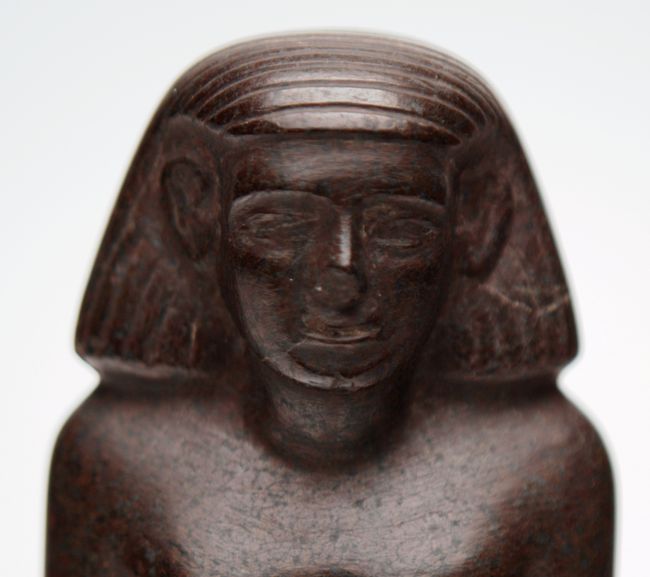
An ancient Egyptian statue appears to have started moving on its own, much to the amazement of scientists and museum curators. The statue of Neb-Senu, believed to date to 1800 B.C., is housed in the Manchester Museum in England, at least for now. But, if the statue keeps moving, there’s no telling where it will end up. “I noticed one day that it had turned around,” museum curator Campbell Price told the Manchester Evening News. “I thought it was strange because it is in a case and I am the only one who has a key. I put it back but, then, the next day, it had moved again […]. We set up a time-lapse video and, although the naked eye can’t see it, you can clearly see it rotate.”
The [10in. (25cm)] statue was acquired by the museum in 1933, according to the New York Daily News. The video clearly shows the artifact slowly turning counterclockwise during the day but, remaining stationary at night. This daytime movement led British physicist Brian Cox to believe the statue’s movement is due to the vibration created by museum visitors’ footsteps. “Brian thinks it’s differential friction, where two surfaces, the stone of the statuette and glass shelf it is on, cause a subtle vibration, which is making the statuette turn […]. But, it has been on those surfaces since we have had it and it has never moved before […]. And, why would it go around in a perfect circle?” said Price.
On his blog, Price […] speculates that the statue “was carved of steatite and, then, fired [which] may imply that it is now vulnerable to magnetic forces.” Steatite, also known as soapstone, is a soft stone often used for carving. Oddly, the statue turns 180 degrees to face [backwards], then turns no more. This led some observers to wonder if the statue moves to show visitors the inscription on its back which asks for sacrificial offerings consisting of bread, beer, oxen and fowl.
None of the proposed explanations satisfies Price. “It would be great if someone could solve the mystery,” he said. But, Paul Doherty (d. 2017), senior scientist at the Exploratorium in San Francisco, believes the statue’s movement isn’t caused by any supernatural force but, by something quite ordinary…vibrational, stick-slip friction, sometimes called stick-slip vibration. As Doherty told LiveScience, “[If] the glass shelf, on which the statue rests, vibrates even slightly, […] the vibrating glass moves the statue in the same direction, […] causing it to turn around.” An everyday example can occur when someone uses an electric blender on a kitchen countertop […]. The vibration of the blender can cause a nearby coffee cup to walk across the countertop.
But, why would the statue stop moving after turning 180 degrees? Doherty believes the statue stops turning because it’s asymmetrically weighted […]. “One side of the statue has more weight than the other side,” [Doherty said]. After turning around on the shelf, the statue’s uneven bottom reaches a more stable position and stops turning. Besides the footsteps of passing museum visitors, the source of the stick-slip vibration “…could be some trolley that goes by during the day or a train that passes during the day,” Doherty said.



 Cosmic-Observation