cover versions
Tune Tuesday: Reunited 1979
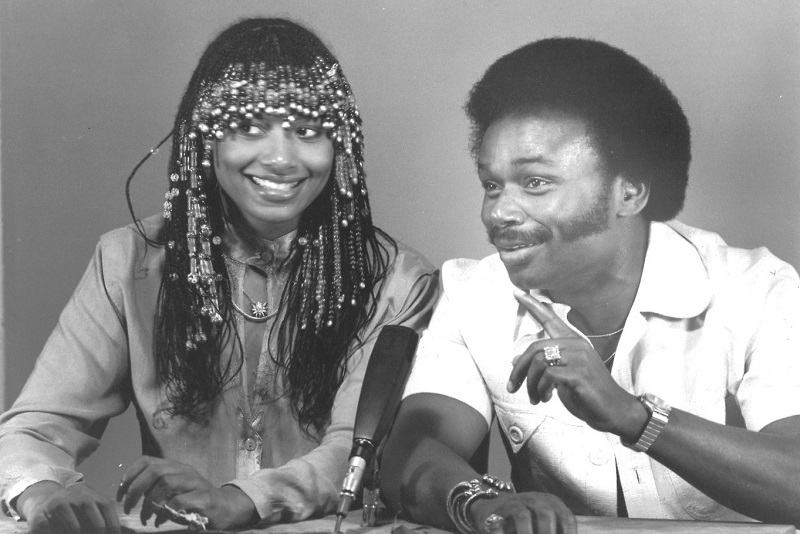
Forty years ago, today, the #1 song on the Billboard Hot R&B chart (and the Hot 100 chart, simultaneously, plus Cash Box) was Reunited by Peaches & Herb (Herb Fame & Linda “Peaches #3” Greene). The song was co-written by Dino Fekaris and Freddie Perren, whom also co-wrote Shake Your Groove Thing, a previous Peaches & Herb song and, I Will Survive, the Gloria Gaynor hit. This was a sequel piece to the duo’s (Herb Fame & Francine “Peaches” Hurd Barker) previous song (We’ll Be) United released in 1968, a cover of The Intruders hit from 1966.
The song sold over two million copies, was the Billboard #5 song for 1979 and the RPM (Canadian) #9 song for 1979 (Wayback Machine). Artists Louise Mandrell (with husband R. C. Bannon), Faith No More and Lulu (with Cliff Richard) have done cover versions. [This link reflects David Hasselhoff and Raven-Symone as cover artists but, I can’t verify. ~Vic]
Nominated for:
American Music Award: Favorite Soul/R&B Song
Grammy: Best R&B Vocal Performance By A Duo, Group Or Chorus
Tune Tuesday: Evelyn Knight & The Stardusters 1949

Seventy years ago, today, the #1 song on Billboard (pre-hot 100 era) was A Little Bird Told Me by Evelyn Knight, backed up by the Stardusters. Written by Harvey Oliver Brooks, the song was recorded by five different artists with Knight’s version being the only number one. Harvey Brooks was the first black American to write a major motion picture’s complete score: I’m No Angel, starring Mae West.

The Stardusters with Mary McKim
In 1950, this particular song was the subject of a landmark court case between Supreme Records in Los Angeles and Decca Records in London, England. Supreme Records founder Albert Patrick sued Decca over copyright infringement as his company had recorded and released the song with singer Paula Watson before Decca’s version was released with Knight & The Stardusters. Patrick was furious and filed for $400,000 claiming plagiarism of the arrangement.
The court ruled in favor of the defense stating that musical arrangements were not copyrightable, as style could not be protested under the law. The case opened the door for cover versions. Supreme went bankrupt shortly afterwards and Paula Watson went to work for Decca.
 Cosmic-Observation