The most popular of the classic blues singers was Tennessee-born Bessie Smith, who first recorded in 1923. Known as the Empress of the Blues, she possessed a large voice. Smith had toured on the T.O.B.A. circuit since 1912, originally as a chorus girl. By 1918, she was appearing in her own revue in Atlantic City, New Jersey. She struggled, initially, to be recorded. Three companies turned her down before she was signed by Columbia. She eventually became the highest-paid black artist of the 1920s and recorded over 160 songs. Inducted into the Rock and Roll Hall of Fame in 1989, she is often regarded as one of the greatest singers of her era and was a major influence on fellow blues singers, as well as jazz vocalists.
Wikipedia Summaries
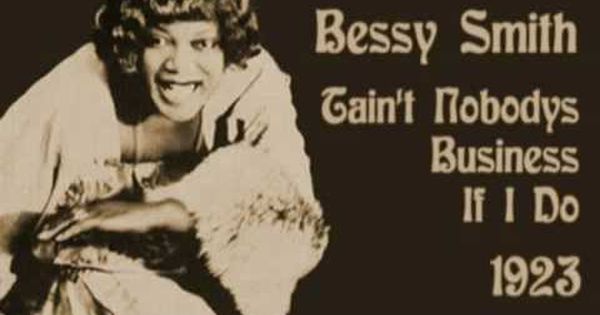
With a theme of freedom of choice, some of the lyrics are pretty tough. Per Tsort, this was the top song for a week per US Billboard 9, October 1923. In 1928, guitarist Frank Stokes recorded a country blues version. In 1947, jump blues singer Jimmy Witherspoon did a version titled Ain’t Nobody’s Business, reviving the song and it was the best selling record of 1949. Hank Williams, Jr. recorded his own version of the song for his 1990 album Lone Wolf, peaking at #15 on Billboard’s Hot Country Singles & Tracks chart. In 1996, a version by H2O, featuring Billie Piper got to #19 on the UK Singles chart. ~Vic
On the day before gathering around the turkey, gather around the nearest jukebox to celebrate National Jukebox Day! As Americans flock to their hometowns for Thanksgiving, many will head out to neighborhood bars and restaurants. They’ll catch up with friends and family and, celebrate by playing great songs on their local jukebox.
Image Credit: pinterest.com
The name jukebox is thought to originate from places called juke houses or jook joints. In the early 1900s, people congregated in these establishments to drink and listen to music. Throughout history, the jukebox continued to evolve with the times. While the Blue Grass Boys played to sold-out audiences in the Grand Ole Opry, guys and gals danced the night away by playing their song over and over, again, on the jukebox at a local pub. With the advancement of technology, today’s jukebox is more versatile than ever before. Throughout each era, from big band, jazz, country and blues, to rock & roll, acoustic, and electric, and everything in between, the jukebox has played it all.
History…
In 1889, Louis Glass and his partner William S. Arnold invented the first coin-operated player in San Francisco. They were both managers of the Pacific Phonograph Co. Formally known as the nickel-in-the-slot machine, the player included a coin operation feature on an Edison phonograph. However, it played a limited selection of songs without any amplification.
1946 ushered in “The Silver Age” for jukeboxes as market demand for the newest and greatest technology soared. Fashionable and sleek, jukeboxes weren’t just music players, they were centerpieces often flamboyant with color and chrome. Neon and sci-fi became a tremendous influence on style as well.
Modern Era…
The 1960s was the start of a new modern age for jukeboxes. Designs of coin-operated models went through radical changes, not only because of the availability of new materials, such as plastic but also because of the need to accommodate customer demand for more song selection.
In 1989, compact-disc mechanisms replaced the older record style players as newer technology became affordable and rapidly implemented among the general population. Jukeboxes started to become more of a novelty than a necessity.
TouchTunes founded National Jukebox Day to celebrate the iconic jukebox and the powerful memories it evokes in people.


 Cosmic-Observation