moving picture world
Flick Friday: To Hell With The Kaiser! 1918
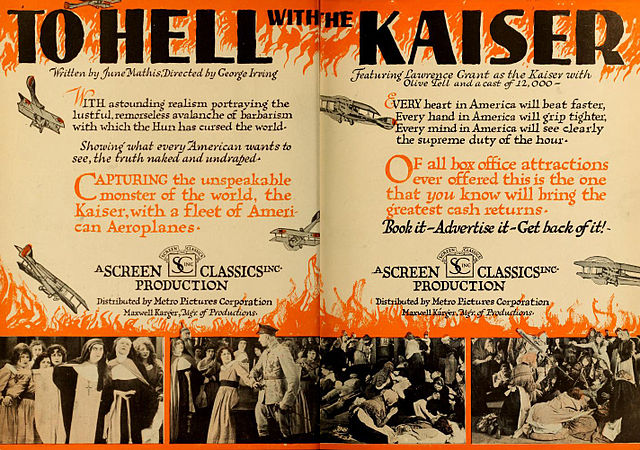
Source: Archive Image
Author: Metro Pictures/Screen Classics, Inc.
One-hundred, five years, ago, today…the silent black & white, comedy-drama To Hell With The Kaiser! was released. Written by June Mathis and directed by George Irving, it starred Lawrence Grant (as The Kaiser/actor Robert Graubel), Olive Tell, Betty Howe, John Sunderland, Earl Schenck (as the Crown Prince), Mabel Wright, Frank Currier, Karl Dane and Walter P. Lewis as Satan.
Following the death of his father, Frederick III of Germany, Wilhelm Hohenzollern becomes the German Kaiser and forms a pact with the devil that, he will conquer the globe in exchange for his soul. During the Kaiser’s invasion of Belgium, the Crown Prince enters a church and rapes Ruth Monroe, the daughter of an American inventor who has perfected a noiseless communications device. When the professor denounces the Crown Prince, he immediately is shot, whereupon his other daughter Alice vows to obtain revenge. While Alice’s sweetheart, Winslow Dodge, fights with the Americans as an aviator, she arranges to meet the Crown Prince through her friend Robert Graubel, an actor who impersonates the Kaiser at public functions. With her father’s wireless [device], Alice informs Winslow of the Kaiser’s whereabouts and, as he captures the German emperor, she kills the Crown Prince. Now a prisoner, the Kaiser drowns himself and wakes up in Hell, where Satan abdicates in his favor, saying that the Kaiser’s tortures are more fiendish than any he ever devised.
IMDb Storyline

Lobby Poster
IMDb & Amazon
Lawrence Grant, who spent his lengthy career playing odious villains, appeared in the dual role of Kaiser Wilhelm II and his look-alike, German actor Robert Graubel. Terrified of being assassinated, the Kaiser hires Graubel to impersonate him at various political functions. In the film, the Kaiser achieves military success through an infernal pact with Satan. Once this is established, the film concentrates on the seemingly endless tally of misdeeds perpetrated by the Kaiser during his quarter-century reign over Germany. His “partner in crime” is the Crown Prince […], who thinks nothing of casually raping convent girls and gunning down protesting nuns. The Crown Prince’s latest conquest is Ruth Monroe […], the daughter of an American inventor. When Ruth’s father protests this outrage, he is brutally murdered, whereupon Ruth’s sister Alice […] vows revenge. Using her father’s newest invention, a wireless machine whose coded messages cannot be intercepted, Alice directs a battalion of planes to bomb the small German village where the Kaiser is hiding. Captured by the Allies, the Kaiser is ignominiously dumped in a POW camp but, not before enduring a well-aimed sock on the jaw from a pugnacious dough-boy. In despair, the Kaiser commits suicide and sends his soul to hell. In hell, the devil […] gives up his throne, confessing that the Kaiser is far more sinister than he could ever hope to be.
[On June 8, 1918], Motography ran a Screen Classics press release explaining that To Hell With The Kaiser “reveals the machinations of Europe’s military monster before and during the war, his contempt for Americans […], his elaborate plans to crush France, […] destroy Russia, […] partition the world, […] his [order] to employ deadly gases in the war, the true circumstances under which he ordered the sinking of the Lusitania, the raiding of hospitals […].” Years before the war, Mr. Grant’s physical likeness to the German ruler was noted by a high official of the Kaiser’s court and a proposition was made for Grant to play the Kaiser in a dramatization […]. The war broke out before discussions went any further.
Actor John Sunderland, playing American pilot Winslow Dodge, was himself “an aviator who has seen service in Belgium.”
[It] had been released in the press that Kaiser Wilhelm II had half a dozen doubles who were employed to pose for him in various parts of the country, where there might be danger of assassination, while the real Kaiser, himself, remained safe behind this cloak.
To Hell With The Kaiser opened in New York City at the Broadway Theatre on June 30, 1918, immediately after it had emerged from the cutting and editing rooms […].
The film turned out to be an effective propaganda tool […]. Not only has the picture been shown in munitions plants and training camps […] but, this power has now been demonstrated in a new way…to convert conscientious objectors.
The National Film Preservation Board (NFPB) included this film on its list of Lost U.S. Silent Feature Films as of February 2021.
I found the building of this post fascinating. What started out as a simple movie post, turned into a history lesson. It’s a shame that it is lost. There are photographs of still pictures on IMDb. ~Vic
Movie Monday: The Princess In The Vase 1908
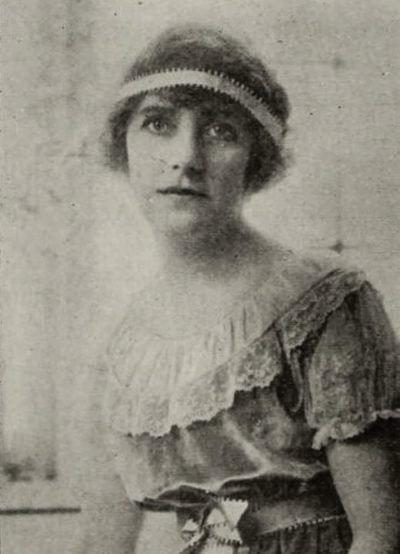
One-hundred, fifteen years ago, today, the short, silent black & white comedy The Princess In The Vase was released. Directed by Wallace McCutcheon, Sr., it starred only three actors…D.W. Griffith, Edward Dillon and Linda Arvidson, Griffith’s then-wife. Griffith is the Lover, Arvidson is the Lady-in-Waiting and Dillon is the Waiter. C. W. “Billy” Bitzer was the cinematographer.
The opening scenes of this production are laid in Egypt, five hundred years before Herodotus, the Father of History, visited that country. Three thousand years ago, there dwelt in Egyptian Memphis, the ancient capital of the Pharaohs, a wealthy prince, whose wife in beauty was likened to [Hathor], the Egyptian Venus, with [a] heart as cold as Egyptian marble. The prince, worried and suspicious, seeks the royal seer, who tells him the princess has a lover and, in a vision, shows him the princess in the arms of that lover, a Theban warrior. Instant death is the punishment meted out to the guilty pair. The princess is placed on a bier and carried out in front of the Temple, under the very shadow of the Pyramids of Gizah. Here, the High Priest, with a flambeau, sets fire to the pyre and her body is burned as an offering, with prayers, to mighty Osiris, beseeching that he overcome Typhon, who seems to hold sway. Alongside the pyre is placed a vase, decorated with hieroglyphics, which is to be the sarcophagus, of that ethereal, of the unfortunate princess. The smoke and vapor, as it arises from the body, enters the vase in a most mysterious manner. The vase is then sealed and the cavalcade proceeds with it to the tomb, where it is deposited and the door of the tomb closed, it was thought forever. Three thousand years later, there came to the “Land of Ruins” a Boston professor, student of the illustrious Jean Francois Chainpollion, discoverer of the key to Egyptian hieroglyphics, who unearthed the vase and took it to his home in Boston. Vague, indeed, was the story he learned about the treasure and, while sitting in his study, cudgeling his brain to lift the veil of mystery from it, falls to sleep. [In] this psychological condition, [he] imagines the maid, while dusting, knocks the vase from the tabouret on which it stands. Bursting into bits, it emits a dense vapor, from which the reincarnated princess appears. Here is trouble. Our friend, the professor, is a married man, whose better-half is a buxom, unethereal person, who doesn’t believe in the “Soul Sister” tommyrot. She, of course, wants an explanation, which the nervous professor is unable to give, so he bolts and runs hatless out of the house, followed by the princess, both followed by Mrs. Professor. Into a restaurant he rushes, with the princess at his heels. At the restaurant, as they sit enjoying a repast, the reincarnated Theban lover appears and claims the princess. This, the old professor resents and is run through by the Egyptian just as the wife enters. Mortally wounded, he falls to the floor, from the sofa, [as] the scene changes and we find the professor awakening from a horrible dream, the pain of the sword thrust being induced by a severe attack of indigestion.
There are no videos of this or any pictures. Since the movie was about a Princess, I grabbed a photo of Linda Arvidson from her IMDb profile. She also has a nice picture on Wikipedia, linked, above. The film is listed for 1908 releases and there is a note/citation referencing a mention of this short in Horror In Silent Films: A Filmography 1896-1929, though IMDb does not tag this as a horror. The production company was American Mutoscope & Biograph Company, the first company in the US devoted entirely to film production and exhibition. There is a survival status of some print in the Library of Congress. I wish I had more. ~Vic
Movie Monday: Suffrage And The Man 1912

One hundred, ten years ago, today, the B&W silent, short comedy film Suffrage and the Man was released. Produced by the French company Eclair, in conjunction with the Women’s Political Union, its original title was Suffrage Wins Herbert.
A young man learns that his betrothed is leaning toward the suffragette cause. He remonstrates with her father to be told “My butler and my bootblack may vote, why not my wife and daughter?” He cannot agree, however and their quarrel brings about a broken engagement. Disappointed and unhappy, he seeks forgetfulness by going to a summer resort. There, he succumbs to the wiles of a designing mother and, caught in an embarrassing position, her daughter “feinting a faint” in his arms, he permits their engagement to be announced. He learns, by an accidental eavesdropping, of the mother’s trickery. He loses no time to denounce the deception and withdraw his offer of marriage. The mother and daughter promptly start suit tor breach of promise. In the meantime, votes have been won for women. The trial of the suit comes up before a mixed jury of men and women with the old sweetheart as forewoman of the twelve peers. Their verdict is acquittal and, as might be expected, “Suffrage Wins Herbert” with a permanently happy result in his reconciliation and marriage.
IMDb Summary
Written by: Moving Picture World
According to Silent Era, the director is unknown, the cast is unknown and the film’s survival status is unknown. There is one trivia bit…it is based on a story written by playwright Dorothy Steele. ~Vic
 Cosmic-Observation