september 2
POTD: Stiffy
T-shirt advertisement from a buddy of mine. Just a little hunting humor… ~Vic

Click for a larger view.
Picture of the Day
Movie Monday: Dick Tracy’s G-Men 1939

Eighty years ago, today, the crime–mystery Dick Tracy’s G-Men was released. A serial film with fifteen chapters, it was co-directed by John English and William Witney and, is over four and a half hours long in total. Produced by Robert Beche, it starred Ralph Byrd, Irving Pichel, Ted Pearson, Phyllis Isley (also known as Jennifer Jones) and Walter Miller (his last film). Based on Chester Gould‘s Dick Tracy comic strip, this serial had Tracy working for the FBI. As a sequel to the original serial, Gould’s contract barred him from production and payment. It was re-released on September 19, 1955.
From IMDB:
A mad doctor named Zanoff uses a drug to bring himself back from the dead after his execution in prison. Dick Tracy sets out to capture Zanoff before he can put his criminal gang back together again.

From Wikipedia:
International spy, Zarnoff, in the employ of “The Three Powers” (presumably a fictionalized reference to the Axis) is captured by Dick Tracy at the start of the serial, [then] tried and sentenced to death. However, through the use of a rare drug embedded by his agents in[to] the evening newspaper, he escapes from the gas chamber. His men pick up his “corpse” by ambushing the hearse and, administering another counter-drug. He continues his espionage plans, while taking the opportunity of revenge on Tracy.
From historian William Cline:
[Dick Tracy serials were] “unexcelled in the action field” [and] “in any listing of serials released after 1930, the four Dick Tracy adventures from Republic must stand out as classics of the suspense detective thrillers and the models for many others to follow.”
Dick Tracy Depot (Watch all 15 chapters)
Foto Friday: Critter Collections 5.0
All Things Critter
All photos are my personal collection. ~Vic
Part I/Part II/Part III/Part IV

The web was enormous.
09-02-2017

09-22-2017
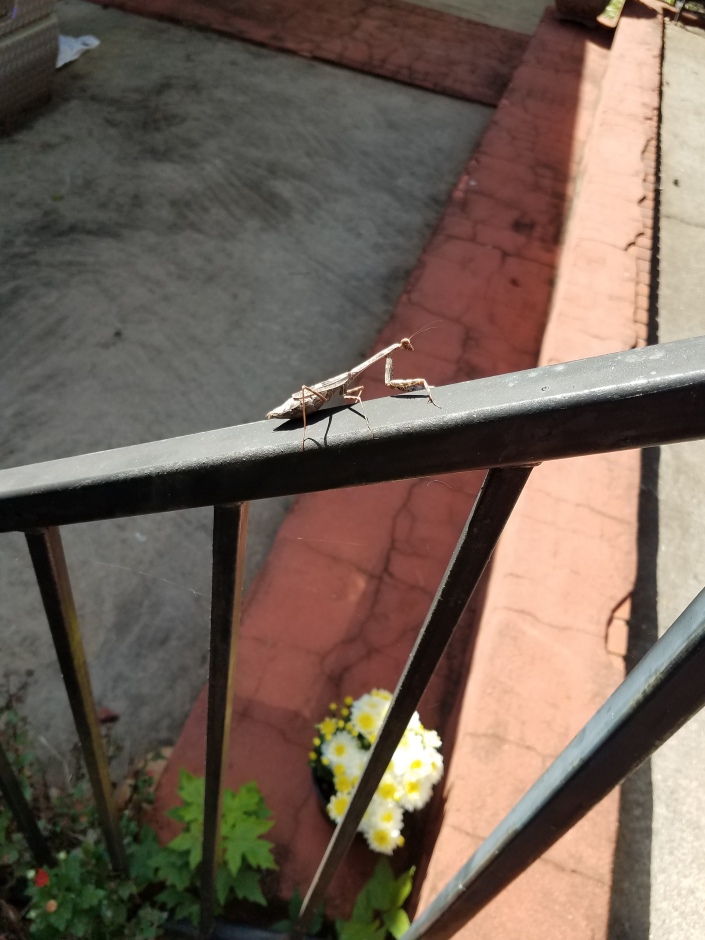
10-02-2017

What a ham.

10-18-2017

Google “black bug, yellow dots” and you will get tons of pix.
This is an Asian lady beetle larva.
10-28-2017

06-16-2018
04-03-2019
Throwback Thursday: Three Mile Island 1979

Forty years ago, today, the Three Mile Island Nuclear Generating Station in eastern Pennsylvania suffered a partial meltdown in its second reactor. Located in the Londonderry Township on a sandbar in the Susquehanna River, the station has two different units. TMI-1 (commissioned September 2, 1974) is owned by Exelon Generation and TMI-2 (commissioned December 30, 1978) is owned by FirstEnergy Corp.
From The History Channel:
At 4:00am EST on March 28, 1979, the worst accident in the history of the U.S. nuclear power industry begins when a pressure valve in the Unit-2 reactor at Three Mile Island fails to close. Cooling water, contaminated with radiation, drained from the open valve into adjoining buildings and the core began to dangerously overheat.
After the cooling water began to drain out of the broken pressure valve […] emergency cooling pumps automatically went into operation. Left alone, these safety devices would have prevented the development of a larger crisis. However, human operators in the control room misread confusing, and contradictory readings, and shut off the emergency water system. The reactor was also shut down but, residual heat from the fission process was still being released. By early morning, the core had heated to over 4,000 degrees, just 1,000 degrees short of meltdown. In the meltdown scenario, the core melts and deadly radiation drifts across the countryside, fatally sickening a potentially great number of people.
As the plant operators struggled to understand what had happened, the contaminated water was releasing radioactive gases throughout the plant. The radiation levels, though not immediately life-threatening, were dangerous and, the core cooked further as the contaminated water was contained and precautions were taken to protect the operators. Shortly after 8:00am EST, word of the accident leaked to the outside world. The plant’s parent company, Metropolitan Edison, downplayed the crisis and claimed that no radiation had been detected off plant grounds but, the same day, inspectors detected slightly increased levels of radiation nearby as a result of the contaminated water leak. Pennsylvania Governor Dick Thornburgh considered calling an evacuation.
Finally, at about 8:00pm EST, plant operators realized they needed to get water moving through the core again and restarted the pumps. The temperature began to drop and pressure in the reactor was reduced. The reactor had come within less than an hour of a complete meltdown. More than half the core was destroyed or molten but, it had not broken its protective shell and no radiation was escaping. The crisis was apparently over.
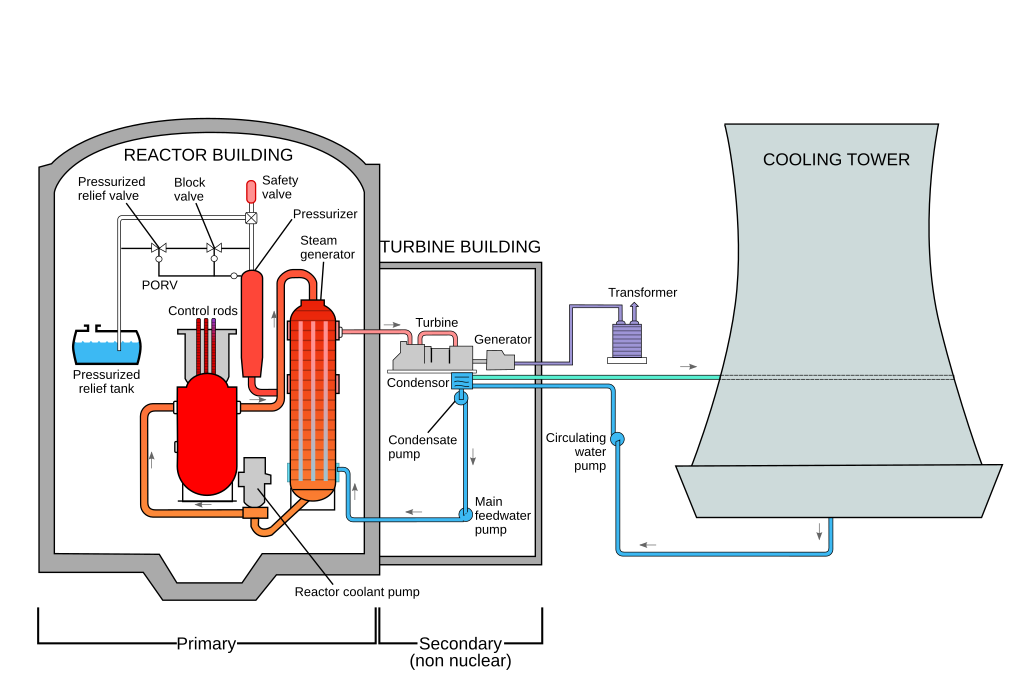
Two days later, however, on March 30, a bubble of highly flammable hydrogen gas was discovered within the reactor building. The bubble of gas was created two days before when exposed core materials reacted with super-heated steam. On March 28, some of this gas had exploded, releasing a small amount of radiation into the atmosphere. At that time, plant operators had not registered the explosion, which sounded like a ventilation door closing. After the radiation leak was discovered on March 30, residents were advised to stay indoors. Experts were uncertain if the hydrogen bubble would create further meltdown or possibly a giant explosion and, as a precaution Governor Thornburgh advised “pregnant women and pre-school age children to leave the area within a five-mile radius of the […] facility until further notice.” This led to the panic the governor had hoped to avoid. Within days, more than 100,000 people had fled surrounding towns.
On April 1, President Jimmy Carter arrived […] to inspect the plant. Carter, a trained nuclear engineer, had helped dismantle a damaged Canadian nuclear reactor while serving in the U.S. Navy. That afternoon, experts agreed that the hydrogen bubble was not in danger of exploding. Slowly, the hydrogen was bled from the system as the reactor cooled.
From Wikipedia:
The accident crystallized anti-nuclear safety concerns among activists and the general public and, resulted in new regulations for the nuclear industry. It has been cited to have been a catalyst to the decline of a new reactor construction program, a slowdown that was already underway in the 1970s. Cleanup started in August 1979 and officially ended in December 1993 with a total cleanup cost of about $1 billion.
Exelon has been operating Unit 1 at […] a loss since 2015. On May 30, 2017, the company said it would consider ceasing operations at [the unit] in 2019 due to high costs of operating the plant, unless there was government action. Unit 2, which has been dormant since the accident in 1979, is still owned by FirstEnergy and it is estimated to close in 2036.
 Cosmic-Observation