August’s full moon is called the Full Sturgeon Moon, after the primitive fish that used to be abundant in North America’s lakes and rivers during the summer months. Having remained mostly unchanged since the earliest fossil records, sturgeons are ancient living fossils that can grow up [to] 3.5 meters long, or as long as two adult humans stacked on top of each other. Nowadays, however, it’s almost impossible to see a sturgeon during the Full Sturgeon Moon. While they used to thrive, sturgeons are now considered […] critically endangered […]. Though sturgeons are extremely long-lived, the females can live up to be 150 years old, sturgeons might not be around for much longer. They might have survived the dinosaurs but, they might not be able to survive human beings and our hunger for luxurious delicacies like caviar.
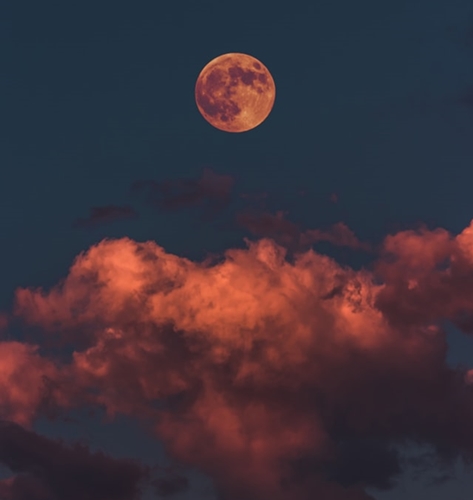
I got squat for a Moon shot. We’ve got Isaias spinning around here. I also don’t have any previous years shots but, I did a post two years ago. So, I’ve trotted over to Unsplash. Another name given to the Sturgeon Moon is Red Moon. Full illumination occurred at 11:59am EDT. Howl for me! ~Vic
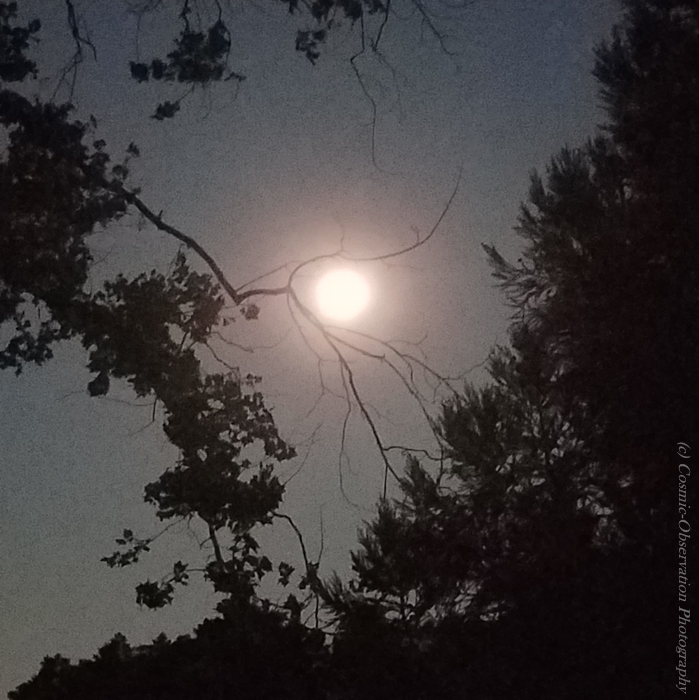
This is my first Buck Moon post. I totally missed 2019 & 2018. There was also a penumbral lunar eclipse happening, as well. Full illumination occurred at 12:44am EDT. Howl for me! ~Vic
Skeleton Tree Hand
Waxing Gibbous
07-03-2020
The Full Moon in July is the Buck Moon, named after the new antlers that emerge from a buck’s forehead around this time of the year. It is also called Thunder Moon, Hay Moon and Wort Moon. For farmers, high summer [is] the time to cut and cure hay to put away for winter feed.
Spooky trees.
One of the more common names for this month’s Full Moon is the Thunder Moon, a tribute from the Algonquin to a time of year when spectacular electrical storms rake the northern forests. The Chinese deserve credit for an equally ominous name. The moon coincides with the Hungry Ghost Festival, a time when the living honor the dead by leaving food and drink to the ancestors. Their name? The Moon of the Hungry Ghosts.
From the parking deck.
07-14-2020
Wort Moon [indicates] that July is the time to gather herbs (worts) to dry and use as spices and remedies. Additional names are Halfway Summer Moon (Ojibwe/Chippewa), Blueberry Moon (Ojibwe), Raspberry Moon (Ojibwe), Flying Moon (Ojibwe), Thunderstorm Moon (Catawba), Corn in Tassel [Moon] (Eastern Band Cherokee), Honey Bee Moon (Stockbridge-Munsee Band of Wisconsin), String Bean Moon (Oneida) and Little Sister of the Summer Moon (Tunica-Biloxi Tribe of Louisiana).





 Cosmic-Observation