This is my first Buck Moon post. I totally missed 2019 & 2018. There was also a penumbral lunar eclipse happening, as well. Full illumination occurred at 12:44am EDT. Howl for me! ~Vic
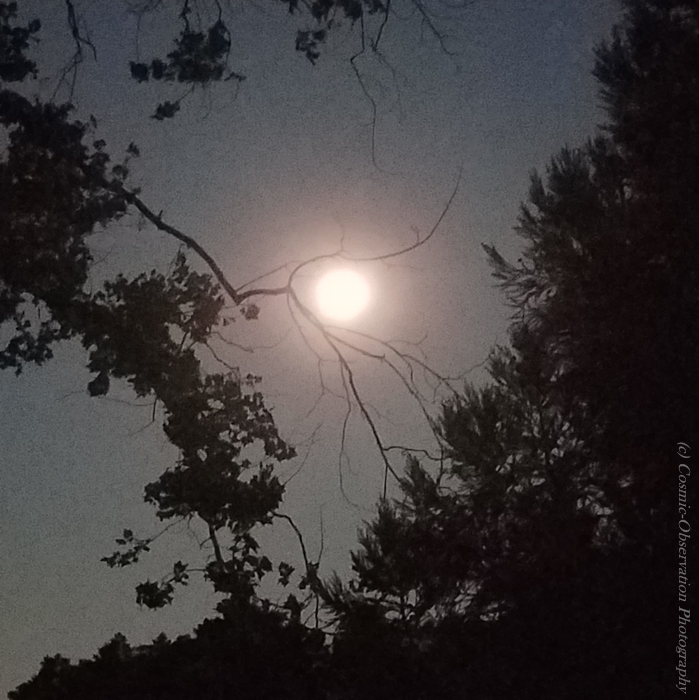
Skeleton Tree Hand
Waxing Gibbous
07-03-2020
The Full Moon in July is the Buck Moon, named after the new antlers that emerge from a buck’s forehead around this time of the year. It is also called Thunder Moon, Hay Moon and Wort Moon. For farmers, high summer [is] the time to cut and cure hay to put away for winter feed.
Spooky trees.
One of the more common names for this month’s Full Moon is the Thunder Moon, a tribute from the Algonquin to a time of year when spectacular electrical storms rake the northern forests. The Chinese deserve credit for an equally ominous name. The moon coincides with the Hungry Ghost Festival, a time when the living honor the dead by leaving food and drink to the ancestors. Their name? The Moon of the Hungry Ghosts.
From the parking deck.
07-14-2020
Wort Moon [indicates] that July is the time to gather herbs (worts) to dry and use as spices and remedies. Additional names are Halfway Summer Moon (Ojibwe/Chippewa), Blueberry Moon (Ojibwe), Raspberry Moon (Ojibwe), Flying Moon (Ojibwe), Thunderstorm Moon (Catawba), Corn in Tassel [Moon] (Eastern Band Cherokee), Honey Bee Moon (Stockbridge-Munsee Band of Wisconsin), String Bean Moon (Oneida) and Little Sister of the Summer Moon (Tunica-Biloxi Tribe of Louisiana).
I did a post nearly a year ago for 2018. Last year, the Strawberry Moon appeared after the Summer Solstice. It’s also referred to as the Flower Moon and this year, it is also a Fathers’ Day Moon (I just made that up). Full illumination occurred at 4:30am EDT. Howl for me! ~Vic
Standing in my driveway.
I supposed my photos could be impressionist like Monet.
The colorful name is closely linked with the spread of warmer weather across the Northern Hemisphere and many Native American and, First Nations peoples, have special names for this full moon. The Algonquin tribes of what is now New England coined the nickname Full Strawberry Moon because the phase marked the best time of year to harvest the wild fruit. Similarly, the Cherokee of the southeastern woodlands knew the moon as the Green Corn Moon, the time of year when fresh corn ears grow best.
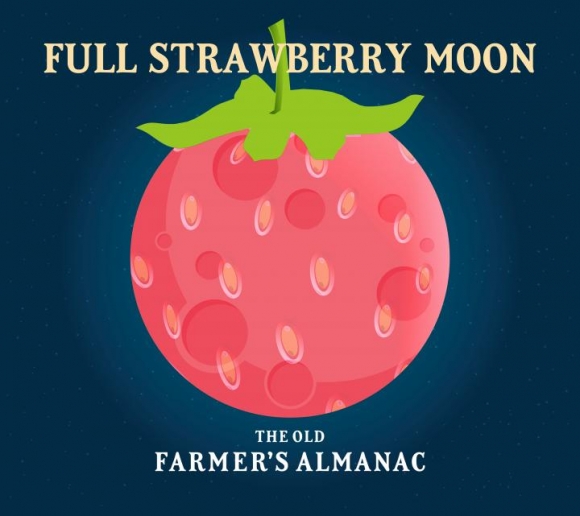
The sweetest full moon of the year is June’s full moon […]. While the full moon itself is inedible, despite how round and delicious it may seem, the Full Strawberry Moon marks strawberry harvesting season in North America. Most Algonquin tribes understood that it was a sign that wild strawberries were starting to ripen and ready for the harvest. Delicious though ripe strawberries may be, June’s full moon has another name that’s even sweeter. What could possibly be sweeter than strawberries? Try honey. In Europe, June’s full moon was actually known as the Honey Moon. Other European names for it included the Hot Moon, signifiying the beginning of hot summer days, or Hay Moon, because of the first hay harvest. Those names aside, European names for the Full Strawberry Moon overall tend to have sweet, romantic connotations, a good example [being] the name Full Rose Moon. June’s full moon is also called Mead Moon, which could refer to the mowing of meadows during summer but, there’s another more romantic interpretation as well.
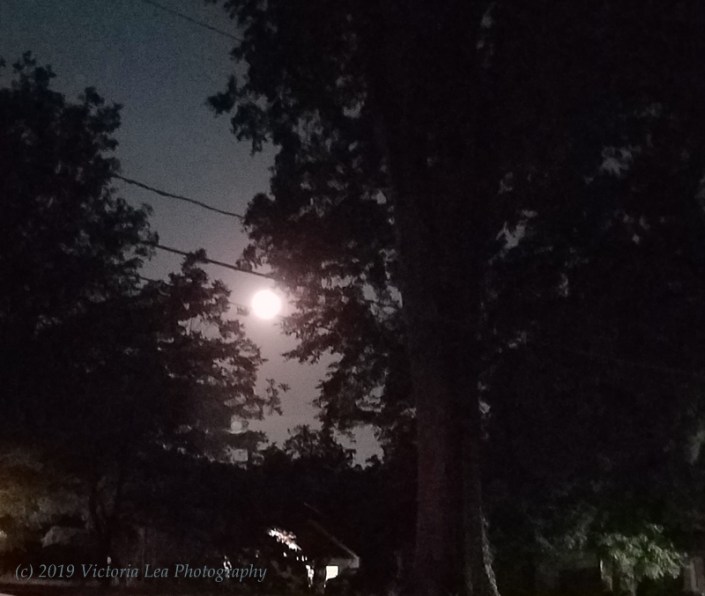
Power lines always get in the way.
In Europe, it’s traditional to gift mead or honey to a newlywed couple during their first moon of marriage. The name Honey Moon, itself, has now become a common word in the English language, used to refer to the honeymoon holiday that couples go on right after they’re married. It used to be that newlyweds in ancient Europe would go on a sweet romantic holiday around the time of June’s full moon because the moon phases were seen as a symbol for the phases of a marriage with the full moon signifying the fullest and happiest part, the wedding itself. The Full Strawberry Moon is tied to romance and marital bliss all around the world. In India, for example, June’s full moon is celebrated as Vat Purnima where married women perform a ceremonial ritual to show their love for their husbands. Vat Purnima is based off a legend from the Mahabharata about a beautiful woman, Savitri, who is determined to save her husband, Satyavan, who is doomed to die an early death. Savitri fasts for three days before Satyavan dies, upon which she successfully negotiates with the King of Hell for the resurrection of her husband. Similarly, married women nowadays dress up in beautiful saris, fast and tie a thread around a banyan tree seven times to wish that their husbands will lead long, happy lives.
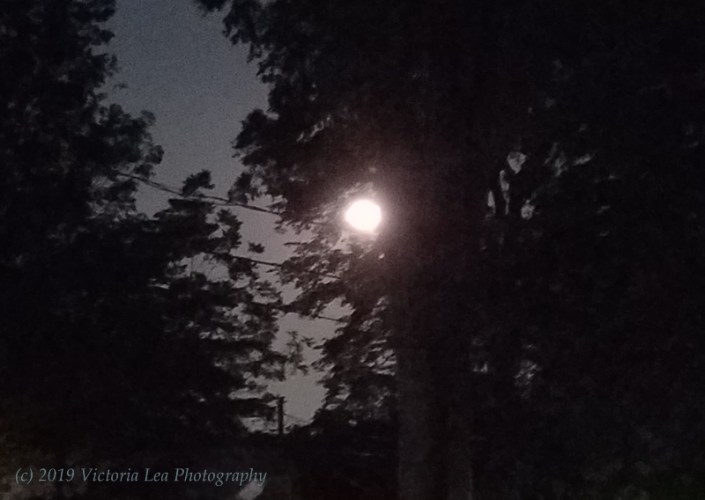
Peaking through the Willow Oak.
It is no wonder, then, that the Pagans also call June’s full moon the Lovers’ Moon. This is an excellent time to work on the connections in your life, romantic or otherwise, by showing affection to your loved ones and allowing yourself to be vulnerable to encourage intimacy in your relationships. During this Honey Moon, some Hoodoo practitioners will even use honey in magic rituals to sweeten other people’s feelings towards the practitioner. An example of a sweetening ritual is to pour honey into a saucer containing the target’s name before lighting a candle on top of it. Another example of a honey ritual is to tie two poppets together with honey between them in order to heal a broken relationship between two people. Honey rituals aside, true magic may happen when you invest your time and effort during this month to work on your relationships and, appreciate the love you have in your life.
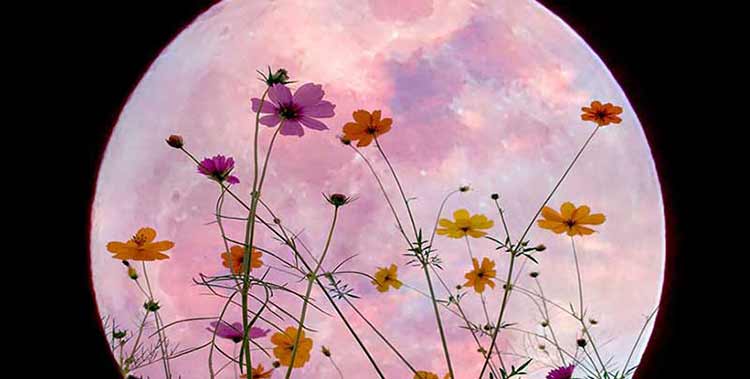
May is most notable for being the turning point in the year where temperatures rise and a vast variety of flowers come into full bloom, letting the world break out into a riot of color. As such, May’s full moon has come to be known as the Full Flower Moon. The Anishnaabe tribe also called it the Blossom Moon. In Northern America, you can expect to see flowers such as bluebells, sundrops, violets and so on, as well as lush greenery to go with the blossoms. The Apache and Lakota peoples named May’s full moon the Green Leaves Moon, while the Mohawk tribe called it the Big Leaf Moon. The Arapaho referred to this Full Moon as “when the ponies shed their shaggy hair”. But, there is one specific plant that’s very important during the May season and it is, in fact, not a flower.
Image Credit: Moon Giant
This plant is corn, an important staple food for Northern American peoples. According to the Algonquin tribes, May’s full moon is the Corn Planting Moon. For Native American tribes, this is the perfect time for them to start preparing the fields for farming and sowing the seeds saved up from last year. Appropriately, the Abenaki culture refers to May’s full moon as the Field Maker Moon, while the Haida tribe calls it the Food Gathering Moon. Apart from corn, other foods such as beans, squash and potatoes are planted during this time. The Cherokee tribe called May’s full moon the Anisguti Moon or the Planting Moon and would, traditionally, perform a Corn Dance during this period to encourage a fruitful corn harvest.
Due to the rising temperatures, the Full Flower Moon is also a time of heightened fertility. This is a good time for women to bear children in a warm, safe environment that would increase the chance of their survival. That’s why May’s full moon is also named Mother’s Moon or Milk Moon which could refer to breastfeeding or to the milking of cows. The latter interpretation is based off the Old English name Rimilcemona, or the Month of Three Milkings referring to how this was a period where cows could be milked up to three times daily.
Is there such a thing as Moon devils?
In other parts of the world, the Full Flower Moon is better known as Vesak or Buddha Day, the most significant celebration for Buddhists all around the world. On the first full moon of May, Buddhists commemorate the birth, enlightenment and passing of the Buddha. Devout practioners are encouraged to renew their intention to adhere to sacred Buddhist principles as well as refrain from all forms of killing and violence, including eating meat. Celebrations include giving charity to the poor, disabled and otherwise marginalized groups in society. Depending on your location, you may witness the spectacular practice of releasing thousands of caged birds into the air as a symbolic gesture of liberation, though this tradition is illegal in countries such as Singapore because it may cause harm to local ecosystems.
Image Credit: almanac.com
Pagans, on the other hand, associate the Full Flower Moon with the element of fire and, thus, often celebrate it by lighting bonfires and engaging in other magical fire rituals to bring prosperity. Powerful colors for the Full Flower Moon include fiery colors like red, yellow and orange. This is a good time to tend your garden and let the seeds you’ve planted blossom, both literally and metaphorically. Cultivate your passions and desires, encourage them to burst forth into bloom and you will be rewarded with abundance in various forms in your life.
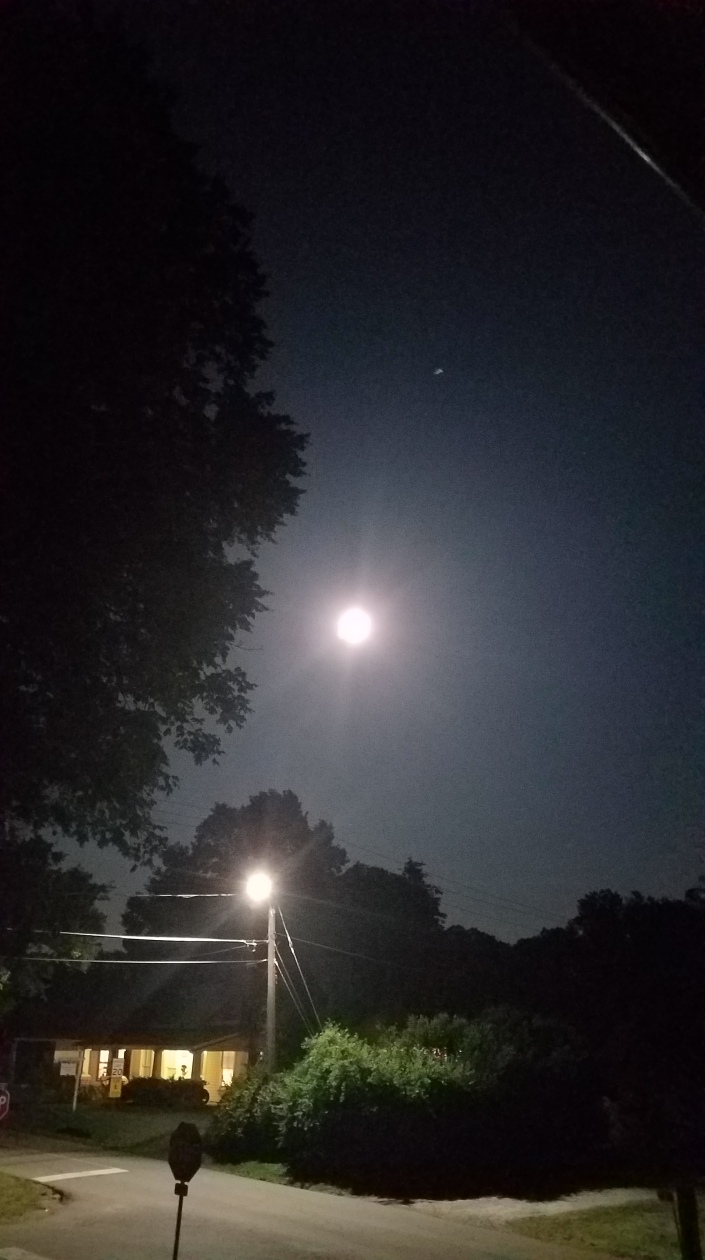
This Flower Moon is also a Seasonal Blue Moon and 100% illumination occurred at 5:11pm EDT. Howl for me! ~Vic





 Cosmic-Observation