I dropped the ball and missed posting about our Summer Solstice. I did catch some pictures, though and a Snapshots Sunday is a perfect reason to post them. I posted about the Solstice in 2018, shortly after I had started blogging, again, after a four year absence. I did an Almanac write-up on the Solstice in 2019. This year’s Solstice occurred at 5:44pm EDT, yesterday. ~Vic
Daisy FamilyIt looks like a Sea Turtle, swimming towards me…sort of…Cone flowers in the Pollinator GardenBig FeatherNew GrowthIn FlightImage Credit: Farmers’ Almanac 1818
Some Folklore:
♦ In ancient Egypt, the summer solstice coincided with the rising of the Nile River. As it was crucial to predict this annual flooding, the Egyptian New Year began at this important solstice.
♦ In centuries past, the Irish would cut hazel branches on solstice eve to be used in searching for gold, water and precious jewels.
♦ Many European cultures hold what are known as Midsummer celebrations at the solstice, which include gatherings at Stonehenge and the lighting of bonfires on hilltops.
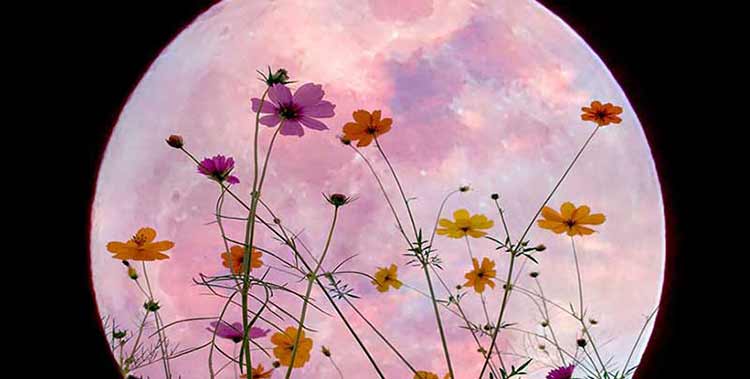
May is most notable for being the turning point in the year where temperatures rise and a vast variety of flowers come into full bloom, letting the world break out into a riot of color. As such, May’s full moon has come to be known as the Full Flower Moon. The Anishnaabe tribe also called it the Blossom Moon. In Northern America, you can expect to see flowers such as bluebells, sundrops, violets and so on, as well as lush greenery to go with the blossoms. The Apache and Lakota peoples named May’s full moon the Green Leaves Moon, while the Mohawk tribe called it the Big Leaf Moon. The Arapaho referred to this Full Moon as “when the ponies shed their shaggy hair”. But, there is one specific plant that’s very important during the May season and it is, in fact, not a flower.
Image Credit: Moon Giant
This plant is corn, an important staple food for Northern American peoples. According to the Algonquin tribes, May’s full moon is the Corn Planting Moon. For Native American tribes, this is the perfect time for them to start preparing the fields for farming and sowing the seeds saved up from last year. Appropriately, the Abenaki culture refers to May’s full moon as the Field Maker Moon, while the Haida tribe calls it the Food Gathering Moon. Apart from corn, other foods such as beans, squash and potatoes are planted during this time. The Cherokee tribe called May’s full moon the Anisguti Moon or the Planting Moon and would, traditionally, perform a Corn Dance during this period to encourage a fruitful corn harvest.
Due to the rising temperatures, the Full Flower Moon is also a time of heightened fertility. This is a good time for women to bear children in a warm, safe environment that would increase the chance of their survival. That’s why May’s full moon is also named Mother’s Moon or Milk Moon which could refer to breastfeeding or to the milking of cows. The latter interpretation is based off the Old English name Rimilcemona, or the Month of Three Milkings referring to how this was a period where cows could be milked up to three times daily.
Is there such a thing as Moon devils?
In other parts of the world, the Full Flower Moon is better known as Vesak or Buddha Day, the most significant celebration for Buddhists all around the world. On the first full moon of May, Buddhists commemorate the birth, enlightenment and passing of the Buddha. Devout practioners are encouraged to renew their intention to adhere to sacred Buddhist principles as well as refrain from all forms of killing and violence, including eating meat. Celebrations include giving charity to the poor, disabled and otherwise marginalized groups in society. Depending on your location, you may witness the spectacular practice of releasing thousands of caged birds into the air as a symbolic gesture of liberation, though this tradition is illegal in countries such as Singapore because it may cause harm to local ecosystems.
Image Credit: almanac.com
Pagans, on the other hand, associate the Full Flower Moon with the element of fire and, thus, often celebrate it by lighting bonfires and engaging in other magical fire rituals to bring prosperity. Powerful colors for the Full Flower Moon include fiery colors like red, yellow and orange. This is a good time to tend your garden and let the seeds you’ve planted blossom, both literally and metaphorically. Cultivate your passions and desires, encourage them to burst forth into bloom and you will be rewarded with abundance in various forms in your life.
This Flower Moon is also a Seasonal Blue Moon and 100% illumination occurred at 5:11pm EDT. Howl for me! ~Vic
As the snowiest month in the United States, February’s full moon is commonly known as the Full Snow Moon in Native American cultures. These ancient tribes named this moon after the way trees cracked in the cold or how people had to sit shoulder to shoulder around the fire for warmth. Even the Celts called it the Moon of Ice. As expected of the coldest month in the year, the Full Snow Moon is also known by more sinister names, such as the Bone Moon. The Cherokee tribe called February’s full moon the Bone Moon because, by this point, the tribe’s winter food supplies had usually dwindled to the point where people had to gnaw on bones and cook bone marrow soup in order to survive. For the same reason, the Kalapuya tribe called this moon the Out of Food Moon. Appropriately, it’s also known as the Hunger Moon and the Little Famine Moon. Perhaps, due to this month’s association with death, the Cherokee tribe would commune with their dead ancestors during the Bone Moon. A didanawiskawi, or a medicine person, would host a medicine dance for the community. Fasting and rituals for the dead were also common practices.
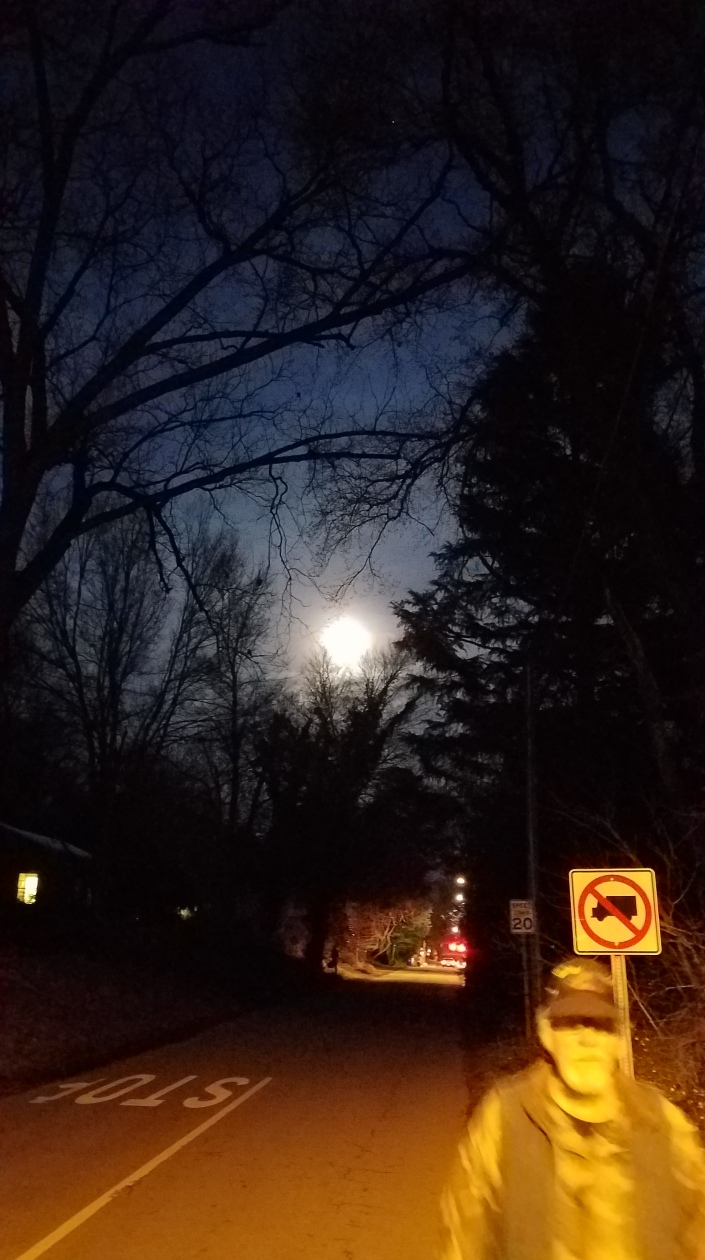
Peaking over the courthouse.
However, not all cultures associate February’s full moon with extreme cold and death. The Hopi tribe calls it the Moon of Purification and Renewal, which is very fitting because the Full Snow Moon is usually the very first full moon of the year according to the lunar calendar. Cultures that follow the lunar calendar, especially East Asian cultures, tend to associate the Full Snow Moon with new beginnings for this very reason. The ancient Chinese, for example, called it the Budding Moon. As a matter of fact, celebrations of February’s full moon are the climax of Lunar New Year festivities in various East Asian countries. In China, the Full Snow Moon is celebrated during the Lantern Festival, also known as the Yuanxiao Festival, which is the 15th day of the Lunar New Year. During this festival, the Chinese release kongming lanterns into the sky as they admire the full moon and eat tangyuan, glutinous rice balls that are usually filled with sweet paste. The round shape of the balls symbolize family togetherness and bring good luck to the whole family.
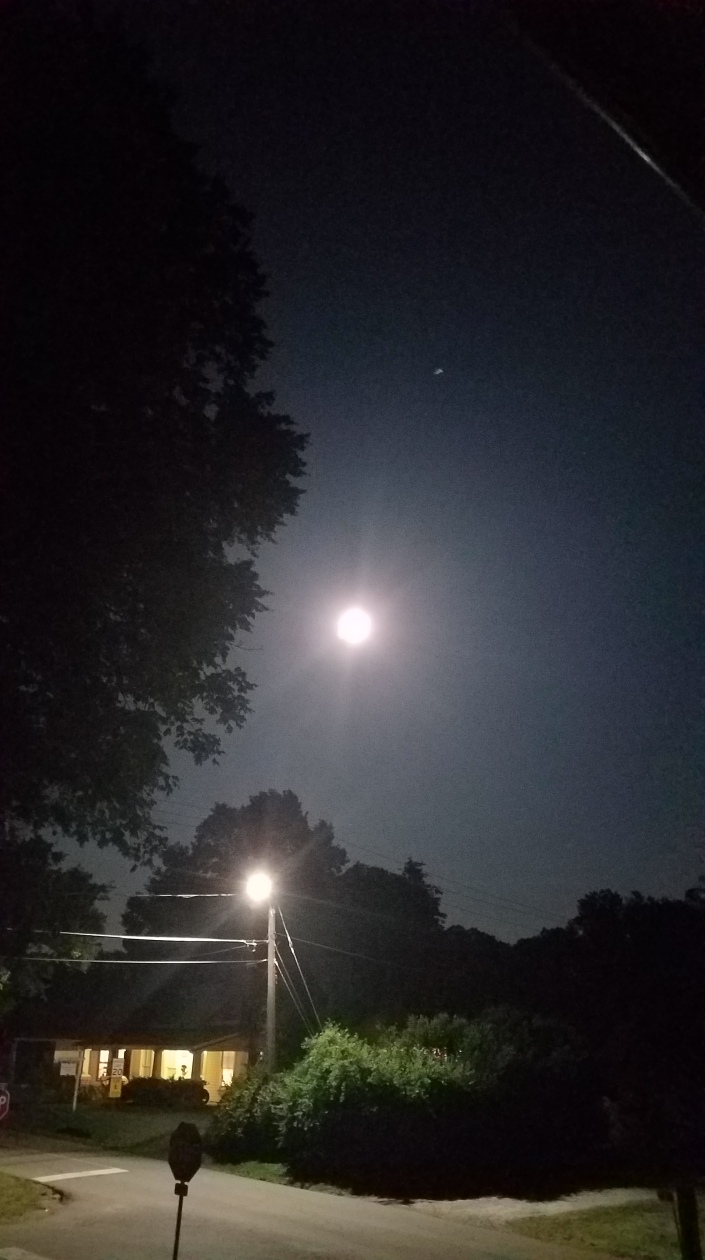
Walking home and below a street light.
Many East Asian cultures in general also light lanterns and bonfires to celebrate February’s full moon. According to an ancient Chinese legend, not long after Buddhism was brought into China, 17 deities were witnessed flying through the sky during the first full moon of the Lunar New Year. Shocked and excited, the populace lit fires and lanterns to see the godly beings better. They continued to do so year after year but, for more practical reasons – to chase away pests and to pray for a good crop in the upcoming spring. In Korea, where February’s full moon is known as Daeboreum, these fiery structures are called “Houses of the Burning Moon”. During Daeboreum, Koreans hike mountains, despite the freezing temperatures, in order to catch a glimpse of the first rise of the first full moon of the Lunar New Year. According to legend, the very first person to accomplish this feat will have their dearest wish come true.
Among the Micmac people of eastern Canada, the driving winds that often accompany February snows led to the name Snow-Blinding Moon. Because this month’s typically harsh weather conditions made hunting very difficult, other common names for February’s Moon included the Hunger Moon, Bony Moon, and Little Famine Moon. To the early American colonists, the optimal time for trapping beaver, fox and mink was the dead of winter when these animals’ coats were at their fullest. So, to them, February’s moon was known as the Trapper’s Moon.
From my driveway.
From a Wiccan site I stumbled across while ‘Googling’ (or ‘Binging’) a particular name, additional names not listed above are Storm Moon, Horning Moon, Wild Moon, Red & Cleansing Moon, Quickening Moon, Big Winter Moon, Moon When Trees Pop and Chaste Moon. And, there is quite an extensive list of Native American moons on Skywise Unlimited.





 Cosmic-Observation