As the snowiest month in the United States, February’s full moon is commonly known as the Full Snow Moon in Native American cultures. These ancient tribes named this moon after the way trees cracked in the cold or how people had to sit shoulder to shoulder around the fire for warmth. Even the Celts called it the Moon of Ice. As expected of the coldest month in the year, the Full Snow Moon is also known by more sinister names, such as the Bone Moon. The Cherokee tribe called February’s full moon the Bone Moon because, by this point, the tribe’s winter food supplies had usually dwindled to the point where people had to gnaw on bones and cook bone marrow soup in order to survive. For the same reason, the Kalapuya tribe called this moon the Out of Food Moon. Appropriately, it’s also known as the Hunger Moon and the Little Famine Moon. Perhaps, due to this month’s association with death, the Cherokee tribe would commune with their dead ancestors during the Bone Moon. A didanawiskawi, or a medicine person, would host a medicine dance for the community. Fasting and rituals for the dead were also common practices.
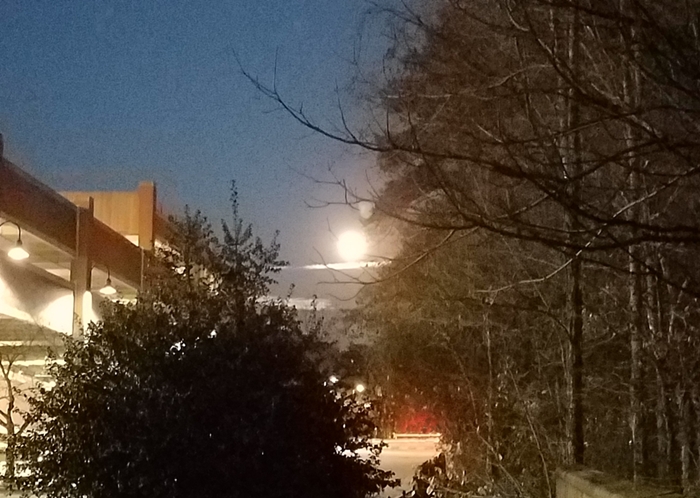
Peaking over the courthouse.
However, not all cultures associate February’s full moon with extreme cold and death. The Hopi tribe calls it the Moon of Purification and Renewal, which is very fitting because the Full Snow Moon is usually the very first full moon of the year according to the lunar calendar. Cultures that follow the lunar calendar, especially East Asian cultures, tend to associate the Full Snow Moon with new beginnings for this very reason. The ancient Chinese, for example, called it the Budding Moon. As a matter of fact, celebrations of February’s full moon are the climax of Lunar New Year festivities in various East Asian countries. In China, the Full Snow Moon is celebrated during the Lantern Festival, also known as the Yuanxiao Festival, which is the 15th day of the Lunar New Year. During this festival, the Chinese release kongming lanterns into the sky as they admire the full moon and eat tangyuan, glutinous rice balls that are usually filled with sweet paste. The round shape of the balls symbolize family togetherness and bring good luck to the whole family.
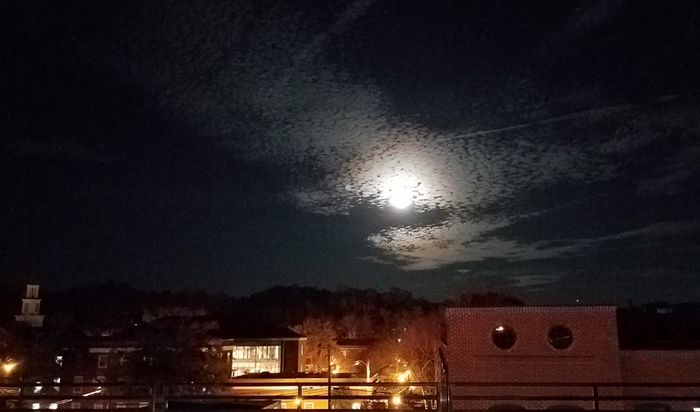
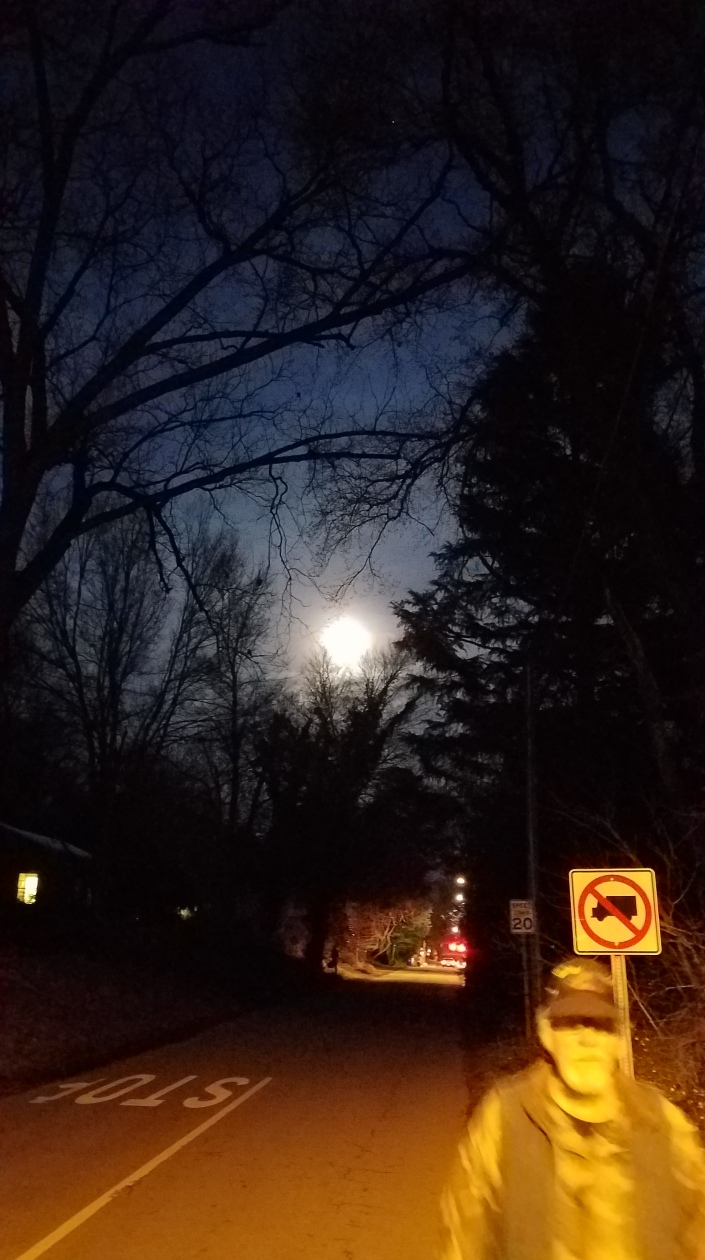
Walking home and below a street light.
Many East Asian cultures in general also light lanterns and bonfires to celebrate February’s full moon. According to an ancient Chinese legend, not long after Buddhism was brought into China, 17 deities were witnessed flying through the sky during the first full moon of the Lunar New Year. Shocked and excited, the populace lit fires and lanterns to see the godly beings better. They continued to do so year after year but, for more practical reasons – to chase away pests and to pray for a good crop in the upcoming spring. In Korea, where February’s full moon is known as Daeboreum, these fiery structures are called “Houses of the Burning Moon”. During Daeboreum, Koreans hike mountains, despite the freezing temperatures, in order to catch a glimpse of the first rise of the first full moon of the Lunar New Year. According to legend, the very first person to accomplish this feat will have their dearest wish come true.
Among the Micmac people of eastern Canada, the driving winds that often accompany February snows led to the name Snow-Blinding Moon. Because this month’s typically harsh weather conditions made hunting very difficult, other common names for February’s Moon included the Hunger Moon, Bony Moon, and Little Famine Moon. To the early American colonists, the optimal time for trapping beaver, fox and mink was the dead of winter when these animals’ coats were at their fullest. So, to them, February’s moon was known as the Trapper’s Moon.
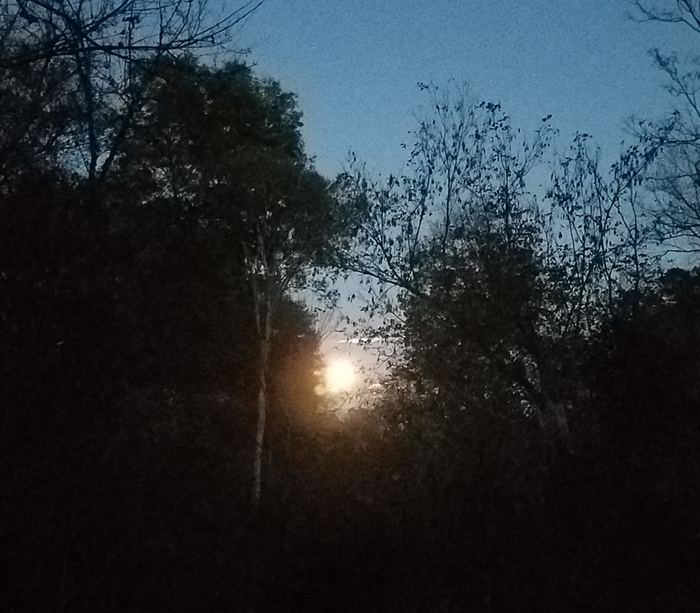
From my driveway.
From a Wiccan site I stumbled across while ‘Googling’ (or ‘Binging’) a particular name, additional names not listed above are Storm Moon, Horning Moon, Wild Moon, Red & Cleansing Moon, Quickening Moon, Big Winter Moon, Moon When Trees Pop and Chaste Moon. And, there is quite an extensive list of Native American moons on Skywise Unlimited.
Well, so much for capturing this evening’s Beaver Moon. I guess I should have tried last night. Tonight is way too foggy. Instead, I present to you my shots from last November.
Also known as the Frosty Moon, it can be referred to as a Mourning Moon if it happens to be the last full moon before the Winter Solstice, as is the case this year.
November’s Full Moon was one of the most important of the year for Northern American communities. Most commonly known as the Full Beaver Moon, this Full Moon marked a time when rivers would begin to freeze over, making it impossible to set out traps. Many Native American tribes, including the Cree, Arapaho and, Abenaki tribes, called November’s full moon the “Moon When Rivers Start to Freeze”.
With the changing of the seasons, November’s full moon marks the beginning of the end. This year, it is the very last full moon before the winter solstice, which makes it the Mourning Moon according to Pagan tradition. In many different cultures, November’s full moon is intimately connected with death and loss, on both a literal and symbolic level. The Celts, for instance, called it the Reed Moon, comparing the mournful music made by wind instruments to the ghoulish sounds of spirits being drawn into the underworld. And, not without good reason…the Full Mourning Moon marks a dangerous time of the year where people could easily slip into the underworld with a single misstep.
We may enjoy the luxury of winter coats and central heating, now but, freezing to death during the long, dark winters used to be a very real threat to early inhabitants of Northern America. In order to survive, making warm winter clothing out of beaver fur was crucial for American colonists and Native American tribes. This is why November’s full moon is also known as the Beaver Moon. During this month, beavers are very active, working hard on dam construction and this was a good time to start harvesting their fur. Missing the timing for this would mean death for these early Northern American communities. This name drives home the importance of November’s full moon as a signal for these Native American tribes to begin trapping beavers before it was too late, as well as to complete their preparations for the darkest depths of winter.
For the Pagans, on the other hand, the final stage of their winter preparations involved the very important process of “mourning”, which is why they call the last moon before the winter solstice the Mourning Moon. After a full year of accumulating possessions, both physically and otherwise, the Mourning Moon is the perfect time to let go of old, unnecessary things, while giving yourself permission to mourn their passing. Practicing Pagans may perform a moonlit ritual where they write down the things they want to rid themselves of and ask their Goddess for help in removing unwanted burdens.
Pagan traditions aside, anyone can benefit from taking the time to self-reflect and to let go. Take advantage of the Full Mourning Moon this November to look back on your year. Take stock of your desires, ambitions, mental and behavioral habits and, the people you spend your energy on. Clean your living and work spaces and, sort out the physical objects that are not contributing to your well-being. Take the time to fully mourn and let go of anything, or anyone, that does not bring you joy, so that you can begin to move forward, unfettered, towards a lighter and happier new year.





 Cosmic-Observation