montana
Flashback Friday: Shoshone National Park 1891
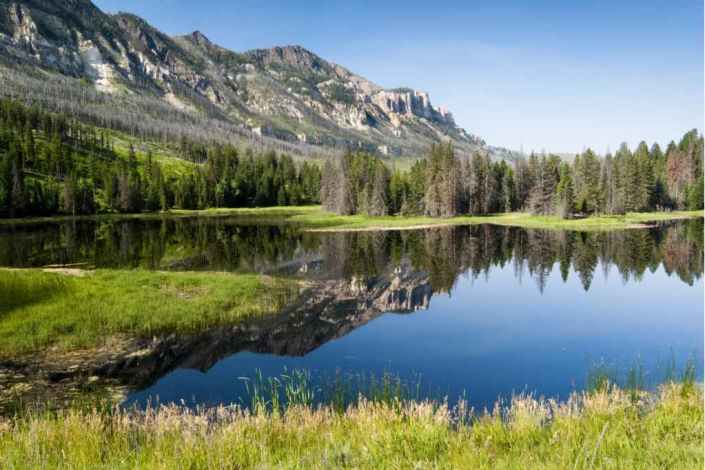
One-hundred, thirty-two years ago, today…
[The] Shoshone National Forest is the first federally protected National Forest in the United States and covers nearly 2,500,000 acres in the state of Wyoming. Originally a part of the Yellowstone Timberland Reserve, the forest is managed by the United States Forest Service and was created by an act of Congress, signed into law by U.S. President Benjamin Harrison in 1891. Native Americans have lived in the region for at least 10,000 years and when the region was first explored by European adventurers, forestlands were occupied by several different tribes. Never heavily settled or exploited, the forest has retained most of its wildness. Shoshone National Forest is a part of the Greater Yellowstone Ecosystem […].
The Absaroka and Beartooth Mountains are partly in the northern section of the forest. The Wind River Range is in the southern portion and contains Gannett Peak, the tallest mountain in Wyoming. [The] Continental Divide separates the forest from its neighbor Bridger-Teton National Forest to the west. The eastern boundary includes privately owned property, lands managed by the U.S. Bureau of Land Management and, the Wind River Indian Reservation, which belongs to the Shoshone and Arapahoe Indians. Custer National Forest along the Montana border is on the northern frontier. The Oregon Trail, the 19th century covered wagon route, passes just south of the forest, where broad and gentle South Pass allowed the migrants to bypass the rugged mountains to the north. The forest is home to the Grizzly bear, Cougar, Moose, tens of thousands of Elk as well as the largest herd of Bighorn sheep in the U.S.
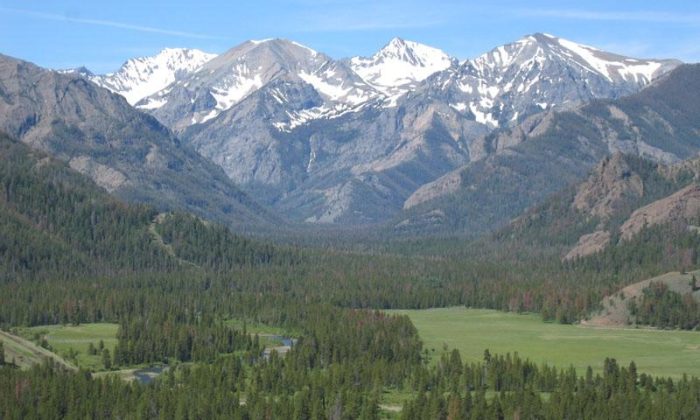
[On] March 3 [of] 1891, Congress enacted, and [President] Harrison signed, the Land Revision Act of 1891. This legislation resulted from a bipartisan desire to initiate reclamation of surplus lands that had been, up to that point, granted from the public domain, for potential settlement or use by railroad syndicates.
The Act reversed previous policy initiatives, such as the Timber Culture Act of 1873, which did not preclude land fraud by wealthy individuals and corporations. The legacy of the General Revision Act of 1891 [Forest Reserve Act/Land Revision Act] is frequently credited as its serving as a catalyst to a series of federal land reform initiatives, notably under President Theodore Roosevelt.
Wikipedia Summaries
As a side note, when my father was a Freshman at N.C. State University in 1963-1964, he studied Forestry. Prior to his death on August 25, 2022, he still remembered most of the Latin terms for all trees and forest plants.
Additional:
♦ Shoshone National Forest (Wyoming State Parks)
♦ America’s First National Forest (Forest Service)
♦ Our First National Forest (National Park Service History)
Flashback Friday: Jeannette Rankin 1917

Author: Adam Cuerden
February 27, 1917
Photo Credit: Wikipedia
“I may be the first woman member of Congress but, I won’t be the last.”
Jeannette Rankin was an American politician and women’s rights advocate and, the first woman to hold federal office in the United States. She was elected to the U.S. House of Representatives as a Republican from Montana in 1916 and, again, in 1940. As of 2022, Rankin is still the only woman ever elected to Congress from Montana.
Each of Rankin’s Congressional terms coincided with initiation of U.S. military intervention in the two World Wars. A lifelong pacifist, she was one of 50 House members who opposed the declaration of war on Germany in 1917. In 1941, she was the only member of Congress to vote against the declaration of war on Japan following the attack on Pearl Harbor.
A suffragist during the Progressive Era, Rankin organized and lobbied for legislation enfranchising women in several states including Montana, New York and North Dakota. While in Congress, she introduced legislation that eventually became the 19th Constitutional Amendment, granting unrestricted voting rights to women nationwide. She championed a multitude of diverse women’s rights and civil rights causes throughout a career that spanned more than six decades.
Wikipedia Summary
“I want to be remembered as the only woman who ever voted to give women the right to vote.”
Rankin was born on June 11, 1880, to John and Olive Rankin at Grant Creek Ranch near Missoula, in what was then the Montana Territory. She was the first of seven children […] in a prosperous family. Her father […] was a rancher and builder who had come to Montana from Canada. Her mother […] had moved from New Hampshire to teach before marrying John Rankin and becoming a housewife. Jeannette attended Montana State University in Missoula (now the University of Montana) and graduated in 1902 with a degree in biology. [Her] career in politics began as a student volunteer with a local women’s suffrage campaign in Washington State, preparing for a referendum on voting rights. [In] February 1911, she became the first woman to address the Montana legislature when she testified in support of women’s suffrage.
Jeannette Rankin
History, Art & Archives
United States House of Representatives
Rankin held office in her first term from March 4, 1917, one-hundred and five years, ago, today, to March 3, 1919. Her second term was from January 3, 1941 to January 3, 1943. Powerful enemies made sure she could not get re-elected. Twenty-four years later, she reclaimed her seat. She never married and passed away May 18, 1973 at the age of 92. ~Vic
Additional Reading:
Jeannette Rankin (Biography/February 27, 2018)
Montana’s Women Candidates Are Out To Set Another Record (Billings Gazette/Web Archive/October 25, 2016)
Seven Things About Jeannette Rankin (History Channel/Jesse Greenspan/September 1, 2018)
 Cosmic-Observation