national park service
Flashback Friday: Shoshone National Park 1891
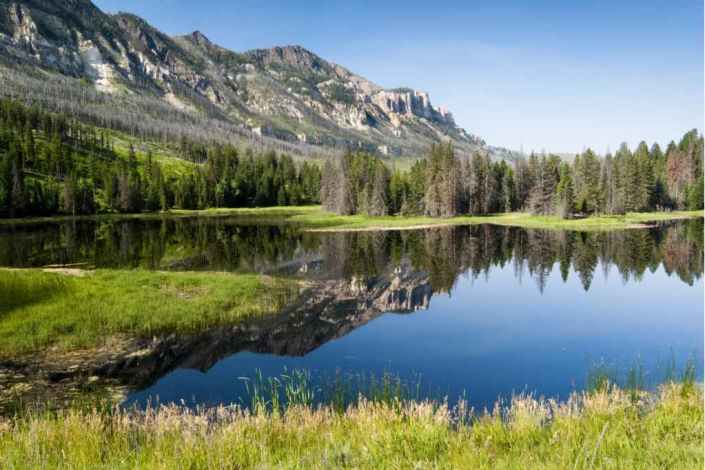
One-hundred, thirty-two years ago, today…
[The] Shoshone National Forest is the first federally protected National Forest in the United States and covers nearly 2,500,000 acres in the state of Wyoming. Originally a part of the Yellowstone Timberland Reserve, the forest is managed by the United States Forest Service and was created by an act of Congress, signed into law by U.S. President Benjamin Harrison in 1891. Native Americans have lived in the region for at least 10,000 years and when the region was first explored by European adventurers, forestlands were occupied by several different tribes. Never heavily settled or exploited, the forest has retained most of its wildness. Shoshone National Forest is a part of the Greater Yellowstone Ecosystem […].
The Absaroka and Beartooth Mountains are partly in the northern section of the forest. The Wind River Range is in the southern portion and contains Gannett Peak, the tallest mountain in Wyoming. [The] Continental Divide separates the forest from its neighbor Bridger-Teton National Forest to the west. The eastern boundary includes privately owned property, lands managed by the U.S. Bureau of Land Management and, the Wind River Indian Reservation, which belongs to the Shoshone and Arapahoe Indians. Custer National Forest along the Montana border is on the northern frontier. The Oregon Trail, the 19th century covered wagon route, passes just south of the forest, where broad and gentle South Pass allowed the migrants to bypass the rugged mountains to the north. The forest is home to the Grizzly bear, Cougar, Moose, tens of thousands of Elk as well as the largest herd of Bighorn sheep in the U.S.
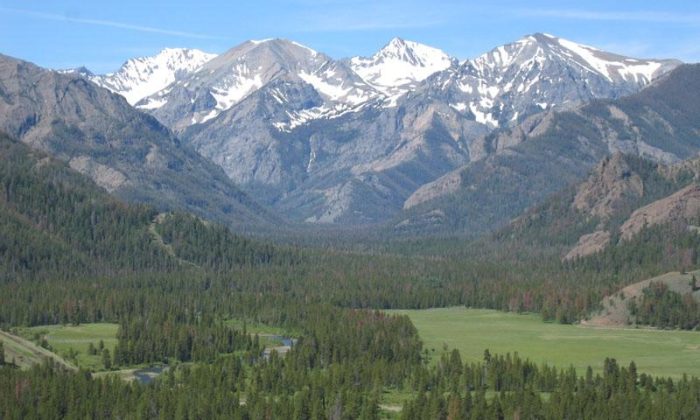
[On] March 3 [of] 1891, Congress enacted, and [President] Harrison signed, the Land Revision Act of 1891. This legislation resulted from a bipartisan desire to initiate reclamation of surplus lands that had been, up to that point, granted from the public domain, for potential settlement or use by railroad syndicates.
The Act reversed previous policy initiatives, such as the Timber Culture Act of 1873, which did not preclude land fraud by wealthy individuals and corporations. The legacy of the General Revision Act of 1891 [Forest Reserve Act/Land Revision Act] is frequently credited as its serving as a catalyst to a series of federal land reform initiatives, notably under President Theodore Roosevelt.
Wikipedia Summaries
As a side note, when my father was a Freshman at N.C. State University in 1963-1964, he studied Forestry. Prior to his death on August 25, 2022, he still remembered most of the Latin terms for all trees and forest plants.
Additional:
♦ Shoshone National Forest (Wyoming State Parks)
♦ America’s First National Forest (Forest Service)
♦ Our First National Forest (National Park Service History)
Throwback Thursday: Gettysburg Address 1863
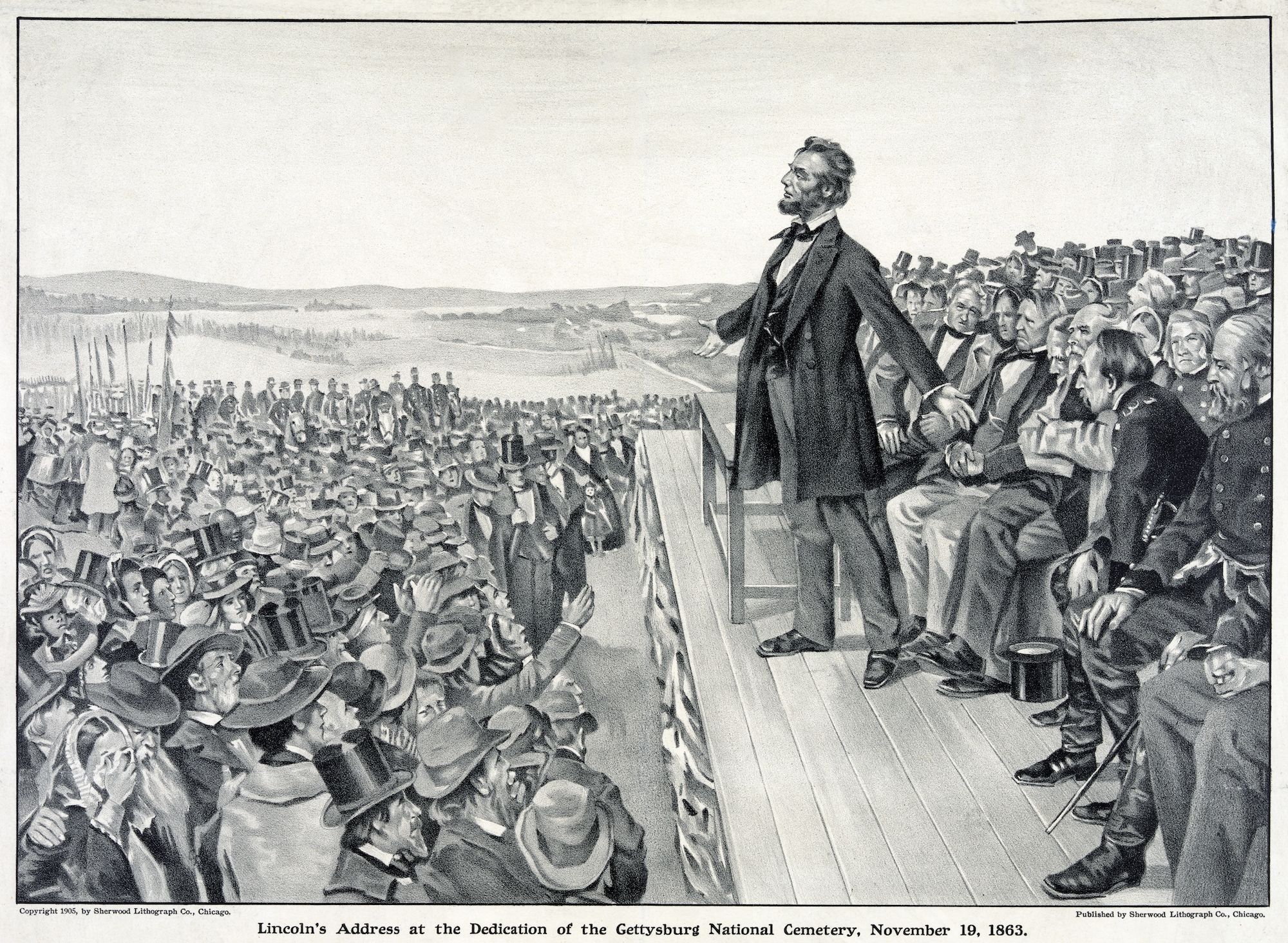
One hundred, fifty-seven years ago, today, President Abraham Lincoln gave his famous speech at the dedication of the Soldier’s National Cemetery in Gettysburg. The Battle of Gettysburg had just been 4 1/2 months prior. Lincoln was in the early stages of a mild case of small pox.

Library of Congress
Photographer: Carol Highsmith 2007
Image Credit: Wikipedia & Wikimedia
Four score and seven years ago our fathers brought forth on this continent, a new nation, conceived in Liberty, and dedicated to the proposition that all men are created equal.
Now we are engaged in a great civil war, testing whether that nation, or any nation so conceived and so dedicated, can long endure. We are met on a great battle-field of that war. We have come to dedicate a portion of that field, as a final resting place for those who here gave their lives that that nation might live. It is altogether fitting and proper that we should do this.
But, in a larger sense, we can not dedicate — we can not consecrate — we can not hallow — this ground. The brave men, living and dead, who struggled here, have consecrated it, far above our poor power to add or detract. The world will little note, nor long remember what we say here, but it can never forget what they did here. It is for us the living, rather, to be dedicated here to the unfinished work which they who fought here have thus far so nobly advanced. It is rather for us to be here dedicated to the great task remaining before us — that from these honored dead we take increased devotion to that cause for which they gave the last full measure of devotion — that we here highly resolve that these dead shall not have died in vain—that this nation, under God, shall have a new birth of freedom — and that government of the people, by the people, for the people, shall not perish from the earth.
Additional Reading:
Speeches & Writings (Abraham Lincoln Online)
Britannica
History Channel
National Geographic
National Park Service
Throwback Thursday: Devil’s Tower 1906

Wikipedia & Wikimedia
07-12-2020
One-hundred, fourteen years ago, today, Devil’s Tower or, Bear Lodge Butte, was established as the first US National Monument by President Theodore Roosevelt. Composed of igneous rock, and possibly laccolithic, it is located in the Bear Lodge Mountains of the Black Hills, near Hulett and Sundance, in Crook County, Wyoming. It is also known as Matȟó Thípila by the Lakota and Daxpitcheeaasáao by the Crow (try to pronounce those). It got it’s religious moniker in 1875 when an interpreter for Colonel Richard Dodge, leading an expedition, misunderstood a native name and thought it meant Bad God’s Tower.
Additional Reading:
Close Encounters of the Third Kind 1977 (AMC’s Filmsite)
The Dakota Peoples (Google Books)
Satellites in the High Country (Google Books)
Devil’s Tower: First 50 Years (National Park Service PDF)
Proposed Name Change (Rapid City Journal June 22, 2015)
Native American Story & Culture (Wikipedia)
Other Native Names (Wikipedia)
Tower Ladder (Wikipedia)
 Cosmic-Observation