farmers almanac
Winter Solstice 2018

I was hoping to capture some images of the Moon, tonight but, we are so overcast from the rain storms, it’s just not going to happen. I will try tomorrow night.
Winter is officially here, as if all the snow we’ve had wasn’t a clue. The solstice arrived at 5:23pm EST and tomorrow’s Full Moon will be at 100% full illumination at 12:48pm EST. From The Almanac:
The word solstice comes from Latin sol “sun” and sistere “to stand still.” In the Northern Hemisphere, as summer advances to winter, the points on the horizon where the Sun rises and sets advance southward each day. The high point in the Sun’s daily path across the sky, which occurs at local noon, also moves southward each day.
At the winter solstice, the Sun’s path has reached its southernmost position. The next day, the path will advance northward. However, a few days before and after the winter solstice, the change is so slight that the Sun’s path seems to stay the same, or stand still. The Sun is directly overhead at “high-noon” on Winter Solstice at the latitude called the Tropic of Capricorn.
The solstice is the beginning of astronomical winter. (An almanac is defined as a “calendar of the heavens,” so we use the astronomical definition.) Astronomical seasons are based on the position of the Earth in relation to the Sun. However, meteorological seasons are based on the annual temperature cycle. For the ancient Celts, the calendar was based around the solstices and equinoxes, marking the Quarter Days, with the mid-points called Cross-Quarter Days.

This is the longest night of the year. It is a time for rest and reflection. Just like Spring cleaning time, the beginning of Winter can herald a cleaning of its own. Cold temperatures and bad weather can mean more time indoors. It can be a time for sifting through the past or contemplating the future. Many may find that re-evaluating relationships and possessions is easier during this slower time. I will be lighting a candle and smudging. Wishing everyone health and happiness. ~Vic
Beaver Moon 2018

Well, so much for capturing this evening’s Beaver Moon. I guess I should have tried last night. Tonight is way too foggy. Instead, I present to you my shots from last November.
Also known as the Frosty Moon, it can be referred to as a Mourning Moon if it happens to be the last full moon before the Winter Solstice, as is the case this year.


From MoonGiant:
November’s Full Moon was one of the most important of the year for Northern American communities. Most commonly known as the Full Beaver Moon, this Full Moon marked a time when rivers would begin to freeze over, making it impossible to set out traps. Many Native American tribes, including the Cree, Arapaho and, Abenaki tribes, called November’s full moon the “Moon When Rivers Start to Freeze”.
With the changing of the seasons, November’s full moon marks the beginning of the end. This year, it is the very last full moon before the winter solstice, which makes it the Mourning Moon according to Pagan tradition. In many different cultures, November’s full moon is intimately connected with death and loss, on both a literal and symbolic level. The Celts, for instance, called it the Reed Moon, comparing the mournful music made by wind instruments to the ghoulish sounds of spirits being drawn into the underworld. And, not without good reason…the Full Mourning Moon marks a dangerous time of the year where people could easily slip into the underworld with a single misstep.
We may enjoy the luxury of winter coats and central heating, now but, freezing to death during the long, dark winters used to be a very real threat to early inhabitants of Northern America. In order to survive, making warm winter clothing out of beaver fur was crucial for American colonists and Native American tribes. This is why November’s full moon is also known as the Beaver Moon. During this month, beavers are very active, working hard on dam construction and this was a good time to start harvesting their fur. Missing the timing for this would mean death for these early Northern American communities. This name drives home the importance of November’s full moon as a signal for these Native American tribes to begin trapping beavers before it was too late, as well as to complete their preparations for the darkest depths of winter.
For the Pagans, on the other hand, the final stage of their winter preparations involved the very important process of “mourning”, which is why they call the last moon before the winter solstice the Mourning Moon. After a full year of accumulating possessions, both physically and otherwise, the Mourning Moon is the perfect time to let go of old, unnecessary things, while giving yourself permission to mourn their passing. Practicing Pagans may perform a moonlit ritual where they write down the things they want to rid themselves of and ask their Goddess for help in removing unwanted burdens.
Pagan traditions aside, anyone can benefit from taking the time to self-reflect and to let go. Take advantage of the Full Mourning Moon this November to look back on your year. Take stock of your desires, ambitions, mental and behavioral habits and, the people you spend your energy on. Clean your living and work spaces and, sort out the physical objects that are not contributing to your well-being. Take the time to fully mourn and let go of anything, or anyone, that does not bring you joy, so that you can begin to move forward, unfettered, towards a lighter and happier new year.

100% illumination occurred at 12:39am EST.
Howl for me… ~Vic
Strawberry Moon 2018
Also known as Rose Moon or Flower Moon.

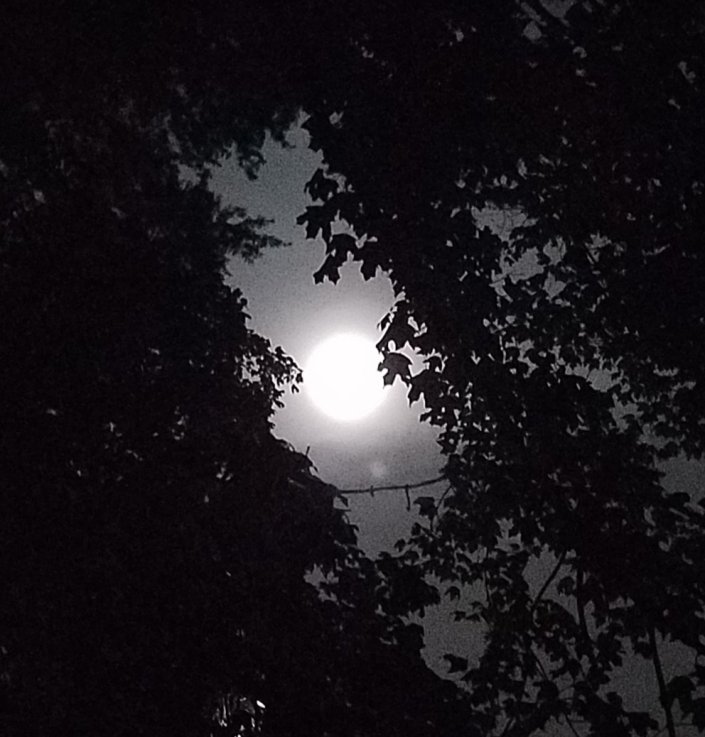


100% full illumination occurred on June 28 at 12:53am EDT.
Howl for me.
~Victoria
- ← Previous
- 1
- 2
 Cosmic-Observation