In my last post on March 2, I was talking about sitting under my Hackberry tree and getting pelted with debris from a little woodpecker above me. I tried to get some shots of him but, they weren’t clear enough. My S7 just doesn’t do well with distance. That’s OK. I have other stuff.
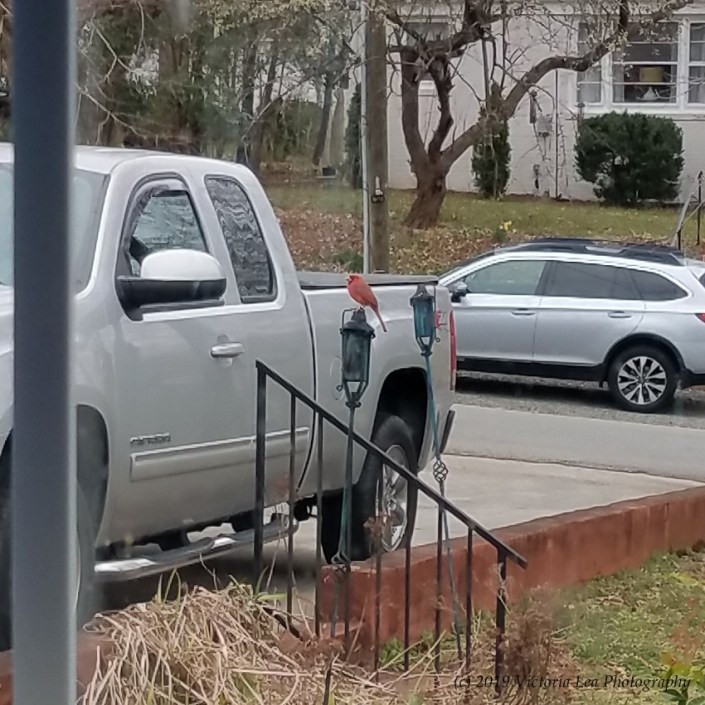
From the Den window.
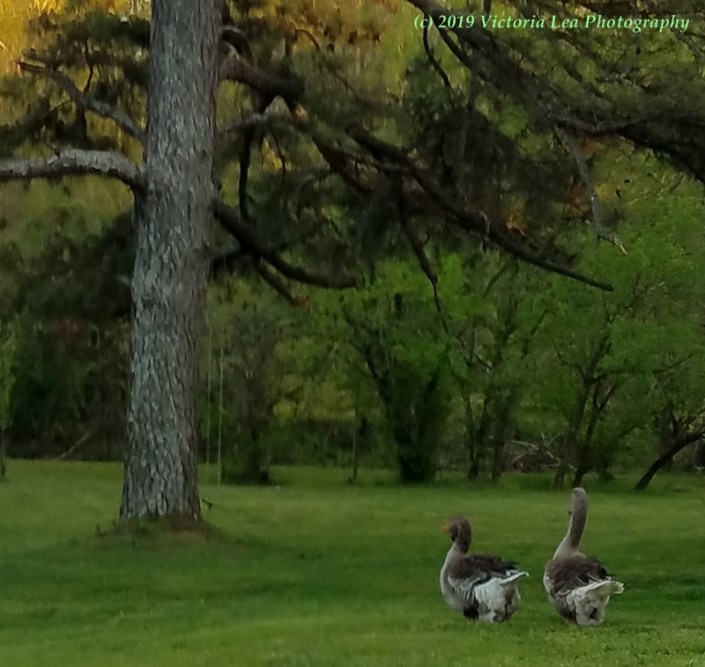
02-19-2019And, he looked at the camera.Geese coming up from the river.
04-16-2019And, headed to a neighbor’s backyard.They are such a cute pair.I haven’t seen any activity…yet. 05-06-2019
Ok. So. No full moon pix for today. *sigh* We have been inundated with storms…again. We were bombarded with tornado warnings for five hours. An area just south of town close to I-40 was damaged. I am so glad it’s over.
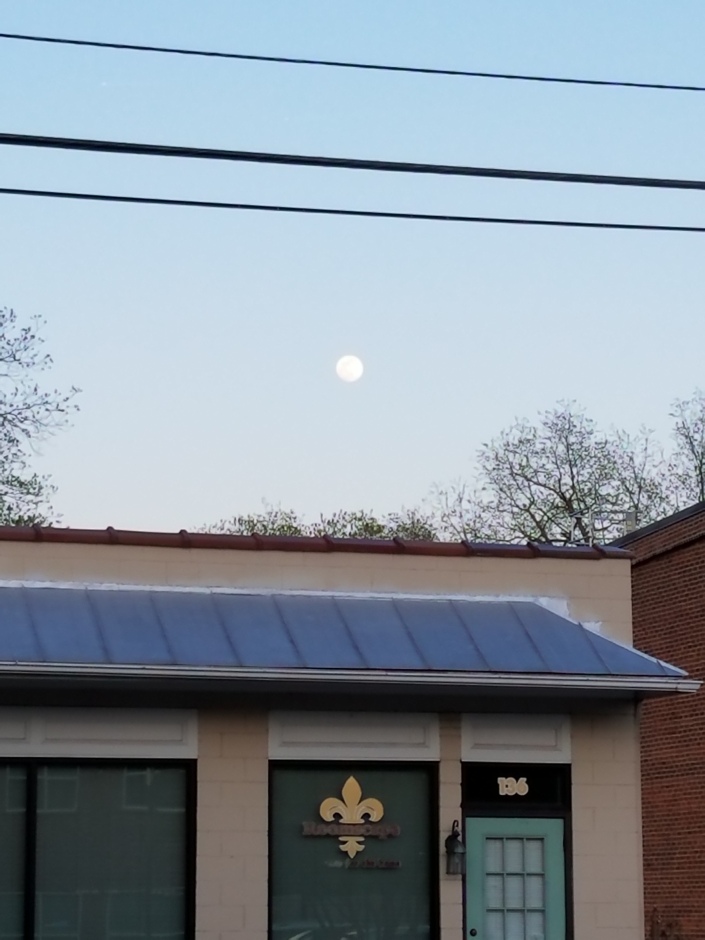
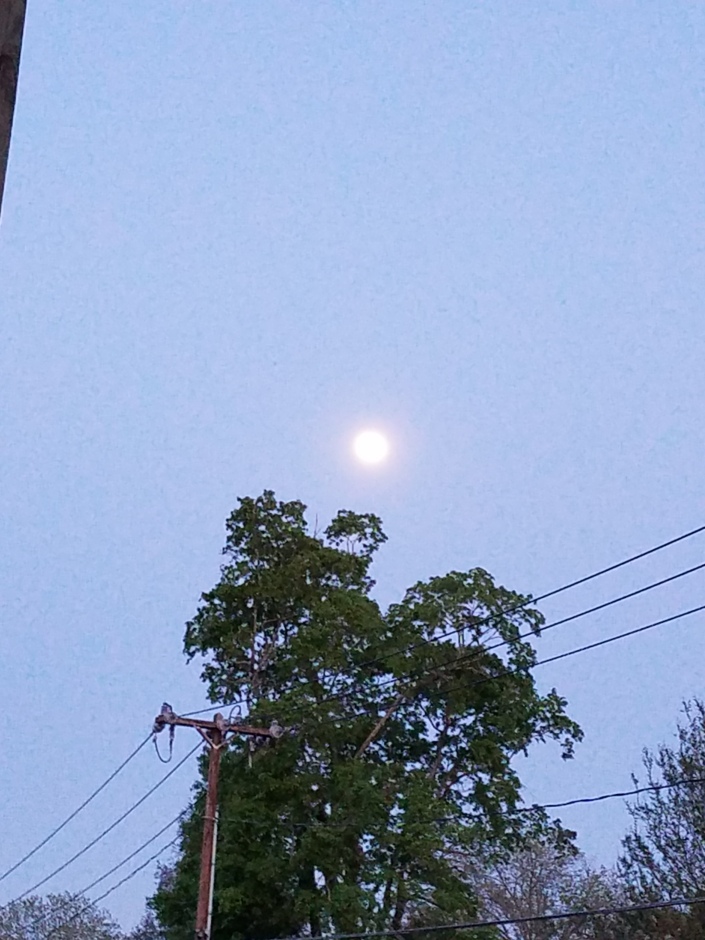
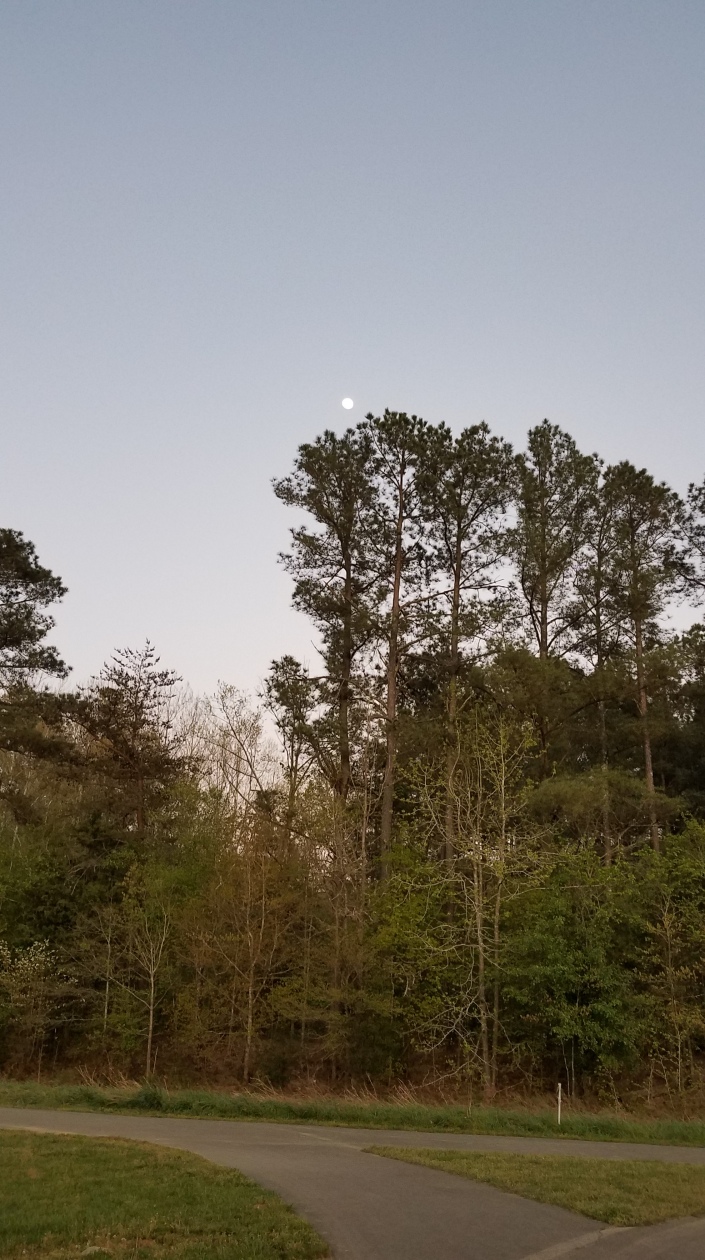
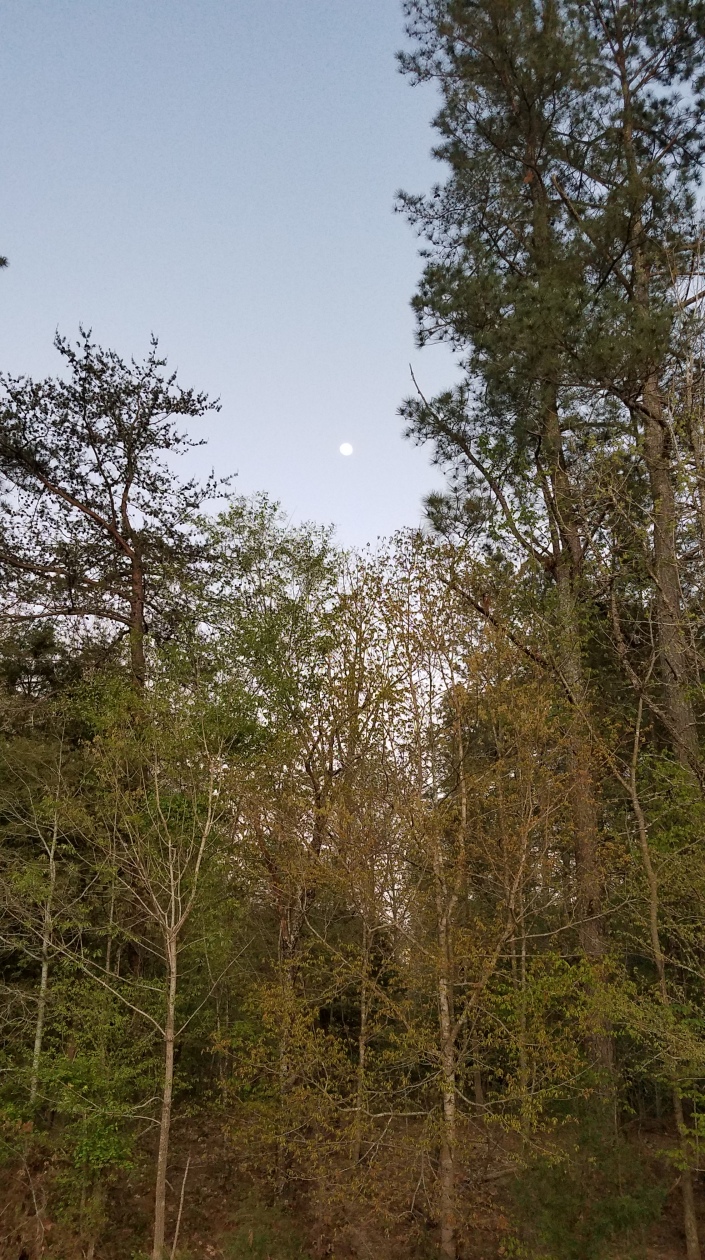
That being said, I do have some shots of the waxing gibbous moon from April 28, 2018. I suspect I had the same problem during that full moon on April 29 (8:58pm EDT)…bad weather. I also have some waxing gibbous shots from April 16.
Howl for me! ~Vic
Pink Moon 2019 was at 100% illumination at 7:12am EDT.
April’s full moon is widely known as the Full Pink Moon, even though it doesn’t actually turn pastel pink as the name suggests. The Full Pink Moon’s name comes from the abundance of moss phlox, a common little pink flower that typically begins to spread across the ground in early spring. With that said, this creeping phlox is not the only thing that begins blooming during the Full Pink Moon.
In many Native American tribes, April’s full moon is associated with the bustling life and vibrant growth of spring. In Sioux culture, it’s named after the sprouting of red grass. The Comanche tribe called it the New Spring Moon and, both the Tlingit and Sioux tribes referred to it as the Budding Moon, after the new plants that begin to bud and sprout during spring. The Cherokee tribe even called it the Flower Moon (though that name is also sometimes used to refer to May’s full moon) and celebrated it for the growth of useful medicinal plants and magical herbs.
Walking back home.
At the same time, April is a time when rivers and streams begin to fully thaw. Accordingly, the Shoshone tribe named April’s full moon the Full Melting Moon and the Arapaho tribe called it the Moon Where Ice Breaks in the River. It was also known as the Fish Moon because of the fish that would begin to swim upstream during this time. The Cherokees believed that flowing water was under the control of a spirit called the Long Man and would perform rituals to honor him during the Full Pink Moon. An example of a ritual like this was the Knee Deep Dance, based off the movements of the Water Frog. The Assiniboine tribe also called April’s full moon the Frog Moon.
Water is not the only thing that starts to flow during the Full Pink Moon. This is also the time where maple sap begins to flow in earnest, marking the true beginning of the incredibly important sugar-making season. The Abenaki tribes called April’s full moon the Sugar Maker Moon, and the Ojibwe called it the Sugarbush Moon. The Ojibwe tribe would journey north to their spring camps to tap maple syrup and engage in spear fishing. Maple syrup was integral to Ojibwe culture. Not only was it a crucial method of seasoning all their foods (they did not have access to salt at that time) but, it also symbolized harmony within the community and with the forces of nature around them.
Gold Park
Waxing Gibbous
04-16-2019
The Full Pink Moon also holds religious significance in other cultures. For example, in Islāmic communities around the world, April’s full moon is celebrated as Bara’at Night, also known as the Night of Innocence. Muslims offer up prayers, asking God to absolve dead ancestors of their sins. They also prepare sweet desserts such as halwa or zarda and give it out to children, the needy and other members of their community. Meanwhile, Christians call it the Paschal Moon and celebrate the first Sunday after April’s full moon as Easter Sunday. It’s possible that the reason why the Easter Bunny brings eggs is because April’s full moon is also known as the Egg Moon, given that animals such as geese begin mating and laying eggs in spring.
While April is known for its showers and ever-warming temperatures, it is also known as a month when spring flowers begin to show up. The name came from the herb moss pink or wild ground phlox which is one of the earliest widespread flowers of the spring. As the name infers, the flowers are pink in color, thus the name for April’s full Moon. But no, the Moon itself won’t be turning pink.
Tribes kept track of the seasons by giving distinctive names to each recurring full Moon. Full Moon names were applied to the entire month in which each occurred. There was some variation in the full Moon names but, in general, the same ones were consistent among regional tribes. European settlers followed that custom and created some of their own names.
Other names for this month’s celestial body include the Full Sprouting Grass Moon, the Egg Moon and, among coastal tribes the Full Fish Moon, because this was the time that the shad swam upstream to spawn.
This is for the birds! I will have more next Friday or Saturday.
All Photos Are My Personal Collection
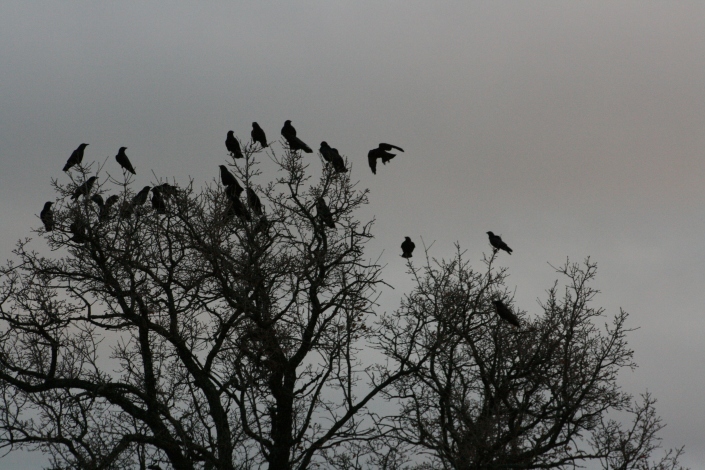
A murder of chattering crows at dusk.
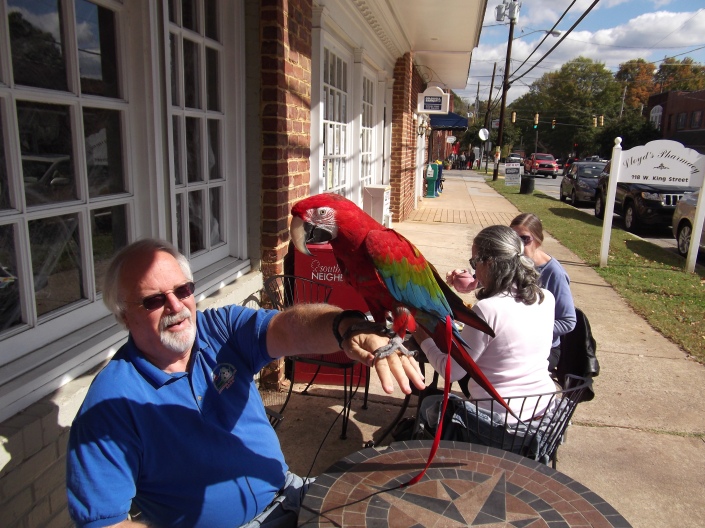
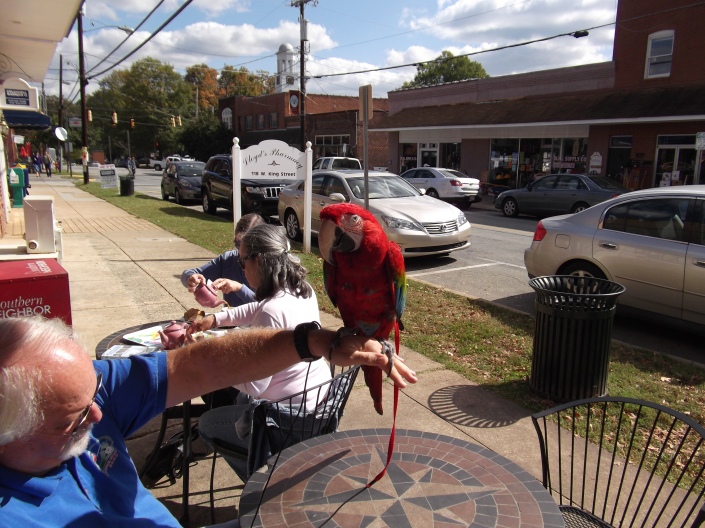
Taken in Texas 12-12-2007Pet parrot visiting uptown.
10-22-2011
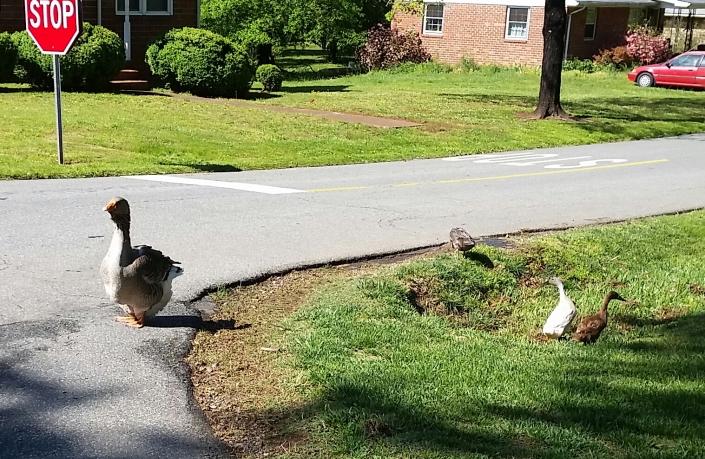
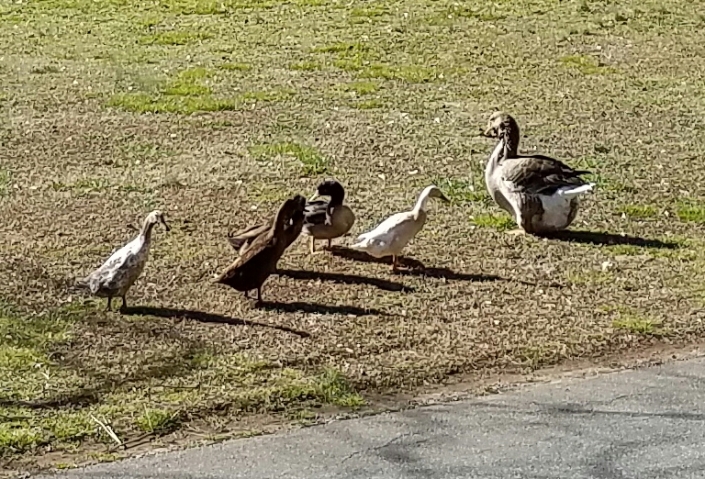
Beautiful bird.We have local geese that hang out at the river.
This one took up bodyguard duty to four ducks.
04-23-2016Standing guard while they eat.Careful crossing the street.Different goose. Same job.
02-13-2017
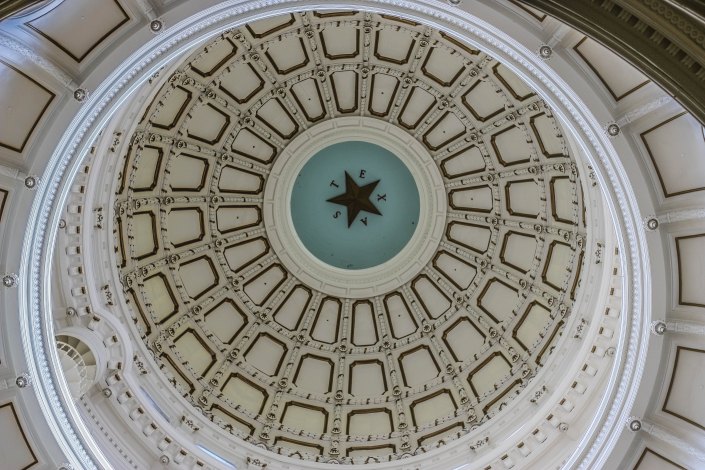
I lived and worked in Texas for nearly a decade. I was fortunate enough to snag a Texas State job for the majority of the time I was there. The gentleman that interviewed and hired me was, as it turns out, my immediate Supervisor. He was one of the best bosses I ever had (his replacement after retirement was just as terrific). He did his job and he let me do mine. We sometimes rode the bus together, to and from work (downtown Austin).
I grew to love this man. He was a lanky 6′ 6″ and spoke fluent Spanish with a Texan accent. He had to have heart valve surgery a decade before I met him and, when you got close to him, he ticked like a clock. He owned a ranch just outside of Abilene in a small town called Clyde. He was a cattleman, a businessman, a photographer, a writer, an artist, a musician, a pilot, interviewed two U.S. Presidents and, was good friends with Mac Davis, Kenny Rogers and Dolly Parton. He graduated Texas Tech with a Journalism degree, loved the Red Raiders and served in the U.S. Army Reserves:
“I protected Fort Leonard Wood, MO, from all enemies, foreign and domestic, during the Cuban missile crisis” ~ W. H. Patton
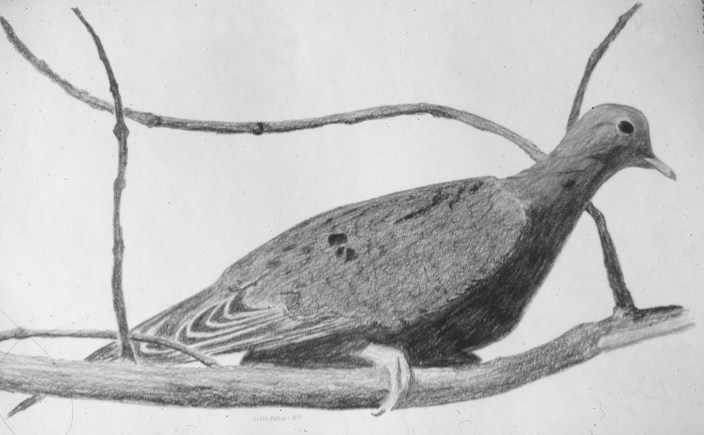
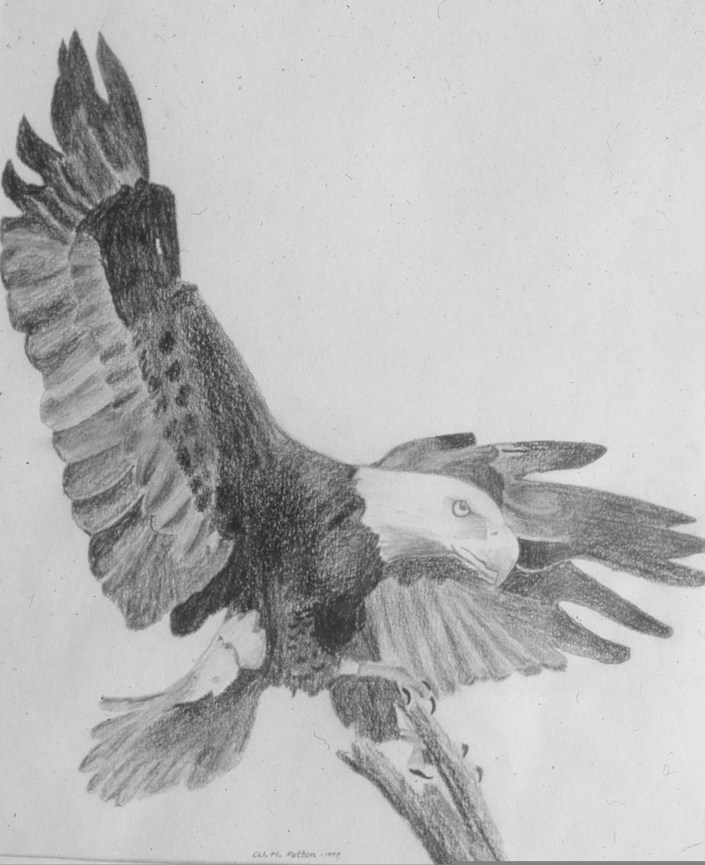
He lived all over the U.S. and Mexico. He moved to the Austin area in 1997 and I met him in 2002. He always had a story to tell and had a wicked sense of humor. He was one hell of a cook and drank like a fish. I am thankful that I met him and am a better person for it. He passed away in 2012, five days after his 73rd birthday. I’d like to share some of his work, as he shared it with me.
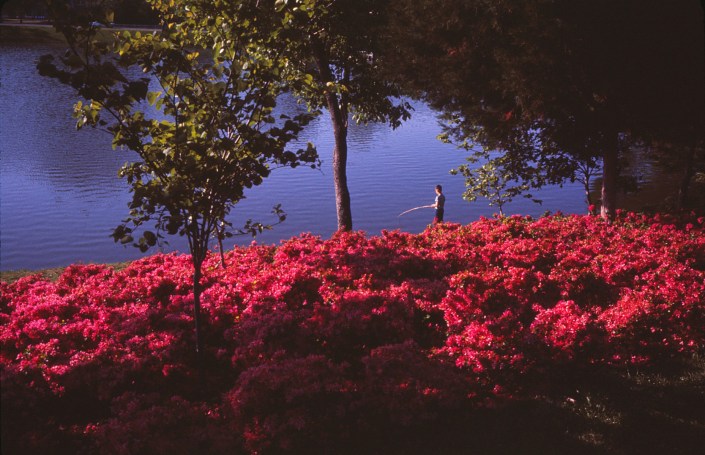
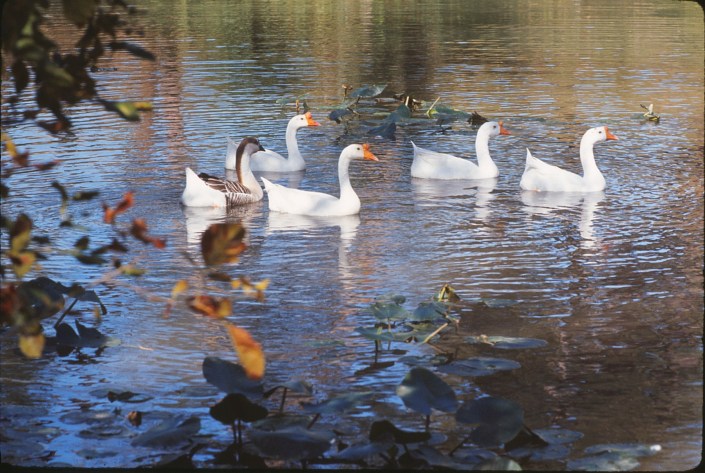
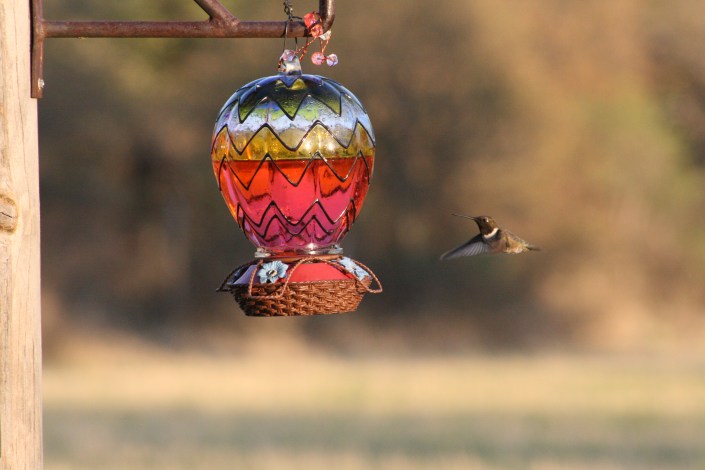
Photo Credit: W. H. Patton From the 1960s, his son fishing.Photo Credit: W. H. Patton From the 1960s, he managed to capture the image of a Barn Owl in an abandoned house.Photo Credit: W. H. Patton From the 1960s, local geese.Photo Credit: W. H. Patton From the 1960s, Kodiak bear.Photo Credit: W. H. Patton From the 1960s, a wood duck.Photo Credit: W. H. Patton From his backyard, 04-08-2008W. H. Patton pencil rendering…1977W. H. Patton pencil rendering…1977










 Cosmic-Observation