imslp.org
Music Monday: Händel Solo Sonatas 1732

Collection: National Portrait Gallery
Date: Between 1726 & 1728
Wikipedia
George Frideric Händel was a German-British Baroque composer well known for his operas, oratorios, anthems, concerti grossi and organ concertos. Händel received his training in Halle and worked as a composer in Hamburg and Italy before settling in London in 1712, where he spent the bulk of his career and became a naturalised British subject in 1727. He was strongly influenced both by the middle-German polyphonic choral tradition and by composers of the Italian Baroque. In turn, Händel’s music forms one of the peaks of the “high baroque” style, bringing Italian opera to its highest development, creating the genres of English oratorio and organ concerto and introducing a new style into English church music. He is consistently recognized as one of the greatest composers of his age. Händel started three commercial opera companies to supply the English nobility with Italian opera. In 1737, he had a physical breakdown, changed direction creatively, addressed the middle class and made a transition to English choral works. After his success with Messiah (1742), he never composed an Italian opera again. Almost blind, he died in 1759, a respected and rich man, and was given a state funeral at Westminster Abbey.
Händel Summary
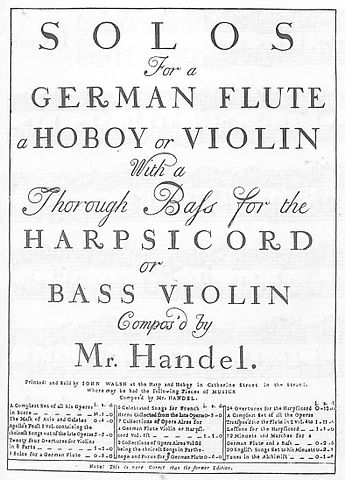
Source: IMSLP
Author: Händel
Two hundred, ninety years ago, Händel Solo Sonatas was published by John Walsh in 1732. It contains a set of twelve sonatas, for various instruments, composed by George Frideric Händel. The 63 page publication includes the sonatas that are generally known as Händel’s Opus 1. The 1732 edition was mostly reprinted from the plates of an earlier 1730 publication […]. Each sonata displays the melody and bass lines […]. By modern-day standards, the music in the publication has a primitive appearance, with squashed notes and irregular spacings, stems and bar widths […]. Despite the titles in both editions, four of the sonatas in each are for a fourth instrument: the Recorder.
John Walsh Summary
Table List of the 12 Händel Sonatas
List of Händel Solo Sonatas
George Frideric Händel Britannica Biography
George Frideric Händel ~ Biography Channel
I can’t seem to find one video with all of the twelve sonatas, combined, so I will post the first three. ~Vic
Flute Sonata E Minor (HWV 359b)
Recorder Sonata G Minor (HWV 360)
Violin Sonata A Major (HWV 361)
Music Monday: Partitas For Solo Violin 1696

from Suite #1
Source: IMSLP
Image Credit: Wikipedia & Wikimedia
The six partitas for solo violin by Johann Paul von Westhoff are the earliest known published music for solo violin. Although Westhoff’s compositions were rediscovered by scholars […] in the mid-19th century, this work was not found until the late 20th century.
The collection […] was discovered […] by musicologist Peter P. Várnai. He announced his discovery in a 1971 article […] published in Die Musikforschung, volume 24. The extant copy is dated 1696 (three hundred & twenty-five years, ago) but, it may be a reprint (partial or full) of a much earlier publication by Westhoff…the Erstes Dutzend Allemanden, Couranten, Sarabanden und Giguen Violino Solo sonder Passo Continuo. [That] collection was published in Dresden in 1682 and is considered lost. The first modern edition of the partitas appeared in 1974.
Nothing is known about how or when the partitas were composed. One other work for solo violin by Westhoff survives, a 1683 suite published in an issue of Dresden’s Mercure galant. [It] is entirely possible that the composer had more solo violin works. The […] surviving partitas are historically important works […] and were most probably the inspiration for Johann Sebastian Bach‘s sonatas and partitas for solo violin.
The partitas all consist of four dances, arranged in the standard late Baroque order… an Allemande, the Courante, the Sarabande and the Gigue. The music is technically demanding. [It is] fully polyphonic with frequent instances of tricky double stopping.
Johann Paul von Westhoff was a German Baroque composer and violinist. One of the most important exponents of the Dresden violin school, he was among the highest ranked violinists of his day […].
Johann Paul von Westhoff 1656-1705 (On Baroque)
List of Known Works
References
Music Monday: Les Pièces de Clavessin 1670
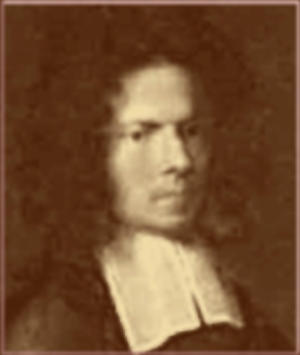
Three hundred, fifty years ago, Jacques Champion de Chambonnières, a French harpsichordist and dancer, composed Les Pieces de Clavessin de Monsieur de Chambonnieres or Harpsichord Pieces.
Due to lack of manuscript sources, little is known about French harpsichord music of the first half of the 17th century and Chambonnières emerges as the sole, major composer of the time with a large surviving oeuvre (works of art). Some 150 pieces are extant, almost all of them dances. Sixty were published by the composer, himself, in 1670 in two volumes of Les Pièces de Clavessin and the rest are known through some 20 manuscript sources, most of which were discovered only in the mid and late 20th century.
Since the exact course of evolution of the classic French harpsichord style remains a mystery, it is impossible to ascertain the role Chambonnières played in establishing said style. He was obviously influenced by the French lute school, adapting its style brisé to the harpsichord and he may have been among the first to do so. Another important influence was a thorough grounding in counterpoint, probably transmitted from his grandfather Thomas through his father.
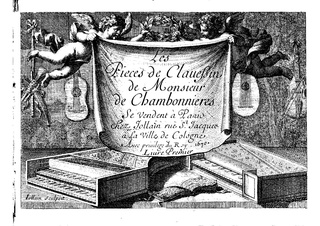
Image Credit: Wikipedia
[The] Pièces de Clavecin (published 1670) reflect in style and texture the compositions of the noted lutenist-composer Denis Gaultier and thus emphasize the roots of the early harpsichord style in lute music. The Pièces are highly ornamented, and rich in harmony, and are grouped by key into suites of dances […] and miniature pieces with fanciful titles. There is no thematic relationship between the movements of a single suite, the aim being rather for contrast within a given key. Chambonnières was one of the first to attach tables of ornaments to his works, indicating the manner of performance of the many embellishments so vital to his free-voiced style.
It appears that he had lavish tastes and struggled financially because of it. He lived beyond his means and died in poverty two years after his Harpsichord Pieces.
Additional Reading & Sources:
Jacques Champion de Chambonnières (Britannica)
Jacques Champion, Sieur de Chambonnières (Here of a Sunday Morning Site)
Chambonnières, Jacques Champion, Sieur de (Oxford Music Online)
List of Compositions (Wikipedia)
These are, roughly, two & half hours long, taken together.
The first one has a minute’s worth of spoken French at the beginning.
Music Monday: My Lady Carey’s Dompe 1520s
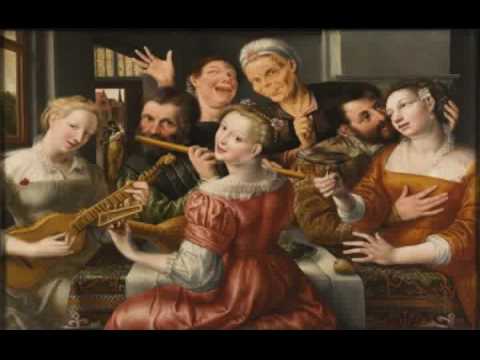
Coming forward in time, I was reading around in the 1400s & 1500s (noticing some of the composers that died in the plague) and discovered another interesting little piece: My Lady Carey’s Dompe (a lament or dirge), a traditional English dance tune. Written for a harpsichord and, possibly, a lute, the composer remains unknown, though suggested attribution is Hugh Aston and, the specific date is questionable. It could be 1525 or, 1528 if the song was, indeed, composed for the death of William Carey, a courtier in the service of Henry VIII. Lady Carey could refer to his wife Mary Boleyn, a mistress to Henry and sister to Anne Boleyn but, could also refer to his mother, sisters or his sister-in-law.
In any case, the song is lovely and, catchy. Enjoy.
Sources
My Lady Carey’s Dompe
1520s in Music
Allmusic Write-Up
The Anne Boleyn Files
Sheet Music
British Library (Record of the Composition)
Internet Archive (History of Keyboard Composition)
“One of the earliest surviving keyboard pieces we have…”
 Cosmic-Observation