“[The] lock of hair and telegram, which provides details of Lincoln’s assassination in 1865, are expected to fetch up to $75,000.”
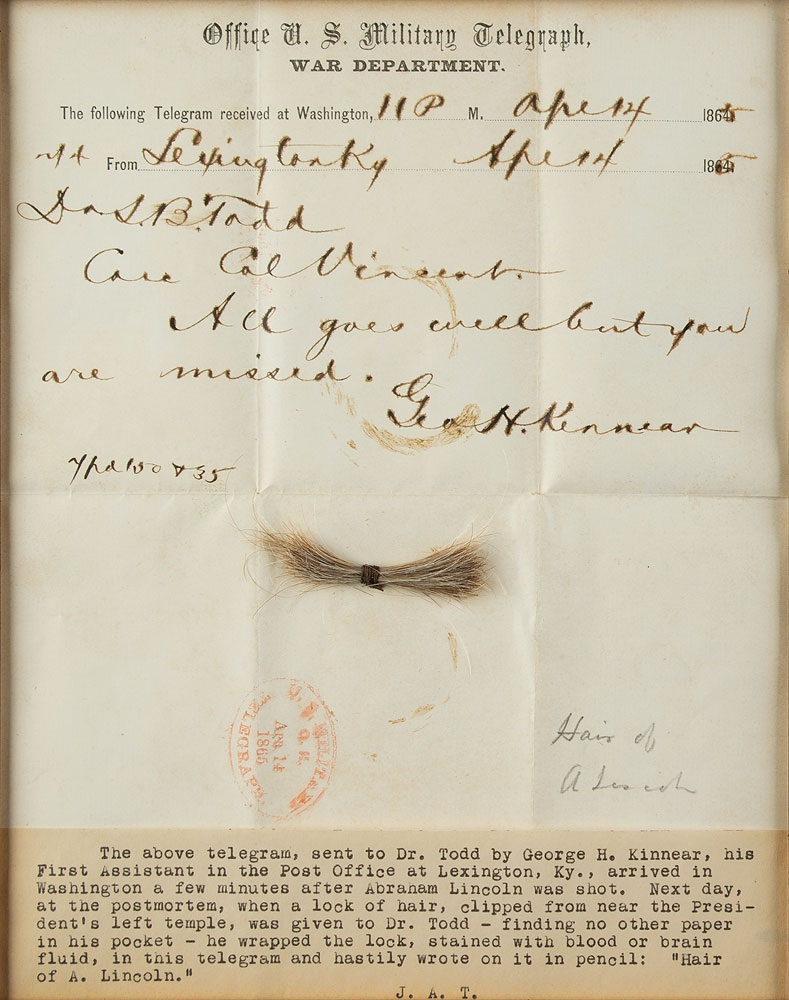
A lock of Abraham Lincoln’s hair wrapped in a telegram stained with the 16th president’s blood is up for auction online. [From RR Auction, based in Boston], [the two} inches of Lincoln’s hair was removed during his postmortem examination after the president was fatally shot by John Wilkes Booth.
The hair ended up in the custody of Dr. Lyman Beecher Todd, a cousin of Lincoln’s widow, Mary Todd Lincoln. The doctor was present at the postmortem examination and is believed to have wrapped the lock of hair in the telegram which had been sent to him the previous day by his assistant, George Kinnear. The telegram is stained with what is believed to be the slain president’s blood.
The hair is mounted to an official War Department manuscript telegram sent to Dr. Todd by George H. Kinnear, his assistant in the Post Office at Lexington, Kentucky, received in Washington at 11:00pm on April 14, 1865 […]. [A] typed caption prepared by Dr. Todd’s son reads, in part: “The above telegram […] arrived in Washington a few minutes after Abraham Lincoln was shot.
Image Credit: Kentucky Kindred Genealogy
Next day, at the postmortem, when a lock of hair, clipped from near the President’s left temple, was given to Dr. Todd. [Finding] no other paper in his pocket […] he wrapped the lock, stained with blood or brain fluid, in this telegram and hastily wrote on it in pencil […] ‘Hair of A. Lincoln.’”
Dr. Lyman Beecher Todd‘s own account of the autopsy, now preserved in an 1895 manuscript held in the Ida Tarbell collection of Lincoln papers at Allegheny College in Meadville, PA, differs slightly from his son’s, noting that he clipped the lock himself: “When all was over, General Hardin entered and handed me a pair of scissors, requesting me to cut a few locks of hair for Mrs. Lincoln. I carefully cut and delivered them to General Hardin and, then, secured one for myself which I have preserved as a sacred relic.”
Memorial Day, as celebrated, has come and gone. The weekend BBQs and party gatherings are over. Some folks have returned to work after their Monday off while others took the entire week off and, possibly, headed to the beach to herald the “summer season”. I am posting, today, because from 1868 to 1970, Memorial Day was observed on May 30.
So, what IS the origin of our Memorial Day? That’s a good question and the following took two days to research.
May we remember them, ALL. ~Vic
Warrenton, Virginia 1861
A newspaper article from the Richmond Times-Dispatch in 1906 reflects Warrenton‘s claims that the first Confederate Memorial Day was June 3, 1861…the location of the first Civil War soldier’s grave ever to be decorated.
Arlington Heights, Virginia 1862
On April 16, 1862, some ladies and a chaplain from Michigan […] proposed gathering some flowers and laying them on the graves of the Michigan soldiers that day. They did so and the next year, they decorated the same graves.
Savannah, Georgia 1862
Women in Savannah decorated soldiers’ graves on July 21, 1862 according the the Savannah Republican.
Gettysburg, Pennsylvania 1863
The November 19, 1863, cemetery dedication at Gettysburg was a ceremony of commemoration at the graves of dead soldiers. Some have, therefore, claimed that President Abraham Lincoln was the founder of Memorial Day.
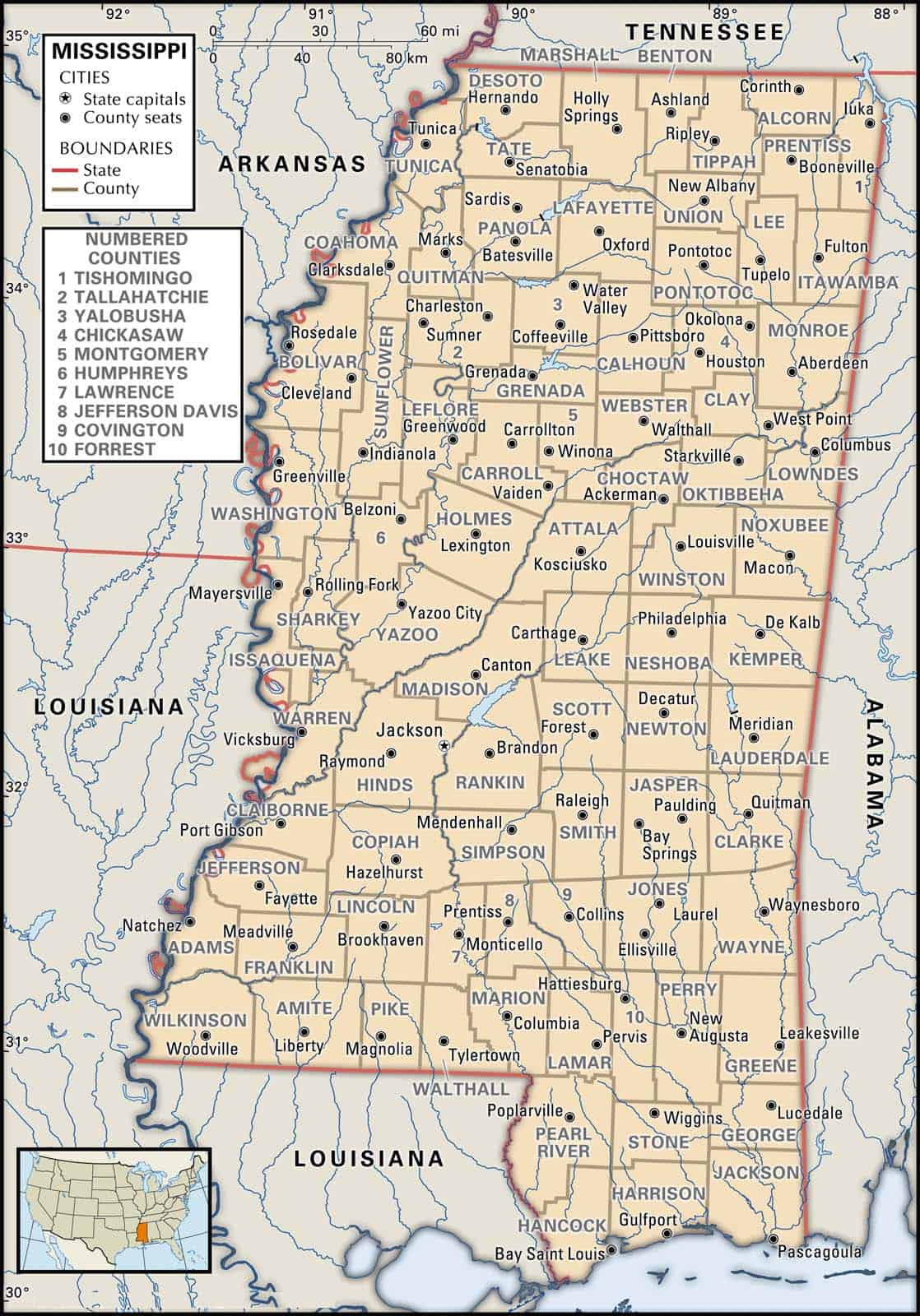
Jackson, Mississippi 1865
The incident in Mrs. [Sue Landon Adams] Vaughan’s life, which assured her name a permanent place in history, occurred at Jackson […] when she founded Decoration Day by first decorating the graves of Confederate and Federal soldiers alike, in a Jackson cemetery on April 26, 1865.
Kingston, Georgia 1865
An historic road-side marker indicates Kingston as the location of the “First Decoration, or Memorial Day” (Late April 1865).
Columbus, Georgia 1866
To the State of Georgia belongs the credit of having inaugurated what has since become the universal custom of decorating annually the graves of the heroic dead. The initial ceremonies which ushered Memorial Day into life were held in Linnwood Cemetery, at Columbus, on April 26, 1866.
Memphis, Tennessee 1866
Yesterday was the day appointed throughout the South as a day of sweet remembrance for our brothers who now sleep their last long sleep, the sleep of death. That day (the 26th day of April) has, and will be, set apart, annually, as a day to be commemorated by all the purely Southern people in the country, as that upon which we are to lay aside our usual vocations of life and, devote to the memory of our friends, brothers, husbands and sons, who have fallen in our late struggle for Southern independence.
Carbondale, Illinois 1866
A stone marker in Carbondale claims that place as the location of the first Decoration Day, honoring the Union soldiers buried there. General John A. Logan, who would later become commander-in-chief of the Grand Army of the Republic, the largest of the Union veterans’ organizations, officiated at the ceremony (April 29, 1866).
Richmond, Virginia 1866
The anniversary of the death of Stonewall Jackson was observed to-day by floral decorations of the graves of Confederate soldiers at Hollywood and Oakwood (May 10, 1866).
May 3, 1866 [they] formed the Ladies’ Hollywood Memorial Association, with the immediate aim of caring for and commemorating the graves of Confederate soldiers. All disposed to co-operate with us will repair, in such groups and at such hours as may be convenient, on Thursday, May 31st, 1866, to Hollywood Cemetery, to mark, by every appropriate means in our power, our sense of the heroic services and sacrifices of those who were dear to us in life and we honored in death.
Petersburg, Virginia 1866
It was in May of this year, 1866, that we inaugurated, in Petersburg, the custom, now universal, of decorating the graves of those who fell in the Civil War. Our intention was simply to lay a token of our gratitude and affection upon the graves of the brave citizens who fell June 9, 1864, in defence of Petersburg…
Dinner on the grounds is not a phrase I hear these days. Just reading the phrase takes me back to those times with my grandmother at her church on […] Decoration Day Sunday. I grew up in north Alabama in the 1960s. Dinner on the grounds was a special occasion that followed the work of cleaning up the graveyard and placing fresh flowers beside the headstones. It provided a time to remember and celebrate the lives of the dear departed. ~Betsy Sanders
Today, we are here to eat, remember and bask in the Southern fascination of death […]. It’s Decoration Day. The South claims death with as much loyalty as we claim our children. J.T. Lowery, a former pastor […] misses when Decoration Day meant keeping company with headstones during dinner on the ground. Opal Flannigan is depending on women […] to uphold a tradition so old it’s hard to say when it emerged. German and Scots-Irish immigrants who birthed much of the Southern Appalachia’s culture in Virginia, Tennessee and the Carolinas likely brought these traditions [with them]. ~Jennifer Crossley Howard
Many rural community cemeteries in western North Carolina hold “decorations.” A decoration is a religious service in the cemetery when people decorate graves to pay respect to the dead. The group assembles at outdoor tables, sometime in an outdoor pavilion, for the ritual “dinner on the ground.” There are variations of this pattern but, the overall pattern is fairly consistent.
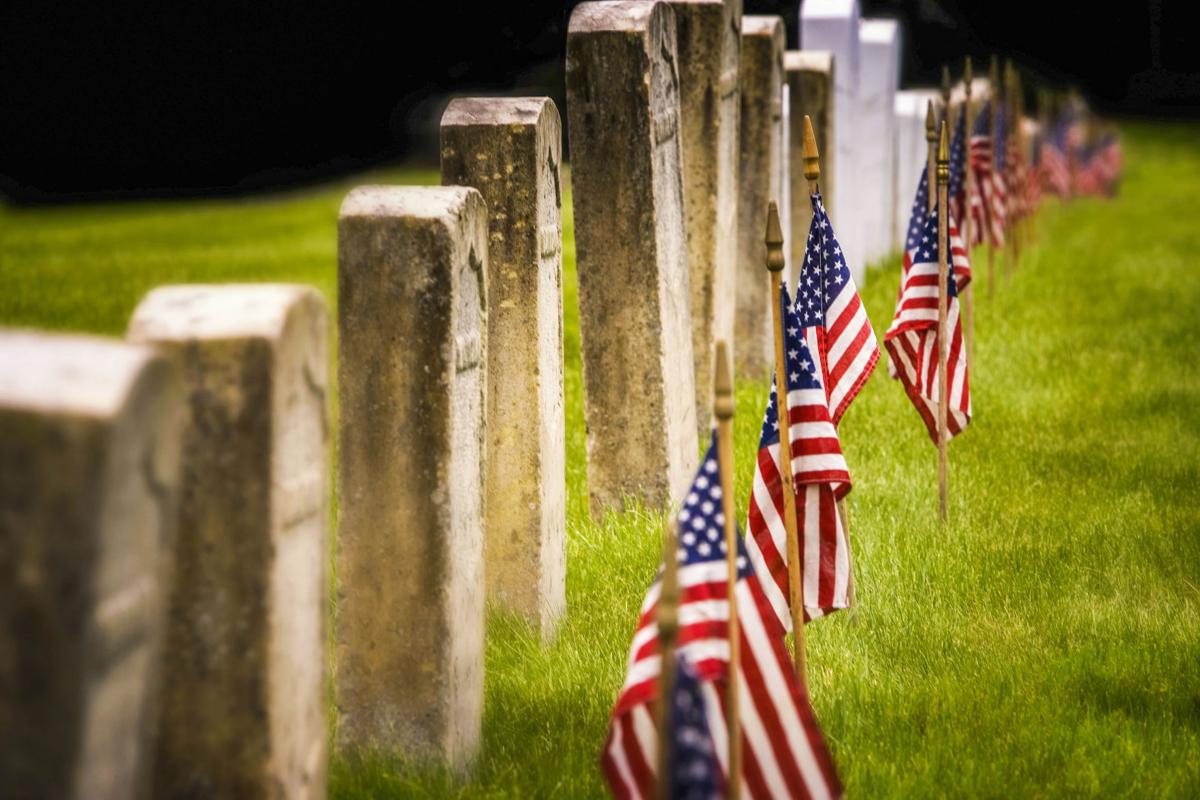
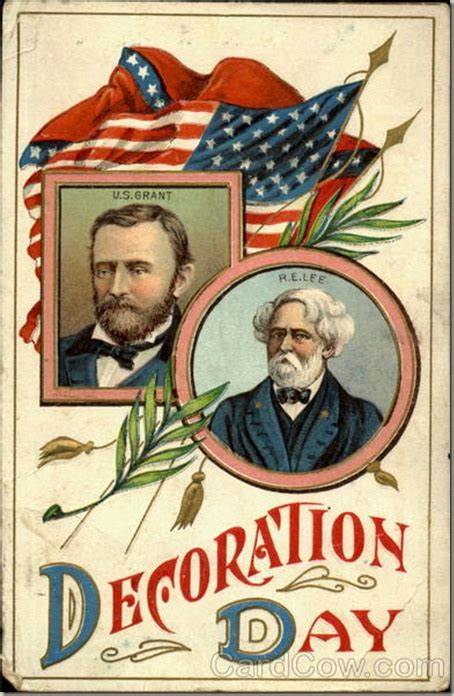
By proclamation of General John A. Logan of the Grand Army of the Republic, the first major Memorial Day observance is held to honor those who died “in defense of their country during the late rebellion.” Known to some as “Decoration Day,” mourners honored the Civil War dead by decorating their graves with flowers. On the first Decoration Day, General James Garfield made a speech at Arlington National Cemetery, after which 5,000 participants helped to decorate the graves of the more than 20,000 Union and Confederate soldiers buried in the cemetery.
The 1868 celebration was inspired by local observances that had taken place in various locations in the three years since the end of the Civil War. In fact, several cities claim to be the birthplace of Memorial Day, including Columbus, Mississippi; Macon, Georgia; Richmond, Virginia; Boalsburg, Pennsylvania; and Carbondale, Illinois. In 1966, the federal government, under the direction of President Lyndon B. Johnson, declared Waterloo, New York, the official birthplace of Memorial Day. They chose Waterloo, which had first celebrated the day on May 5, 1866, because the town had made Memorial Day an annual, community-wide event, during which businesses closed and, residents decorated the graves of soldiers with flowers and flags.
From the St. Louis Globe-Democrat December 28, 1895:
William Lyons, 25, a levee hand, was shot in the abdomen yesterday evening at 10 o’clock in the saloon of Bill Curtis, at Eleventh and Morgan Streets, by Lee Sheldon [sic], a carriage driver. Lyons and Sheldon [sic] were friends and were talking together. Both parties, it seems, had been drinking and were feeling in exuberant spirits. The discussion drifted to politics, and an argument was started, the conclusion of which was that Lyons snatched Sheldon’s [sic] hat from his head. The latter indignantly demanded its return. Lyons refused, and Sheldon [sic] withdrew his revolver and shot Lyons in the abdomen. When his victim fell to the floor Sheldon [sic] took his hat from the hand of the wounded man and coolly walked away. He was subsequently arrested and locked up at the Chestnut Street Station. Lyons was taken to the Dispensary, where his wounds were pronounced serious. Lee Sheldon [sic] is also known as ‘Stag’ Lee.
Quote from Cecil Brown (author of Stagolee Shot Billy):
“Lee Shelton belonged to a group of pimps known in St. Louis as the ‘Macks’. The Macks were not just ‘urban strollers’. They presented themselves as objects to be observed.”
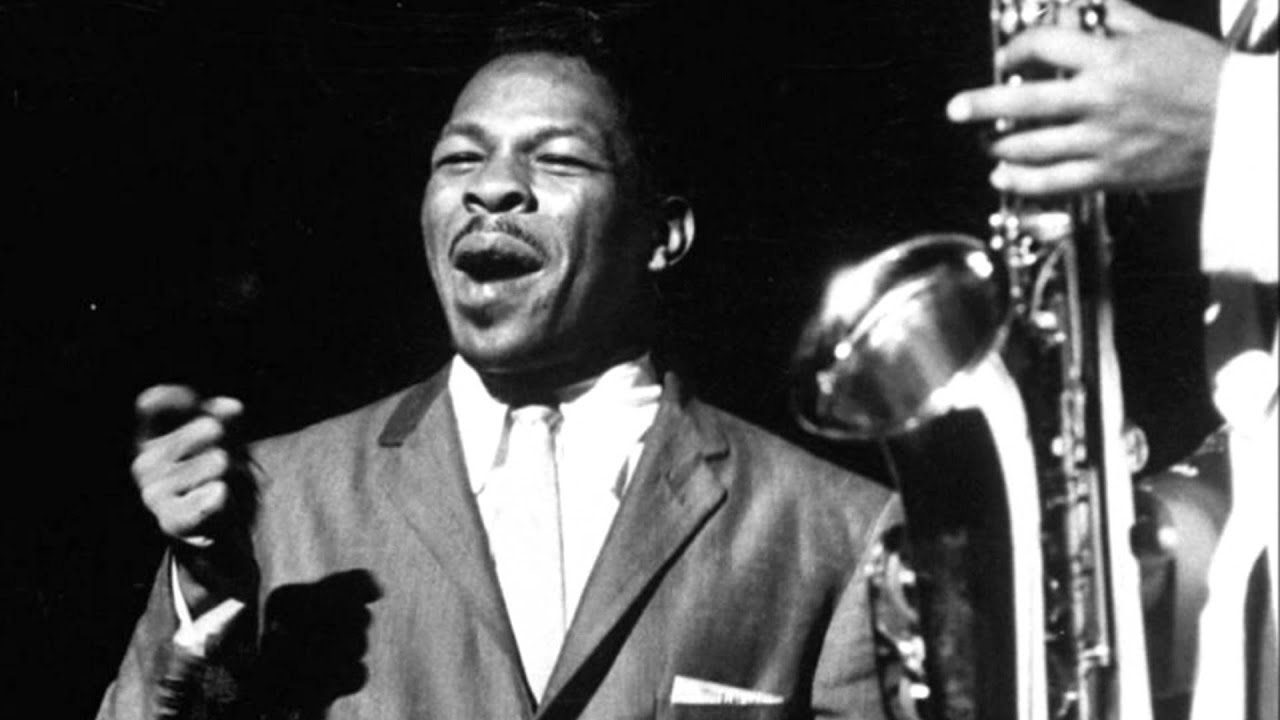
The original version of this song was the Stack O’ Lee Blues from 1924. It has some shocking lyrics and has absolutely nothing to do with the Stagger Lee version penned by Price and Harold Logan.
Mississippi […] only got around to officially ratifying the amendment last month — 148 years later — thanks to the movie “Lincoln.” The state’s historical oversight came to light after Mississippi resident Ranjan Batra saw the Steven Spielberg-directed film last November […]. After watching the film, which depicts the political fight to pass the 13th Amendment, Batra did some research. He learned that the amendment was ratified after three-fourths of the states backed it in December 1865. Four remaining states all eventually ratified the amendment — except for Mississippi. Mississippi voted to ratify the amendment in 1995 but failed to make it official by notifying the U.S. Archivist. Batra spoke to another Mississippi resident, Ken Sullivan, who contacted Mississippi Secretary of State Delbert Hosemann about the oversight. Finally, on Jan. 30, Hosemann sent the Office of the Federal Register a copy of the 1995 resolution, and on Feb. 7, the Federal Register made the ratification official.
Two medical school colleagues, one an immigrant from India, the other a life-long Mississippian, joined forces to resolve a historical oversight that until this month had never officially been corrected. Dr. Ranjan Batra, professor of Neurobiology and Anatomical sciences at the University of Mississippi Medical Center, told ABC News he was inspired to investigate the history of the Thirteenth Amendment in his state after a viewing of the film “Lincoln.” […] Batra proceeded to do some investigating of his own, noticing on the website usconstitution.net, that there was an asterisk next to the state of Mississippi in connection with the ratification of the Thirteenth Amendment.
Batra: “Mississippi gets a lot of bad press about this type of stuff and I just felt that it is something that should be fixed, and I saw every reason that could be done.” “Everyone here would like to put this part of Mississippi’s past behind us and move on into the 21 st century rather than the 19th.”
[…] Batra enlisted the help of University of Mississippi Medical Center colleague Ken Sullivan, who took an immediate interest in the story, calling the national archives to confirm that they had in fact never received the proper paperwork.
Batra: “The last paragraph [of the bill] directs the Secretary of State of Mississippi to inform the national archives of the law of the ratification which is exactly the way ratification is supposed to proceed, but that hadn’t been done for whatever reason.”
Sullivan: “For me it was just important that this part of history was done from our state.” “I know we have some dark spots in our history through the south, it still affects people’s opinions about Mississippi today.”
Sullivan and Batra are thankful the ratification question has finally been resolved. Now, that asterisk next to Mississippi can finally be removed.
The Mississippi Legislature had actually formally ratified the historic amendment in 1995, which even then was more than a century late […]. Throughout 1865, 26 states ratified the critical law, and in December of that year, the amendment was formally adopted into U.S. law after Georgia’s approval brought the number the required 27. Several states, including Kentucky and Delaware, waited decades to ratify the amendment, the last being Mississippi in 1995 — or so the state thought.




 Cosmic-Observation