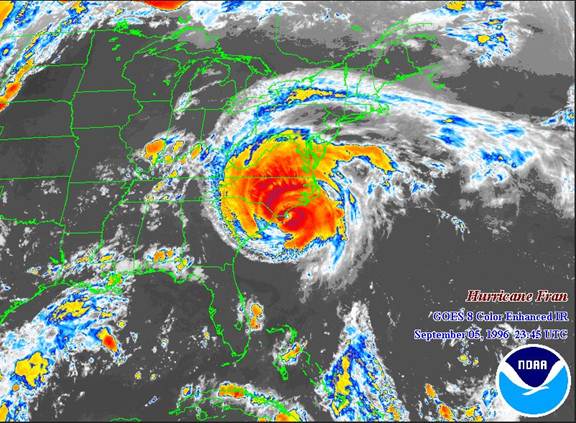
While many folks are suffering from the damage brought about by Hurricane Dorian, including my own state, twenty-three years ago, today, another hurricane made landfall between 7:17 & 9:03pm EDT…Hurricane Fran. The eye passed over Bald Head Island and Southport.
Fran was the second hurricane to slam into the North Carolina coast in the same season. Bertha was a Category 2 hurricane when she hit just two months earlier. There wasn’t much time to recover from the first disaster before the second hit.
Due to a low pressure centered over Tennessee and the western extension of the subtropical ridge over the northwest Atlantic, Fran was steered onto a north-northwesterly track and gained speed. Moving around 17 mph, the center of Fran made landfall over the Cape Fear area on September 5th around 8:30 p.m., just southwest of Wilmington. At landfall, sustained winds were 115 mph […].
Image Credit: noaa.gov
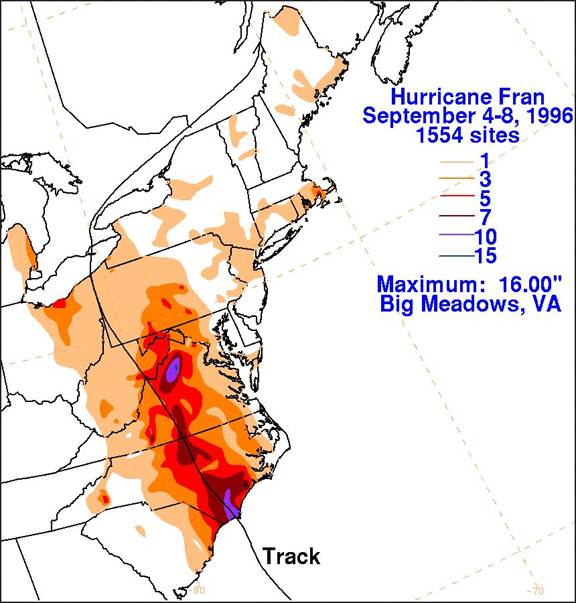
Fran caused major flooding from North Carolina to Maryland [to] West Virginia. The damage from Fran was so extensive that the name “Fran” was removed from the hurricane name list and replaced by Fay. North Carolina got the worst of the storm […]. The North Topsail Beach police station was washed away by a 12 foot storm surge. The police station was being temporarily housed in a double wide since Bertha wiped out the original building just a few months prior. Kure Beach Pier was destroyed along with the Emerald Isle fishing pier, while Bogue Inlet Pier lost 150 feet. Storm surge in North Topsail Beach created a 100-foot wide inlet. Topsail Island lost 40 feet of beach due to erosion. Swansboro and New Bern experienced 10 feet of storm surge […].
Hurricane force wind gusts were experienced as far inland as Raleigh. High winds damaged historical buildings. Classes at the University of North Carolina were canceled for a day and it was almost a week before the water was drinkable again. Strong winds and a saturated ground led to many trees being uprooted inland. This led to numerous houses being destroyed by trees falling on them. Over a million people were left without power. Almost two weeks after the storm, 150 secondary roads were still closed due to flooding and downed trees.
In the same way that residents of Columbia and Charlotte remember Hurricane Hugo‘s devastating inland winds, residents of Raleigh and most of the North Carolina inland coastal plain think back to Fran when discussing the strong wind a hurricane can bring well away from the coast. Fran was the worst storm to strike southeastern North Carolina since Hurricane Hazel in 1954.
My dad was nine years old when Hazel hit. He remembered being underneath his desk in elementary school. I was living in Durham when Fran hit. I thought the roof of the house was going to come off (I was living in an attic studio apartment on the west side of town, close to Duke Hospital and Duke University). That hurricane came straight up thru the middle of NC. Working in Law Enforcement, I was considered “necessary personnel” and when I got up to head in, Durham looked like a war zone. Interstate 85 was completely shut down and I wound my way thru town, west to east. Oh, the devastation. The Trooper Station I worked in had power but, my apartment went without for a week. I need to dig up the pictures of the damage and post them. They are in a box…somewhere. ~Vic
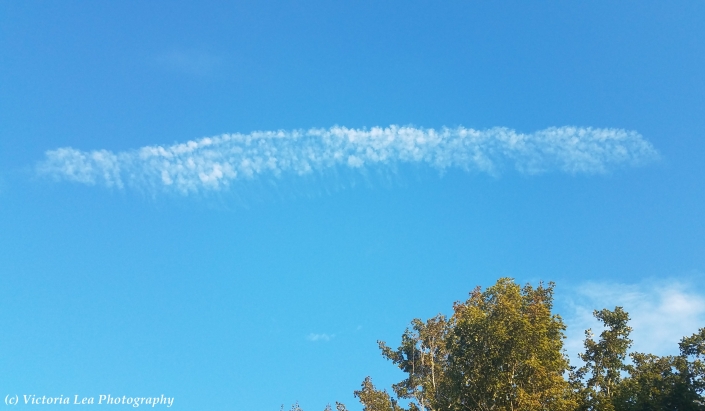
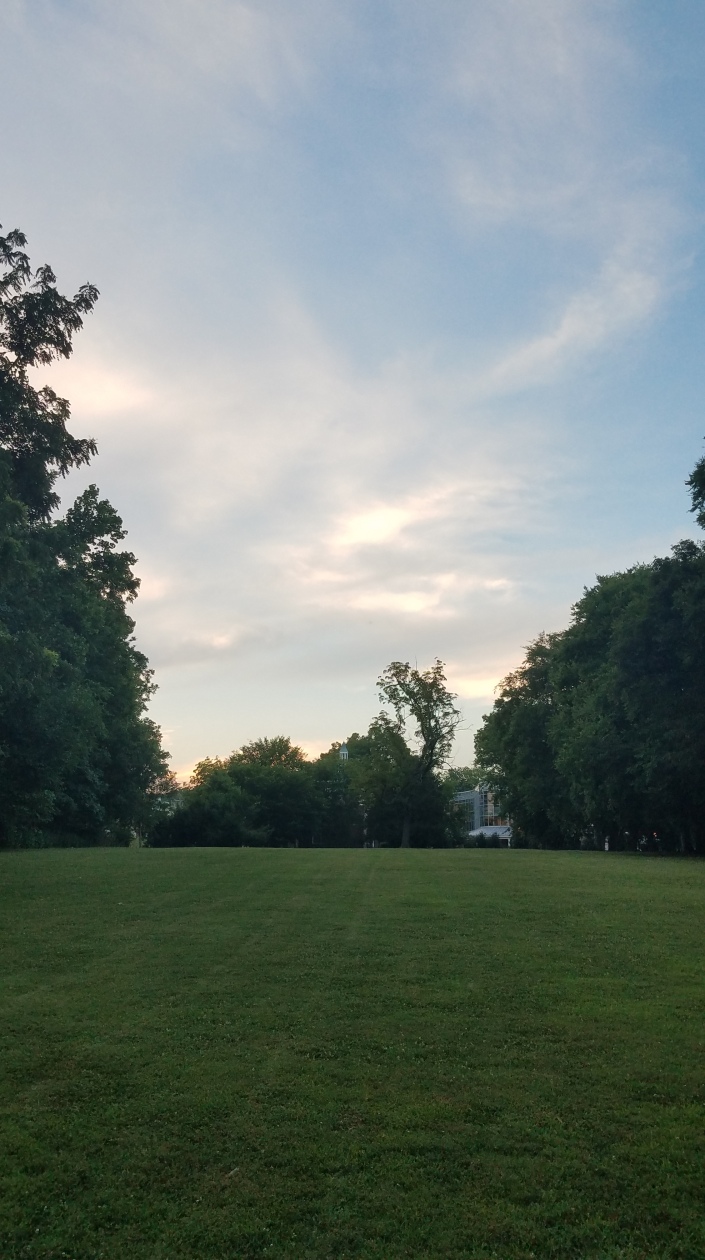
The weather has been gorgeous over the last couple of days. My birthday was nothing but blue skies and low humidity. Yesterday was the same. Now that we have Dorian headed towards an East Coast pub crawl, the clouds have been moving in. This looked like a giant caterpillar to me. ~Vic
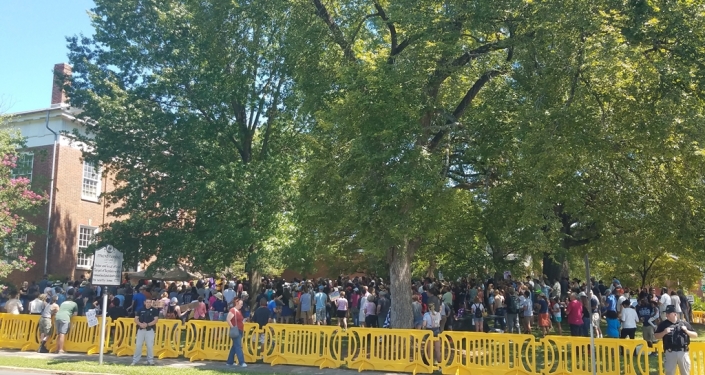
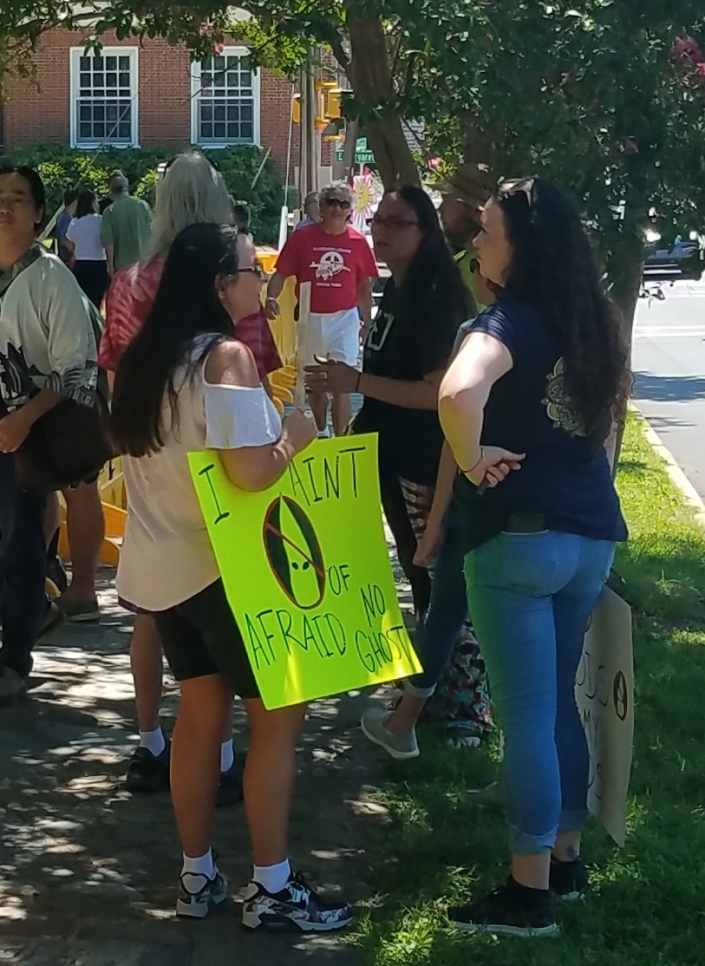
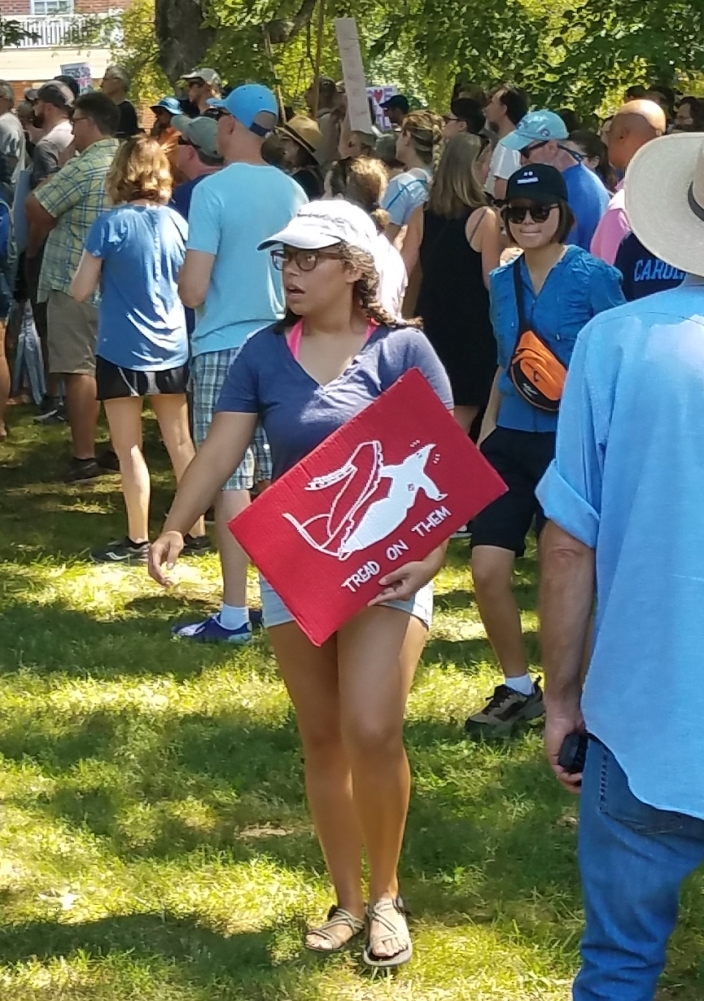
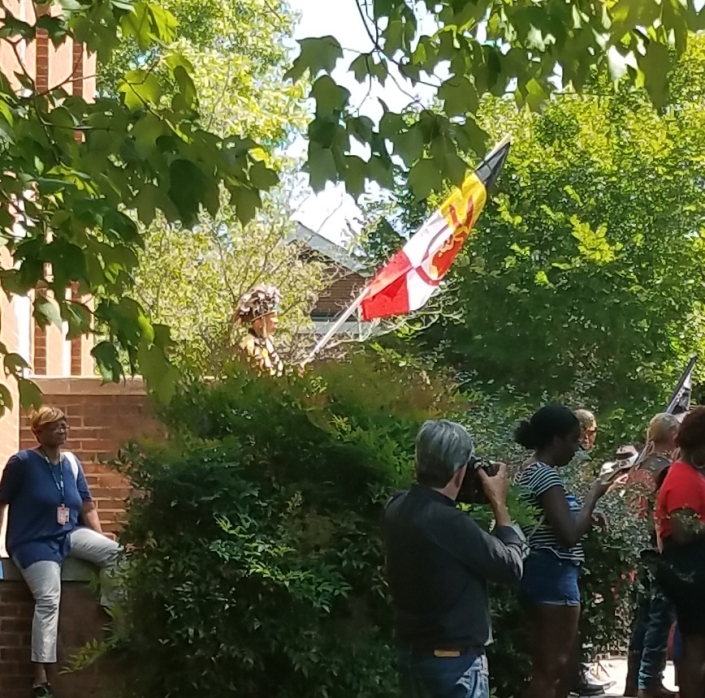
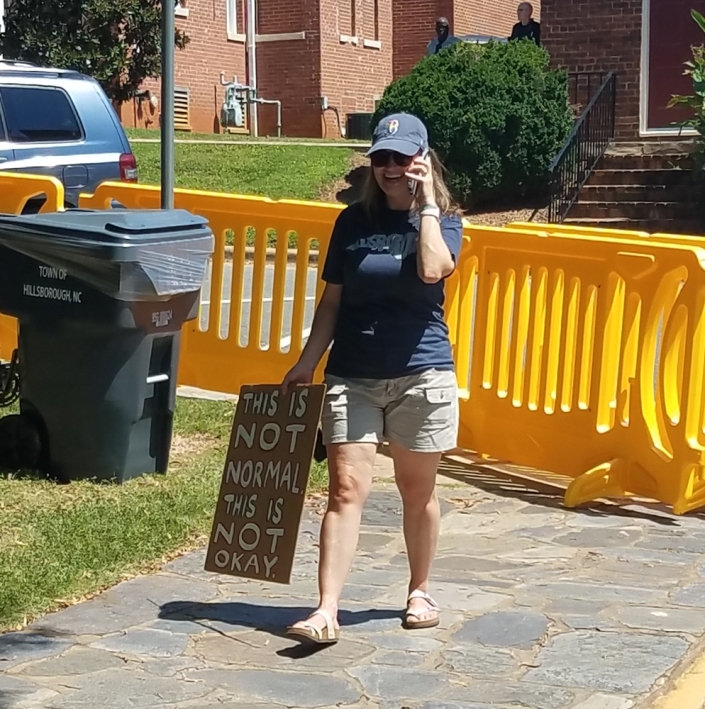
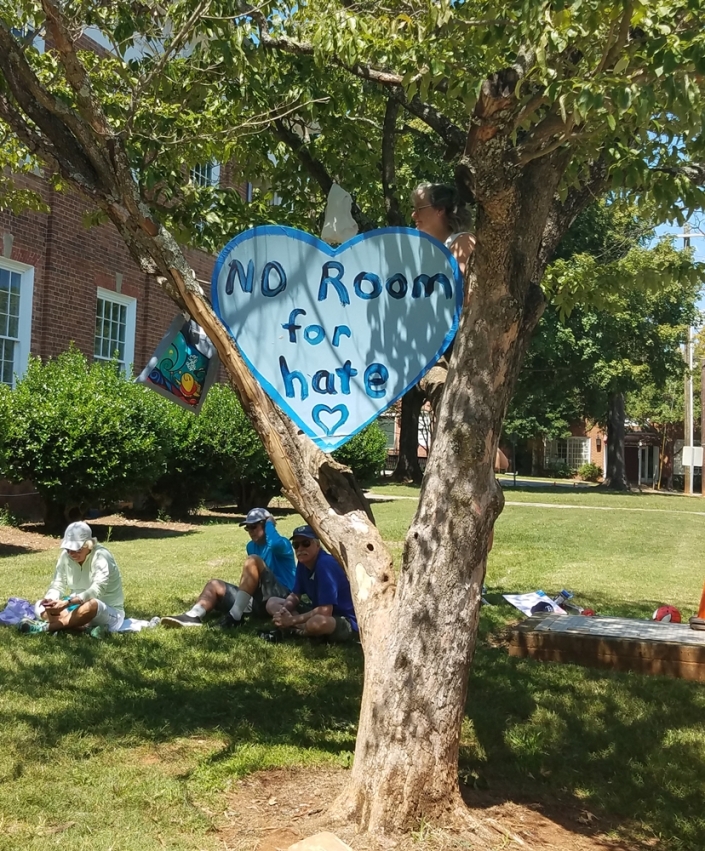
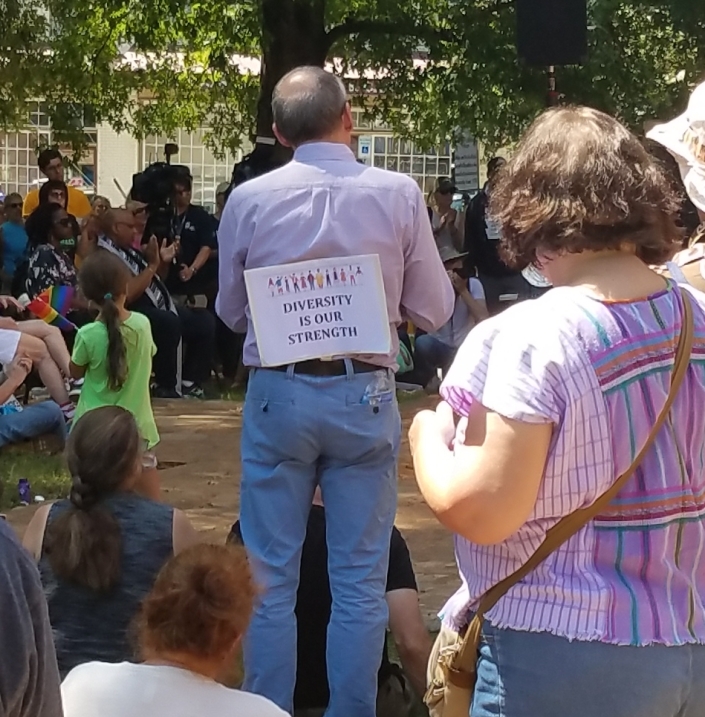
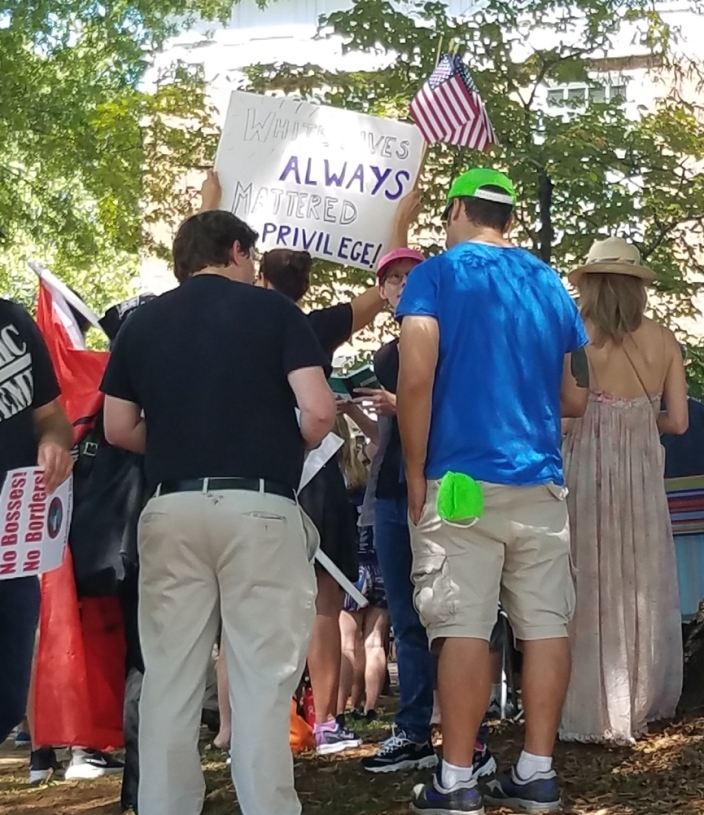
“We will not back down. City of Hillsborough”“Diversity is our strength.”
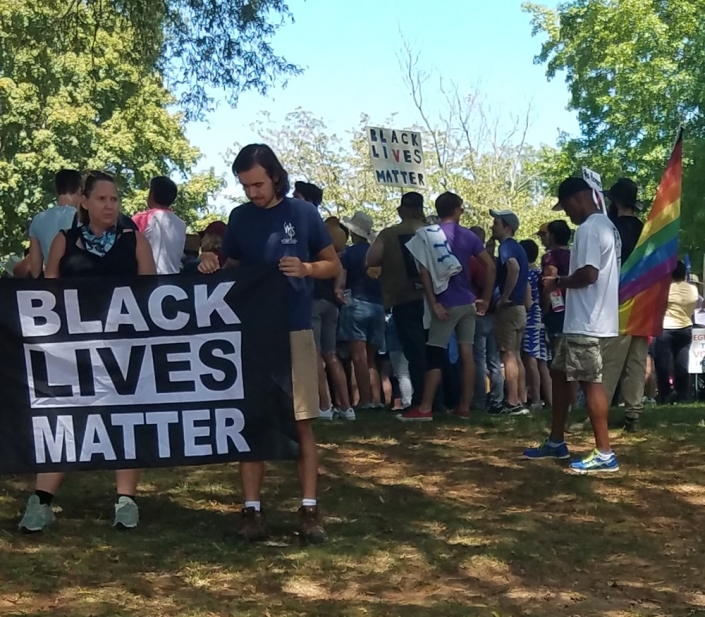
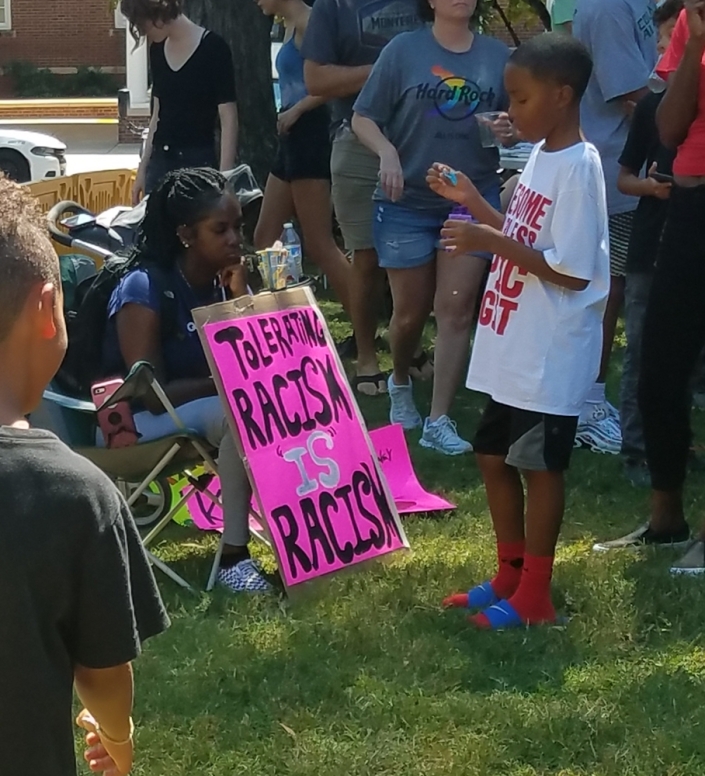
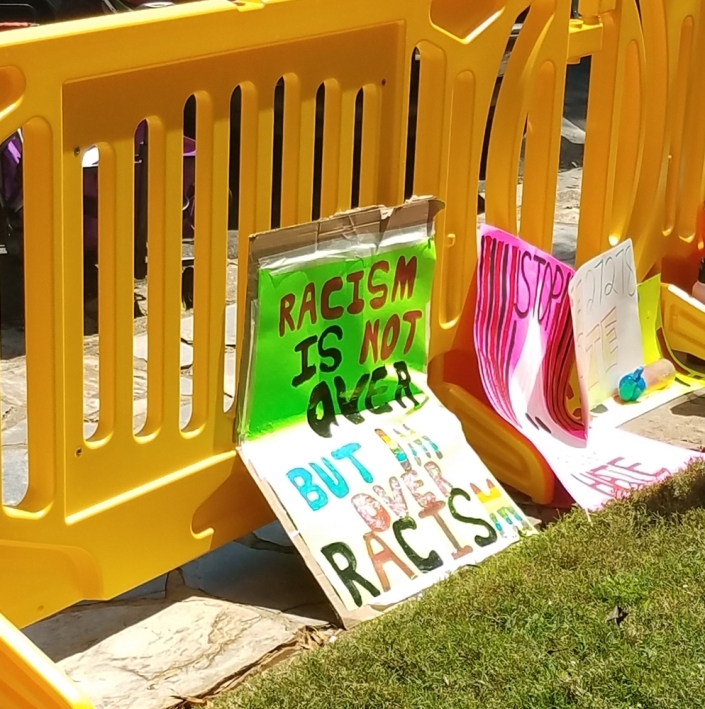
“Tolerating racism is racism.”“Racism is not over but, I’m over racism.”“Black lives matter more than white feelings.”“White lives always mattered = privilege”
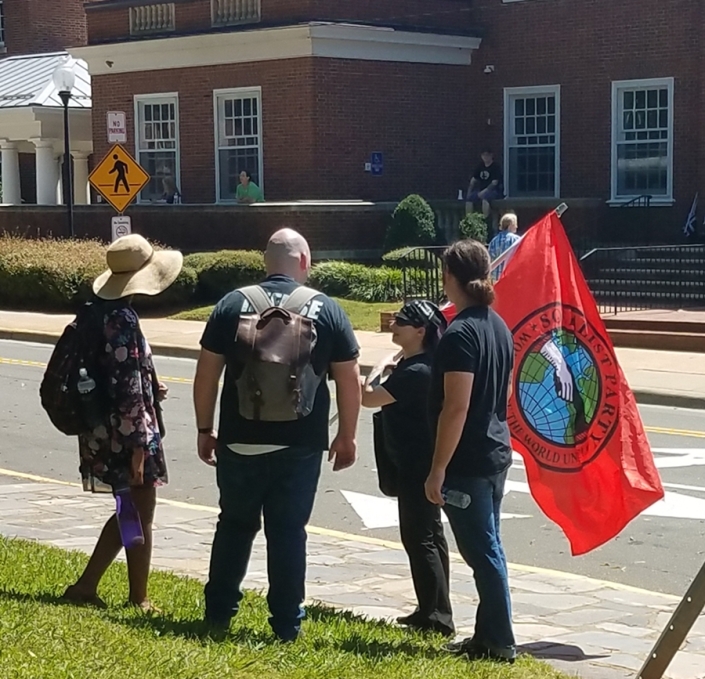
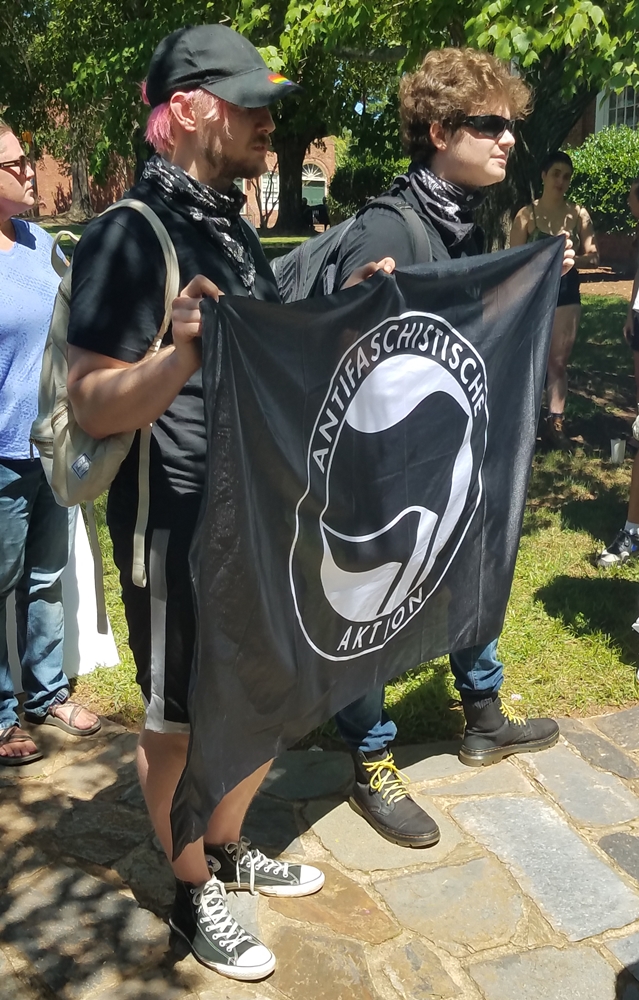
“No Bosses! No Borders!”
Fifty-three years ago…10:38am. I did a post last year with more background information and some nostalgia.
I stopped posting on July 15, as the following day, I wound up in the ER. As my maternal grandmother would say “I had a spell with my heart.” Luckily, it turned out to be nothing life threatening but, it scared me. After six weeks of rest and some lifestyle changes, I’m good.
I’m not fond of a lot of fanfare regarding my birthday. I prefer to have the day to myself. I’m mostly an introvert but, I can be extroverted for short periods of time. Here is a personal toast to still being upright and walking.
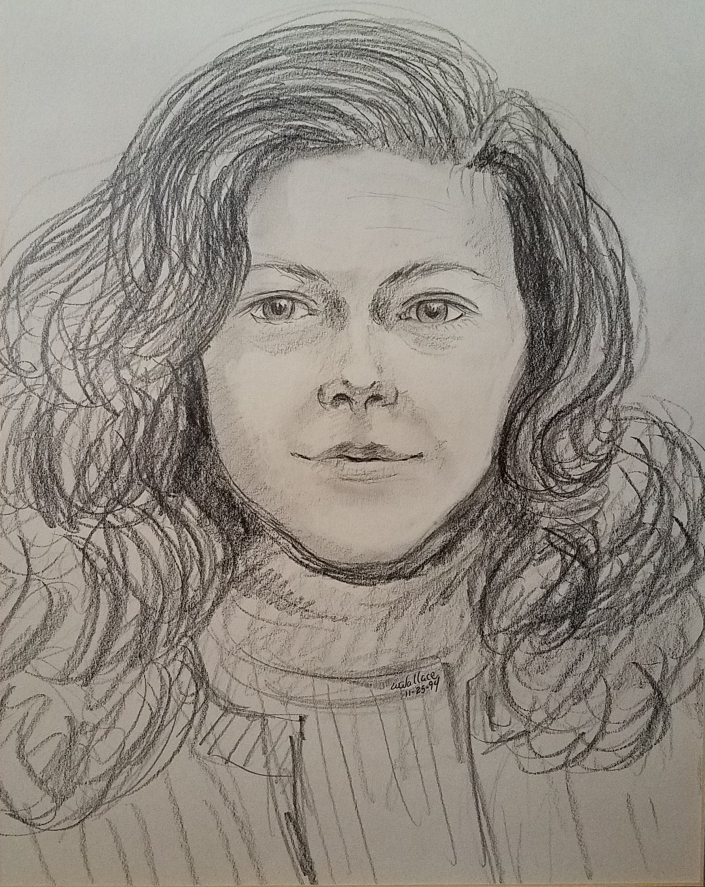
My likeness was sketched by artist Wendy T. Wallace of Greensboro, back in November of 1994. I sat for her at a Christmas shopping festival at the Greensboro Coliseum…as I recall. This was ten years after high school graduation.
Big grasshopper.
Taken with my old Samsung Alias II.
Nature Preserve
Round Rock, TX
10-25-2008Another shot of the blue tail.
05-06-2019Tiny bee in my side yard.
05-13-2019On the Riverwalk, headed to Gold Park.
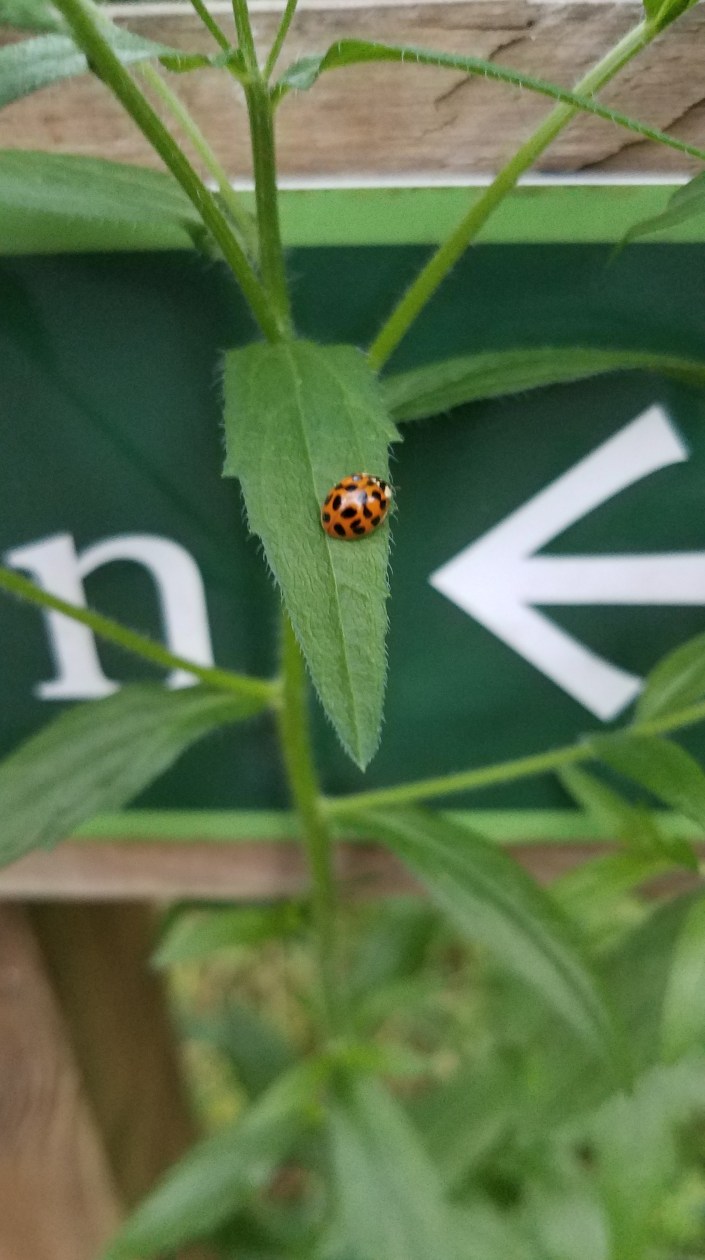
Love the Ladybugs.
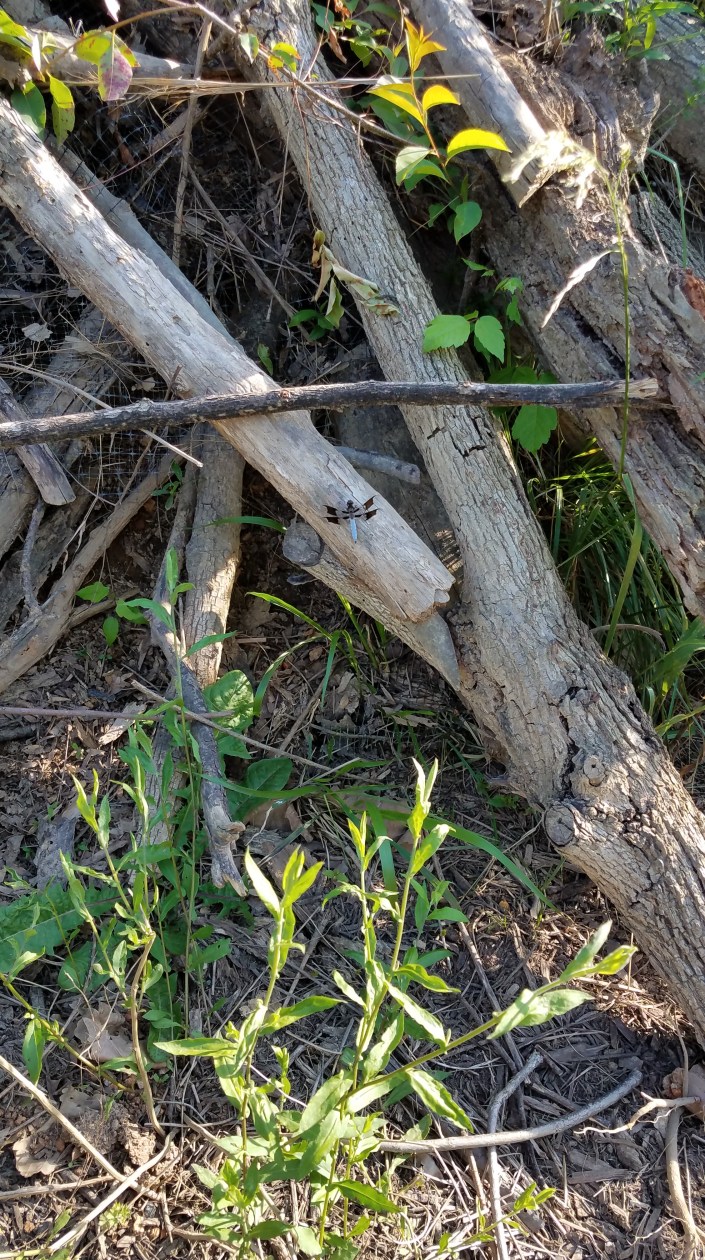
05-13-2019Dragonfly in the Butterfly Garden.
He looks like a Skivvy Waver.
05-17-2019Wolf spider running on the Riverwalk.
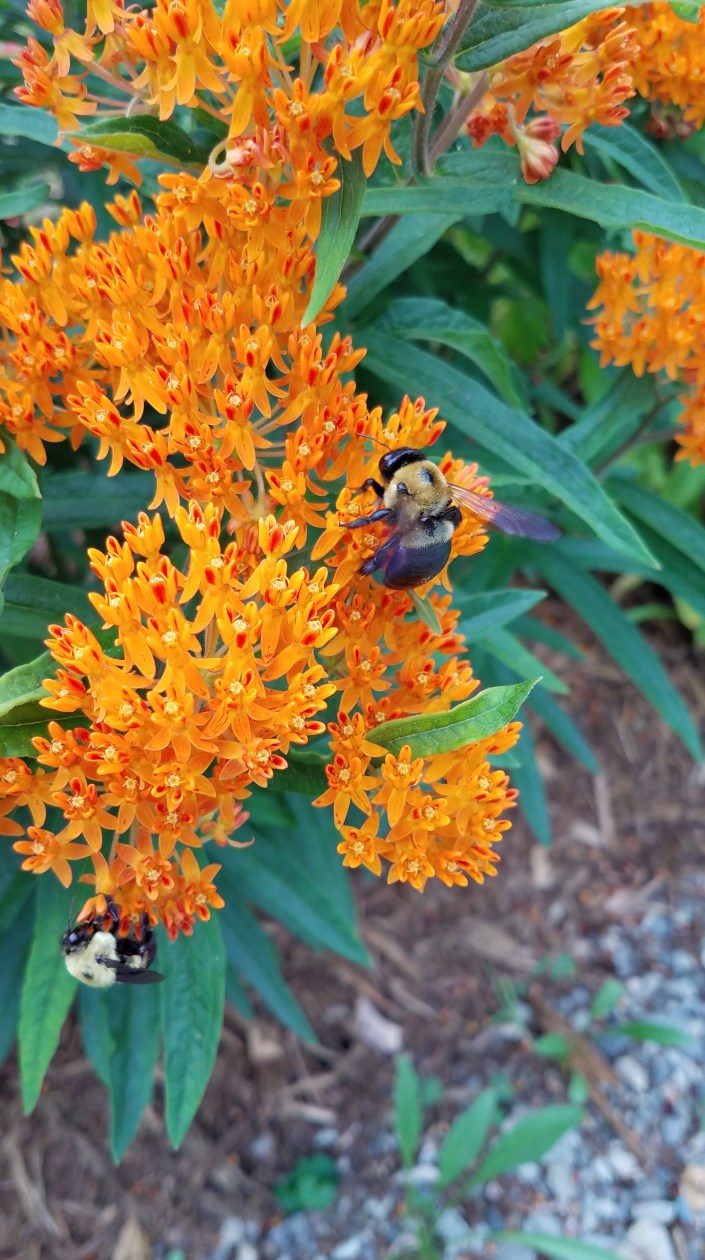
05-19-2019Hungry Bumbles
05-31-2019Young Preying Mantis on a Black-Eyed Susan.
Riverwalk
05-31-2019
On the way to the restaurant I mentioned in my post, yesterday, there was a pit stop for gas. Not only was this a cool looking older truck, the adorable pooch waiting patiently for his owner was so sweet.
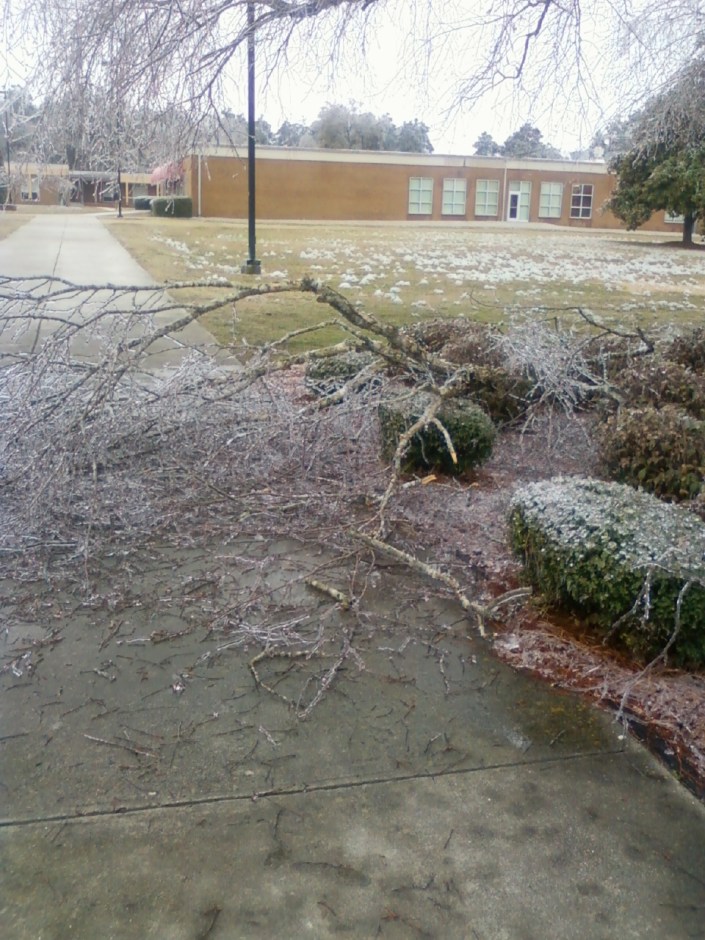
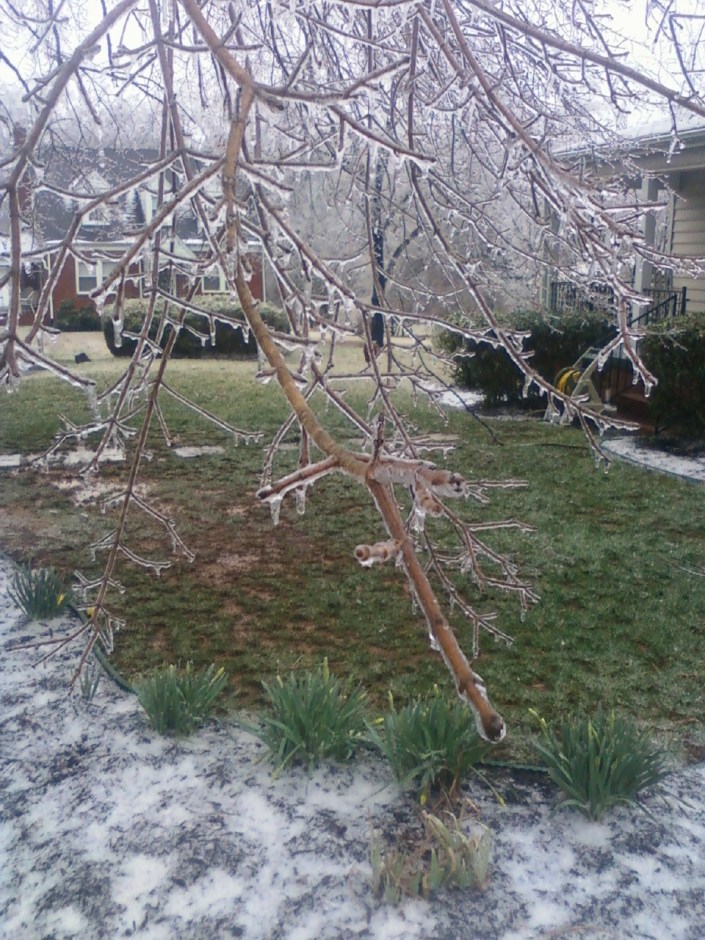
Continuing from yesterday’s post, this was an ice storm that occurred when I was in Examiner School. This area is in the Eastern part of the state, a half an hour due East of Fayettenam (Fayetteville/Fort Bragg) and 75 miles NNW of Wilmington. Basically, it’s in the middle of nowhere. It was all I could do to not bust my ass walking to class.
These and yesterday’s pix were taken with my old Samsung Alias II. ~Vic
Ice Branches
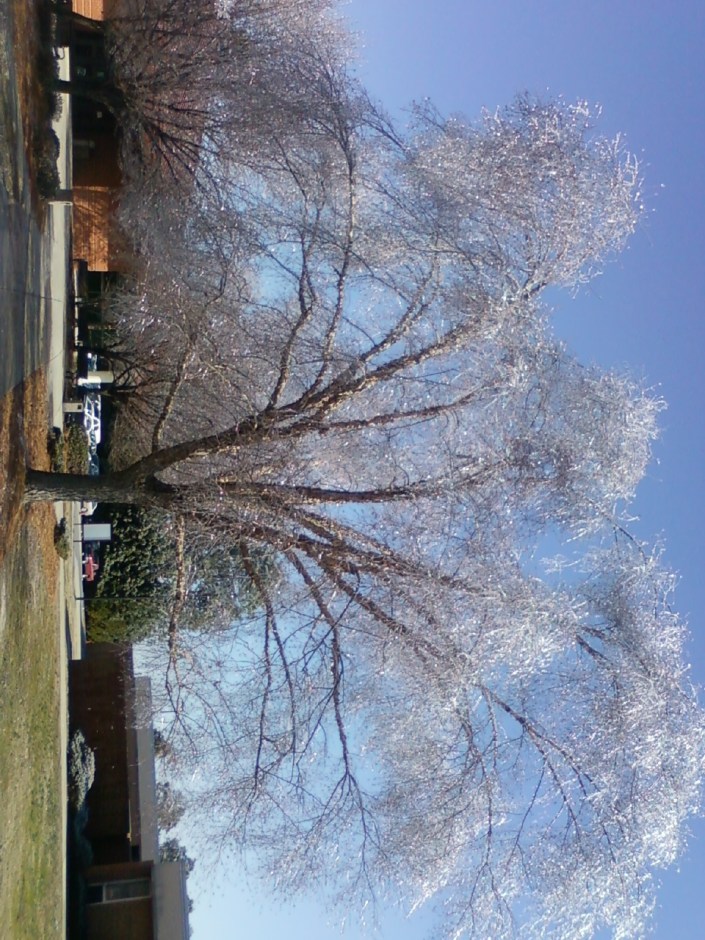
02-17-2015Lost a limb.Frozen grass clumps.Ice tree in front of the library.
02-18-2015Looks like glass.Sun DevilGlass DaggersFrozen fountain outside of a steakhouse in Roseborough. Railroad Street Steakhouse
02-19-2015
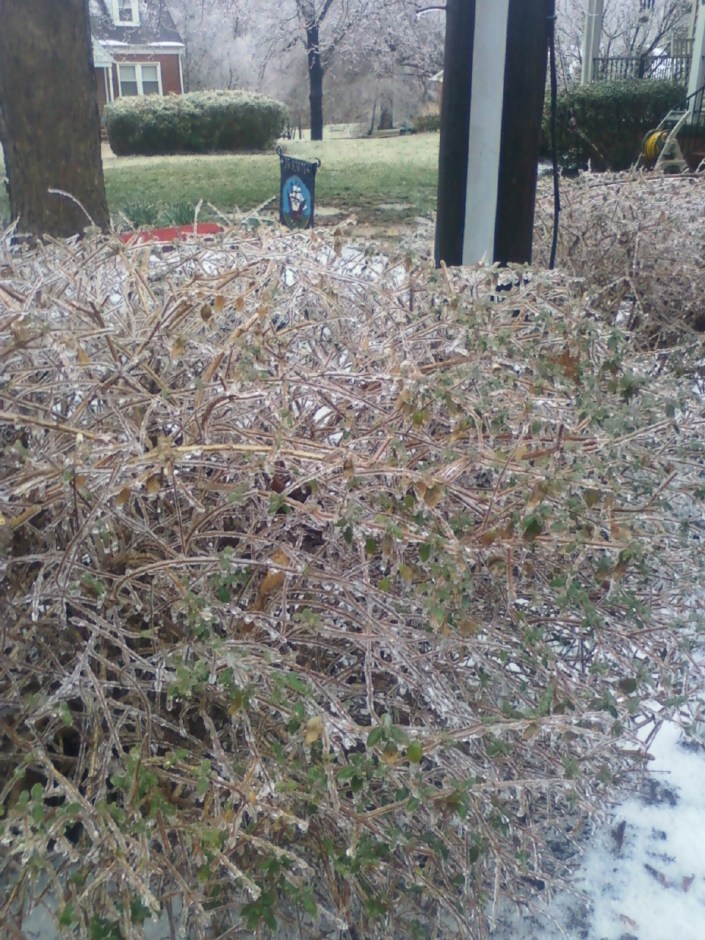
Since we are in the 90s+, here are some pix of cooler weather. We got a lot of these things back in the 70s when I was a kid. They are a little more rare, now. ~Vic
Ice all bunched up on the back of my, then, 2010 Chevy Cobalt.
03-07-2014Sugar Maple encased in ice.Ice branches.
Narcissus in the process of blooming. They don’t care.Icy bushes.
SN 1054 is a supernova that was first observed on 4 July 1054 and remained visible for around two years. The event was recorded in contemporary Chinese astronomy [..]. [There is] a pictograph associated with the Ancestral Puebloan (Anasazi) culture found near the Peñasco Blanco site in New Mexico. The remnant of SN 1054, which consists of debris ejected during the explosion, is known as the Crab Nebula (M1). It is located in the sky near the star Zeta Tauri (ζ Tauri) The core of the exploding star formed a pulsar called the Crab Pulsar. When the French astronomer Charles Messier watched for the return of Halley’s Comet in 1758, he confused the nebula for the comet as he was unaware of the former’s existence. Motivated by this error, he created his catalogue of non-cometary nebulous objects, the Messier Catalogue, to avoid such mistakes in the future. The nebula is catalogued as the first Messier object […].
Chinese astronomers watching the sky on July 4, 1054, noted the appearance of a new or guest star just above the southern horn of Taurus. Other observations of the explosion were recorded by Japanese, Arabic and Native American stargazers. In 1731, British astronomer John Bevis observed a cloudy blob in the sky and added it to his star atlas. Although [Messier] credited himself with its discovery in his first publication of the Messier Catalog, he acknowledged Bevis’ original finding in subsequent versions after receiving a letter from the astronomer. Around 1844, [Irish] astronomer William Parsons, the third Earl of Rosse, sketched the nebula. The resemblance of the image to a crustacean led to M1’s other name, the Crab Nebula. In the early 20th century, astronomers (Carl Lampland/1921 & Edwin Hubble/1928, included) were able to take more detailed measurements of M1 and determined that it is expanding. Working backwards, they determined its origination date and matched the explosion up with observations from Chinese and Native American records.
Photo Credit:
Alex Marentes
flickr.com
earthsky.org
It is likely that skywatchers of the Anasazi People in the American Southwest also viewed the bright new star in 1054. Historic research shows that a crescent moon was visible in the sky very near the new star on the morning of July 5, the day following the observations by the Chinese. The pictograph above, from Chaco Canyon in New Mexico, is believed to depict the event. The multi-spiked star to the left represents the supernova near the crescent moon. The handprint above may signify the importance of the event, or may be the artist’s “signature.”

















 Cosmic-Observation