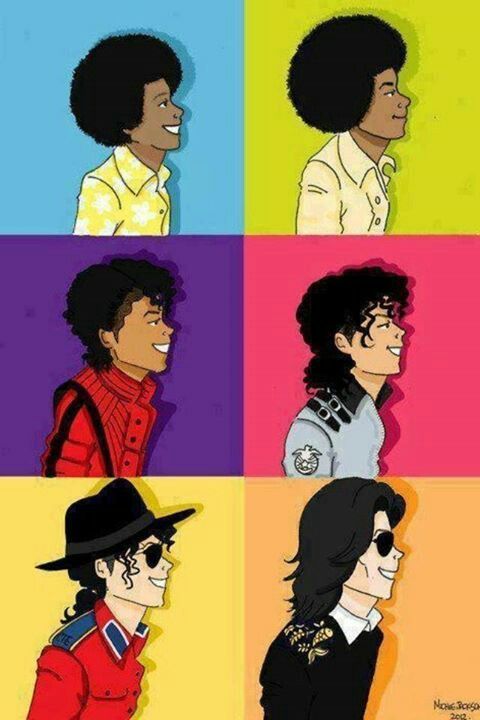
Michael Joseph Jackson was born in Gary, Indiana, the seventh of nine children, to Joseph Walter “Joe” and Katherine Ester (née’ Scruse). [Note: In birth order, he was eighth of ten children as his older brother Marlon’s twin, Brandon, died at birth.]
Nearly a decade has passed since his death. He was an incredible performer and had a stunning voice. He was a humanitarian and was recognized for his work with an award from President Ronald Reagan on May 14, 1984. He co-wrote We Are The World with Lionel Richie that won grammys in 1985 for Record of the Year, Song of the Year and Best Pop Performance by a Duo or Group with Vocal.
He had a hard time as a child and it affected his adult life. He was plagued with scandal after scandal, his marriages were short and his last few years were tangled with financial troubles. On June 25, 2009, Michael passed away at the age of 50 from a drug overdose. The whole world mourned his loss. He would have been 60, today.
I was 16 when Thriller came out. I was 12 when Off The Wall came out. His music is a large part of the tapestry of my younger years. He definitely was the King of Pop. Happy Birthday, Michael. ~Victoria
The Sturgeon is a big, prehistoric fish that is rather common to the Great Lakes. Native American fishing tribes, like the Algonquin, are credited with naming August’s full moon. It is also known as a Red Moon due to August heat and hazy days, giving the moon a red tint.
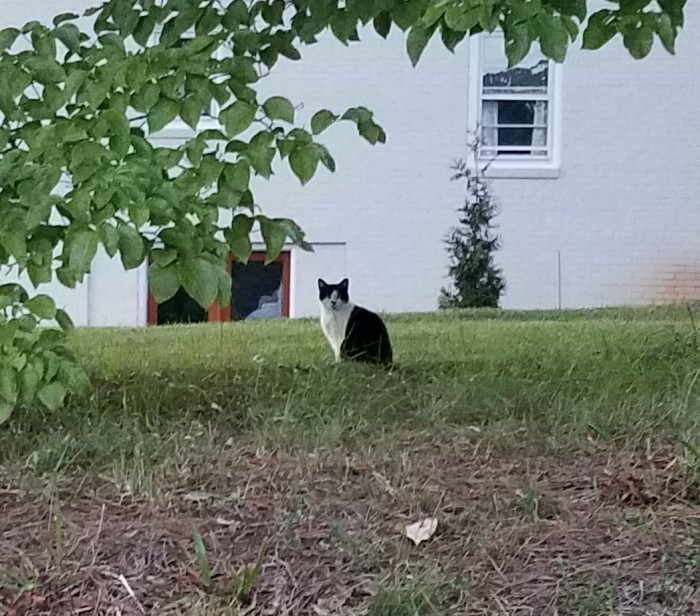
Not a care in the world, this one.
Local sweet Persian mix.“I’m watching you…”
Unknown Calico.Sweet, sweet baby, missing a foot.
Sweet Tuxedo ‘Gemini’.“How dare you pet that other kitty!”
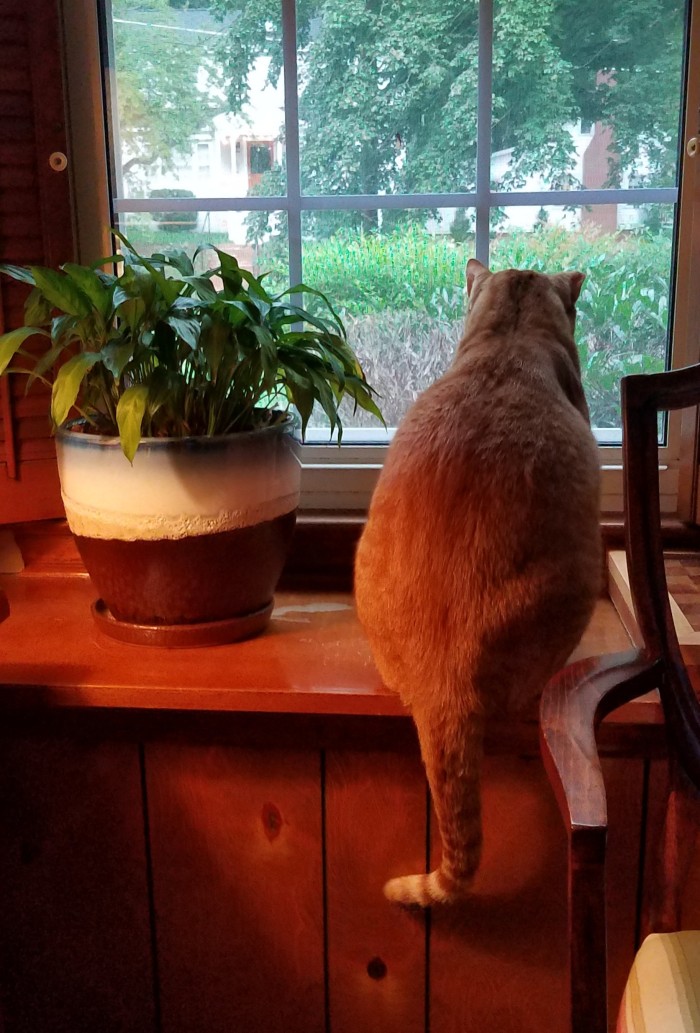
A very unhappy Maine Coon mix…’Yow Ming’.And, my Oliver…The Hemingway.
He watches the world happen through the windows.
Twenty-five years ago, today, the number one movie was The Fugitive, a suspense film that was based on the TV Show that ran from 1963 to 1967 on ABC starring David Janssen.
The television show started before I was born and I was just an infant when it ceased production. I have picked up a re-run or two over the years. Harrison Ford managed to capture the intensity that David Janssen displayed nearly 30 years earlier. ~Vic
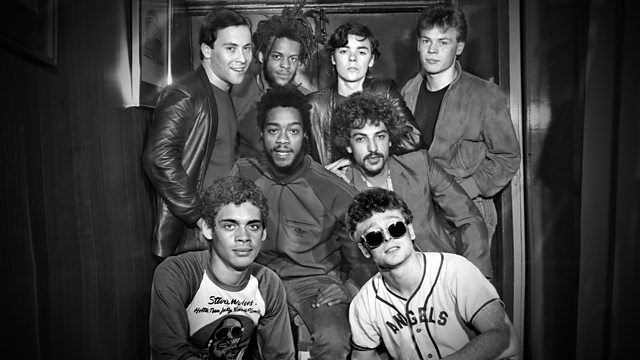
It’s Tune Tuesday! Twenty-five years ago, today, the number one song was I Can’t Help Falling In Love, a Reggae version of Elvis’ hit from the 1961 soundtrack and movie of the same name, Blue Hawaii. Both of these versions topped the U.S. & U.K. charts.
I am also posting the clip from the movie. Elvis’ original didn’t make it to number one on the Billboard Hot 100 (which is usually where I get my number one songs from) in the U.S., getting stuck at number two behind Peppermint Twist but, it did make it to number one in the U.K. & Australia in early 1962. It was a number one hit on the Billboard Adult Contemporary Chart in January 1962:
Plus, I have to confess that, while I like Reggae, I am an Elvis fan and I prefer the original (no offense, guys!).
The number one movie 30 years ago, today, is A Nightmare on Elm Street 4: The Dream Master! I never did get into the Freddy movies…or any other ‘slice & dice’ type movie. I saw about 10 minutes of the second Jason movie & about five minutes of Halloween III. Yeah. That was enough. I love a good suspense piece or a nail-biting thriller or a ‘whodunit’ but, guts & gore? No thanks. ~Vic
Gone on the same day, 41 years apart. I was two weeks shy of my 11th birthday when Elvis died. I am two weeks shy of my 52 birthday. Two incredibly beautiful, powerful voices and souls are gone.
After the panics of 1893 and 1896, economic depression, inflation and unemployment were rampant. The Coinage Act of 1873 had destroyed the use of silver dollar coins, dropping the price of silver and ending bi-metallism. This prompted many to dash to the area in search of gold, leaving behind other jobs in a quest for adventure and financial security. Even author Jack London headed north for his fair share and many of his novels were born out of his experiences. Pacific port towns reaped the benefits of the traders and travelers, desperate to survive the economic downturn.
Very few walked away from Dawson City rich. George and Kate split and, George remarried, living fairly well on his earnings. Skookum Jim, though wealthy, continued to prospect until his death. Dawson Charlie spent money and drank too much, dying in an alcohol related accident. Most of the businessmen and miners died penniless. The damage to the area from the mining was extensive and, the Native people suffered from contaminated water and disease.
Although this song is based on a John Wayne movie, and the George mentioned isn’t the same George in history, it’s still apropos…and, a great song. It’s sad, though, that Johnny Horton died shortly before its release.
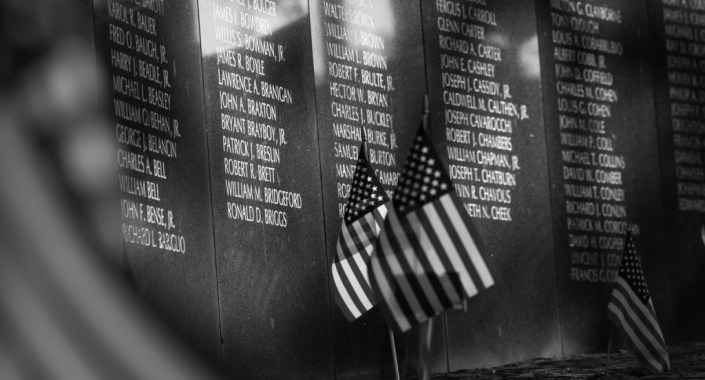
On this day in 1964, Congress approved the Gulf of Tonkin Resolution, effectively entering the U.S. into a conflict that still affects us to this day. This resolution, brought about by the questionable Gulf of Tonkin Incident (also referred to as the USS Maddox incident), gave President Johnson the legal justification for sending U.S. troops to Vietnam, under the guise of assisting a country under the treat of communist aggression.
“The resolution marked the beginning of an expanded military role for the United States in the Cold War battlefields of Vietnam, Laos and Cambodia. By 1964, America’s ally, South Vietnam, was in serious danger of falling to a communist insurgency. The insurgents, aided by communist North Vietnam, controlled large areas of South Vietnam and no amount of U.S. military aid and training seemed able to save the southern regime. During the presidencies of Dwight D. Eisenhower and John F. Kennedy, hundreds-and then thousands-of U.S. military advisers had been sent to South Vietnam to train that nation’s military forces. In addition, hundreds of millions of dollars in military and economic assistance had been given to South Vietnam. The administration of President Lyndon B. Johnson made the decision that only direct U.S. military intervention in the conflict could turn the tide. However, Johnson was campaigning in the presidential election of 1964 as the “responsible” candidate who would not send American troops to fight and die in Asia. In early August, a series of events occurred that allowed Johnson to appear statesmanlike while simultaneously expanding the U.S. role in Vietnam. On August 2, North Vietnamese torpedo boats attacked an American destroyer in the Gulf of Tonkin. Johnson responded by sending in another destroyer. On August 4, the two destroyers reported that they were under attack. This time, Johnson authorized retaliatory air attacks against North Vietnam. He also asked Congress to pass the Gulf of Tonkin Resolution. This resolution declared, “The United States regards as vital to its national interest and to world peace the maintenance of international peace and security in Southeast Asia.” It also gave Johnson the right to “take all necessary measures to repel any armed attack against the forces of the United States and to prevent further aggression.” The House passed the resolution by a unanimous vote. The vote in the Senate was 88 to 2. Johnson’s popularity soared in response to his “restrained” handling of the crisis. The Johnson administration went on to use the resolution as a pretext to begin heavy bombing of North Vietnam in early 1965 and to introduce U.S. combat troops in March 1965. Thus began a nearly eight-year war in which over 58,000 U.S. troops died. In a wider sense, the Gulf of Tonkin Resolution can be considered America’s Cold War policy toward all of Southeast Asia at the time. The resolution was also another example of the American government’s less than candid discussion of “national security” matters during the Cold War. Unspoken during the Congressional debate over the resolution was the fact that the commanders of the U.S. destroyers could not state with absolute accuracy that their ships had actually been attacked on the night of August 4, nor was any mention made of the fact that the U.S. destroyers had been assisting South Vietnamese commandos in their attacks on North Vietnamese military installations. By the late 1960s, the tangle of government deceptions and lies began to unravel as public confidence in both Johnson and the American military effort in Vietnam began to erode.”
[My father was in college from 1963 to 1967 and was in the ROTC. I was born at the beginning of his senior year. He came very, very close to going to Vietnam as a 2LT. He became more and more disturbed by reports and stories of what was actually happening over there. The young men that had graduated before him and entered combat…weren’t coming home. Many of the officers that he had started out with during his early years with the ROTC…weren’t coming back. The ones that did manage to return spoke of a “war without direction or purpose” and horrible “death traps”. My father had a crisis of faith, in a way. As a 2LT in the Army, he would have been an officer that could, potentially, send other young men under him to their deaths. If friends were telling him that the purpose of the war was not completely understood, how could he, in good conscience, participate. He took his concerns to his ROTC CO. That conversation devolved into a shouting match, complete with threats. My father resigned his ‘impending’ commission, despite the protestation of an older officer, stating that “Men like you, we need. We need the common sense approach and conscience you display. You would be a voice of reason and strength that could steady the others.” He would hear none of it. He turned in his uniforms, graduated…and never looked back. My father is still alive, today, because of his decision not to participate. He was never sent a draft card. ~Vic
Addendum: My father passed away on August 25, 2022]
On this day in 1964, Congress approved the Gulf of Tonkin Resolution, effectively entering the U.S. into a conflict that still affects us to this day. This resolution, brought about by the questionable Gulf of Tonkin Incident (also referred to as the USS Maddox incident), gave President Johnson the legal justification for sending U.S. troops to Vietnam, under the guise of assisting a country under the treat of communist aggression.
“The resolution marked the beginning of an expanded military role for the United States in the Cold War battlefields of Vietnam, Laos and Cambodia. By 1964, America’s ally, South Vietnam, was in serious danger of falling to a communist insurgency. The insurgents, aided by communist North Vietnam, controlled large areas of South Vietnam and no amount of U.S. military aid and training seemed able to save the southern regime. During the presidencies of Dwight D. Eisenhower and John F. Kennedy, hundreds-and then thousands-of U.S. military advisers had been sent to South Vietnam to train that nation’s military forces. In addition, hundreds of millions of dollars in military and economic assistance had been given to South Vietnam. The administration of President Lyndon B. Johnson made the decision that only direct U.S. military intervention in the conflict could turn the tide. However, Johnson was campaigning in the presidential election of 1964 as the “responsible” candidate who would not send American troops to fight and die in Asia. In early August, a series of events occurred that allowed Johnson to appear statesmanlike while simultaneously expanding the U.S. role in Vietnam. On August 2, North Vietnamese torpedo boats attacked an American destroyer in the Gulf of Tonkin. Johnson responded by sending in another destroyer. On August 4, the two destroyers reported that they were under attack. This time, Johnson authorized retaliatory air attacks against North Vietnam. He also asked Congress to pass the Gulf of Tonkin Resolution. This resolution declared, “The United States regards as vital to its national interest and to world peace the maintenance of international peace and security in Southeast Asia.” It also gave Johnson the right to “take all necessary measures to repel any armed attack against the forces of the United States and to prevent further aggression.” The House passed the resolution by a unanimous vote. The vote in the Senate was 88 to 2. Johnson’s popularity soared in response to his “restrained” handling of the crisis. The Johnson administration went on to use the resolution as a pretext to begin heavy bombing of North Vietnam in early 1965 and to introduce U.S. combat troops in March 1965. Thus began a nearly eight-year war in which over 58,000 U.S. troops died. In a wider sense, the Gulf of Tonkin Resolution can be considered America’s Cold War policy toward all of Southeast Asia at the time. The resolution was also another example of the American government’s less than candid discussion of “national security” matters during the Cold War. Unspoken during the Congressional debate over the resolution was the fact that the commanders of the U.S. destroyers could not state with absolute accuracy that their ships had actually been attacked on the night of August 4, nor was any mention made of the fact that the U.S. destroyers had been assisting South Vietnamese commandos in their attacks on North Vietnamese military installations. By the late 1960s, the tangle of government deceptions and lies began to unravel as public confidence in both Johnson and the American military effort in Vietnam began to erode.”
[My father was in college from 1963 to 1967 and was in the ROTC. I was born at the beginning of his senior year. He came very, very close to going to Vietnam as a 2LT. He became more and more disturbed by reports and stories of what was actually happening over there. The young men that had graduated before him and entered combat…weren’t coming home. Many of the officers that he had started out with during his early years with the ROTC…weren’t coming back. The ones that did manage to return spoke of a “war without direction or purpose” and horrible “death traps”. My father had a crisis of faith, in a way. As a 2LT in the Army, he would have been an Officer that could, potentially, send other young men under him to their deaths. If friends were telling him that the purpose of the war was not completely understood, how could he, in good conscience, participate. He took his concerns to his ROTC CO. That conversation devolved into a shouting match, complete with threats. My father resigned his ‘impending’ commission, despite the protestation of an older officer, stating that “Men like you, we need. We need the common sense approach and conscience you display. You would be a voice of reason and strength that could steady the others.” He would hear none of it. He turned in his uniforms, graduated…and never looked back. My father is still alive, today, because of his decision not to participate. He was never sent a draft card. ~Victoria]
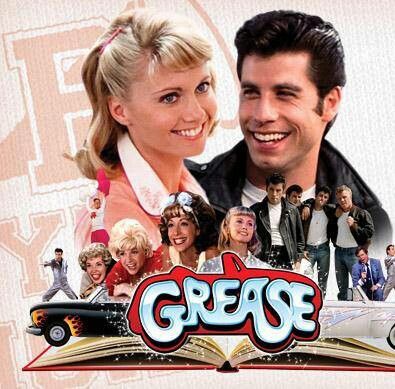
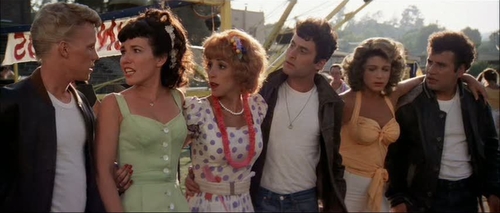
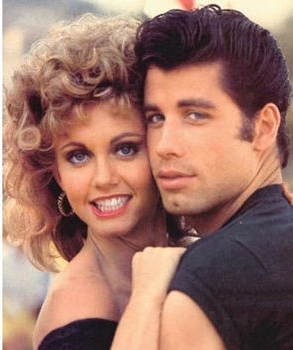
It’s Flick Friday. The number one movie 40 years ago, today, is…Grease! I was 11 years old when it was released. I was such an Olivia Newton-John fan. I begged my mom to buy me the album soundtrack. I nearly wore it out. I still have it to this day. And, I remember those shoes… I was headed to seventh grade that year and ALL the girls had to have a pair of the Candies that ‘Sandy’ made famous. Can you imagine a bunch of tween girls in the late 70s trying to change classes, going up and down stairs…in ‘Sandy’s Candies’? Oh, my…
I STILL love this movie. What wonderful memories… ~Vic
During a visit to America, Australian Sandy meets Danny Zuko at the beach and falls in love. She is heartbroken when summer ends [as] she has to return home and their last kiss on the beach is a very emotional one. But, fate lends a hand — her parents decide to stay in America and she finds herself attending the same school as Danny.
Photo Credit: jewelwpg.com
But, Danny at school is different from Danny at the beach. He is the leader of the T-Birds, a black leather-clad gang and has a reputation to keep up. He can’t be seen to fall in love with just one chick! Sandy is upset and seeks solace with some new friends she has made – a girls’ club called The Pink Ladies. But, her prim and proper virginal ways do not fit in and she soon finds herself almost alone. A change must be made. Does she attempt to get her man by turning him into a jock? Or must she get rid of her “Sandra Dee” image?
“”GREASE,” the film version of the still-running Broadway musical show, is not really the 1950’s teen-age movie musical it thinks it is but, a contemporary fantasy about a 1950’s teen-age musical—a larger, funnier, wittier and more imaginative-than-Hollywood movie with a life that is all its own. Somewhat in the manner of “Close Encounters of the Third Kind,” which recalls the science-fiction films of the 50’s in a manner more elegant, and more benign, than anything that was ever made then, “Grease” is a multimillion-dollar evocation of the B-picture quickies that Sam Katzman used to turn out in the 50’s […].
Photo Credit: pinterest.com
The gang at old Rydell High, which is the universe of “Grease,” is unlike any high school class you’ve ever seen except in the movies. For one thing, they’re all rather long in the tooth to be playing kids who’d hang around malt shops. For another, they are loaded with the kind of talent and exuberance you don’t often find very far from a musical stage.
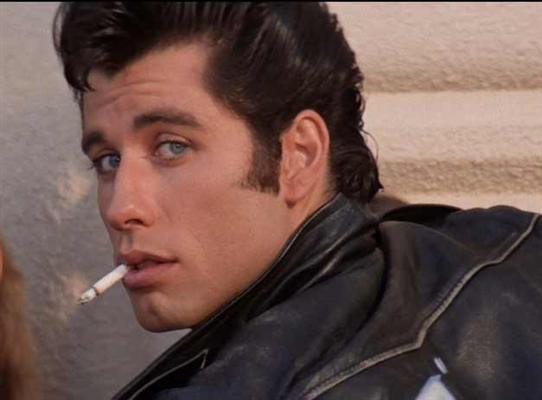
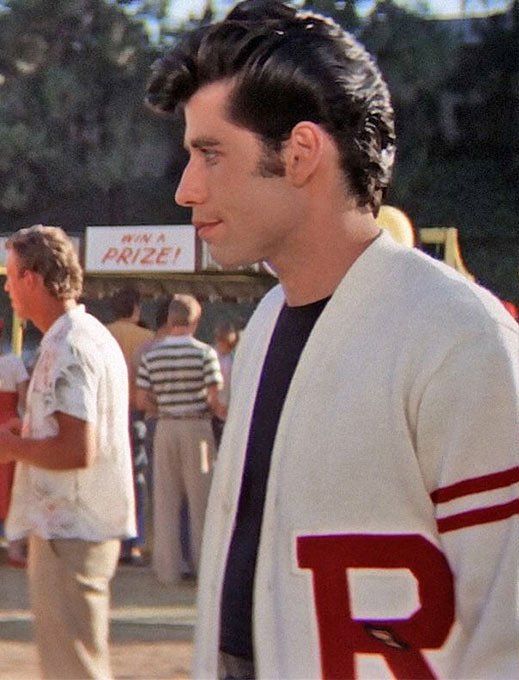
Olivia Newton-John, the recording star in her American film debut, is simultaneously very funny and utterly charming as the film’s ingénue […]. She possesses true screen presence as well as a sweet, sure singing voice […]. John Travolta […], a not-so-malevolent gang-leader, is better than he was in “Saturday Night Fever.” I’m still not sure if he’s a great actor but, he’s a fine performer with the kind of energy and humor that are brought to life by the musical numbers.
It’s to the director’s credit that the musical numbers slip in and out of reality mostly with hugely comic effect. Let me emphasize, then, that “Grease” stands outside the traditions it mimics. Its sensibility is not tied to the past but, to a free-wheeling, well informed, high-spirited present.”
Trivia Bits:
♦ Rizzo’s hickeys were real. Stockard Channing said in an interview that Jeff Conaway insisted on applying them himself.
♦ “Hopelessly Devoted to You” was written and recorded after the movie had wrapped.
Photo Credit: express.co.uk
♦ Elvis Presley turned down the role of The Guardian Angel in the ‘Beauty School Drop-Out’ scene.
♦ Due to a zipper breaking, Olivia Newton-John had to be sewn into the trousers she wears in the last sequence (the carnival at Rydell).
♦ Jeff Conaway was so infatuated with Olivia Newton-John, he was tongue-tied whenever she was around. He later married Olivia’s sister, Rona Newton-John.
♦ Danny’s blue windbreaker at the beginning of the film was intended as a nod to Rebel Without a Cause.
♦ Jamie Donnelly had prematurely grey hair, which she dyed black to play Jan. Her hair grew really quickly, so her roots had to be coloured in daily with a black crayon.
♦ Rydell High is a reference to teen idol Bobby Rydell who had a million selling hit with “Swingin’ School” in 1960.
♦ The “blonde pineapple” line was improvised by Barry Pearl.
♦ Olivia Newton-John insisted on a screen test for the role of Sandy. She was concerned that she didn’t have the acting skills and would look too old to be a high school student. The part was originally meant for Susan Dey, who turned it down on her manager’s advice.
July 12th is another very busy ‘National Day’ with five celebrations. Simplicity Day is observed on the birthday of Henry David Thoreau. He was born on this day in 1817. As a philosopher, he believed in living a simple life:
“In proportion as he simplifies his life, the laws of the universe will appear less complex and solitude will not be solitude, nor poverty poverty, nor weakness weakness.”
He was a world-renowned author, historian, abolitionist, tax resister (my hero!), a surveyor, criticized over-development, preferred the natural ways and transcendentalism and, was a friend of and mentored by, Ralph Waldo Emerson. Born nearly 100 years prior to Alan Watts, the two could have been contemporary peers.
In our overly busy lives, steeped in political battles, materialism, social media madness and the struggle to survive, slowing down, disengaging and walking in nature can be a refreshing break. De-cluttering and simplifying one’s life can, ultimately, bring peace and balance.
I snapped these yesterday evening. I was stunned at how clear and brilliant this rainbow was. The companion rainbow above is harder to see. It is a shame that my cell phone cannot truly capture what I see. The beauty is breathtaking. It’s summertime and we’re getting the hot weather storms in the afternoons. I heard the thunder as the system rolled in and the sunlight dimmed. I didn’t really think much about it. I just happened to step outside to our recyclables bin and…wow. I ran back inside and grabbed my phone. I wandered up and down the street trying to get good shots. Damn power lines. *sigh*
They have a National Day for nearly everything. Some of them are very tongue-in-cheek, if not down-right ridiculous. Did you know there is a Ding-a-Ling Day? Yeah. I didn’t either. Apparently, it’s for dialing up friends, not pointing out stupid people. Who knew.
I wander around and take pictures of everything. I see so much I want to capture. My Samsung stupidphone gets a lot of use. I would really like to get a genuine camera but, I can’t decide what to get and cost is an issue. Expensive cameras don’t have payment plans like, say, a stupidphone.
So, anyway, enjoy National Camera Day…or, what is left of it. Take pix of your family. Take pix of your friends. Take pix of nature. Let your imagination wander. There is always something in a photograph that surprises.
The United States, acting under the auspices of the United Nations, quickly sprang to the defense of South Korea and fought a bloody and frustrating war for the next three years. Korea, a former Japanese possession, had been divided into zones of occupation following World War II. U.S. forces accepted the surrender of Japanese forces in southern Korea, while Soviet forces did the same in northern Korea. Like in Germany, however, the “temporary” division soon became permanent. The Soviets assisted in the establishment of a communist regime in North Korea, while the United States became the main source of financial and military support for South Korea. On June 25, 1950, North Korean forces surprised the South Korean army (and the small U.S. force stationed in the country), and quickly headed toward the capital city of Seoul. The United States responded by pushing a resolution through the U.N.’s Security Council calling for military assistance to South Korea. (Russia was not present to veto the action as it was boycotting the Security Council at the time.) With this resolution in hand, President Harry S. Truman rapidly dispatched U.S. land, air, and sea forces to Korea to engage in what he termed a “police action.” The American intervention turned the tide, and U.S. and South Korean forces marched into North Korea. This action, however, prompted the massive intervention of communist Chinese forces in late 1950. The war in Korea subsequently bogged down into a bloody stalemate. In 1953, the United States and North Korea signed a cease-fire that ended the conflict. The cease-fire agreement also resulted in the continued division of North and South Korea at just about the same geographical point as before the conflict. The Korean War was the first “hot” war of the Cold War. Over 55,000 American troops were killed in the conflict. Korea was the first “limited war,” one in which the U.S. aim was not the complete and total defeat of the enemy, but rather the “limited” goal of protecting South Korea. For the U.S. government, such an approach was the only rational option in order to avoid a third world war and to keep from stretching finite American resources too thinly around the globe. It proved to be a frustrating experience for the American people, who were used to the kind of total victory that had been achieved in World War II. The public found the concept of limited war difficult to understand or support and the Korean War never really gained popular support.













 Cosmic-Observation