There is a LOT of data on this siege and I’m not re-writing history. This will serve as a highlight, only. I will provide links to more information, below. ~Vic
Four hundred, fifty-five years ago, today, the island of Malta was attacked and nearly invaded by the Ottoman Empire, it’s second attempt.
If it had not taken place, the Great Siege would no doubt have been dreamt up for the screenplay of an epic film. Few other historic episodes rival it for sheer heroism, the bloodshed of war and military strategy. The story of the siege is interwoven with the tale of two adversaries, the ageing Grand MasterJean Parisot de la Valette, and his contemporary, the Barbary CorsairDragut Reis who commanded the fleet of Sultan Suleiman the Magnificent. It is also the story of thousands of lives of Maltese Islanders, men at arms to the Knights of St. John.
The years leading up to the siege saw the Islands under constant threat from the Ottoman Turks […]. The Knights knew they were vulnerable in Malta despite the harbours and their two forts […]. Grand Master La Valette had done his best to build defences and had requested extra forces from the Emperor Charles V, the Pope and the Viceroy of Sicily. But, no help came. In May, 1565, a vast Ottoman fleet, some 40,000 men, lay siege to the Islands.
The Knights were heavily outnumbered with a mere 700 or so men and around 8000 Maltese regular troops. The Islanders took refuge in the fortified towns [..] destroying crops and poisoning wells as they fled.
Image Credit: medievalists.net
The Ottomans first decided to attack isolated Fort St. Elmo […]. Repeated assaults were launched over 36 days but, the small garrison of Knights held on to the fort for far longer than Suleiman‘s men anticipated. After four weeks, they finally overran St. Elmo but, at a heavy price […]. The Turkish commander Dragut was fatally injured during the taking […].
It is the battle for [Fort] St. Angelo which saw some of the bloodiest episodes of this Holy War. It was to [be] the basis of legends for centuries to come. [Some] 10 attacks [were launched] on [its] walls [and], when a huge part of the defences were breached, the Ottomans failed to take the Fort.
At one point in the battle, the Ottomans floated the headless corpses of captured Knights across Grand Harbour. The act was returned in kind [as] Valette ordered all Ottoman prisoners to be executed and their heads used as ‘cannon balls’ to fire back toward their compatriots in St. Elmo.
[Valette]’s long-awaited relief forces [finally] appeared […] and took control of high ground inland. [The] Ottoman troops retreated […].
The Turks fled to their ships, and from the islands, on September 13 (almost four months had passed). Malta had survived the Turkish assault, and throughout Europe, people celebrated what would turn out to be the last epic battle involving Crusader Knights.
Malta’s magnificent capital, Valletta, was founded by and named after Grand Master Jean de la Valette. Valette, himself, was buried in the city some three years later.
Back in May, I did a post on the Battle of Alamance so, I won’t revisit the historical details. Yesterday, I visited the actual battleground with my buddy, Ray. They were having German Heritage Day with authentic German food for visitors. I was so glad we had a beautiful day. It was chilly but, there was a really good turnout. I hadn’t been to this site in nearly 45 years.
Battle map behind the Visitor Center Museum, facing the battleground.3-D Map of NC Militia troops and the Regulators.The rock in the 3-D battle map and
the small creek/tributary of Beaver Creek/Big Alamance Creek/Lake Mackintosh.Field cannon.Facing Inscription:
“HERE WAS FOUGHT THE BATTLE OF ALAMANCE
MAY 18, 1771
BETWEEN THE BRITISH AND
THE REGULATORSLeft Inscription:
Crossed Cannons & LIBERTY
Right Inscription:
FIRST BATTLE OF THE REVOLUTIONBattleground Sun
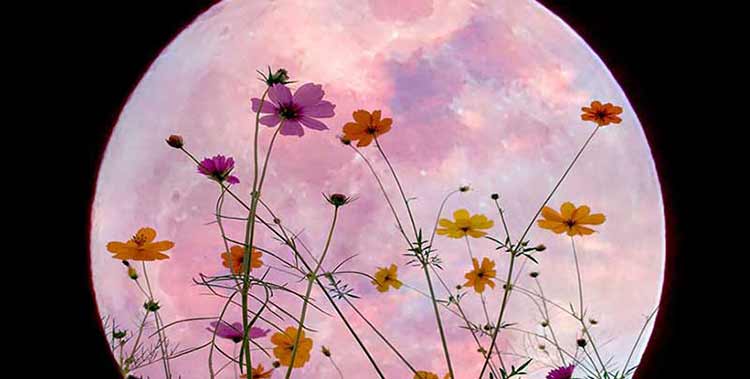
May is most notable for being the turning point in the year where temperatures rise and a vast variety of flowers come into full bloom, letting the world break out into a riot of color. As such, May’s full moon has come to be known as the Full Flower Moon. The Anishnaabe tribe also called it the Blossom Moon. In Northern America, you can expect to see flowers such as bluebells, sundrops, violets and so on, as well as lush greenery to go with the blossoms. The Apache and Lakota peoples named May’s full moon the Green Leaves Moon, while the Mohawk tribe called it the Big Leaf Moon. The Arapaho referred to this Full Moon as “when the ponies shed their shaggy hair”. But, there is one specific plant that’s very important during the May season and it is, in fact, not a flower.
Image Credit: Moon Giant
This plant is corn, an important staple food for Northern American peoples. According to the Algonquin tribes, May’s full moon is the Corn Planting Moon. For Native American tribes, this is the perfect time for them to start preparing the fields for farming and sowing the seeds saved up from last year. Appropriately, the Abenaki culture refers to May’s full moon as the Field Maker Moon, while the Haida tribe calls it the Food Gathering Moon. Apart from corn, other foods such as beans, squash and potatoes are planted during this time. The Cherokee tribe called May’s full moon the Anisguti Moon or the Planting Moon and would, traditionally, perform a Corn Dance during this period to encourage a fruitful corn harvest.
Due to the rising temperatures, the Full Flower Moon is also a time of heightened fertility. This is a good time for women to bear children in a warm, safe environment that would increase the chance of their survival. That’s why May’s full moon is also named Mother’s Moon or Milk Moon which could refer to breastfeeding or to the milking of cows. The latter interpretation is based off the Old English name Rimilcemona, or the Month of Three Milkings referring to how this was a period where cows could be milked up to three times daily.
Is there such a thing as Moon devils?
In other parts of the world, the Full Flower Moon is better known as Vesak or Buddha Day, the most significant celebration for Buddhists all around the world. On the first full moon of May, Buddhists commemorate the birth, enlightenment and passing of the Buddha. Devout practioners are encouraged to renew their intention to adhere to sacred Buddhist principles as well as refrain from all forms of killing and violence, including eating meat. Celebrations include giving charity to the poor, disabled and otherwise marginalized groups in society. Depending on your location, you may witness the spectacular practice of releasing thousands of caged birds into the air as a symbolic gesture of liberation, though this tradition is illegal in countries such as Singapore because it may cause harm to local ecosystems.
Image Credit: almanac.com
Pagans, on the other hand, associate the Full Flower Moon with the element of fire and, thus, often celebrate it by lighting bonfires and engaging in other magical fire rituals to bring prosperity. Powerful colors for the Full Flower Moon include fiery colors like red, yellow and orange. This is a good time to tend your garden and let the seeds you’ve planted blossom, both literally and metaphorically. Cultivate your passions and desires, encourage them to burst forth into bloom and you will be rewarded with abundance in various forms in your life.
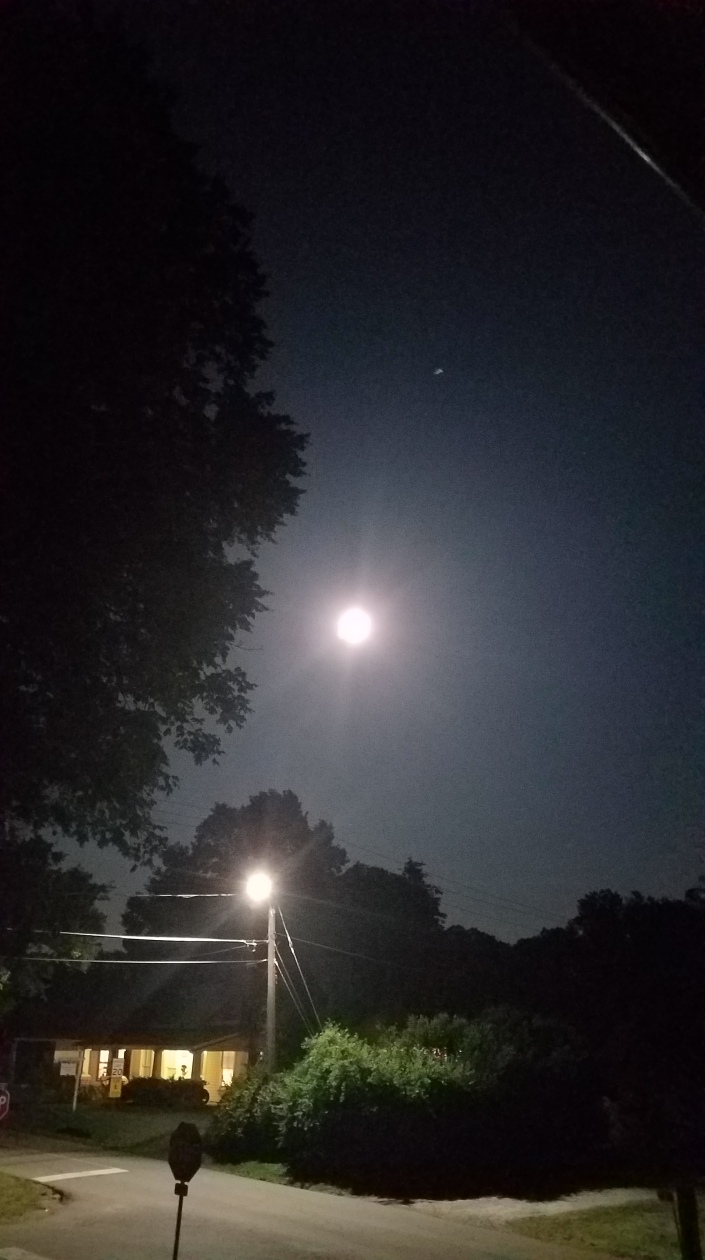
This Flower Moon is also a Seasonal Blue Moon and 100% illumination occurred at 5:11pm EDT. Howl for me! ~Vic
This is part four of a five, possibly, six part series showcasing my former supervisor W. H. Patton’s photography. The first post is here. The second post is here. The third post is here.
Round four…
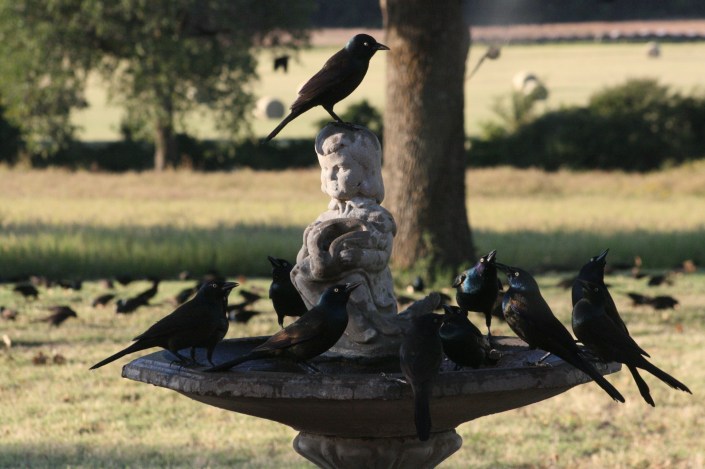
Starlings everywhere…
10-09-2008Backyard bird bath
10-09-2008Visiting fox
02-21-2008Another fox six days later
02-27-2008Strutting gobbler
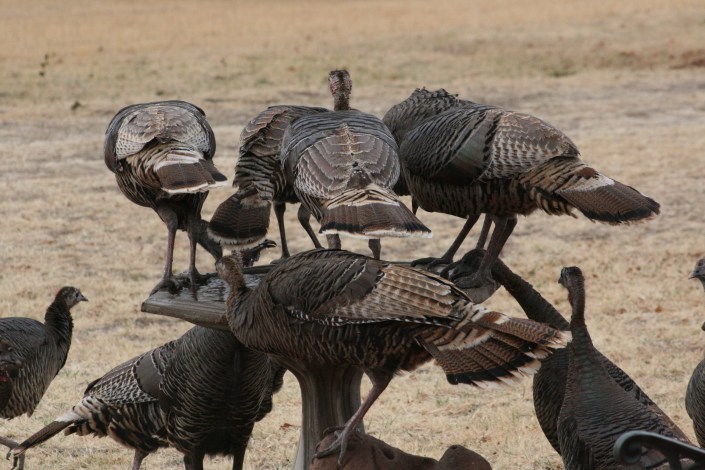
03-07-2009Turkey hens on the bird bath
03-07-2009His grandson’s puppy Copper
05-18-2008Adorable Copper
05-18-2008








 Cosmic-Observation