time magazine
Throwback Thursday: Japan Airlines Flight 404 1973

Date: August 19, 1983
Source: Air Britain Photo Library
Similar plane to the hijacked one.
Acquired: Wikimedia Commons
Fifty years ago, today…
Japan Air Lines Flight 404 was a passenger flight which was hijacked by Palestinian and Japanese terrorists on July 20, 1973. The flight departed Amsterdam-Schiphol International Airport, Netherlands, […], en route to Tokyo International Airport […], Japan, via Anchorage International Airport, Alaska. The aircraft was a Boeing 747-246B, with 123 passengers and 22 crew members on board. The passenger complement included five terrorists, led by Osamu Maruoka, a member of the Japanese Red Army and the other four were members of the Popular Front for the Liberation of Palestine.
The flight was hijacked shortly after takeoff from Schiphol. In the course of the hijacking, a grenade carried by one of the skyjackers detonated, killing her and injuring the flight’s chief purser. The lead hijacker […] immediately announced himself to air traffic control as El Kassar, hijacking the aircraft in the name of the Palestinian Liberation movement. After several Middle Eastern governments refused to permit Flight 404 to land, the plane eventually touched down in Dubai, in the United Arab Emirates. After several days on the ground, the terrorists demanded the release of Kozo Okamoto, survivor of the JRA’s attack on Tel Aviv’s Lod Airport.
After the Israeli government refused to release Okamoto, the hijackers flew the aircraft first to Damascus, Syria, and then to Benghazi, in Libya. On July 23, 89 hours after the hijacking began, the passengers and crew were released. [The] hijackers then blew up the aircraft, making the incident the second hull loss of a Boeing 747. The first hull-loss was also the result of hijackers. Maruoka escaped and in 1977, led the hijacking of Japan Air Lines Flight 472. He remained a fugitive, until 1987, when he was arrested in Tokyo after entering Japan on a forged passport. Given a life sentence, he died in prison on May 29, 2011.
Wikipedia Summary
The Skyjackers Strike Again (Time Magazine/07-30-1973/Wayback Machine)
Skyjackers: Part II (Time Magazine/07-30-1973/Wayback Machine)
Chronology Of Aviation Terrorism: 1968-2004 (Skyjack Chronology/Dr. Hillel Avihai/Wayback Machine)
Aviation Safety Network Database (JL404/Aviation Letter 184/07-23-1973)
Ex-Red Army Member Maruoka Dies (The Japan Times/05-30-2011)
July 22
July 25
July 26
Flashback Friday: Ellis Island 1954
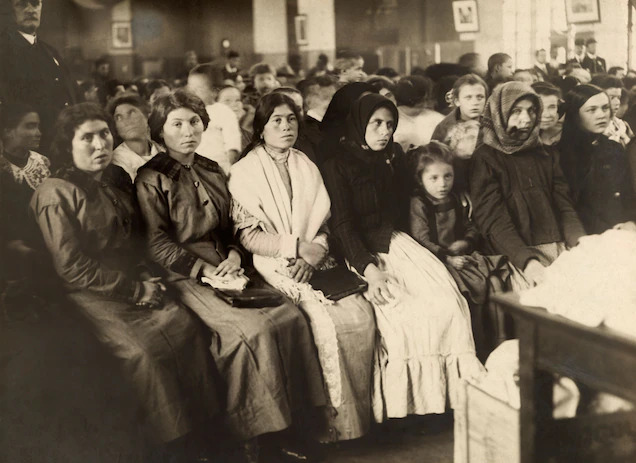
when they first entered the building on Ellis Island.
Photograph by Paul Thompson
Credit: National Geographic
Sixty-five years ago, [today] on November 12, 1954, a Norwegian merchant seaman named Arne Peterssen became the last immigrant to pass through Ellis Island. Later that month, the ferry Ellis Island made its final stop at the island in New York Harbor and the immigration facility closed for good, ending its run as a gateway to the United States for generations of immigrants.
These days Ellis Island is a national symbol remembered in sepia tones but, while it was in active service, the station reflected the country’s complicated relationship with immigration, one that evolved from casual openness to rigid restriction. “It was not a great welcoming place for immigrants but, it was not a place of horrors either,” says Vincent Cannato, author of American Passage: The History of Ellis Island.
Until the end of the 19th century, individual states handled immigration with rules varying by jurisdiction. [T]hen, immigration soared. In light of the influx, the federal government decided in 1891 that it had to take charge.
New York was immigration’s epicenter. Some 75 percent of the country’s steamship traffic came through New York Harbor and so did 75 percent of the nation’s immigrants, according to Cannato. New York state ran an immigration facility called Castle Gardens at the tip of Manhattan but, the new federal Office of Immigration wanted an intake and inspection station in a more controlled location. It selected Ellis Island, a three-acre spot of land in the harbor between New York and New Jersey […].
The immigrants who eventually passed through Ellis Island started their journey by buying passage on a steamship, usually sailing from Europe. Between 1892 and 1924, 12 million people successfully traversed this highly efficient conveyor-belt immigration system. Most immigrants were processed through Ellis Island in a few hours and only 2 percent that arrived on the island were prevented from entering the United States.
[T]his era of mass immigration came to an end with the passage in 1921 and 1924 of new laws that severely limited immigration by establishing quotas for individual countries and requiring immigrants to obtain visas from American consulates. Since most official immigration screening now happened at U.S. consulates abroad, Ellis Island became increasingly irrelevant. The facility, which had once teemed with thousands of hopeful immigrants, transformed into “a major center for deportation and for holding enemy alien spies,” says [Barry] Moreno. “It was like night and day.” President Eisenhower quietly closed Ellis Island in 1954.
How Ellis Island Shepherded Millions of Immigrants Into America
Rachel Hartigan
National Geographic
November 13, 2019
Story Sunday: The War On Computers
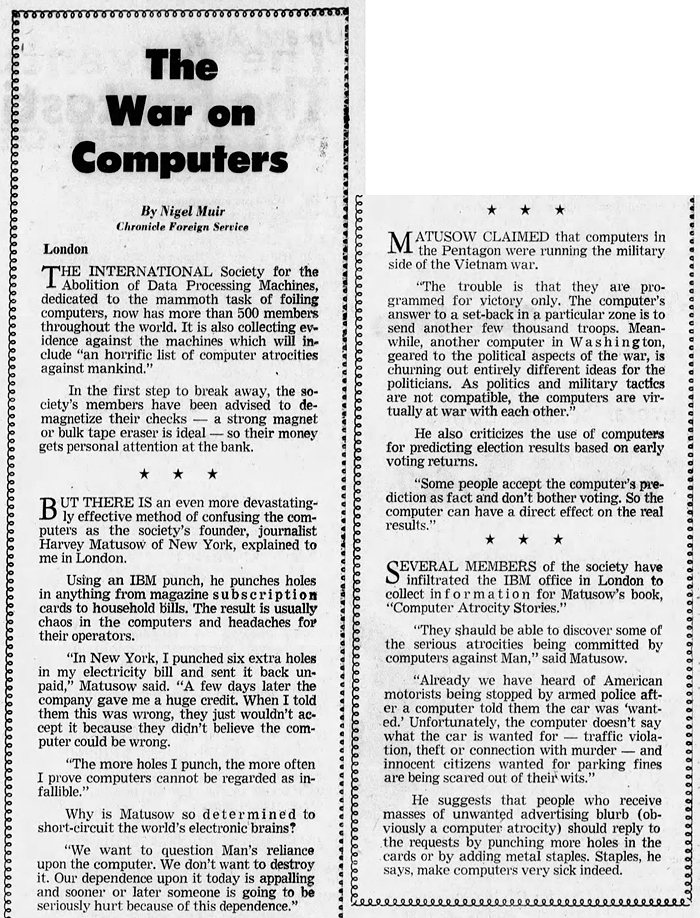
San Francisco Examiner
10-27-1968
The International Society for the Abolition of Data-Processing Machines […] was founded by Harvey Matusow in the late 1960s. Its aim was “to conduct guerrilla warfare against the computer by such means as sending a penny too much or too little when paying a utility bill.”
Matusow also authored The Beast of Business, which was supposed to serve as a manual for the guerrilla warfare against the computer. I wonder if any of the techniques he detailed would still work today?
However, Matusow is best known for giving evidence in court against individuals during the McCarthy era. Later, he claimed that the FBI had paid him to give false testimony and he detailed these allegations in his book False Witness.
He seems to have had a rather eccentric life and career. Some other highlights of it, from the University of Sussex’s page about him:
♦ Founded a band called the Harvey Matusow’s Jew’s Harp Band
♦ Married approximately twelve times
♦ Is possibly part of the reason The Beatles broke up – he held the party where John Lennon met Yoko Ono
♦ Worked as a children’s TV clown called Cockyboo in Tucson, Arizona
♦ Converted to Mormonism and spent his last years known as Job MatusowAlex Boese
Weird Universe
May 29, 2021
Additional Reading:
Frustrations: Guerrilla War Against Computers (Time Magazine/09-12-1969)
Sir Thomas Sean Connery

Bond. James Bond.
Photo Credit: Far Out Magazine UK
I just found out about the passing of actor Sean Connery. There are certain actors I have a thing for and he is one of them. Our birthdays are five days apart and we both have Scottish (and Irish) ancestry. He enlisted in the Royal Navy at the age of 16, was assigned to the HMS Formidable as an Able Seaman and was medically discharged at 19 for ulcers.
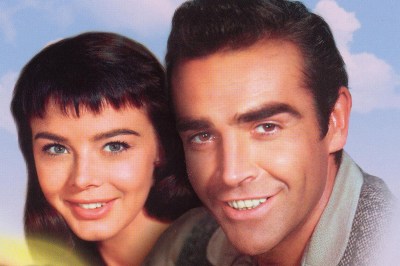
Image Credit: Time
One of his early endeavors was as an artist’s model. He was into bodybuilding and was in a Mr. Universe contest, though the actual year is disputed. He was a footballer, playing for Bonnyrigg Rose and was once offered a contract to play professionally:
“[I] realised that a top-class footballer could be over the hill by the age of 30 and I was already 23. I decided to become an actor and it turned out to be one of my more intelligent moves.”
He was a member of the Scottish National Party and campaigned for Scottish Independence, financially supporting the party until the UK passed legislation to prohibit overseas funding. One of his two tattoos was “Scotland Forever.”
He managed to make it all the way to 90 but, according to his son Jason, he had been unwell for some time. He passed peacefully in his sleep at his home in the Bahamas. I think it altogether fitting and proper that Sir Sean left on Halloween during a full Blue Moon. Godspeed. ~Vic

Image Credit: Reddit
Career Highlights:
His acting debut (uncredited) was in the UK film Lilacs in the Spring (titled Let’s Make Up in the US) in 1954, a British musical starring Errol Flynn. On UK TV, he played MacBeth, Alexander the Great and Count Vronsky. His first appearance on US TV was on The Jack Benny Program in 1957. His first credited film roll in the US was a UK/US collaboration in the movie Action of the Tiger, also in 1957. He was the first James Bond (and some say the only one), he played a savage in the distant future, became Robin Hood, was a Marshal in outer space, was King Agamemnon, was a sword-wielding immortal, did a turn as a Franciscan friar, was an Untouchable, a Provost Marshall in San Francisco, was the father of Indiana Jones, a Russian submarine Captain, appeared as King Richard, became a doctor, was a detective, a professor, played King Arthur, played an ex-con & an art thief, was a reclusive author and, was the voice of The Last Dragon. He was only in one Western in 1968. His last time on the big screen was in 2003 playing Allan Quatermain in The League of Extraordinary Gentlemen and his last time on TV was playing character John Muir in an episode of the documentary Freedom: A History of US, also in 2003. He did voice work up to 2012.
Awards:
♥ 1987 Academy Award (Best Supporting Actor/The Untouchables)
♥ 1987 BAFTA (Best Actor/The Name of the Rose)
♥ 1998 BAFTA Fellowship
♥ 1972 Golden Globe (Henrietta Award/World Film Favorite-Male)
♥ 1987 Golden Globe (Best Supporting Actor/The Untouchables)
♥ 1995 Golden Globe (Cecil B. DeMille Award)

Photo Credit: Pinterest
Nominations:
♦ 1987 BAFTA (Best Supporting Actor/The Untouchables)
♦ 1989 BAFTA (Best Supporting Actor/Indiana Jones and the Last Crusade)
♦ 1990 BAFTA (Best Actor/The Hunt for Red October)
♦ 1965 Golden Globe (Henrietta Award/World Film Favorite-Male)
♦ 1968 Golden Globe (Henrietta Award/World Film Favorite-Male)
♦ 1989 Golden Globe (Best Supporting Actor/Indiana Jones and the Last Crusade)
www.seanconnery.com (Web Archive)
Additional Reading & Sources:
BBC News
Belly Buzz (Web Archive of Connery’s Military Service)
List of Work (IMDb)
List of Work (Wikipedia)
Muscle Memory (As Tom Connery)
Scottish Junior Football Association (Web Archive)
Scottish Roots
Talk-Talk UK (Archive Today Copy of Connery’s Biography)
Wayback Wednesday: Leser vs. Garnett 1922

The Nineteenth Amendent to the U.S. Constitution was ratified on August 18, 1920, with Tennessee being the last state to vote in favor of, achieving the 3/4 majority needed to amend. One would think that this event would have been the end of any argument against a woman’s right to vote but, one more hurdle had to be cleared.
Ninety-seven years ago, today, the U.S. Supreme Court made a ruling on the constitutionality of the amendment.
From Cornell Law (some case-law text):
On October 12, 1920, Cecilia Streett Waters and Mary D. Randolph, citizens of Maryland, applied for and were granted registration as qualified voters in Baltimore City. To have their names stricken from the list Oscar Leser and others brought this suit in the court of common pleas. The only ground of disqualification alleged was that the applicants for registration were women, whereas the Constitution of Maryland limits the suffrage to men. Ratification of the proposed amendment to the federal Constitution, now known as the Nineteenth, 41 Stat. 362, had been proclaimed on August 26, 1920, 41 Stat. 1823, pursuant to Revised Statutes, § 205 (Comp. St. § 303). The Legislature of Maryland had refused to ratify it. The petitioners contended, on several grounds, that the amendment had not become part of the federal Constitution. […] the case comes here on writ of error. That writ must be dismissed but, the petition for a writ of certiorari, also duly filed, is granted. The laws of Maryland authorize such a suit by a qualified voter against the board of registry. Whether the Nineteenth Amendment has become part of the federal Constitution is the question presented for decision.

There were three claims:
[1] The power to amend the Constitution did not cover this amendment due to its character.
“[…] the amendment “destroyed State autonomy” because it increased Maryland’s electorate without the state’s consent.”
[2] Several states that had ratified the amendment had constitutions that prohibited women from voting, rendering them unable to ratify an amendment to the contrary.
[3] The ratifications of Tennessee and West Virginia were invalid, because they were adopted without following the rules of legislative procedure in place in those states.
Justice Brandeis delivered the opinion of the Court:
[1] This amendment is in character and phraseology precisely similar to the Fifteenth. For each, the same method of adoption was pursued. One cannot be valid and the other invalid. That the Fifteenth is valid, although rejected by six states, including Maryland, has been recognized and acted on for half a century.
[2] […] But the function of a state Legislature in ratifying a proposed amendment to the federal Constitution, like the function of Congress in proposing the amendment, is a federal function derived from the federal Constitution and, it transcends any limitations sought to be imposed by the people of a state.
[3] The question raised may have been rendered immaterial by the fact that since the proclamation the Legislatures of two other states—Connecticut and Vermont—have adopted resolutions of ratification. But, a broader answer should be given to the contention. The proclamation by the Secretary certified that, from official documents on file in the Department of State, it appeared that the proposed amendment was ratified by the Legislatures of 36 states and, that it ‘has become valid to all intents and purposes as a part of the Constitution of the United States.’ As the Legislatures of Tennessee and of West Virginia had power to adopt the resolutions of ratification, official notice to the Secretary, duly authenticated, that they had done so, was conclusive upon him, and, being certified to by his proclamation, is conclusive upon the courts.
Quote From Time Magazine:
“So, while the 19th Amendment granted women the right to vote, Leser made sure that the right could actually be used, even where the state constitution said otherwise. It’s not one of the more famous Supreme Court decisions in American history but, without it, the electorate would be, well, lesser.”
As an addendum to the above, Maryland finally ratified the amendment on March 29, 1941 but, didn’t certify that until February 25, 1958, two days shy of an exact 36 year delay. And, I am sad to say that my home state of North Carolina didn’t ratify until May 6, 1971, making it third to last behind South Carolina (ratified July 1, 1969 but, not certified until August 22, 1973) and Mississippi (ratified March 22, 1984).
Little video snippet regarding this case:
And, I grew up watching Schoolhouse Rock, I just had to put this up:
 Cosmic-Observation