Author: The Hinoeuma
POTD: Boot Birdhouse
This hangs in our little Dogwood, that is getting ready to bloom. ~Vic

Picture of the Day
TV Tuesday: Stage Door 1948
Yes, I am still alive. I took a break for health reasons. ~Vic
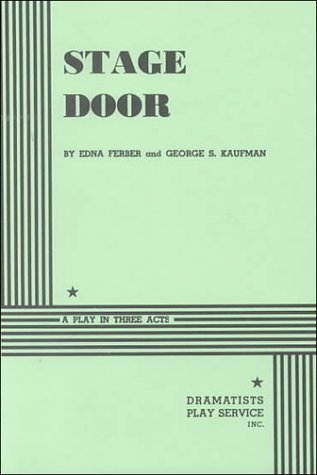
Seventy-five years, ago, today, the TV movie Stage Door aired. The information on this movie is limited but, there is a record of it in the IMDb. Based on a 1936 stage play, written by Edna Ferber and George S. Kaufman…
[It is] about a group of struggling actresses who room at the Footlights Club, a fictitious theatrical boardinghouse in New York City, modeled after the real-life Rehearsal Club. The three-act comedy opened on Broadway on October 22, 1936, at the Music Box Theatre and ran for 169 performances. The play was adapted into the 1937 film of the same name and was also adapted for television.
Wikipedia Summary
Directed by Ed Sobol, it starred Louisa Horton, Harvey Stephens, Mary Anderson, John Forsythe, Enid Markey and Mary Alice Moore. It was an hour & 30 minutes long and there is no indication as to which network carried it. The 1937 film adaption starred Katharine Hepburn, Ginger Rogers and Lucille Ball.
An additional one-hour television adaption aired on CBS in April of 1955. There are plenty of clips on YouTube from the 1937 movie but, nothing from either television version.
Flashback Friday: Shoshone National Park 1891
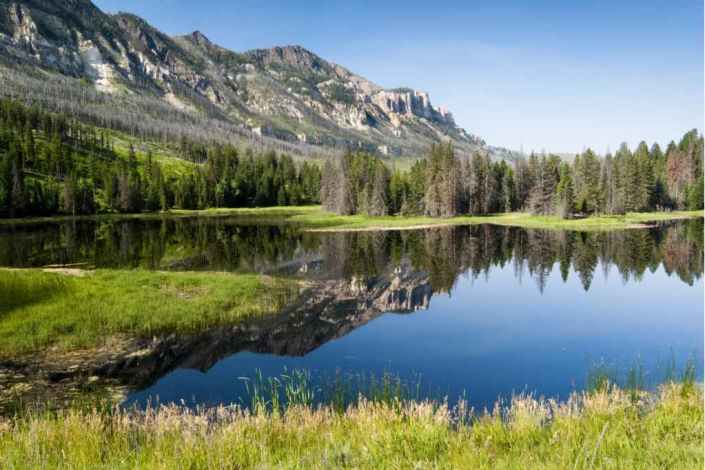
One-hundred, thirty-two years ago, today…
[The] Shoshone National Forest is the first federally protected National Forest in the United States and covers nearly 2,500,000 acres in the state of Wyoming. Originally a part of the Yellowstone Timberland Reserve, the forest is managed by the United States Forest Service and was created by an act of Congress, signed into law by U.S. President Benjamin Harrison in 1891. Native Americans have lived in the region for at least 10,000 years and when the region was first explored by European adventurers, forestlands were occupied by several different tribes. Never heavily settled or exploited, the forest has retained most of its wildness. Shoshone National Forest is a part of the Greater Yellowstone Ecosystem […].
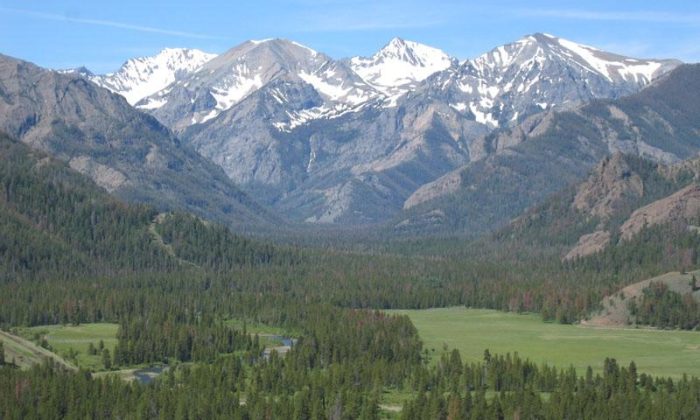
The Absaroka and Beartooth Mountains are partly in the northern section of the forest. The Wind River Range is in the southern portion and contains Gannett Peak, the tallest mountain in Wyoming. [The] Continental Divide separates the forest from its neighbor Bridger-Teton National Forest to the west. The eastern boundary includes privately owned property, lands managed by the U.S. Bureau of Land Management and, the Wind River Indian Reservation, which belongs to the Shoshone and Arapahoe Indians. Custer National Forest along the Montana border is on the northern frontier. The Oregon Trail, the 19th century covered wagon route, passes just south of the forest, where broad and gentle South Pass allowed the migrants to bypass the rugged mountains to the north. The forest is home to the Grizzly bear, Cougar, Moose, tens of thousands of Elk as well as the largest herd of Bighorn sheep in the U.S.
[On] March 3 [of] 1891, Congress enacted, and [President] Harrison signed, the Land Revision Act of 1891. This legislation resulted from a bipartisan desire to initiate reclamation of surplus lands that had been, up to that point, granted from the public domain, for potential settlement or use by railroad syndicates.
The Act reversed previous policy initiatives, such as the Timber Culture Act of 1873, which did not preclude land fraud by wealthy individuals and corporations. The legacy of the General Revision Act of 1891 [Forest Reserve Act/Land Revision Act] is frequently credited as its serving as a catalyst to a series of federal land reform initiatives, notably under President Theodore Roosevelt.
Wikipedia Summaries
As a side note, when my father was a Freshman at N.C. State University in 1963-1964, he studied Forestry. Prior to his death on August 25, 2022, he still remembered most of the Latin terms for all trees and forest plants.
Additional:
♦ Shoshone National Forest (Wyoming State Parks)
♦ America’s First National Forest (Forest Service)
♦ Our First National Forest (National Park Service History)
POTD: Spring Is Almost Here
Bring it on. ~Vic
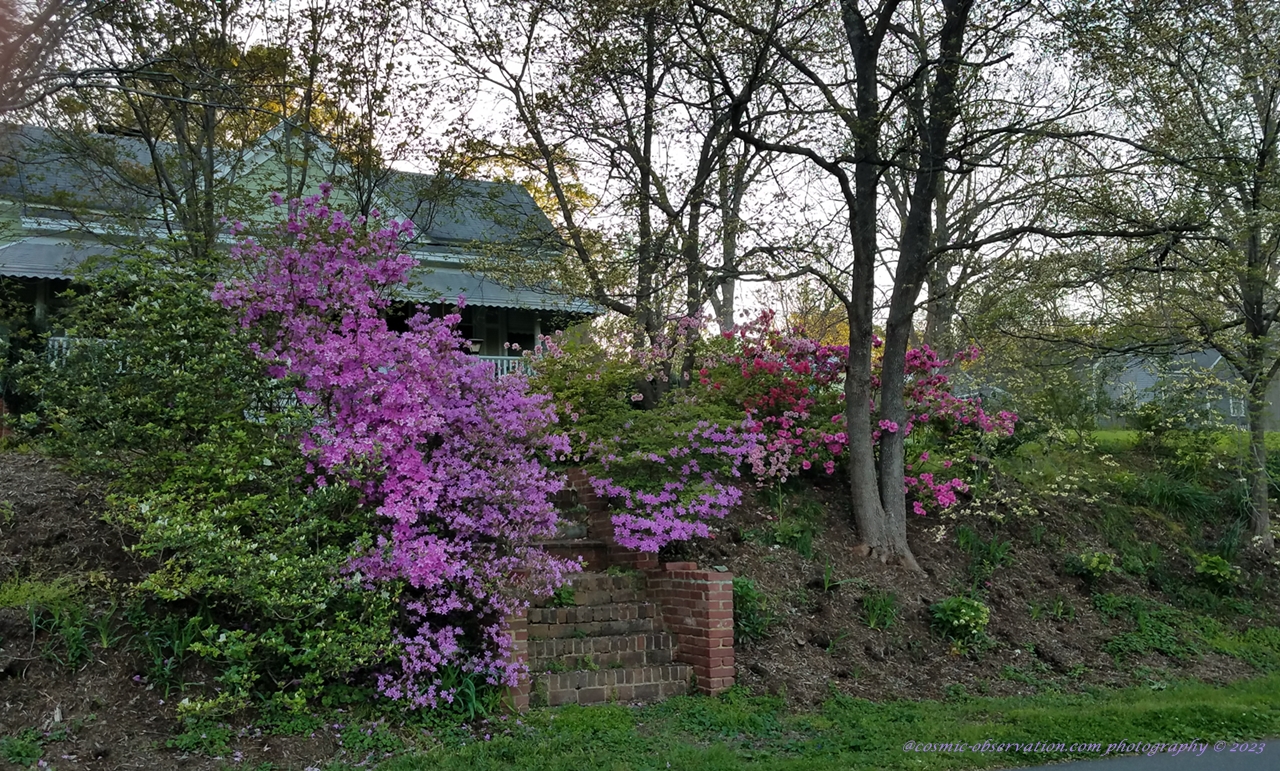
Click for a larger view.
Picture of the Day
Movie Monday: The Princess In The Vase 1908
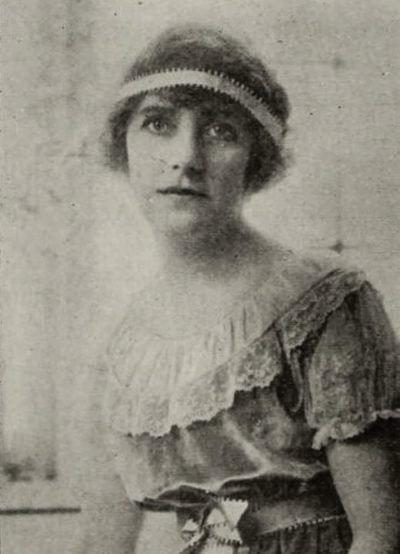
One-hundred, fifteen years ago, today, the short, silent black & white comedy The Princess In The Vase was released. Directed by Wallace McCutcheon, Sr., it starred only three actors…D.W. Griffith, Edward Dillon and Linda Arvidson, Griffith’s then-wife. Griffith is the Lover, Arvidson is the Lady-in-Waiting and Dillon is the Waiter. C. W. “Billy” Bitzer was the cinematographer.
The opening scenes of this production are laid in Egypt, five hundred years before Herodotus, the Father of History, visited that country. Three thousand years ago, there dwelt in Egyptian Memphis, the ancient capital of the Pharaohs, a wealthy prince, whose wife in beauty was likened to [Hathor], the Egyptian Venus, with [a] heart as cold as Egyptian marble. The prince, worried and suspicious, seeks the royal seer, who tells him the princess has a lover and, in a vision, shows him the princess in the arms of that lover, a Theban warrior. Instant death is the punishment meted out to the guilty pair. The princess is placed on a bier and carried out in front of the Temple, under the very shadow of the Pyramids of Gizah. Here, the High Priest, with a flambeau, sets fire to the pyre and her body is burned as an offering, with prayers, to mighty Osiris, beseeching that he overcome Typhon, who seems to hold sway. Alongside the pyre is placed a vase, decorated with hieroglyphics, which is to be the sarcophagus, of that ethereal, of the unfortunate princess. The smoke and vapor, as it arises from the body, enters the vase in a most mysterious manner. The vase is then sealed and the cavalcade proceeds with it to the tomb, where it is deposited and the door of the tomb closed, it was thought forever. Three thousand years later, there came to the “Land of Ruins” a Boston professor, student of the illustrious Jean Francois Chainpollion, discoverer of the key to Egyptian hieroglyphics, who unearthed the vase and took it to his home in Boston. Vague, indeed, was the story he learned about the treasure and, while sitting in his study, cudgeling his brain to lift the veil of mystery from it, falls to sleep. [In] this psychological condition, [he] imagines the maid, while dusting, knocks the vase from the tabouret on which it stands. Bursting into bits, it emits a dense vapor, from which the reincarnated princess appears. Here is trouble. Our friend, the professor, is a married man, whose better-half is a buxom, unethereal person, who doesn’t believe in the “Soul Sister” tommyrot. She, of course, wants an explanation, which the nervous professor is unable to give, so he bolts and runs hatless out of the house, followed by the princess, both followed by Mrs. Professor. Into a restaurant he rushes, with the princess at his heels. At the restaurant, as they sit enjoying a repast, the reincarnated Theban lover appears and claims the princess. This, the old professor resents and is run through by the Egyptian just as the wife enters. Mortally wounded, he falls to the floor, from the sofa, [as] the scene changes and we find the professor awakening from a horrible dream, the pain of the sword thrust being induced by a severe attack of indigestion.
There are no videos of this or any pictures. Since the movie was about a Princess, I grabbed a photo of Linda Arvidson from her IMDb profile. She also has a nice picture on Wikipedia, linked, above. The film is listed for 1908 releases and there is a note/citation referencing a mention of this short in Horror In Silent Films: A Filmography 1896-1929, though IMDb does not tag this as a horror. The production company was American Mutoscope & Biograph Company, the first company in the US devoted entirely to film production and exhibition. There is a survival status of some print in the Library of Congress. I wish I had more. ~Vic
POTD: Real Clouds
As opposed to chemtrailed fake ones… ~Vic
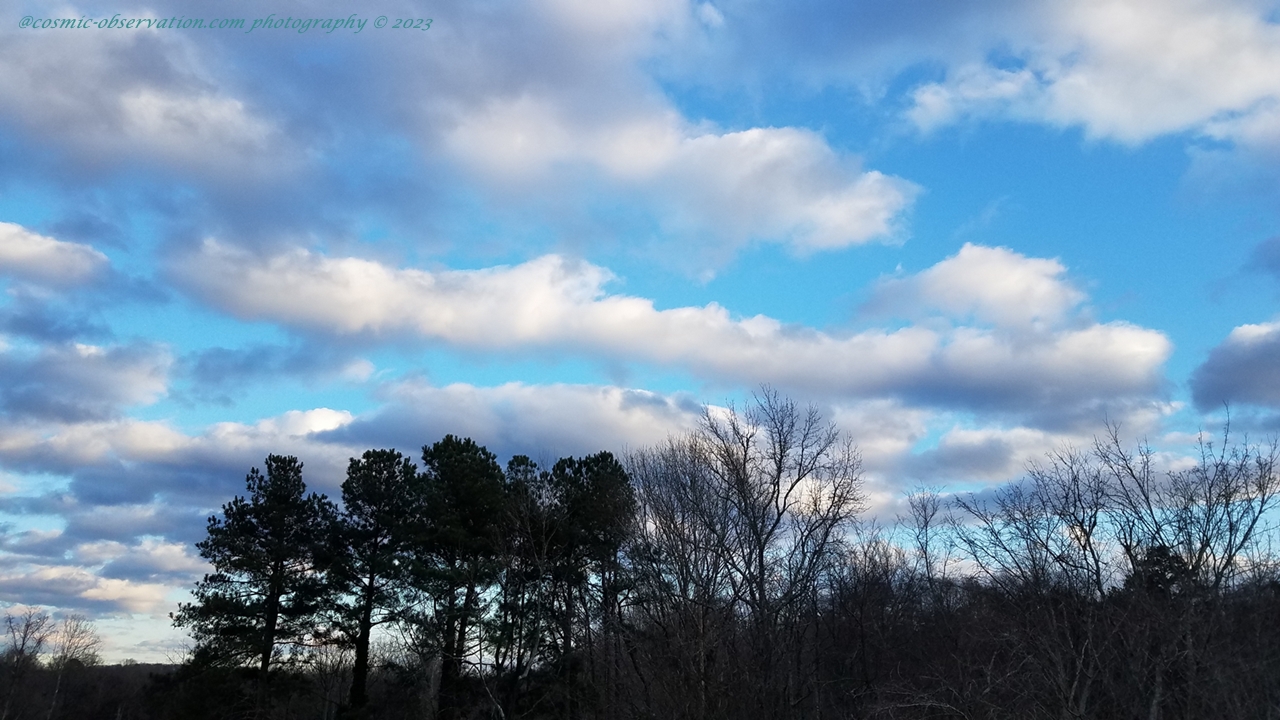
Click for a larger view.
Picture of the Day
Song Sunday: Radar Love

“I’ve been drivin’ all night, my hands wet on the wheel…There’s a voice in my head that drives my heel…
Submitted for your approval, returning to my Samsung playlist, I present Radar Love by Golden Earring, a Dutch hard-rock/progressive rock band. I can’t imagine that anyone out there hasn’t heard this song at least once. Founded in 1961 in The Hague, Netherlands, most of their extensive material didn’t even chart in the US. In the 60 years of their existence, they made 25 studio albums, eight live albums, two compilation albums and an impressive 74 singles. Originally named The Tornadoes…
Golden Earring was formed in 1961 in The Hague by 13-year-old George Kooymans and his 15-year-old neighbour, Rinus Gerritsen. Originally called The Tornados, the name was changed to Golden Earrings, when they discovered that The Tornados was already in use by another group.
They [achieved] their first success in 1965 with “Please Go,” as a pop rock band with Frans Krassenburg as lead singer. By 1969, the rest of the lineup had stabilized, with lead vocalist and multi-instrumentalist Barry Hay and drummer Cesar Zuiderwijk. By ’71, they [were] a regular presence on Dutch charts and [were] starting to climb up the ladder in Germany. They [signed] on to the Who’s Track label, which released a compilation of Dutch singles, Hearing Earring, helping the group break through in England.
Golden Earring
Prog Related/Netherlands
Prog Archives
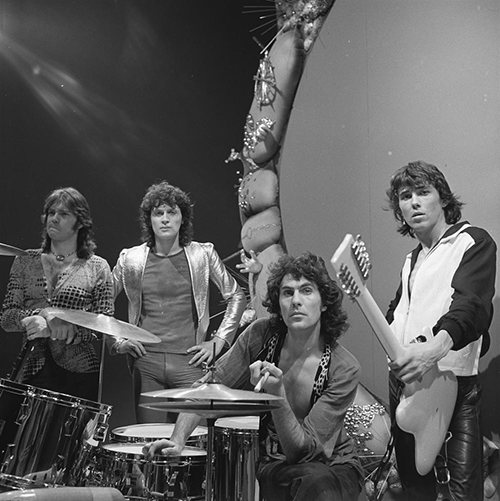
Date: April 19, 1974
Author: AVRO
Source: Netherlands Wiki
Image Credit: Wikipedia
The young group initially baptizes itself as The Tornadoes but, when that name turns out to have already been claimed by another band, they switch to The Golden Earrings – loosely based on a song by the British band The Hunters.
While most Dutch pop bands from the sixties stumble over the threshold to the seventies, the Golden Earring – as the band has come to call itself – emerges from the decade strong and confident.
In 1973, Golden Earring aspires to make an album that is of international allure both artistically and commercially. A lot of time is put into writing and recording what will eventually become Moontan. The mission succeeds brilliantly. Candy’s Going Bad, Radar Love, Just Like Vince Taylor and The Vanilla Queen are among the best the band has written to date.
Both Moontan’s first single Radar Love are a resounding success. First in the Netherlands, then in the rest of Europe and finally in America – where the album was released in 1974. Radar Love even becomes a big hit, with a 13th place as the highest listing. In the following years, however, the song will mainly grow into one of the ultimate car songs, which can still be heard daily on American radio stations. Radar Love has been covered by hundreds of international acts over the decades, including U2, White Lion, Ministry and Def Leppard. Both the single and the album are an undisputed milestone in Dutch pop history.
Golden Earring Biography Page (Google will have to translate.)

It’s not really normal for a band eight albums into their career to suddenly enjoy a worldwide breakout. And, for it to happen with a track over six minutes long with elongated instrumental passages and a somewhat mysterious narrative is even stranger. “…the song most likely to inspire a speeding ticket some 47 years after it was first released.” Barry Hay, the group’s lead singer and lyricist, explained in a recent interview with American Songwriter that a record company push gave then some hope.
“We signed up with Track records, the label of The Who,” Hay says. “And, they really put an effort into it, because they had a sort of monkey wrench. If they could put us together on tour in Europe, they could put us together in Madison Square Garden. So, [we’re] sort of the sons of the Who.”
“At first, the opening line was ‘I’m sitting in a bathtub.’ And, I thought, ‘That’s hardly masculine.’ Then, I came up with sitting in a car.”
“…Hay managed to come up with effortless couplets […] while tying them together in a resonant story of a mystical connection between two separated lovers. […] I remember, in those days, I was really interested in ESP. I read some shit about it. […] Like there’s an accident but, these people still have ESP, they still have contact in a way. Which is sort of a magical thing…
It also inspired a million interpretations but, Hay says that the tragic one is correct. “The guy actually dies,” he says of the song’s narrator. “That’s the gist of the whole thing. In a way, she still has contact with him. There is an afterlife.”
Behind The Song: Radar Love
American Songwriter
Jim Beviglia (Written three years ago)
Unfortunately, Golden Earring is no more:
Golden Earring Co-Founder George Kooymans Retires After ALS Diagnosis
The Band Calls It Quits ~Vic
Additional:
♦ The Virgin Encyclopedia of Heavy Rock (Colin Larkin/1999/Internet Archive/Pages 187-188/Sign-In Required)
♦ It’s Prog Jim, But Not As We Know It: Golden Earring (Louder Sound/Prog/Malcolm Dome/10-28-2014)
Chris Thomas: Time-Lines
A PDF Essay From: The Chris Thomas Files
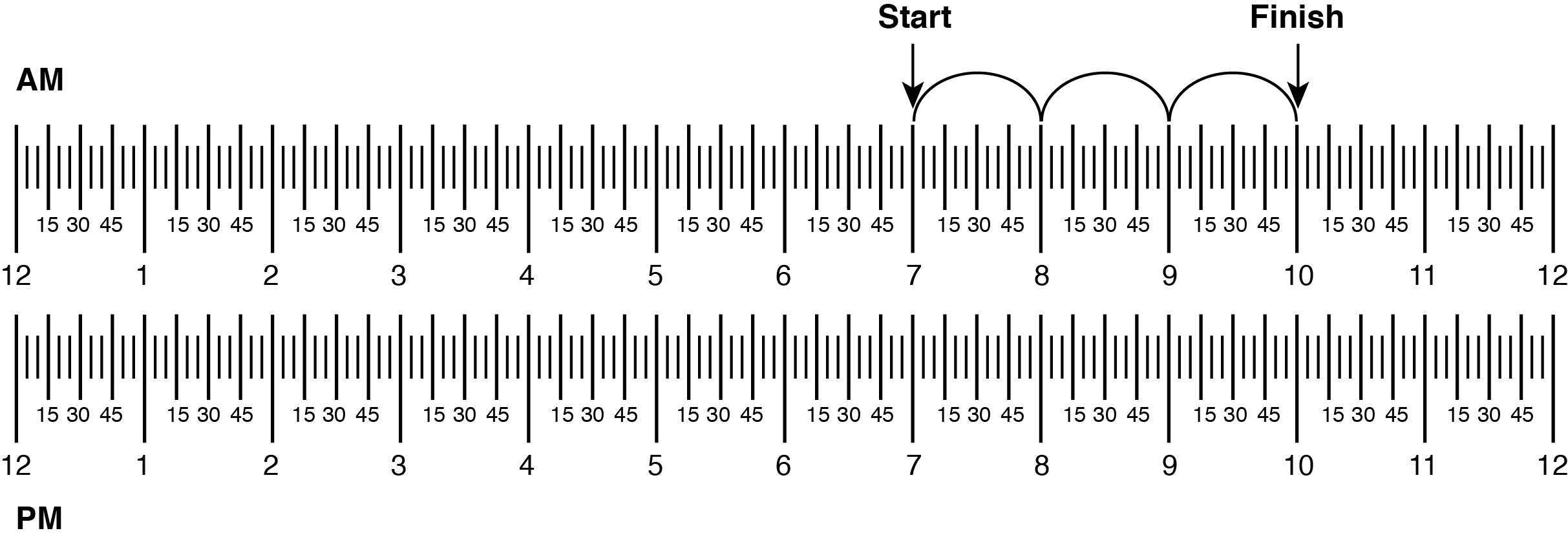
There is a great deal of confusion raging over the issue of time and whether there are alternate time-lines at work on Earth and, if so, will these alternate time-lines have any affect on the changes in consciousness we are currently undergoing. To begin with, we need to understand the nature of time and how it affects our lives, whether on Earth or in the Universe beyond. On Earth, we are used to understanding time as being a linear progression. Our Earth revolves around the sun on an orbit that takes a regular, measurable, quantity of time to complete. We take this orbital time as one year. Each year is sub-divided in ways which depend upon the amount of sunlight received by regions of the planet…these are the four seasons.
Next, the Earth revolves on its own axis, producing periods of day light and periods of darkness, called night. We have divided this regular day-time/night-time pattern into 24 hours, each hour being divided into 60 minutes which are further sub-divided into 60 seconds. So, as far as the inhabitants of Earth are concerned, time is divided into a series of regular units which count off the time-span of our lives. Ultimately, this form of measurement and division is dependent on light and the speed at which it travels. In our solar system, light has been measured to travel at 30,000,000 metres per second or 186,000 miles per hour…or thereabouts. However, we live in a solar system which is unique and the speed at which light travels is not the constant that scientists like to think it is once we leave the solar system.
Time As An Energy
To begin to understand how everything fits together, we have to step away from the limited scientific ways of gaining knowledge and turn to the “memory” that is a fundamental part of the structure of this Universe. This “memory” is more usually called “The Akashic”. The Akashic contains the record of everything that has ever occurred within this Universe. As someone who has the ability to access this record keeping aspect of the Universe, the author has spent thirty years exploring this information source to try to find answers to the problems we have been encountering on Earth. When it comes to understanding the workings of the Universe, the Akashic is a totally reliable source and is totally contradictory to the way in which scientists have theorised its workings over the centuries.
We live in an energetic Universe. This means that all that we see in the night skies is comprised of energy. The same applies to Earth. Everything we think of as being physical is not actually solid but, comprised of energy. Our brains and senses work in such a way as to make us believe that we live in a physical world whereas, all is energy of different, and differing, frequencies which our brains interpret as being solid. In this sense, we tend to experience time as a solid thing…one second follows another as the Earth revolves and the sky darkens or lightens. Time “feels” physical to us.
However, if we step outside of our solar system, everything begins to change. Light travels at different speeds and, therefore, our perception of time alters and linear measurements of time do not necessarily apply…and certainly do not apply in the way in which we measure time on Earth. If it were possible to stand at a point which was at the centre of the Universe, we would see time as two energy spirals…one stretching behind us, back in time and, one stretching in front of us which would represent the future. If we had sufficient energy potential, we could travel backwards in time but, we could not travel forwards…we cannot travel to a time which does not yet exist.

Quantum Physics’ Alternate Universes
Most of the explanations provided by scientists are based on the world being a physical place as theorised by Isaac Newton in the 1700’s. Science sees the conditions that exist on Earth and tries to apply those same conditions to the Universe as a whole. The scientific view began to change about 100 years ago when they started to explore that which exists at levels below the size of an atom. The term “quantum” means the smallest quantity of some physical attribute that a process or system contains.
In this new realm, everything that they thought applied to the world had to be newly explored and understood. As far as science is concerned, the quantum world bears little resemblance to the world outside, the world they thought they understood. As their exploration of the quantum progressed, they began to develop new theories to make their experiments explainable. One thing they did find was that the scientist could create his own reality. If a scientist “thought” that light travelled in particles, his experiments “proved” that light travelled in particles. If a scientist believed that light travelled in waves, his experiments “proved” that it travelled in waves. In other words, the experimenter “created” his own reality.
The experiments and observations carried out into quantum phenomena showed, time and time again, that it is what the scientist believed the outcome would be that determined what actually happened. This led to a great deal of theorising about how the world, and the Universe at large, actually works. As they daydreamed about the nature of reality and how the scientist could create their own, they began to postulate about “alternate” realities. Quite why they should do this is not explained given that they have not even begun to understand our current reality.
Essentially, scientists studying the quantum world started thinking about their experiments. If what I think is going to occur does occur, what happens to all of the answers received by other scientists? To try to make sense of this, they came up with the idea that every scientist’s experiment formed its own reality and these alternate realities must exist somewhere. If the nature of the Universe is determined by how someone thinks it works, then, all of the other theories must create a universe of their own. And, if new universes were created, then, there must be different time-lines running parallel to ours. So this is how the concept of alternate, parallel universes arose and, how the concept of alternate and parallel time-lines fitted in with it.
The alternate, parallel universe concept runs something like this:
If I am faced with making a decision, I consider all of the possible alternate options I am aware of. I consider all of these alternative answers and choose one which I believe will work and, then, act on it. Taking action on my decision fits into the current time-line. But, what of all of the alternate options that I rejected? Each of those answers were viable in some way and could have resolved the problem I needed to decide on. Therefore, each possible option could lead to a different solution to the problem and, that alternative solution must exist somewhere…which runs on its own independent time-line. This, obviously, does not encroach on our current time-line, therefore, it must exist in an alternate universe!
The author’s own research into this theory would indicate that it is a hangover from too many post-conference alcoholic beverages.
To return to reality and the Akashic…
To continue reading (it’s eight pages), download the PDF version HERE.
[Note: This PDF was originally posted on The Spirit Guides UK website on August 23, 2011.]
POTD: Tonight’s Sky

You can barely see the Crescent Moon
Click for a larger view.
Picture of the Day
Tune Tuesday: In The Good Old Summer Time 1903

1896 Publicity Photo
National Phonograph Co.
One hundred, twenty years ago, today, the #1 song in 1903 was In The Good Old Summer Time by the Haydn Quartet. In a previous post, I stated that Tsort has very few charts prior to 1920. Music popularity just wasn’t tracked as closely as it is, today. For music this old, I plug in a date on Playback FM and run with it.
Written by Ren Shields and composed by George “Honey Boy” Evans, it is a Tin Pan Alley song, originally published in 1902. Blanche Ring assisted in having the number added to the 1902 comedy musical The Defender. There is also a John Philip Sousa band version.
The Haydn Quartet was originally formed in 1896 as the Edison Quartet. They eventually changed their name to Haydn, an homage to Joseph Haydn and as a way to record for other companies besides Edison Records.
In The Good Old Summer Time was a very popular song for its time and John Scantlebury MacDonald, a replacement member of the Edison Quartet, went on to record the song, solo. It was the Haydn Quartet’s biggest commercial success while contracted with the Victor Talking Machine Company.
 Cosmic-Observation