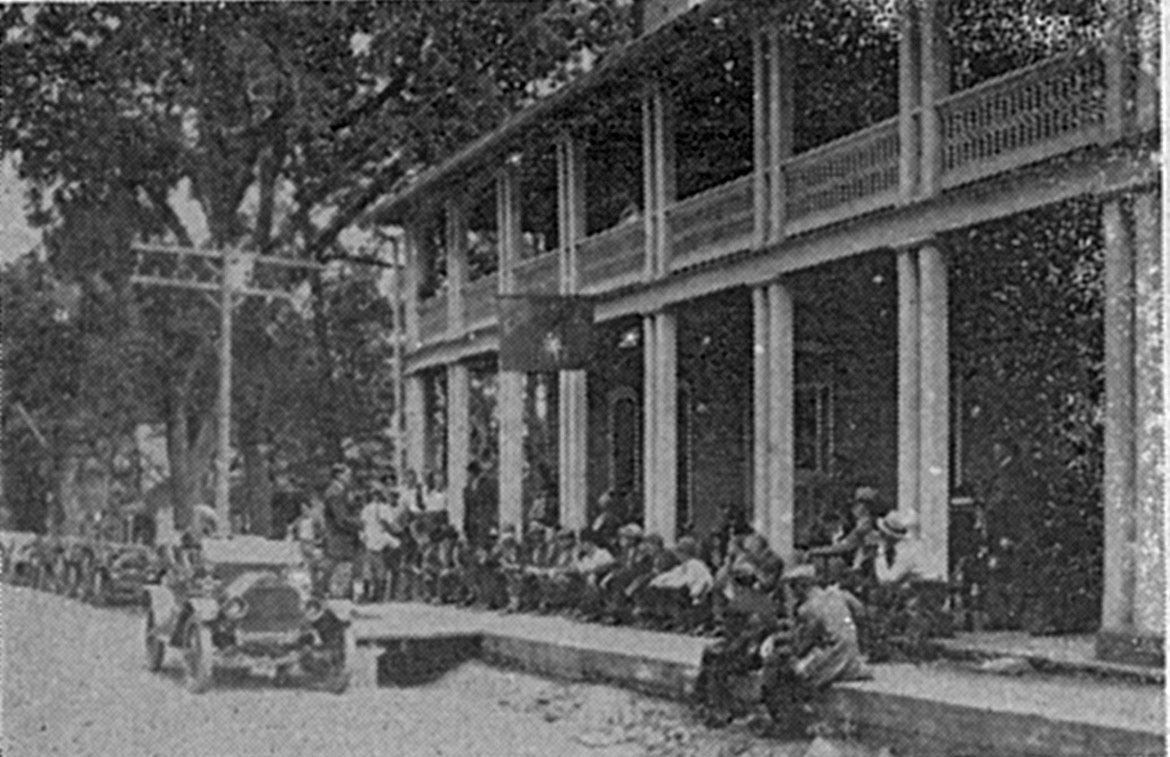
The structure known today as the Colonial Inn was built on Lot 15 in 1838 as a hotel and was locally called Spencer’s Tavern […] but, was advertised as the Orange Hotel (a name which lasted into the 1880s). The structure was built for Isaac (Isaiah) Spencer (from Hyde County) who had purchased the property in late 1837. In 1841, Richardson Nichols purchased the property from Spencer and expanded the main structure. In 1856, Nichols sold the structure to the “Hillsborough Improvement Company” which consisted of Alfred, Henry and Cave Stroud.
Stroud family history has it that Henry’s wife (Sarah) saved the Inn from looting by Union troops by displaying her husband’s Masonic apron. Upon seeing the apron, a sympathetic Union officer, [whom] was a fellow Mason, protected the site from destruction.
Strayhorn’s Hotel
1870
Image Credit: Rootsweb
William F. Strayhorn may have purchased or, at least, managed the business beginning in 1868 and, the property was purchased by local businessmen Henry N. Brown and Charles M. Latimer (who was also the county treasurer) in 1870. Brown and Latimer apparently lost the property through bankruptcy in 1872, with Strayhorn managing or operating the hotel until at least then. Perhaps related is that Strayhorn had been living in Twin Chimneys across the street from the hotel but, lost it due to financial problems in January 1869. [It] was purchased by David C. Parks in December 1872. In 1885, Parks sold the property to neighboring property owner Emily Pogue, who sold it back to Parks in 1888. [At] this time, it became known as the Occoneechee Hotel.
Looking East
1890s
Image Credit: Rootsweb
In 1908, Thomas A. Corbin purchased the property and renamed the complex the Corbinton Inn. In 1921, W. L. Foushee […] purchased the property from a H. L. Akers and by 1924, renamed the hotel the Colonial Inn. In 1946, Paul Henderson purchased the property from Foushee […].
During Henderson’s ownership, a “fine-dining” restaurant was added within the hotel structure. In December 1952, Charles and Ann Crawford purchased the property and business and, expanded the structure. They operated the business successfully until they, in turn, sold it to James and Maxine Freeland in 1969. The Freelands also expanded the structure and, continued the hotel and restaurant business at the location.
Looking WSW
1960s
Photo Credit: Open Orange
It fell into disrepair for many years. When I moved to this town in 2011, it looked bad.
10-23-201610-23-2016
The good news is, new owners are re-building. ~Vic
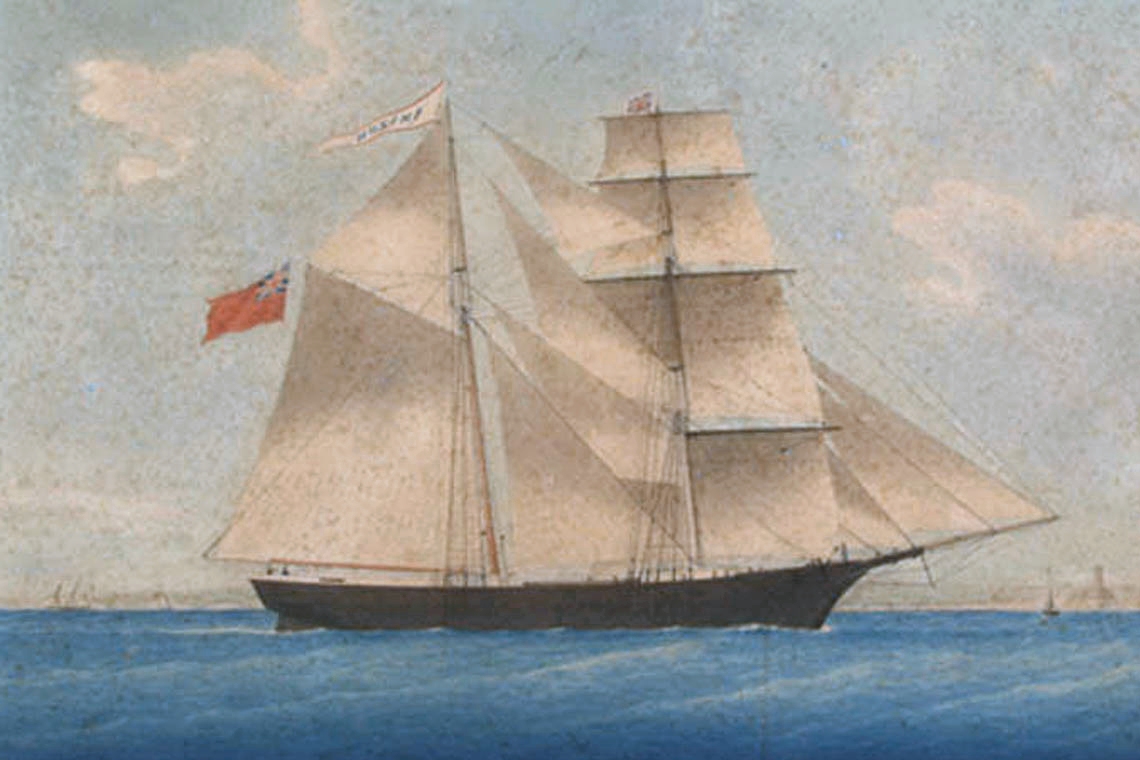
A merchant brigantine, the Mary Celeste was built at Spencer’s Island, Nova Scotia and launched under British registration as Amazon in 1861. She was transferred to American ownership and registration in 1868 when she acquired her new name. Thereafter, she sailed, uneventfully, until her 1872 voyage.
[She was] discovered adrift and deserted in the Atlantic Ocean off the Azores Islands on December 4, 1872. The Canadian brigantine Dei Gratia found her in a disheveled but seaworthy condition under partial sail and with her lifeboat missing. The last entry in her log was dated ten days earlier.
She left New York City for Genoa on November 7 and [the] Dei Gratia departed for Gibraltar on November 15, following the same general route eight days [later]. [She] was still amply provisioned when found. Her cargo of denatured alcohol was intact and, the captain’s and crew’s personal belongings were undisturbed. None of those who had been on board were ever heard from again.
Image Credit: gutenberg.org
At the salvage hearings in Gibraltar following her recovery, the court’s officers considered various possibilities of foul play, including mutiny by Mary Celeste’s crew, piracy by the Dei Gratia crew or others and conspiracy to carry out insurance or salvage fraud. No convincing evidence supported these theories but, unresolved suspicions led to a relatively low salvage award.
The inconclusive nature of the hearings fostered continued speculation as to the nature of the mystery and, the story has repeatedly been complicated by false detail and fantasy. Hypotheses that have been advanced include the effects on the crew of alcohol fumes rising from the cargo, submarine earthquakes (seaquakes), waterspouts, attack by a giant squid and paranormal intervention. The story of her 1872 abandonment has been recounted and dramatized many times in documentaries, novels, plays and films and, the name of the ship has become a byword for unexplained desertion.
[Were] it not for Dr. Arthur Conan Doyle, struggling to establish himself as a writer prior to creating Sherlock Holmes, perhaps the world would not have ever known or cared [about the ship]. Conan Doyle’s short story about the ‘Marie Celeste‘ (he changed the name from Mary) turned a minor puzzle into one of the most famous legends of the sea. Nevertheless, we should recognise it was fiction, for which his editor paid 30 Pounds, […] a respectable sum in 1884.
Memorial Day, as celebrated, has come and gone. The weekend BBQs and party gatherings are over. Some folks have returned to work after their Monday off while others took the entire week off and, possibly, headed to the beach to herald the “summer season”. I am posting, today, because from 1868 to 1970, Memorial Day was observed on May 30.
So, what IS the origin of our Memorial Day? That’s a good question and the following took two days to research.
May we remember them, ALL. ~Vic
Warrenton, Virginia 1861
A newspaper article from the Richmond Times-Dispatch in 1906 reflects Warrenton‘s claims that the first Confederate Memorial Day was June 3, 1861…the location of the first Civil War soldier’s grave ever to be decorated.
Arlington Heights, Virginia 1862
On April 16, 1862, some ladies and a chaplain from Michigan […] proposed gathering some flowers and laying them on the graves of the Michigan soldiers that day. They did so and the next year, they decorated the same graves.
Savannah, Georgia 1862
Women in Savannah decorated soldiers’ graves on July 21, 1862 according the the Savannah Republican.
Gettysburg, Pennsylvania 1863
The November 19, 1863, cemetery dedication at Gettysburg was a ceremony of commemoration at the graves of dead soldiers. Some have, therefore, claimed that President Abraham Lincoln was the founder of Memorial Day.
Jackson, Mississippi 1865
The incident in Mrs. [Sue Landon Adams] Vaughan’s life, which assured her name a permanent place in history, occurred at Jackson […] when she founded Decoration Day by first decorating the graves of Confederate and Federal soldiers alike, in a Jackson cemetery on April 26, 1865.
Kingston, Georgia 1865
An historic road-side marker indicates Kingston as the location of the “First Decoration, or Memorial Day” (Late April 1865).
Columbus, Georgia 1866
To the State of Georgia belongs the credit of having inaugurated what has since become the universal custom of decorating annually the graves of the heroic dead. The initial ceremonies which ushered Memorial Day into life were held in Linnwood Cemetery, at Columbus, on April 26, 1866.
Memphis, Tennessee 1866
Yesterday was the day appointed throughout the South as a day of sweet remembrance for our brothers who now sleep their last long sleep, the sleep of death. That day (the 26th day of April) has, and will be, set apart, annually, as a day to be commemorated by all the purely Southern people in the country, as that upon which we are to lay aside our usual vocations of life and, devote to the memory of our friends, brothers, husbands and sons, who have fallen in our late struggle for Southern independence.
Carbondale, Illinois 1866
A stone marker in Carbondale claims that place as the location of the first Decoration Day, honoring the Union soldiers buried there. General John A. Logan, who would later become commander-in-chief of the Grand Army of the Republic, the largest of the Union veterans’ organizations, officiated at the ceremony (April 29, 1866).
Richmond, Virginia 1866
The anniversary of the death of Stonewall Jackson was observed to-day by floral decorations of the graves of Confederate soldiers at Hollywood and Oakwood (May 10, 1866).
May 3, 1866 [they] formed the Ladies’ Hollywood Memorial Association, with the immediate aim of caring for and commemorating the graves of Confederate soldiers. All disposed to co-operate with us will repair, in such groups and at such hours as may be convenient, on Thursday, May 31st, 1866, to Hollywood Cemetery, to mark, by every appropriate means in our power, our sense of the heroic services and sacrifices of those who were dear to us in life and we honored in death.
Petersburg, Virginia 1866
It was in May of this year, 1866, that we inaugurated, in Petersburg, the custom, now universal, of decorating the graves of those who fell in the Civil War. Our intention was simply to lay a token of our gratitude and affection upon the graves of the brave citizens who fell June 9, 1864, in defence of Petersburg…
Dinner on the grounds is not a phrase I hear these days. Just reading the phrase takes me back to those times with my grandmother at her church on […] Decoration Day Sunday. I grew up in north Alabama in the 1960s. Dinner on the grounds was a special occasion that followed the work of cleaning up the graveyard and placing fresh flowers beside the headstones. It provided a time to remember and celebrate the lives of the dear departed. ~Betsy Sanders
Today, we are here to eat, remember and bask in the Southern fascination of death […]. It’s Decoration Day. The South claims death with as much loyalty as we claim our children. J.T. Lowery, a former pastor […] misses when Decoration Day meant keeping company with headstones during dinner on the ground. Opal Flannigan is depending on women […] to uphold a tradition so old it’s hard to say when it emerged. German and Scots-Irish immigrants who birthed much of the Southern Appalachia’s culture in Virginia, Tennessee and the Carolinas likely brought these traditions [with them]. ~Jennifer Crossley Howard
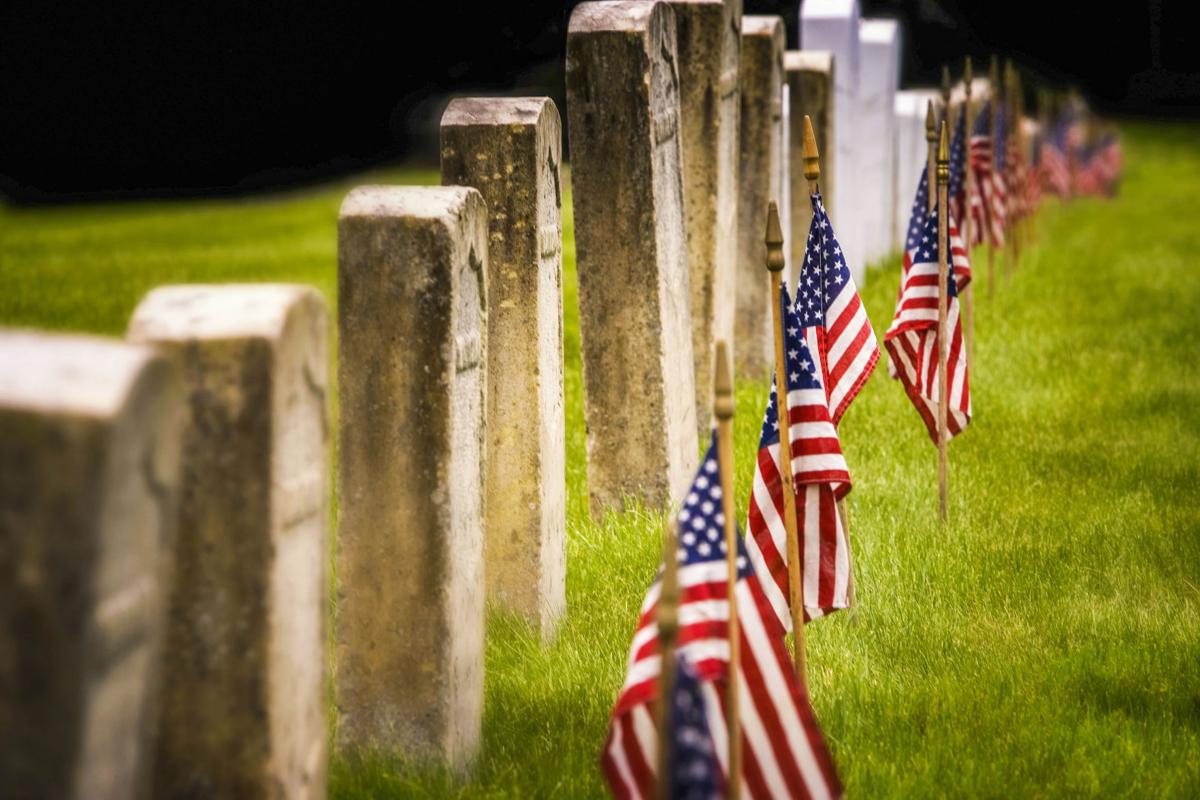
Many rural community cemeteries in western North Carolina hold “decorations.” A decoration is a religious service in the cemetery when people decorate graves to pay respect to the dead. The group assembles at outdoor tables, sometime in an outdoor pavilion, for the ritual “dinner on the ground.” There are variations of this pattern but, the overall pattern is fairly consistent.
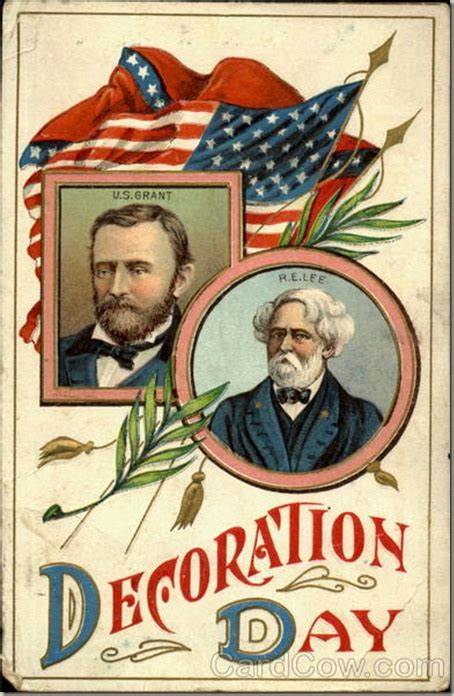
By proclamation of General John A. Logan of the Grand Army of the Republic, the first major Memorial Day observance is held to honor those who died “in defense of their country during the late rebellion.” Known to some as “Decoration Day,” mourners honored the Civil War dead by decorating their graves with flowers. On the first Decoration Day, General James Garfield made a speech at Arlington National Cemetery, after which 5,000 participants helped to decorate the graves of the more than 20,000 Union and Confederate soldiers buried in the cemetery.
The 1868 celebration was inspired by local observances that had taken place in various locations in the three years since the end of the Civil War. In fact, several cities claim to be the birthplace of Memorial Day, including Columbus, Mississippi; Macon, Georgia; Richmond, Virginia; Boalsburg, Pennsylvania; and Carbondale, Illinois. In 1966, the federal government, under the direction of President Lyndon B. Johnson, declared Waterloo, New York, the official birthplace of Memorial Day. They chose Waterloo, which had first celebrated the day on May 5, 1866, because the town had made Memorial Day an annual, community-wide event, during which businesses closed and, residents decorated the graves of soldiers with flowers and flags.






 Cosmic-Observation