1962
Hell Is Freezing Over Day

This isn’t a National Day but, it is a recognized day…of some such celebration. I had to laugh when I saw this one. I like the weird and funky day observations. ~Vic
While we don’t know who created this cold holiday, it must have been someone who finally saw the unthinkable happen. All of us have used it multiple times in our lives. Hell freezing over has also been referenced in popular culture and is the name of the Eagles album that was released in 1994. In an interview, when one of the band members [Don Henley…1980] was asked when they will reunite again, after they announced their break, he said, “When hell freezes over…” implying that a reunion was highly unlikely. They did, however, get back together after a 14-year break and, thus, their second live album was named “Hell Freezes Over.” It was also used in a speech at the United Nations in 1962 by the late Adlai Stevenson ’22.
National Today
Every January 31st, hell freezes over. At least, that’s what Hell Is Freezing Over Day suggests. This holiday must have been created by someone who witnessed something they believed would never happen. After all, the phrase “when hell freezes over” is used to describe the improbability of an event occurring. It’s an idiom that originated in the 19th century and has remained popular well into the 21st century. [It] was first coined in Middle American English to describe an unlikely event. During this time, hell was depicted as one of the hottest places in the universe and a plane of reality that would remain hot for eternity. Thus, it would be seen as highly unlikely that it would ever freeze over. Now that we’ve explained the origins of this idiom, we decided to investigate and see if we could uncover the origins of this holiday. Unfortunately, that is just something we couldn’t accomplish.All that we know about this holiday is that it was created sometime after 2001. We still don’t know who invented it or why they did so. I guess we’ll uncover the entire history behind this holiday when hell freezes over.
Holidays Calendar
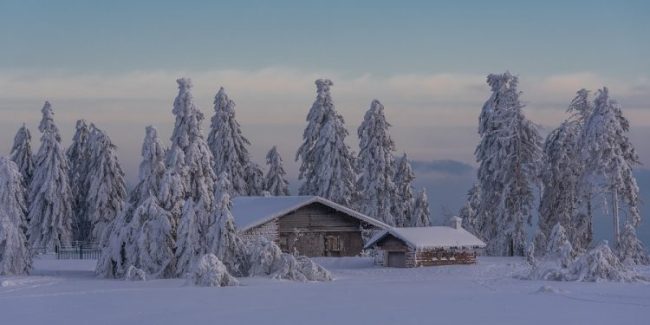
In honor of what are some of the coldest feeling days of the year for many people who live in northern places, Hell is Freezing Over Day is here so that everyone can share in the misery together. It’s true that it doesn’t always help to complain, because it certainly isn’t going to change anything but, sometimes it makes a difference to remember that no one is alone and everyone feels like hell is actually freezing over. So, get ready to enjoy the day as much as possible and celebrate the fact that winter won’t actually last forever!
Days Of The Year
Snapshots Sunday: Alamance Battleground 2.0
Two months ago, on December 7, 2019, I visited Alamance Battleground with my buddy Ray. I posted the first batch of pictures on December 8, intending to post the rest on December 14. For obvious reasons, that didn’t happen so, here are the rest.
All photos are my personal collection. © ~Vic

Originally located at Guilford Courthouse Military Park
Moved in 1962, “on indefinite loan.”


It is claimed that the battle was the first of the Revolutionary War.
It was actually the last battle of the War of Regulation,
which lead to the Revolutionary War.

James Hunter
General of the Regulators

North Carolina Timeline
1774 North Carolina Provincial Congress
The Mecklenburg Declaration 1775
Battle of Moore’s Creek Bridge 1776
North Carolina is the first to call for independence
with the Halifax Resolves 1776

Six were executed.
“Our blood will be as good seed in good ground,
that will soon produce one hundred fold.”
James Pugh June 19, 1771


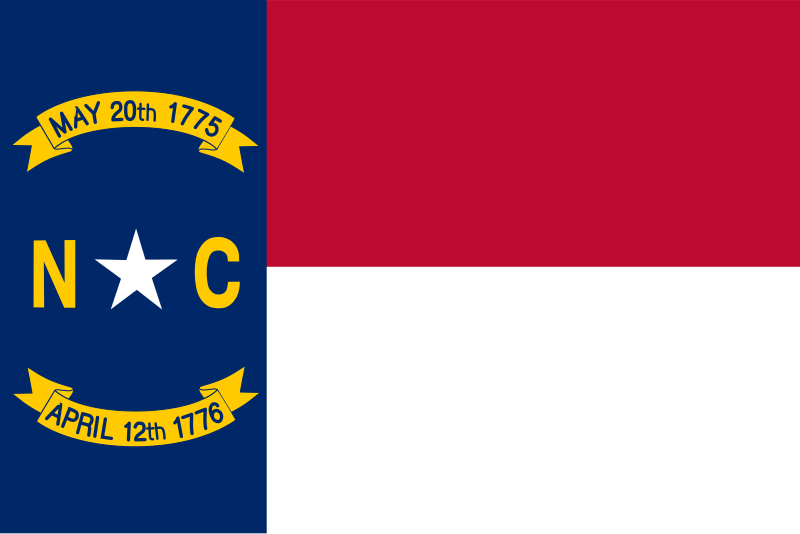
Dates reflect the Mecklenburg Declaration of Independence (disputed but,
possibly Mecklenburg Resolves) and
the Halifax Resolves.
Wayback Wednesday: Operation Northwoods 1962

Fifty-seven years ago, today, a document…a memorandum was typed up. It was a proposal from the Chairman of the Joint Chiefs of Staff, Lyman Lemnitzer, submitted to President Kennedy via Defense Secretary McNamara.

(Difficult to read on a phone)
From Wikipedia:
The proposals called for the Central Intelligence Agency (CIA), or other U.S. government operatives, to commit acts of terrorism against American civilians and military targets, blaming them on the Cuban government and, using it to justify a war against Cuba. The plans detailed in the document included the possible assassination of Cuban émigrés, sinking boats of Cuban refugees on the high seas, hijacking planes, blowing up a U.S. ship and orchestrating violent terrorism in U.S. cities. The proposals were rejected by [The President].
The John F. Kennedy Assassination Records Review Board finally released the document to the public on November 18, 1997. The proposed operation came on the heals of the failed Bay of Pigs Invasion and Operation Mongoose.
♦ The entire Archived Document.
♦ ABC News Article
♦ Additional Reading
I’m not going to reinvent the wheel, here, with this data. Aaron & Melissa Dykes have done a terrific video investigation on this:
Tune Tuesday: Casa Loma Orchestra 1944

Seventy-five years ago, today, the #1 song on Billboard (pre-hot 100 era) was My Heart Tells Me (Should I Believe My Heart?) by Glen Gray, his Casa Loma Orchestra and singer Eugenie Baird. Written by Harry Warren (Lullaby of Broadway, Jeepers Creepers & That’s Amore) with lyrics by Mack Gordon (Chattanooga Choo-Choo), this was the theme for the 1943 musical film Sweet Rosie O’Grady. Betty Grable sang the song in the movie.
Glen Gray & his Orchestral version was number one for five weeks from January 29 to February 26, boosted by the popularity of the musical. As a popular standard for the 1940s, other well-known artists with their own versions include Etta Jones (1961), Frank Sinatra (1945), Nat King Cole (1958) and Tony Bennett (1955). Glenn Miller & his orchestra had a go in 1944, broadcasting to German soldiers. From Dance in the City (Page 191):
“One of the paradoxes of the Nazi terror was that SS officers themselves demonstrated a fondness for swing (Vogel, 1962).
Mike Zwerin (1985), in his exploration of jazz under the Nazis, described a Luftwaffe pilot who switched on the BBC hoping to catch a few bars of Glenn Miller before bombing the antenna from which these forbidden sounds were being broadcast. Allied propagandists recognised the potential for exploiting the contradictory allure that jazz possessed with Nazi society.
The sound barrier of 1944 was marked on the one hand by the music of the Nazi marches and on the other by the big band swing of Glenn Miller. The Allies attempted to exploit the popularity of swing inside Germany. On October 30, 1944, Miller’s swing tunes were aimed at German soldiers through the American Broadcast Station in Europe (ABSIE) in an effort to persuade them to lay down their arms.
Major Miller addressed German soldiers in their own language with the assistance of Ilse Weinberger, a German compere and translator. Ilse introduced Glenn Miller as the ‘magician of swing’ and, through a strange act of cultural alchemy, tunes like Long Ago and Far Away and My Heart Tells Me were rendered in German by vocalist Johnny Desmond.”
 Cosmic-Observation