Author: The Hinoeuma

Flashback Friday: Alcoholics Anonymous 1935

Author: John Leffman
Eighty-seven years ago, today, Robert Smith drank his last drink, the date marked by AA for its anniversaries.
Alcoholics Anonymous (AA) is an international mutual aid fellowship dedicated to abstinence based recovery from alcoholism through its spiritually inclined Twelve Step program. Following its Twelve Traditions, AA and autonomous AA groups are self-supporting through the strictly voluntary contributions from members only. The Traditions also establish AA as non-professional, non-denominational and apolitical, with an avowed desire to stop drinking as its sole requirement for membership. Though AA has not endorsed the disease model of alcoholism, to which its program is nonetheless sympathetic, its wider acceptance is partly due to many members independently promulgating it. A recent scientific review shows that by many measures AA does as well or better than other clinical interventions or no treatment. In particular, AA produces better abstinence rates with lower medical costs. As of 2020, having spread to diverse cultures, including geopolitical areas normally resistant to grassroots movements, AA has estimated its worldwide membership to be over two million with 75% of those in the U.S. and Canada.
AA marks 1935 for its founding when Wall Street analyst and newly recovering alcoholic Bill Wilson, then reeling from a failed proxy fight, sought to stay sober by commiserating with detoxing surgeon Bob Smith. After leaving the Oxford Group to form a fellowship of alcoholics only, Wilson and Smith, along with other early members, wrote Alcoholics Anonymous: The Story of How More Than One Hundred Men Have Recovered From Alcoholism, from which AA acquired its name. Published in 1939 and commonly called “the Big Book”, it contains AA’s Twelve Step recovery program. Later editions included the Twelve Traditions, first adopted in 1946 to formalize and unify the fellowship as a “benign anarchy”.
Wiki Summary
Wayback Wednesday: Attilla Attacks Italy 452
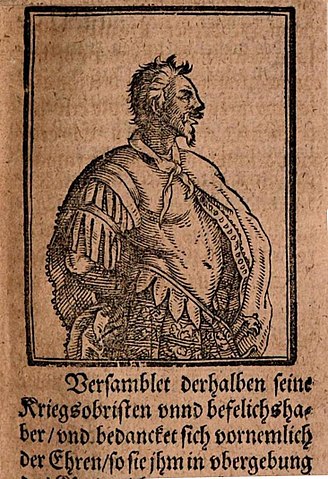
Author: Willhelm Dilich
Source: Ungarische Chronica
Image Credit: Wikipedia
Attila was the ruler of the Huns from 434 until his death in March 453. He was also the leader of a tribal empire consisting of Ostrogoths, Alans and Bulgars, among others, in Central and Eastern Europe. He is also considered one of the most powerful rulers in world history.
Attila [invaded] and [ravaged] Italy on June 8, 452, one-thousand, five hundred and seventy years, ago, today. Communities became established in what would later become Venice as a result of these attacks when the residents fled to small islands in the Venetian Lagoon. His army sacked numerous cities and razed Aquileia so completely that it was afterwards hard to recognize its original site. Aëtius lacked the strength to offer battle, but managed to harass and slow Attila’s advance with only a shadow force. Attila finally halted at the River Po. By this point, disease and starvation may have taken hold in Attila’s camp, thus hindering his war efforts and potentially contributing to the cessation of invasion.
Wiki Summary
Attila, by-name Flagellum Dei (Latin: “Scourge of God”) [ruled] jointly with his elder brother Bleda until 445. In legend, he appears under the name Etzel in the Nibelungenlied and under the name Atli in Icelandic sagas. The empire that Attila and his elder brother Bleda inherited seems to have stretched from the Alps and the Baltic in the west to somewhere near the Caspian Sea in the east.
In 452, the Huns invaded Italy and sacked several cities, including Aquileia, Patavium (Padua), Verona, Brixia (Brescia), Bergomum (Bergamo), and Mediolanum (Milan). Aetius could do nothing to halt them but, the famine and pestilence raging in Italy in that year compelled the Huns to leave without crossing the Apennines.
Attila, King of the Huns
Britannica Summary
Attila invaded northern Italy in 452 but, spared the city of Rome due to the diplomacy of Pope Leo I and the rough shape of his own troops. Legend has it that St. Peter and St. Paul appeared to Attila, threatening to strike him dead if he did not settle with Pope Leo I. Attila died the following year, in 453, before he could try once again to take Italy.
Attlia the Hun
Biography
POTD: Metal Buffalo
I am guessing on this one. I could just as easily be a Metal Lion. It’s hard to tell. ~Vic

Click for a larger view.
Picture of the Day
Movie Monday: Suffrage And The Man 1912

One hundred, ten years ago, today, the B&W silent, short comedy film Suffrage and the Man was released. Produced by the French company Eclair, in conjunction with the Women’s Political Union, its original title was Suffrage Wins Herbert.
A young man learns that his betrothed is leaning toward the suffragette cause. He remonstrates with her father to be told “My butler and my bootblack may vote, why not my wife and daughter?” He cannot agree, however and their quarrel brings about a broken engagement. Disappointed and unhappy, he seeks forgetfulness by going to a summer resort. There, he succumbs to the wiles of a designing mother and, caught in an embarrassing position, her daughter “feinting a faint” in his arms, he permits their engagement to be announced. He learns, by an accidental eavesdropping, of the mother’s trickery. He loses no time to denounce the deception and withdraw his offer of marriage. The mother and daughter promptly start suit tor breach of promise. In the meantime, votes have been won for women. The trial of the suit comes up before a mixed jury of men and women with the old sweetheart as forewoman of the twelve peers. Their verdict is acquittal and, as might be expected, “Suffrage Wins Herbert” with a permanently happy result in his reconciliation and marriage.
IMDb Summary
Written by: Moving Picture World
According to Silent Era, the director is unknown, the cast is unknown and the film’s survival status is unknown. There is one trivia bit…it is based on a story written by playwright Dorothy Steele. ~Vic
Shutterbug Saturday: Sky Gazing 6.0
Previous post here. ~Vic


Click for a larger view.

Click for a larger view.

Throwback Thursday: Rome Sacked 455

Collection: Tretyakov Gallery
Image Credit: Wikipedia
One thousand, five hundred and sixty-seven years ago, today…
The Sack of 455 was the third of four ancient sacks of Rome. [It] was conducted by the Vandals, who were then at war with the usurping Western Roman Emperor Petronius Maximus.
In the 440s, the Vandal king Genseric and the Roman Emperor Valentinian III had betrothed their children, Huneric and Eudocia, to strengthen their alliance, reached in 442 with a peace treaty (the marriage was delayed as Eudocia was too young). In 455 Valentinian was killed and Petronius Maximus rose to the throne. Petronius married Valentinian’s widow, Licinia Eudoxia and had his son Palladius marry Eudocia. [In] this way, Petronius was to strengthen his bond with the Theodosian Dynasty. Unhappy, however, with her husband’s murder and the usurpation of Maximus, Eudoxia turned to aid from the Vandals to remove Maximus from his undeserved throne. The overture was favorably met because Maximus’ revolution was damaging to Genseric’s ambitions. The king of the Vandals claimed that the broken betrothal between Huneric and Eudocia invalidated his peace treaty with Valentinian and set sail to attack Rome, landing at Ostia at the mouth of the Tiber.
Wiki Summary
On this day in 455, the Vandals sacked Rome. It wasn’t too awful, as sackings go, because the Vandal king Genseric agreed to refrain from slaughtering all the inhabitants and burning down the entire city if the Romans didn’t put up any military resistance…which, they didn’t. They just threw the gates right open. So, for the next two weeks, the Vandals merely drank all the wine, stole all the treasure, enslaved an unlucky few thousand locals and generally vandalized the place. A few hundred of the impromptu wine-tastings, as it were, got out of hand and some buildings, or some people, ended up on fire but, hey…relatively speaking, the Romans got off pretty easy.
Modern Drunkard Magazine
Today’s Reason To Drink
Frank Kelly Rich
Funny Friday: Stress Reducer
I’ve had this one for a while. It’s dated November 2007 but, I don’t remember where it came from. ~Vic
POTD: Shell Collection
Neighbor up the street has a nice collection. ~Vic

Click for a larger view.
Picture of the Day
Hans-Max 2022 TV Draft: Round Five-Pick One-Sisters (1991-1996)

Hanspostcard/Max has a TV draft challenge. This is my Round Five pick.
I didn’t catch the first season of this show during its original run but, started watching during season two (it was a while before I got to see season one). I was immediately hooked by the quirky interaction between the sisters and their day to day lives in Winnetka, IL and, I was already a Patricia Kalember fan due to the short-lived Kay O’Brien TV show. ~Vic
Created by Ron Cowen and Daniel Lipman, the series begins one year after the death of the family’s father, Dr. Thomas Reed, a workaholic, played in flashbacks by three different actors but, mostly by Peter White. The matriarch of the family is Beatrice (Elizabeth Hoffman), a long-suffering, neglected wife, who turns to alcohol to deal with the doctor’s multiple affairs. She has four daughters:
☆ Alexandra…”Alex” (Swoosie Kurtz), the eldest. She married a plastic surgeon that had affairs on her and she divorced him, retaining some wealth. After battling breast cancer, she became a talk show host. She frequently butts heads her daughter, Reed Halsey (played by three different actresses, most notably Ashley Judd). She eventually remarries.

Image Credit: TMDb
☆ Theodora…”Teddy” (Sela Ward), the second daughter. At the beginning of the series, she is returning from California and is shocked to discover that her ex-husband, Mitch, is engaged to her youngest sister, Frankie. She, drunk, temporarily, stops the wedding with a shotgun (she inherited Beatrice’s drinking habits). An artist in school, she becomes a fashion designer, helming three different companies. She goes on to marry twice more…to Det. James Falconer (George Clooney), the cop that investigated her daughter Cat’s rape (he was killed in an explosion) and Dr. Gabriel Sorenson (Stephen Collins), the doctor that saved her life when she was shot in the head.
☆ Georgiana…”Georgie” (Patricia Kalember), the third daughter. She is the stay-at-home mom with the most level head of all the sisters. A part-time real estate agent, she is the one the other sisters come to for guidance. She and her husband, John, have two sons, the youngest surviving leukemia. She carries and gives birth to Thomas George, Frankie & Mitch’s son. After trouble with her first son, she has an affair with her therapist, separates from John, has a second affair with a much younger classmate in college and, eventually returns to John.
☆ Francesca…”Frankie” (Julianne Phillips…Springsteen’s first wife), the fourth daughter. She is a highly paid executive, a workaholic like her father and discovered that she was infertile. Georgie becomes her surrogate for her baby. Her work habits break apart her marriage to Mitch. Afterwards, she quits her job and buys a local diner. She eventually moves to Japan for another job.
☆ Charlotte…”Charley” (a doctor, originally played by Jo Anderson, then Sheila Kelley) as the unknown, fifth, illegitimate daughter that shows up in the fourth season, looking for a bone marrow donation (a shift in the story-line as Julianne Phillips prepared to leave the show). The nicknames are a product of their father wanting boys and never getting one. The four older sisters tagged Charlotte with her own nickname.
Supporting Characters:
★ John Witsig (Garrett M. Brown), Georgie’s husband.
★ Mitch Margolis (Ed Marinaro), Teddy’s high school sweetheart, ex-husband & Frankie’s ex-husband.
★ Catherine “Cat” Margolis (Heather McAdam), Teddy & Mitch’s daughter that goes on to be a cop.
Much of the show is full of flashbacks, particularly the interactions of the sisters growing up.
Trivia Bits:
♦ Patricia Kalember’s husband in real life, Daniel Gerroll, had a recurring role in season five. He played psychiatrist Dr. David Caspian, who was counseling her character Georgie.
♦ Julianne Phillips and Patricia Kalember also co-starred in Fletch Lives.
♦ Elizabeth Hoffman was a minor, recurring character on Stargate SG-1 and played Eleanor Roosevelt in two mini-series: The Winds of War (1983) and War & Remembrance (1988-1989).
Scene & Opening Theme
Snapshots Sunday: Rogue Artistes 6.0
It’s been over two years since I posted some local art work. Previous post, here. ~Vic

Town Parking Garage
10-07-2020
Click for a larger view.

Lovely Drawing
04-26-2020
Click for a larger view.

I see Morgan Freeman.
Who do you see?
03-13-2020
Click for a larger view.

Day of the Dead Masks?
03-07-2020
Click for a larger view.

09-13-2019
Click for a larger view.

More Information On Strayhorn
09-13-2019
Click for a larger view.
Word Wednesday: Cemetery

Ambrose Bierce
The Devil’s Dictionary
Another smart ass on the Urban Dictionary called it “something that people are dying to get into.” Everybody is a comedian. ~Vic
 Cosmic-Observation