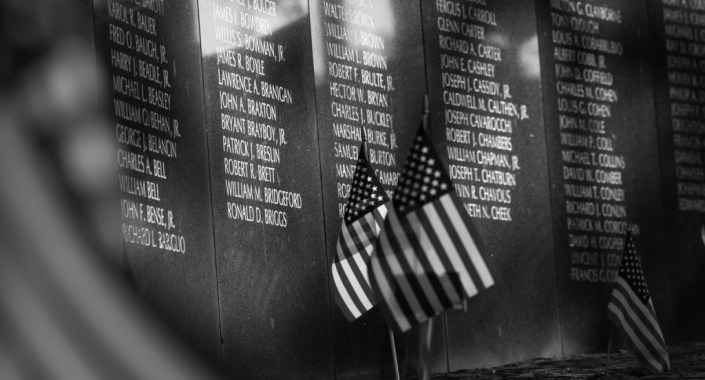
On this day in 1964, Congress approved the Gulf of Tonkin Resolution, effectively entering the U.S. into a conflict that still affects us to this day. This resolution, brought about by the questionable Gulf of Tonkin Incident (also referred to as the USS Maddox incident), gave President Johnson the legal justification for sending U.S. troops to Vietnam, under the guise of assisting a country under the treat of communist aggression.
“The resolution marked the beginning of an expanded military role for the United States in the Cold War battlefields of Vietnam, Laos and Cambodia. By 1964, America’s ally, South Vietnam, was in serious danger of falling to a communist insurgency. The insurgents, aided by communist North Vietnam, controlled large areas of South Vietnam and no amount of U.S. military aid and training seemed able to save the southern regime. During the presidencies of Dwight D. Eisenhower and John F. Kennedy, hundreds-and then thousands-of U.S. military advisers had been sent to South Vietnam to train that nation’s military forces. In addition, hundreds of millions of dollars in military and economic assistance had been given to South Vietnam. The administration of President Lyndon B. Johnson made the decision that only direct U.S. military intervention in the conflict could turn the tide. However, Johnson was campaigning in the presidential election of 1964 as the “responsible” candidate who would not send American troops to fight and die in Asia. In early August, a series of events occurred that allowed Johnson to appear statesmanlike while simultaneously expanding the U.S. role in Vietnam. On August 2, North Vietnamese torpedo boats attacked an American destroyer in the Gulf of Tonkin. Johnson responded by sending in another destroyer. On August 4, the two destroyers reported that they were under attack. This time, Johnson authorized retaliatory air attacks against North Vietnam. He also asked Congress to pass the Gulf of Tonkin Resolution. This resolution declared, “The United States regards as vital to its national interest and to world peace the maintenance of international peace and security in Southeast Asia.” It also gave Johnson the right to “take all necessary measures to repel any armed attack against the forces of the United States and to prevent further aggression.” The House passed the resolution by a unanimous vote. The vote in the Senate was 88 to 2. Johnson’s popularity soared in response to his “restrained” handling of the crisis. The Johnson administration went on to use the resolution as a pretext to begin heavy bombing of North Vietnam in early 1965 and to introduce U.S. combat troops in March 1965. Thus began a nearly eight-year war in which over 58,000 U.S. troops died. In a wider sense, the Gulf of Tonkin Resolution can be considered America’s Cold War policy toward all of Southeast Asia at the time. The resolution was also another example of the American government’s less than candid discussion of “national security” matters during the Cold War. Unspoken during the Congressional debate over the resolution was the fact that the commanders of the U.S. destroyers could not state with absolute accuracy that their ships had actually been attacked on the night of August 4, nor was any mention made of the fact that the U.S. destroyers had been assisting South Vietnamese commandos in their attacks on North Vietnamese military installations. By the late 1960s, the tangle of government deceptions and lies began to unravel as public confidence in both Johnson and the American military effort in Vietnam began to erode.”
[My father was in college from 1963 to 1967 and was in the ROTC. I was born at the beginning of his senior year. He came very, very close to going to Vietnam as a 2LT. He became more and more disturbed by reports and stories of what was actually happening over there. The young men that had graduated before him and entered combat…weren’t coming home. Many of the officers that he had started out with during his early years with the ROTC…weren’t coming back. The ones that did manage to return spoke of a “war without direction or purpose” and horrible “death traps”. My father had a crisis of faith, in a way. As a 2LT in the Army, he would have been an officer that could, potentially, send other young men under him to their deaths. If friends were telling him that the purpose of the war was not completely understood, how could he, in good conscience, participate. He took his concerns to his ROTC CO. That conversation devolved into a shouting match, complete with threats. My father resigned his ‘impending’ commission, despite the protestation of an older officer, stating that “Men like you, we need. We need the common sense approach and conscience you display. You would be a voice of reason and strength that could steady the others.” He would hear none of it. He turned in his uniforms, graduated…and never looked back. My father is still alive, today, because of his decision not to participate. He was never sent a draft card. ~Vic
Addendum: My father passed away on August 25, 2022]
On this day in 1964, Congress approved the Gulf of Tonkin Resolution, effectively entering the U.S. into a conflict that still affects us to this day. This resolution, brought about by the questionable Gulf of Tonkin Incident (also referred to as the USS Maddox incident), gave President Johnson the legal justification for sending U.S. troops to Vietnam, under the guise of assisting a country under the treat of communist aggression.
“The resolution marked the beginning of an expanded military role for the United States in the Cold War battlefields of Vietnam, Laos and Cambodia. By 1964, America’s ally, South Vietnam, was in serious danger of falling to a communist insurgency. The insurgents, aided by communist North Vietnam, controlled large areas of South Vietnam and no amount of U.S. military aid and training seemed able to save the southern regime. During the presidencies of Dwight D. Eisenhower and John F. Kennedy, hundreds-and then thousands-of U.S. military advisers had been sent to South Vietnam to train that nation’s military forces. In addition, hundreds of millions of dollars in military and economic assistance had been given to South Vietnam. The administration of President Lyndon B. Johnson made the decision that only direct U.S. military intervention in the conflict could turn the tide. However, Johnson was campaigning in the presidential election of 1964 as the “responsible” candidate who would not send American troops to fight and die in Asia. In early August, a series of events occurred that allowed Johnson to appear statesmanlike while simultaneously expanding the U.S. role in Vietnam. On August 2, North Vietnamese torpedo boats attacked an American destroyer in the Gulf of Tonkin. Johnson responded by sending in another destroyer. On August 4, the two destroyers reported that they were under attack. This time, Johnson authorized retaliatory air attacks against North Vietnam. He also asked Congress to pass the Gulf of Tonkin Resolution. This resolution declared, “The United States regards as vital to its national interest and to world peace the maintenance of international peace and security in Southeast Asia.” It also gave Johnson the right to “take all necessary measures to repel any armed attack against the forces of the United States and to prevent further aggression.” The House passed the resolution by a unanimous vote. The vote in the Senate was 88 to 2. Johnson’s popularity soared in response to his “restrained” handling of the crisis. The Johnson administration went on to use the resolution as a pretext to begin heavy bombing of North Vietnam in early 1965 and to introduce U.S. combat troops in March 1965. Thus began a nearly eight-year war in which over 58,000 U.S. troops died. In a wider sense, the Gulf of Tonkin Resolution can be considered America’s Cold War policy toward all of Southeast Asia at the time. The resolution was also another example of the American government’s less than candid discussion of “national security” matters during the Cold War. Unspoken during the Congressional debate over the resolution was the fact that the commanders of the U.S. destroyers could not state with absolute accuracy that their ships had actually been attacked on the night of August 4, nor was any mention made of the fact that the U.S. destroyers had been assisting South Vietnamese commandos in their attacks on North Vietnamese military installations. By the late 1960s, the tangle of government deceptions and lies began to unravel as public confidence in both Johnson and the American military effort in Vietnam began to erode.”
[My father was in college from 1963 to 1967 and was in the ROTC. I was born at the beginning of his senior year. He came very, very close to going to Vietnam as a 2LT. He became more and more disturbed by reports and stories of what was actually happening over there. The young men that had graduated before him and entered combat…weren’t coming home. Many of the officers that he had started out with during his early years with the ROTC…weren’t coming back. The ones that did manage to return spoke of a “war without direction or purpose” and horrible “death traps”. My father had a crisis of faith, in a way. As a 2LT in the Army, he would have been an Officer that could, potentially, send other young men under him to their deaths. If friends were telling him that the purpose of the war was not completely understood, how could he, in good conscience, participate. He took his concerns to his ROTC CO. That conversation devolved into a shouting match, complete with threats. My father resigned his ‘impending’ commission, despite the protestation of an older officer, stating that “Men like you, we need. We need the common sense approach and conscience you display. You would be a voice of reason and strength that could steady the others.” He would hear none of it. He turned in his uniforms, graduated…and never looked back. My father is still alive, today, because of his decision not to participate. He was never sent a draft card. ~Victoria]
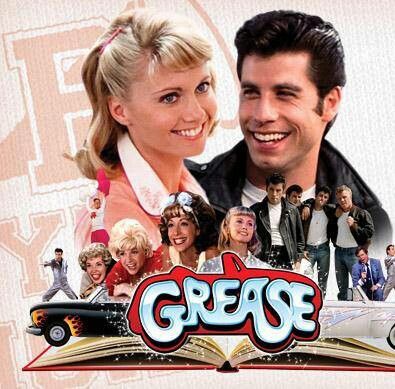
It’s Flick Friday. The number one movie 40 years ago, today, is…Grease! I was 11 years old when it was released. I was such an Olivia Newton-John fan. I begged my mom to buy me the album soundtrack. I nearly wore it out. I still have it to this day. And, I remember those shoes… I was headed to seventh grade that year and ALL the girls had to have a pair of the Candies that ‘Sandy’ made famous. Can you imagine a bunch of tween girls in the late 70s trying to change classes, going up and down stairs…in ‘Sandy’s Candies’? Oh, my…
I STILL love this movie. What wonderful memories… ~Vic
During a visit to America, Australian Sandy meets Danny Zuko at the beach and falls in love. She is heartbroken when summer ends [as] she has to return home and their last kiss on the beach is a very emotional one. But, fate lends a hand — her parents decide to stay in America and she finds herself attending the same school as Danny.
Photo Credit: jewelwpg.com
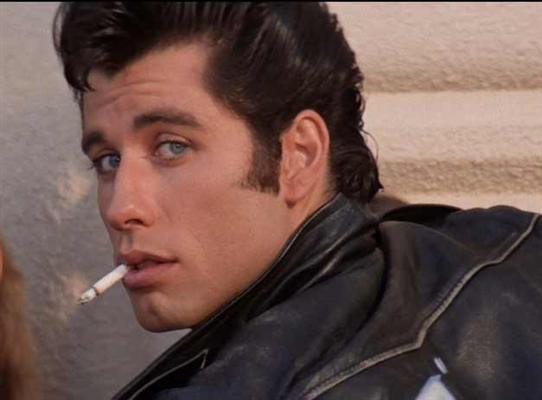
But, Danny at school is different from Danny at the beach. He is the leader of the T-Birds, a black leather-clad gang and has a reputation to keep up. He can’t be seen to fall in love with just one chick! Sandy is upset and seeks solace with some new friends she has made – a girls’ club called The Pink Ladies. But, her prim and proper virginal ways do not fit in and she soon finds herself almost alone. A change must be made. Does she attempt to get her man by turning him into a jock? Or must she get rid of her “Sandra Dee” image?
“”GREASE,” the film version of the still-running Broadway musical show, is not really the 1950’s teen-age movie musical it thinks it is but, a contemporary fantasy about a 1950’s teen-age musical—a larger, funnier, wittier and more imaginative-than-Hollywood movie with a life that is all its own. Somewhat in the manner of “Close Encounters of the Third Kind,” which recalls the science-fiction films of the 50’s in a manner more elegant, and more benign, than anything that was ever made then, “Grease” is a multimillion-dollar evocation of the B-picture quickies that Sam Katzman used to turn out in the 50’s […].
Photo Credit: pinterest.com
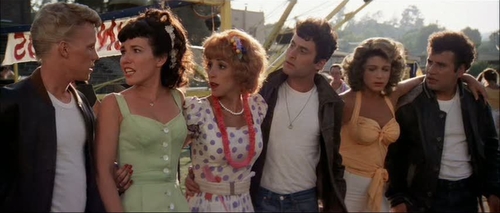
The gang at old Rydell High, which is the universe of “Grease,” is unlike any high school class you’ve ever seen except in the movies. For one thing, they’re all rather long in the tooth to be playing kids who’d hang around malt shops. For another, they are loaded with the kind of talent and exuberance you don’t often find very far from a musical stage.
Olivia Newton-John, the recording star in her American film debut, is simultaneously very funny and utterly charming as the film’s ingénue […]. She possesses true screen presence as well as a sweet, sure singing voice […]. John Travolta […], a not-so-malevolent gang-leader, is better than he was in “Saturday Night Fever.” I’m still not sure if he’s a great actor but, he’s a fine performer with the kind of energy and humor that are brought to life by the musical numbers.
It’s to the director’s credit that the musical numbers slip in and out of reality mostly with hugely comic effect. Let me emphasize, then, that “Grease” stands outside the traditions it mimics. Its sensibility is not tied to the past but, to a free-wheeling, well informed, high-spirited present.”
Trivia Bits:
♦ Rizzo’s hickeys were real. Stockard Channing said in an interview that Jeff Conaway insisted on applying them himself.
♦ “Hopelessly Devoted to You” was written and recorded after the movie had wrapped.
Photo Credit: express.co.uk
♦ Elvis Presley turned down the role of The Guardian Angel in the ‘Beauty School Drop-Out’ scene.
♦ Due to a zipper breaking, Olivia Newton-John had to be sewn into the trousers she wears in the last sequence (the carnival at Rydell).
♦ Jeff Conaway was so infatuated with Olivia Newton-John, he was tongue-tied whenever she was around. He later married Olivia’s sister, Rona Newton-John.
♦ Danny’s blue windbreaker at the beginning of the film was intended as a nod to Rebel Without a Cause.
♦ Jamie Donnelly had prematurely grey hair, which she dyed black to play Jan. Her hair grew really quickly, so her roots had to be coloured in daily with a black crayon.
♦ Rydell High is a reference to teen idol Bobby Rydell who had a million selling hit with “Swingin’ School” in 1960.
♦ The “blonde pineapple” line was improvised by Barry Pearl.
♦ Olivia Newton-John insisted on a screen test for the role of Sandy. She was concerned that she didn’t have the acting skills and would look too old to be a high school student. The part was originally meant for Susan Dey, who turned it down on her manager’s advice.
July 20 has three celebrations. The most notable of the three is National Moon Day, commemorating Apollo 11 and the 1969 moon walk. Everyone knows about that one.
But, today is also National Pennsylvania Day, a recognition of the second state to join the Union. Known as the ‘Keystone State’, Pennsylvania also served as a temporary Capitol for the U.S….Philadelphia, the site of the signing of The Declaration of Independence and The U.S. Constitution. It is the home of the Original Philly Cheesesteak, the Original Banana Split, Hershey’s Chocolate, Marshmallow Peeps and Twizzlers. It is also the home of the largest concentration of U.S. ‘Pennsylvania Dutch’ Amish.
Image Credit: National Day Calendar
Notable Pennsylvanians:
Daniel Boone – Frontiersman (November 2, 1734 – September 26, 1820)
Elizabeth Griscom ‘Betsy’ Ross – Flag Maker (January 1, 1752 – January 30, 1836)
James Buchanan – 15th U.S. President (April 23, 1791 – March 4, 1861)
Louisa May Alcott – Author (November 29, 1832 – March 6, 1888)
Elizabeth Cochrane Seaman [Nellie Bly] – Journalist (May 4, 1864 – January 27, 1922) [NOTE: Wikipedia reflects May 5]
Lee Iacocca – Auto Executive [Ford & Chrysler] (October 15, 1924)
Arnold Palmer – Golfer (September 10, 1929 – September 25, 2016)
Reginald Reggie Jackson – Baseball Player (May 18, 1946)
July 12th is another very busy ‘National Day’ with five celebrations. Simplicity Day is observed on the birthday of Henry David Thoreau. He was born on this day in 1817. As a philosopher, he believed in living a simple life:
“In proportion as he simplifies his life, the laws of the universe will appear less complex and solitude will not be solitude, nor poverty poverty, nor weakness weakness.”
He was a world-renowned author, historian, abolitionist, tax resister (my hero!), a surveyor, criticized over-development, preferred the natural ways and transcendentalism and, was a friend of and mentored by, Ralph Waldo Emerson. Born nearly 100 years prior to Alan Watts, the two could have been contemporary peers.
In our overly busy lives, steeped in political battles, materialism, social media madness and the struggle to survive, slowing down, disengaging and walking in nature can be a refreshing break. De-cluttering and simplifying one’s life can, ultimately, bring peace and balance.
Seventy-one years ago, today, something happened in Roswell, New Mexico. The Roswell Daily Record printed the story of the crash of a flying saucer on a ranch roughly 30 miles outside of Roswell proper. The Sacramento Bee picked up the story and printed statements from the Roswell Army Air Field.
Over the years, I’ve seen documentaries and read accounts of the initial debris field pieces that were retrieved from the owner of the land. I’ve seen the interviewees on camera and read their statements. I also know that there was a concerted effort by our military to keep what they found out of any more newspapers and, to quickly change the narrative to the weather balloon story.
I’ve actually been to Roswell, NM, spending the night in a local motel just for the complete experience in September of 2002. It’s cattle ranch territory and it smells that way especially in the morning. I’ve been to the Roswell UFO Museum. It is really quite fascinating to walk through it. Some of it is tongue-in-cheek but, there is a lot of information despite the government’s desire to make it “a joke”. A local waitress in a diner, where my *then* husband and I went for breakfast, said that the whole thing was a blessing and a curse. It brought in tourism dollars but, it was also a sore point for some of the older residents whom, at that time, still remembered the events when they happened. As she poured our coffee, she leaned over and told us that there were many locals that swore it was a craft…information passed quietly from neighbor to neighbor, family descendant to family descendant, much like Native American verbal history, handed down through time. Frankly, I never believed the official story. There were too many questions left unanswered and too many things that didn’t add up. Plus, our government lies to us all the time. Why should this be any different.
[…] these were a race we have come to call The Greys. The Greys originate on a star system many galaxies distant from us. […] their own name for themselves does not translate into anything pronounceable by the human voice box. These beings have been observing Earth for many centuries […] The Greys behave a little like human teenagers in that they have a certain level of knowledge but, cannot quite put it into context. The first real contact we had with these beings was with the Roswell crash in New Mexico in 1948 [sic]. This was an event where a Grey ship malfunctioned and crashed into the desert near the town of Roswell. As with just about anything that happens in America, the military took control. The crash provided them with an alien ship and three survivors. The Greys were reluctant to become involved in human affairs but, the American military had three of their beings. So began a relationship […] The American military looking for ‘advanced’ technology to give them global military advantage and, in return, the Greys received free access to the genetic material available on Earth.
[Note: Chris Thomas is many things but, not the best typist. His books have a few typos.]
Their home galaxy is too far distant for us to have a name for it. This race is responsible for some of the human and animal abductions that have taken place on Earth in the past 40 years. As they were causing some disruption to human plans, they have, effectively, been banned from our solar system since 2000. This race has been working with the American miliary since the Roswell crash in 1947 and has given over a great deal of its technology in exchange for permission to carry out some animal experimentation and medical examinations of people.
During the Second World War, a great many ‘unidentified’ flying craft were observed as the skies were watched with far more zeal than was previously necessary. Several of these craft were shot down but, because it was war time and it was known that Hitler was developing many innovative weapons, it was assumed that crashed UFOs were Nazi in origin. During the war, the American military began to experiment with many forms of weapons and energy devices and, in particular, energy devices that would help shield ships or aircraft from the newly developed enemy radar. […] the technology was kept for later experiments which the American military began in the late 1940s. In 1948 [sic], the experiments began in a region of New Mexico, although this time, the machinery was land based […] They ran experiments for three days and each day at least one UFO fell out of the sky, the most famous one being the crash at Roswell. There is so much disinformation spread about this race that the only way of finding out any form of truth is to look to the Akashic. In exchange for new ‘alien’ technology, the American military ‘granted’ the Greys permission to abduct and study human physiology. Since 2000, the Greys have been asked not to travel to our solar system, a request with which they have generally been happy to comply.
Their first real contact with Earth was the Roswell crash […] The military have mainly been interested in Grey technology which the military mainly use for psychic attack purposes. The Greys are very interested in human physiology and are responsible for some human and animal abductions. Please note: the vast majority of human and animal abductions, and mutilations, have been carried out by the military.
Still believe our government? Still believe our military? If you are unsure of what the Akashic is, that will be for another post. ~Vic
I snapped these yesterday evening. I was stunned at how clear and brilliant this rainbow was. The companion rainbow above is harder to see. It is a shame that my cell phone cannot truly capture what I see. The beauty is breathtaking. It’s summertime and we’re getting the hot weather storms in the afternoons. I heard the thunder as the system rolled in and the sunlight dimmed. I didn’t really think much about it. I just happened to step outside to our recyclables bin and…wow. I ran back inside and grabbed my phone. I wandered up and down the street trying to get good shots. Damn power lines. *sigh*
The 1st of July is a very busy day of celebration for the nation, leading up to Independence Day. It’s National Postal Worker Day, established in 1997 by a Seattle area carrier. I have two high school classmates that are postmen. They both really enjoy it. It can be a tough job, though.
If you are thinking “Neither rain nor sleet nor snow…” or something along those lines, the U.S. Post Office doesn’t have an “official” motto, really. There seems to be a bit of confusion from a modified translation of Herodotus’ quote regarding the courier service of the Persian Empire:
There is nothing in the world which travels faster than the Persian couriers. The whole idea is a Persian invention, and works like this: riders are stationed along the road, equal in number to the number of days the journey takes – a man and a horse for each day. Nothing stops these couriers from covering their allotted stage in the quickest possible time – neither snow, rain, heat, nor darkness. The first, at the end of his stage, passes the dispatch to the second, the second to the third, and so on along the line, as in the Greek torch-race which is held in honour of Hephaestus.
Image Credit: the-pa-in-connection.blogspot.com
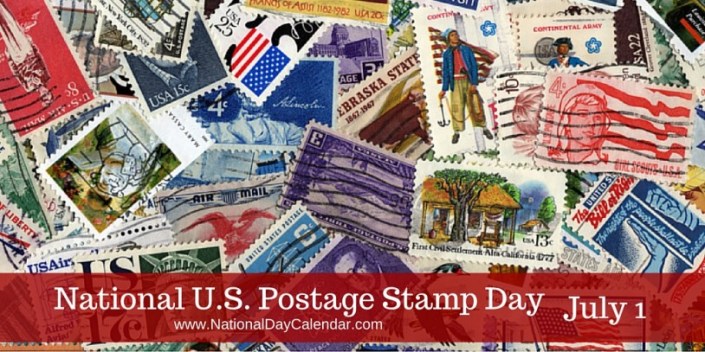
It’s also U.S. Postage Stamp Day…naturally. The very first postage stamp was issued on July 1, 1847 but, no one seems to know who created the National Day for it. Lost to history, I suppose.
They have a National Day for nearly everything. Some of them are very tongue-in-cheek, if not down-right ridiculous. Did you know there is a Ding-a-Ling Day? Yeah. I didn’t either. Apparently, it’s for dialing up friends, not pointing out stupid people. Who knew.
I wander around and take pictures of everything. I see so much I want to capture. My Samsung stupidphone gets a lot of use. I would really like to get a genuine camera but, I can’t decide what to get and cost is an issue. Expensive cameras don’t have payment plans like, say, a stupidphone.
So, anyway, enjoy National Camera Day…or, what is left of it. Take pix of your family. Take pix of your friends. Take pix of nature. Let your imagination wander. There is always something in a photograph that surprises.
The United States, acting under the auspices of the United Nations, quickly sprang to the defense of South Korea and fought a bloody and frustrating war for the next three years. Korea, a former Japanese possession, had been divided into zones of occupation following World War II. U.S. forces accepted the surrender of Japanese forces in southern Korea, while Soviet forces did the same in northern Korea. Like in Germany, however, the “temporary” division soon became permanent. The Soviets assisted in the establishment of a communist regime in North Korea, while the United States became the main source of financial and military support for South Korea. On June 25, 1950, North Korean forces surprised the South Korean army (and the small U.S. force stationed in the country), and quickly headed toward the capital city of Seoul. The United States responded by pushing a resolution through the U.N.’s Security Council calling for military assistance to South Korea. (Russia was not present to veto the action as it was boycotting the Security Council at the time.) With this resolution in hand, President Harry S. Truman rapidly dispatched U.S. land, air, and sea forces to Korea to engage in what he termed a “police action.” The American intervention turned the tide, and U.S. and South Korean forces marched into North Korea. This action, however, prompted the massive intervention of communist Chinese forces in late 1950. The war in Korea subsequently bogged down into a bloody stalemate. In 1953, the United States and North Korea signed a cease-fire that ended the conflict. The cease-fire agreement also resulted in the continued division of North and South Korea at just about the same geographical point as before the conflict. The Korean War was the first “hot” war of the Cold War. Over 55,000 American troops were killed in the conflict. Korea was the first “limited war,” one in which the U.S. aim was not the complete and total defeat of the enemy, but rather the “limited” goal of protecting South Korea. For the U.S. government, such an approach was the only rational option in order to avoid a third world war and to keep from stretching finite American resources too thinly around the globe. It proved to be a frustrating experience for the American people, who were used to the kind of total victory that had been achieved in World War II. The public found the concept of limited war difficult to understand or support and the Korean War never really gained popular support.
The Summer Solstice for the Northern Hemisphere was, officially, at 6:07am EDT. It is the longest day of the year. It was a fine day for small tasks, discussing work with my boss, playing with Oliver, taking a walk with a close friend, waiting for rain that never showed up, enjoying a ginger ale while reading and being thankful that I managed to avoid the evening news. 🙄
Ollie the 18lbs orange Hemingway (I have thumbs!)
I covet peace and quiet. I covet calm. I see so little of it on a television. I try to keep it on a soothing music channel so I can function.
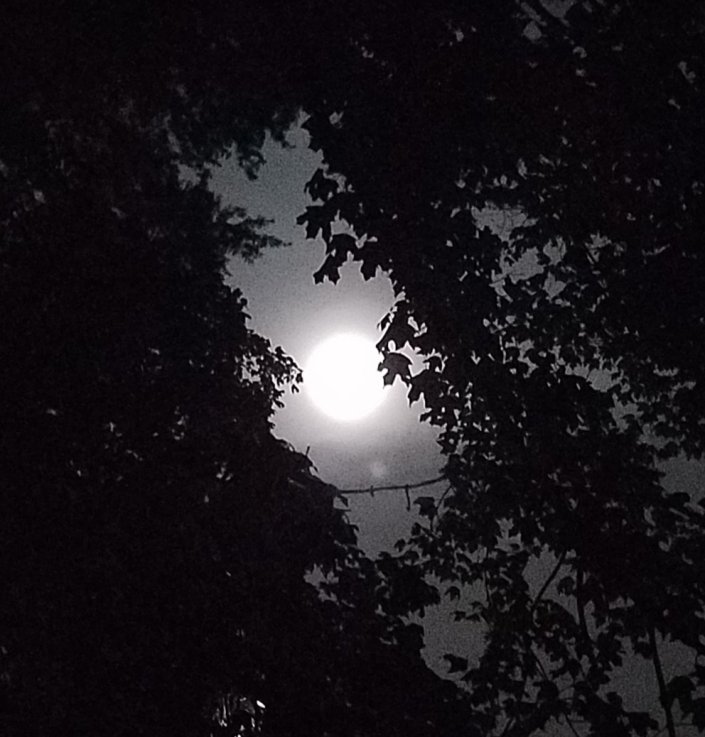
I was fortunate enough while walking to catch a clear glimpse of our waxing gibbous Moon, 61% illumination, before the clouds moved in for the non-existent rain. I neglected to get a shot of it. I normally chase good renderings of full moons, which is a task with a smartphone. Nothing really matches the rich textures of a camera with real film. I feel the same way about LPs/records. Digital will never capture the tones and depth of analog recordings. And, I’m showing my age. Heh.
From My Personal Collection
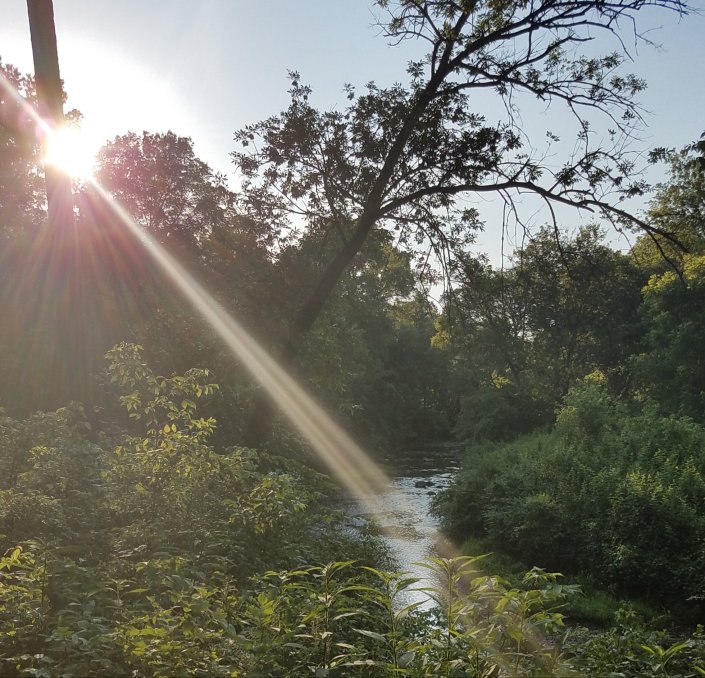
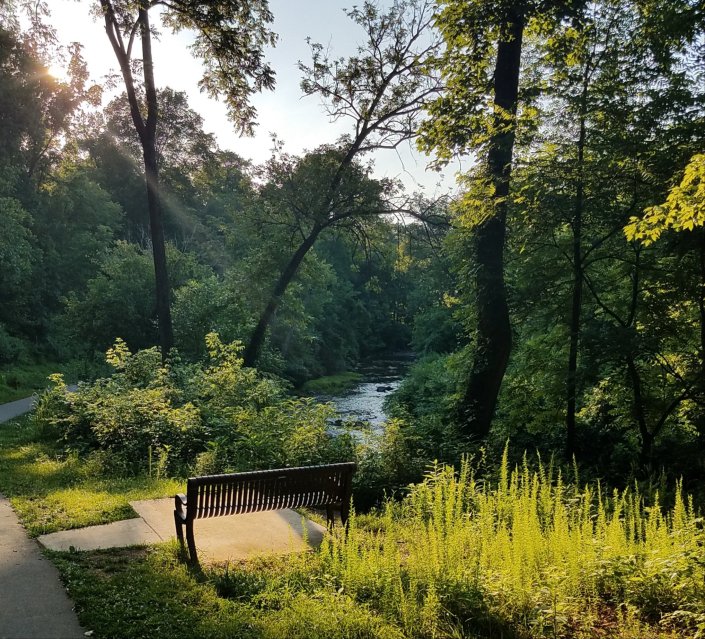
It was in the low 90s. That is just too high for June to suit me. Had to wait until 6:00pm to wander out. I do love the local Riverwalk.
Local Deer
I understand that there was a gathering at Stonehenge. I would have loved to have been there.
I have been gone for quite a while. I started this blog five years ago this month. A lot of what I posted, I took down as my attitudes about certain things have changed, drastically. I am definitely not the same person I was five years ago. That is a good thing.
Since June 2013, I’ve gone through four jobs. Finding good employment is not as easy as it was when I got out of school in the middle 80s. Those jobs just don’t exist anymore. So, I work PT and do the best I can. I am hopeful for the future…mine and everyone else’s.
Today will be the New Moon, as I am typing this past midnight. I will be putting forth my wishes and desires for this Moon. We certainly live in interesting times.
Examples of Smart Meters
Image Credit: stopsmartmeters.org
Update: The damn meters made it to my town. Luckily, I was home when the person showed up to install them. I had already petitioned Duke Energy to delay installation (they were still figuring out a deferment plan and were using South Carolina as an example to follow) and I made sure the person knew that. They were aware. I pushed forward for a medical exemption…and got it. When the second person showed up three months later, they stopped and showed me that it was a non-smart meter. I’m suspicious that Duke Energy is lying but, so far, no health issues, no jacked-up power bills and, thank goodness, no burnt down house.
Smart meters are bad news. Seriously. These things should be outlawed. Not only have there been reports of skyrocketing bills and privacy invasion but, the radiation that these things give off can ravage your health. If you refuse and say no to the installation of one, you are charged a one time hefty fee and a monthly charge. Nice, huh?
This technology has destroyed jobs because they don’t need to be read by a human. They just transmit their data and boom, the power company knows how much power you are using. Apparently, they can also tell which appliance(s) you are using and there is the potential to, say, shut off your appliance(s) or cut your overall power when they determine that you are using too much. They might have the ability to know when you are home and when you are not. Talk about Big Brother.
Stop Smart Meters is a terrific website with lots of information. It is a gateway to all things “Smart Meter” and “EMF”. Check it out.
Video Warnings
Dr. David O. Carpenter, below, Dean of the School of Public Health at the University of Albany, former head of the New York State Dept. of Public Health and is a graduate of Harvard Medical School warns of the health dangers:
This video shows how aluminum foil can block the radiation:
Aluminum mesh does the same:
You can buy a Smart Meter Guard but, he’s charging $100:
A Glendale, CA, woman was persistent and got her analog meter put back on. I don’t know if the city is charging her a fee for having that done but, her health was a definite issue:
Update:
Some of the links, below, became broken and I’ve had to re-gather some information as Mr. Barrett has done his best to wipe out his history. If links become broken again, I have provided PDF screen captures of the data.
[Note: This is a re-post from an old blog, originally posted on February 27, 2010. I think it’s worth sharing because I find this man to be dangerous. He’s a liar and a bully and, I’m shining the light on him.]
This guy, Stephen Barrett…he’d have you believe that he is the foremost expert in all things quackery. To him, anything other than mainstream-AMA-backed medicine is useless.
Photo Credit: Anaximperator Blog
Although he is free to present his opinion, much like the rest of us out here blogging (me, included), do not be fooled by the ‘M.D.’ at the end of his name. I think he even wrote his own biography on Wikipedia. However, that being expressed, he has gotten himself into quite a bit of trouble in the courts for repeatedly suing people and claiming he was a ‘retired psychiatrist’. Carlos F. Negrete of Negrete Law and Health Freedom Law, attorney for Tedd Koren, D.C., got the awful truth out of Mr. Barrett…
At trial, under a heated cross-examination by Negrete, Barrett conceded that he was not a Medical Board Certified psychiatrist because he had failed the certification exam. This was a major revelation since Barrett had provided supposed “expert testimony” as a psychiatrist and had testified in numerous court cases. Barrett also had said that he was a “legal expert” even though he had no formal legal training.
That cross-examination (screen capture PDF) took place in 2005 in Allentown, PA…Mr. Barrett’s longtime residence (he was born in New York City in 1933). In 2007, a higher court in Pennsylvania backed up the lower court’s decision to dismiss his frivolous lawsuit (original screen capture PDF) (updated screen capture PDF). It was at that point he decided to relocate to Chapel Hill, NC. Perhaps Allentown folks got tired of his crap? I find it amusing that he decided to move to an area that is a hotbed of the very alternative medicine he rails against. The Triangle of North Carolina (Raleigh-Durham-Chapel Hill) contains a plethora of natural, homeopathic and holistic practitioners. I’m pretty sure he didn’t move to the area to get warm fuzzies from the locals. I think he saw an opportunity to make money harassing and ambulance-chasing gifted healers. He does have legal bills he needs cover.
A Patrick Pontillo operated a now-defunct website (screen capture PDF) on chemical sensitivities (a subject that I know something about). He maintains an additional, similar website, Blue Marble Album. He has an extensive history on Mr. Barrett.
Tim Bolen has his own history of Barrett (screen capture PDF & Web Archived Page) from his website and wrote an article on the Doctor’s Data vs Barrett case. Judging by this posted 2016 legal decision, the case was nearly a stalemate but, Barrett’s National Council Against Health Fraud (NCAHF) dissolved after the lawsuit began and Quackwatch dissolved before the case came to trial…even though the website is still active and full of hysterical mainstream medical nonsense. “Googling” this case (I really, really dislike that term but, it is, now, part of our language…for better or worse…) will return links stating that the case was “settled, amicably, out of court”. Translation: Both parties were tired of fighting after six years. A lawsuit of this size and scope costs money…and time. And, Stephen Barrett is in his 80s. The briefing notes clearly state that both parties were free to re-file and start new court proceedings. That means…more money and more time.
Be very careful when you read this man’s so-called “facts”. He is no expert. He merely has an opinion and he has tried to beat people over the head with it. Believing that this man is a seasoned doctor with many, many practicing years of experience would be as ridiculous as believing that I am an experienced journalist. I am not and would never claim to be.

















 Cosmic-Observation