August’s full moon is called the Full Sturgeon Moon, after the primitive fish that used to be abundant in North America’s lakes and rivers during the summer months. Having remained mostly unchanged since the earliest fossil records, sturgeons are ancient living fossils that can grow up [to] 3.5 meters long, or as long as two adult humans stacked on top of each other. Nowadays, however, it’s almost impossible to see a sturgeon during the Full Sturgeon Moon. While they used to thrive, sturgeons are now considered […] critically endangered […]. Though sturgeons are extremely long-lived, the females can live up to be 150 years old, sturgeons might not be around for much longer. They might have survived the dinosaurs but, they might not be able to survive human beings and our hunger for luxurious delicacies like caviar.
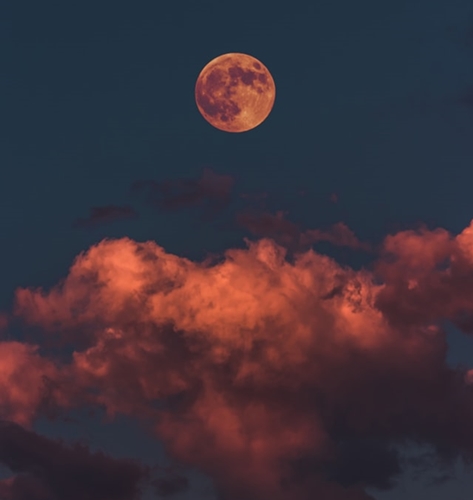
I got squat for a Moon shot. We’ve got Isaias spinning around here. I also don’t have any previous years shots but, I did a post two years ago. So, I’ve trotted over to Unsplash. Another name given to the Sturgeon Moon is Red Moon. Full illumination occurred at 11:59am EDT. Howl for me! ~Vic
This is my first Buck Moon post. I totally missed 2019 & 2018. There was also a penumbral lunar eclipse happening, as well. Full illumination occurred at 12:44am EDT. Howl for me! ~Vic
Skeleton Tree Hand
Waxing Gibbous
07-03-2020
The Full Moon in July is the Buck Moon, named after the new antlers that emerge from a buck’s forehead around this time of the year. It is also called Thunder Moon, Hay Moon and Wort Moon. For farmers, high summer [is] the time to cut and cure hay to put away for winter feed.
Spooky trees.
One of the more common names for this month’s Full Moon is the Thunder Moon, a tribute from the Algonquin to a time of year when spectacular electrical storms rake the northern forests. The Chinese deserve credit for an equally ominous name. The moon coincides with the Hungry Ghost Festival, a time when the living honor the dead by leaving food and drink to the ancestors. Their name? The Moon of the Hungry Ghosts.
From the parking deck.
07-14-2020
Wort Moon [indicates] that July is the time to gather herbs (worts) to dry and use as spices and remedies. Additional names are Halfway Summer Moon (Ojibwe/Chippewa), Blueberry Moon (Ojibwe), Raspberry Moon (Ojibwe), Flying Moon (Ojibwe), Thunderstorm Moon (Catawba), Corn in Tassel [Moon] (Eastern Band Cherokee), Honey Bee Moon (Stockbridge-Munsee Band of Wisconsin), String Bean Moon (Oneida) and Little Sister of the Summer Moon (Tunica-Biloxi Tribe of Louisiana).
One-hundred, ninety-nine years ago, today, the realDaniel Boone passed away. Two days prior, I posted about the television show Daniel Boone that was hardly accurate in its portrayal or his frame of life despite being a popular show.
On September 26, 1820 the great pioneering frontiersman Daniel Boone dies quietly in his sleep at his son’s home near present-day Defiance, Missouri.
The indefatigable voyager was 86. Boone was born in 1734 (he has two different dates of birth due to the 1752 Gregorian calendar switch) to Quaker parents living in Berks County, Pennsylvania. Following a squabble with the Pennsylvania Quakers, Boone’s family decided to head south and west for less crowded regions and they eventually settled in the Yadkin Valley of North Carolina. There the young Daniel Boone began his life-long love for wilderness, spending long days exploring the still relatively unspoiled forests and mountains of the region. An indifferent student who never learned to write more than a crude sentence or two, Boone’s passion was for the outdoors, and he quickly became a superb marksman, hunter and woodsman. (It should be noted here that historian John Mack Faragher stated that Boone “acquired a level of literacy that was the equal of most men of his times. He was often the only literate person in groups of frontiersmen.”)
In May of 1769, Boone and five companions crossed over the Cumberland Gap and explored along the south fork of the Kentucky River. Boone returned in 1773 with his family, hoping to establish a permanent settlement. An Indian attack prevented that first attempt from succeeding (Boone’s eldest son James and, William Russell‘s son Henry were captured and tortured to death, a prelude to Dunmore’s War.) but, Boone returned two years later to open the route that became known as Boone’s Trace (or the Wilderness Road) between the Cumberland Gap and a new settlement along the Kentucky River called Fortress Boonesboro. Boonesboro eventually became one of the most important gateways for the early American settlement of the Trans-Appalachian West.
After the French and Indian War (1754–1763) broke out between the French and British, and their respective Indian allies, North Carolina Governor Matthew Rowan called up a militia, for which Boone volunteered. He served under Captain Hugh Waddell on the North Carolina frontier. Waddell’s unit was assigned to serve in the command of General Edward Braddock […].
Boone served in the North Carolina militia during [the] “Cherokee Uprising“. His militia expeditions went deep into Cherokee territory beyond the Blue Ridge Mountains and he was separated from his wife for about two years.
On December 22, 1769, Boone and a fellow hunter, Benjamin Cutbirth, were captured by a party of Shawnees, who confiscated all of their skins and told them to leave and never return.
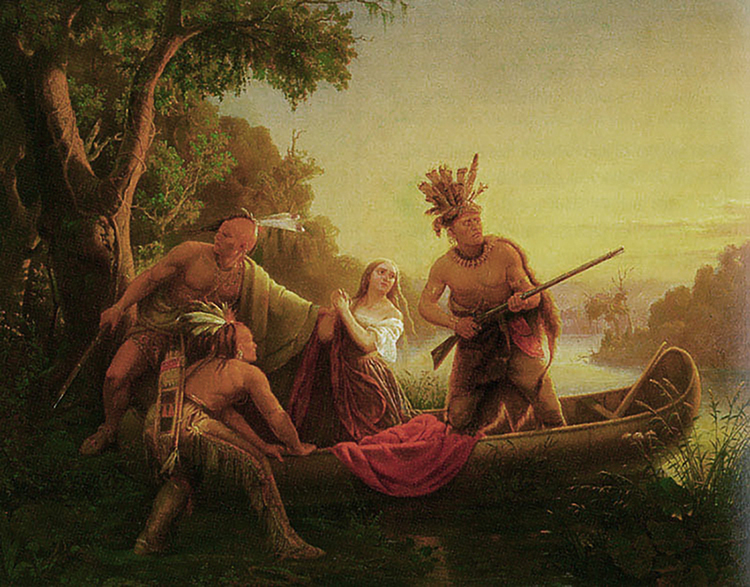
Image Credit: wikipedia.org & wikimedia.org Charles Wimar 1853
[During the Revolutionary War], Boone’s daughter Jemima and two other teenaged girls were captured outside Boonesborough by an Indian war party on July 5, 1776. The incident became the most celebrated event of Boone’s life. James Fenimore Cooper created a fictionalized version of the episode in his classic novel The Last of the Mohicans (1826).
He lived quite an eventful life.
♦ In February 1778, Boone was adopted into the Shawnee tribe as a prisoner to replace a fallen warrior (a Shawnee custom) and was named Sheltowee (Big Turtle), eventually escaping.
♦ In September 1778, he was court-martialed due to misunderstandings during the Siege of Boonesborough.
♦ There is some indication that Boone crossed paths with Abraham Lincoln’s grandfather.
♦ In 1780, Boone was [a] Lieutenant Colonel in the Fayette County militia. In October, his brother Ned was killed by Shawnees and beheaded for a trophy, as the they thought they had killed Boone.
♦ In 1781, he was elected as a representative to the Virginia General Assembly.
♦ [Traveling] to Richmond to take his seat in the legislature, […] British dragoons under Banastre Tarleton captured Boone and several other legislators near Charlottesville. The British released Boone on parole several days later.
♦ In 1782, he was elected sheriff of Fayette County.
♦ By 1787, he owned seven slaves.
♦ In 1798, a warrant was issued for Boone’s arrest after he ignored a summons to testify in a court case, although the sheriff never found him.
♦ Also in 1798, the Kentucky assembly named Boone County in his honor.
♦ From 1799 to 1804, he served as syndic and commandant, appointed by the Spanish governor of Spanish Louisiana (now St. Charles County, Missouri).
♦ American painter John James Audubon claimed to have gone hunting with Boone in the woods of Kentucky around 1810 (some historians believe Boone visited his brother Squire near Kentucky in 1810).
♦ Boone died of natural causes at his son Nathan’s home. He was 85.
I did a post nearly a year ago for 2018. Last year, the Strawberry Moon appeared after the Summer Solstice. It’s also referred to as the Flower Moon and this year, it is also a Fathers’ Day Moon (I just made that up). Full illumination occurred at 4:30am EDT. Howl for me! ~Vic
Standing in my driveway.
I supposed my photos could be impressionist like Monet.
The colorful name is closely linked with the spread of warmer weather across the Northern Hemisphere and many Native American and, First Nations peoples, have special names for this full moon. The Algonquin tribes of what is now New England coined the nickname Full Strawberry Moon because the phase marked the best time of year to harvest the wild fruit. Similarly, the Cherokee of the southeastern woodlands knew the moon as the Green Corn Moon, the time of year when fresh corn ears grow best.
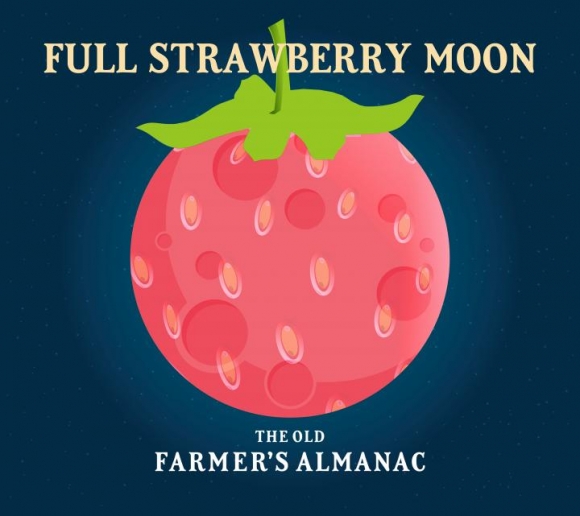
The sweetest full moon of the year is June’s full moon […]. While the full moon itself is inedible, despite how round and delicious it may seem, the Full Strawberry Moon marks strawberry harvesting season in North America. Most Algonquin tribes understood that it was a sign that wild strawberries were starting to ripen and ready for the harvest. Delicious though ripe strawberries may be, June’s full moon has another name that’s even sweeter. What could possibly be sweeter than strawberries? Try honey. In Europe, June’s full moon was actually known as the Honey Moon. Other European names for it included the Hot Moon, signifiying the beginning of hot summer days, or Hay Moon, because of the first hay harvest. Those names aside, European names for the Full Strawberry Moon overall tend to have sweet, romantic connotations, a good example [being] the name Full Rose Moon. June’s full moon is also called Mead Moon, which could refer to the mowing of meadows during summer but, there’s another more romantic interpretation as well.
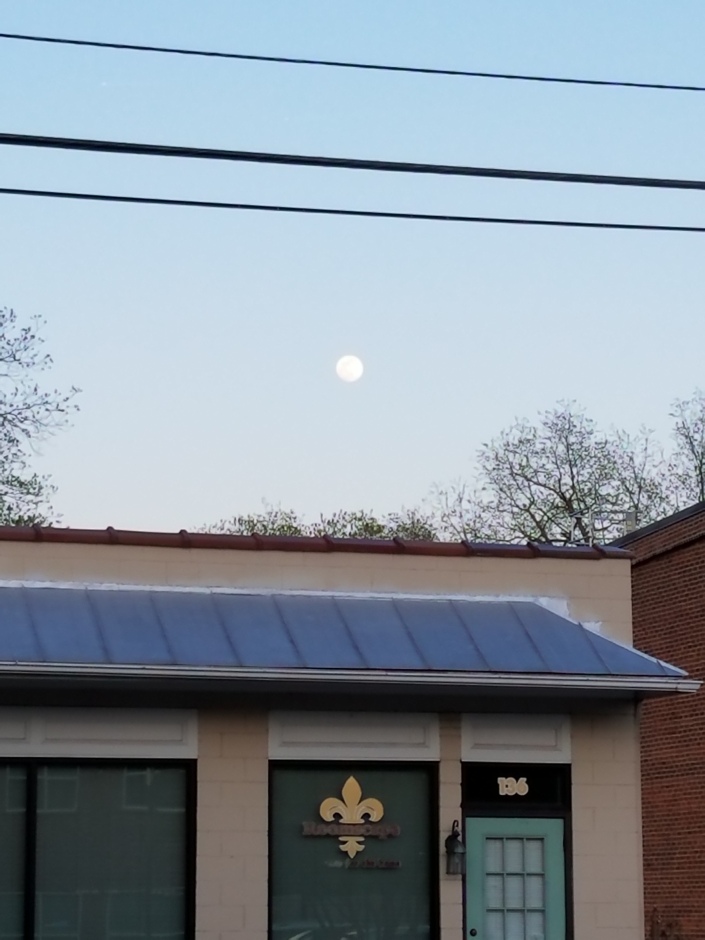
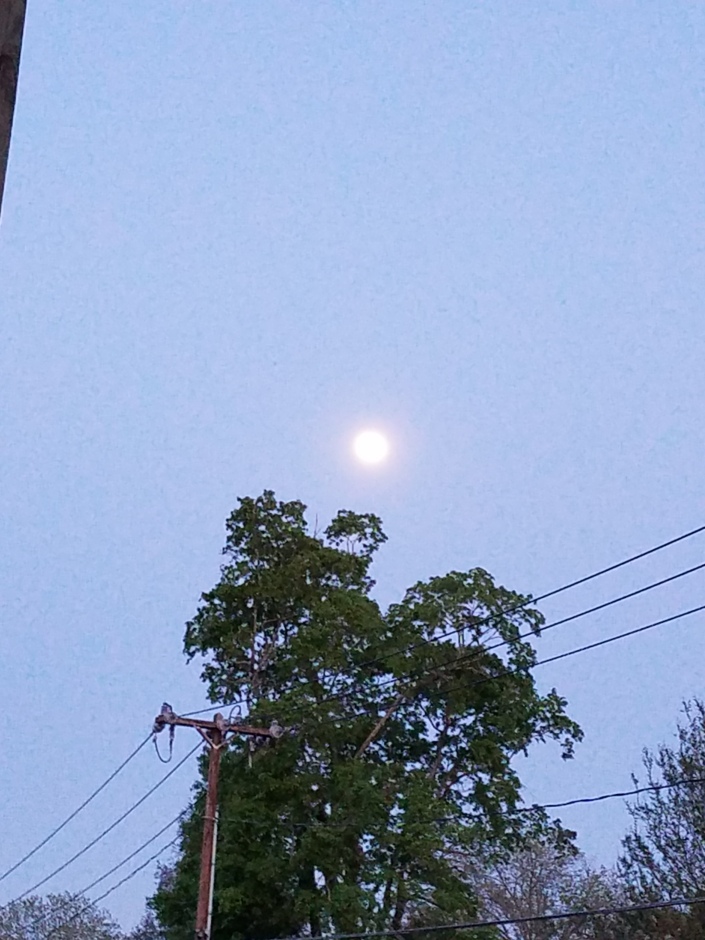
Power lines always get in the way.
In Europe, it’s traditional to gift mead or honey to a newlywed couple during their first moon of marriage. The name Honey Moon, itself, has now become a common word in the English language, used to refer to the honeymoon holiday that couples go on right after they’re married. It used to be that newlyweds in ancient Europe would go on a sweet romantic holiday around the time of June’s full moon because the moon phases were seen as a symbol for the phases of a marriage with the full moon signifying the fullest and happiest part, the wedding itself. The Full Strawberry Moon is tied to romance and marital bliss all around the world. In India, for example, June’s full moon is celebrated as Vat Purnima where married women perform a ceremonial ritual to show their love for their husbands. Vat Purnima is based off a legend from the Mahabharata about a beautiful woman, Savitri, who is determined to save her husband, Satyavan, who is doomed to die an early death. Savitri fasts for three days before Satyavan dies, upon which she successfully negotiates with the King of Hell for the resurrection of her husband. Similarly, married women nowadays dress up in beautiful saris, fast and tie a thread around a banyan tree seven times to wish that their husbands will lead long, happy lives.
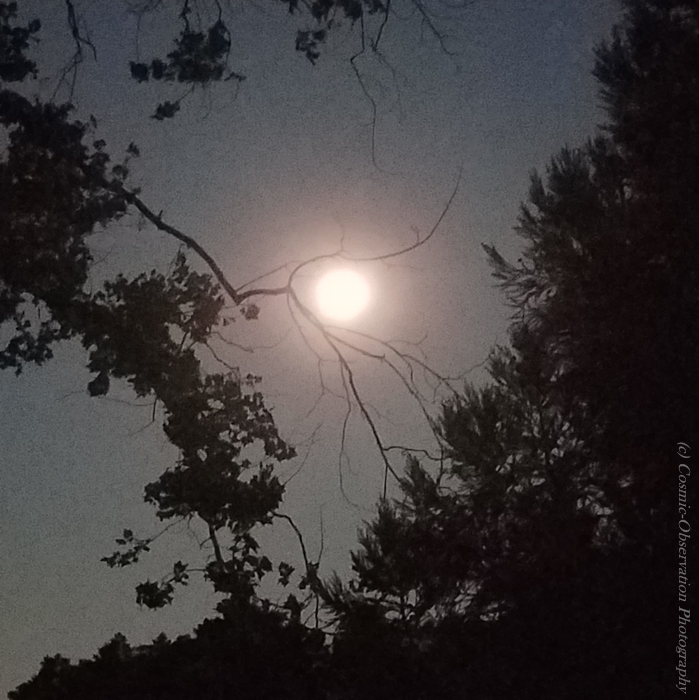
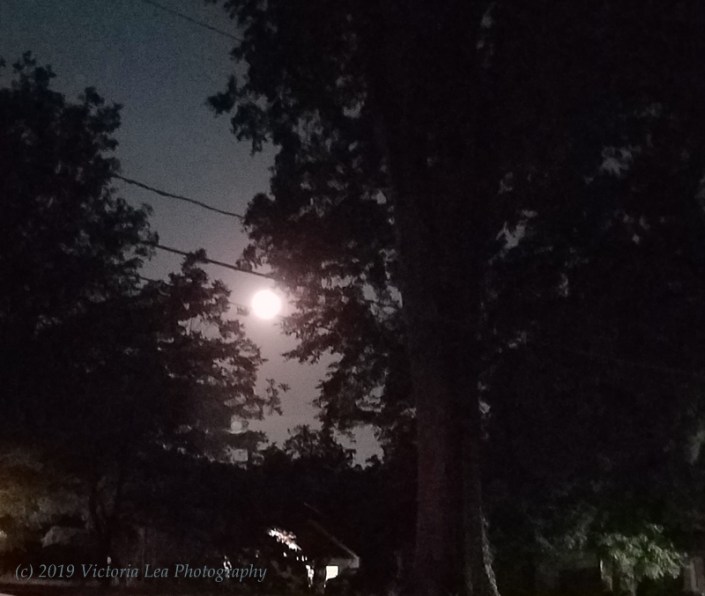
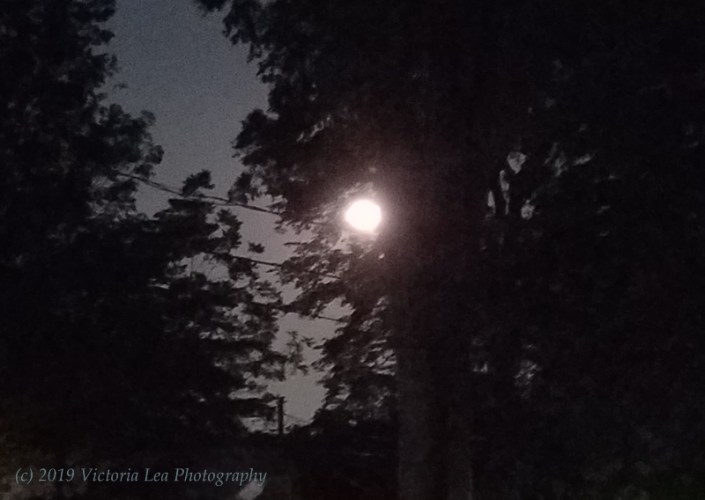
Peaking through the Willow Oak.
It is no wonder, then, that the Pagans also call June’s full moon the Lovers’ Moon. This is an excellent time to work on the connections in your life, romantic or otherwise, by showing affection to your loved ones and allowing yourself to be vulnerable to encourage intimacy in your relationships. During this Honey Moon, some Hoodoo practitioners will even use honey in magic rituals to sweeten other people’s feelings towards the practitioner. An example of a sweetening ritual is to pour honey into a saucer containing the target’s name before lighting a candle on top of it. Another example of a honey ritual is to tie two poppets together with honey between them in order to heal a broken relationship between two people. Honey rituals aside, true magic may happen when you invest your time and effort during this month to work on your relationships and, appreciate the love you have in your life.
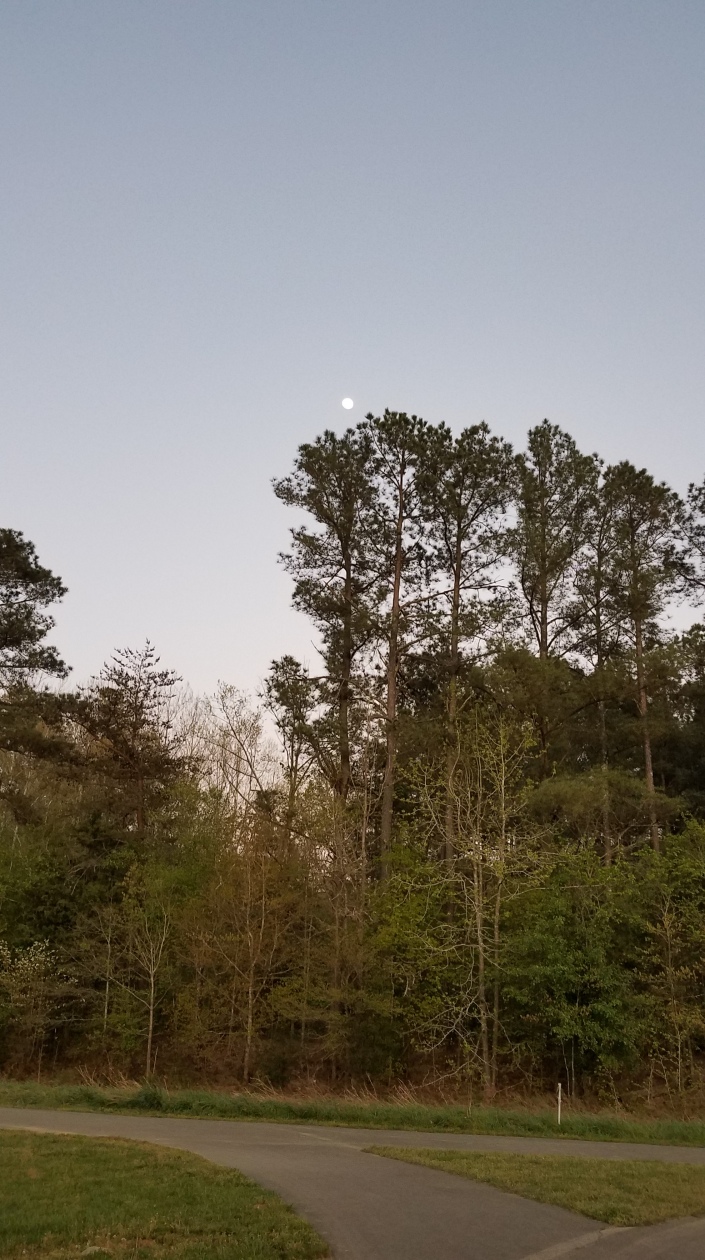
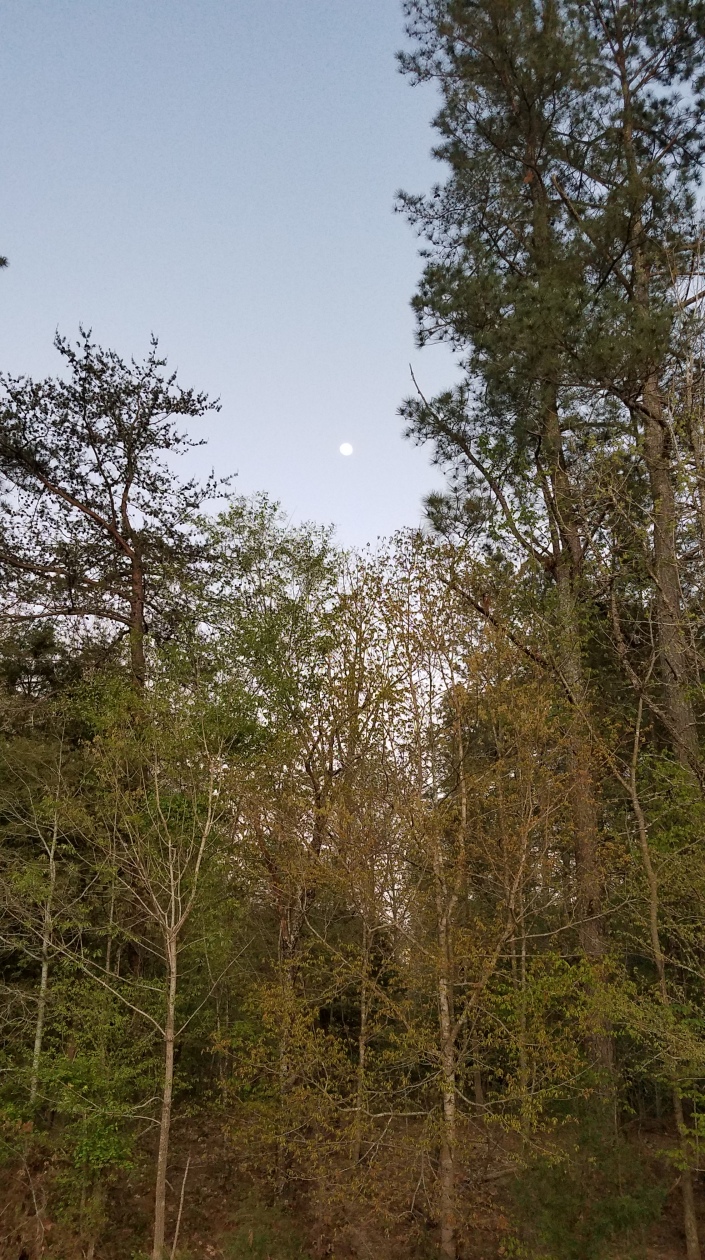
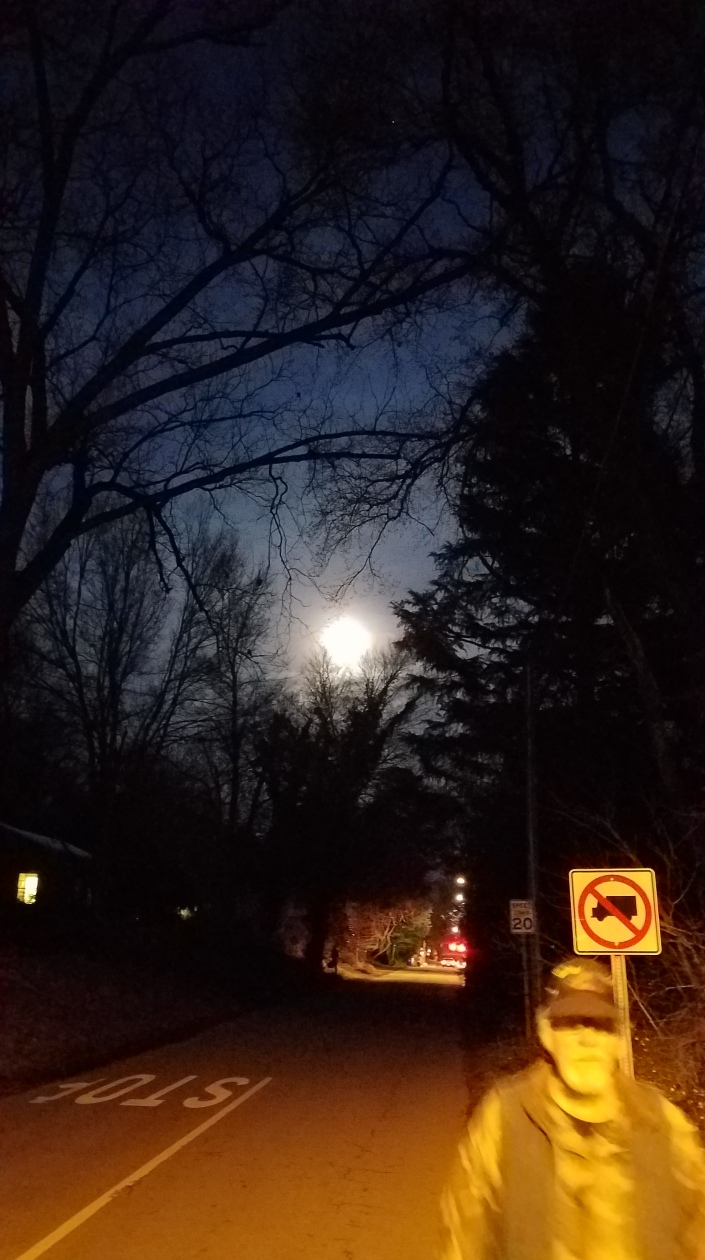
Ok. So. No full moon pix for today. *sigh* We have been inundated with storms…again. We were bombarded with tornado warnings for five hours. An area just south of town close to I-40 was damaged. I am so glad it’s over.
That being said, I do have some shots of the waxing gibbous moon from April 28, 2018. I suspect I had the same problem during that full moon on April 29 (8:58pm EDT)…bad weather. I also have some waxing gibbous shots from April 16.
Howl for me! ~Vic
Pink Moon 2019 was at 100% illumination at 7:12am EDT.
April’s full moon is widely known as the Full Pink Moon, even though it doesn’t actually turn pastel pink as the name suggests. The Full Pink Moon’s name comes from the abundance of moss phlox, a common little pink flower that typically begins to spread across the ground in early spring. With that said, this creeping phlox is not the only thing that begins blooming during the Full Pink Moon.
In many Native American tribes, April’s full moon is associated with the bustling life and vibrant growth of spring. In Sioux culture, it’s named after the sprouting of red grass. The Comanche tribe called it the New Spring Moon and, both the Tlingit and Sioux tribes referred to it as the Budding Moon, after the new plants that begin to bud and sprout during spring. The Cherokee tribe even called it the Flower Moon (though that name is also sometimes used to refer to May’s full moon) and celebrated it for the growth of useful medicinal plants and magical herbs.
Walking back home.
At the same time, April is a time when rivers and streams begin to fully thaw. Accordingly, the Shoshone tribe named April’s full moon the Full Melting Moon and the Arapaho tribe called it the Moon Where Ice Breaks in the River. It was also known as the Fish Moon because of the fish that would begin to swim upstream during this time. The Cherokees believed that flowing water was under the control of a spirit called the Long Man and would perform rituals to honor him during the Full Pink Moon. An example of a ritual like this was the Knee Deep Dance, based off the movements of the Water Frog. The Assiniboine tribe also called April’s full moon the Frog Moon.
Water is not the only thing that starts to flow during the Full Pink Moon. This is also the time where maple sap begins to flow in earnest, marking the true beginning of the incredibly important sugar-making season. The Abenaki tribes called April’s full moon the Sugar Maker Moon, and the Ojibwe called it the Sugarbush Moon. The Ojibwe tribe would journey north to their spring camps to tap maple syrup and engage in spear fishing. Maple syrup was integral to Ojibwe culture. Not only was it a crucial method of seasoning all their foods (they did not have access to salt at that time) but, it also symbolized harmony within the community and with the forces of nature around them.
Gold Park
Waxing Gibbous
04-16-2019
The Full Pink Moon also holds religious significance in other cultures. For example, in Islāmic communities around the world, April’s full moon is celebrated as Bara’at Night, also known as the Night of Innocence. Muslims offer up prayers, asking God to absolve dead ancestors of their sins. They also prepare sweet desserts such as halwa or zarda and give it out to children, the needy and other members of their community. Meanwhile, Christians call it the Paschal Moon and celebrate the first Sunday after April’s full moon as Easter Sunday. It’s possible that the reason why the Easter Bunny brings eggs is because April’s full moon is also known as the Egg Moon, given that animals such as geese begin mating and laying eggs in spring.
While April is known for its showers and ever-warming temperatures, it is also known as a month when spring flowers begin to show up. The name came from the herb moss pink or wild ground phlox which is one of the earliest widespread flowers of the spring. As the name infers, the flowers are pink in color, thus the name for April’s full Moon. But no, the Moon itself won’t be turning pink.
Tribes kept track of the seasons by giving distinctive names to each recurring full Moon. Full Moon names were applied to the entire month in which each occurred. There was some variation in the full Moon names but, in general, the same ones were consistent among regional tribes. European settlers followed that custom and created some of their own names.
Other names for this month’s celestial body include the Full Sprouting Grass Moon, the Egg Moon and, among coastal tribes the Full Fish Moon, because this was the time that the shad swam upstream to spawn.
As the snowiest month in the United States, February’s full moon is commonly known as the Full Snow Moon in Native American cultures. These ancient tribes named this moon after the way trees cracked in the cold or how people had to sit shoulder to shoulder around the fire for warmth. Even the Celts called it the Moon of Ice. As expected of the coldest month in the year, the Full Snow Moon is also known by more sinister names, such as the Bone Moon. The Cherokee tribe called February’s full moon the Bone Moon because, by this point, the tribe’s winter food supplies had usually dwindled to the point where people had to gnaw on bones and cook bone marrow soup in order to survive. For the same reason, the Kalapuya tribe called this moon the Out of Food Moon. Appropriately, it’s also known as the Hunger Moon and the Little Famine Moon. Perhaps, due to this month’s association with death, the Cherokee tribe would commune with their dead ancestors during the Bone Moon. A didanawiskawi, or a medicine person, would host a medicine dance for the community. Fasting and rituals for the dead were also common practices.
Peaking over the courthouse.
However, not all cultures associate February’s full moon with extreme cold and death. The Hopi tribe calls it the Moon of Purification and Renewal, which is very fitting because the Full Snow Moon is usually the very first full moon of the year according to the lunar calendar. Cultures that follow the lunar calendar, especially East Asian cultures, tend to associate the Full Snow Moon with new beginnings for this very reason. The ancient Chinese, for example, called it the Budding Moon. As a matter of fact, celebrations of February’s full moon are the climax of Lunar New Year festivities in various East Asian countries. In China, the Full Snow Moon is celebrated during the Lantern Festival, also known as the Yuanxiao Festival, which is the 15th day of the Lunar New Year. During this festival, the Chinese release kongming lanterns into the sky as they admire the full moon and eat tangyuan, glutinous rice balls that are usually filled with sweet paste. The round shape of the balls symbolize family togetherness and bring good luck to the whole family.
Walking home and below a street light.
Many East Asian cultures in general also light lanterns and bonfires to celebrate February’s full moon. According to an ancient Chinese legend, not long after Buddhism was brought into China, 17 deities were witnessed flying through the sky during the first full moon of the Lunar New Year. Shocked and excited, the populace lit fires and lanterns to see the godly beings better. They continued to do so year after year but, for more practical reasons – to chase away pests and to pray for a good crop in the upcoming spring. In Korea, where February’s full moon is known as Daeboreum, these fiery structures are called “Houses of the Burning Moon”. During Daeboreum, Koreans hike mountains, despite the freezing temperatures, in order to catch a glimpse of the first rise of the first full moon of the Lunar New Year. According to legend, the very first person to accomplish this feat will have their dearest wish come true.
Among the Micmac people of eastern Canada, the driving winds that often accompany February snows led to the name Snow-Blinding Moon. Because this month’s typically harsh weather conditions made hunting very difficult, other common names for February’s Moon included the Hunger Moon, Bony Moon, and Little Famine Moon. To the early American colonists, the optimal time for trapping beaver, fox and mink was the dead of winter when these animals’ coats were at their fullest. So, to them, February’s moon was known as the Trapper’s Moon.
From my driveway.
From a Wiccan site I stumbled across while ‘Googling’ (or ‘Binging’) a particular name, additional names not listed above are Storm Moon, Horning Moon, Wild Moon, Red & Cleansing Moon, Quickening Moon, Big Winter Moon, Moon When Trees Pop and Chaste Moon. And, there is quite an extensive list of Native American moons on Skywise Unlimited.









 Cosmic-Observation