Biopic of the wartime exploits of Audie Murphy (played by himself), the most decorated US soldier in World War II. Starting with his boyhood in Texas, where he became the head of his family at a young age, the story follows his enrollment in [the] Army where he was assigned to the 3rd Division. He fought in North Africa, Sicily and Italy, before landing in southern France and, eventually, fighting in Germany. A Medal of Honor recipient, he also received battle honors from the French and Belgian government.
The highly variable Audie Murphy delivers his best screen performance as “himself” in Universal‘s To Hell and Back. Based on the star’s autobiography, this is the story of how Murphy became America’s most-decorated soldier during WW II. After dwelling a bit on Murphy’s hard-scrabble Texas upbringing, the story moves ahead to 1942, when, as a teenager, Audie joined the army. Within a year, he was a member of the 7th Army, serving in North Africa, Italy, France and, ultimately, Germany and Austria. One by one, the members of Murphy’s Company B are killed in the war, until only three men from the original company are left. [The] others appear at the finale as ghostly images […]. The bulk of the film is given over to Murphy’s conspicuous acts of combat bravery and his killing of 240 enemy soldiers. Highlighted by excellent battle sequences, To Hell and Back is a serviceable tribute to a most complex individual.
Date: 1948
Photo Author: Fort Detrick
Wikipedia & Wikimedia
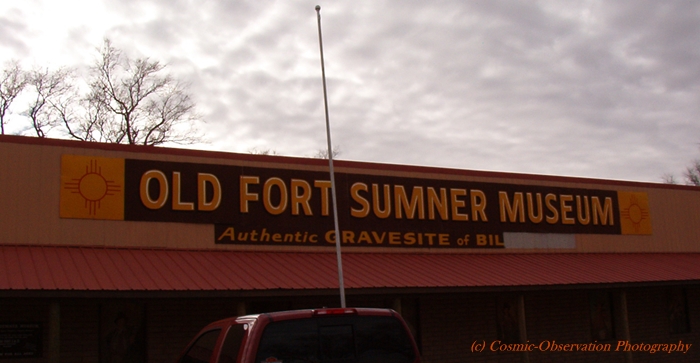
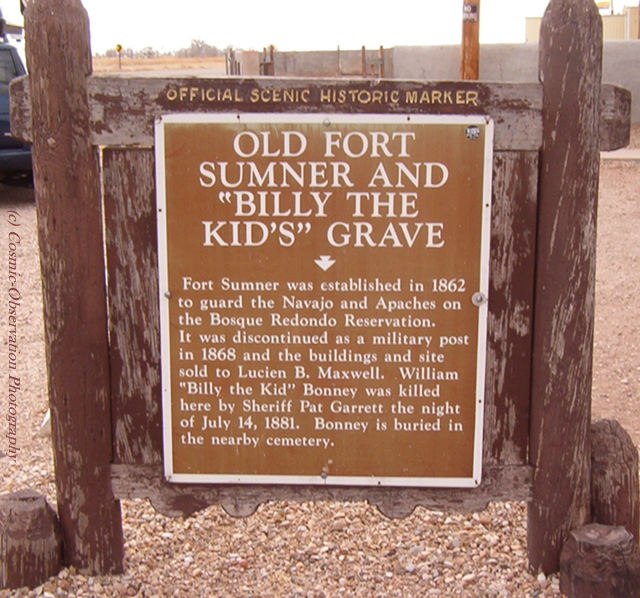
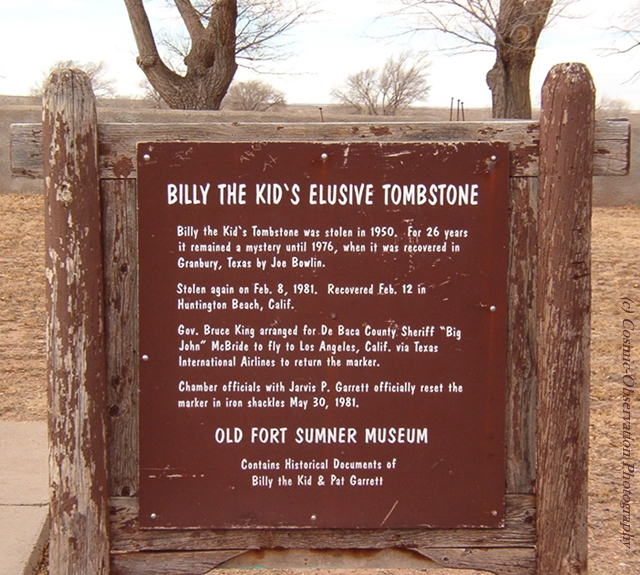
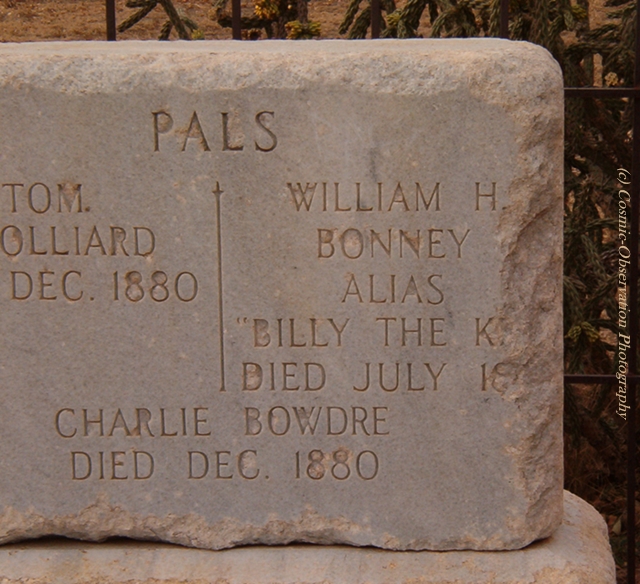
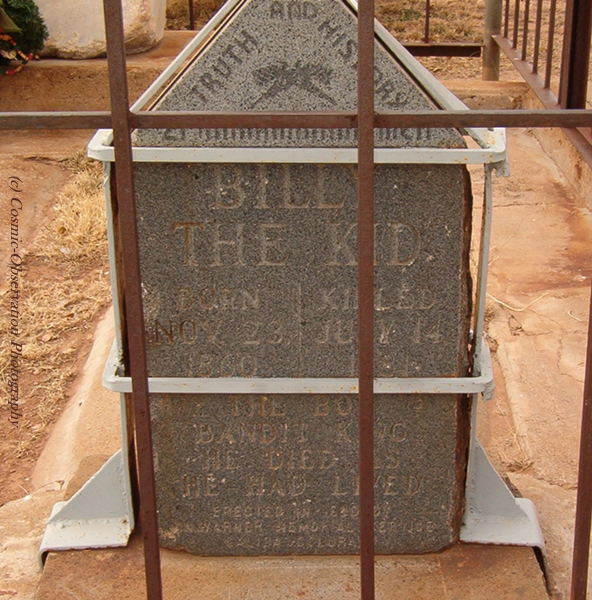
I lived in Texas for nearly a decade. My ex-Marine and I did some traveling through the west when we had opportunities. I’ve been digging around in some old stuff and found some photos from a visit to the Old Fort Sumner Museum in New Mexico in December of 2008. We were on our way to Liar’s Lodge. The museum closed in 2017. ~Vic
Update:
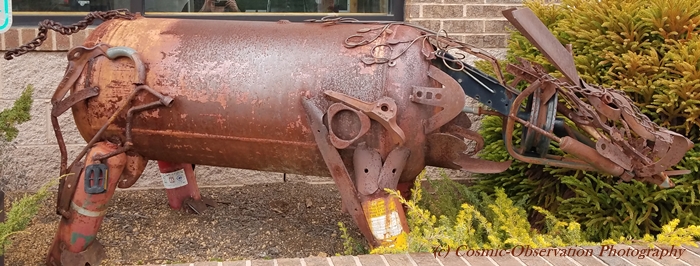
Thanks to blogger J. T. Twissel, this is an insect trap, used to study insect infestations. Thank you, dear!
We have a small kids’ park called Turnip Patch Park. It has a little stream running through it with a covered wooden bridge, park benches, a butterfly garden and, at one time, a piece of artwork on a concrete slab. On the back side of it, adjacent to someone’s home is this lovely box. Out of curiosity, I opened it, expecting to see guano, thinking it was a bat box but, instead, I found wasps. Hm. ~Vic
Photo Credit: Library of Congress
Historic American Buildings Survey
February 1965
Twin Chimneys, so named for the paired chimneys in each gable end, is sited on a hill on West King Street, directly across from the Colonial Inn and the Parks-Richmond House […]. An iron gate from Stewart Iron Works in Cincinnati, Ohio, separates the house from the pedestrian traffic of the sidewalk. [It] is reputedly a pre-Revolutionary house, however, the exact date of construction is not known. It is important to note that a house is sited at the exact location on the 1768 Sauthier Map of Hillsborough but, it cannot be assumed that the houses are the same.
05-20-201907-14-2020Left side gate.
Photo Credit: Pinterest
This is a most delightful old house, with four huge chimneys and a second-floor balcony, from which a view of the busy thoroughfare, King Street, may have been enjoyed down through the years. The lot on which it stands was once owned by Edmund Fanning.
It is interesting to know that this house was the setting for the old romantic novel, “Joscelyn Cheshire.” According to the story, the heroine concealed her lover in the attic to protect him from Cornwallis’ army. The house served at one time as Hillsborough’s Post Office.
Archibald DeBow Murphey was a North Carolina politician known as the “Father of Education” in his state for his proposals that benefited public works and public education. [Murphey] died at Twin Chimneys in Hillsborough on February 1, 1832. He is buried at the Presbyterian Church […]. The town of Murphy, North Carolina (despite its spelling) was named after him.
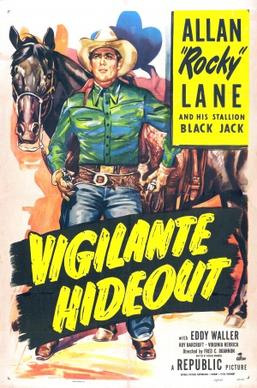
Rocky (Lane), a Range Detective, arrives to help Nugget (Waller) with rustlers. When he learns Nugget owns only three cows, he stays on, anyway and, soon, becomes involved in Benson’s attempt to blow open the bank’s safe. When Rocky upsets his plans, Benson (Don Haggerty), supposedly, gets rid of him by having him declared an outlaw, wanted dead or alive. Then, Benson takes a load of explosives into an old mine located directly under the bank vault.
Double-barreled justice catches up with a cold-blooded killer when “Rocky” takes up the chase! Cattle detective, Rocky Lane, arrives in town to investigate cattle disappearances only to realize just three cows, owned by eccentric inventor Nugget Clark, are involved. However, the disappearances lead to a deeper mystery involving dynamite explosions, rampaging cowboys and a water shortage.
Lane and his trusty black stallion are on hand to help old-timer Waller find water for a town which is threatening to fold up due to drought. Some crooked townsfolk don’t want the water to be found because they want to collect on the $25,000 being stashed away for an aqueduct. Lane’s job is to make sure these people don’t pose too much of a problem, while Waller goes about finding the water. The characterization of Waller as a crazed inventor of gadgets is an added attraction to this oater with a realistic bent.
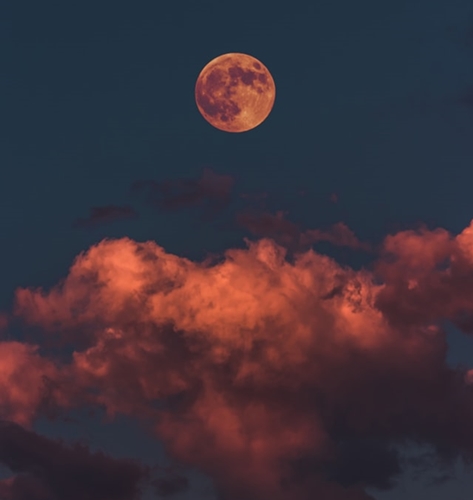
August’s full moon is called the Full Sturgeon Moon, after the primitive fish that used to be abundant in North America’s lakes and rivers during the summer months. Having remained mostly unchanged since the earliest fossil records, sturgeons are ancient living fossils that can grow up [to] 3.5 meters long, or as long as two adult humans stacked on top of each other. Nowadays, however, it’s almost impossible to see a sturgeon during the Full Sturgeon Moon. While they used to thrive, sturgeons are now considered […] critically endangered […]. Though sturgeons are extremely long-lived, the females can live up to be 150 years old, sturgeons might not be around for much longer. They might have survived the dinosaurs but, they might not be able to survive human beings and our hunger for luxurious delicacies like caviar.
I got squat for a Moon shot. We’ve got Isaias spinning around here. I also don’t have any previous years shots but, I did a post two years ago. So, I’ve trotted over to Unsplash. Another name given to the Sturgeon Moon is Red Moon. Full illumination occurred at 11:59am EDT. Howl for me! ~Vic
This Sunday night’s playlist submission was never released. The 8th track from her album Fumbling Towards Ecstasy, it has no chart information. Sarah was already a star in her native Canada but, this album was her breakthrough in the US, exploding on the scene when her first track, Possession, was released. Born in Halifax, Nova Scotia in 1968, she was playing music, early, starting with a ukulele at age four. In high school, she was the singer for the short-lived band The October Game and, after finishing a year in college, signed a recording contract with Nettwerk without having written a single song.
This is another album/CD I have worn out. I can remember when Possession showed up on the radio and I first heard it. I was driving home from work and immediately went looking for her album. Her music has been used in many television shows and I remember her being on Charmed. Notable movies using her songs are City of Angels, Message in a Bottle, The Brave One and Four Christmases.









 Cosmic-Observation