There are several species of Verbena and this one is a Bonariensis or Purpletop Vervain, Clustertop Vervain, Argentinian Vervain and, good old fashioned Tall Verbena. It is not, however, a Brazilian Verbena. ~Vic
**Edward Lodewijk Van Halen (January 26, 1955 – October 6, 2020)**
“She saw the look in his eyes, and she knew better…”
This Sunday’s playlist submission is Jamie’s Cryin’ by American rock band Van Halen, formed in 1972 in Pasadena, California. The sixth track from their debut album Van Halen, it was released as a single on May 16, 1978 but, it never charted. Credit for songwriting is the whole band and the album peaked at #19 on the Billboard 200 on May 20, 1978 after its February 10 release. It was certified RIAA Diamond (10x Platinum) in sales on August 7, 1996.
American rapper Tone Lōc used the opening tom-tom and bass riff from this song on his 1989 hit Wild Thing and wound up settling out of court with Van Halen. He and Eddie Van Halen crossed paths some time afterwards and it wasn’t friendly.
I was in sixth grade when this song came out and I had no clue. I was all into disco back then. I didn’t know who they were until Dance the Night Away came out the following year. I didn’t buy an album of theirs until Diver Down. I have never been to a concert. ~Vic
A member of the Acanthaceae family, this could be a Ruellia Simplex or Mexican Petunia, Mexican Bluebell or Britton’s Wild Petunia. It could be a Ruellia Tuberosa or Minnieroot, Fever Root, Snapdragon Root or Sheep Potato. Honestly, they look the same to me. ~Vic
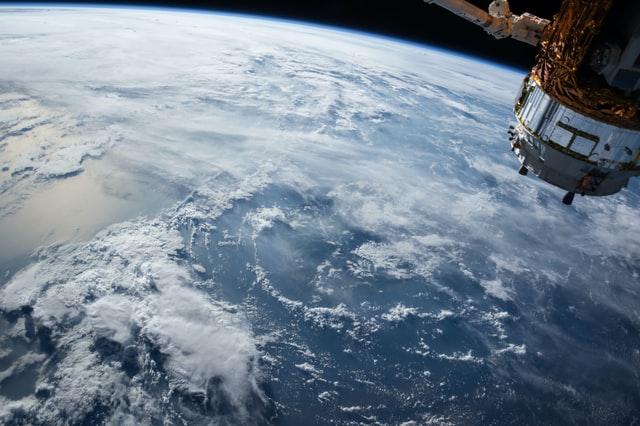
“A report warns that fleets of new communication satellites in low-Earth orbit will spoil some astronomical observations, even if all known mitigation strategies are taken.”
Astronomers and the operators of new, thousands-strong […] low-orbiting satellites will have to work together to prevent them from having a devastating impact on ground-based observations of planets, stars and other celestial objects, says a [recent] report […]. Even then, there is no escaping some harm from the fleets of commercial orbiters.
“All optical and infrared observatories will be affected to some degree,” [stated] astronomer Anthony Tyson of the University of California, Davis, […] at a briefing on the report.
The satellites, designed to provide internet access in remote areas, now number in the hundreds. [Following] the launch of the first batch by SpaceX in May 2019, astronomers were alarmed by how bright they appear in the sky. If all the planned [launches] go ahead, the number of satellites will grow beyond 100,000. Since last year, there have been a number of independent studies of [satellites’] possible impact. [The] workshop’s report is the first time the satellite companies, and those who would be affected (astronomers to the agencies that fund them and their telescopes), have pooled their results and worked out a strategy for the future.
The satellite trails are very bright, and out of focus slightly, so they’re wide and cover several pixels on images taken with a test version of the (soon to open Vera C.) Rubin Observatory’s camera, notes Tyson. [Telescopes] that need to work during twilight will also run into problems. Because the satellites are in low orbits, they will often be seen close to the horizon and will be most visible when they are still in sunlight but, the observer is not. If, however, satellite operators choose orbits above 600 kilometers, the situation gets worse because, then, their spacecraft are visible for more of the night, and in [the] summer, all night long. Astronomers should also develop software tools to remove satellite trails from images and the companies should make accurate orbital data available for their orbiters so telescopes can try to avoid them.
The only measure the report could offer to totally eliminate the damage to astronomy was to launch fewer or no low-orbiting satellites…likely not an option given the financial investments the companies are making in the [satellites] and the lucrative market they foresee.
Tyson and his colleagues have been working with SpaceX engineers to modify their satellites to reduce their brightness. His team has also modeled trying to steer the Rubin Observatory telescope to avoid passing satellites but, Tyson says there are simply too many. Astronomers are already actively pursuing image processing solutions but, he says “the jury’s out” on how much that can help.
It took me a while to find this one. Even Pl@ntNet had trouble. At first, I thought it was a Coreopsis but, the petals didn’t match. Then, I thought it might be a Cosmos but, the petals still didn’t match. This is a Bidens Trichosperma. I think there has been some classification shuffling but, they are all in the Asteraceae family or Sunflower family. ~Vic
Photo Credit: Library of Congress
Historic American Buildings Survey
February 1965
Twin Chimneys, so named for the paired chimneys in each gable end, is sited on a hill on West King Street, directly across from the Colonial Inn and the Parks-Richmond House […]. An iron gate from Stewart Iron Works in Cincinnati, Ohio, separates the house from the pedestrian traffic of the sidewalk. [It] is reputedly a pre-Revolutionary house, however, the exact date of construction is not known. It is important to note that a house is sited at the exact location on the 1768 Sauthier Map of Hillsborough but, it cannot be assumed that the houses are the same.
05-20-201907-14-2020Left side gate.
Photo Credit: Pinterest
This is a most delightful old house, with four huge chimneys and a second-floor balcony, from which a view of the busy thoroughfare, King Street, may have been enjoyed down through the years. The lot on which it stands was once owned by Edmund Fanning.
It is interesting to know that this house was the setting for the old romantic novel, “Joscelyn Cheshire.” According to the story, the heroine concealed her lover in the attic to protect him from Cornwallis’ army. The house served at one time as Hillsborough’s Post Office.
Archibald DeBow Murphey was a North Carolina politician known as the “Father of Education” in his state for his proposals that benefited public works and public education. [Murphey] died at Twin Chimneys in Hillsborough on February 1, 1832. He is buried at the Presbyterian Church […]. The town of Murphy, North Carolina (despite its spelling) was named after him.
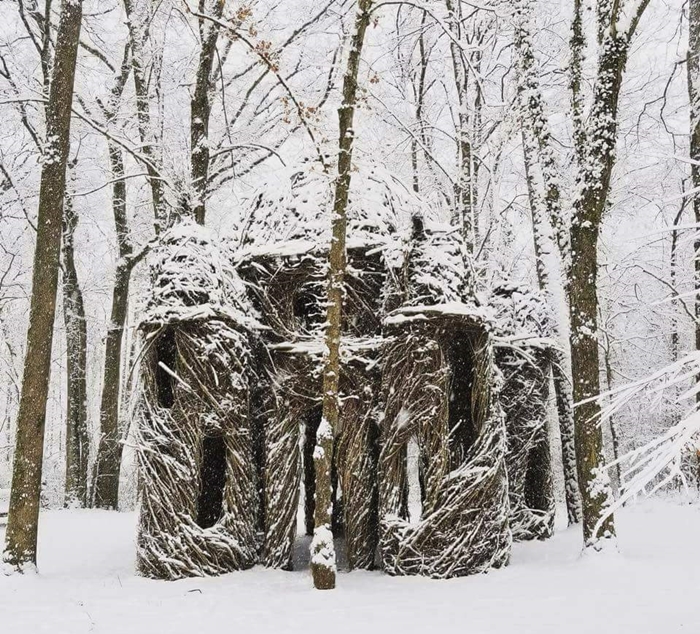
I’ve posted this sculpture twice, before…here & here. This will be my last installment as I only had a few shots and this shot isn’t even mine. This photo was part of a larger group of snow shots I posted about here & here.
Since it is SO HOT outside, I thought I would cool your mind a bit. ~Vic
Photo Credit: Tim Woody
(I have no idea who he is despite searching.)
From the January 2018 Snow Bomb
01-18-2018






 Cosmic-Observation