the hollywood reporter
Hans 2021 Movie Draft: Round Seven-Pick Six-Cop Land 1997

Hanspostcard has a movie draft challenge. This is my Round Seven pick.
Category: Crime/Film Noir
Film: Cop Land
Written and directed by James Mangold, it was executive produced by the Weinstein brothers (though their names have been removed from the Wikipedia article). Released August 6, 1997 in New York (premiere) and nationwide on August 15, it was an incredible ensemble cast of Sly Stallone, Harvey Keitel, Ray Liotta, Robert De Niro, Robert Patrick, Peter Berg, Janeane Garafalo, Edie Falco, Michael Rapoport, Annabella Sciorra, John Spencer, Cathy Moriarty, Noah Emmerich, Frank Vincent, Malik Yoba, Arthur Nascarella and, cameos of Deborah Harry & Geraldo Rivera.
Sylvester Stallone put on 40 pounds to play Nowheresville, N.J., sheriff Freddy Heflin in Cop Land […]. His town is run by Ray Donlan (Keitel) and the other New York cops who have settled there with their families. He wears blinders when it comes to their lawbreaking and mob dealings. Moe Tilden (De Niro), the internal-affairs officer out to get the goods on Cop Land, correctly pegs Freddy as “a man looking for something to do.” Keitel’s [Donlan] exudes dangerous energy. He cares for his own as long as they don’t cross him […]. Robert Patrick brings sly menace to Rucker […]. Ray Liotta […], as Gary Figgis, [is] a tainted cop who sides with Freddy.
Mangold […] has a rare talent for finding the human drama in ordinary lives.
Peter Travers
Rolling Stone
August 15, 1997
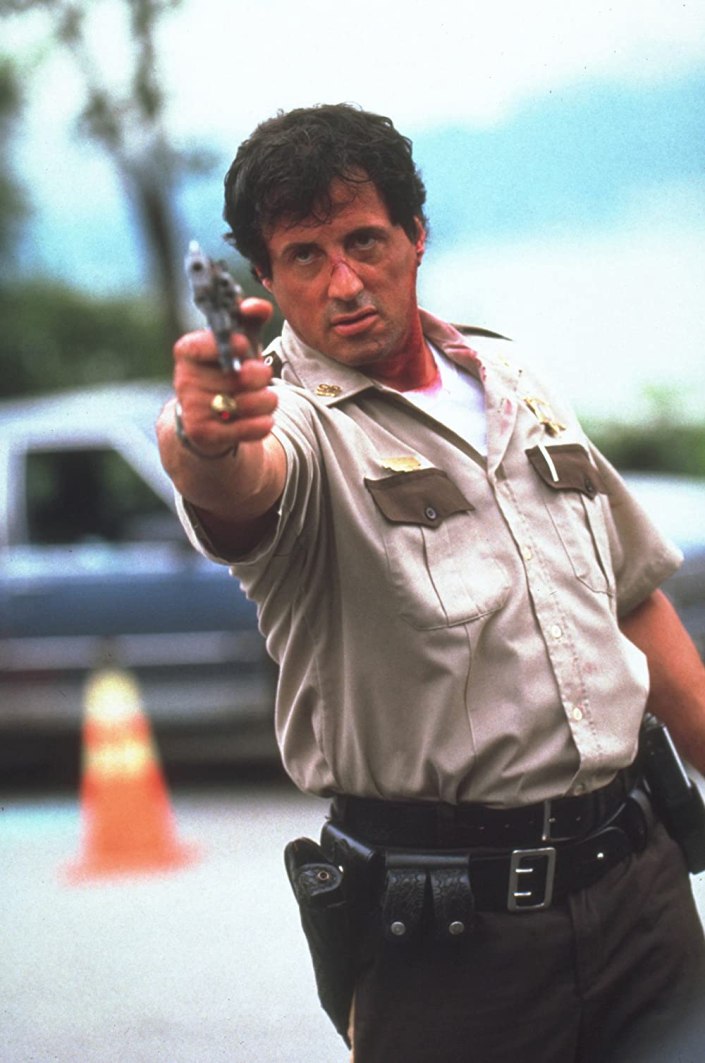
Writer-director James Mangold […] wrangles an impressive cast […] and spins a compelling tale of cancerous corruption among a secretive group of New York’s finest who have settled in the fictional New Jersey burg of Garrison. [Stallone] indeed looks chunky and plays the sleepy, docile Sheriff […] with sluggishness to spare in a largely commendable performance as a half-deaf small-town dreamer. [He] is not given much in the way of memorable dialogue but, he makes the character work […]. [Having] yet to replace his LP of The River with a CD, [he] carries a torch for the local Jersey girl (Sciorra) he saved from drowning…the reason for his loss of hearing in one ear…[he] once longed to be a big-city cop but, had to settle for policing them.
Freddy gradually realizes that he doesn’t like how the town has turned out.
David Hunter
The Hollywood Reporter
August 11, 1997
I saw this at the theater when it came out and caught it, again, a few nights ago. I was born and raised in law enforcement and, worked in it, too (non-sworn). I’ve known good cops and I’ve known some really bad ones. I love a well written cop movie and this was an unusual one in that Stallone wasn’t playing a bad ass like Rambo, Cobra, Tango, John Spartan (though I do love that movie) or Ray Quick. This character was different…subdued. His scenes with Annabella Sciorra have Springsteen playing in the background which adds depth and texture to the mood. This is clearly a period piece as all the vehicles, hair cuts and clothing styles are, effectively, early 80s. The River came out in 1980 and music from the Director’s Cut, like Blue Oyster Cult‘s Burnin’ For You came out in 1981. This also manages to cover the Crime category via IMDb and the Film Noir category, simultaneously, via Historical Dictionary of Film Noir (2010). ~Vic
Trivia Bits:
♦ There is a disclaimer at the end of the credits which states “This film is a work of fiction. It is currently illegal for New York City Police officers to live outside the state of New York.”
♦ Arthur J. Nascarella was a real-life NYPD officer.
♦ Debbie Harry acted in the movie but, was edited out in the final cut. She explained on a live television special that although she was cut, she still got paid.
♦ In the scene in which Ray Liotta confronts Robert Patrick in the bar, the dart that Liotta shoves up Patrick’s left nostril was made out of rubber.
♦ Tom Cruise, Tom Hanks, Gary Sinise and John Travolta were considered for Sheriff Freddy Heflin.
Stallone’s Variety Interview 2019
The Making of an Urban Western
Movie Monday: The Other Woman 2014

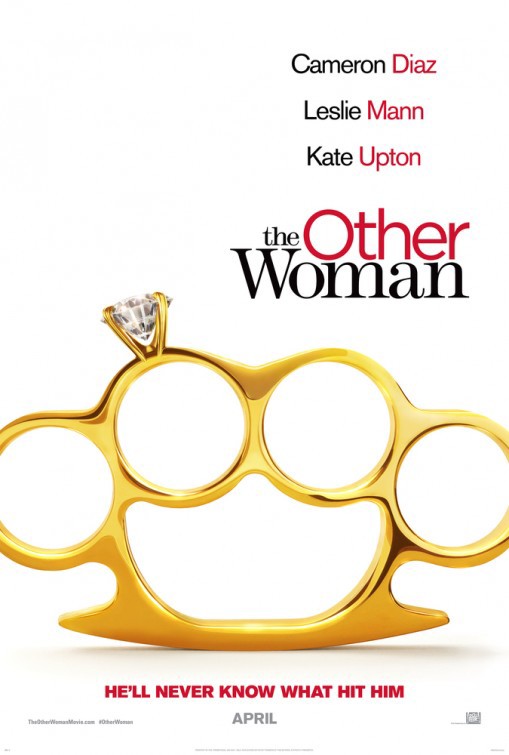
Five years ago, today, the #1 movie at the box office was The Other Woman, a comedy starring Cameron Diaz, Leslie Mann, Nikolaj Coster-Waldau, Don Johnson, Kate Upton, Taylor Kinney and Nicki Minaj. Released April 25, it was directed by Nick Cassavetes (the son of John Cassavetes & Gena Rowlands). Melissa Stack was hired to write a screenplay that was based on the 1996 movie The First Wives Club.
After discovering her boyfriend is married, Carly Whitten tries to get her ruined life back on track. But, when she accidentally meets the wife he’s been cheating on, she realizes they have much in common and her sworn enemy becomes her greatest friend. When yet another affair is discovered, all three women team up to plot mutual revenge on their cheating, lying, three-timing SOB.
Quotes
From Justin Chang (Variety):
[…] an ungainly, often flat-footed yet weirdly compelling romantic dramedy about two gals who become unlikely best friends when they realize they’re being screwed (literally) by the same man. Like a watered-down “Diabolique” or a younger-skewing “First Wives Club,” this latest mainstream rebound from director Nick Cassavetes taps into the pleasures of sisterly solidarity and righteous revenge. Beneath the wobbly pratfalls and the scatological set pieces, there’s no denying the film’s mean-spirited kick, or its more-than-passing interest in what makes its women tick.
From Todd McCarthy (The Hollywood Reporter):
A female solidarity adultery comedy that’s three parts embarrassing farce to one part genuinely comic discharge.
From Christy Lemire (Roger Ebert):
Trouble is, Cassavetes, working from a script by Melissa K. Stack, veers wildly between cautionary tale, revenge comedy, scatological raunchfest and female empowerment drama. In theory, the joy of watching this kind of movie comes from seeing such a smooth operator squirm as his schemes are revealed and destroyed. […] plot contrivances abound […], along with not one but, two instances of characters, um, graphically relieving themselves at inopportune moments. The joke isn’t funny the first time and this kind of gross-out strain of comedy clangs uncomfortably with the feel-good message […]. Any semblance of intelligent humor or insight into female aging that may have existed gets tossed out the window of Carly’s high-rise office by the end […]
There are, literally, NO good trivia bits for this movie. ~Vic
Movie Monday: Blazing Saddles 1974

Forty-five years ago, today, the most popular film at the box office was Blazing Saddles, a satirical Mel Brooks-directed western starring Cleavon Little, Gene Wilder, Slim Pickens, Harvey Korman, Madeline Kahn, Mel Brooks (three on-screen characters), Alex Karras, David Huddleston, John Hillerman, Dom DeLuise, Count Basie (as himself), Rodney Allen Rippy (as a young Bart), with uncredited appearances by Anne Bancroft, Aneta Corsaut (Helen Crump) and Patrick Labyorteaux (JAG TV series). Released February 7, it was produced by Michael Hertzberg and based on a story by Andrew Bergman. Bergman collaborated with Brooks, Richard Pryor, Norman Steinberg and Al Uger to craft the screenplay and, John Morris (The Woman in Red & Dirty Dancing) was composer.
The Ultimate Western Spoof. A town where everyone seems to be named Johnson is in the way of the railroad. In order to grab their land, Hedley Lemar [sic] (Harvey Korman), a politically connected nasty person, sends in his henchmen to make the town unlivable. After the sheriff is killed, the town demands a new sheriff from the Governor (Mel Brooks). Hedley convinces him to send the town the first Black sheriff (Cleavon Little) in the west. Bart is a sophisticated urbanite who will have some difficulty winning over the townspeople.
Quotes:
From Vincent Canby (The New York Times):
“[…] comedies, like Mel Brooks’s “Blazing Saddles,” the best title of the year to date, are like Chinese food. A couple of hours later you wonder where it went. You wonder why you laughed as consistently as you did. [It] is every Western you’ve ever seen turned upside down and inside out, braced with a lot of low burlesque […]. The trouble is that [it] has no real center of gravity. Harvey Korman, a gifted comic actor who is so fine as Carol Burnett’s television co‐star, tries very hard to be funny as a crooked businessman and sometimes succeeds. But, it’s apparent that he’s hard put to keep up with the movie’s restless shifting from satire to parody to farce to blackout sketch. [It] has no dominant personality and, it looks as if it includes every gag thought up in every story conference. Whether good, bad or mild, nothing was thrown out.”

From Roger Ebert:
“It’s a crazed grab bag of a movie that does everything to keep us laughing except hit us over the head with a rubber chicken. At its best, his comedy operates in areas so far removed from taste that (to coin his own expression) it rises below vulgarity. One of the hallmarks of Brooks’ movie humor has been his willingness to embrace excess.”
From Mel Brooks (Interview at Creative Screen Writing):
“The writing process on Blazing Saddles was the complete opposite of the writing process on Young Frankenstein. Blazing Saddles was more or less written in the middle of a drunken fistfight. There were five of us all yelling loudly for our ideas to be put into the movie. Not only was I the loudest but, luckily, I also had the right as director to decide what was in or out.”
Trivia Bits:
♦ James Earl Jones was to be the original Sheriff. Richard Pryor was next in line but, the studio wouldn’t finance it due to Pryor’s background.
♦ Gig Young was originally cast as the “Waco Kid” but, collapsed on set and was replaced with Wilder.
♦ Warner Bros. almost didn’t release the film. The executives thought it too vulgar for the American public.
♦ Governor William J. Le Petomane (Brooks) was a take-off on the stage name of a French Flatulist.
Nominated for three Academy Awards and two BAFTAs. It won three awards. Recognized by the American Film Institute, it is listed as #6 of the 100 funniest American films.
 Cosmic-Observation