There is very little written about this special, save a New York Times Article, written the next day (No writer credited):
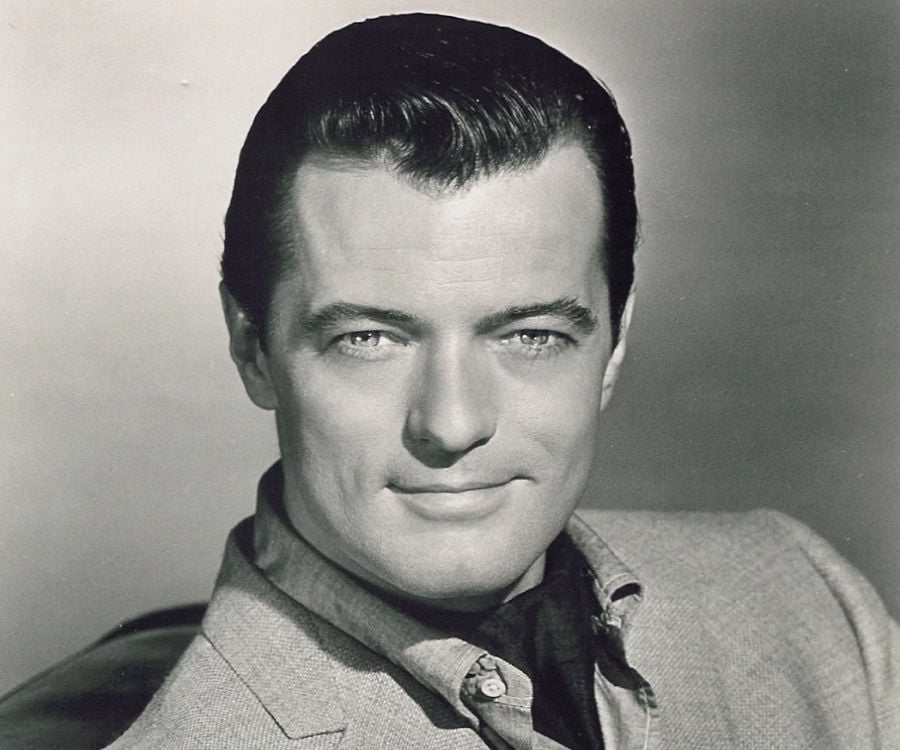
ONE of the tiredest gimmicks of variety shows was coupled last night with a fresh idea on “The Robert Goulet Hour.” When the tenor turned his profile toward the sun on a southern California beach and a light wind ruffled his perfectly groomed hair as he sang “Lost in the Stars,” his program consciously aimed for the creative touch. Few singers are willing to compete with the Pacific Ocean.
But when Mr. Goulet was on the sound stage of C.B.S. Television City in Hollywood, he was engulfed in that shopworn gag of pretending to be rehearsing a musical special for TV. Leslie Caron joined him in “Call Me Irresponsible” and then said “no,” she simply would not sing on his show. Peter Gennaro demonstrated a possible dance step and Fredd Wynne [sic] agonized over material for Mr. Goulet and sketches for Miss Caron. Even the ad‐libs were planned.
Visiting the University of California at Los Angeles, Mr. Goulet and company held a press conference for tanned Tammys and Gidgets, who watched Terry‐Thomas mug shamelessly as a fine arty professor. The atypical students acted like graduates of the Hollywood Professional School.
When the script permitted Mr. Goulet to forget the script, his show had possibilities. Still, the evening’s honors must go to Miss Caron, who, impersbnating [sic] Marlene Dietrich as the Blue Angel, tackled a chair with the finesse of an Olympic champion.
IMDB states that it was filmed at the Wilshire Boulevard Brown Derby. The second video, below, appears to be from a Robert Goulet channel that was set up by his widow, Vera Novak. Written below the video:
Robert Goulet Live From Sahara Hotel In Las Vegas was filmed as part of “An Hour With Robert Goulet” TV special in 1964 and produced by our company Rogo Productions, Inc. This is a rare gem and wonderful historical footage of a remarkable entertainer showcasing live entertainment in Las Vegas during 1960s. In this clip, Robert sings a “Medley Of Old Songs” written by Jerry Bresler and Lyn Duddy, which was also recorded in 1963 on Columbia Records “Robert Goulet in Person“.
This is the show that introduced the world to Elvis Presley.
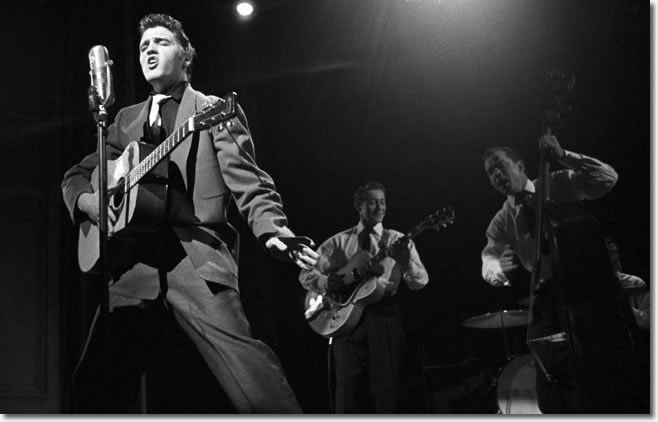
Dave Marsh, in his insightful musical biography Elvis, writes about the moment Elvis Presley burst upon the American scene via The Dorsey Brothers Stage Show on January 28, 1956. “In his first appearance on the Dorsey Brothers’ TV show, the young singer rocked the world”. Marsh described Elvis’ startling rendition of Heartbreak Hotel and concluded, “He owned the song and he owned the crowd”.
March 17, 1956
Photo Credit: elvispresleymusic.com.au
After 17 months of personal appearances all over the south […], Elvis […] made his first appearance […]. Those shows were broadcast, live, from the CBS Studios in New York City. Young Elvis The Pelvis’ first appearance […] was followed by 5 others throughout the next 2 months until the 24 of March, 1956.
Update: Less than 24 hours after I posted this, YouTube snatched down the video. If they continue, YouTube won’t have any videos left to watch. So, that being said, I am leaving the original link and adding what I can find. ~Vic
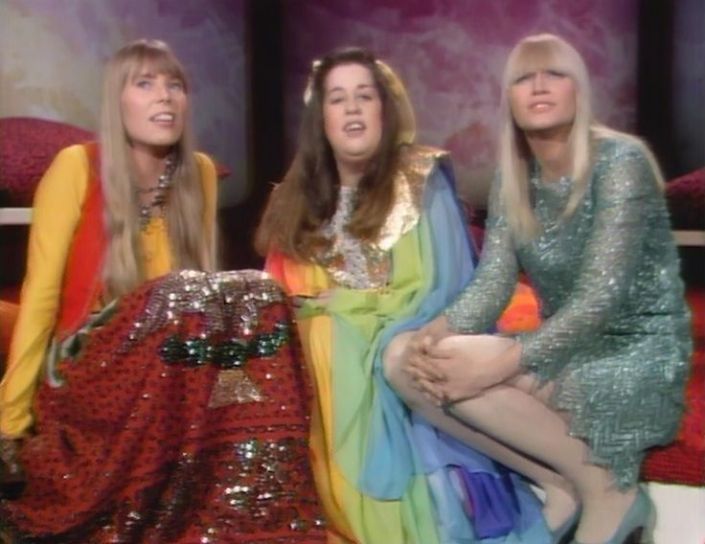
[This was] a one-shot pilot episode for a TV series that was never picked up. In 1968, Mama Cass had launched her solo career and was hoping to move into television. This one-hour program only aired once on ABC-TV and was never shown, again. The show features Mama Cass Elliot with special guest stars, John Sebastian (The Lovin’ Spoonful), Joni Mitchell, Mary Travers (Peter, Paul and Mary), Buddy Hackett, Martin Landau and Barbara Bain (husband & wife, both from Mission: Impossible and later, Space: 1999).
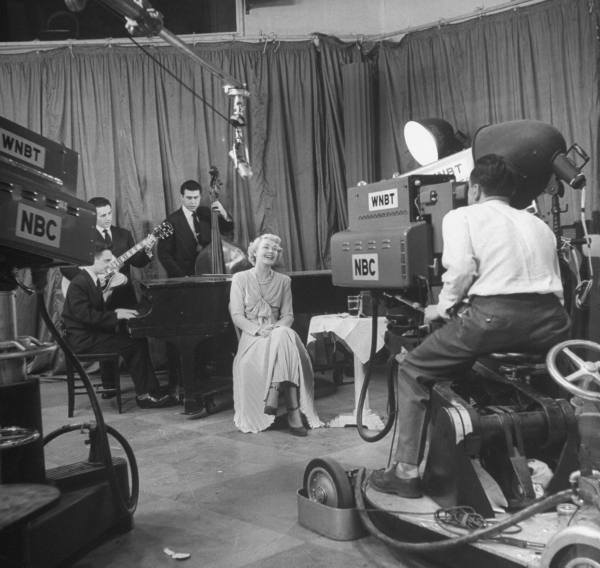
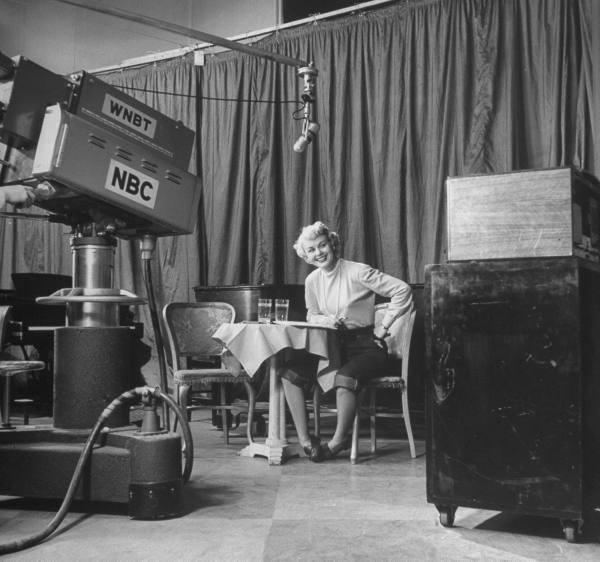
Hour Glass was sponsored by Standard Brands, promoting Chase and Sanborn Coffee and, Tenderleaf Tea. The program included comedians, musicians, entertaining films (such as a film of dance in South America) and a long, live commercial for the sponsor’s products. Such famous names as Doodles Weaver, Bert Lahr, Dennis Day, Jerry Colonna, Peggy Lee and Joe Besser appeared on the program.
The Columbia History of American Television attributed the program’s short life to its cost, saying, “Standard Brands invested $200,000 in this series over its ten-month tenure at a time when that level of investment just couldn’t be supported and sustained, leading to the Hour Glass’s abbreviated run.” Another factor was that James Petrillo, president of the American Federation of Musicians, forbade musicians from performing on television without an agreement between the AFM and the networks, thus, limiting directors, and performers, to use of recorded music.
It is historically important, however, in that it exemplified the issues faced by networks, sponsors and advertising agencies in television’s formative years. The program was produced by the J. Walter Thompson agency […]. The lines of responsibility were not completely defined in those early years and the nine-month run of Hour Glass was punctuated by frequent squabbling among the principals. Each show was assembled by seven Thompson employees working in two teams, each putting together a show over two weeks in a frenzy of production. It must have been the curiosity factor that prompted some stars to appear on the show because they certainly were not paid much money. Hour Glass had a talent budget of only $350 a week, hardly more than scale for a handful of performers. Still, Standard Brands put an estimated $200,000 into the program’s nine-month run, by far the largest amount ever devoted to a sponsored show at that time. In February 1947, Standard Brands canceled Hour Glass. They were pleased with the show’s performance in terms of beverage sales and its overall quality, yet, were leery about continuing to pour money into a program that did not reach a large number of households (it is unclear if the show was broadcast anywhere other than NBC’s interconnected stations in New York and Philadelphia). The strain between NBC and Thompson played a role as well. Still, Hour Glass did provide Thompson with a valuable blueprint for the agency’s celebrated and long-running production, Kraft Television Theatre.


 Cosmic-Observation