composer
Music Monday: Wachet! Betet! Betet! Wachet! 1716

Collection: Bach-Archiv_Leipzig
Source: Dave’s J. S. Bach Page
Photographer: David J. Grossman
Johann Sebastian Bach was a German composer and organist. The most important member of the Bach family, his genius combined outstanding performing musicianship with supreme creative powers in which forceful and original inventiveness, technical mastery and intellectual control, are perfectly balanced. While it was in the former capacity, as a keyboard virtuoso, that in his lifetime he acquired an almost legendary fame, it is the latter virtues and accomplishments, as a composer, that, by the end of the 18th century, earned him a unique historical position. His musical language was distinctive and extraordinarily varied, drawing together and surmounting the techniques, the styles and the general achievements, of his own and earlier generations, and leading on to new perspectives, which later ages have received, and understood, in a great variety of ways.
Wachet! Betet! Betet! Wachet! (Watch! Pray! Pray! Watch!) is the title of two church cantatas by Johann Sebastian Bach. He composed a first version, BWV 70a, in Weimar for the second Sunday in Advent of 1716 and expanded it in 1723 in Leipzig to BWV 70, a cantata in two parts for the 26th Sunday after Trinity.
On [March] 2, 1714, Bach was appointed concertmaster of the Weimar court capelle of the co-reigning dukes Wilhelm Ernst and Ernst August of Saxe-Weimar. As concertmaster, he assumed the principal responsibility for composing new works, specifically cantatas for the Schlosskirche (palace church), on a monthly schedule. Bach originally wrote this cantata in his last year there […].
The instrumentation of the Weimar cantata is lost.
Bach first performed the cantata on [December] 6, 1716.
Wikipedia Summaries
Additional Reading:
Bach Cantata Translations (Emmanuel Music Organization Website)
Chapter 28 BWV 70 (The Cantatas of Johann Sebastian Bach by Julian Mincham)
Bach-Collegium Stuttgart
Gächinger Kantorei Choir
Helmuth Rilling
Dvořák Hall Prague
Monteverdi Choir
John Eliot Gardiner
Music Monday: Partitas For Solo Violin 1696

from Suite #1
Source: IMSLP
Image Credit: Wikipedia & Wikimedia
The six partitas for solo violin by Johann Paul von Westhoff are the earliest known published music for solo violin. Although Westhoff’s compositions were rediscovered by scholars […] in the mid-19th century, this work was not found until the late 20th century.
The collection […] was discovered […] by musicologist Peter P. Várnai. He announced his discovery in a 1971 article […] published in Die Musikforschung, volume 24. The extant copy is dated 1696 (three hundred & twenty-five years, ago) but, it may be a reprint (partial or full) of a much earlier publication by Westhoff…the Erstes Dutzend Allemanden, Couranten, Sarabanden und Giguen Violino Solo sonder Passo Continuo. [That] collection was published in Dresden in 1682 and is considered lost. The first modern edition of the partitas appeared in 1974.
Nothing is known about how or when the partitas were composed. One other work for solo violin by Westhoff survives, a 1683 suite published in an issue of Dresden’s Mercure galant. [It] is entirely possible that the composer had more solo violin works. The […] surviving partitas are historically important works […] and were most probably the inspiration for Johann Sebastian Bach‘s sonatas and partitas for solo violin.
The partitas all consist of four dances, arranged in the standard late Baroque order… an Allemande, the Courante, the Sarabande and the Gigue. The music is technically demanding. [It is] fully polyphonic with frequent instances of tricky double stopping.
Johann Paul von Westhoff was a German Baroque composer and violinist. One of the most important exponents of the Dresden violin school, he was among the highest ranked violinists of his day […].
Johann Paul von Westhoff 1656-1705 (On Baroque)
List of Known Works
References
Music Monday: Membra Jesu Nostri 1680
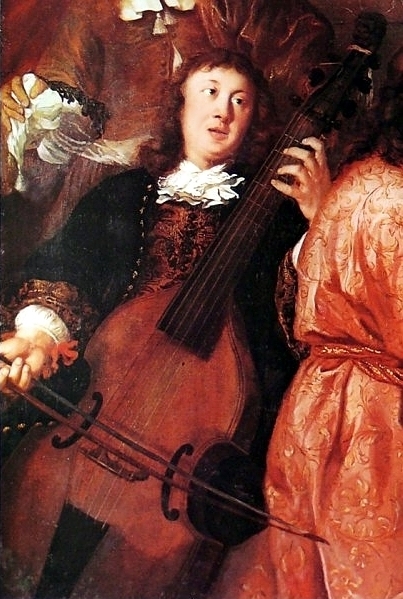
Painting Author: Johannes Voorhout
Collection: Hamburg Museum
Image Credit: Wikipedia & Wikimedia
Three hundred, forty years ago, Danish-German Baroque composer and organist Dieterich Buxtehude composed Membra Jesu Nostri. Considered to be one of the most influential composers in Germany, his style is reflected in the works of Johann Sebastian Bach, one of his students. [More] than 100 compositions of his survive […].
Membra Jesu Nostri [or The limbs of our Jesus], BuxWV 75, is a cycle of seven cantatas composed by Dieterich Buxtehude in 1680 and dedicated to Gustaf Düben. The full Latin title Membra Jesu Nostri Patientis Sanctissima translates to “The most holy limbs of our suffering Jesus”. This work is known as the first Lutheran oratorio. The main text are stanzas from the Medieval hymn Salve Mundi Salutare, also known as the Rhythmica Oratio, a poem formerly ascribed to Bernard of Clairvaux but, now thought more likely to have been written by Medieval poet Arnulf of Leuven […]. It is divided into seven parts, each addressed to a different part of Christ’s crucified body: feet, knees, hands, sides, breast, heart and face. In each part, biblical words referring to the limbs frame verses of the poem.
Sources:
Duke Vespers Ensemble (MSR Classics)
Salve Mundi Salutare (New Advent)
Buxtehude Composition List (Wikipedia)
Dieterich Buxtehude (Wikipedia)
Membra Jesu Nostri (Wikipedia)
The International Dieterich Buxtehude Society
Music Monday: Les Pièces de Clavessin 1670
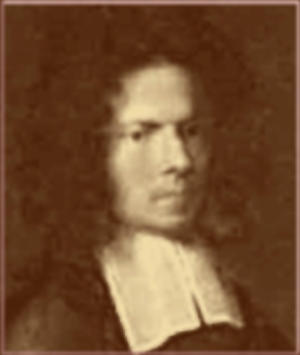
Three hundred, fifty years ago, Jacques Champion de Chambonnières, a French harpsichordist and dancer, composed Les Pieces de Clavessin de Monsieur de Chambonnieres or Harpsichord Pieces.
Due to lack of manuscript sources, little is known about French harpsichord music of the first half of the 17th century and Chambonnières emerges as the sole, major composer of the time with a large surviving oeuvre (works of art). Some 150 pieces are extant, almost all of them dances. Sixty were published by the composer, himself, in 1670 in two volumes of Les Pièces de Clavessin and the rest are known through some 20 manuscript sources, most of which were discovered only in the mid and late 20th century.
Since the exact course of evolution of the classic French harpsichord style remains a mystery, it is impossible to ascertain the role Chambonnières played in establishing said style. He was obviously influenced by the French lute school, adapting its style brisé to the harpsichord and he may have been among the first to do so. Another important influence was a thorough grounding in counterpoint, probably transmitted from his grandfather Thomas through his father.
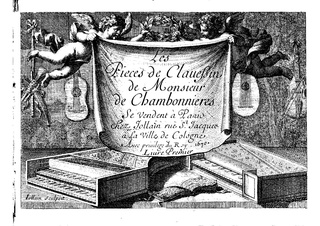
Image Credit: Wikipedia
[The] Pièces de Clavecin (published 1670) reflect in style and texture the compositions of the noted lutenist-composer Denis Gaultier and thus emphasize the roots of the early harpsichord style in lute music. The Pièces are highly ornamented, and rich in harmony, and are grouped by key into suites of dances […] and miniature pieces with fanciful titles. There is no thematic relationship between the movements of a single suite, the aim being rather for contrast within a given key. Chambonnières was one of the first to attach tables of ornaments to his works, indicating the manner of performance of the many embellishments so vital to his free-voiced style.
It appears that he had lavish tastes and struggled financially because of it. He lived beyond his means and died in poverty two years after his Harpsichord Pieces.
Additional Reading & Sources:
Jacques Champion de Chambonnières (Britannica)
Jacques Champion, Sieur de Chambonnières (Here of a Sunday Morning Site)
Chambonnières, Jacques Champion, Sieur de (Oxford Music Online)
List of Compositions (Wikipedia)
These are, roughly, two & half hours long, taken together.
The first one has a minute’s worth of spoken French at the beginning.
Tune Tuesday: I Will Always Give Thanks 1665
18th Century
Collection: National Library of France
Source: Gallica Digital Library
Photo Credit: Wikipedia & Wikimedia
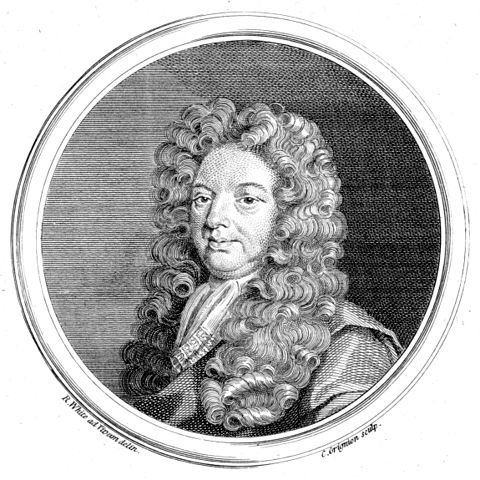
Three hundred, fifty-five years ago, John Blow, an English Baroque organist, composed the “club anthem” I Will Always Give Thanks, collaborating with Pelham Humfrey and William Turner. There is not a lot written about this song but, there are two suggestions of it either being an honoring of the victory over the Dutch in 1665 or a simple commemoration of the three men working together.
In late 1668, Blow was appointed to Westminster Abbey as its organist and three of his students were William Croft, Jeremiah Clarke and Henry Purcell. In 1685, he became the private musician to King James II. He was the choir-master at St. Paul’s Cathedral in 1687 and became Composer to the Chapel Royal in 1699.
As a side note, 1665 was a bad year. Sounds familiar. ~Vic
Additional Reading & Sources:
Choral Evensong/John Blow Death Anniversary (BBC October 1, 2008)
John Blow Biography (encyclopedia.com)
Tales for Our Time (Mark Steyn Online)
John Blow Anthems (The Gramophone Newsletter Site)
John Blow Commemoration (Westminster Abbey Site)
A Journal of the Plague Year (Wikipedia)
Battle of Lowestoft (Wikipedia)
Great Plague of London (Wikipedia)
Music Monday: Libro Quarto d’intavolatura di Chitarrone 1640
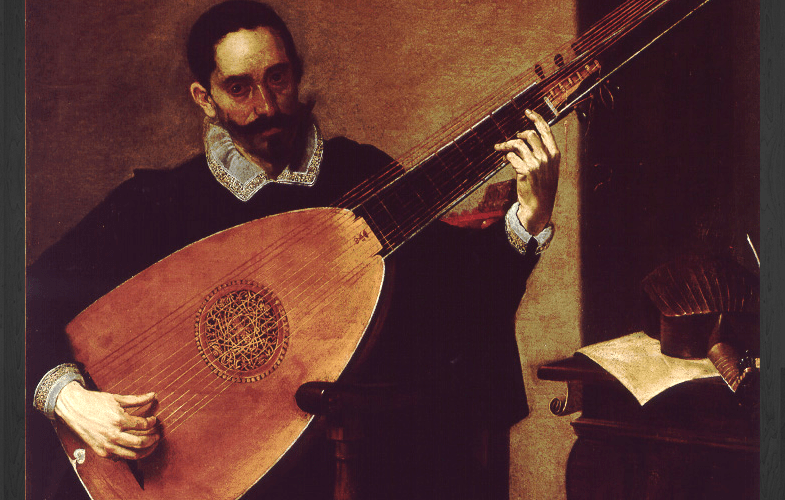
Three hundred, eighty years ago, the Libro quarto d’intavolatura di chitarrone (Fourth Book of Chitarrone Tablature) was published. Composed by Giovanni Girolamo Kapsperger (Johannes Hieronymus Kapsberger), a highly skilled German–Italian early-Baroque musician, it consists of 12 toccatas, 16 preludes, 10 passacaglias, 5 chaconnes, along with other pieces including variations, canzonas & dances. Kapsberger was known for lute & theorbo (chitarrone) mastery. He was in the service of Cardinal Francesco Barberini by 1624, working along side Girolamo Frescobaldi and Stefano Landi, as well as the future Pope Clement IX.
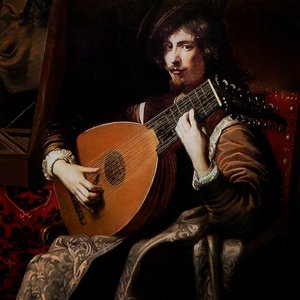
Some of his contemporaries, including Landi, criticized Kapsberger’s composing skill. Due to his unusual rhythmic groupings, sharp contrasts and non-conforming to the rules of counterpoint, it was suggested that he was an inferior composer. A current lutenist, Rolf Lislevand commented in liner notes in 1993:
“Kapsberger was as bad a composer as he was a fine instrumentalist […]. The ideas are often badly developed and are freely associated with one another […]. [N]o real musical discourse is built up […] the rhythm, even after serious efforts at fathoming it, wavers between inspired cleverness and total confusion.
Despite the above complaints, Kapsberger greatly contributed towards advancing European plucked string instruments of the time. At least six collections were published during his lifetime, two of which are currently lost.
There is very little else written about this specific composition. ~Vic
Additional Reading & Sources:
Kapsberger: Interview with Anne Marie Dragosits (Cuervas Pulsadas or Pulsed Ravens Website)
Giovanni Girolamo Kapsberger (Wikipedia)
Music Monday: Now Is The Month of Maying 1595
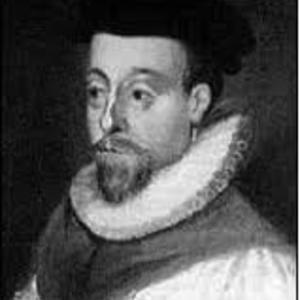
Stepping backwards a bit, I stumbled across something prior to 1600…
Thomas Morley was an English composer, theorist, singer and organist of the Renaissance. He was one of the foremost members of the English Madrigal School. Living in London at the same time as Shakespeare, Morley was the most famous composer of secular music in Elizabethan England. [He] was active in church music as a singer, composer and organist at St Paul’s Cathedral [and] was involved in music publishing. [He] lived for a time in the same parish as Shakespeare and, a connection between the two has been long speculated but, never proven. In addition to his madrigals, [he] wrote instrumental music, including keyboard music […].
Now Is The Month of Maying is one of the most famous of the English ballets […]. It is based on the canzonet So Ben Mi Chi Ha Bon Tempo used by Orazio Vecchi […]. It was printed in […] Morley’s First Book of Ballets to Five Voyces [in] 1595. The song delights in bawdy double-entendre. It is, apparently, about spring dancing but, this is a metaphor for making love/sex. For example, a barley-break would have suggested outdoor sexual activity (rather like […] a roll in the hay). The use of such imagery and puns increased during the Renaissance.
It was also heard in 1964 on The Andy Griffith Show episode The Song Festers.

Lyrics:
Now is the month of maying,
When merry lads are playing,
Fa la la la la la la la la,
Fa la la, etc…
Each with his bonny lass
Upon the greeny grass.
Fa la la, etc…
The Spring, clad all in gladness,
Doth laugh at Winter’s sadness,
Fa la la, etc…
And to the bagpipe’s sound
The nymphs tread out their ground.
Fa la la, etc…
Fie then! Why sit we musing,
Youth’s sweet delight refusing?
Fa la la, etc…
Say, dainty nymphs, and speak,
Shall we play barley break?
Fa la la, etc…
Additional Reading & Sources:
Thomas Morley (Britannica)
Thomas Morley (Elizabethan-Era Site)
The Song Festers (IMDB)
Now Is The Month of Maying (Wikipedia)
Thomas Morley (Wikipedia)
Barney’s Voice Lessons
Music Monday: Messe de Nostre Dame 1360s
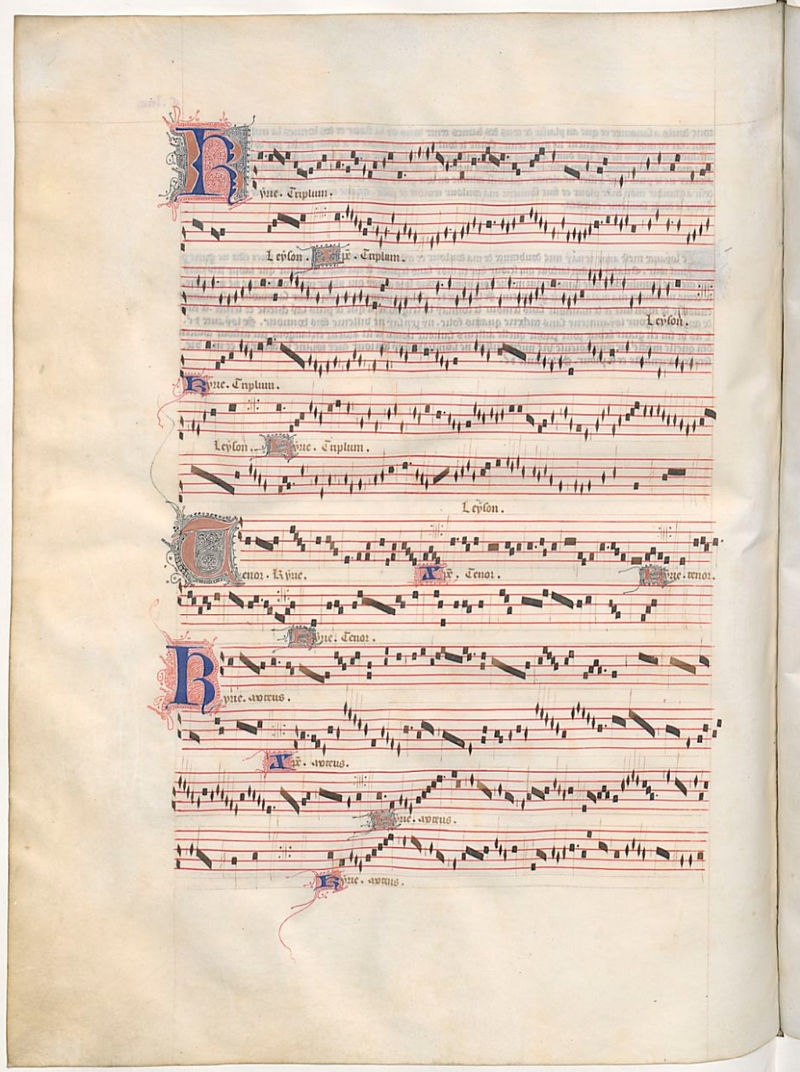
Image Credit: wikipedia.org &
wikimedia.org
Author: manuscrito sob a
supervisão do autor
I’m still digging around in the old stuff. I found this piece and thought it interesting.
From Wikipedia:
Messe de Nostre Dame (Mass of Our Lady) is a polyphonic mass composed before 1365 by French poet and composer Guillaume de Machaut […]. Widely regarded as one of the masterpieces of medieval music, and of all religious music, it is historically notable as the earliest complete setting of the Ordinary of the Mass attributable to a single composer […].
It’s Structure:
The Messe de Nostre Dame consists of 5 movements: the Kyrie (Eleison…”Lord, have mercy”), Gloria (in Excelsis Deo…”Glory to God in the highest”), Credo (Nicene Creed), Sanctus (“Holy”) and Agnus Dei (“Lamb of God”), followed by the dismissal Ite, missa est (Mass Response: Deo Gratias or “Thanks be to God”). The tenor of the Kyrie is based on Vatican Kyrie IV, the Sanctus and Agnus correspond to Vatican Mass XVII and the Ite is on Sanctus VIII. The Gloria and Credo have no apparent chant basis, although they are stylistically related to one another. Machaut’s Messe de Nostre Dame is for four voices rather than the more common three. Machaut added a contratenor voice that moved in the same low range as the tenor, sometimes replacing it as the lowest voice.
The information is rather wonky and, not only have I never studied music theory, my education on Catholic Mass is limited to a short stint as a member in an Anglican church in Austin, TX, a decade ago. That being said, what I find fascinating about this composition is that Machaut combined each part into an artistic whole, the earliest known example of it unified. Previously, the items were performed non-consecutively and, separated by prayers and chants.
[Instrumental Version of The Kyrie by Guillaume de Machaut]
[Modern Take on Kyrie by Patrick Lenk]
And, just because I could, I’m ending with Mr. Mister.
 Cosmic-Observation