youtube
Song Sunday: Take A Chance On Me (ABBA)

Returning to my Samsung playlist…submitted for your approval. ~Vic
“My love is strong enough to last when things are rough, It’s magic…”
I have loved ABBA since their music showed up on the radio. Their first album in 1973 didn’t make it to the US. They finally got noticed, here, with their second album in 1974. I clearly remember hearing Waterloo during the summer after second grade (I was seven). I was permanently hooked. I still love them and I am in my middle 50s.
The second track from the album ABBA: The Album, released in December 1977, Take A Chance On Me peaked at #3 on Billboard’s Hot 100 & #9 on Billboard’s Adult Contemporary, in July 1978 and, #5 on Cash Box in April 1978. Written and produced by Benny Andersson & Björn Ulvaeus, the song was one of ABBA’s first singles in which their manager Stig Anderson did not assist with writing the lyrics […]. In the UK Charts, it was number #1 and, of ABBA’s Top 20 biggest songs, this song is #4. It was a #1 hit in Austria, Belgium and Ireland. It was certified Gold in Canada, Denmark, the UK & the US.
English duo Erasure did a version of the song, released in June of 1992. It was the third track on their album Abba-esque. I am not fond of the remake but, I am including two videos, below.
I was also lucky to come across an actual live version of them singing this on a 1978 Olivia Newton-John television special. Most “live” videos are them lip-synching.
Official Video
Olivia’s Show
Erasure Version
Erasure Top of the Pops
TV Tuesday: Wisden Trophy 1963
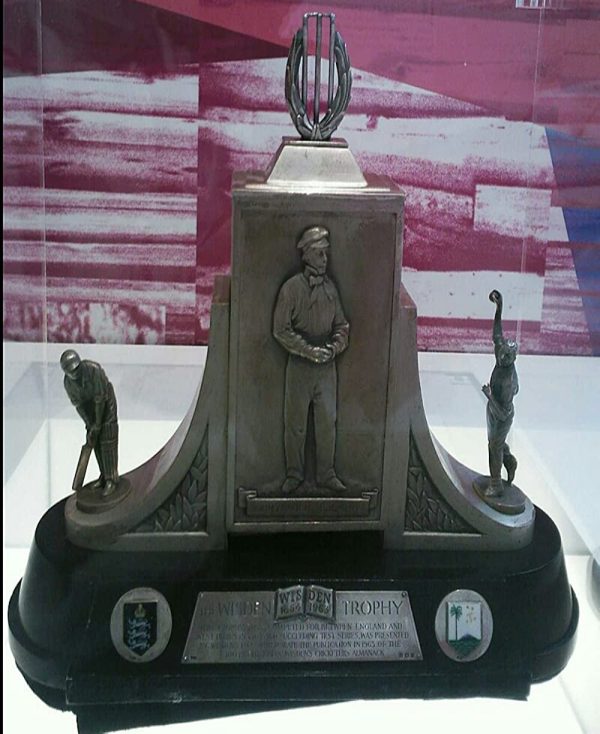
Sixty years, ago, today, the British TV Series Wisden Trophy debuted.
The trophy is named after the famous cricketing publisher Wisden and was presented by John Wisden & Co. after gaining the approval of the Marylebone Cricket Club (MCC) and the West Indies Cricket Board (WICB). The [trophy] was presented to the victorious team as a symbol of its victory but, then, returned to the MCC Museum at Lord’s.
The [trophy was] awarded to the winner of the Test cricket series, played between England and the West Indies. It was first awarded in 1963 to commemorate the hundredth edition of Wisden Cricketers’ Almanack. Series were played in accordance with the future tours programme, with varying lengths of time between tours. If a series was drawn, then, the country holding the [trophy] retained it. In 2020, it was announced that the trophy would be replaced by the Richards–Botham Trophy, named after Sir Vivian Richards and Sir Ian Botham.
Wikipedia Summary
The list of “cast members” consisted of various cricketers hosting the show. Brian Lara had the most appearances (34), with Garry Sobers, Rohan Kanhai and Micky Stewart hosting the first episode.
I have to confess that I know squat about cricketing. ~Vic
Flick Friday: Barney Oldfield’s Race For A Life 1913

One-hundred, ten years ago, today, the black & white, silent comedy short (13 min., 14 sec.) Barney Oldfield’s Race For A Life was released. Directed & produced by Mack Sennett, it starred Mabel Normand, Sennett, Ford Sterling, Barney Oldfield, Raymond Hatton, William Hauber, Helen Holmes, Rube Miller & Carmen Phillips (per IMDb). Wikipedia is a bit different and I’m not sure why. Additional actors are Hank Mann, Al St. John and The Keystone Cops. Usually, cast listings match between IMDb & Wikipedia, as well as release date. The release dates don’t match, either…off by one day.
Virtuous Mabel rejects the improper advances of a villainous cad. The furious villain, and his henchmen, then seize Mabel and chain her to a railroad track. Mabel’s anxious boyfriend turns for help to the great Barney Oldfield, who jumps in his racing car and speeds to the rescue.
IMDb Storyline
A lady, Mabel Sweet and Lovely, is courted by a gentleman, A Bashful Suitor. He offers her a corsage, which she accepts. They coyly share a kiss. After the Suitor leaves, the Villain appears and grabs the lady. She hits him and escapes. This angers the Villain and he vows to get his way. At the next opportunity, the Villain, once again, kidnaps the lady, this time with the help of two henchmen and chains her to the railway tracks.
The three villains travel by handcar to the station, where they assault two workers and steal a locomotive engine. The villains drive the train back towards the location of Mabel, who is still tied to the tracks. The railyard worker alerts the Suitor about the situation, who then rushes to ask his friend, racecar driver, Barney Oldfield for help.
The two friends jump in the automobile and race the speeding hi-jacked locomotive to rescue the damsel in distress. Mabel is dramatically saved at the last moment and is carried away to safety. The foiled villain kills his accomplice and shoots five Keystone Cops arriving by handcar to arrest him. Finally, he turns the gun on himself but, upon discovering the bullet chamber empty, he drops dead in a rage.
Wikipedia Plot Summary
Music Monday: Shine On, Harvest Moon 1908

One hundred, fifteen years ago in May (not necessarily today), the song Shine On, Harvest Moon was at the top of the Billboard chart, such as it was back then, for eleven weeks. Sung by Ada Jones & Billy Murray, the song is credited to the married vaudeville team of Nora Bayes & Jack Norworth.
It was one of a series of moon-related Tin Pan Alley songs of the era. The song was debuted by Bayes and Norworth in the Ziegfeld Follies of 1908 to great acclaim. It became a pop standard and, continues to be performed and recorded in the 21st Century. During the vaudeville era, songs were often sold outright and the purchaser would be credited as the songwriter. John Kenrick credits the song’s writers as Edward Madden and Gus Edwards. However, David Ewen credits Dave Stamper, who contributed songs to 21 editions of the Ziegfeld Follies and was Bayes’ pianist from 1903 to 1908. Vaudeville comic Eddie Cantor also credited Stamper.
The song has had a long history with Hollywood movies. In 1932, animation great Dave Fleischer directed a short titled Shine On Harvest Moon. A 1938 Roy Rogers western was named after the song, as was a 1944 biographical film about Bayes and Norworth. The song has been featured in dozens of movies from 1933 to 1978. There was also a popular British 1980s comedy drama called Shine on Harvey Moon.
Wikipedia Summary Excerpts
I am not entirely sure why this Jones & Murray piece is listed as 1909, as Tsort lists it as 1908. There must be some lost data, somewhere. ~Vic
Film & Television
Other Recordings
Duo’s Long List Of Songs Performed
Throwback Thursday: Lennon’s Psychedelic Rolls Royce 1967

Image Credit: Reddit
Fifty-six years ago, today…
John Lennon bought a 1964 Mulliner Park Ward Phantom V, finished in [Valentine Black]. Everything was black except for the radiator, even the wheels. Lennon asked for the radiator to be black as well but, Rolls-Royce refused. Originally, the car was customised from Park Ward with black leather upholstery, cocktail cabinet with fine-wood trim, writing table, reading lamps, a seven-piece his-and-hers black-hide luggage set and a Perdio portable television. A refrigeration system was put in the boot and it was one of the first cars in England to have tinted windows. In December 1965, Lennon made a seven-page list of changes […].
Wikipedia Summary
Lennon’s Phantom V

“You swine! How dare you do that to a Rolls-Royce!”…so screamed an outraged Englishwoman as John Lennon’s Phantom V cruised past on London’s posh Piccadilly promenade in the Summer of 1967. The ornately decorated limousine, sprayed an electric yellow and bedecked with colorful floral tendrils, Romany scrolls and, zodiac symbols like a hallucinatory gypsy caravan, so offended her sensibilities that she briefly attacked it with an umbrella…or, at least, that’s the way Lennon always told the story.
Much as the length of the Beatles’ mop-tops had done, Lennon’s choice to express himself through his automobile triggered a generational clash, enraging those who felt the tripped-out paintjob had subverted a British icon.
In the 50 years since it outraged the Establishment, Lennon’s Rolls-Royce Phantom V is now embraced as a masterpiece of design and a jewel of the Swinging Sixties.
For all of the paperwork accumulated during the car’s construction, the total price of the vehicle is not recorded. [With] publicity at a premium and Lennon being one of the most famous people on the planet, odds are good that he received some sort of Beatle discount. Ironic considering the significant expenditure, Lennon was unable to drive when he first ordered the Phantom V. He wouldn’t pass his “L-Test” until February 15th, 1965 at age 24, becoming the last Beatle to do so. That same day, the Beatles began work on a new song, Ticket to Ride, a prophetic title considering the number of citations Lennon eventually racked up during his road hours. By all accounts, including his own, he was a horrendous driver, far too myopic to read signs, too distracted to recall routes and too impractical to troubleshoot even the simplest mechanical issue.

Exactly how Lennon decided on the lurid Romany floral/zodiac hybrid is subject to some debate. [Les] Anthony recalls Ringo Starr planting the seed of the idea during a drive in early 1967. However, others say the idea was suggested by Marijke Koger, of the Dutch design collective The Fool, who would also paint Lennon’s piano that summer, after Lennon commissioned a refurbished 1874 gypsy caravan as a present for his young son, Julian.
After spraying the body of the car yellow, local artist Steve Weaver was tasked with painting the red, orange, green & blue art nouveau swirls, floral side panels and Lennon’s astrological symbol, Libra, on the roof. On May 24th, Weaver submitted an invoice for 290 pounds and, the following day [May 25], the car was ready for pickup.
“John Lennon chose an automotive piece as his canvas, using all the symbols of wealth and other messages that go along with the Rolls-Royces of that period. He was certainly getting fed up with conforming at that time. It was a classic artistic statement.”
Giles Taylor
Design Director
Rolls RoyceReactions were mixed, depending on which side of the generation gap you happened to stand. The Daily Mail reported that the shrieking yellow vehicle elicited jeers from the assembled crowd and Beatles Book Monthly [July 1967] claimed that a local traffic official feared the loud colors would be a dangerous distraction to drivers on the road. Delivered days before the Sgt. Pepper’s Lonely Hearts Club Band was issued, its official maiden voyage took place on May 28th, leading a fleet of friends to Epstein’s new country home for a combined album release party and housewarming.
Rolling Stone (The Complete Article)
Jordan Runtagh
July 27, 2017
Additional:
♦ The Story Behind John Lennon’s Psychedelic Rolls-Royce Phantom V (Vintage News Daily/January 6, 2019)
♦ How John Lennon’s Rolls Royce Limousine Ended Up In This British Columbia Museum (Reader’s Digest Canada/Mike Lane)
♦ John Lennon’s Rolls-Royce (Royal BC Museum/April 30, 2020)
Song Sunday: Sail On (Commodores)

Returning to my Samsung playlist…submitted for your approval. ~Vic
“I know it’s a shame but, I’m giving you back your name…”
Written by Lionel Richie and, produced by James Anthony Carmichael & the Comodores, this was released on July 27, 1979. I was 12 years old and it was the summer before 8th grade. I loved it as soon as I heard it on the radio.
The 8th track from the album Midnight Magic, it was the first single released from the album and it entered the Hot 100 on August 11, peaking at #4. It did very well in the Netherlands, New Zealand and the UK. Richie re-recorded the song with Tim McGraw for his tenth album Tuskegee.
Additional:
♦ The Commodores~Sail On (Saved on the Internet Archive)
♦ Cash Box: A Sparkling Ballad (World Radio History/August 11, 1979)
♦ Billboard: A Surprising Country Flavored Ballad (World Radio History/August 11, 1979)
♦ Record World: A Beautiful Country-Colored Ballad (World Radio History/August 11, 1979)
♦ Real Reason Why Richie Left (Grunge/A. C. Grimes/March 30, 2020)
♦ The Commodores (Encyclopedia of Alabama/Ben Berntson/July 3, 2012)
♦ Commodores Official Website
Full Version
Richie & McGraw
Wayback Wednesday: Jolliet-Marquette Upper Mississippi Exploration 1673

Date: 1681
Based on the 1673 Expedition
Source: Library of Congress
Author: Melchisédech Thévenot
Image Credit: Wikimedia Commons
Three hundred, fifty years ago, today…
On May 17, 1673, Louis Jolliet and Jacques Marquette departed from St. Ignace, Michigan, with two canoes and five other voyageurs of French-Indian ancestry. The group sailed to Green Bay. They paddled upstream (southward) on the Fox River to the site now known as Portage, Wisconsin. There, they portaged a distance of slightly less than two miles through marsh and oak forest to the Wisconsin River. Europeans eventually built a trading post at that shortest convenient portage between the Great Lakes and Mississippi River basins. On June 17, the canoeists ventured onto the Mississippi River near present-day Prairie du Chien, Wisconsin.
The Jolliet-Marquette expedition paddled along the west bank of the Mississippi until mid-July. When they passed the mouth of the Arkansas River, they became satisfied that they had established that the Mississippi flowed into the Gulf of Mexico.
The voyageurs then followed the Mississippi back to the mouth of the Illinois River, which friendly natives told them was a shorter route back to the Great Lakes. Following the Illinois river upstream, they turned up its tributary, the Des Plaines River near modern-day Joliet, Illinois. They continued up the Des Plaines River and portaged their canoes, and gear, at the Chicago Portage. They followed the Chicago River downstream until they reached Lake Michigan near the location of modern-day Chicago. Father Marquette stayed at the mission of St. Francis Xavier at the southern end of Green Bay, which they reached in August. Jolliet returned to Quebec to relate the news of their discoveries. On his way through the Lachine Rapids, Jolliet’s canoe overturned and his records were lost. His brief narrative, written from memory, is in essential agreement with Marquette’s, the chief account of the journey.
While Hernando de Soto was the first European to make official note of the Mississippi River by discovering its southern entrance in 1541, Jolliet and Marquette were the first to locate its upper reaches and, travel most of its length, about 130 years later. De Soto had named the river Rio del Espiritu Santo but, tribes along its length called it “Mississippi”, meaning “Great River” in the Algonquian languages.
Wikipedia Summary
Additional:
♦ Louis Jolliet (Britannica)
♦ Louis Jolliet (Dictionary of Canadian Biography)
♦ Jacques Marquette (Britannica)
♦ Jacques Marquette (Biography)
♦ The Explorers (Canadian Museum of History)
♦ Archdiocese of Chicago (New Advent Catholic Encyclopedia/James Marquette)
Louis Jolliet & Jacques Marquette: PBS World Explorers
Marquette and Jolliet: The Beginning of the Voyage to the Mississippi
TV Tuesday: A Good Idea, Son! 1953

Seventy years, ago, today, the TV Special A Good Idea, Son! aired on BBC at 9:30pm. A musical comedy, written by Eric Sykes, it starred Max Bygraves (host & presenter), Belita (The Ice Maiden), Bob Dixon (pianist), the George Mitchell Singers, Peter Glover, The King Brothers, Lillemor Knudsen and Jean Marsh. It was an hour long program in black & white. There are no pictures from the show but, I did manage to find a short YouTube clip of Max Bygraves singing the title song. Bygraves is also associated with the Educating Archie Radio Show. As with many early television shows, there is not much written about it. ~Vic
Additional:
♦ A Good Idea, Son! (British Comedy Guide)
♦ Max Bygraves (Evening Standard/09-01-2012)
♦ Eric Sykes In His Own Words (BBC News/07-04-2012)
♦ Educating Archie (Vinny’s Mislaid Comedy Heroes)
♦ Educating Archie (Vintage Comedy Corner)
Flashback Friday: Shoshone National Park 1891
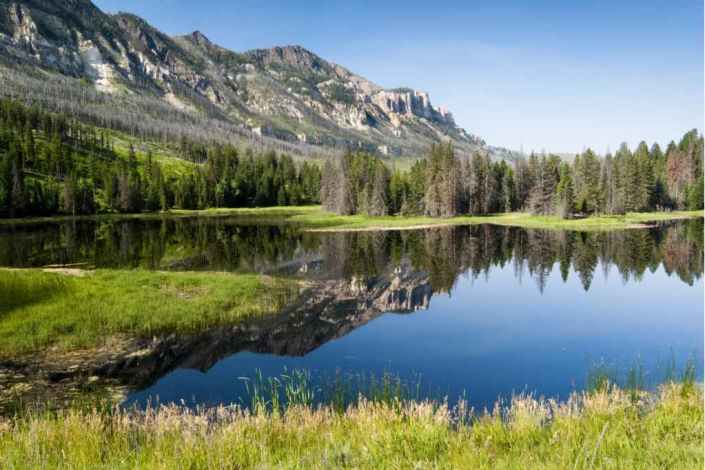
One-hundred, thirty-two years ago, today…
[The] Shoshone National Forest is the first federally protected National Forest in the United States and covers nearly 2,500,000 acres in the state of Wyoming. Originally a part of the Yellowstone Timberland Reserve, the forest is managed by the United States Forest Service and was created by an act of Congress, signed into law by U.S. President Benjamin Harrison in 1891. Native Americans have lived in the region for at least 10,000 years and when the region was first explored by European adventurers, forestlands were occupied by several different tribes. Never heavily settled or exploited, the forest has retained most of its wildness. Shoshone National Forest is a part of the Greater Yellowstone Ecosystem […].
The Absaroka and Beartooth Mountains are partly in the northern section of the forest. The Wind River Range is in the southern portion and contains Gannett Peak, the tallest mountain in Wyoming. [The] Continental Divide separates the forest from its neighbor Bridger-Teton National Forest to the west. The eastern boundary includes privately owned property, lands managed by the U.S. Bureau of Land Management and, the Wind River Indian Reservation, which belongs to the Shoshone and Arapahoe Indians. Custer National Forest along the Montana border is on the northern frontier. The Oregon Trail, the 19th century covered wagon route, passes just south of the forest, where broad and gentle South Pass allowed the migrants to bypass the rugged mountains to the north. The forest is home to the Grizzly bear, Cougar, Moose, tens of thousands of Elk as well as the largest herd of Bighorn sheep in the U.S.
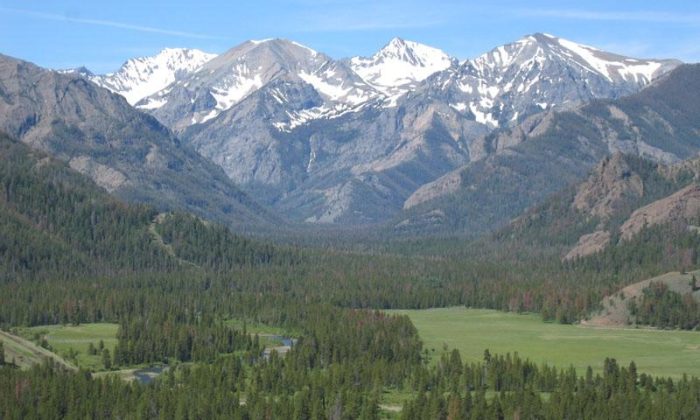
[On] March 3 [of] 1891, Congress enacted, and [President] Harrison signed, the Land Revision Act of 1891. This legislation resulted from a bipartisan desire to initiate reclamation of surplus lands that had been, up to that point, granted from the public domain, for potential settlement or use by railroad syndicates.
The Act reversed previous policy initiatives, such as the Timber Culture Act of 1873, which did not preclude land fraud by wealthy individuals and corporations. The legacy of the General Revision Act of 1891 [Forest Reserve Act/Land Revision Act] is frequently credited as its serving as a catalyst to a series of federal land reform initiatives, notably under President Theodore Roosevelt.
Wikipedia Summaries
As a side note, when my father was a Freshman at N.C. State University in 1963-1964, he studied Forestry. Prior to his death on August 25, 2022, he still remembered most of the Latin terms for all trees and forest plants.
Additional:
♦ Shoshone National Forest (Wyoming State Parks)
♦ America’s First National Forest (Forest Service)
♦ Our First National Forest (National Park Service History)
 Cosmic-Observation