SN 1054 is a supernova that was first observed on 4 July 1054 and remained visible for around two years. The event was recorded in contemporary Chinese astronomy [..]. [There is] a pictograph associated with the Ancestral Puebloan (Anasazi) culture found near the Peñasco Blanco site in New Mexico. The remnant of SN 1054, which consists of debris ejected during the explosion, is known as the Crab Nebula (M1). It is located in the sky near the star Zeta Tauri (ζ Tauri) The core of the exploding star formed a pulsar called the Crab Pulsar. When the French astronomer Charles Messier watched for the return of Halley’s Comet in 1758, he confused the nebula for the comet as he was unaware of the former’s existence. Motivated by this error, he created his catalogue of non-cometary nebulous objects, the Messier Catalogue, to avoid such mistakes in the future. The nebula is catalogued as the first Messier object […].
Chinese astronomers watching the sky on July 4, 1054, noted the appearance of a new or guest star just above the southern horn of Taurus. Other observations of the explosion were recorded by Japanese, Arabic and Native American stargazers. In 1731, British astronomer John Bevis observed a cloudy blob in the sky and added it to his star atlas. Although [Messier] credited himself with its discovery in his first publication of the Messier Catalog, he acknowledged Bevis’ original finding in subsequent versions after receiving a letter from the astronomer. Around 1844, [Irish] astronomer William Parsons, the third Earl of Rosse, sketched the nebula. The resemblance of the image to a crustacean led to M1’s other name, the Crab Nebula. In the early 20th century, astronomers (Carl Lampland/1921 & Edwin Hubble/1928, included) were able to take more detailed measurements of M1 and determined that it is expanding. Working backwards, they determined its origination date and matched the explosion up with observations from Chinese and Native American records.
Photo Credit:
Alex Marentes
flickr.com
earthsky.org
It is likely that skywatchers of the Anasazi People in the American Southwest also viewed the bright new star in 1054. Historic research shows that a crescent moon was visible in the sky very near the new star on the morning of July 5, the day following the observations by the Chinese. The pictograph above, from Chaco Canyon in New Mexico, is believed to depict the event. The multi-spiked star to the left represents the supernova near the crescent moon. The handprint above may signify the importance of the event, or may be the artist’s “signature.”
This is the show that introduced the world to Elvis Presley.
Dave Marsh, in his insightful musical biography Elvis, writes about the moment Elvis Presley burst upon the American scene via The Dorsey Brothers Stage Show on January 28, 1956. “In his first appearance on the Dorsey Brothers’ TV show, the young singer rocked the world”. Marsh described Elvis’ startling rendition of Heartbreak Hotel and concluded, “He owned the song and he owned the crowd”.
March 17, 1956
Photo Credit: elvispresleymusic.com.au
After 17 months of personal appearances all over the south […], Elvis […] made his first appearance […]. Those shows were broadcast, live, from the CBS Studios in New York City. Young Elvis The Pelvis’ first appearance […] was followed by 5 others throughout the next 2 months until the 24 of March, 1956.
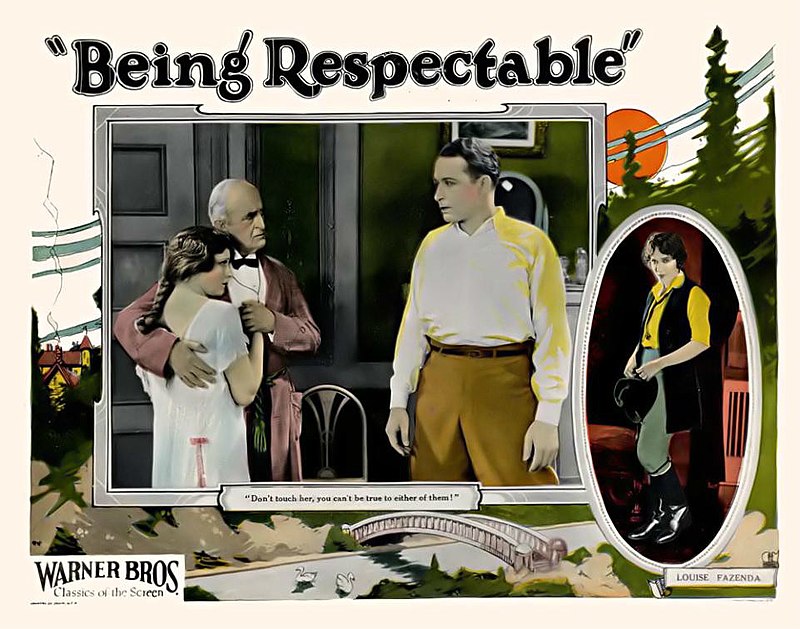
Wealthy young Charles Carpenter is pressured by his family to marry Suzanne, even though he is really in love with young “flapper” Valerie. He gives in to his family’s pressure, however and marries Suzanne, after which Valerie leaves town. Years later, after Charles and Suzanne have had a child, Valerie comes back to town and, Charles realizes he is still in love with her…and she with him. Complications ensue. [Source]
Through the scheming of his respectable, and wealthy family, Charles Carpenter is obliged to marry Suzanne, although he is in love with young flapper Valerie Winship. Years later, when Valerie is back in town, they renew the affair and, Carpenter plans to leave his wife and child for her. […] in the end, he yields to family duty and respectability. [Source]
These two YouTube videos were promotional. The first one was done in June of 2009 to showcase an upcoming DVD. The second is a ten-minute clip from August of 2010 that served as an introduction to a two-part series/interview.
Voices of the New Paradigm New Paradigm Films
Interviewer: Terje Toftenes
Much like June 14, June 28 is also a very interesting day. It marks the beginning and ending of The Great War or, The War to End All Wars. Though true that the guns fell silent on the eleventh hour of the eleventh day of the eleventh month with the signing of the Armistice in a railroad car in Compiègne, France, today’s date serves as solid markers in the timeline. ~Vic
Image Credit: smithsonianmag.com
On this day in 1914, Archduke Franz Ferdinand of Austria and his wife Sophie are shot to death by a Bosnian Serb nationalist during an official visit to the Bosnian capital of Sarajevo. The archduke traveled to Sarajevo […] to inspect the imperial armed forces in Bosnia and Herzegovina, annexed by Austria-Hungary in 1908. The annexation had angered Serbian nationalists, who believed the territories should be part of Serbia. A group of young nationalists hatched a plot to kill the archduke during his visit to Sarajevo and, after some missteps, 19-year-old Gavrilo Princip was able to shoot the royal couple at point-blank range, while they traveled in their official procession, killing both, almost instantly.
The assassination set off a rapid chain of events, as Austria-Hungary immediately blamed the Serbian government for the attack. As large, powerful Russia supported Serbia, Austria asked for assurances that Germany would step in on its side against Russia, and its allies, including France and possibly Great Britain. On July 28, Austria-Hungary declared war on Serbia and the fragile peace between Europe’s great powers collapsed, beginning the devastating conflict now known as the First World War.
World War I officially ended with the signing of the Treaty of Versailles [on this day in] 1919. The treaty, negotiated between January and June […] in Paris, was written by the Allies with almost no participation by the Germans. The negotiations revealed a split between the French, who wanted to dismember Germany to make it impossible for it to renew war with France and, the British and Americans, who did not want to create pretexts for a new war. The eventual treaty included 15 parts, […] 440 articles, […] reassigned German boundaries and assigned liability for reparations.
The German government signed the treaty under protest. The U.S. Senate refused to ratify the treaty and the U.S. government took no responsibility for most of its provisions.
For five years the French and the Belgians tried to enforce the treaty quite rigorously […]. In 1924, however, Anglo-American financial pressure compelled France to scale down its goals and end the occupation. […] The French assented to modifying important provisions of the treaty in a series of new agreements. Germany in 1924, and 1929, agreed to pay reparations under the Dawes Plan and the Young Plan but, the Great Depression led to the cancellation of reparations in 1932. Hitler denounced the treaty altogether in 1935.
One can never know whether either rigorous Franco-British enforcement of the original treaty or a more generous treaty would have avoided a new war.
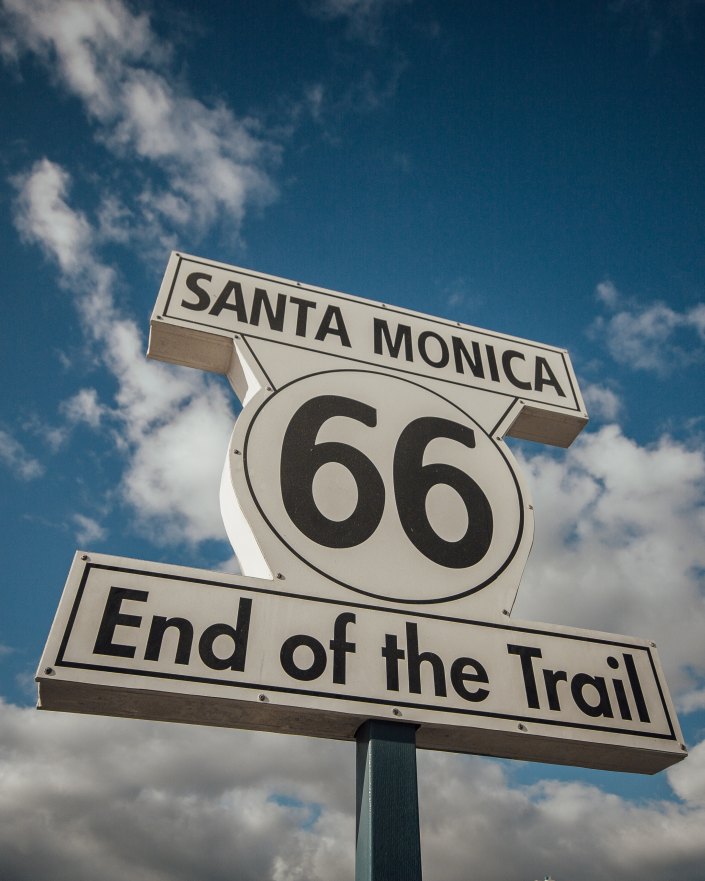
After 59 years, the iconic Route 66 enters the realm of history on this day in 1985, when the American Association of State Highway and Transportation Officials decertifies the road and votes to remove all its highway signs. Measuring some 2,200 miles in its heyday, Route 66 stretched from Chicago, Illinois to Santa Monica, California, passing through eight states. According to a New York Times article about its decertification, most of Route 66 followed a path through the wilderness forged in 1857 by U.S. Navy Lieutenant Edward Beale at the head of a caravan of camels. Over the years, wagon trains and cattlemen eventually made way for trucks and passenger automobiles.
The idea of building a highway along this route surfaced in Oklahoma in the mid-1920s as a way to link the state to cities like Chicago and Los Angeles. Highway Commissioner Cyrus S. Avery touted it as a way of diverting traffic from Kansas City, Missouri and Denver. In 1926, the highway earned its official designation as Route 66. The diagonal course of Route 66 linked hundreds of mostly rural communities to the cities along its route, allowing farmers to more easily transport grain and other types of produce for distribution. The highway was also a lifeline for the long-distance trucking industry, which by 1930 was competing with the railroad for dominance in the shipping market.
Route 66 was the scene of a mass westward migration during the 1930s, when more than 200,000 people traveled from the poverty-stricken Dust Bowl to California. John Steinbeck immortalized the highway, which he called the “Mother Road”, in his classic 1939 novel The Grapes of Wrath. Beginning in the 1950s, the building of a massive system of interstate highways made older roads increasingly obsolete and, by 1970, modern four-lane highways had bypassed nearly all sections of Route 66. In October 1984, Interstate-40 bypassed the last original stretch of Route 66 at Williams, Arizona and, the following year, the road was decertified. According to the National Historic Route 66 Federation, drivers can still use 85 percent of the road and Route 66 has become a destination for tourists from all over the world.
Often called the Main Street of America, Route 66 became a pop culture mainstay over the years, inspiring its own song (written in 1947 [sic] by Bobby Troup, Route 66 was later recorded by artists as varied as Nat King Cole, Chuck Berry and The Rolling Stones) as well as a 1960s television series. More recently, the historic highway was featured prominently in the hit animated film Cars (2006).
Update: Less than 24 hours after I posted this, YouTube snatched down the video. If they continue, YouTube won’t have any videos left to watch. So, that being said, I am leaving the original link and adding what I can find. ~Vic
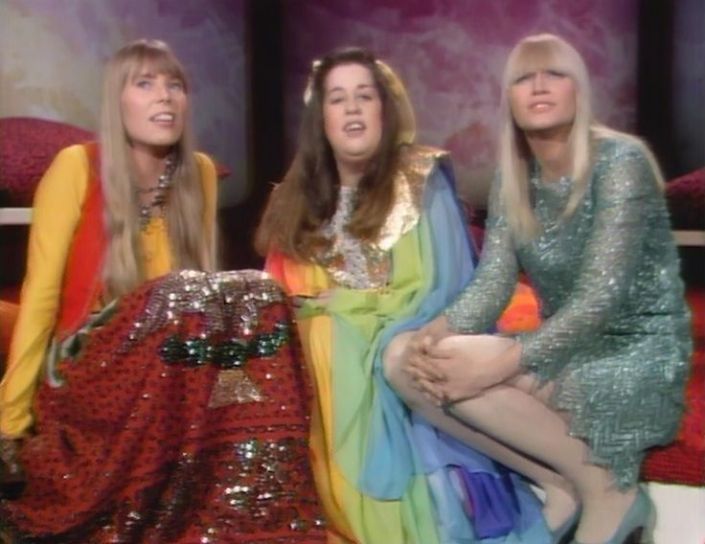
[This was] a one-shot pilot episode for a TV series that was never picked up. In 1968, Mama Cass had launched her solo career and was hoping to move into television. This one-hour program only aired once on ABC-TV and was never shown, again. The show features Mama Cass Elliot with special guest stars, John Sebastian (The Lovin’ Spoonful), Joni Mitchell, Mary Travers (Peter, Paul and Mary), Buddy Hackett, Martin Landau and Barbara Bain (husband & wife, both from Mission: Impossible and later, Space: 1999).
A serious-minded boob named Stradivarious O’Day, because his music-loving mother says he “fiddles his time away”, acquires his nickname because of his motto of “one thing at a time and that done well.” Falling in love when he first sees circus bareback rider Prairie-Flower Marie, O’Day, living off his inheritance, follows the circus until the pestered manager gives him a job cleaning his Ford. With the help of a manual, O’Day learns to drive and secures employment with the circus as a chauffeur. After strong man Gorilla Lawson, who also loves Marie, beats him up, O’Day contacts his friend, boxer Roughneck M’Dool, to teach him to fight. Lawson, frightened by O’Day’s daily development, steals the circus receipts, and the Ford, on the day of their scheduled fight but, O’Day overtakes and whips him. After O’Day weds Marie, he unwittingly goes against his motto when he becomes the father of twins.
[Note: I made a Fifth Dimensionpost on December 2, 2018. It was Chris Thomas’s first attempt to try to explain the “Ascending to a 5th Dimension” nonsense. It was one of his earliest essays and it was posted on the, now, defunct Mount Zion 144 Forum on May 15, 2011. This essay revisits the 5th Dimension issue and became Chris’s very last, full-length essay. It was published on October 30, 2013, on the One-Vibration Forum, via a blog post by one of his clients.]
Introduction
Over the past number of years, we have heard repeated claims that we need to “Ascend to a 5th Dimension”…these claims coming to us from a number of channeled sources such as Ashtar Command, Sananda, St. Germaine, The Agarthans, The Galactic Federation of Light, etc., etc… We have all read these messages from our inter-galactic “friends” and, for the most part, many people have accepted these claims and offers of help at face value in the hope that the actions of these alien beings will resolve all of the desperate problems we have here on Earth. In fact, so desperate are we to remove ourselves from the current conditions on Earth that we are prepared to accept these promises of help without question.
Rarely, if ever, have people asked themselves what “Ascending to the 5th Dimension” would actually mean for us humans, or to the planet we live on. Currently, scientists describe us as living in a three dimensional world. There is nothing special about this description as all it describes is the fact that we are physical. Each of us, and the objects we encounter in life, have a physical form that is described as being three-dimensional. We can measure these three physical dimensions in a physical way […] the length, width and height of our physical world define who we are in terms of physical bulk and, also, our physical location in relation to other objects or to other people. That is what is meant by ‘we live in a three-dimensional world’. We have a physical presence and a physical existence.
Whilst time can be measured in a linear fashion, one second following another, one minute following another, one hour following another, etc…it is not the way in which we perceive time. For example, if we are having a busy day, then, one hour can feel as though it has passed in a minute, whereas, if we are having a very boring day, then, one minute can feel to have taken an hour. So, whilst time can be measured, we perceive it in different ways depending upon our circumstances. Also, if you talk with quantum physicists, they will tell you their theories about multiple dimensions existing outside of our solar system. But, these are just theories and are not “provable” in any way, as we cannot access anything that exists outside of our solar system. [For] all intents and purposes, we are three-dimensional beings who live on a three-dimensional planet that exists within a three-dimensional solar system. What occurs outside of our solar system and the dimensions in which other planets exist or, the dimensions in which other forms of life exist, is totally unknown to science.
So, what can be meant by the “5th Dimension”? The fundamental problem is that nobody knows. Neither can we comprehend, from our three-dimensional world, what a fifth-dimensional world would look like or how it would function. Those who have listened to, and believed in, these channeled messages assume that existing in a 5-dimensional world is superior to living in a 3-dimensional world. But, how do we know? We don’t. We assume, without any kind of knowledge or understanding, that living in a 5-dimensional world is better than living in a 3-dimensional one.
Why would we assume this? Those who have channeled these messages have never explained what the implications of changing our world from 3 to 5 dimensions actually means. How will it change our lives? How will it change the planet? How will it change the solar system? To these questions no answers have been provided. However, the most important question of all is:
Can we, and the planet, survive in a 5 dimensional existence?
Answer:
No answer to that question has ever been provided by those who propose that we shift to a 5th dimension. We have just assumed that it is possible. We will return to that question a little later.
Dimensional Differences
Our solar system, and particularly the Earth, exists as a three dimensional, physical, reality. Let us pose a question:
What if we, humans, decided to “Ascend to the 5th Dimension” whilst the Earth decides that She wants to stay in Her three-dimensional, physical existence. What would happen to us? What would happen to the Earth?
After all, we have been Created with the absolute freedom to choose our path in life. If we decide to move on and the Earth does not, what would happen? That is a difficult question to answer as we do not have any awareness or experience of anything other than our three-dimensional physical world. This question has been considered by many scientists over the centuries and explored in many books and movies. So, here is one example of what could happen.
The TV series Star Trek: The Next Generation had an episode that explored this question. Captain Jon Luc-Picard [sic] and the crew of the Starship Enterprise were warping through the galaxy when the ship came to a sudden halt. The engines and all of the ship’s systems were working perfectly. They could detect nothing outside of the ship that could have stopped them and, yet, they were marooned in space. They fired one of their “probes” out into space to look at the ship from the outside but, could not see or detect anything. They could not move forwards or backwards nor could they move up or down…just locked into position without anything, apparently, stopping them. Eventually, they realised that the probe had filmed an extremely thin line, virtually undetectable, at the mid-line of the ship. What the ship had hit was a colony of beings that existed only in two dimensions. In other words, they had width and depth […] but, no height. The three-dimensional humans, and their three-dimensional technology, could not detect the existence of these beings and, the two dimensional beings could not perceive the three-dimensional ship.
To continue reading (it’s six pages), download the PDF version HERE.
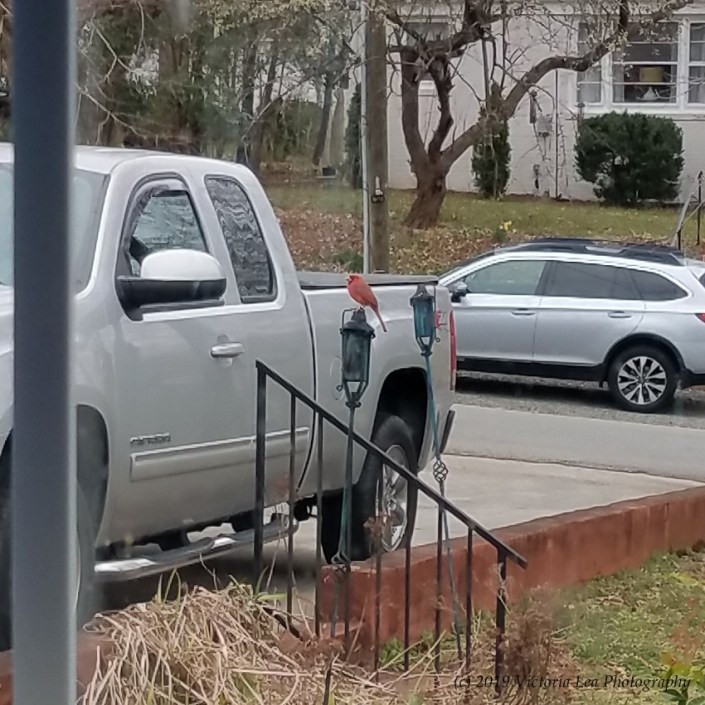
In my last post on March 2, I was talking about sitting under my Hackberry tree and getting pelted with debris from a little woodpecker above me. I tried to get some shots of him but, they weren’t clear enough. My S7 just doesn’t do well with distance. That’s OK. I have other stuff.
From the Den window.
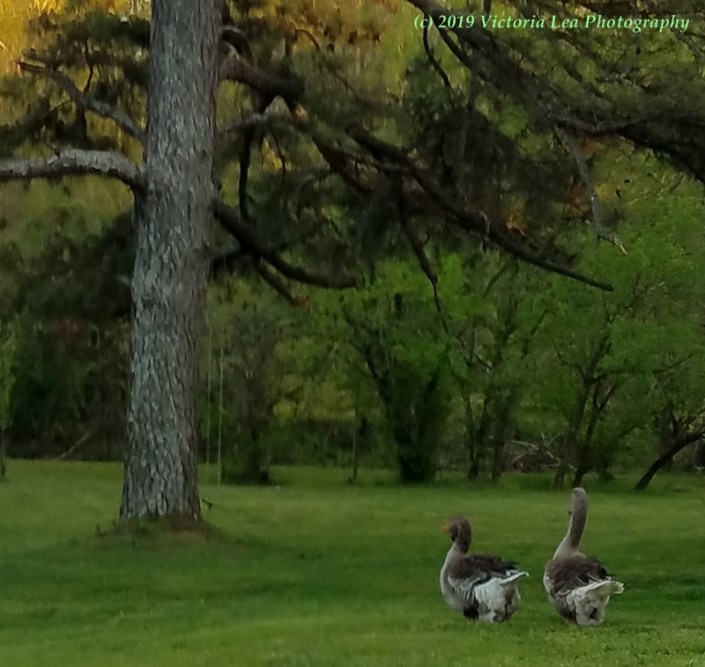
02-19-2019And, he looked at the camera.Geese coming up from the river.
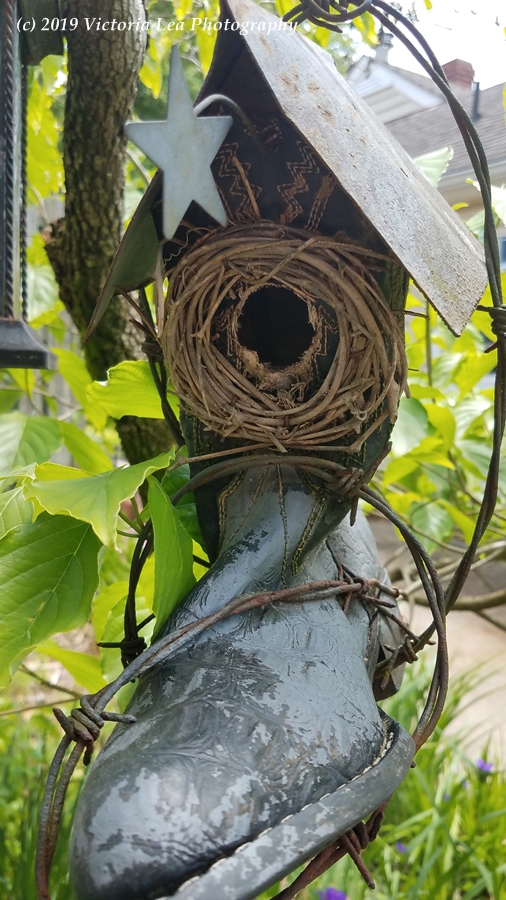
04-16-2019And, headed to a neighbor’s backyard.They are such a cute pair.I haven’t seen any activity…yet. 05-06-2019














 Cosmic-Observation