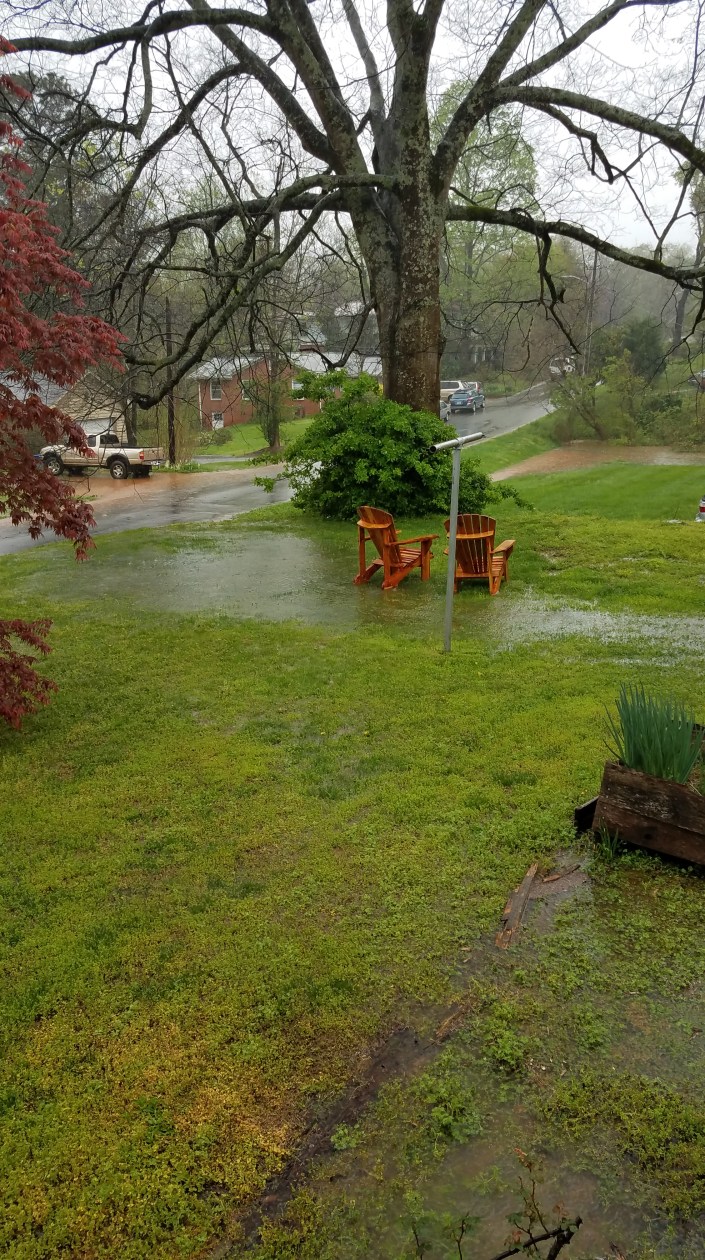
Or, Toad Strangler or, Gully Washer… My dad was fond of the frog saying and my maternal grandfather always used the latter. All three are good descriptions of the storm that just swept through here, today. I haven’t seen this much water since Hurricane Matthew in 2016. Have mercy… ~Vic
I thought my chairs might float away.
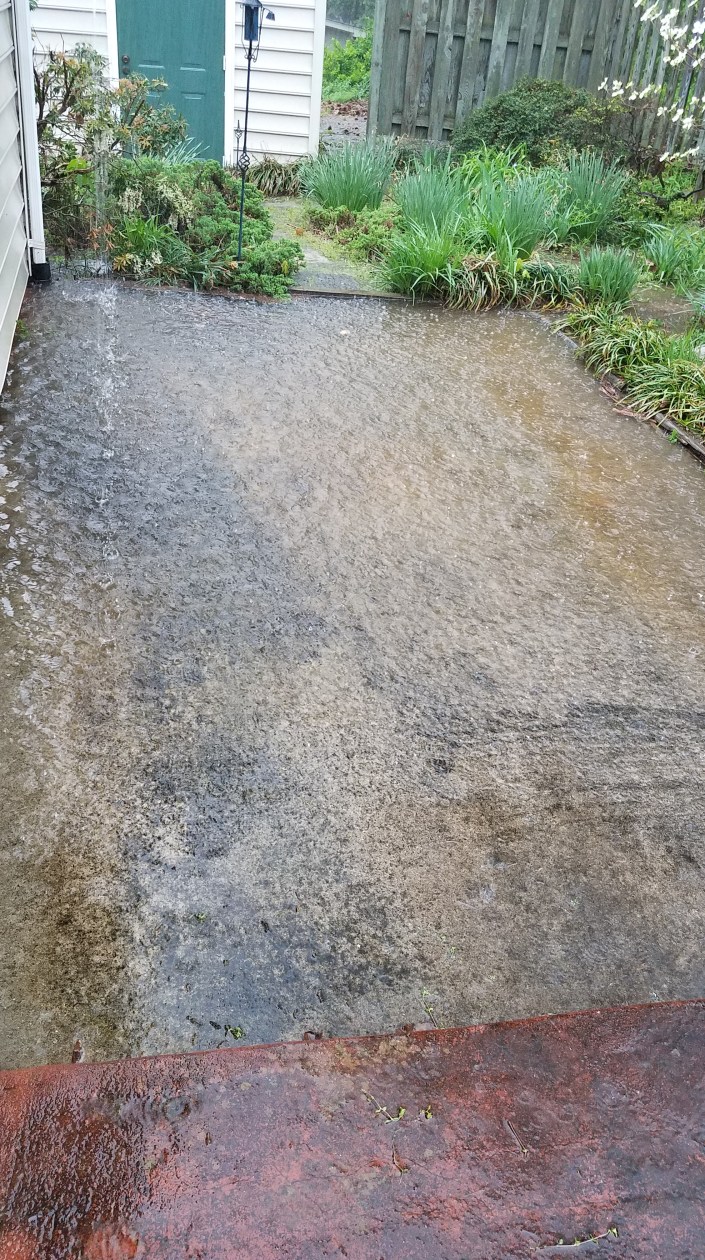
The backdoor neighbor had his own mini-river.Patio at the side door looks like a mini-swimming pool.
Water from the next door neighbor’s poor drainage…The gold pick-up in the first photo…this is his backyard.
The Eno hasn’t crested, yet and, the water is at his backdoor right now.Bench at Turnip Patch Park didn’t fare well.Entrance to Gold Park underwater.
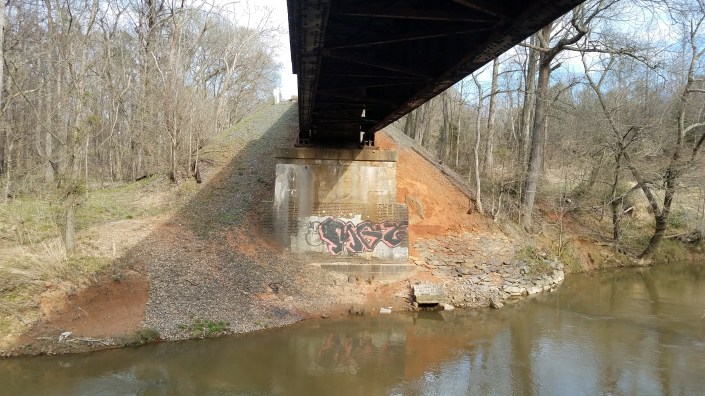
One sewer access is over-flowing.Underwater graffiti.
See my previous post on this. Picture #2
Nature’s wonderful creatures with many legs or, none at all. All photos are my personal collection. ~Vic
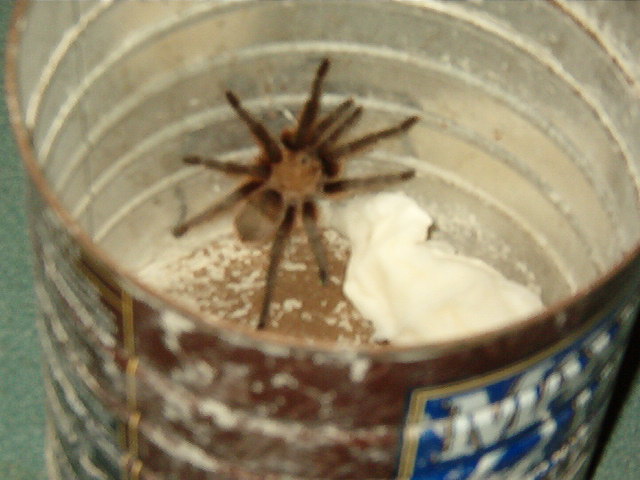
Juvenile Texas Brown Tarantula
Found the little guy in our shed in the backyard (mating season).
I had trouble snapping his picture as he kept moving and I kept jumping.
09-10-2008Gentle spiders.
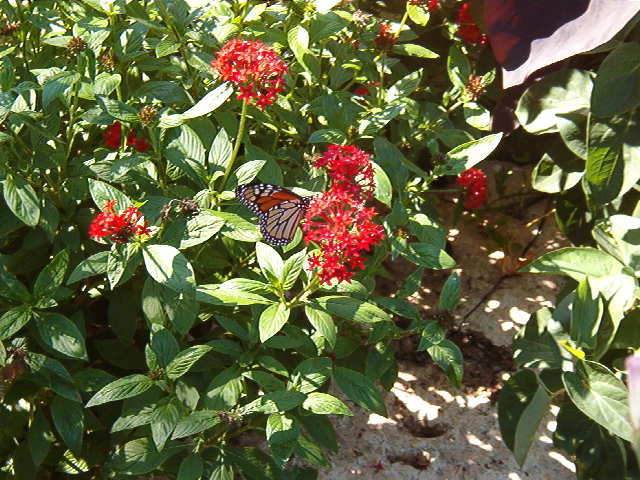
We turned him over to a friend who had Tarantulas as pets.Butterfly enjoying a Red Verbena.
Nature Preserve in Round Rock, TX.
10-25-2008Red Dragonfly
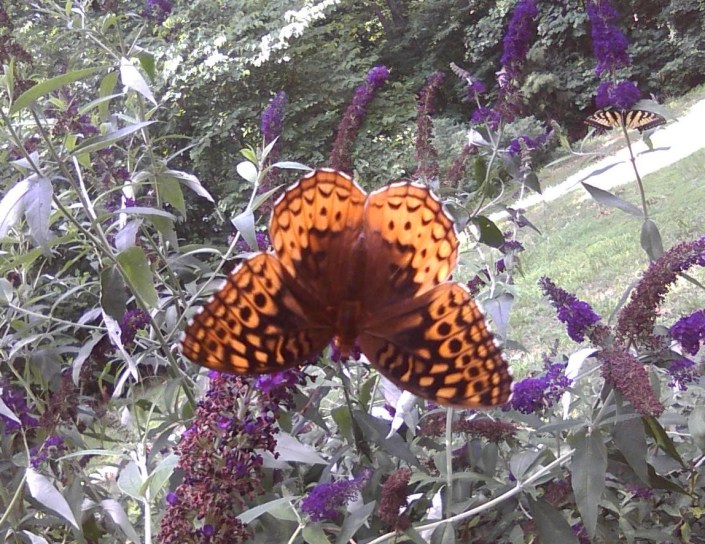
Nature Preserve.Beautiful moth on a Salvia in the Butterfly Garden at Gold Park.
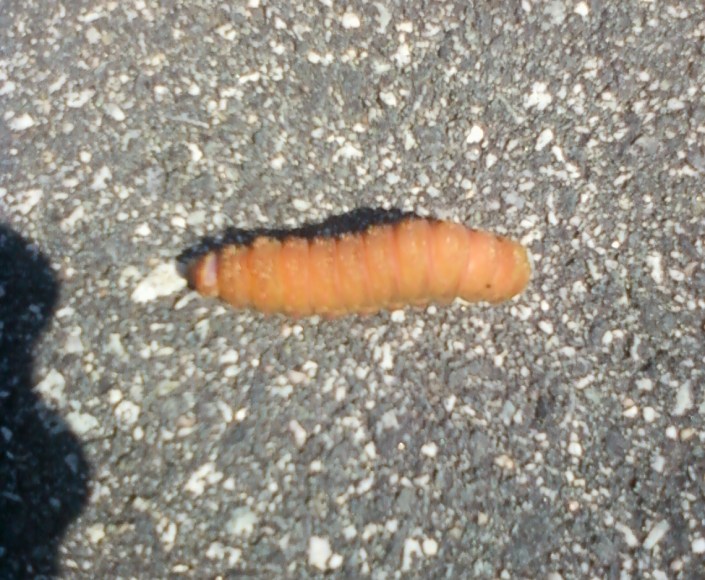
06-20-2013Big, fast-moving worm…of some sort.
He had places to go.
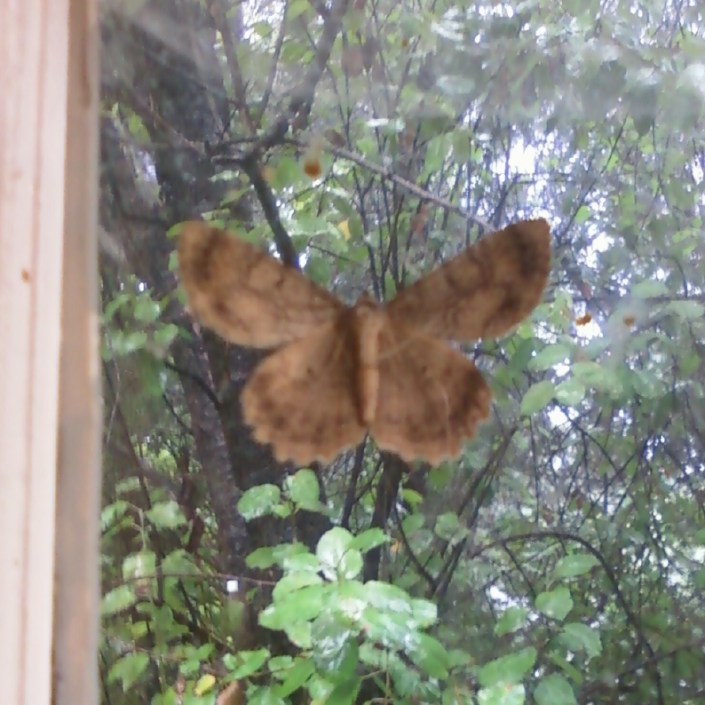
08-30-2013He looks like a carrot.Moth in the dirty window of a friend’s house. 08-01-2014
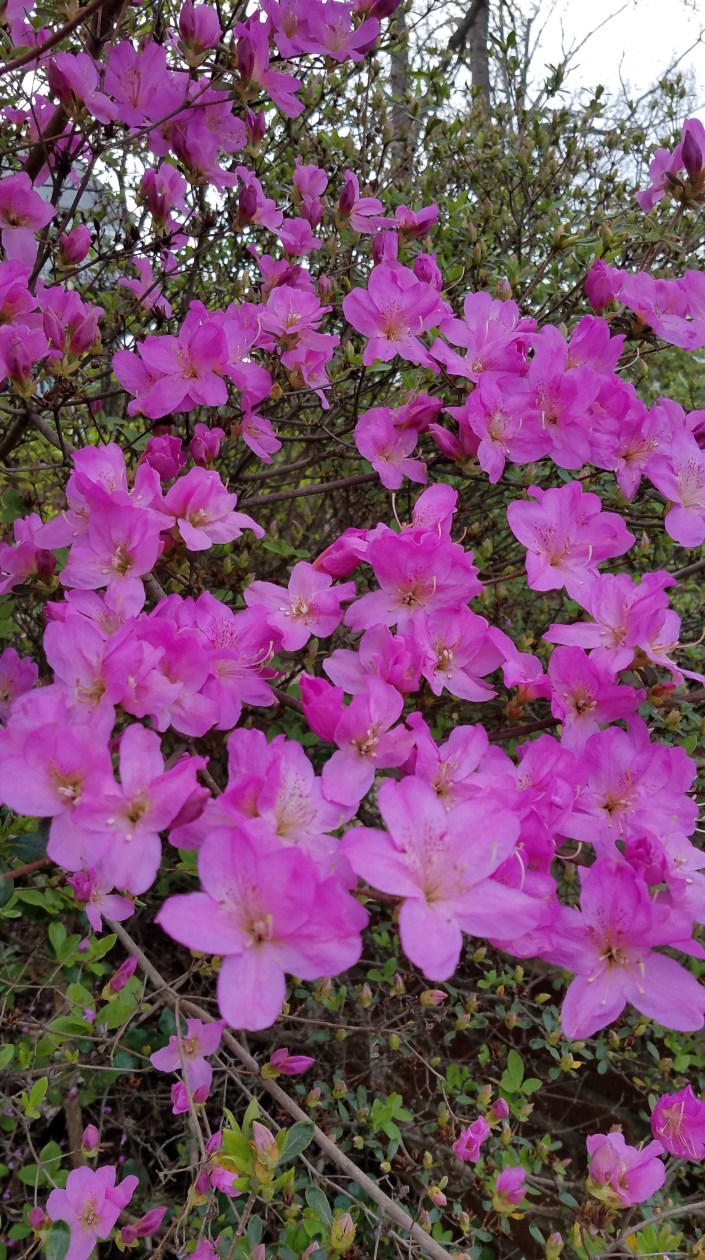
Grabbed a few more graffiti shots and, enjoyed the newest and littlest Spring offerings. All photos are my personal collection. ~Vic
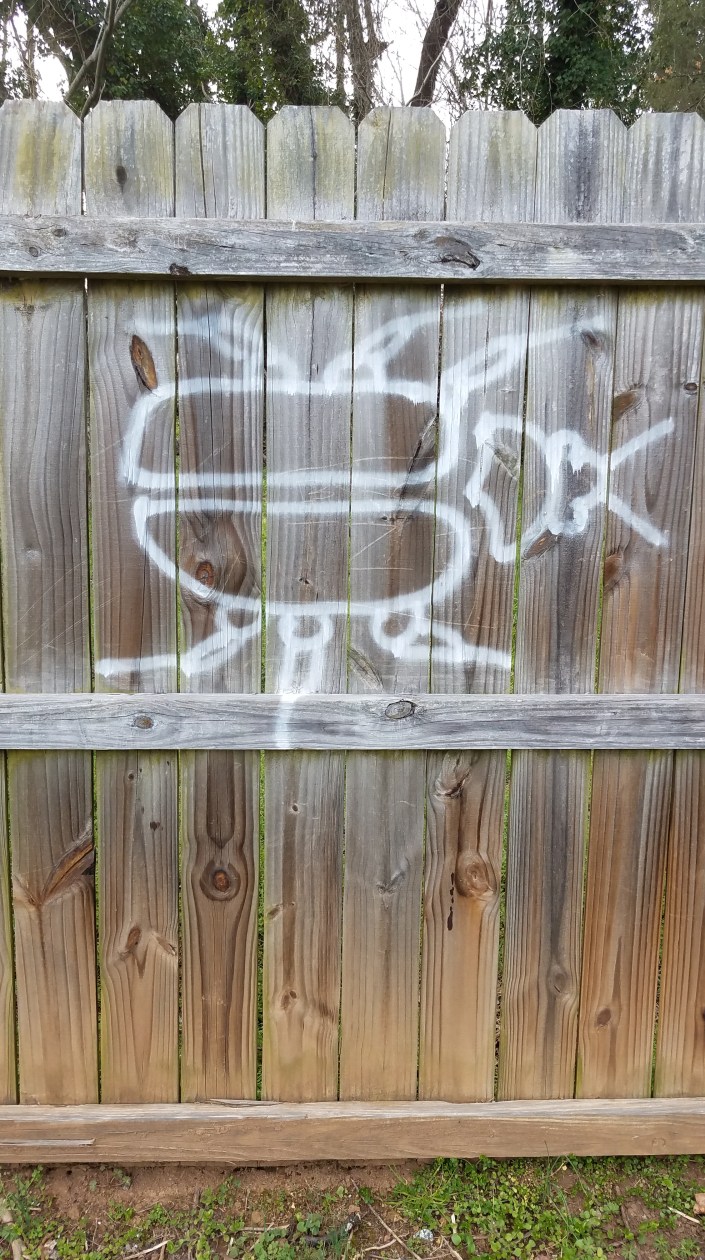
Random decorations.
I can see an eye shooting out beams of light, sort of?
03-24-2019Different language?
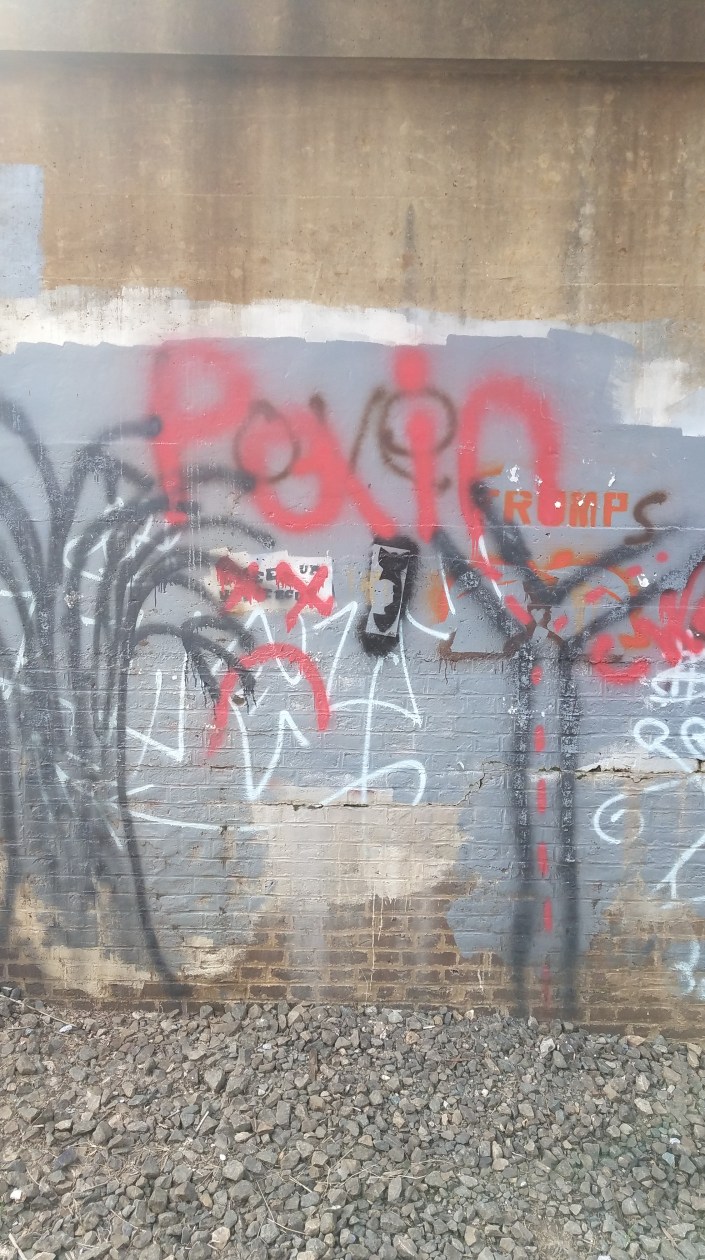
It looks like it was drawn over a money bag.Winter tree with a red heart?There is pain.
There was love.
Probably not a Trump fan.Anarchy, choice, voodoo and I hate walls.Japanese beetle?
June bug?
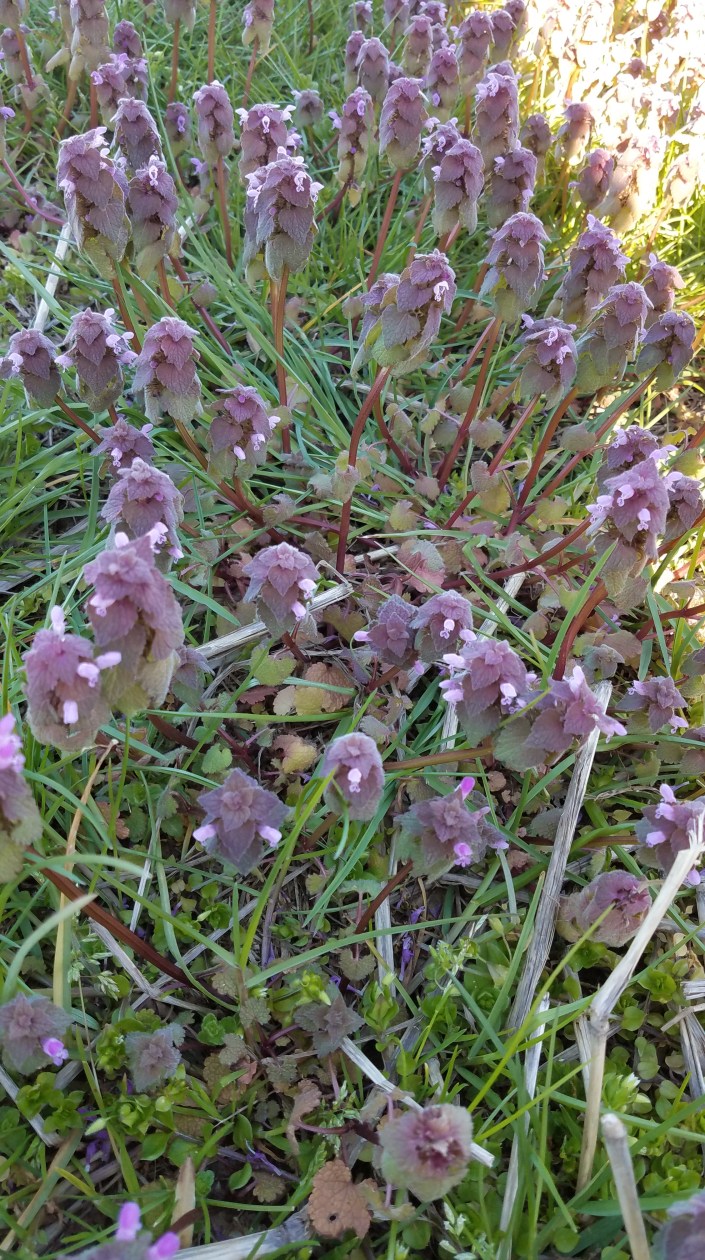
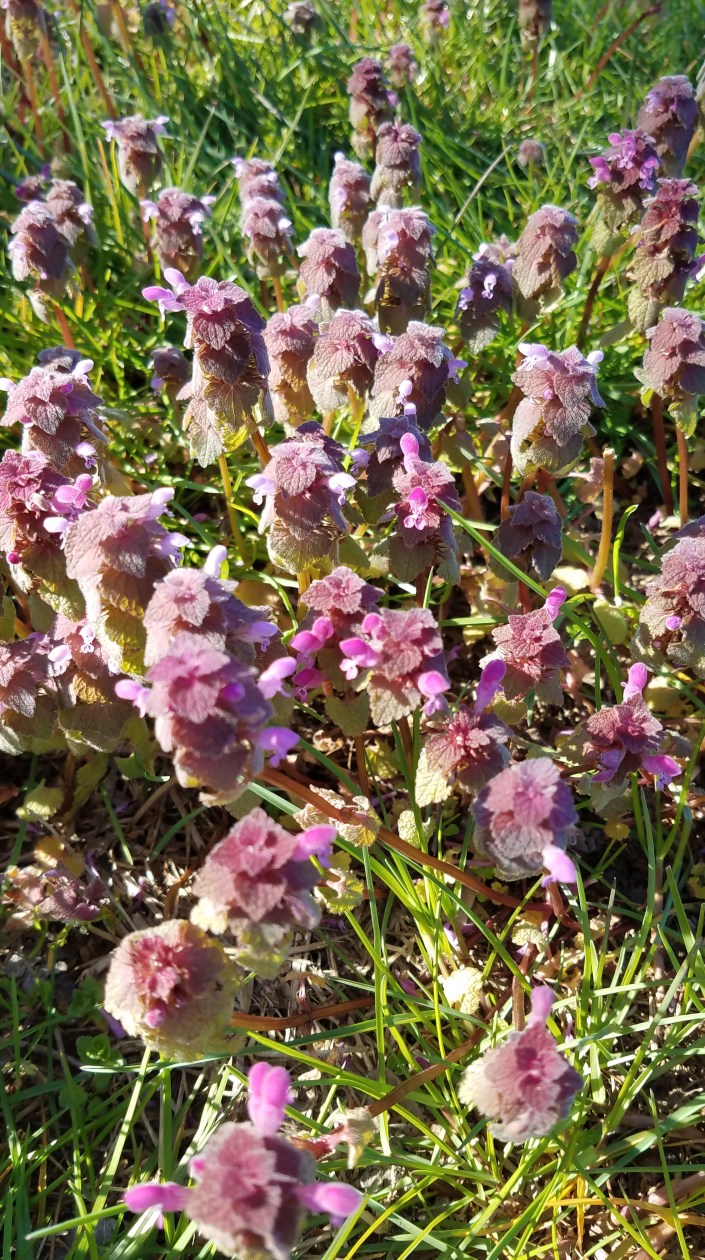
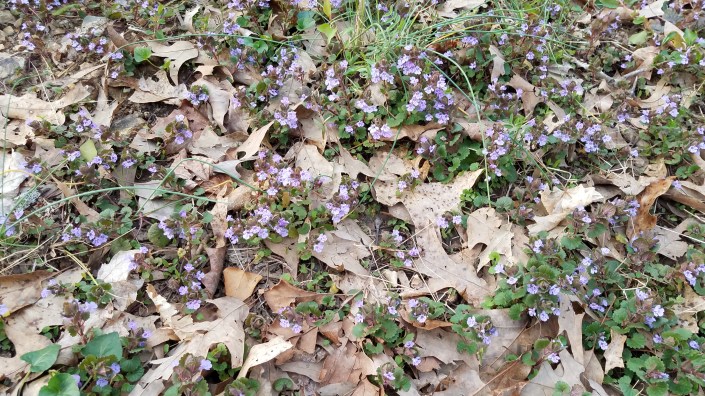
Why it’s on the fence, I don’t know.My yard is full of these wild violets.
03-17-2019I wish I knew what these were.
They are all over the local dog park.
03-23-2019The bees love them.Narcissus near the side door.
03-24-2019On the Riverwalk, hugging the sewer access.
03-30-2019So cute.
So tiny.
Everywhere.
I wish I knew what they were.
Sharing some graffiti artwork from our Riverwalk. All photos are from my personal collection. ~Vic
Decorating an abandoned house.
Love is all…y’all.
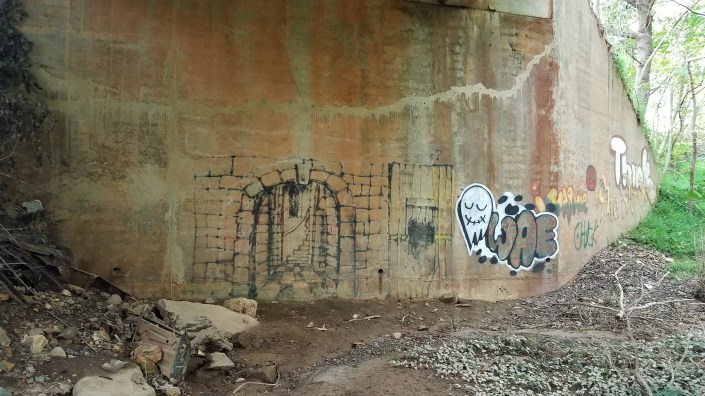
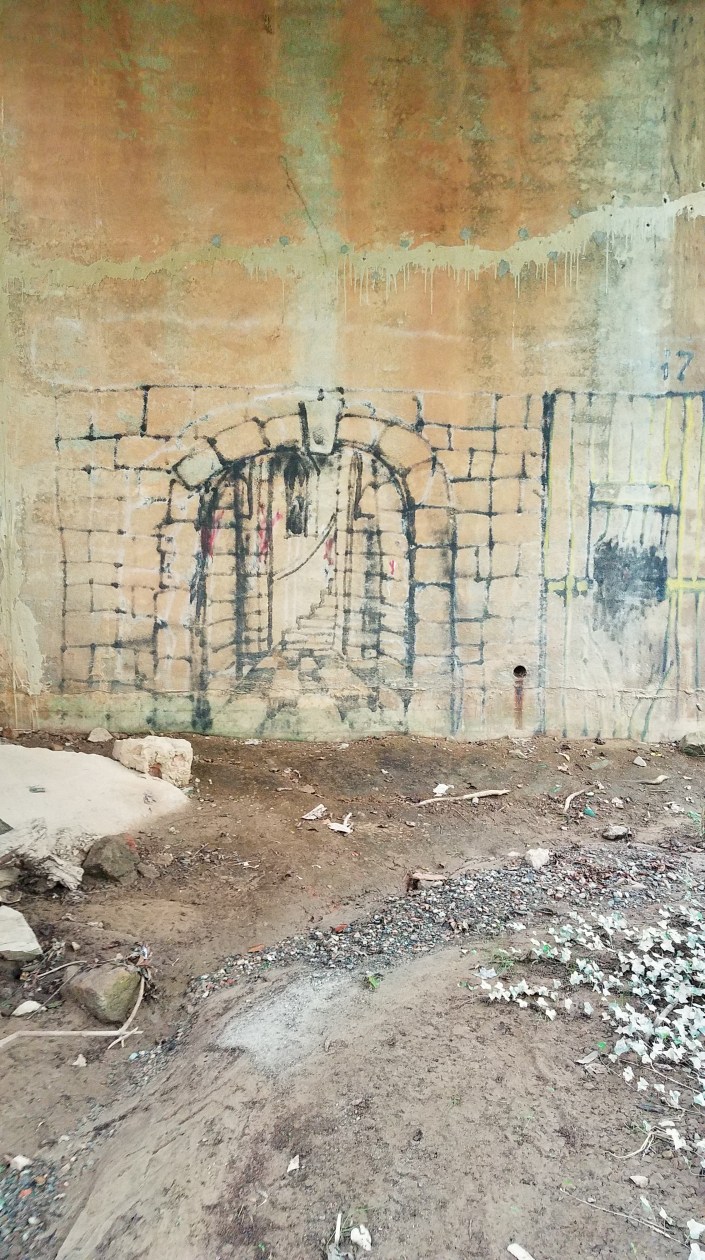
09-23-2018That looks like a wooden prison door.
I have no idea what WAE stands for.
10-06-2018Door to the underworld?
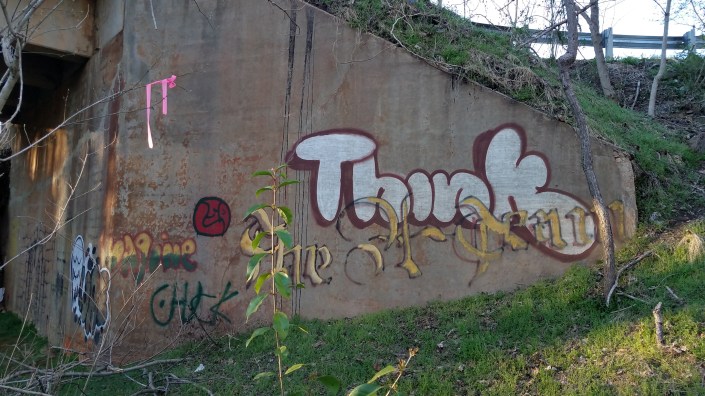
10-06-2018Think and, live life to the fullest.
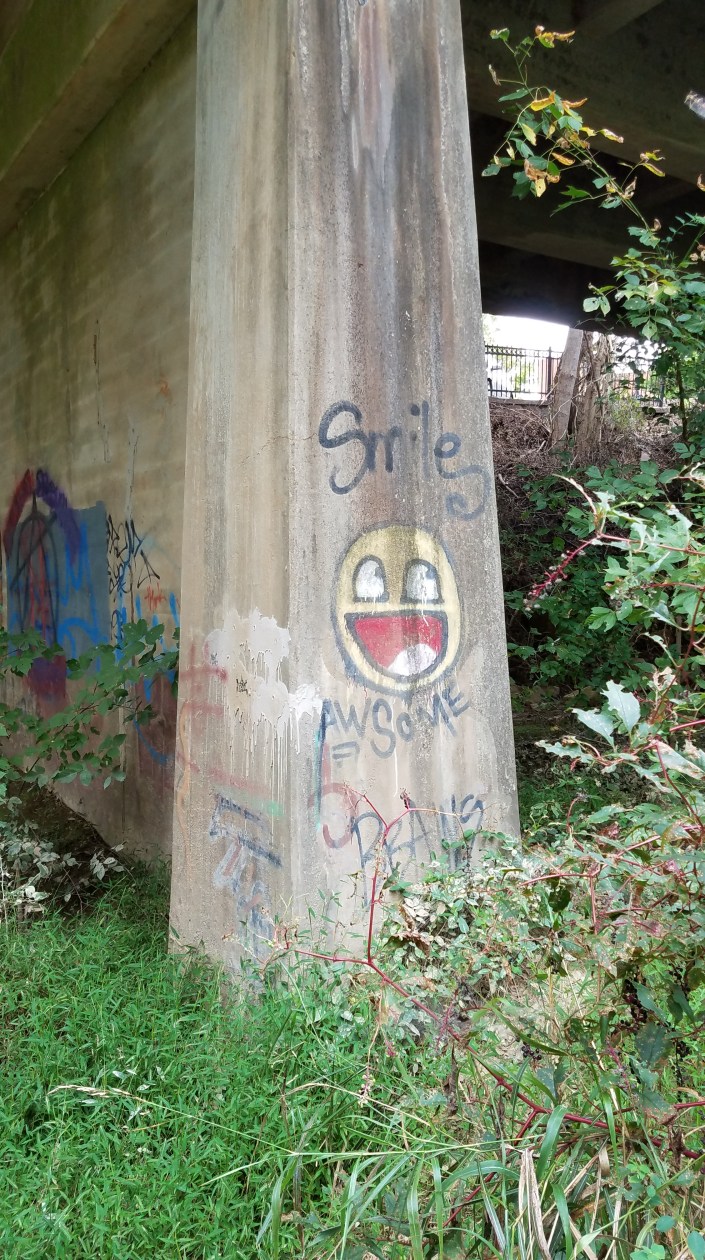
10-06-2018Smile.
Aw-some.
Brains.
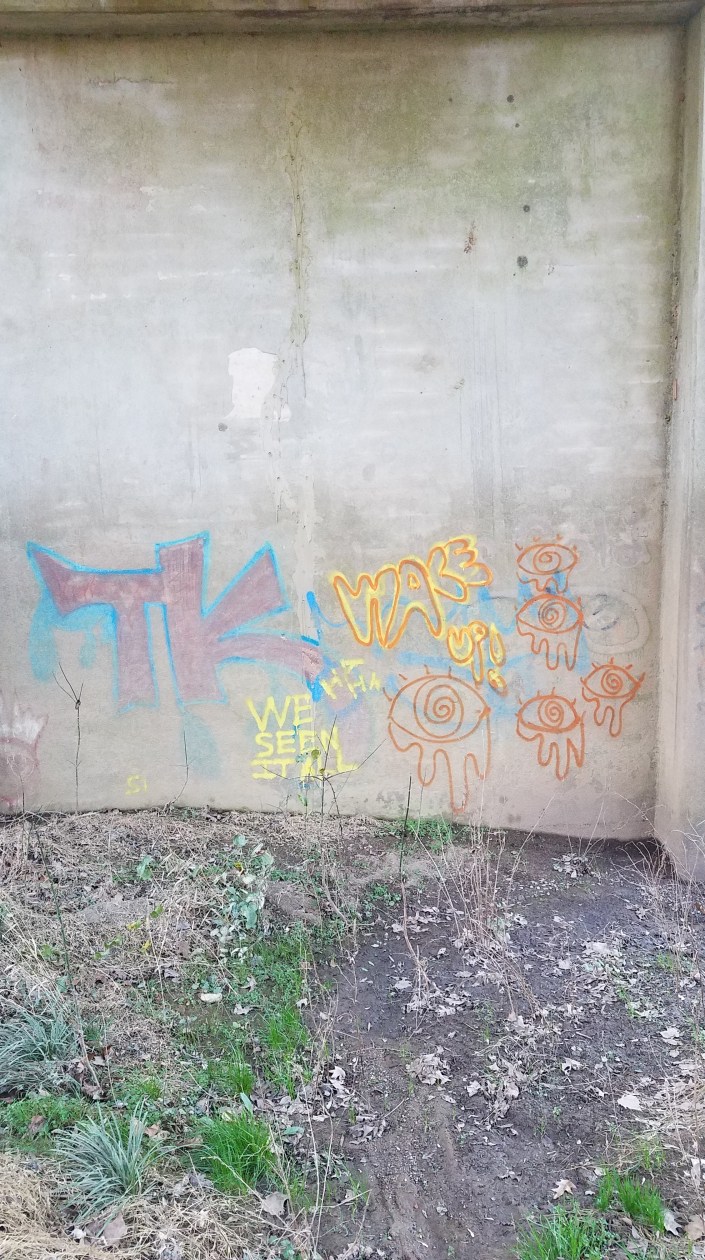
10-06-2018Wake up.
We seen it all.
Looks like the ‘all seeing eye’.
TK could be ‘think’, again?
01-08-2019I haven’t a clue.
01-08-2019Imagine (to the left).
Think (again).
I can’t read the rest.
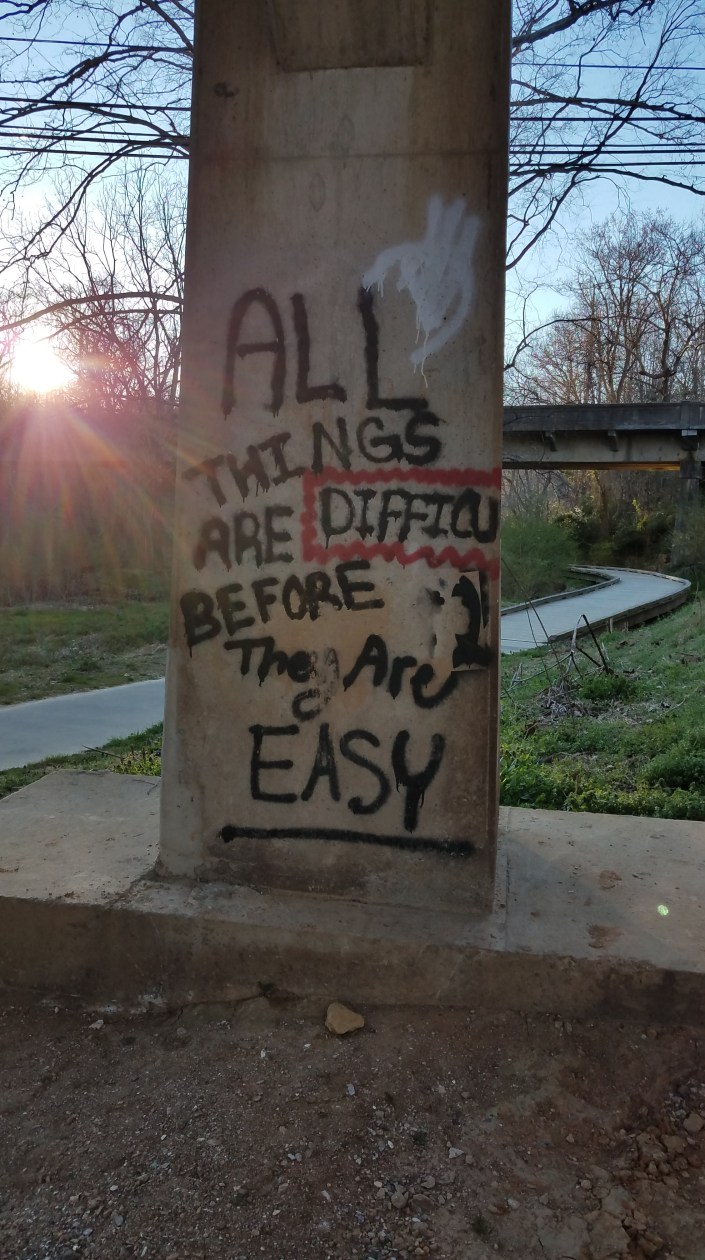
03-17-2019All things are difficult before they are easy.
Well said and true.
03-17-2019
Spwing has spwung! Well, maybe not. I understand that the Northeast US is getting hit by a ‘Nor’easter‘ at the moment. But, as I am typing this, the official arrival time of the Vernal (Spring) Equinox was 5:58pm EDT here in the Northern Hemisphere/Southeastern US. I posted the definition of equinox back in September 2018 but, the term ‘Vernal’ translates to ‘new‘ or ‘fresh‘. A fresh start is on the way.
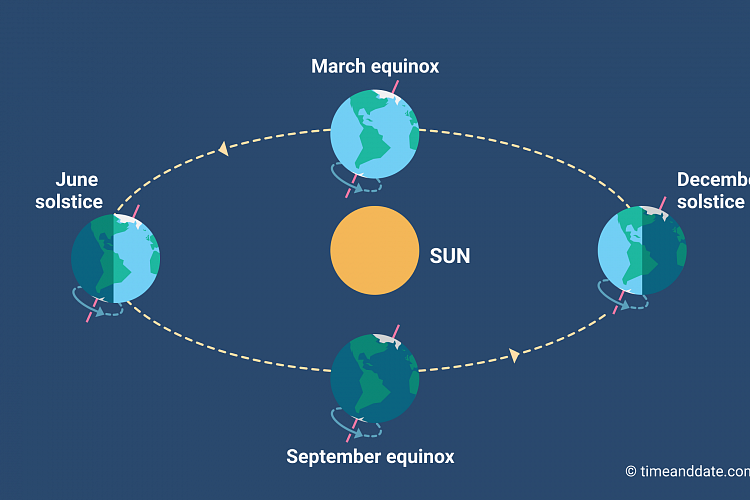
Earth’s axis is tilted at an angle of about 23.4° in relation to the ecliptic plane, the imaginary plane created by the Earth’s path around the Sun. On any other day of the year, either the Southern Hemisphere or the Northern Hemisphere tilts a little towards the Sun. But, on the two equinoxes, the tilt of the Earth’s axis is perpendicular to the Sun’s rays, like the illustration (below) shows. The March equinox is often used by astronomers to measure a tropical year, the mean time it takes for the Earth to complete a single orbit around the Sun. Also known as a solar year, a tropical year is approximately 365 days, 5 hours, 48 minutes and 45 seconds long.
The Iranian New Year (Nowruz, No-Ruz, No-Rooz or No Ruz) occurs during the time of the March Equinox, in accordance with the Persian astronomical calendar. It has been celebrated for over 3000 years and is rooted in the traditions of Zoroastrianism. No-Ruz celebrations last for about 12 days. Preparations start well in advance and include buying new clothes for family members and thoroughly cleaning homes. Wheat or lentil representing new growth is grown in a flat dish a few days before the New Year and is called Sabzeh (green shoots).
Higan (Higan-e or Ohigan), is a week of Buddhist services in Japan during the March and September Equinox. Both equinoxes have been national holidays since the Meiji period (1868-1912). “Higan” means the “other shore” (Sanzu River) and refers to dead spirits who reach Nirvana after crossing the river of existence. It celebrates the spiritual move from the world of suffering to the world of enlightenment.
Image Credit: timeanddate.com
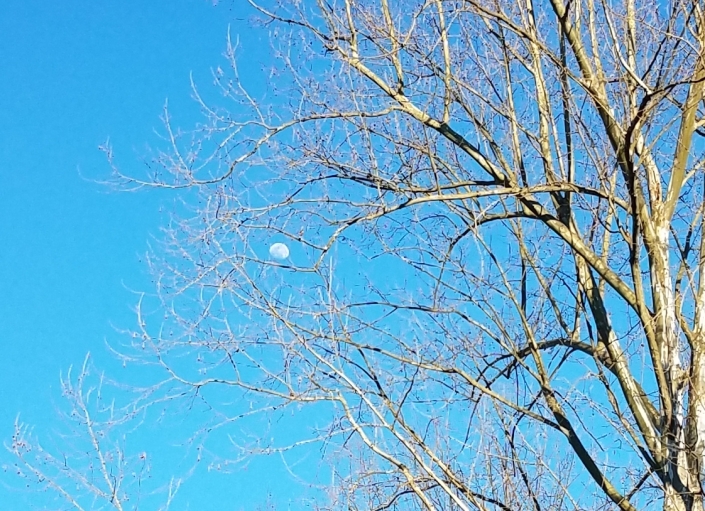
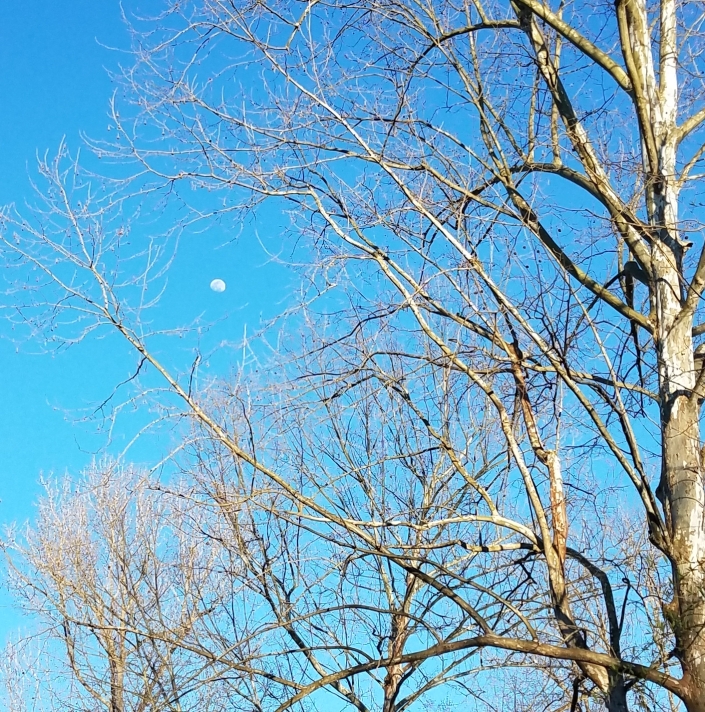
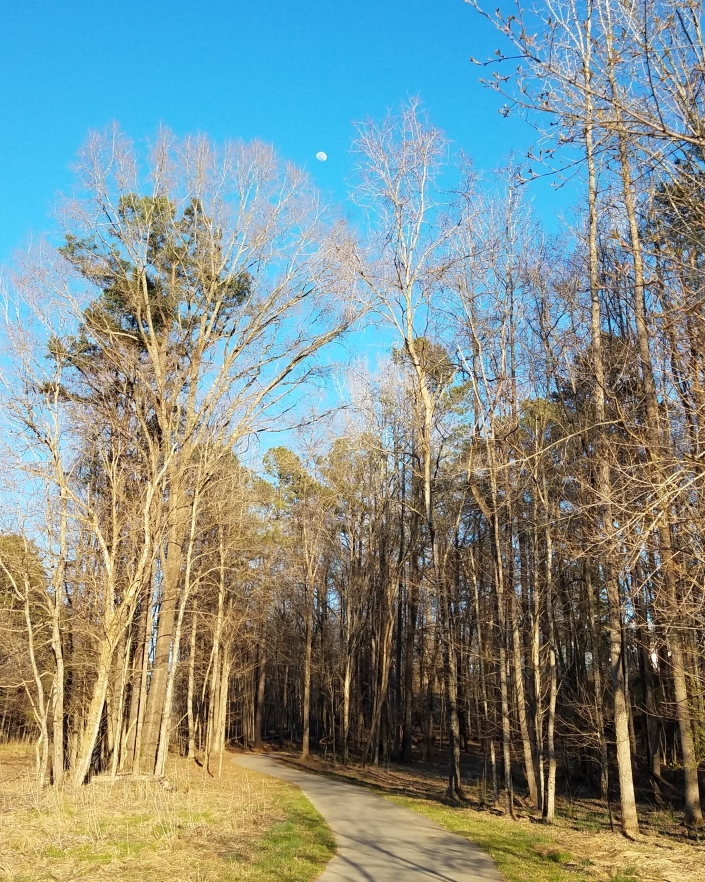
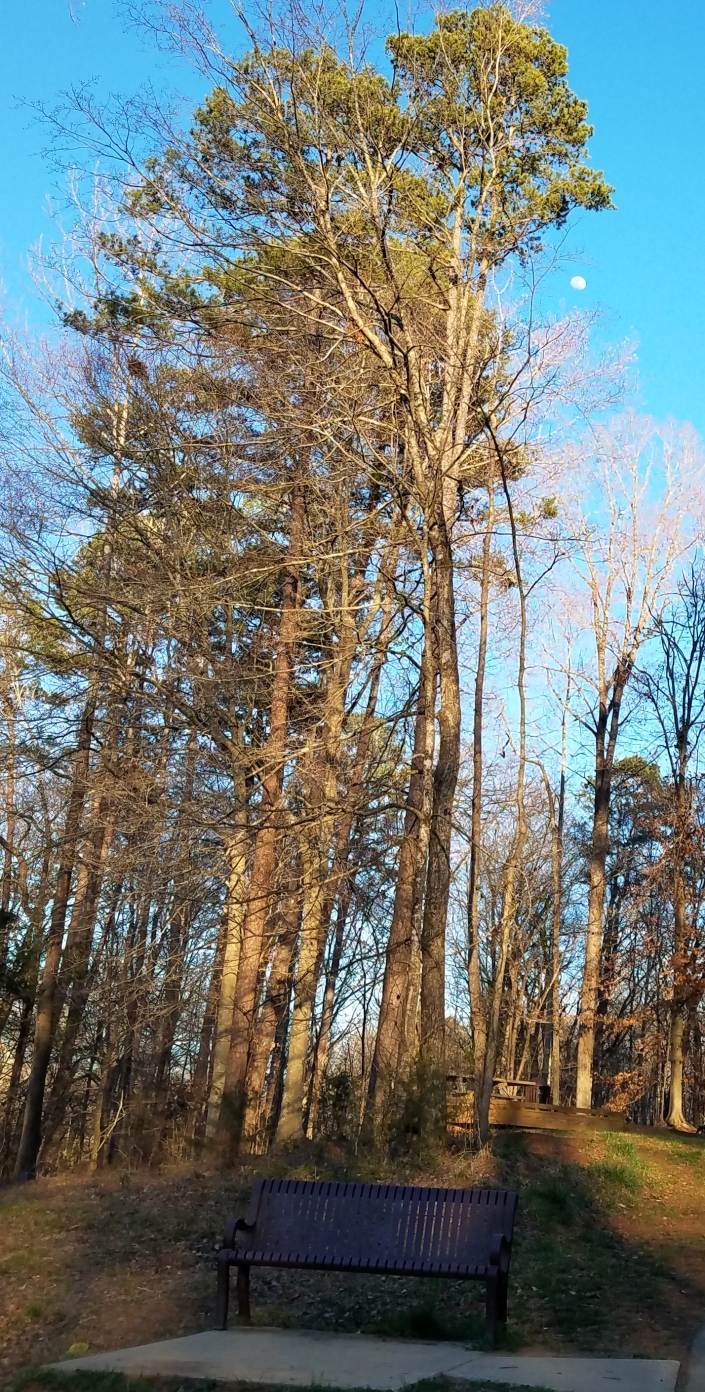
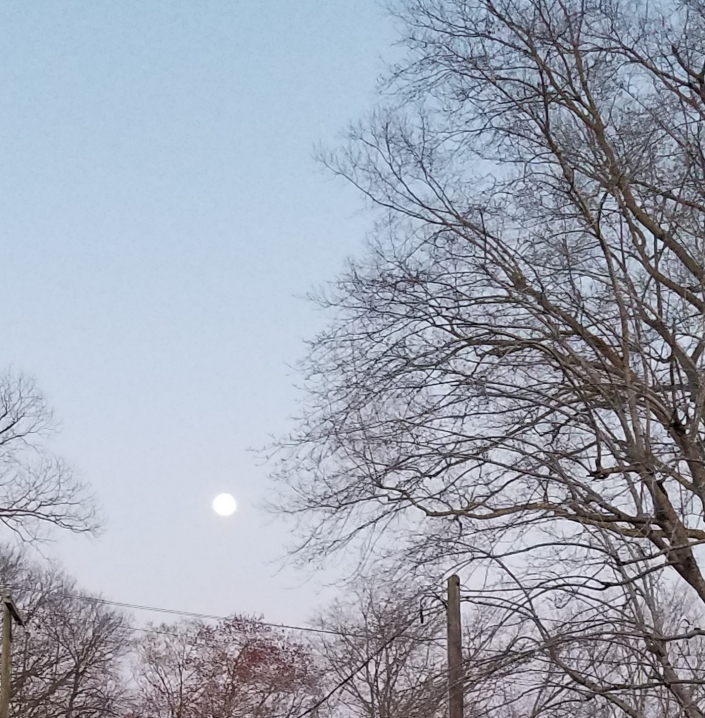
We will also be graced with a full moon, tonight. It was 100% full illumination at 9:42pm EDT. Busy day! Unfortunately, we have had a rainy day, today, so no shots of it full. The sky has been nothing but a boring shade of grey. I did get a few shots of it earlier in the week, though. They weren’t too bad.
All Photos Are My Personal Collection Unless Otherwise Stated
Peeking thru the limbs.
Saint Patrick’s DayBrilliant blue sky.
Looks like a golf ball.
Saint Patrick’s DayOver the Riverwalk.
Saint Patrick’s DayHanging out over the park bench.
Saint Patrick’s DayRising in town at 7:39pm, yesterday.
Best I could do.
March’s full moon is commonly called the Full Worm Moon. This is because of the earthworms that wriggle out of the ground as the earth begins to thaw in March. Here’s a little known fact about March’s full moon…it was called the Worm Moon only by Southern Native American tribes. In fact, there’s no way the Northern tribes would have ever called it the Worm Moon and the reason why is fascinating.
Essentially, earthworms did not exist in Northern America. It would be literally impossible for Northern tribes to see worms popping up in March. All the earthworms you see in Northern America today are invasive species brought in by colonists. These earthworms were brought over either out of a misguided intent to help fertilize the soil or, as an accident along with transported plants or the soil used for ballast in ships. Little did the colonists know that, during the last Ice Age, glaciers had spread so far across Canada and the northern parts of the United States that, all earthworms had been completely wiped out.
When the deep ice melted 12,000 years ago, the native forests in those areas grew back and adapted to the loss of earthworms. The growth of these forests became dependent on a layer of duff, which is a compost layer comprised of decomposing leaves and other rotting organic matter. If you ever visit one of these native forests, you will be asked to clean your shoes and make sure it’s free of earthworm eggs. That’s because, while it’s normally harmless everywhere else, earthworms will aggressively destroy the native forest’s duff layer by eating right through it.
This is why in Northern American tribes, such as the Shawnee tribe, the Worm Moon is called the Sap Moon, instead, as a reminder for the tribes that they can begin tapping maple syrup. In general, March’s full moon is known as a herald for the beginning of spring and new agricultural cycles. The Anglo-Saxons even used the Worm Moon as a way to predict the state of their crops. They called it the Storm Moon if it was stormy, which was a sign that their crops would fail. But, if it was dry, they called it the Rugged Moon, an indication of a bounteous harvest.
One of its other names is the Chaste Moon, symbolizing the purity of early spring. The Pueblo tribe named it the Moon When the Leaves Break Forth, while in Shoshone culture, it was known as the Warming Moon. Sometimes, it is called the Crow Moon, after the crows and other birds that appear as winter draws to a close. Other times, it’s called the Crust Moon, because of the snow that becomes crusty when it thaws in the sun and freezes in the moonlight.
In India, March’s full moon is also seen as a symbol of the arrival of spring and coincides with the festival of Holi. This is a riotous party where Indian communities all around the world engage in a huge water fight. Everyone goes out into the streets and sprays each other with colored water and powders, singing and dancing with strangers and, loved ones, alike. Playing and feasting together is a chance for you to repair relationships that have gone bad, reaffirming your existing social bonds as you move forward together into the new year.
I suppose I should have labeled the first post as Part I but…I neglected. Oh, well… All photos are my personal collection except the very last one. ~Vic
03-12-2019
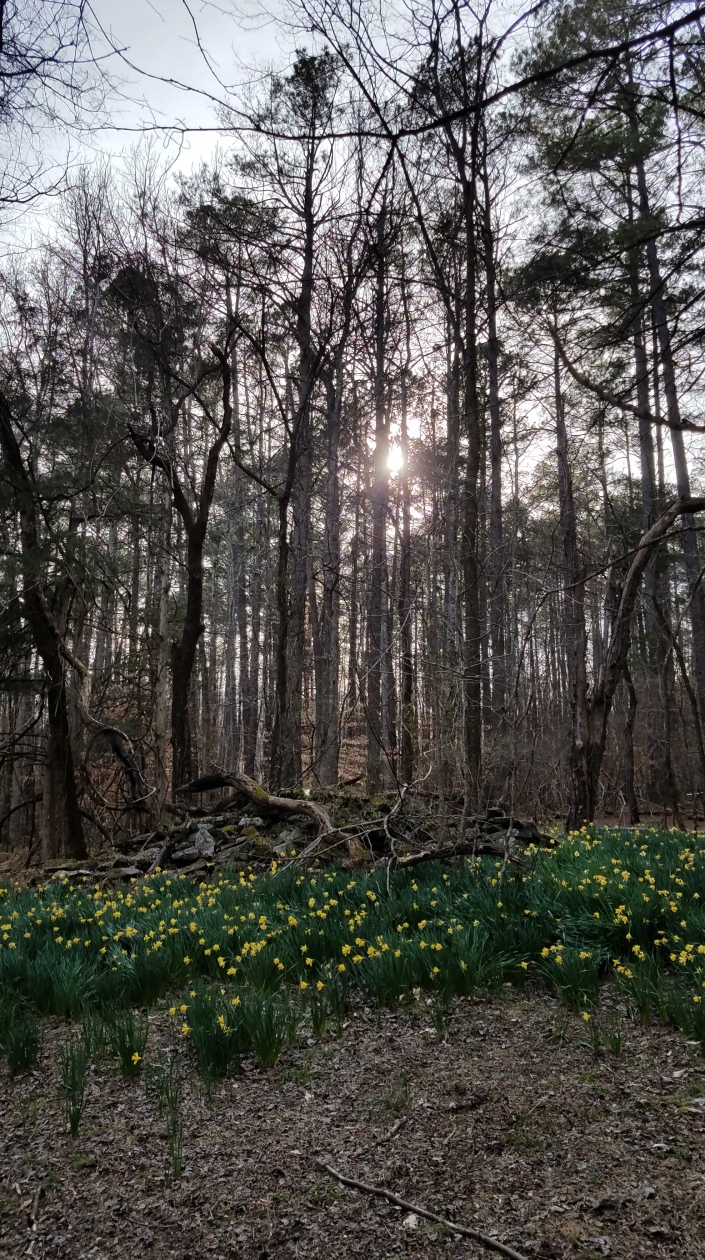
Portrait angle of the same flower gathering.Opposite angle of that big tree.Setting sun.
Another flower group.
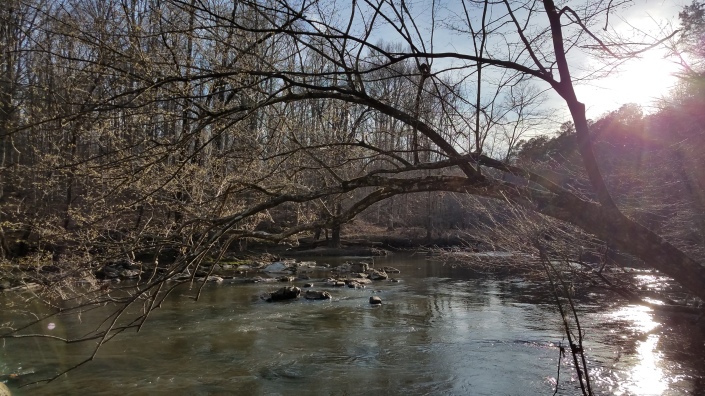
Bizarre rock pile beyond that.There are so many trails that run along the Eno.
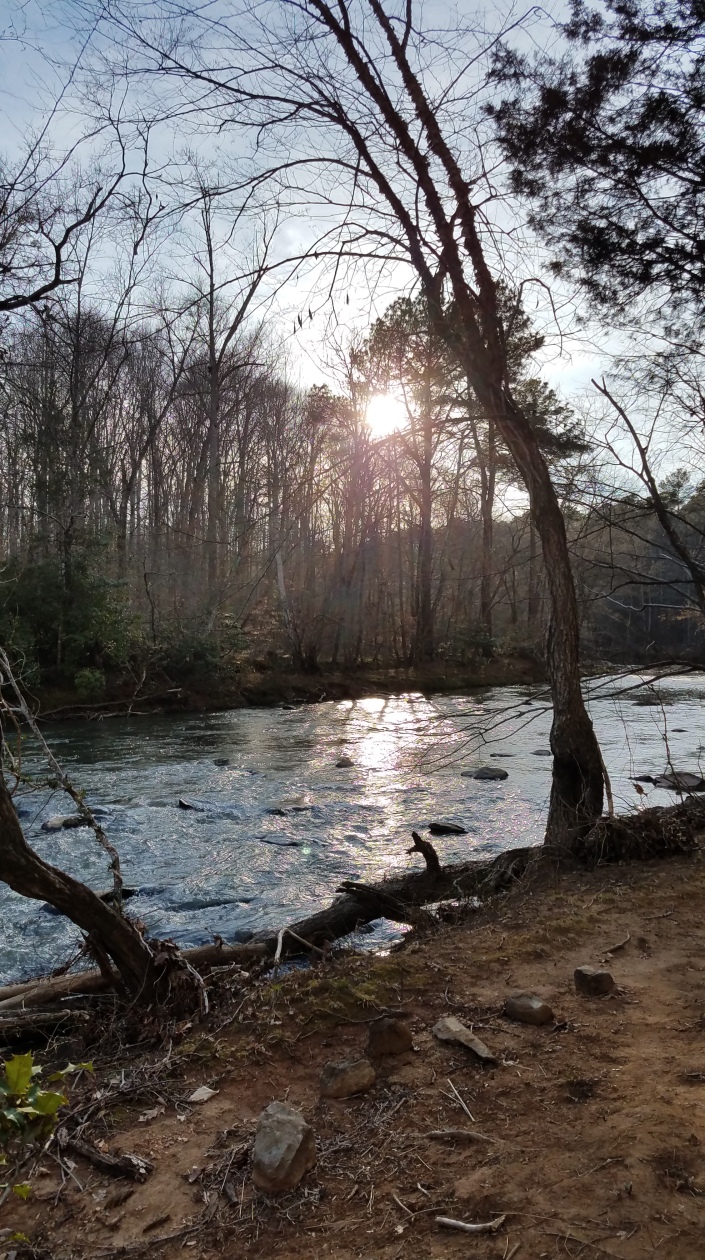
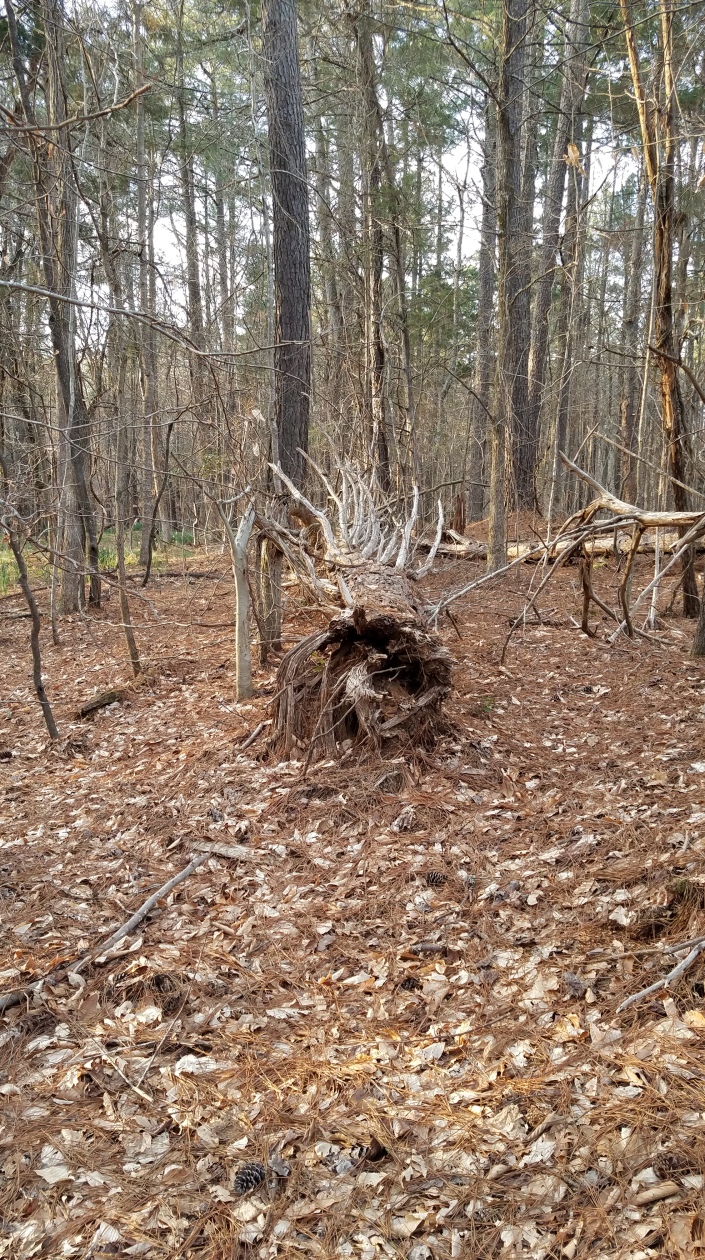
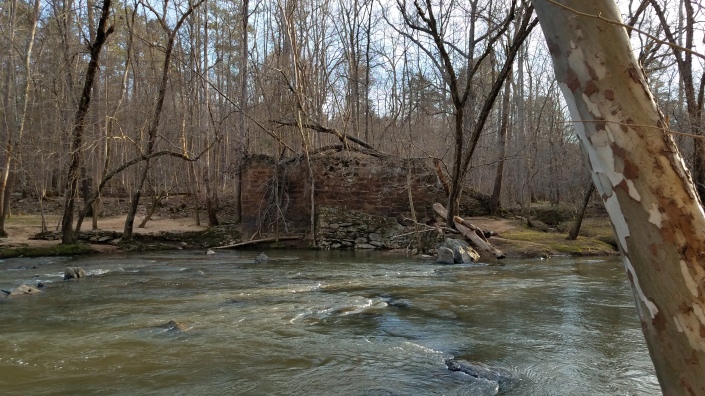
So many lovely views…I can almost feel the sun’s warmth from this shot.Odd porcupine-looking tree formation.What’s left of the old Eno River Pumping Station.Image Credit: opendurham.org
You can see the rock formation I had to climb over on the right.
All that’s left is the base.
Circa 1905
I love watching and listening to the birds. They are fun and fascinating. A few evenings ago, I was sitting in one of my Adirondack chairs I have in my yard. They are underneath a very large Hackberry tree. This tree is huge and old. As I was enjoying the sunset and journaling, I heard tapping…above my head. Then, I noticed dust-like material gathering in my lap, my pages and on my phone (and, no doubt, on my head). I looked directly above me, which was not an easy task in a high-back chair. Yes. It was a small woodpecker. This little thing had the entire tree to beat its beak into but, decided to do its routine…directly above me. I struggled to get shots but, I got a few. That will be for another post in the future.
All Photos Are My Personal Collection
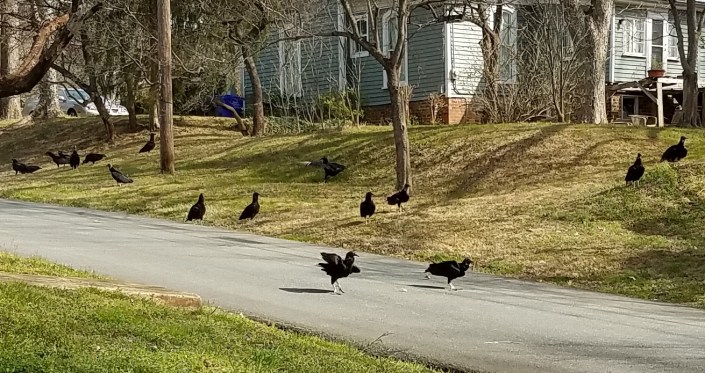
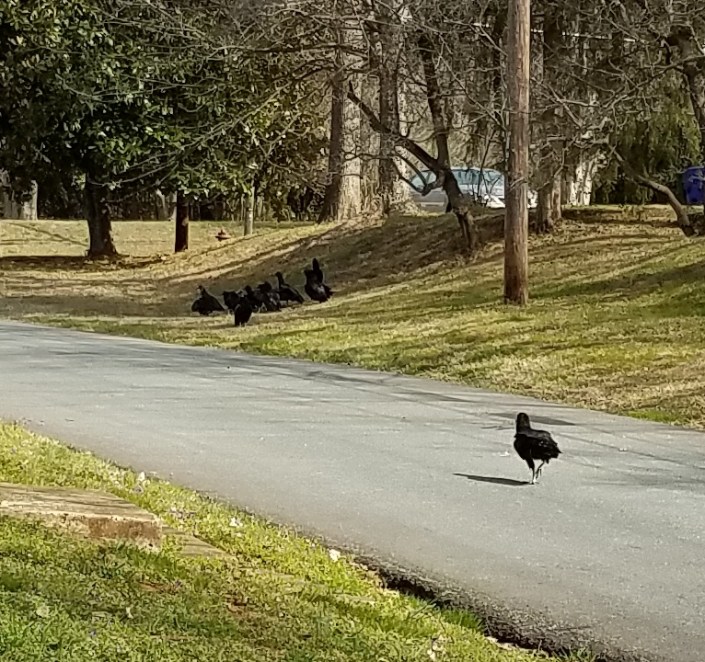
Invasion of the Buzzards
03-07-2017As carrion eaters, they are the clean-up crew.I never saw what they were after.I guess they have bodyguards or scouts.
They hung out for a while.Caught this beauty from the kitchen window (six years ago, tomorrow).
Sadly, all of those trees had to come down last year.
03-03-2013I think this is a juvenile.
But, a Cooper’s Hawk or a Sharp-Shinned, I’m not sure.Drake & mate(s) in a park in Central Texas.
12-12-2008
More birdie stuff. I will have more, tomorrow. Here is my first post: Part I
All Photos Are My Personal Collection
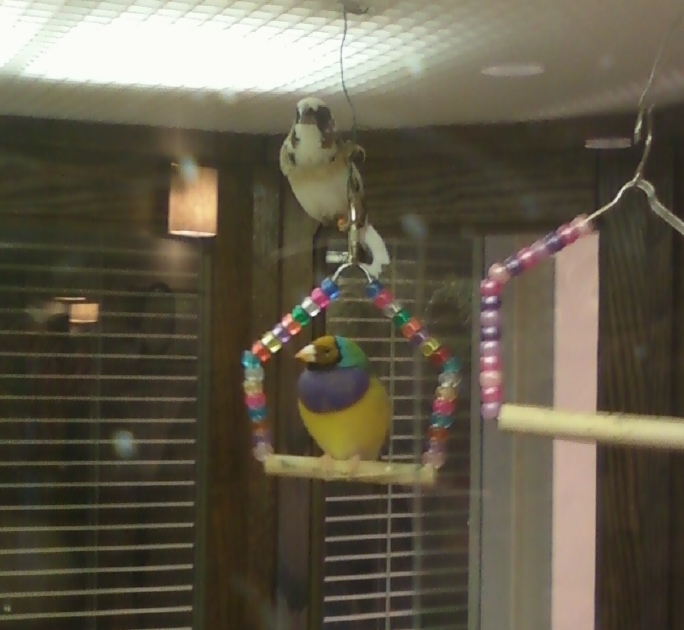
Indoor bird-cage at the Salisbury Veterans’ Home
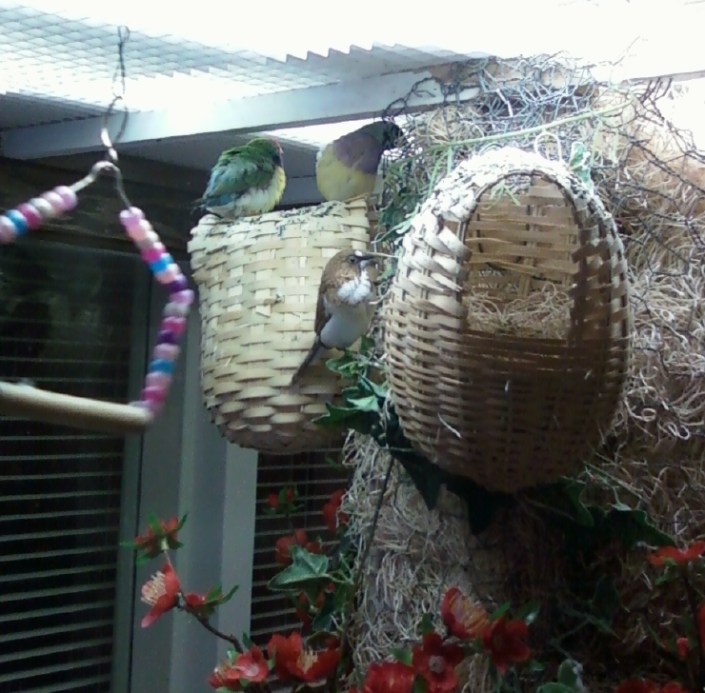
12-13-2012I think this is a Finch of some sort.Colorful little things.I’m not sure what the little brown bird is.They are SO cute!The bouncer goose returned with the quacking entourage.
02-03-2017Comfortable enough to munch as well.Always watching.Still standing guard behind the Japanese Maple.
This is for the birds! I will have more next Friday or Saturday.
All Photos Are My Personal Collection
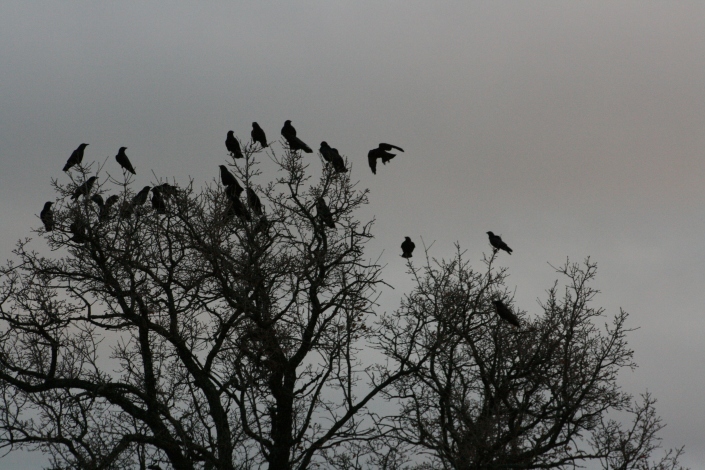
A murder of chattering crows at dusk.
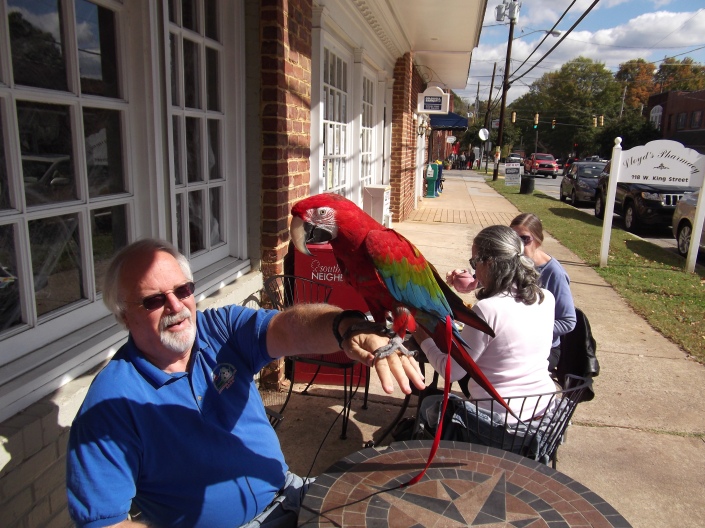
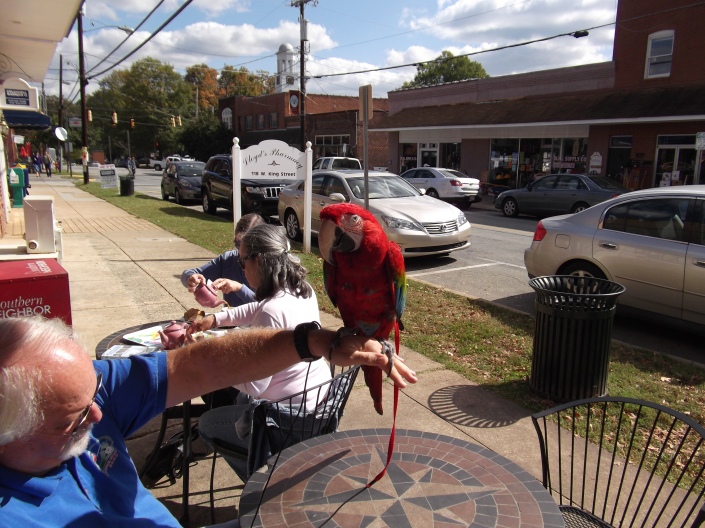
Taken in Texas 12-12-2007Pet parrot visiting uptown.
10-22-2011
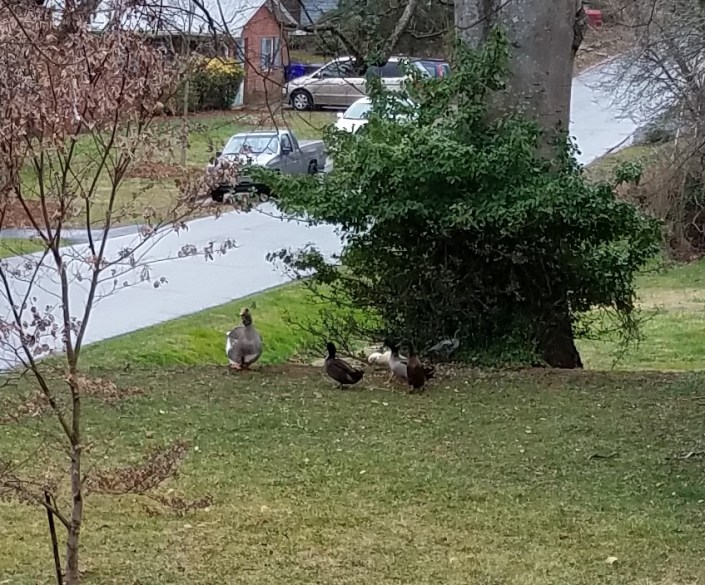
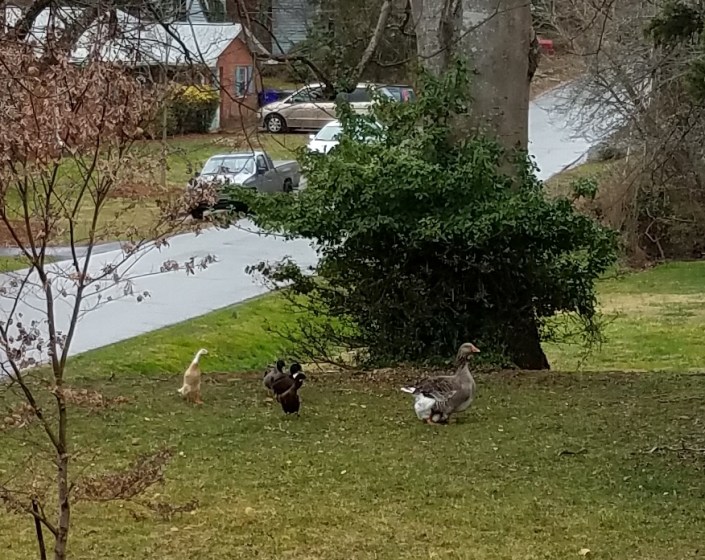
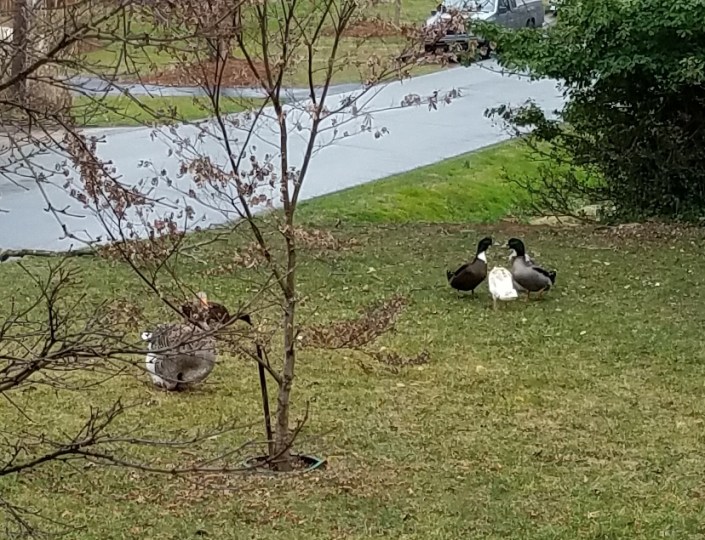
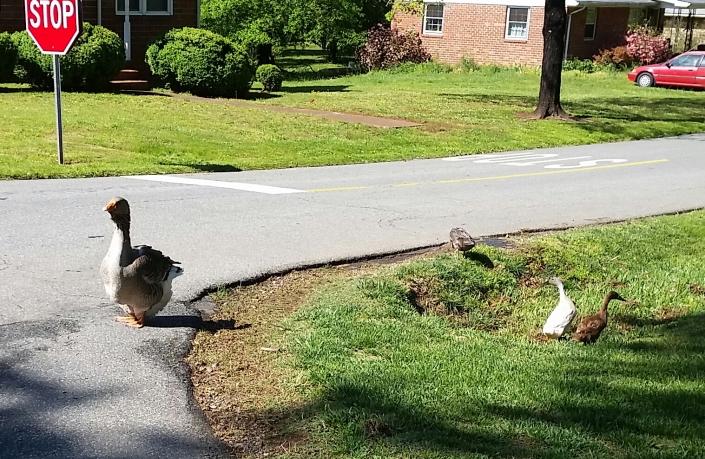
Beautiful bird.We have local geese that hang out at the river.
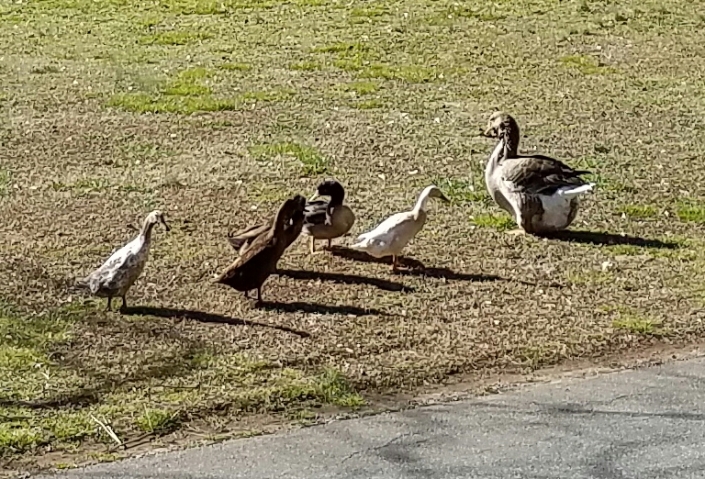
This one took up bodyguard duty to four ducks.
04-23-2016Standing guard while they eat.Careful crossing the street.Different goose. Same job.
02-13-2017
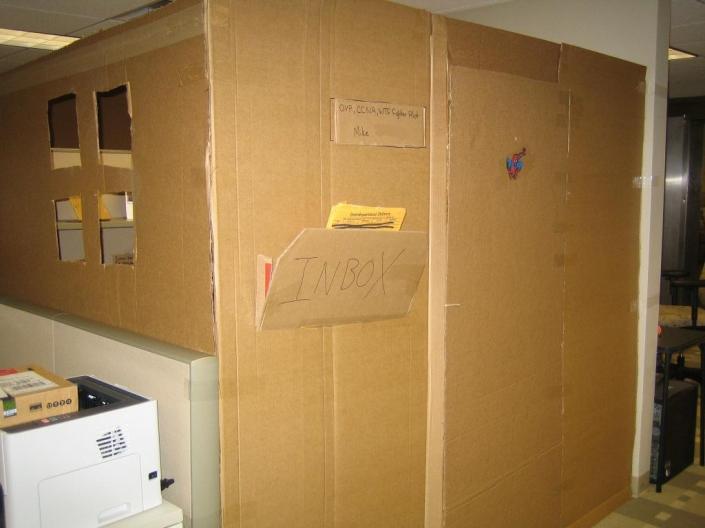
This post is a continuation of my Part I post from last Friday. More email-forward silliness from the early-to-middle 2000s. As with the first batch, I have no clue where these came from.
Cardboard office.Love the little Spiderman on the door.Effective use of foil.Keyboard planter.Newspaper workstation.A well-packed cube.Yeah. Do not touch.
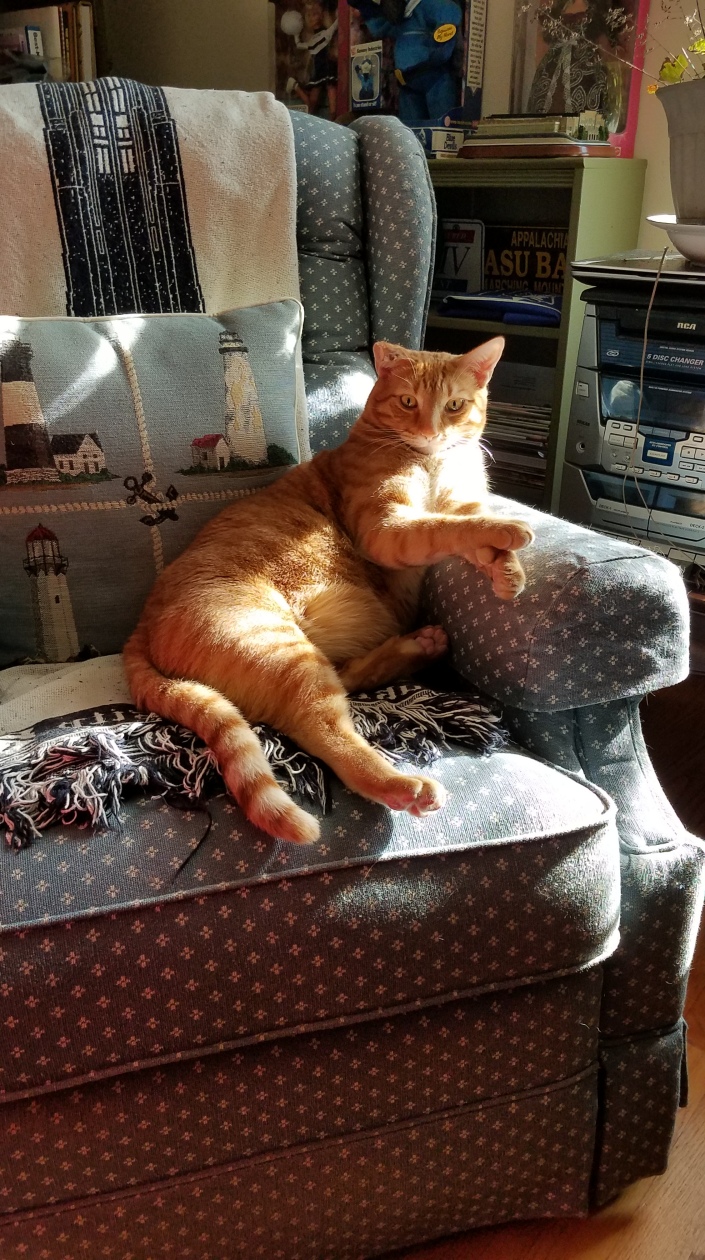
February 20 has two celebrations. National Love Your Pet Day is, clearly, a national day to love your pet(s)…as if we need a reason or an excuse to shower our fur-babies with adoration or smother them with kisses and hugs. Still, it’s a sweet sentiment to proclaim a national day of rejoicing for our companions or, best friends or, children or, partners. They fulfill so many needs on so many levels that volumes of literature exist that could occupy a very large library.
The statistics on pets in the U.S. is interesting and on the rise. As of March 2017, 68% of all households have a pet(s), up from 56% in 1988. Topping the list, believe it or not, is freshwater fish. All of a sudden, I am seeing Nemo in the aquarium of the dentist’s office. Yeah. I know. Nemo was a saltwater fish but, that is the first thing that popped into my head.
Image Credit: thebestpictureproject.wordpress.com
The National Day Calendar folks couldn’t find the creator of this day but, thank you, whomever you are. So, give your pet(s) an extra hug or, a scratch or, a new toy or, treats (they really, really like treats) in celebration. They won’t mind.
As the snowiest month in the United States, February’s full moon is commonly known as the Full Snow Moon in Native American cultures. These ancient tribes named this moon after the way trees cracked in the cold or how people had to sit shoulder to shoulder around the fire for warmth. Even the Celts called it the Moon of Ice. As expected of the coldest month in the year, the Full Snow Moon is also known by more sinister names, such as the Bone Moon. The Cherokee tribe called February’s full moon the Bone Moon because, by this point, the tribe’s winter food supplies had usually dwindled to the point where people had to gnaw on bones and cook bone marrow soup in order to survive. For the same reason, the Kalapuya tribe called this moon the Out of Food Moon. Appropriately, it’s also known as the Hunger Moon and the Little Famine Moon. Perhaps, due to this month’s association with death, the Cherokee tribe would commune with their dead ancestors during the Bone Moon. A didanawiskawi, or a medicine person, would host a medicine dance for the community. Fasting and rituals for the dead were also common practices.
Peaking over the courthouse.
However, not all cultures associate February’s full moon with extreme cold and death. The Hopi tribe calls it the Moon of Purification and Renewal, which is very fitting because the Full Snow Moon is usually the very first full moon of the year according to the lunar calendar. Cultures that follow the lunar calendar, especially East Asian cultures, tend to associate the Full Snow Moon with new beginnings for this very reason. The ancient Chinese, for example, called it the Budding Moon. As a matter of fact, celebrations of February’s full moon are the climax of Lunar New Year festivities in various East Asian countries. In China, the Full Snow Moon is celebrated during the Lantern Festival, also known as the Yuanxiao Festival, which is the 15th day of the Lunar New Year. During this festival, the Chinese release kongming lanterns into the sky as they admire the full moon and eat tangyuan, glutinous rice balls that are usually filled with sweet paste. The round shape of the balls symbolize family togetherness and bring good luck to the whole family.
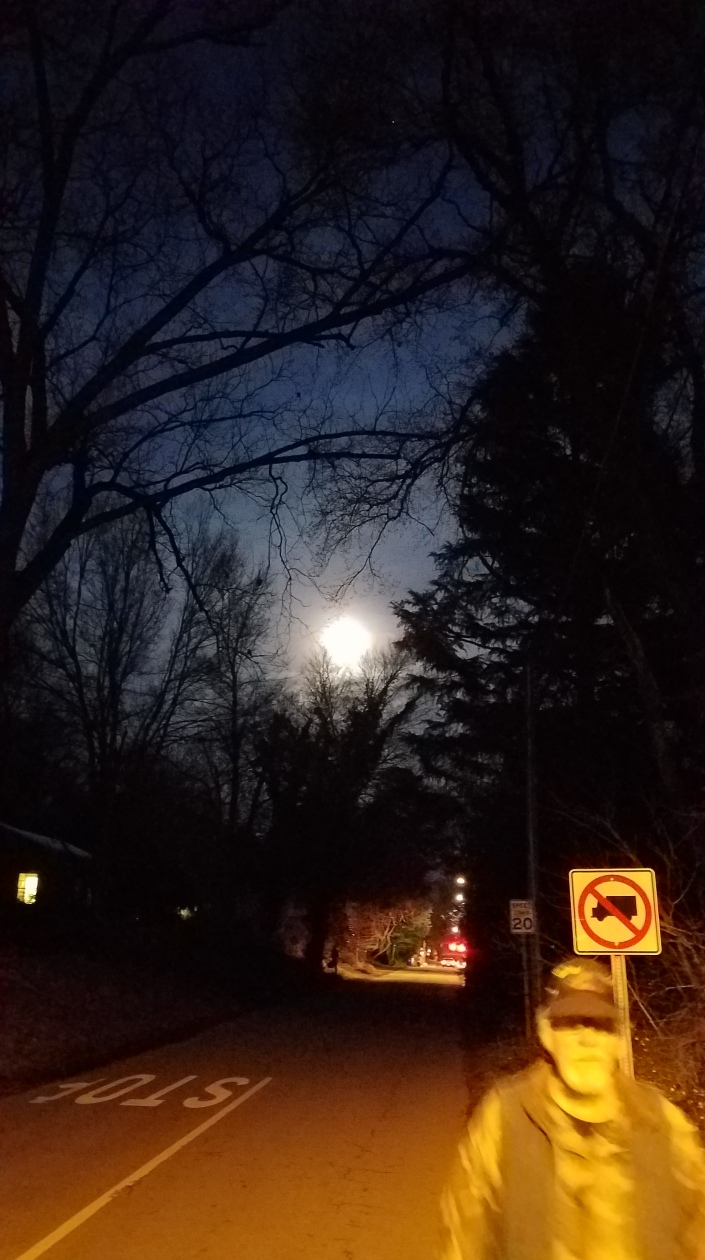
Walking home and below a street light.
Many East Asian cultures in general also light lanterns and bonfires to celebrate February’s full moon. According to an ancient Chinese legend, not long after Buddhism was brought into China, 17 deities were witnessed flying through the sky during the first full moon of the Lunar New Year. Shocked and excited, the populace lit fires and lanterns to see the godly beings better. They continued to do so year after year but, for more practical reasons – to chase away pests and to pray for a good crop in the upcoming spring. In Korea, where February’s full moon is known as Daeboreum, these fiery structures are called “Houses of the Burning Moon”. During Daeboreum, Koreans hike mountains, despite the freezing temperatures, in order to catch a glimpse of the first rise of the first full moon of the Lunar New Year. According to legend, the very first person to accomplish this feat will have their dearest wish come true.
Among the Micmac people of eastern Canada, the driving winds that often accompany February snows led to the name Snow-Blinding Moon. Because this month’s typically harsh weather conditions made hunting very difficult, other common names for February’s Moon included the Hunger Moon, Bony Moon, and Little Famine Moon. To the early American colonists, the optimal time for trapping beaver, fox and mink was the dead of winter when these animals’ coats were at their fullest. So, to them, February’s moon was known as the Trapper’s Moon.
From my driveway.
From a Wiccan site I stumbled across while ‘Googling’ (or ‘Binging’) a particular name, additional names not listed above are Storm Moon, Horning Moon, Wild Moon, Red & Cleansing Moon, Quickening Moon, Big Winter Moon, Moon When Trees Pop and Chaste Moon. And, there is quite an extensive list of Native American moons on Skywise Unlimited.








































 Cosmic-Observation