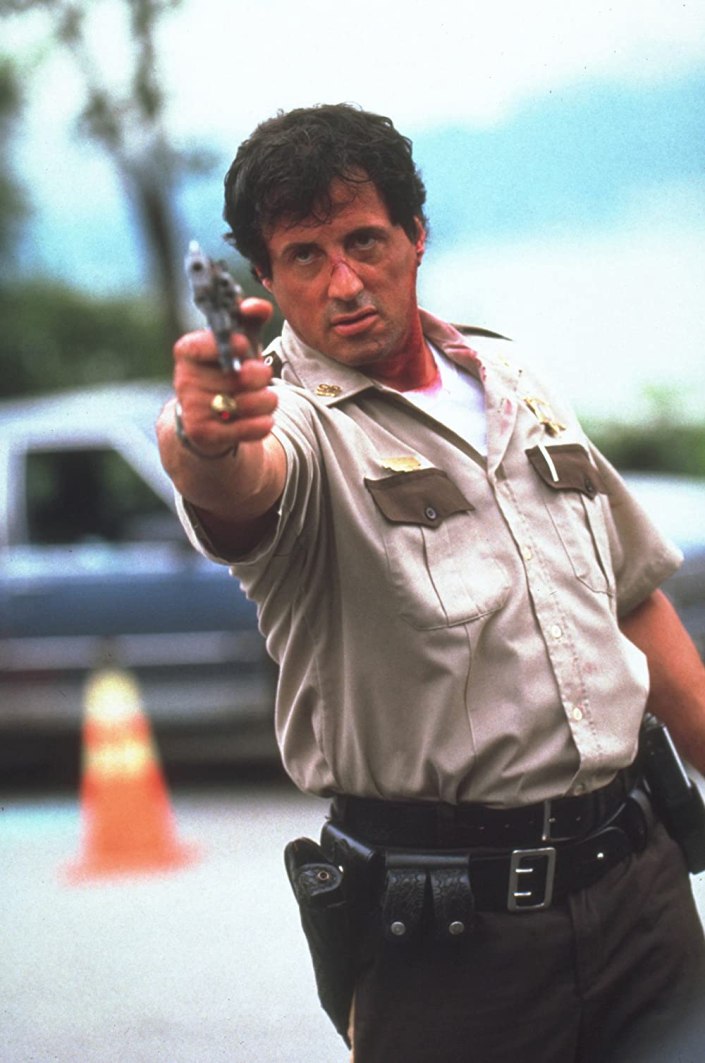
Sylvester Stallone put on 40 pounds to play Nowheresville, N.J., sheriff Freddy Heflin in Cop Land […]. His town is run by Ray Donlan (Keitel) and the other New York cops who have settled there with their families. He wears blinders when it comes to their lawbreaking and mob dealings. Moe Tilden (De Niro), the internal-affairs officer out to get the goods on Cop Land, correctly pegs Freddy as “a man looking for something to do.” Keitel’s [Donlan] exudes dangerous energy. He cares for his own as long as they don’t cross him […]. Robert Patrick brings sly menace to Rucker […]. Ray Liotta […], as Gary Figgis, [is] a tainted cop who sides with Freddy.
Mangold […] has a rare talent for finding the human drama in ordinary lives.
Writer-director James Mangold […] wrangles an impressive cast […] and spins a compelling tale of cancerous corruption among a secretive group of New York’s finest who have settled in the fictional New Jersey burg of Garrison. [Stallone] indeed looks chunky and plays the sleepy, docile Sheriff […] with sluggishness to spare in a largely commendable performance as a half-deaf small-town dreamer. [He] is not given much in the way of memorable dialogue but, he makes the character work […]. [Having] yet to replace his LP of The River with a CD, [he] carries a torch for the local Jersey girl (Sciorra) he saved from drowning…the reason for his loss of hearing in one ear…[he] once longed to be a big-city cop but, had to settle for policing them.
Freddy gradually realizes that he doesn’t like how the town has turned out.
I saw this at the theater when it came out and caught it, again, a few nights ago. I was born and raised in law enforcement and, worked in it, too (non-sworn). I’ve known good cops and I’ve known some really bad ones. I love a well written cop movie and this was an unusual one in that Stallone wasn’t playing a bad ass like Rambo, Cobra, Tango, John Spartan (though I do love that movie) or Ray Quick. This character was different…subdued. His scenes with Annabella Sciorra have Springsteen playing in the background which adds depth and texture to the mood. This is clearly a period piece as all the vehicles, hair cuts and clothing styles are, effectively, early 80s. The River came out in 1980 and music from the Director’s Cut, like Blue Oyster Cult‘s Burnin’ For You came out in 1981. This also manages to cover the Crime category via IMDb and the Film Noir category, simultaneously, via Historical Dictionary of Film Noir (2010). ~Vic
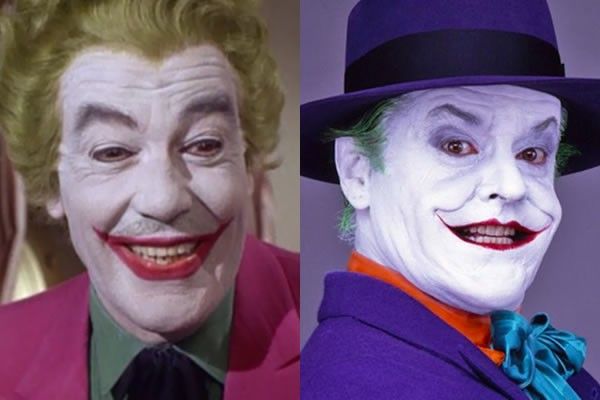
A 25-year-old man clad in “Joker” makeup “menacingly waved” a pocketknife at several teenagers as he drove past them Tuesday in Haddon Township, authorities said. Assoumou Diby was stopped a short time [after] cruising past the group on the 400 block of West Crystal Lake Avenue on Tuesday, the Camden County Prosecutor’s Office and Haddon Township police said in a statement Wednesday.
It’s blurry but, here’s a visual…a man in joker makeup arrested by Haddon Twp, NJ, police after allegedly waving a pocketknife at children. The arrest followed days of sightings, scares and calls to police, who say, until last night, the behavior wasn’t criminal. @FOX29philly
Diby, of Haddon Township, was charged with unlawful possession of a weapon following his arrest. Earlier in the week, police said they received multiple reports from people who saw a man in Joker makeup walking around town, noting it’s not a crime [to] simply do that.
Diby is due to make a first appearance in municipal court July 16.
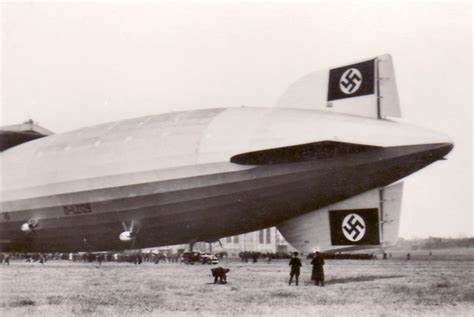
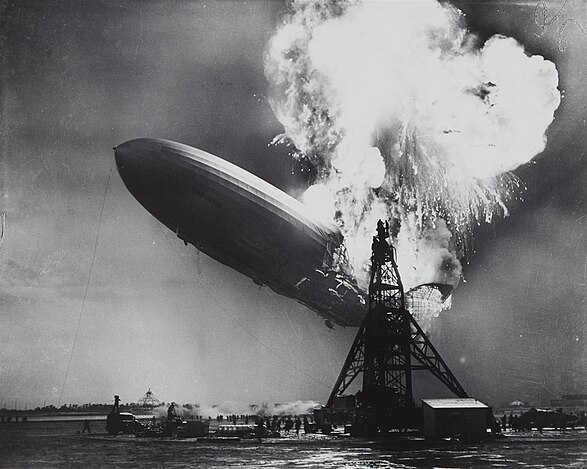
[T]he largest dirigible ever built, [it burst] into flames upon touching its mooring mast […]. There were 35 fatalities (13 passengers and 22 crewmen) from the 97 people on board (36 passengers and 61 crewmen) and an additional fatality on the ground.
The rigid airship, often known as the Zeppelin after the last name of its innovator, Count Ferdinand von Zeppelin, was developed by the Germans in the late 19th century. [It] had a light framework of metal girders that protected a gas-filled interior [of] highly flammable hydrogen gas, vulnerable to explosion.
On May 3, the Hindenburg left Frankfurt, Germany, for a journey across the Atlantic to Lakehurst’s Navy Air Base. While attempting to moor, […] the airship suddenly burst into flames, probably after a spark ignited its hydrogen core. Rapidly falling 200 feet to the ground, the hull of the airship incinerated within seconds. [M]ost of the survivors suffered substantial injuries.
The disaster was the subject of newsreel coverage, photographs and [radio announcer] Herbert Morrison‘s recorded […] eyewitness reports from the landing field, which were broadcast the next day. He is known for his famous emotional declaration “Oh, the humanity!”
A variety of hypotheses have been put forward for both the cause of ignition and the initial fuel for the ensuing fire. The event shattered public confidence in the giant, passenger-carrying rigid airship and marked the abrupt end of [that] era.
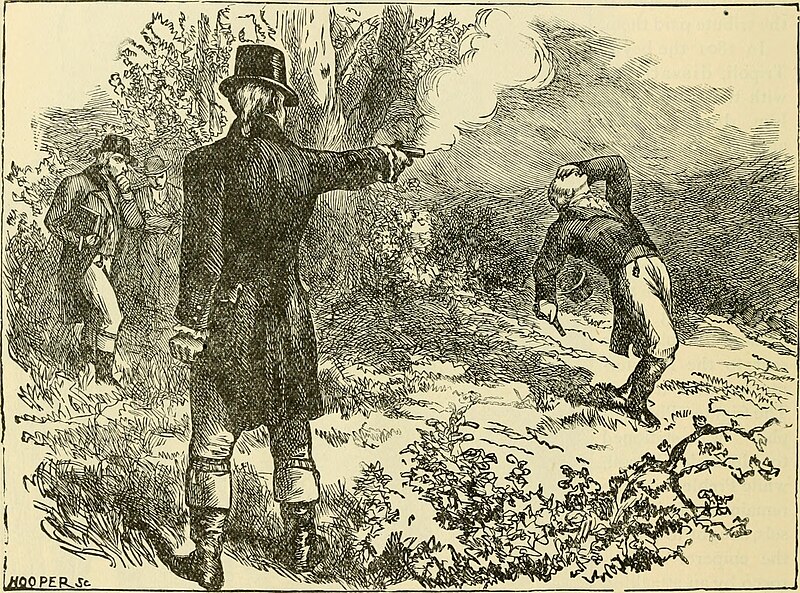
Two-hundred, fifteen years ago, today, Vice President Aaron Burr shot former Secretary of the Treasury Alexander Hamilton in a duel in Weehawken, New Jersey.
At dawn on the morning of July 11, […] political antagonists, and personal enemies, Alexander Hamilton and Aaron Burr met on the heights of Weehawken […], to settle their longstanding differences with a duel. The participants fired their pistols in close succession. Burr’s shot met its target immediately, fatally wounding Hamilton and leading to his death the following day. Burr escaped unharmed. This tragically extreme incident reflected the depth of animosity aroused by the first emergence of the nation’s political party system. Both men were political leaders in New York: Burr, a prominent Republican, and Hamilton, leader of the opposing Federalist Party. Burr had found himself the brunt of Hamilton’s political maneuvering on several occasions, including the unusual presidential election of 1800, in which vice-presidential candidate Burr almost defeated his running mate, presidential candidate Thomas Jefferson. In 1804, Hamilton opposed Burr’s closely fought bid for governor of New York. On the heels of this narrow defeat, Burr challenged Hamilton to a duel on the grounds that Hamilton had publicly maligned his character.
Alexander Hamilton, the chief architect of America’s political economy, was born on the Caribbean island of Nevis [and] came to the American colonies in 1773 as a poor immigrant. (There is some controversy as to the year of his birth, but it was either 1755 or 1757.) In 1776, he joined the Continental Army in the American Revolution and his […] remarkable intelligence brought him to the attention of General George Washington. Aaron Burr, born into a prestigious New Jersey family in 1756, was also intellectually gifted and [..] graduated from the College of New Jersey (later Princeton) at the age of 17. He joined the Continental Army in 1775 […]. In 1790, he defeated Alexander Hamilton’s father-in-law in a race for the U.S. Senate. Hamilton came to detest Burr, whom he regarded as a dangerous opportunist, and […] often spoke ill of him.
In the 1800 election, Jefferson and Burr became running mates […]. Under the electoral procedure then prevailing, president and vice president were voted for, separately. […] the candidate who received the most votes was elected president, and the second in line, vice president. What at first seemed but an electoral technicality […] developed into a major constitutional crisis when Federalists in the lame-duck Congress threw their support behind Burr. After a remarkable 35 tie votes, a small group of Federalists changed sides and voted in Jefferson’s favor. Alexander Hamilton, who had supported Jefferson as the lesser of two evils, was instrumental in breaking the deadlock.
The duel was fought at a time when the practice was being outlawed in the northern United States and it had immense political ramifications. Burr survived the duel and was indicted for murder in both New York and New Jersey, though these charges were later either dismissed or resulted in acquittal. The harsh criticism and animosity directed toward him following the duel brought an end to his political career. The Federalist Party was already weakened by the defeat of John Adams in the presidential election of 1800 and was further weakened by Hamilton’s death.
[Burr] spent [many] years in Europe. He finally returned to New York City in 1812, where he resumed his law practice and spent the remainder of his life in relative obscurity.
A vignette of a bar-room/liquor-store in the West [with] no plot, per se. However, this short is usually regarded as the first “Western” in the sense that it depicts a western scene.
Shows tap room of the “Miners Arms”, stout lady at the bar and three men playing stud horse. Old toper with a silk hat asleep by the stove. Rough miner enters, bar maid serves him with Red Eye Whiskey and he proceeds to clean out the place. Barmaid takes a hand with a siphon of vichy and, bounces the intruder with the help of the card players, who line up before the bar and take copious drinks on the house.
An actual Cripple Creek, Colorado, bar.
Photo Credit: silentology.wordpress.com & pinterest.com
So the film’s supposed to be set in one of the rough mining towns that were part of the Wild West. Also, it was definitely named “Cripple Creek” for a reason. Cripple Creek, Colorado, was a real-life ranch town that experienced a major gold rush in the late 19th century. In 1890, Robert Miller Womack struck gold and, six years later, the town had swelled from a mere 500 souls to well over 30,000 gold-fevered prospectors. All in all, something in the range of a half-billion dollars worth of gold would be extracted from the area.
The Black Maria was completed in early 1893 in West Orange, NJ and, when Edison built a new, rooftop movie studio in New York City, it ceased operation in January 1901. It was torn down in 1903.






 Cosmic-Observation