Released in March, it was the second single from the album The Two and Only and their first #1 hit on Billboard’s Hot Country Singles chart, with Let Your Love Flow reaching #1 on Billboard’s Hot 100 in May of 1976. The title […] shown on the original single was “If I Said You Have a Beautiful Body Would You Hold It Against Me” but, on the album and subsequent releases, the title is shown as “… Had …”.
Of all the songs we released as singles, that was my favorite. The song, first of all, had a classical base and the middle had a gospel section, which I loved.
We were doing an album at the time and, usually, we try and be collaborative when we write the songs because, we had made an agreement that we would share the publishing on all of our songs so that specific writers don’t get the credit. But, that was a song that I came up with. We put it on a bummer album like Oops! Wrong Planet thinking, maybe, we need to put something a little hopeful on it.
The song still has meaning to me. I perform it every night with Ringo. Ringo has his “three hit rule” and I’m taking advantage of a technicality in that Love Is The Answer was a hit but, it wasn’t a hit for me or Utopia. It was a hit for England Dan & John Ford Coley.
Originally, Ringo wanted me to do Hello It’s Me and I just felt that the song, in the context of what the rest of the band was playing, didn’t represent the message I wanted to convey because, “Hello It’s Me” is a kind of a selfish song. It’s me, me, me…it’s all about me. I’m in charge and, all this other stuff. I thought a better song, especially for Mr. Peace & Love, Ringo himself, would be “Love Is The Answer” and, people would know the song because it was a hit. […] they, maybe even, would just gloss over the fact that it wasn’t a hit for me and think, ‘Oh Yeah! Now, I remember him singing this song.’ So, for me, it’s a high point of the evening and, hopefully, the audience is getting the message.
Heart of Glass was one of the first songs Blondie wrote but, it was years before we recorded it properly. We’d tried it as a ballad, as reggae but, it never quite worked. At that point, it had no title. We just called it “the disco song”. Back then, it was very unusual for a guitar band to be using computerised sound. People got nervous and angry about us bringing different influences into rock. Although we’d covered Lady Marmalade and I Feel Love at gigs, lots of people were mad at us for “going disco” with Heart of Glass. There was the Disco Sucks! movement, and there had even been a riot in Chicago, with people burning disco records. Clem Burke, our drummer, refused to play the song live at first. When it became a hit, he said: “I guess I’ll have to.” The lyrics weren’t about anyone. They were just a plaintive moan about lost love. At first, the song kept saying: “Once I had a love, it was a gas. Soon turned out, it was a pain in the ass.” We couldn’t keep saying that, so we came up with: “Soon turned out, had a heart of glass.” We kept one “pain in the ass” in – and the BBC bleeped it out for radio. ~Debbie Harry
*************
As far as I was concerned, disco was part of R&B, which I’d always liked. The Ramones went on about us “going disco” but, it was tongue-in-cheek. They were our friends. In the video, there’s a shot of the legendary Studio 54, so everyone thought we shot the video there but, it was actually in a short-lived club called the Copa or something. I came up with the phrase “heart of glass” without knowing anything about Werner Herzog or his movie of the same name, which is a great, weird film. It’s nice people now use the song to identify the period in films and documentaries. I never had an inkling it would be such a big hit, or become the song we’d be most remembered for. It’s very gratifying. ~Chris Stein
In season one, DJ Johnny Fever not only plays Blondie’s “Heart of Glass” on his broadcast but, home audiences actually hear him announce the band’s, and the song’s, names. It was fantastic promotion for the up-and-coming Blondie, whose huge breakthrough album, Parallel Lines (with other seminal singles like Hanging on the Telephone and One Way or Another), came out the same month WKRP in Cincinnati debuted. The band reportedly gave the show a Gold record plaque celebrating the album’s major sales numbers as a “Thank You” card. It can be seen in the background as set design on several episodes in later seasons.
Unlike many DJs from that era, Fever played punk as well as rock and soul. The range of music on the show gave this fictional radio station a better playlist than most of the era’s real ones. […] although the show helped break Blondie’s “Heart of Glass” big, the exception, in Fever’s case, was disco. “I asked him to play one disco record and he threatened to throw himself in front of Donna Summer‘s tour bus,” Travis complains in “Baby, If You’ve Ever Wondered,” from season two.
As of April 20, 2011, Heart of Glass is #259 of Rolling Stone Magazine’s 500 Greatest Songs of All Time.
If the power is on where you are reading this article, you likely have a lineman to thank. From the power plant, the grid crisscrossing the country, both above and underground, and right up to the meters on our homes, these men, and women, build and maintain the system that keeps our nation running. Regardless of the source, the electricity has to be transported by employing transformers and other equipment. Due to the dangerous conditions power poses, safety is of utmost importance for both the lineman and the consumer.
When mother nature destroys what our linemen have built up, they are on call to build it back up again as quickly as possible. These men and women work tirelessly to get emergency systems back in working order and, urgently, return service to remaining areas. Even when there is no crisis, they work under dangerous conditions on a daily basis. Whether they are working in trenches, near water or on high towers, the risks are extreme.
This day was first recognized on April 10, 2013, by the U.S. Senate [via] Resolution S Res 95.
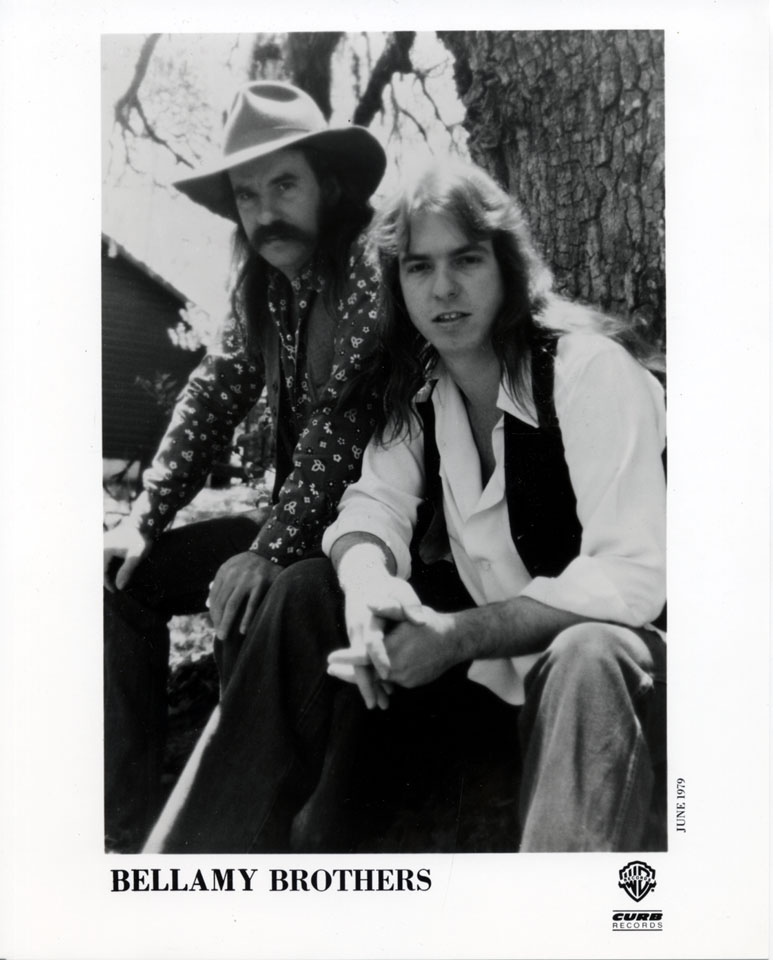
Weatherly told Tom Roland in The Billboard Book of Number One Country Hits that he wrote the song in 1971 and let his father-in-law first record it as a Christmas present for the latter’s wife. “I thought it was really strange that nobody’d written a song with that title — possibly somebody had but, I’d never heard it — so, I just sat down and let this stream of consciousness happen. I basically wrote it in a very short period of time, probably 30 minutes or an hour.”
“I don’t think I stole from them [at] all but, that’s my favorite theme of all time. There’s not a similarity, and yet, you can understand what I was thinking about and where I was coming from.”
Lyrics: Babe, somewhere I know I’m gonna find it, babe
It’ll have my love behind it
And it will be a symphony of all you mean to me
A Very Special Love Song
And babe, if there’s a way you know I’m gonna say it babe
If there’s a melody I’ll play it
I’ll play it through especially for you and all the words are true
A Very Special Love Song
So don’t be surprised if you’re sittin’ alone and you hear it
‘Cause I’m goin’ to sing it to the whole big lonely world
So turn your radio way down low and get near it
And I’ll tell the world I love you, girl
Babe, if there’s an ounce of love I’m gonna give it to you
Babe, if there’s a breath of life I’m gonna live it every day for you
And all the whole night through, singin’ just for you
The untimely deaths of famous musicians at age 27 may be coincidence but, it is [a] tragic coincidence. The mythology of the 27 Club gained prominence with the death of Kurt Cobain in 1994 since he died at the same age as iconic rock musicians, including Jimi Hendrix, Janis Joplin and Jim Morrison, when they died in the 1970s. The premature death of Amy Winehouse at age 27 in 2011, again, renewed interest in the age’s apparent curse. This is a list of some of the artists and musicians who died at the far too young age of 27.
Robert Johnson…Blues singer-songwriter-musician (May 8, 1911 – August 16, 1938) Brian Jones…The Rolling Stones founder (February 28, 1942 – July 3, 1969) Alan “Blind Owl” Wilson…Canned Heat co-founder (July 4, 1943 – September 3, 1970) Jimi Hendrix…Rock singer-songwriter-guitarist (November 27, 1942 – September 18, 1970) Janis Joplin…Rock-soul-blues singer-songwriter (January 19, 1943 – October 4, 1970) Jim Morrison…The Doors co-founder (December 8, 1943 – July 3, 1971) Ron “Pigpen” McKernan…Grateful Dead founding member (September 8, 1945 – March 8, 1973) Kurt Cobain (February 20, 1967 – April 5, 1994) Amy Winehouse…Singer-songwriter (September 14, 1983 – July 23, 2011)
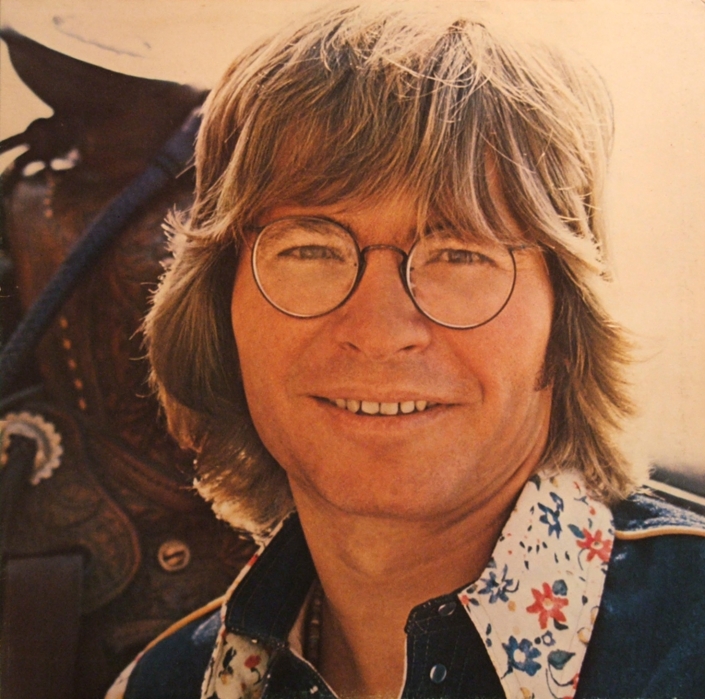
Forty-five years ago, today, the #1 song on the Billboard Hot 100 chart was Sunshine on My Shoulders by John Denver. Co-written with guitarist Mike Taylor and bassist Richard Kniss, the song was originally released in 1971 as an album track on Poems, Prayers & Promises. It wasn’t released as a single until October 1973 (oddly, the same month as his death) and hit #1 on Billboard’s Adult Contemporary chart just two weeks prior to making the Hot 100. It had been re-mixed to include woodwinds and strings and, had the last verses removed. The full length single mix showed up on Denver’s later compilation albums.
Denver described how he wrote “Sunshine on My Shoulders”: “I wrote the song in Minnesota at the time I call ‘late winter, early spring’. It was a dreary day, gray and slushy. The snow was melting and, it was too cold to go outside and have fun but, God, you’re ready for spring. You want to get outdoors again and you’re waiting for that sun to shine and, you remember how, sometimes, just the sun, itself, can make you feel good. And, in that very melancholy frame of mind, I wrote ‘Sunshine on My Shoulders’.”
Lyrics: Sunshine on my shoulders makes me happy
Sunshine in my eyes can make me cry
Sunshine on the water looks so lovely
Sunshine almost always makes me high
If I had a day that I could give you
I’d give to you a day just like today
If I had a song that I could sing for you
I’d sing a song to make you feel this way
Sunshine on my shoulders makes me happy
Sunshine in my eyes can make me cry
Sunshine on the water looks so lovely
Sunshine almost always makes me high
If I had a tale that I could tell you
I’d tell a tale sure to make you smile
If I had a wish that I could wish for you
I’d make a wish for sunshine all the while
Sunshine on my shoulders makes me happy
Sunshine in my eyes can make me cry
Sunshine on the water looks so lovely
Sunshine almost always makes me high
Sunshine almost all the time makes me high
Sunshine almost always
The lyrics to the song detail a series of challenges that the singer has endured in his life, including the death of his mother while giving birth to him, [being] deprived of the love of his father [described as] like time spent in prison “for something that I never done” and, the singer’s wife taking their child and leaving. He describes these setbacks as hills that he has scaled in the past but, then states that “this time, Lord, you gave me a mountain” […]
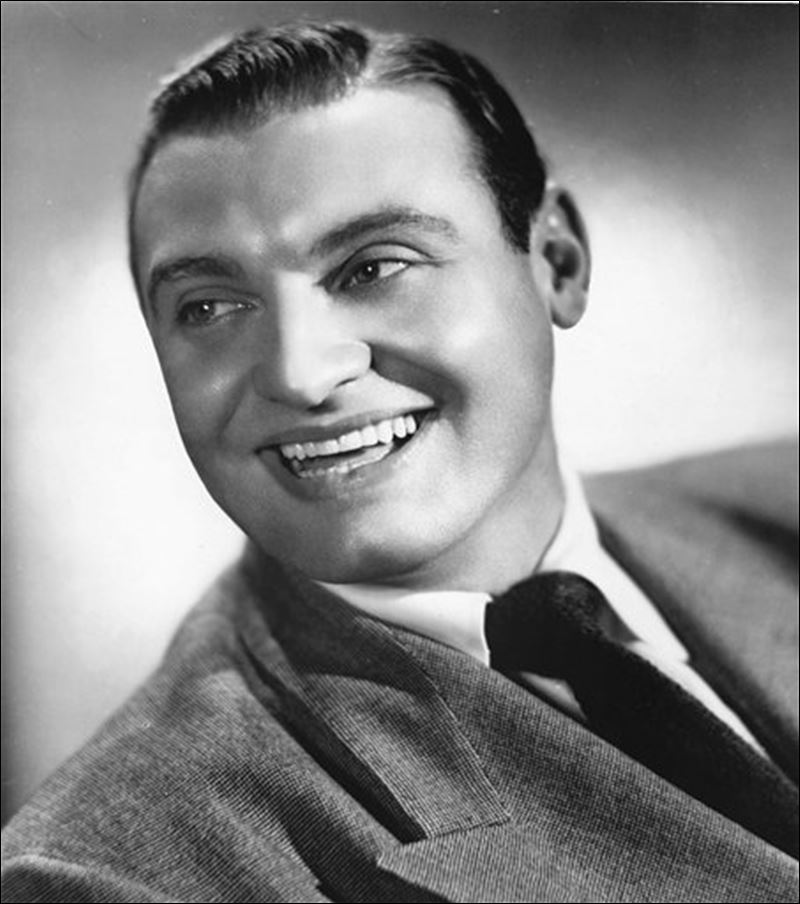
The original third line of Robbins’ song mentioned that he was “despised and disliked from my father” but, Laine requested that this line be changed to “deprived of the love of my father” when he recorded his version, since Laine’s father had died shortly before the recording took place.
Lyrics: Dum-dum-dum-dumdy-doo-wah
Ooh-yay-yay-yay-yeah
Oh-oh-oh-oh-wah
Only the lonely
Only the lonely (dum-dum-dum-dumdy-doo-wah)
Know the way I feel tonight (ooh-yay-yay-yay-yeah)
Only the lonely (dum-dum-dum-dumdy-doo-wah)
Know this feelin aint right (dum-dum-dum-dumdy-doo-wah)
There goes my baby
There goes my heart
They’re gone forever
So far apart
But only the lonely
Know why
I cry
Only the lonely
Dum-dum-dum-dumdy-doo-wah
Ooh-yay-yay-yay-yeah
Oh-oh-oh-oh-wah
Only the lonely
Only the lonely
Know the heartaches I’ve been through
Only the lonely
Know I cried and cried for you
Maybe tomorrow
A new romance
No more sorrow
But that’s the chance – you gotta take
If your lonely heart breaks
Only the lonely
Sly and the Family Stone took the Sixties ideal of a generation coming together and, turned it into deeply groove-driven music. Rock’s first integrated, multi-gender band became funky Pied Pipers to the Woodstock Generation, synthesizing rock, soul, R&B, funk and psychedelia into danceable, message-laden, high-energy music. In promoting their gospel of tolerance and celebration of differences, Sly and the Family Stone brought disparate audiences together during the latter half of the Sixties. The group connected with the rising counterculture by means of songs that addressed issues of personal pride and liberation in the context of driving, insistent and sunny-tempered music that fused rock and soul, creating a template for Seventies funk.
Lyrics: Sometimes I’m right and I can be wrong
My own beliefs are in my song
The butcher, the banker, the drummer and then
Makes no difference what group I’m in
I am everyday people, yeah, yeah
There is a blue one
Who can’t accept the green one
For living with a fat one
Trying to be a skinny one
Different strokes
For different folks
And so on and so on
And scooby dooby dooby
Oh sha sha
We got to live together
I am no better and neither are you
We are the same, whatever we do
You love me, you hate me, you know me and then
You can’t figure out the bag I’m in
I am everyday people, yeah yeah
There is a long hair
That doesn’t like the short hair
For being such a rich one
That will not help the poor one
Different strokes
For different folks
And so on and so on
And scooby dooby dooby
Oh sha sha
We got to live together
There is a yellow one
That won’t accept the black one
That won’t accept the red one
That won’t accept the white one
Different strokes
For different folks
And so on and so on
And scooby dooby dooby
Oh sha sha
I am everyday people
Addendum:
In 1961, Billboard added a new category called Adult Contemporary. Prior to that, from 1958 to 1960, everything fit into either Hot 100, R & B or Country. In 1963, Billboard 200 was added and in 1964, Top Country Albums. As of 2018, Billboard now has 87 individual categories. Choosing a number #1 song in any of these categories could fill up a blog, if a blogger was so inclined. Previously, I tried to showcase Hot 100s and added Alternative Rock, Mainstream Rock, Country and, R&B. It is a lot of work and if I tried to cover all the new categories, well…they would find my dead body, slumped over the keyboard.
Under normal circumstances, I go backwards each week by five years. I love music so, I’m going to have to shift gears, soon, to cover #1 songs in some categories other than the coveted Hot 100. I may end up going backwards five years every month instead of every week. We shall see… ~Vic
[…] it was the first Beatles record to be made using four-track equipment. It was also the group’s first American number one, entering the Billboard Hot 100 chart on 18 January 1964 at number forty-five and starting the British Invasion of the American music industry.
“A telegram came through to Brian from Capitol Records of America. He came running in to the room saying, ‘Hey, look. You are number one in America!’ I Want To Hold Your Hand had gone to number one. Well, I can’t describe our response. We all tried to climb onto Big Mal’s back to go round the hotel suite: ‘Wey-hey!’ And that was it, we didn’t come down for a week.”
“It was such a buzz to find that it had gone to number one. We went out to dinner that evening with Brian and George Martin. George took us to a place which was a vault, with huge barrels of wine around. It was a restaurant and its theme was… well, the bread rolls were shaped like penises, the soup was served out of chamber pots and the chocolate ice cream was like a big turd. And, the waiter came ’round and tied garters on all the girls’ legs. I’ve seen some pictures of us. There is a photograph around of Brian with the pot on his head. It was a great feeling because we were booked to go to America directly after the Paris trip, so it was handy to have a number one. We’d already been hired by Ed Sullivan so, if it had been a number two or number ten we’d have gone anyway but, it was nice to have a number one. We did have three records out in America before this one. The others were on two different labels. It was only after all the publicity and the Beatlemania in Europe that Capitol Records decided, ‘Oh, we will have them.’ They put out I Want To Hold Your Hand as our first single but, in fact, it was our fourth.
Will We All Become Beatle Nuts?
Here’s What the Reviewers Say…
“Anyone who is not a teenage girl obviously is unqualified to comment on the sight of The Beatles in action. Heaven knows we’ve heard them enough. It has been impossible to get a radio weather bulletin or time signal without running into “I Want To Hold Your Hand.” And now, having seen the four performers on Ed Sullivan’s show Sunday night, Beatlemania is even more of a mystery to an elderly viewer.”
~Cynthia Lowry (Associated Press)
“It is now clear why President de Gaulle has been giving England such a hard time about the Common Market. He undoubtedly saw The Beatles and decided nothing doing. As you certainly know, America saw the four-member rock’n’roll British group live on television last night. Pandemonium reigned. Vive La France.”
~Rick DuBrow (United Press International)
“”You can tell right away its The Beatles and not anyone else,” is the opinion of a 15-year-old specialist on the topic who saw them on the Ed Sullivan show. The age of 15 (or 16, or 14 or 13) is essential in Beatle experts. And, so, taking the above axiom as gospel, an attempt was made to find out just what is musically unique about the English group that is now visiting our shores.”
~Theodore Strongin (The New York Times)
“It seems The Beatles came, sang and conquered…all that is but, the TV reviewers. Most of the time, these reviewers have real troubles finding something to write about. Ask them… When Elvis Presley first appeared on the popular musical scene and made his TV début, did they praise him? No. In fact, most beat singers who come under the TV reviewer’s eagle eye rarely receive a word of praise. It seems obvious the reviewers came to bury the teenage favorites and not to praise them. Again, the teenage taste has been mocked. As long as this superior feeling is put across, the younger generation will continue to make their idols…and won’t give a darn who likes them.”
Lyrics: Oh yeah, I’ll tell you something,
I think you’ll understand,
Then I’ll say that something,
I wanna hold your hand,
I wanna hold your hand,
I wanna hold your hand.
Oh please say to me
You’ll let me be your man,
And please say to me,
You’ll let me hold your hand,
Now let me hold your hand,
I wanna hold your hand.
And when I touch you
I feel happy inside,
It’s such a feeling
That my love I can’t hide,
I can’t hide, I can’t hide.
Yeah, you got that something,
I think you’ll understand,
When I feel that something,
I wanna hold your hand,
I wanna hold your hand,
I wanna hold your hand.
And when I touch you
I feel happy inside,
It’s such a feeling
That my love I can’t hide,
I can’t hide, I can’t hide.
Yeah, you got that something,
I think you’ll understand,
When I feel that something,
I wanna hold your hand,
I wanna hold your hand,
I wanna hold your hand.
[…] it was the first Beatles record to be made using four-track equipment. It was also the group’s first American number one, entering the Billboard Hot 100 chart on 18 January 1964 at number forty-five and starting the British Invasion of the American music industry.
“A telegram came through to Brian from Capitol Records of America. He came running in to the room saying, ‘Hey, look. You are number one in America!’ I Want To Hold Your Hand had gone to number one. Well, I can’t describe our response. We all tried to climb onto Big Mal’s back to go round the hotel suite: ‘Wey-hey!’ And that was it, we didn’t come down for a week.”
“It was such a buzz to find that it had gone to number one. We went out to dinner that evening with Brian and George Martin. George took us to a place which was a vault, with huge barrels of wine around. It was a restaurant and its theme was… well, the bread rolls were shaped like penises, the soup was served out of chamber pots and the chocolate ice cream was like a big turd. And, the waiter came ’round and tied garters on all the girls’ legs. I’ve seen some pictures of us. There is a photograph around of Brian with the pot on his head. It was a great feeling because we were booked to go to America directly after the Paris trip, so it was handy to have a number one. We’d already been hired by Ed Sullivan so, if it had been a number two or number ten we’d have gone anyway but, it was nice to have a number one. We did have three records out in America before this one. The others were on two different labels. It was only after all the publicity and the Beatlemania in Europe that Capitol Records decided, ‘Oh, we will have them.’ They put out I Want To Hold Your Hand as our first single but, in fact, it was our fourth.”
Will We All Become Beatle Nuts?
Here’s What the Reviewers Say…
“Anyone who is not a teenage girl obviously is unqualified to comment on the sight of The Beatles in action. Heaven knows we’ve heard them enough. It has been impossible to get a radio weather bulletin or time signal without running into “I Want To Hold Your Hand.” And now, having seen the four performers on Ed Sullivan’s show Sunday night, Beatlemania is even more of a mystery to an elderly viewer.”
~Cynthia Lowry (Associated Press)
“It is now clear why President de Gaulle has been giving England such a hard time about the Common Market. He undoubtedly saw The Beatles and decided nothing doing. As you certainly know, America saw the four-member rock’n’roll British group live on television last night. Pandemonium reigned. Vive La France.”
~Rick DuBrow (United Press International)
“”You can tell right away its The Beatles and not anyone else,” is the opinion of a 15-year-old specialist on the topic who saw them on the Ed Sullivan show. The age of 15 (or 16, or 14 or 13) is essential in Beatle experts. And, so, taking the above axiom as gospel, an attempt was made to find out just what is musically unique about the English group that is now visiting our shores.”
~Theodore Strongin (The New York Times)
“It seems The Beatles came, sang and conquered…all that is but, the TV reviewers. Most of the time, these reviewers have real troubles finding something to write about. Ask them… When Elvis Presley first appeared on the popular musical scene and made his TV début, did they praise him? No. In fact, most beat singers who come under the TV reviewer’s eagle eye rarely receive a word of praise. It seems obvious the reviewers came to bury the teenage favorites and not to praise them. Again, the teenage taste has been mocked. As long as this superior feeling is put across, the younger generation will continue to make their idols…and won’t give a darn who likes them.”
From the St. Louis Globe-Democrat December 28, 1895:
William Lyons, 25, a levee hand, was shot in the abdomen yesterday evening at 10 o’clock in the saloon of Bill Curtis, at Eleventh and Morgan Streets, by Lee Sheldon [sic], a carriage driver. Lyons and Sheldon [sic] were friends and were talking together. Both parties, it seems, had been drinking and were feeling in exuberant spirits. The discussion drifted to politics, and an argument was started, the conclusion of which was that Lyons snatched Sheldon’s [sic] hat from his head. The latter indignantly demanded its return. Lyons refused, and Sheldon [sic] withdrew his revolver and shot Lyons in the abdomen. When his victim fell to the floor Sheldon [sic] took his hat from the hand of the wounded man and coolly walked away. He was subsequently arrested and locked up at the Chestnut Street Station. Lyons was taken to the Dispensary, where his wounds were pronounced serious. Lee Sheldon [sic] is also known as ‘Stag’ Lee.
Quote from Cecil Brown (author of Stagolee Shot Billy):
“Lee Shelton belonged to a group of pimps known in St. Louis as the ‘Macks’. The Macks were not just ‘urban strollers’. They presented themselves as objects to be observed.”
The original version of this song was the Stack O’ Lee Blues from 1924. It has some shocking lyrics and has absolutely nothing to do with the Stagger Lee version penned by Price and Harold Logan.





 Cosmic-Observation