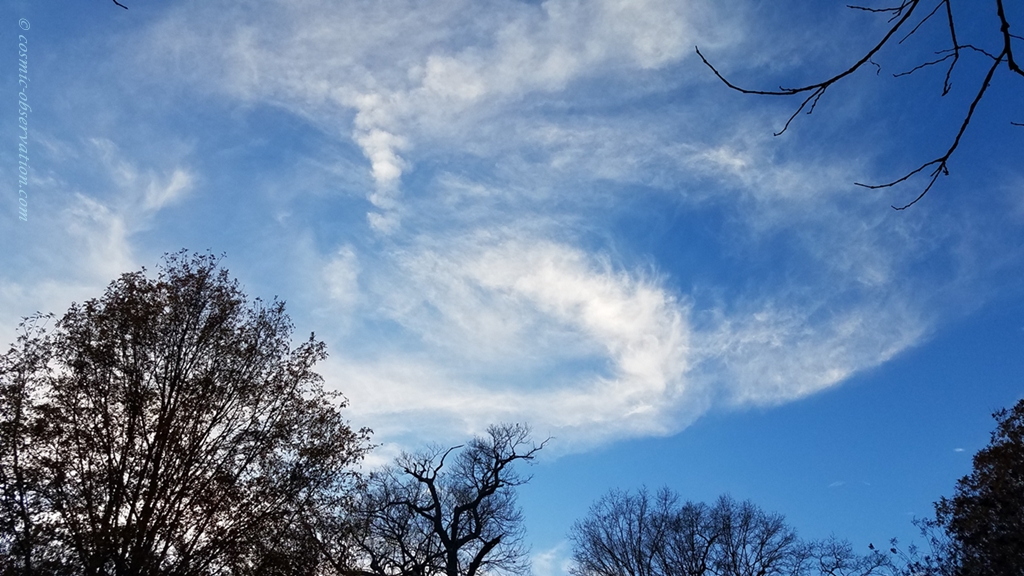
I’m still on a break and, yes, that is a new heading but, I want to thank Momma Linda, again. for a gift I received, today. In addition to my two previous dragons, I have a third baby to enjoy. More tears… ~Vic
Johann Sebastian Bach was a German composer and organist. The most important member of the Bach family, his genius combined outstanding performing musicianship with supreme creative powers in which forceful and original inventiveness, technical mastery and intellectual control, are perfectly balanced. While it was in the former capacity, as a keyboard virtuoso, that in his lifetime he acquired an almost legendary fame, it is the latter virtues and accomplishments, as a composer, that, by the end of the 18th century, earned him a unique historical position. His musical language was distinctive and extraordinarily varied, drawing together and surmounting the techniques, the styles and the general achievements, of his own and earlier generations, and leading on to new perspectives, which later ages have received, and understood, in a great variety of ways.
On [March] 2, 1714, Bach was appointed concertmaster of the Weimar court capelle of the co-reigning dukes Wilhelm Ernst and Ernst August of Saxe-Weimar. As concertmaster, he assumed the principal responsibility for composing new works, specifically cantatas for the Schlosskirche (palace church), on a monthly schedule. Bach originally wrote this cantata in his last year there […].
The instrumentation of the Weimar cantata is lost.
Bach first performed the cantata on [December] 6, 1716.
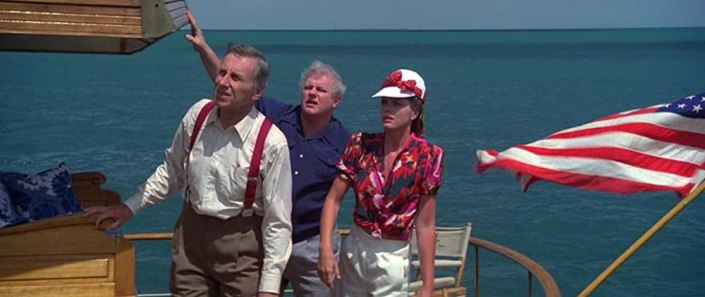
Captain Yelland: […to his Native American Weather Officer…] “Ahhh, Black Cloud, you’ve been doing unauthorized rain dances again.”
Lasky: […as a Japanese pilot is holding Laurel at gunpoint…] “Why don’t you tell him what’s going on here, Commander? You’re an expert on what’s gonna happen tomorrow…” Captain Yelland: “Go ahead, tell him.” Commander Richard Owens: “26 November, six carriers left the Kuril Isles north of Japan. The carriers were the Akagi, Kaga, Shokaku, Zuikaku, Hiryu, Soryu. Tomorrow at dawn, these carriers will send 353 planes to attack Pearl Harbor.” Senator Chapman: “How in the hell do you know all that?”
F-14 Pilot #1: “Mission aborted? But, we can see ’em!” F-14 Pilot #2: “They’re gonna let the Japs do it, again.”
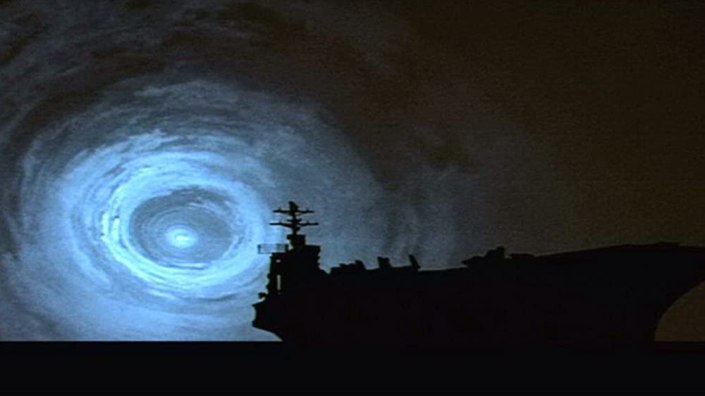
It’s 1980 and Warren Lasky (Sheen) is a Systems Analyst from Tideman Industries, working with the Department of Defense as an efficiency expert. He is dispatched by his secretive employer to board the USS Nimitz before its departure from Naval Station Pearl Harbor for naval exercises in the Pacific. Tideman Industries designed and built the carrier. Not long at sea, a strange storm appears out of nowhere and the Nimitz can neither outrun nor maneuver away from it. Passing thru the storm, electronics and people, alike, are knocked out. Once the storm is gone and everything returns to normal, Captain Yelland (Douglas), his crew and his civilian passenger discover that they have been thrown backwards in time to 1941, just hours before the attack on Pearl Harbor. What now?
It’s original premiere was in London on May 21, 1980, Japan on July 5 and the US on August 1. I didn’t get to see it at the theater but, caught it on HBO a year later. IMDb lists this as Action & Sci-Fi, which it is but, I think it fits in the Adventure/Thriller categories, too. As a contributor on IMDb, I’ve made a suggested update of the genre. Having been on board the USS Enterprise on December 7, 2001, I have a much greater appreciation for the making of this movie. It received mixed reviews and didn’t make a lot of money. Two months later, another time travel film was released…Somewhere In Time and The Philadelphia Experiment, four years later, is the reverse of this movie in time frames. ~Vic
[Note: I originally posted this, yesterday, just before midnight. In researching the data, I stumbled across Bill Owens, a photographer that was at Altamont. He was hired by the Associated Press to cover the concert. I emailed him, reference the two photos of his I posted. I hit ‘publish’ before I found his contact page and statement about photos for sale. In my haste to get this up while it was still Friday, I jumped the gun and quickly made the post private. I asked Bill what the price would be to use two of his pictures. As a photographer myself, I understand copyright issues but, I also recognize the gray area that many a blogger operate in, in the blogosphere….Fair Use (link on that, below). Anyway, this very kind gentleman has allowed my one-time use for this 50th anniversary post. He also provided me with a copy of an interview, conducted by Tony D’Souza in April 2019, covering his Altamont experience and other questions regarding his career. I will post an excerpt and attach the full interview, below. ~Vic]
[It’s] not every day that a rock and roll band’s performance, let alone the Rolling Stones’, is accompanied by a knifing, stomping murder within a scream of the stage.
“The violence,” Keith Richard told the London Evening Standard, “just in front of the stage was incredible. Looking back, I don’t think it was a good idea to have [Hells] Angels there. But, we had them at the suggestion of the Grateful Dead. The trouble is, it’s a problem for us either way. If you don’t have them to work for you as stewards, they come, anyway and cause trouble. But, to be fair, out of the whole 300 Angels working as stewards, the vast majority did what they were supposed to do, which was to regulate the crowds as much as possible without causing any trouble. But, there were about ten or twenty who were completely out of their minds…trying to drive their motorcycles through the middle of the crowds.”
The Maysles Brothers, the film company which had shot the whole Stones’ tour, complete with its violent climax at Altamont, had gotten some remarkable footage of Hunter’s killing.
Robert Hiatt, a medical resident at the Public Health Hospital in San Francisco, was the first doctor to reach 18-year-old Meredith Hunter after the fatal wounds. He was behind the stage and responded to Jagger’s call from the stage for a doctor. When Hiatt got to the scene, people were trying to get Hunter up on the stage, apparently in the hope that the Stones would stop playing and help could get through quicker.
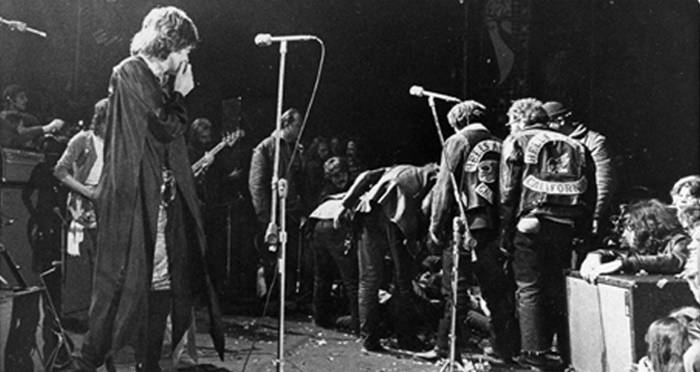
Stones on stage with Hells Angels.
Photo Credit: allthatsinteresting.com
Three others […] died (two in a hit-and-run accident, another by drowning) and, countless more were injured and wounded during the course of this daylong “free” concert. It was such a bad trip that it was almost perfect. All it lacked was mass rioting and the murder of one or more musicians.
All these things happened, and worse. Altamont was the product of diabolical egotism, hype, ineptitude, money manipulation and, at base, a fundamental lack of concern for humanity.
Bill Owens took iconic photos of the Hells Angels beating concertgoers with pool cue sticks at the Rolling Stones’ performance during the Altamont Speedway Free Festival four months after Woodstock on December 6, 1969. Altamont, which included violence almost all day and one stabbing death, is considered by historians as the end of the Summer of Love and the overall 1960’s youth ethos. This series of photos include panoramas of the massive, unruly crowd, Grace Slick and Carlos Santana on stage with the press of humanity so close in, they’re clearly performing under duress.
Of that day, Owens has written: “I got a call from a friend, she said the Associated Press wanted to hire me for a day to cover a rock and roll concert. I road my motorcycle to the event. I had two Nikons, three lenses, thirteen rolls of film, a sandwich, and a jar of water.”
Owens was so fearful of retribution by the Hells Angels that he published the photos under pseudonyms. Some of the negatives were later stolen…Owens believes by the Angels. He continues to have conflicted feelings about Altamont. He had no interest in violence and took no pride in photographing it.
In 1972, Owens released a book of black and white photography called Suburbia, also, now, an American icon. Irascible, stubborn, funny, grouchy, ornery and deeply rooted in small town life, Owens is built like a middleweight puncher and wears his hair as though he was a Marine. Indeed, Owens was never a hippie but, a clean-cut newspaper photographer, husband and father, who joined the Peace Corps to serve his country and “do good.” Turning 80 this September, Owens has also had noted careers as a craft beer brewer and pub owner, a magazine publisher many times over and, is now a distiller. His books include Suburbia, Working, Leisure and many others. He is the recipient of a Guggenheim and two NEAs. His work is collected in leading museums the world over, including the Smithsonian. Recent coverage of Owens includes an April retrospective in the New York Times (link above) of his Altamont photos for the event’s impending 50th anniversary. The photos are available for viewing at Owens’ website (link above and below).
I first met Owens at the defunct Rostel Gallery in remote and far northern Dunsmuir, CA, in late August or early September of 2008 (I remember because my daughter had just been born and the event was the first outing of her life), where they were showing images from Suburbia. These are images of people embarking on a new, modern way of life that they look excited by, but also confused, as though technology and the modish styles of the time were costumes they were still getting comfortable in. Owens’ photograph of a young suburban boy wearing cowboy boots, carrying a toy rifle and riding a Big Wheel, “Ritchie,” has always haunted me, though I couldn’t say precisely why.





 Cosmic-Observation