History
Shutterbug Saturday: The Wall That Heals

Yesterday, my friend Ray and I went to see The Wall That Heals. It came to Wake Forest, NC, over the weekend, sponsored by the Wake Forest Purple Heart Foundation and held at the E. Carroll Joyner Park.
In a previous post, I talked about nearly being an Army brat. I also could have potentially been fatherless as 2nd Lieutenants had short life spans in Vietnam, but…that was not my fate…nor, the fate of my father.
I do not personally know anyone that died in Vietnam. I have no names to scratch for my own memories but, my partner, my ‘significant other’ knew many that perished as he was in country 1967-1968 with the Naval Mobile Construction Battalion 74 (PDF) at Camp Haskins-South, Red Beach, Da Nang . There will be a future post on him.


~Never Forget~
Flashback Friday: Hurricane Wilma 2005

Thirteen years ago, today, Cat 5 monster Hurricane Wilma became the most intense Atlantic hurricane ever recorded. As part of the 2005 Atlantic hurricane season, Wilma’s mbar pressure reached a low of 882 (hPa; 27.05 inHg) and the eye shrank to 2.3 miles in diameter, the smallest ever seen. She made landfall several times but, the Yucatán Peninsula, Cuba and South Florida suffered the worst. She did $27.4 billion dollars in total damage and claimed 87 lives. Her name has been retired.

Other October 19 history:
1789…..John Jay was sworn in as the first Chief Justice of the United States.
1900…..Max Planck discovers the law of black-body radiation or Planck’s Law. (This makes my head hurt.)
1987…..Stock markets crashed all around the world beginning in Hong Kong, spreading to Europe and, then, hitting the United States on Black Monday.
2005…..Saddam Hussein goes on trial for crimes against humanity.
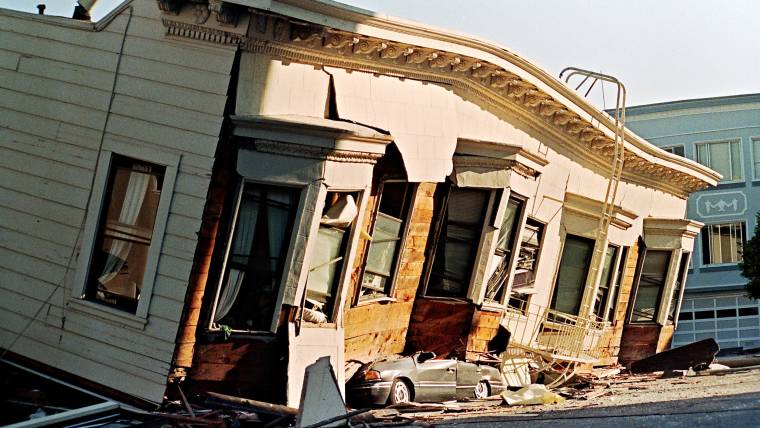
Wayback Wednesday: Loma Prieta Earthquake 1989

Photo Credit: heavy.com
In 1989, at 5:04pm local time in California, a 6.9-7.1 magnitude earthquake struck an area nearly 10 miles northeast of Santa Cruz on the Loma Prieta segment of the San Andreas Fault. The epicenter was in The Forest of Nisene Marks State Park. Named for the Loma Prieta Peak in the Santa Cruz Mountains, the effects and damage covered Santa Cruz County, Monterey County, the San Francisco Peninsula, the ‘Frisco Bay and across the bay in Oakland. There were 3,700+ injuries and 63-67 deaths (depending upon what article you read) and $5-$6 billion dollars in damage. The earthquake disrupted Game 3 of the 1989 World Series.

Photo Credit: huffingtonpost.com
Other October 17 history:
1814…..The London Beer Flood kills eight people. (Yes, this actually happened.)
1931…..Al Capone goes to prison for tax evasion. (Addendum: There seems to be confusion on the specific date of his conviction. Time Magazine, The NYTimes and the History Channel say the 17th. The FBI says the 18th. Pick one…)
1973…..OPEC imposes the oil embargo as punishment for assisting Israel during the Yom Kippur War. (Remember those gas lines, anyone?)
1979…..President Jimmy Carter signs into law the Department of Education Organization Act, creating the U.S. Department of Education and renaming the Department of Health, Education & Welfare to the U.S. Department of Health & Human Services. (Because the government wasn’t big enough, already…)
2018…..Canada just legalized cannabis for recreational use…today!
Throwback Thursday: Kathy D. Sullivan & Space
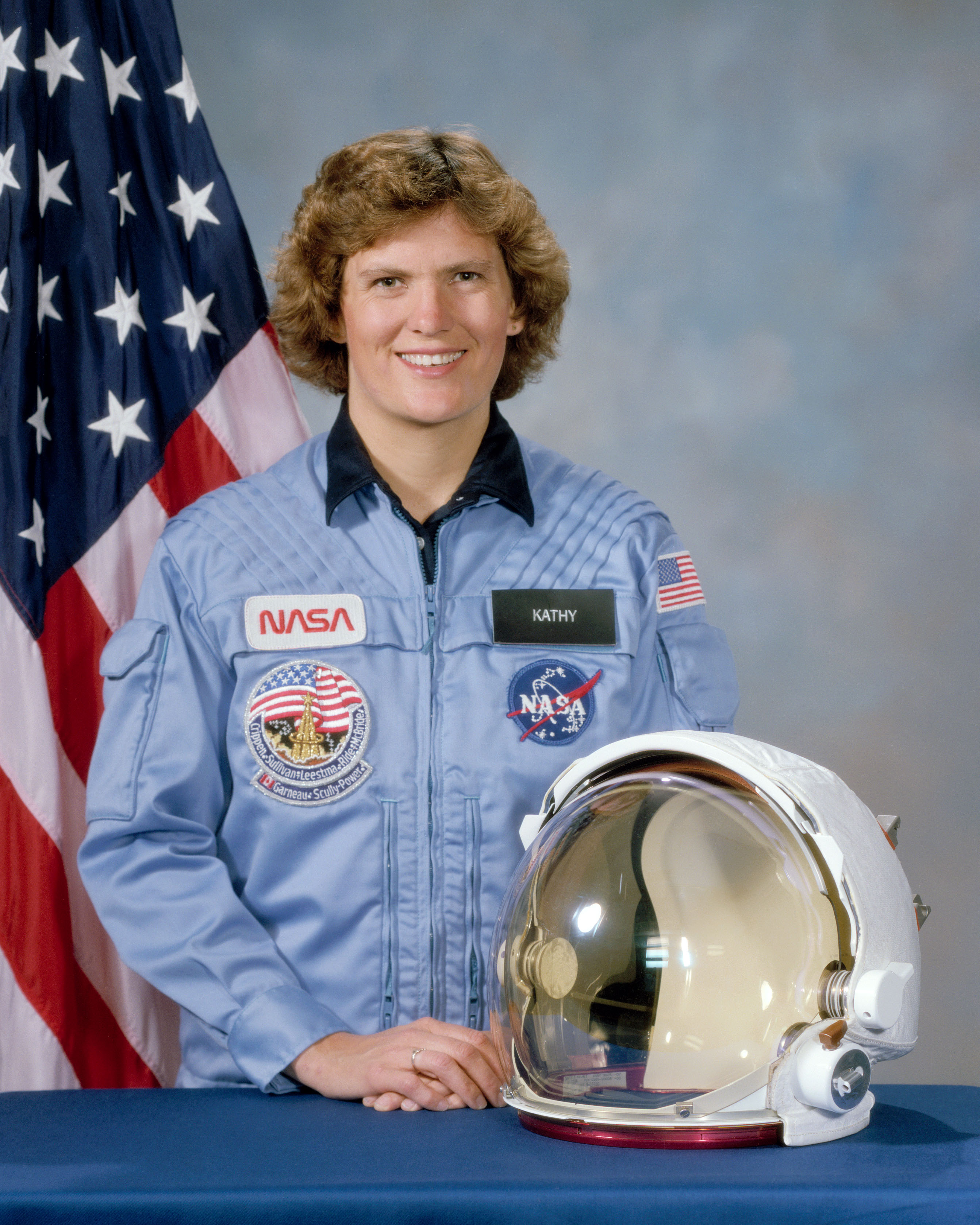
October 11, 1984, Kathryn Dwyer “Kathy” Sullivan became the first American woman astronaut during the STS-41-G mission to perform an EVA or an extravehicular activity (3.5 hours worth), which freely translates to a “space walk”. This was NASA‘s thirteenth flight in the Space Shuttle program and the sixth flight of the Challenger. She was the Mission Specialist 1 and had just turned 33 years of age eight days prior.
She received a Ph.D. in geology from Dalhousie University in 1978, became an Adjunct Professor of Geology at Rice University in 1985 and joined the Navy Reserves in 1988 as an Oceanography Officer, retiring after 18 years at the rank of Captain.
April 24, 1990, she served on board the Space Shuttle Discovery as a Mission Specialist 3 for the STS-31 mission that launched the Hubble Space Telescope. March 24, 1992, she served as Mission Specialist 1 during the STS-45 mission on board the Space Shuttle Atlantis. She was part of the Group 8 NASA Astronaut selection on January 16, 1978. She left NASA in 1993.
Other October 11 space-related trivia:
1957…..Operation Moonwatch scientists calculate Sputnik 1‘s ‘satisfactory orbit’ with an IBM 704.
1958…..NASA launches the lunar probe Pioneer 1 (Pioneer Program). It falls back to Earth and burns up.
1968…..NASA launches Apollo 7, the first crewed flight.
2000…..NASA launches STS-92, the 100th Space Shuttle mission to the ISS via Discovery.
Wayback Wednesday: Great Hurricane 1780
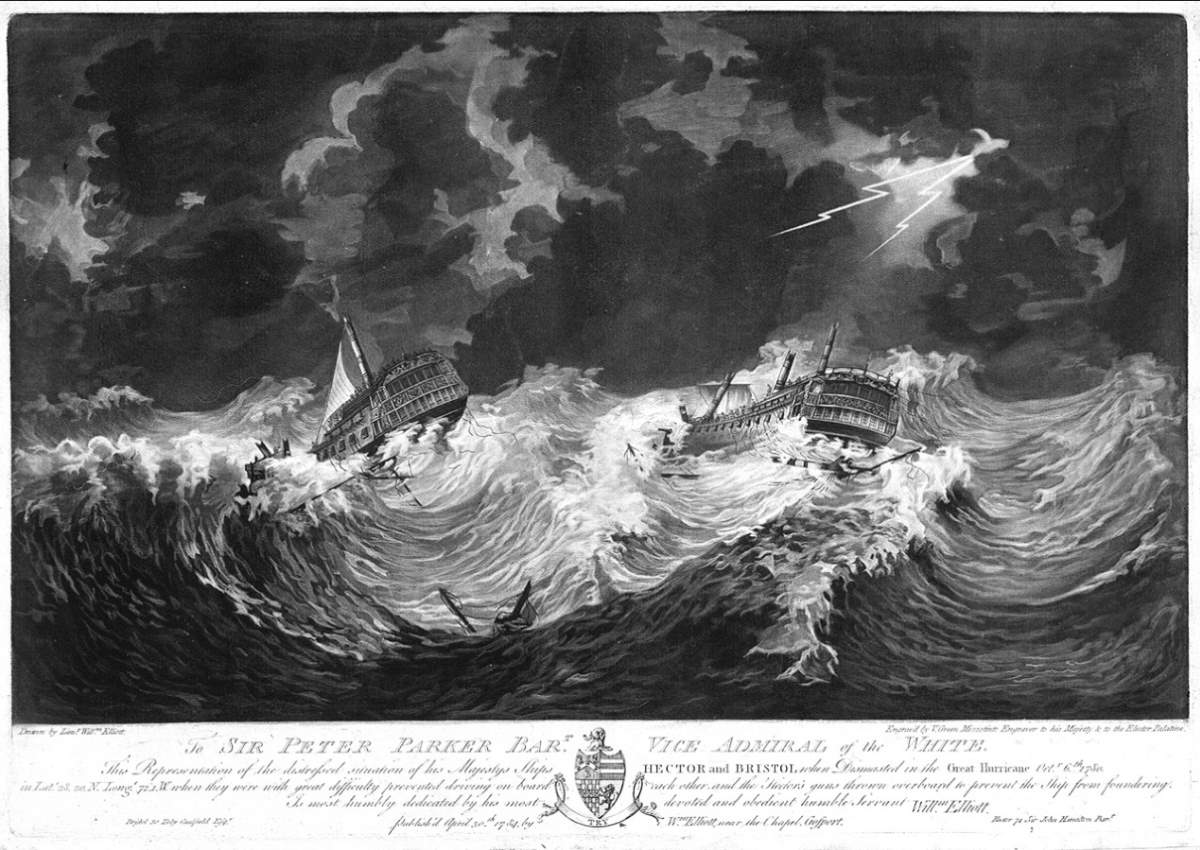
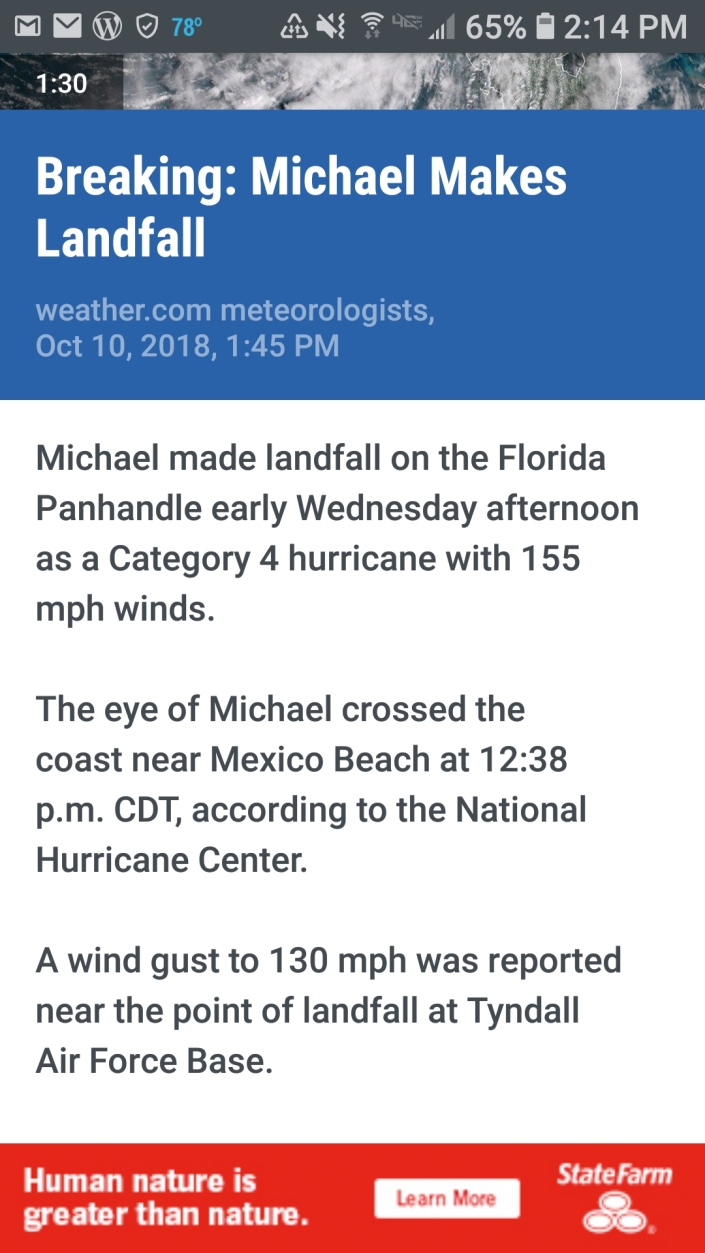
As Hurricane Michael, a Cat 4 monster, slams the Florida Panhandle (making history, today), the Great Hurricane of 1780 is still the deadliest Atlantic hurricane in recorded history, with a death toll between 22,000 and 27,000+. Also referred to as the Great Hurricane of the Antilles, the 1780 Disaster and the Huracan San Calixto, it was one of four major hurricanes in the 1780 Atlantic hurricane season, the worst hurricane season in recorded history.
On October 10, the San Calixto Hurricane (official name) struck the island of Barbados with, possibly, 200+ mph wind gusts, making it an extreme Cat 5. The winds were so violent and so deafening that, reportedly, “people could not hear their own voices”. It felled most every tree, stripped the bark off the few left standing and nearly destroyed every house on the island. The specifics of the hurricane’s track and exact strength are unknown as the Atlantic hurricane database starts in 1851 but, historical records from Puerto Rico, Jose’ Carlos Milas (Cuban Meteorologist), NOAA and hurricane research from The University of Rhode Island indicate that the storm moved on to St. Lucia, Martinique, Dominica and struck Guadeloupe. It turned towards Puerto Rico, hitting Isla de Mona and, later, the eastern portion of the Dominican Republic. The beast finally reached the Atlantic Ocean on October 15 after passing the Grand Turk Island. It passed Bermuda on October 18 and was last seen two days later off the coast of Cape Race in Newfoundland.
From Hurricane Science at The University of Rhode Island:
Coming in the midst of the American Revolutionary War, the 1780 hurricanes caused heavy losses to European fleets fighting for control of the New World’s Atlantic coast. A fleet of 40 French ships capsized off Martinique during the Great Hurricane, drowning approximately 4,000 soldiers. On St. Lucia, rough waves and a strong storm surge destroyed the British fleet of Admiral Rodney at Port Castries. Much of the British fleet was decimated by the three storms, and the English presence in the western North Atlantic was greatly reduced thereafter.
The worst losses, however, were suffered by Vice Admiral Peter Parker and Rear Admiral Joshua Rowley.
Other interesting October 10 history:
1582…..Due to the shift from the Julian calendar to the Gregorian calendar, today does not exist.
1845…..The Naval School (U.S. Naval Academy) opens.
1967…..The Outer Space Treaty goes into effect (yes, this is a thing).
1973…..Spiro Agnew, Richard Nixon‘s first Vice President, resigns after pleading guilty to federal income tax evasion.
1985…..U.S. Navy F-14s intercept the Egyptian plane carrying the hijackers of the MS Achille Lauro and force it to land in Sicily. The hijackers are arrested.
Busy, busy day… ~Victoria
Wayback Wednesday: The Revenue Act of 1913

buzzle.com
In 1913, The Revenue Act or the Underwood Act or the Underwood Tariff or the Underwood Tariff Act or the Underwood-Simmons Act or, simply, the Tariff Act (Federal Income Tax) was signed into law (re-imposed) by President Woodrow Wilson after the ratification of the Sixteenth Amendment. It was sponsored/introduced by House Majority Leader Oscar Underwood from Alabama.
The very first personal income tax was signed into law in 1861 by Abraham Lincoln as a way to fund the Civil War. It was largely ineffective and, was, originally, a flat rate tax before being repealed and replaced with the Revenue Act of 1862, converting the flat rate into a progressive rate. This act ended in 1866.
When the U.S. Supreme Court struck down the income tax provision of the Wilson-Gorman Tariff Act of 1894 via Pollock vs Farmers’ Loan & Trust in 1895, that opened the door for the Sixteenth Amendment 18 years later, affirming that “…the Constitution did not deny Congress the power to impose a tax on real and personal property“… Yay for us.

Other things from October 3…
1922…Rebecca Ann Latimer Felton of Georgia is the 1st woman in the U.S. Senate, if only for one day.
1929…The Kingdom of Serbs, Croats and Slovenes changes its name to the Kingdom of Yugoslavia.
1945…Elvis Presley has his first public appearance at the age of 10. He was dressed as a cowboy, stood on a chair and sang “Old Shep” at the Mississippi–Alabama Fair and Dairy Show.
1955…Captain Kangaroo and The Mickey Mouse Club both premier on CBS and ABC, respectively.
1990…At midnight on this day, the flag of West Germany was raised over Brandenburg Gate, signifying the reunification of Germany.
National POW/MIA Recognition Day

September 21 has two celebrations, two ‘third Friday in September’ celebrations and a brand new celebration. Today, I showcase one of the ‘third Friday in September’ days…National POW/MIA Recognition Day. Though National Day Calendar states that this day has been observed since 1989 by Presidential Proclamation, according to www.pow-miafamilies.org:
Until July 18, 1979, no special commemoration was held to honor America’s POW/MIAs, those returned and, those still missing and unaccounted for from our nation’s wars. That first year, resolutions were passed in Congress and the national ceremony was held at the National Cathedral, Washington, DC.
National POW/MIA Recognition Day legislation was introduced yearly until 1995 when Congress opted to discontinue considering legislation to designate special commemorative days. Since then, successive Presidents have signed an annual proclamation.
www.timeanddate.com adds some additional data to the history:
The United States Congress passed a resolution authorizing National POW/MIA Recognition Day to be observed on July 18, 1979. It was observed on the same date in 1980 and, was held on July 17 in 1981 and 1982. It was then observed on April 9 in 1983 and July 20 in 1984. The event was observed on July 19 in 1985 and, then, from 1986 on-wards, the date moved to the third Friday of September. The United States president each year proclaims National POW/MIA Recognition Day. Many states in the USA also proclaim POW/MIA Recognition Day together with the national effort.
The passage of Section 1082 in the 1998 Defense Authorization Act covers the display of the POW/MIA flag.
There is, also, still a National Former Prisoner of War Recognition Day, permanent to April 9 in any year.
Also celebrated today:
National New York Day
National Pecan Cookie Day (Yum! People love to celebrate food!)
National Tradesmen Day (Also on the third Friday in September)
National Chai Day (Founded by Somrus and proclaimed by The Registrar at National Day Calender, today!)
Cheers and enjoy!
Throwback Thursday: Jim Croce 1973
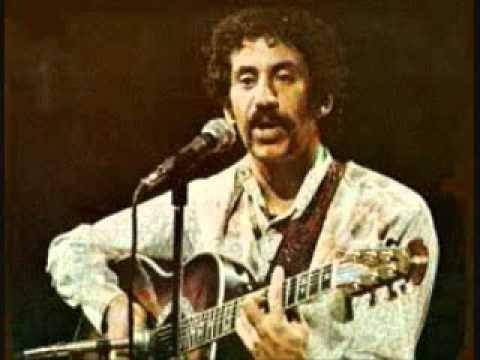
Forty-five years ago, today, James Joseph ‘Jim’ Croce, American folk rock singer-songwriter was killed when the Beechcraft E18S, that he and five others were aboard, crashed into a tree during take-off from the Natchitoches Regional Airport in Natchitoches, Louisiana. The accident also claimed the lives of musician Maurice T. ‘Maury’ Muehleisen, comedian George Stevens, manager & booking agent Kenneth Cortese, road manager Dennis Rast and pilot Robert N. Elliott. Croce’s final concert was at Prather Coliseum.
He is buried at Haym Salomon Memorial Park in Frazer, Pennsylvania. His singer-songwriter wife, Ingrid Jacobson Croce maintains an historical site of their work. Their son, Adrian James ‘A. J.’ Croce is a singer-songwriter in his own right.
His two number one singles…
Behind The Music
Constitution Day & Citizenship Day

September 17 has three celebrations. Constitution Day & Citizenship Day commemorates the 1787 signing of the Constitution of the United States, despite Rhode Island holding out until 1790 and, all naturalized citizens. Patrick Henry refused to attend the Convention as he preferred the Articles of Confederation. He feared a strong central government and saw the Constitution a step backwards.
Will the abandonment of your most sacred rights tend the security of your liberty? Liberty, the greatest of all earthly blessings—give us that precious jewel and you may take everything else. But I fear I have lived long enough to become an old-fashioned fellow. Perhaps an invincible attachment to the dearest rights of man may, in these refined, enlightened days, be deemed old-fashioned: if so, I am contented to be so.
He managed to settle himself down after the Constitutional ratification as the convention members proposed 40 amendments, some of which became the Bill of Rights.
Under the 14th Amendment of the U.S. Constitution, citizenship is defined as “All persons born or naturalized in the United States, and subject to the jurisdiction thereof, are citizens of the United States and of the State wherein they reside.”
This holiday was first recognized in Iowa in 1911. The Sons of the American Revolution promoted it in 1917.
Also celebrated today:
National Apple Dumpling Day (Yum!)
National Monte Cristo Day (Also, yum!)
Cheers and enjoy!
Military Monday: The Battle of Antietam 1862

[From: Wikipedia & The History Channel]
One hundred and sixty-five years ago, today, The Battle of Antietam, also known as the Battle of Sharpsburg, particularly in the Southern U.S., occurred September 17, 1862, at Antietam Creek near Sharpsburg, Maryland. It pitted Confederate General Robert E. Lee’s Army of Northern Virginia against Union General George McClellan’s Army of the Potomac and was the culmination of Lee’s attempt to invade the north. The battle’s outcome would be vital to shaping America’s future and it remains the deadliest one-day battle in all American military history, with a combined tally of 22,717 dead, wounded or missing.
McClellan had halted Lee’s invasion of Maryland but, Lee was able to withdraw his army back to Virginia without interference from the cautious McClellan. McClellan’s refusal to pursue Lee’s army led to his removal from command by President Abraham Lincoln in November. Although the battle was tactically inconclusive, the Confederate troops had withdrawn first from the battlefield and abandoned their invasion, making it a Union strategic victory. It was a sufficiently significant victory to give Lincoln the confidence to announce his Emancipation Proclamation, which discouraged the British and French governments from pursuing any potential plans to recognize the Confederacy.

[From: Emerging Civil War…another take…]
Fortunately, for the sake of debate, the outcome of Civil War battles is not as clear-cut as that of a football game, where one can look at the scoreboard at the end of the game and easily determine who won, who lost, or, in some cases, if the outcome was a draw. Historians endlessly debate whether certain battles were overwhelming victories, marginal victories, or draws. Perhaps no other battle’s tactical outcome is more misunderstood than the bloodiest single day battle of the war: Antietam.
No one would doubt Antietam’s significance in the larger picture of the war. However, the common conception of Antietam is that the battle was tactically a draw, with neither side having gained a significant enough of an advantage to have claimed the victory. This article will challenge that commonly held belief, using particular instances from the battle and the Maryland Campaign to demonstrate the Army of the Potomac’s victory at Antietam.
[Had this battle been a Confederate victory, this country might look very, very different. ~Victoria]
Throwback Thursday: Hurricane Ike 2008

While we are on the subject of hurricanes, ten years ago, today, Hurricane Ike struck Galveston, Texas, at 2:10am CDT. It was recorded as a Category 4 on September 4 as it moved near the Leeward Islands. Though it had lessened in strength from its prior Cat4 status to Cat2, this was a bad storm in costs, damage and death. Ike’s storm surge went right over the Galveston Seawall, a ten-mile wall built for protection after the devastating Galveston Hurricane of 1900.
Ike claimed 195 lives…74 in Haiti, six in Cuba and 113 in the US. As of August 2011, 16 are still missing. This was a huge storm that also damaged the Bahamas, the Turks & Caicos, the Florida Panhandle, Mississippi and Louisiana. It is the most expensive storm to ever hit Cuba and, at $38 billion, was the second-costliest storm in US history until 2012.
I was living in Texas when Ike hit. I was too far inland to be affected by more than some rain storms. The terrain in Texas is quite different from North Carolina and even though the Austin Area is roughly the same distance from the Texas coast as the Piedmont/Triangle is from the NC coast, my native Texan friends told me that Austin had never been hit by a hurricane.
I was employed by the very agency that responded to the disaster…The Texas General Land Office, though I was not working in the Coastal Management Unit. I was working for the Veterans Land Board but, I remember the teams going down to help with the clean up and the pictures of the damage that were posted to our intranet. The stunning images of the debris that littered I-45 and the heartbreaking photos of the flooding to downtown Galveston. NASA’s Johnson Space Center (Houston, we’ve had a problem…) suffered roof damage to Mission Control and my beloved Lone Star Flight Museum wound up with $18 million in damaged planes and had to be moved inland to Ellington Field. ~Victoria
Wayback Wednesday: SS Central America 1857
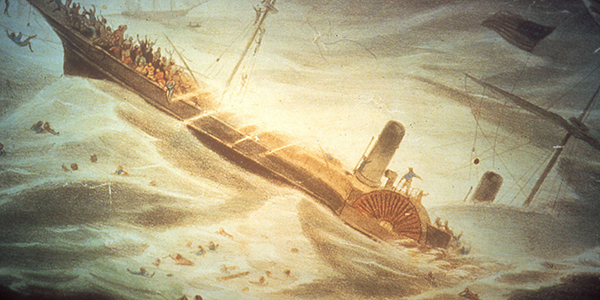
In 1857, caught in a Category 2 Hurricane, the SS Central America sank 160 miles off the coast of Cape Hatteras, North Carolina, drowning 420+, including Captain of the Ship Commander William Lewis Herndon. Nicknamed The Ship of Gold, 30,000 pounds of gold from the California Gold Rush went down with her, exacerbating The Panic of 1857.
It wasn’t until very recently that the lost gold was recovered and only two years ago that the salvage award of 100% was awarded.
In other September 12 trivia bits, as we wait for Hurricane Florence 2018 to show up, this appears to be a rather bad day for hurricanes. Did you know that there have been six Atlantic Hurricanes named Florence? She gets around. ~Vic
1910 Alice Stebbins Wells was hired as the first LAPD Policewoman.
1928 The Okeechobee Hurricane, a Category 4 storm, struck Guadeloupe, killing 1,200.
1979 Hurricane Frederic, a Category 4 storm, slammed into Dauphin Island, Alabama, destroying the bridge to the mainland and killing five.
1988 Hurricane Gilbert, the most intense Atlantic hurricane on record until 2005, devastated Jamaica, produced a 19 foot storm surge and killed 49.
Burt Reynolds

February 11, 1936 – September, 6, 2018
A sad Throwback Thursday…(just a little late posting).
He was Ben Frazer for 20 episodes on the TV show Riverboat, 1959-1960. He was Quint Asper for 50 episodes on the TV show Gunsmoke, 1962-1965. He played Detective Lt. John Hawk for one season on the TV show Hawk in 1966. He was Dan August for one season on the TV show of the same name, 1970-1971 (I remember this…vaguely). He was the voice of Troy Garland on the Out of this World TV show for four years, 1987-1991. He was B.L. Stryker for 12 episodes on the TV show of the same name, 1989-1990. He played Wood Newton for four years on the TV show Evening Shade, 1990-1994. He was even on an episode of The X-Files playing God in 2002.
He was Lewis Medlock in the thriller Deliverance, 1972. He was Jay Grobart in The Man Who Loved Cat Dancing, 1973. He was Robert ‘Gator’ McKlusky in White Lightening, 1973. He was Paul ‘Wrecking’ Crewe in The Longest Yard, 1974. He was W.W. Bright in W.W. and the Dixie Dancekings, 1975. He returned in 1976 as ‘Gator’ McKlusky, again, in Gator, the sequel to White Lightening. He was Billy Clyde Puckett in Semi-Tough, 1977. He was “The Greatest Stuntman Alive” Sonny Hooper in Hooper, 1978. He was Phil Potter in Starting Over, 1979. He was J.J. McClure in The Cannonball Run, 1981 (I remember going to this at the theatre with friends). He was Sgt. Thomas Sharky in Sharky’s Machine, 1981. He played the great Sheriff Ed Earl Dodd in The Best Little Whorehouse in Texas, 1982. He was Richard Babson in Best Friends, 1982. He was Stroker Ace in the film of the same name in 1983. He was David Fowler in The Man Who Loved Women, 1983 (he did a LOT of loving!). He reprised his role of J.J. McClure in Cannonball Run II, 1984. He was Mike Murphy in City Heat, 1984. He was Tony Church in Rent-A-Cop, 1988. He was John L. Sullivan IV in Switching Channels, 1988. He was Joe Paris in Physical Evidence, 1989 (another one I remember going to the theatre to see). He was the voice of Charlie B. Barkin, the German Shepherd mix in All Dogs Go to Heaven, 1989.
His career slowed down after that but, he roared back to life playing Jack Horner in the 1997 hit Boogie Nights. He returned to the The Longest Yard remake as Coach Nate Scarborough in 2005. He played Boss Hogg in the 2005 film version of the TV show The Dukes of Hazzard. He was Sam LeFleur in Forget About It, 2006. One of his last movies was playing Vic Edwards in The Last Movie Star, a 2017 fitting story of an aging movie star with the bulk of his work behind him. Burt worked until he died, with his last film, Defining Moments, to be released after his death.
Even with all of the above interesting characters he played in a career spanning 60 years, literally, he will always and forever be…Bo Darville…The Bandit. ~Victoria
Smokey and The Bandit, 1977.
Smokey and The Bandit II, 1980.
Smokey and The Bandit Part 3, 1983.
Addendum:
Awards
♡ 1991 Primetime Emmy Award for Outstanding Lead Actor/Comedy Series in Evening Shade
♡ 1992 Golden Globe Award for Best Actor/TV Musical or Comedy in Evening Shade
♡ 1998 Golden Globe Award for Best Supporting Actor/Motion Picture in Boogie Nights
Notable Nominations
☆ 1971 Golden Globe Award Nomination for Best Actor/TV Drama in Dan August
☆ 1975 Golden Globe Award Nomination for Best Actor/Motion Picture Musical or Comedy in The Longest Yard (The movie won for Best Musical or Comedy)
☆ 1980 Golden Globe Award Nomination for Best Actor/Motion Picture Musical or Comedy in Starting Over
☆ 1991 Golden Globe Award Nomination for Best Actor/TV Musical or Comedy in Evening Shade
☆ 1992 Primetime Emmy Nomination for Outstanding Lead Actor/Comedy Series in Evening Shade
☆ 1993 Golden Globe Award Nomination for Best Actor/TV Musical or Comedy in Evening Shade
★ 1998 Academy Award Nomination for Best Supporting Actor in Boogie Nights
☆ 1998 BAFTA Award Nomination for Actor/Supporting Role in Boogie Nights
☆ 1998 SAG Award Nomination for Outstanding Performance/Male Actor/Supporting Role in Boogie Nights
☆ 1998 SAG Award Nomination for Outstanding Performance/Cast/Motion Picture in Boogie Nights

Throwback Thursday: Klondike Gold Rush 1896


GOLD! It’s in them, there hills! August 16, 1896, gold was discovered in Dawson City, Bonanza Creek, Klondike River, Yukon, Canada. George Carmack, his wife Kate, her brother ‘Skookum’ Jim Mason (Keish) and Dawson (Tagish) Charlie began looking for gold on one of the river’s tributaries. History is still unclear on ‘who’ actually made the discovery but, George Carmack is generally referred to as the claim maker.
After the panics of 1893 and 1896, economic depression, inflation and unemployment were rampant. The Coinage Act of 1873 had destroyed the use of silver dollar coins, dropping the price of silver and ending bi-metallism. This prompted many to dash to the area in search of gold, leaving behind other jobs in a quest for adventure and financial security. Even author Jack London headed north for his fair share and many of his novels were born out of his experiences. Pacific port towns reaped the benefits of the traders and travelers, desperate to survive the economic downturn.
Very few walked away from Dawson City rich. George and Kate split and, George remarried, living fairly well on his earnings. Skookum Jim, though wealthy, continued to prospect until his death. Dawson Charlie spent money and drank too much, dying in an alcohol related accident. Most of the businessmen and miners died penniless. The damage to the area from the mining was extensive and, the Native people suffered from contaminated water and disease.
Although this song is based on a John Wayne movie, and the George mentioned isn’t the same George in history, it’s still apropos…and, a great song. It’s sad, though, that Johnny Horton died shortly before its release.
Military Monday: First Woman Marine

One hundred years ago, today, August 13, 1918, Opha May (Jacob) Johnson, born May 4, 1879, enlisted in the Marine Corps Reserve during World War I. She just happened to be the first one in line with 300+ other women behind her.
From the U.S. World War One Centennial Commission:
At the onset and throughout the First World War, women in the United States were still denied the same basic rights and privileges as male citizens, including the right to vote. Suffragists would continue to battle on through this time, but their efforts would not culminate into a constitutional revision until 1920. Not only was the political arena considered off-limits for women, but military service was also denied to them. Though legends of women dressing as males to fight for the United States had been spoken of since the Revolution, women were not allowed to legally enlist in the armed services, the Marine Corps being no exception. By the summer of 1918 however, the Corps was in need of more soldiers, many of whom occupied vital administrative and clerical positions throughout the war department at the time. The idea was circulated and eventually approved to allow women into the marines to fill these non-combat positions, relieving this men to head for the front. From Kokomo, Indiana, Opha May Johnson was first in line when the recruiting station in Washington D.C. opened its doors to women and would become a legend as the first woman Marine.
She passed away August 11, 1955 but, her funeral services were held on August 13, 1955…37 years to the day that she first stood in line.
- ← Previous
- 1
- …
- 10
- 11
- 12
- Next →
 Cosmic-Observation