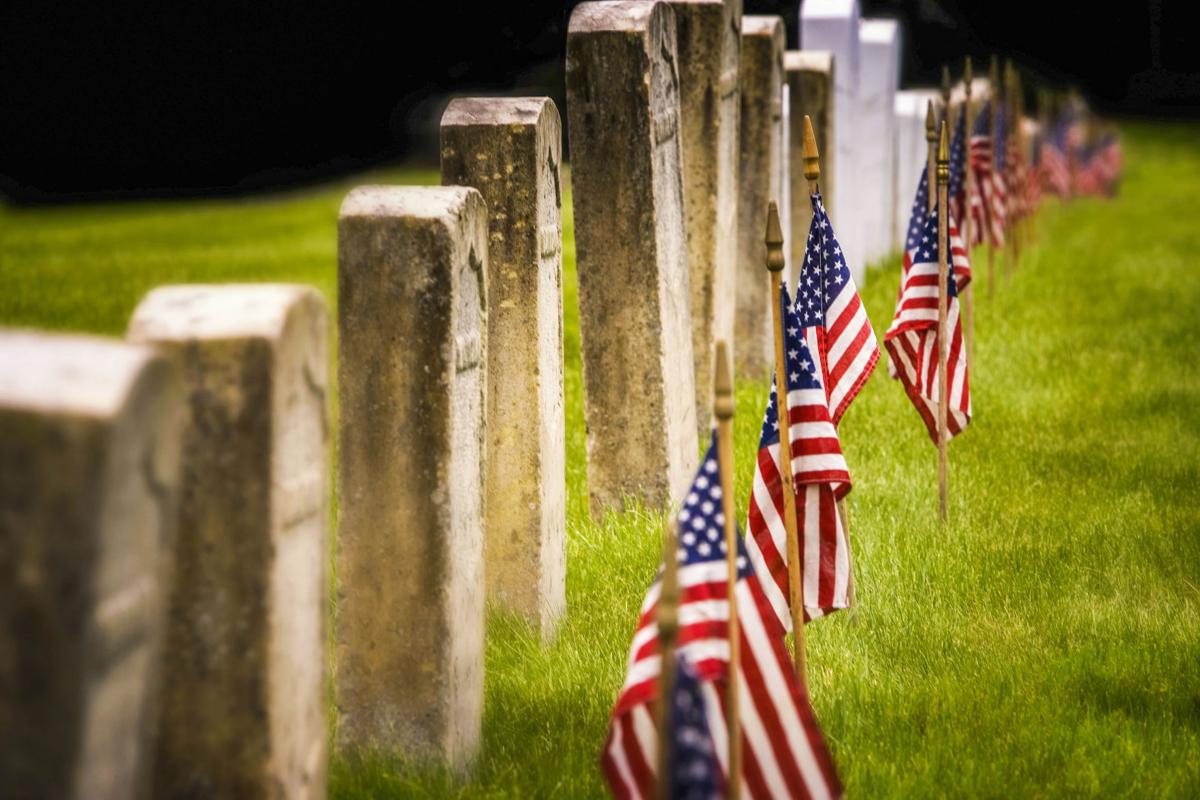
Memorial Day, as celebrated, has come and gone. The weekend BBQs and party gatherings are over. Some folks have returned to work after their Monday off while others took the entire week off and, possibly, headed to the beach to herald the “summer season”. I am posting, today, because from 1868 to 1970, Memorial Day was observed on May 30.
So, what IS the origin of our Memorial Day? That’s a good question and the following took two days to research.
May we remember them, ALL. ~Vic
Warrenton, Virginia 1861
A newspaper article from the Richmond Times-Dispatch in 1906 reflects Warrenton‘s claims that the first Confederate Memorial Day was June 3, 1861…the location of the first Civil War soldier’s grave ever to be decorated.
Arlington Heights, Virginia 1862
On April 16, 1862, some ladies and a chaplain from Michigan […] proposed gathering some flowers and laying them on the graves of the Michigan soldiers that day. They did so and the next year, they decorated the same graves.
Savannah, Georgia 1862
Women in Savannah decorated soldiers’ graves on July 21, 1862 according the the Savannah Republican.
Gettysburg, Pennsylvania 1863
The November 19, 1863, cemetery dedication at Gettysburg was a ceremony of commemoration at the graves of dead soldiers. Some have, therefore, claimed that President Abraham Lincoln was the founder of Memorial Day.
Jackson, Mississippi 1865
The incident in Mrs. [Sue Landon Adams] Vaughan’s life, which assured her name a permanent place in history, occurred at Jackson […] when she founded Decoration Day by first decorating the graves of Confederate and Federal soldiers alike, in a Jackson cemetery on April 26, 1865.
Kingston, Georgia 1865
An historic road-side marker indicates Kingston as the location of the “First Decoration, or Memorial Day” (Late April 1865).
Columbus, Georgia 1866
To the State of Georgia belongs the credit of having inaugurated what has since become the universal custom of decorating annually the graves of the heroic dead. The initial ceremonies which ushered Memorial Day into life were held in Linnwood Cemetery, at Columbus, on April 26, 1866.
Memphis, Tennessee 1866
Yesterday was the day appointed throughout the South as a day of sweet remembrance for our brothers who now sleep their last long sleep, the sleep of death. That day (the 26th day of April) has, and will be, set apart, annually, as a day to be commemorated by all the purely Southern people in the country, as that upon which we are to lay aside our usual vocations of life and, devote to the memory of our friends, brothers, husbands and sons, who have fallen in our late struggle for Southern independence.
Carbondale, Illinois 1866
A stone marker in Carbondale claims that place as the location of the first Decoration Day, honoring the Union soldiers buried there. General John A. Logan, who would later become commander-in-chief of the Grand Army of the Republic, the largest of the Union veterans’ organizations, officiated at the ceremony (April 29, 1866).
Richmond, Virginia 1866
The anniversary of the death of Stonewall Jackson was observed to-day by floral decorations of the graves of Confederate soldiers at Hollywood and Oakwood (May 10, 1866).
May 3, 1866 [they] formed the Ladies’ Hollywood Memorial Association, with the immediate aim of caring for and commemorating the graves of Confederate soldiers. All disposed to co-operate with us will repair, in such groups and at such hours as may be convenient, on Thursday, May 31st, 1866, to Hollywood Cemetery, to mark, by every appropriate means in our power, our sense of the heroic services and sacrifices of those who were dear to us in life and we honored in death.
Petersburg, Virginia 1866
It was in May of this year, 1866, that we inaugurated, in Petersburg, the custom, now universal, of decorating the graves of those who fell in the Civil War. Our intention was simply to lay a token of our gratitude and affection upon the graves of the brave citizens who fell June 9, 1864, in defence of Petersburg…
Dinner on the grounds is not a phrase I hear these days. Just reading the phrase takes me back to those times with my grandmother at her church on […] Decoration Day Sunday. I grew up in north Alabama in the 1960s. Dinner on the grounds was a special occasion that followed the work of cleaning up the graveyard and placing fresh flowers beside the headstones. It provided a time to remember and celebrate the lives of the dear departed. ~Betsy Sanders
Today, we are here to eat, remember and bask in the Southern fascination of death […]. It’s Decoration Day. The South claims death with as much loyalty as we claim our children. J.T. Lowery, a former pastor […] misses when Decoration Day meant keeping company with headstones during dinner on the ground. Opal Flannigan is depending on women […] to uphold a tradition so old it’s hard to say when it emerged. German and Scots-Irish immigrants who birthed much of the Southern Appalachia’s culture in Virginia, Tennessee and the Carolinas likely brought these traditions [with them]. ~Jennifer Crossley Howard
Many rural community cemeteries in western North Carolina hold “decorations.” A decoration is a religious service in the cemetery when people decorate graves to pay respect to the dead. The group assembles at outdoor tables, sometime in an outdoor pavilion, for the ritual “dinner on the ground.” There are variations of this pattern but, the overall pattern is fairly consistent.
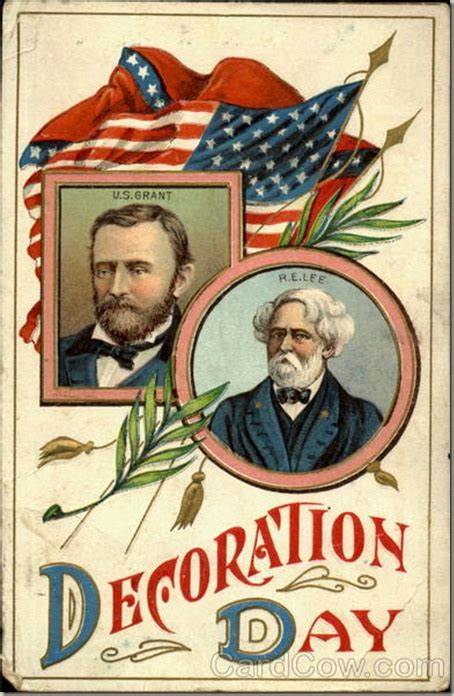
By proclamation of General John A. Logan of the Grand Army of the Republic, the first major Memorial Day observance is held to honor those who died “in defense of their country during the late rebellion.” Known to some as “Decoration Day,” mourners honored the Civil War dead by decorating their graves with flowers. On the first Decoration Day, General James Garfield made a speech at Arlington National Cemetery, after which 5,000 participants helped to decorate the graves of the more than 20,000 Union and Confederate soldiers buried in the cemetery.
The 1868 celebration was inspired by local observances that had taken place in various locations in the three years since the end of the Civil War. In fact, several cities claim to be the birthplace of Memorial Day, including Columbus, Mississippi; Macon, Georgia; Richmond, Virginia; Boalsburg, Pennsylvania; and Carbondale, Illinois. In 1966, the federal government, under the direction of President Lyndon B. Johnson, declared Waterloo, New York, the official birthplace of Memorial Day. They chose Waterloo, which had first celebrated the day on May 5, 1866, because the town had made Memorial Day an annual, community-wide event, during which businesses closed and, residents decorated the graves of soldiers with flowers and flags.
I saw the Cardinal thru the Den window. It was perched on one of the torches. Just as I took the shot, he took off. I was pleasantly surprised to capture him diving relatively clearly. ~Vic
Yes. He’s dead…by his own admission. I heard him say he was born in 1735 when addressing his tour subjects. He was pleased that I wished to photograph him. I guess the lantern adds to the spookiness.
The town I live in is haunted…in some places. It’s pretty common knowledge. It is an old town. During the summer, there are ghost tours. I’m not kidding. I might take a tour one day. ~Vic
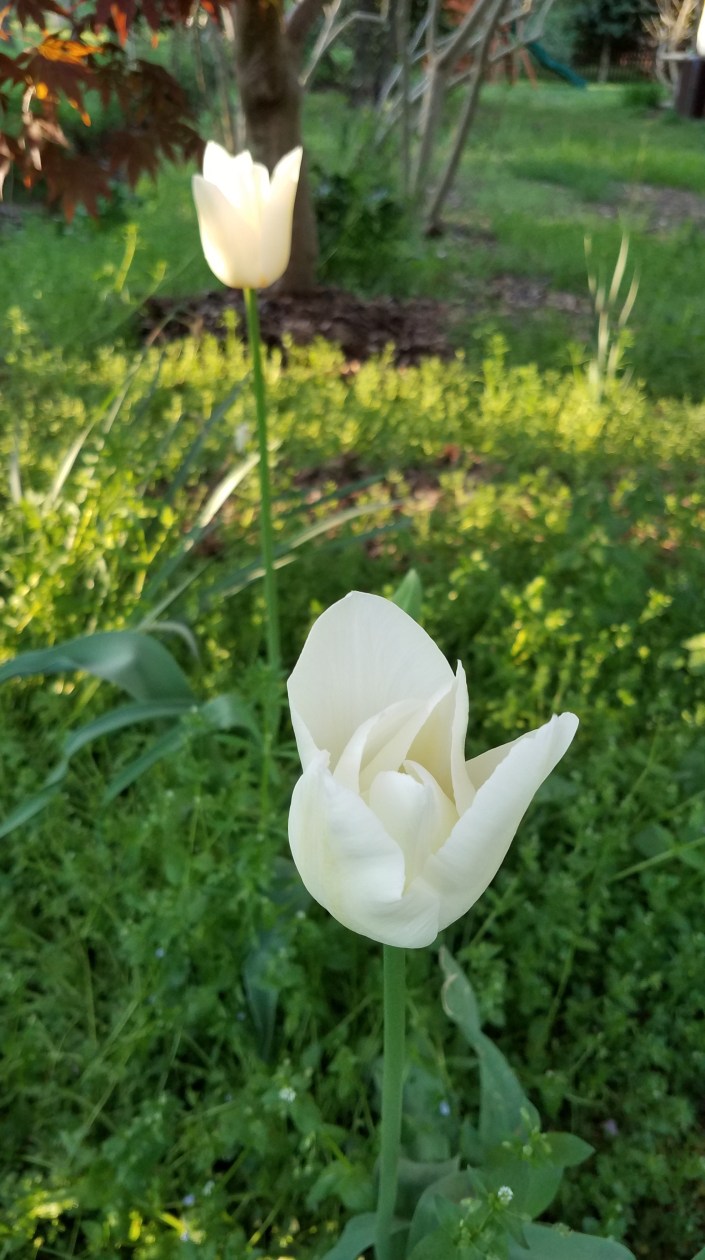
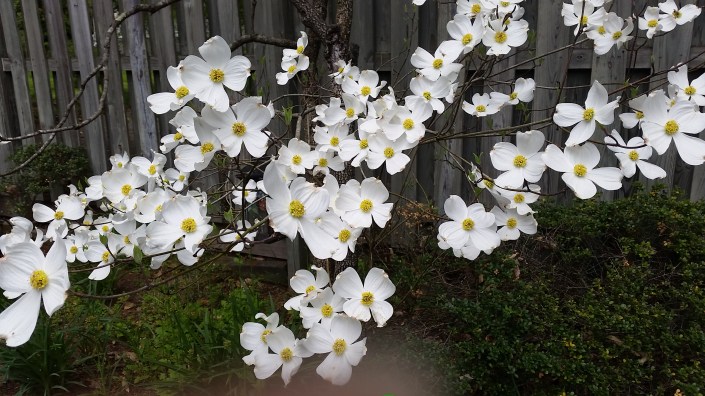
These beauties have their own timetable. They bloom early, even when it is still cold…or snowing, no less. They are quite happy underneath Mr. Sugar Maple. ~Vic
I climbed into a guy’s car for a road test and met his little friend. I asked him if he minded me taking a picture of it. He posed her a little bit for me. Then, I asked him “Favorite past-time?” “Nah.” was his response. “It was gift from a friend…a female friend, no less.”
This comes under the heading of Things You Don’t See Everyday. I DO miss this job sometimes. ~Vic
I snapped this at my friend’s house with my old flip phone. It was trying its best to grow up on the porch. I have no idea what it is…other than pretty pink. ~Vic
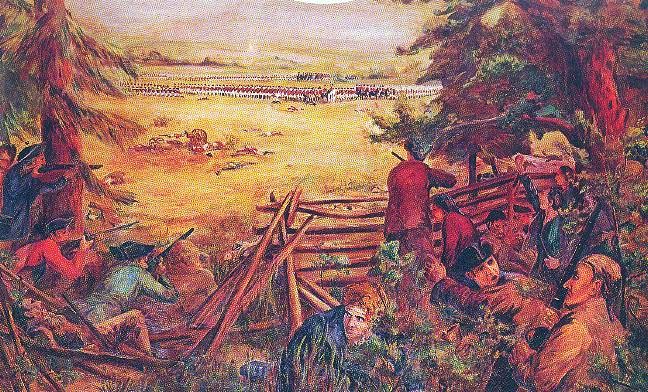
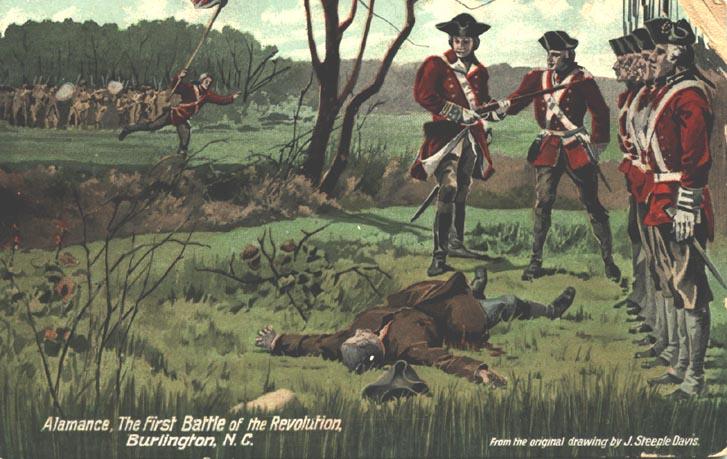
On a field in [the] Piedmont [of] North Carolina, Regulators clashed with North Carolina militia on May 16, 1771. Many probably had predicted the day when public disagreements, political protests and riots would one day escalate into an armed conflict. For a couple decades, tensions had been mounting. Piedmont farmers believed that they were being overtaxed and had been paying excessive fees to local sheriffs, and the colonial government. Piedmont farmers started demanding changes to the law and, publicly humiliating, intimidating and sometimes, flogging officials whom they deemed to be corrupt…Judge Richard Henderson and Sheriff Edmund Fanning are two examples.
After the Johnston [Riot] Act was passed, Rowan Regulators deemed it “riotous,” writes historian William Powell and, “swore that they would pay no more taxes.” Similar sentiment spread throughout the backcountry, so, in 1771, Governor Tryon flexed his executive muscle and ordered a special court in Hillsborough. Predicting that disgruntled Regulators would protest this action, Tryon sent out militia to the courthouse to quell any rebellious activity or interference with court sessions.
Image Credit: wikipedia.org & J. Steeple Davis
As the militia marched westward, approximately 2,000 Regulators assembled and, converged and met the militiamen camping beside Great Alamance Creek. On May 16, the Regulators relayed to Governor Tryon that they wanted to discuss their differences with government officials. Tryon scoffed at the suggestion and returned a message stating that a prerequisite for such an audience necessitated that the Regulators disarm. The royal governor gave the Regulators one hour to surrender. Their reply: “Fire and be damned.” No doubt believing the other side to be condemned to eternal fire, Tryon and the militia answered with cannon fire.
The Battle of Alamance lasted for two hours. The Regulators fired weapons behind trees and large rocks [but] their effort lacked organization. Sometimes when a Regulator would run out of ammunition, he left the field of battle. As to be expected, the militia was more organized in its attack, and maneuvers, and Tryon defeated the Regulators.
The War of the Regulation which culminated in the Battle of Alamance is one of the most controversial events in the history of North Carolina.
A great many of the people of North Carolina in the years just before the American Revolution were restless and dissatisfied with the state of affairs in their province. Their grievances were serious and affected their daily lives. Royal governors sent from outside the province were not able to maintain peace and quiet but, instead, frequently gave the people further cause for discontent. The outstanding group opposing the ruling class represented by the governor and his friends were known as Regulators.
It was a movement based upon the social and economic differences between the tidewater section and the back country of North Carolina. In the East, the people were almost entirely of English descent. It was here that an aristocratic form of society prevailed, based upon large plantations and slave labor. This area had taken on many of the forms and luxuries of older societies. The people looked to Virginia, and the mother country, for its social, intellectual and political standards. In the West, Scotch-Irish and German ancestries were predominant. Here, plantations were small and slaves were few in number. For the most part, the West was still in the pioneer stage. The forms and ideals of society were democratic. Philadelphia was the principal center for the interchange of ideas, as well as of produce. With slight intercourse between them, the two sections felt but little sympathetic interest in each other.
[…] North Carolina’s Governor Tryon built himself a mansion of grandiose proportions from those unfair taxes levied on struggling farmers. At this point emerged the Regulators. A group formed to protest these abuses, initially to print petitions, distribute pamphlets, advertise their demands for fair hearing and tax.
What started as a war of words swiftly moved to confrontation in the North Carolina courthouse of Hillsborough when a mob took over the building and removed the judge. Governor Tryon immediately passed a law making membership in the Regulators an act of treason.
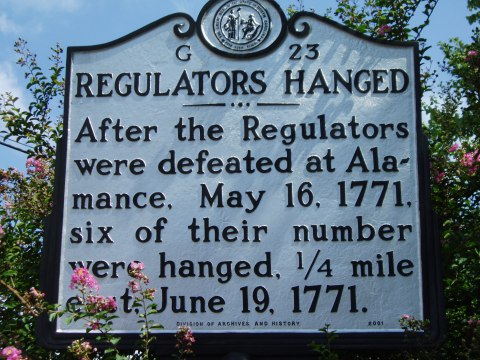
One man from the Regulators, attempting to negotiate peace, crossed to Tryon who took a gun from one of his militiamen and shot the man dead. An order to ‘Fire and be damned’ was given and the Battle of Alamance ensued. The Regulators, though not outnumbered, were without sufficient arms and ammunition and, the outcome was swift. Governor Tryon took 13 prisoners and six were later executed in nearby Hillsborough.
[Historical records of the casualties are disputed. The numbers of dead range from nine to 27 and the wounded range from 61 to 300. Historians of the time claim that this was, indeed, the beginning of the American Revolution. Modern historians disagree with this.
From October 2014 to August 2016, I was a Driver’s License Examiner. I had several interesting encounters and experiences. The job wasn’t bad but, HQ was a terrible problem. Politics is a nasty business.
This kid was the customer of one of my co-workers but, I started to giggle when I read it. He didn’t mind me taking a picture. ~Vic
[…] shot by inventor and film pioneer William Friese-Greene on celluloid film using his ‘machine’ camera, the 20 feet of film […] was shot […] at Apsley Gate, Hyde Park, London. [It] was claimed to be the first motion picture [but] Louis Le Prince successfully shot on glass plate before 18 August 1887 and on paper negative in October 1888. It may, nonetheless, be the first moving picture film on celluloid and the first shot in London.
It is now considered a lost film with no known surviving prints and only one possible still image extant.
Image Credit: wikipedia.org
An article in This Is Bristol UK from December 17, 2009, (via The Wayback Machine) has an interview with David Friese-Greene, the great-grandson. From the article:
My great-grandfather was an idealist and a brilliant inventor, with 71 patents to his name but, he was a dreadful businessman. He died without ever having made a penny out of his inventions. He married his first wife Helena Friese when he was just 19 and incorporated her surname with his, because he felt it sounded more impressive. Tragically, Helena died at the age of 21 […].
It was during the late 1880s, shortly after Helena’s death, that Friese-Greene first began to experiment with the idea of creating moving pictures. […] in 1890, he patented [a] new device, which he dubbed the chronophotographic camera. Unfortunately, he was so pleased with his creation that, he wrote to the great American inventor, Thomas Edison, telling him what he had come up with and, even, included plans and designs […]. William never heard back from the inventor of the electric light bulb, though, the following year, Edison patented his own version of a movie camera and went down in many history books as the inventor of cinema.
In fact, William died a pauper but, [was] still passionate about his most famous creation. He was at a cinema industry meeting in London, which had been called to discuss the poor state of the British film industry in 1921. He had got to his feet to speak about his vision of how film could be used to create educational documentaries when he fell down dead. It is said he had just 21 pence in his pockets when he died.
All photos and video are my personal collection. I'm surprised some of these turned out as well as they did. The first six were taken with a Samsung Alias II…an old flip phone. ~Vic Part I/Part II
Rogue spider in the Den.
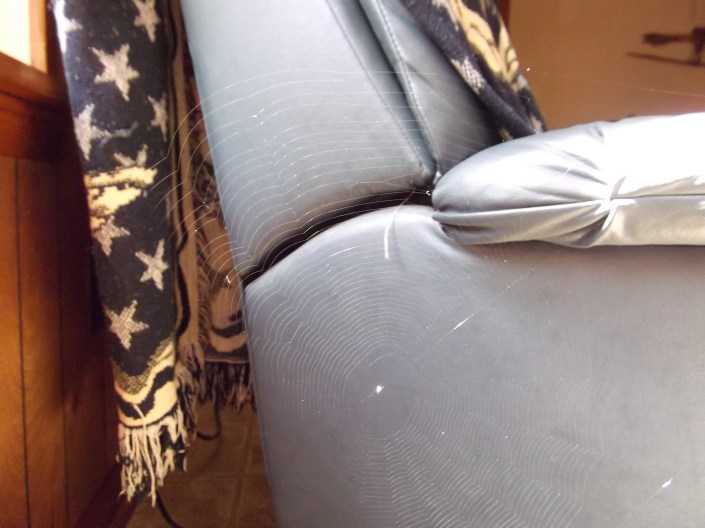
06-01-2013It was a good-sized web.
Spider was nowhere to be found.I nearly walked into this big web leaving work.
10-23-2013Healthy spider.These long-legged things freak me out.
They love to hang upside down in bathrooms.
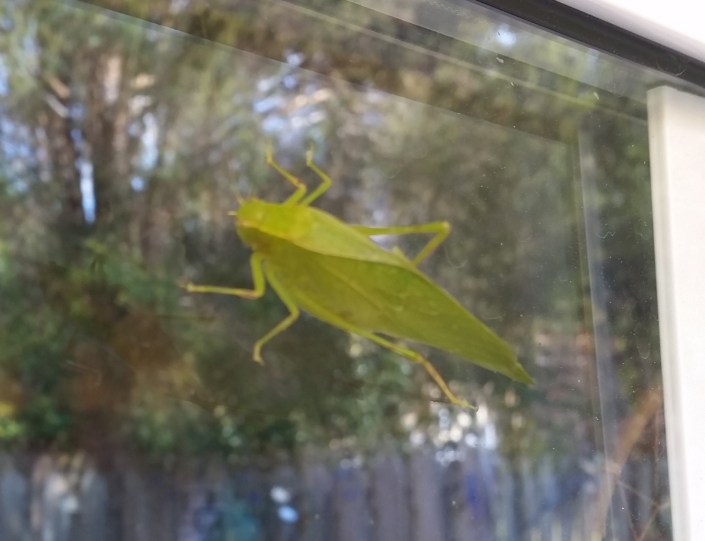
08-22-2015Just ewwwww…He looks like a leaf.
10-31-2016During a rainstorm, he crawled up on the kitchen window to dry off.
YUCK.
06-20-2017
I had forgotten that I had some videos of critters, too. I was trying to sing like a child, just being silly.
Clark was not impressed.












 Cosmic-Observation