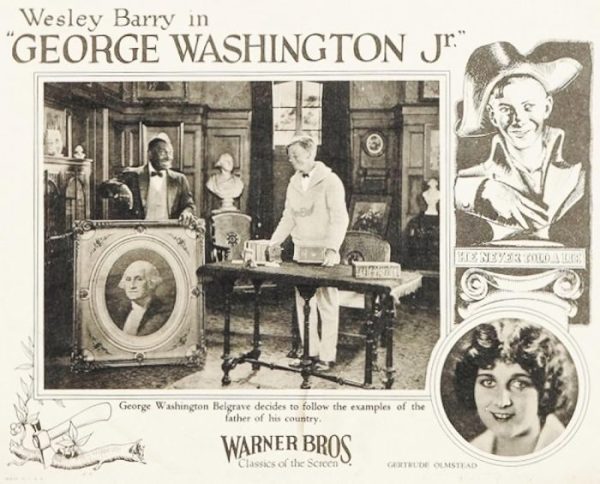
As described in a film magazine review, Count Gorfa, anarchist leader, steals the private records of a Senate Investigative Committee, the loss of which threatens the political fortunes of Senator Belgrave, whose daughter the Count wishes to wed. The Senator’s son, the young George Washington Belgrave and his friend Robert Lee Hopkins trail the anarchists. After many adventures and burlesques of historical fables, the documents are recovered and the Senator is saved.
A senator is trying to get his niece to marry a foreign count. The senator’s teenage son finds out that the count is not only a phony but, an international criminal. The boy sets out to break up the impending marriage, save his father from ruin and, his cousin from marrying a man she doesn’t love.
IMDb Storyline
George Belgrave is guided by George Washington’s principles of integrity and honesty. He exposes his cousin Dolly’s fiancé, Count Tyrola, to be a bogus count and an internationally sought criminal. [As] the leader of the Vassalini gang, [he] steals a secret treaty from George’s father, a United States senator. It is Tyrola’s intention to use the treaty to cause political strife in Bessarabia. George, his friend Bob, and Ham, the negro butler, subdue the Vassalini gang and, after recovering the treaty, lock them up. Tyrola’s treachery is revealed seconds before the wedding ceremony. George, to save his father embarrassment, tells his only lie in giving him credit for the whole “plan” to capture Tyrola. Cousin Dolly marries friend Bob.
I got lucky, today and found a Friday The 13th movie that had nothing to do with Jason or Camp Crystal Lake. Ninety years, ago, Friday The Thirteenth was released in the UK, at some point in November of 1933. The movie opened in New York on May 14, 1934. Curiously, this movie seems more science-fiction than spook. ~Vic
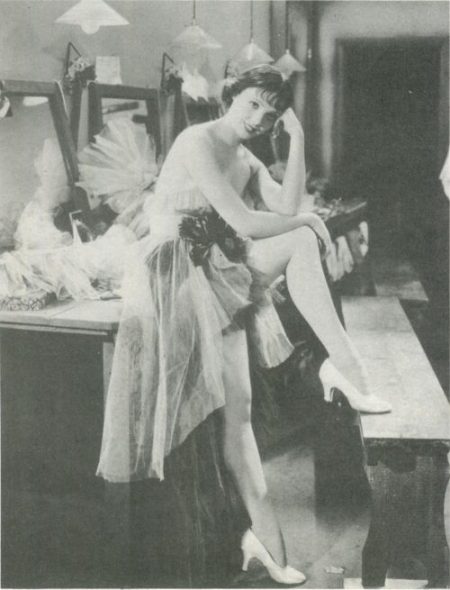
Jessie Matthews as Millie
Photo Credit: IMDb & Amazon
It is pouring with rain at one minute to midnight on Friday the thirteenth and the driver of a London bus is peering through his blurred windshield as his vehicle sails down an empty road. Suddenly, lightning strikes and a vast crane above topples into the path of the oncoming bus. Then, Big Ben begins to wind backwards. Time recedes and we discover the lives of all of the passengers, and the events that brought them to that late-night bus journey, from the con man with a hundred pound cheque to the businessman’s distraught elderly wife. Time flows on, inevitably, to the crash and past it, as some live and some die.
IMDb Storyline
The complicated lives of twelve people travelling on a bus are traced up to the point when the bus crashes into a shop, killing two of the passengers.
BFI Screen Online
In London, near midnight, as a rain storm rages, several people travel across the city on a bus. Of the passengers, one elderly woman seems anxious and upset, a young man who has just been robbed by a pickpocket gratefully accepts money for his fare from another passenger, another man boasts of his knowledge of art, and a young woman angrily destroys a photo of a man. When a lightning strike causes the bus to crash, each passenger recalls what brought them on the ill-fated journey.
Rotten Tomatoes Movie Info
After a London bus crash leaves two people dead and several injured, the clock is turned back twenty-four hours to show the lives of the bus passengers, how they happened to be on that bus at that time, and the effect of the crash upon their lives.
One hundred years, ago, today, the black & white silent film [The] Forbidden Lover was released. Brackets around “THE” is a product of the differences of the title from data sources. This film is an edited version of The Power of Love, the very first 3-D movie, released on September 27, 1922 at the Ambassador Hotel Theater in Los Angeles. Both films are believed lost.
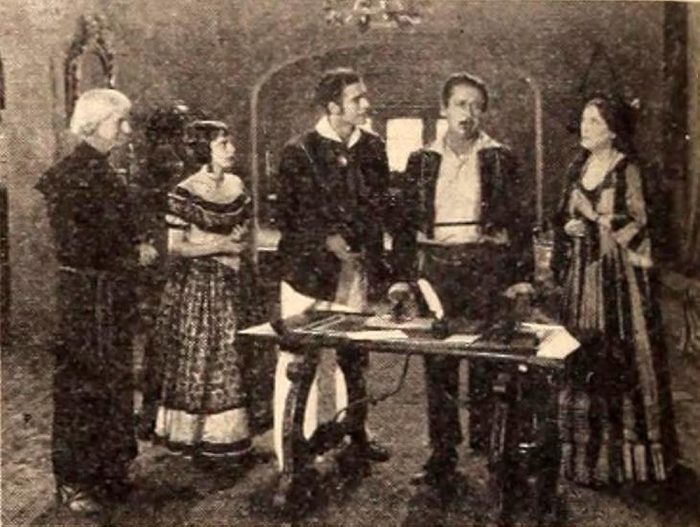
Yankee sea captain lands on the coast during the old Spanish days to trade with the ranch owners. He meets a girl who is betrothed to a man she loathes. After a series of adventures and narrow escapes, he shows up the unscrupulous ranch owner and wins the girl.
Still Image
The Power Of Love
Image Credit: IMDb & Amazon
Because of his financial trouble, Don Almeda promises his daughter, Maria, to Don Alvarez but, Maria does not love [him]. In fact, she falls in love with Terry O’Neil, a stranger who has been wounded by robbers associated with Alvarez. O’Neil takes Alvarez’s place at a masked ball. Alvarez, in turn, robs the old Padre of some pearls and stabs him to death with O’Neil’s knife. He then accuses O’Neil of the murder and tries to shoot him but, wounds Maria instead, having thrown herself in front of him. Maria recovers and, after proving that Alvarez is a thief and a killer, weds O’Neil.
IMDb The Power of Love Storyline Moving Picture World
October 1922 Production Company:Perfect Pictures Tagline: A pair of spectacles will be handed to you as you enter the theatre, through which you will view the new sterescopic pictures.
The Power of Love was screened in front of a live audience at the Ambassador Hotel Theater […]. It was projected dual-strip in the red/green anaglyph format, making it both the earliest known film that utilized dual strip projection and the earliest known film in which anaglyph glasses were used. The camera rig used to shoot the film was made by the producers themselves and as you can imagine, it was far from perfect. Simply put, the film was not a success. It was screened, again, for exhibitors, and press, in New York City and, then, almost immediately fell out of sight. It was not booked again by other exhibitors. Unfortunately, we may never see what this movie looked like.
3-D TV & Movies
The first stereoscopic image dates to 1844, which makes 3-D images as old as the art of photography. [No] less a personage than Queen Victoria was photographed in 1854 in stereoscopic 3-D. 3-D stereoscopic moving images date to the 1850s with what was called the Kinetamatoscope [sic]. The first public display of a 3-D movie came in 1922 with The Power of Love […]. The film received a decent review in Moving Pictures World, then promptly disappeared from history by changing its title to Forbidden Lover and touring the country in a 2-D version. It was too complex and costly at the time to take 3-D on the road.
Randome
Looking Up/My Daily Plant Blogspot (Blogger) Cirque de 3-D
March 6, 2009
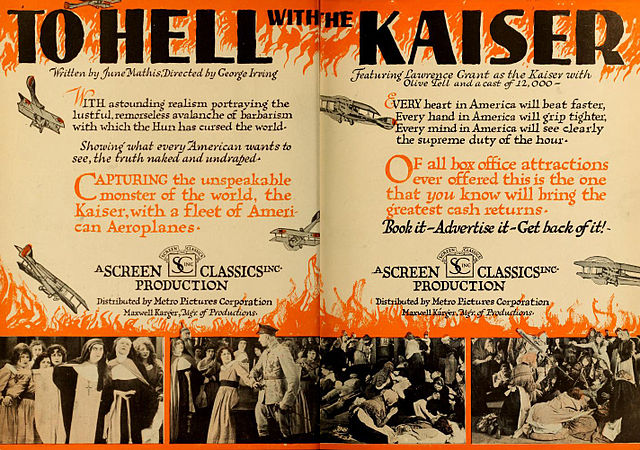
Following the death of his father, Frederick III of Germany, Wilhelm Hohenzollern becomes the German Kaiser and forms a pact with the devil that, he will conquer the globe in exchange for his soul. During the Kaiser’s invasion of Belgium, the Crown Prince enters a church and rapes Ruth Monroe, the daughter of an American inventor who has perfected a noiseless communications device. When the professor denounces the Crown Prince, he immediately is shot, whereupon his other daughter Alice vows to obtain revenge. While Alice’s sweetheart, Winslow Dodge, fights with the Americans as an aviator, she arranges to meet the Crown Prince through her friend Robert Graubel, an actor who impersonates the Kaiser at public functions. With her father’s wireless [device], Alice informs Winslow of the Kaiser’s whereabouts and, as he captures the German emperor, she kills the Crown Prince. Now a prisoner, the Kaiser drowns himself and wakes up in Hell, where Satan abdicates in his favor, saying that the Kaiser’s tortures are more fiendish than any he ever devised.
Lawrence Grant, who spent his lengthy career playing odious villains, appeared in the dual role of Kaiser Wilhelm II and his look-alike, German actor Robert Graubel. Terrified of being assassinated, the Kaiser hires Graubel to impersonate him at various political functions. In the film, the Kaiser achieves military success through an infernal pact with Satan. Once this is established, the film concentrates on the seemingly endless tally of misdeeds perpetrated by the Kaiser during his quarter-century reign over Germany. His “partner in crime” is the Crown Prince […], who thinks nothing of casually raping convent girls and gunning down protesting nuns. The Crown Prince’s latest conquest is Ruth Monroe […], the daughter of an American inventor. When Ruth’s father protests this outrage, he is brutally murdered, whereupon Ruth’s sister Alice […] vows revenge. Using her father’s newest invention, a wireless machine whose coded messages cannot be intercepted, Alice directs a battalion of planes to bomb the small German village where the Kaiser is hiding. Captured by the Allies, the Kaiser is ignominiously dumped in a POW camp but, not before enduring a well-aimed sock on the jaw from a pugnacious dough-boy. In despair, the Kaiser commits suicide and sends his soul to hell. In hell, the devil […] gives up his throne, confessing that the Kaiser is far more sinister than he could ever hope to be.
[On June 8, 1918], Motography ran a Screen Classics press release explaining that To Hell With The Kaiser “reveals the machinations of Europe’s military monster before and during the war, his contempt for Americans […], his elaborate plans to crush France, […] destroy Russia, […] partition the world, […] his [order] to employ deadly gases in the war, the true circumstances under which he ordered the sinking of the Lusitania, the raiding of hospitals […].” Years before the war, Mr. Grant’s physical likeness to the German ruler was noted by a high official of the Kaiser’s court and a proposition was made for Grant to play the Kaiser in a dramatization […]. The war broke out before discussions went any further.
Actor John Sunderland, playing American pilot Winslow Dodge, was himself “an aviator who has seen service in Belgium.”
[It] had been released in the press that Kaiser Wilhelm II had half a dozen doubles who were employed to pose for him in various parts of the country, where there might be danger of assassination, while the real Kaiser, himself, remained safe behind this cloak.
To Hell With The Kaiser opened in New York City at the Broadway Theatre on June 30, 1918, immediately after it had emerged from the cutting and editing rooms […].
The film turned out to be an effective propaganda tool […]. Not only has the picture been shown in munitions plants and training camps […] but, this power has now been demonstrated in a new way…to convert conscientious objectors.
The National Film Preservation Board (NFPB) included this film on its list of Lost U.S. Silent Feature Films as of February 2021.
I found the building of this post fascinating. What started out as a simple movie post, turned into a history lesson. It’s a shame that it is lost. There are photographs of still pictures on IMDb. ~Vic
Biopic of the wartime exploits of Audie Murphy (played by himself), the most decorated US soldier in World War II. Starting with his boyhood in Texas, where he became the head of his family at a young age, the story follows his enrollment in [the] Army where he was assigned to the 3rd Division. He fought in North Africa, Sicily and Italy, before landing in southern France and, eventually, fighting in Germany. A Medal of Honor recipient, he also received battle honors from the French and Belgian government.
The highly variable Audie Murphy delivers his best screen performance as “himself” in Universal‘s To Hell and Back. Based on the star’s autobiography, this is the story of how Murphy became America’s most-decorated soldier during WW II. After dwelling a bit on Murphy’s hard-scrabble Texas upbringing, the story moves ahead to 1942, when, as a teenager, Audie joined the army. Within a year, he was a member of the 7th Army, serving in North Africa, Italy, France and, ultimately, Germany and Austria. One by one, the members of Murphy’s Company B are killed in the war, until only three men from the original company are left. [The] others appear at the finale as ghostly images […]. The bulk of the film is given over to Murphy’s conspicuous acts of combat bravery and his killing of 240 enemy soldiers. Highlighted by excellent battle sequences, To Hell and Back is a serviceable tribute to a most complex individual.
Date: 1948
Photo Author: Fort Detrick
Wikipedia & Wikimedia
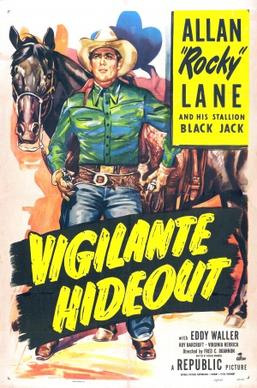
Rocky (Lane), a Range Detective, arrives to help Nugget (Waller) with rustlers. When he learns Nugget owns only three cows, he stays on, anyway and, soon, becomes involved in Benson’s attempt to blow open the bank’s safe. When Rocky upsets his plans, Benson (Don Haggerty), supposedly, gets rid of him by having him declared an outlaw, wanted dead or alive. Then, Benson takes a load of explosives into an old mine located directly under the bank vault.
Double-barreled justice catches up with a cold-blooded killer when “Rocky” takes up the chase! Cattle detective, Rocky Lane, arrives in town to investigate cattle disappearances only to realize just three cows, owned by eccentric inventor Nugget Clark, are involved. However, the disappearances lead to a deeper mystery involving dynamite explosions, rampaging cowboys and a water shortage.
Lane and his trusty black stallion are on hand to help old-timer Waller find water for a town which is threatening to fold up due to drought. Some crooked townsfolk don’t want the water to be found because they want to collect on the $25,000 being stashed away for an aqueduct. Lane’s job is to make sure these people don’t pose too much of a problem, while Waller goes about finding the water. The characterization of Waller as a crazed inventor of gadgets is an added attraction to this oater with a realistic bent.
The famous fairy tale is musicalized and given a modern 1940s spin with the principal characters (Cinderella, Prince Charming and the Wicked Step Sisters) all played by children.
Trivia Bit:
♦ This short was produced toward the tail end of Shirley Temple‘s reign as Hollywood’s #1 box office star and it’s reasonable to assume it was made to showcase young talent that Warner Brothers may have thought had a shot at replicating Temple’s success.
Lady Gwen, the last of the sporting Grayles, falls in love with Donald MacAllan, a bright young medical student far below her station. Gwen’s father, who opposes the match, introduces her to Prince Carlos, who wishes to marry her in order to pay off his creditors.
Photo Credit: imdb.com & amazon.com
Donald enlists during the World War and Carlos continues his courtship. When Donald returns from the fighting, Carlos tells him that he is engaged to Gwen and Donald, therefore, makes no attempt to see her. Gwen mistakes Donald’s seeming indifference for contempt and seeks to forget him by living riotously in several European capitals. Having exhausted her fortune, and ruined her health, Gwen returns to Scotland and goes to live in the same cottage where Donald used to study. She becomes ill and, in delirium, calls for Donald. Her old nurse goes to fetch him at the Grayle estate, which, having become wealthy, he has just bought. Donald rescues Gwen, who has wandered out in a storm, and nurses her back to health.
A Hollywood conception of Scotsmen who wear the kilt but, whose complexions betray nary a sign of the ruddy ruggedness due to Highland rain and wind, is to be seen at the Capitol this week in a picture called “The Sporting Venus” […]. [There] is a question [of] whether the Wallaces, the Bruces, the Watts and the McTavishes will smile with any satisfaction upon it. Not that they are intentionally maligned in this story but, that the men from the land of the heather are portrayed with studio-blanched complexions and, in one or two instances, wearing brocaded silk dressing gowns.
Marshall Neilan, the director of this celluloid effusion, in his desire to depict Lady Grayle (Blanche Sweet) as a plucky person at the eleventh hour of a fast life, shows her ladyship smoking a cigarette before she breathes her last. Ronald Colman is undoubtedly a bonnie actor but, you just know that he never was born to wear a kilt, [though], he does for a few scenes. He impersonates Donald McAllen, frequently alluded to as a commoner.
Donald and the capricious lassie, Lady Gwendolyn, are happy in Scotland until the coming of Prince Carlos […]. This Prince, played by Lew Cody, is a man of many debts and a faithful valet. His creditors see only one way to get back their money and that is to have the oily gentleman marry a wealthy wife. Donald goes to France to fight, and when he returns on leave, [believes] the Prince’s story […] that [he], more or less, is to wed Lady Gwendolyn.
Lady Gwendolyn […] becomes […] a flighty young woman who gambles in millions. The young hero goes back to France, and as a surgeon, makes a great name for himself. He purchases Grayloch, the great estate of the Grayles.
With the background of Scotland, Mr. Neilan ought to have been able to make a production far stronger than this effort, which, at best, is only a mediocre diversion. It is true that it has some beautiful scenery and the settings are quite pleasing.
This film survived but, I can’t find any clips of it. Silent Era states that a premiere took place on May 10, 1925, at the Capitol Theatre in New York City and was released May 17, 1925. AFI disagrees. ~Vic
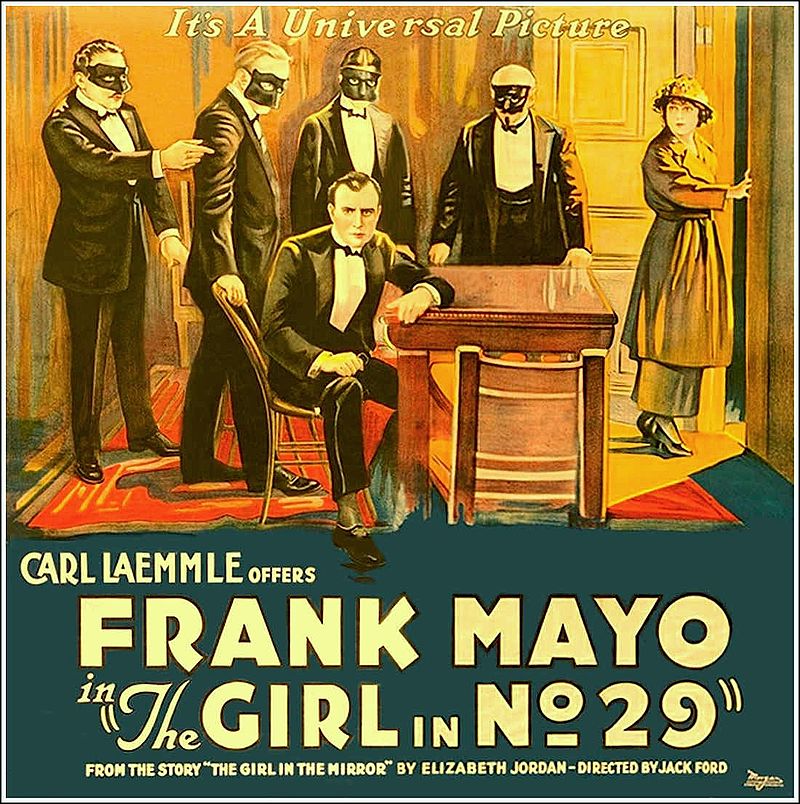
After turning out a successful drama, young playwright Laurie Devon settles down to a life of idleness. Alarmed and disgusted, his friends make every effort to get him to work again but, he refuses. One evening, while glancing into his mirror, Laurie sees a beautiful girl in the apartment across the way, holding a revolver to her head. Dashing out of his apartment house, he prevents her from pulling the trigger. He learns that her name is Doris Williams and discovers that her plight is caused by a man named Shaw. Soon after, Shaw and his thugs abduct her, and Laurie comes to her rescue, shooting her tormentor. Returning home, he confesses his crime to his sister and friends, and learns that the whole incident was a trick to restore his interest in life. The plot succeeds and Laurie writes another hit play in which his new wife Doris is the star.
Laurie Devon (Mayo) is a New York playwright who, having had one success, refuses to work on another play. One night he sees a woman (Anderson) in an apartment across the street take out a gun and place it to her forehead. He reaches her in time to save her and she tells him that she is under some terrible evil influence, which she will not disclose. Devon attempts to untangle the mystery and is led on an adventure. The woman is taken to a house on Long Island, where Devon, after a fight, rescues her. He takes out the revolver and shoots one of the pursuers, who falls to the ground. On returning home, he is heartbroken and tells his sister Barbara (Fair) and his friends that he is a murderer. His sister, and two of his friends, then confess that the whole thing was a frame-up. [T]hey had hired some actors to stage everything and that it was an attempt to get the ambitionless [sic] author to write again. The revolver used in the suicide attempt by the woman, and in the later shooting, had blanks. Devon and the woman from the apartment melt into each other’s arms at the final fade-out.
Oh, it has been work looking for a film for today’s date. IMDB had plenty to choose from but, I couldn’t seem to get any further information from the others…Wikipedia, American Film Institute, Turner Classic Movies… Even the Silent Era site and Silent Hollywood were slim pickings and, Silentology had nothing.
The discovery that detectives are on their trail causes Doyle, Broden and Etzer, counterfeiters, to pack their paraphernalia into a trunk and express it to Lone Point. Upon its arrival at that station, a corner of the trunk is smashed. Helen thus learns of its contents. The telegrapher immediately wires to Savage, a railroad detective. The latter, accompanied by Duncan, a Secret Service detective, hastens to the scene. At their suggestion, Helen arranges a trap for the counterfeiters. When the latter appear, they are set upon by the officers. Etzer is captured but, his pals get away. Doyle eludes pursuit but, Broden later falls into Savage’s hands. Helen, watching the pursuit, ventures on the high trestle which crosses the dry bed of the Loro River. Doyle, who is hiding, sees Helen. Overpowered by a desire for revenge, the man attacks the telegrapher and makes her a prisoner. A rope lies nearby. Binding Helen, Doyle suspends his victim from the trestle and fastens the end of the line around the rails. Duncan sees this from afar. Although he rushes forward, he knows that the Keene local, due any moment, will cut the rope as it crosses the trestle. Meanwhile, Helen, after a tremendous effort, frees her hands. There is one chance for life. The girl commences swinging her body. Each time, she [manages] a wider arc. The train is crossing the trestle when Helen swings toward a beam. The engine wheels sever the rope. Helen flies through the air and reaches the beam. Doyle is captured. Savage and Duncan raise Helen to the tracks and find her uninjured.
Moving Picture World
This is one of the lost pieces so, there isn’t a YouTube clip and I could only find one picture. ~Vic
In a New York hotel, the body of Steven Humbolt is discovered and Chief Inspector Decker Dawes is called to investigate. After a brief inspection of Humbolt’s belongings, Dawes and Sergeant Meed determine that Humbolt had fifteen wives, three of whom…Sybilla Crum, a well-known reformer, wealthy Carol Arnold, and Ruby Cotton…live in New York. Dawes first questions the still devoted Sybilla, then quizzes Jason Getty, a florist who had sent Humbolt a funeral wreath hours before his death was discovered. While Meed checks out Getty’s lead that the wreath was ordered in Philadelphia, Dawes interrogates Carol Arnold. Carol tells Dawes that Humbolt had robbed, and deserted her, after three weeks of marriage and, that, a year later, she had received a letter from South America informing her of his demise. Just after Carol had married wealthy Gregory Arnold, Humbolt contacted her with blackmail demands but, according to Carol, she never saw him before his murder. Although Dawes doubts Carol’s story, he leaves her to talk to a chemist about a broken glass globe that was found near Humbolt’s body.
Image Credit: imdb.com
The chemist reveals that the globe, a Helmholtz Resonator, contained a lethal dose of hydrocynanic acid gas that was released when the glass was broken. Once Dawes determines that the globe came from Philadelphia, he demonstrates how a radio performer known as The Electric Voice, whose fiancée is Ruby Cotton, could have broken the globe during a broadcast. Dawes arrests The Voice and Ruby but, returns to question Carol, who he discovers is hiding a child she had by Humbolt. Then, Dawes receives a message from Sybilla about a clue she unearthed at Humbolt’s funeral. While at Sybilla’s home, Dawes discovers that florist Getty is impersonating the reformer and that he is wearing a pair of gloves similar to a pair Humbolt was wearing in his coffin. Suspicious, Dawes orders Humbolt’s coffin exhumed, which causes Getty, who needed the gloves to hide his amputated fingers, to panic. [He] confesses that he killed Sybilla and had used The Electric Voice’s broadcast to kill Humbolt out of revenge for stealing his wife in Australia. After thwarting Getty’s escape attempt, Dawes telephones Carol, who is divorcing [Gregory] Arnold and proposes that they leave for Europe together.
Disclamer:
The Internet Movie Database (IMDB) and Wikipedia state that this film was released July 15, 1934. The American Film Institute (AFI) and Turner Classic Movies (TCM) state that it was released June 1, 1934. I have no way of verifying either. I also can’t find any video clips. ~Vic
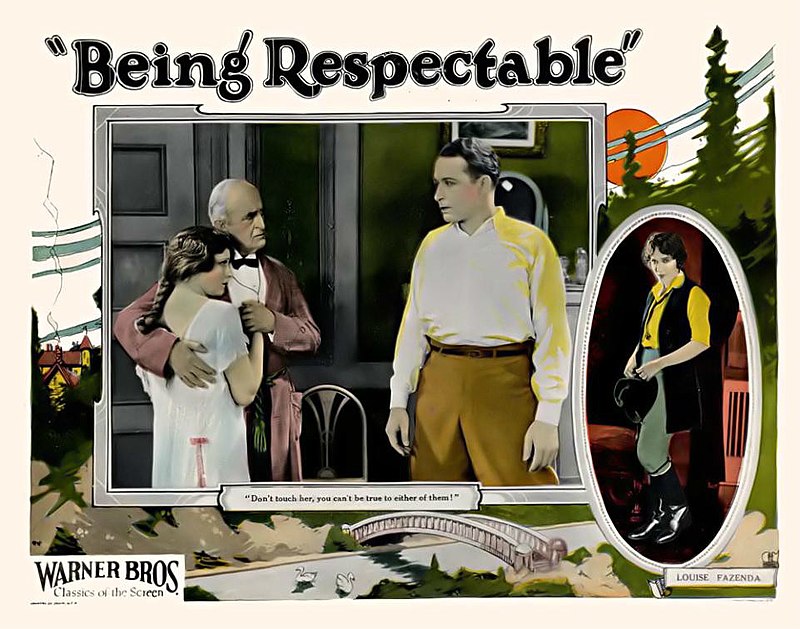
Wealthy young Charles Carpenter is pressured by his family to marry Suzanne, even though he is really in love with young “flapper” Valerie. He gives in to his family’s pressure, however and marries Suzanne, after which Valerie leaves town. Years later, after Charles and Suzanne have had a child, Valerie comes back to town and, Charles realizes he is still in love with her…and she with him. Complications ensue. [Source]
Through the scheming of his respectable, and wealthy family, Charles Carpenter is obliged to marry Suzanne, although he is in love with young flapper Valerie Winship. Years later, when Valerie is back in town, they renew the affair and, Carpenter plans to leave his wife and child for her. […] in the end, he yields to family duty and respectability. [Source]
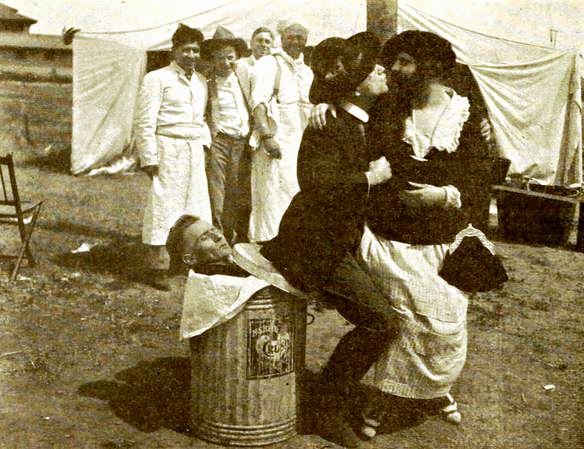
A serious-minded boob named Stradivarious O’Day, because his music-loving mother says he “fiddles his time away”, acquires his nickname because of his motto of “one thing at a time and that done well.” Falling in love when he first sees circus bareback rider Prairie-Flower Marie, O’Day, living off his inheritance, follows the circus until the pestered manager gives him a job cleaning his Ford. With the help of a manual, O’Day learns to drive and secures employment with the circus as a chauffeur. After strong man Gorilla Lawson, who also loves Marie, beats him up, O’Day contacts his friend, boxer Roughneck M’Dool, to teach him to fight. Lawson, frightened by O’Day’s daily development, steals the circus receipts, and the Ford, on the day of their scheduled fight but, O’Day overtakes and whips him. After O’Day weds Marie, he unwittingly goes against his motto when he becomes the father of twins.









 Cosmic-Observation