You’ve probably heard of ChatGPT, a computer program that is trained to follow your instruction and provide a variety of wide ranging responses. As someone that has spent some time actually using the AI, I have to say, the results it produces can be eerily human but, did you know that computer scientists have been working alongside chatbots as early as the 1960s?
It was the late 1960’s and Joseph Weizenbaum, an MIT computer scientist, had just completed work on his revolutionary chatbot ELIZA. Weizenbaum was born in Berlin, Germany, in 1923 and fled the country with his family in 1935 to escape the political turmoil. Weizenbaum came to the United States where his road to computer science would ultimately begin. After time spent in the Air Force, Weizenbaum would go on to study as a computer scientist and eventually work in the industry. You have to remember, computers at that time were not portable devices that could fit in our pockets. In fact, they often barely fit into a room! As an associate Professor at MIT, Weizenbaum became obsessed with the way computers could directly interact with humans through language. It was this early through line between computers and human language that would work to lay the foundation for his own chatbot and eventually lay the groundwork for the AI development of programs such as ChatGPT, Siri and Alexa.
Eliza was completed in 1966 and Weizenbaum offered MIT students the opportunity to interact with the chatbot. This process consisted of messages typed into the computer by students and, responses would then be provided by ELIZA, […] routed to an electronic typewriter and printer. Weizenbaum was initially happy with the response that was garnered from users’ experience with ELIZA but, there was one thing he did begin to notice that he viewed as considerably concerning. Overtime, Weizenbaum made note of users starting to divulge deep personal information, looking for help similar to that of a therapy session. This observation ended up pushing Weizenbaum to advocate for caution when relying too heavily on computers for human thought…
“There are aspects to human life that a computer cannot understand—cannot. It’s necessary to be a human being. Love and loneliness have to do with the deepest consequences of our biological constitution. That kind of understanding is in principle impossible for the computer.”
I got a another gift in the mail from Momma Linda. I have another dragon to add to my collection. I think there are eggs in the geode. Just…too cute! Thanks, Momma!
Hanspostcard has a song draft challenge. This is my Round Nine pick.
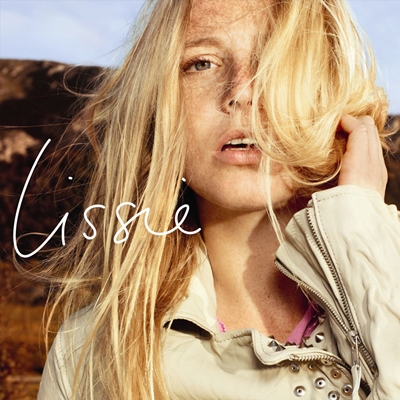
This, and my last pick, will feature two women that are a little less known in the music world. I skipped right over the 2000s (only so many choices) and hopped into the next decade. I happened to catch this song while listening to the University of Texas @ Austin’s radio station (a station involved with SXSW). I was hooked and I went looking for it…and her. Elisabeth Corrin Maurus or Lissie is a singer-songwriter out of Rock Island, Illinois.
“I always sang, since I was little and wrote poems in high school. I sort of taught myself to play guitar lines to the poems and stuff. In high school, it seems like everyone has more drama than any other time in their life, [so] that was the time in my life where I really leaned on music as a way to stay sane…”
Interview With Lissie Scott the Intern Pop Culture Madness [Web Archive] February 11, 2008
Give her a listen. I think she is fantastic and her two band members are outstanding, as well. They are all over YouTube and, in live recordings, her bassist is sitting down, keeping the drum/cymbal beat. Talk about multitasking. I’ve included the studio version of this that has more drum work on it and a possible synthesizer. I’m also including her version of Go Your Own Way. which actually charted in the UK in 2012. The studio version sounds like it has a cello in it and is part of the soundtrack from the movie Safe Haven. She has been very busy.
Image Credit: americanmovieawards.com & The Wayback Machine
Screen Capture
Forty years ago, today, the very first American Movie Awards was televised on NBC. Filmed at the Wilshire Theatre, the ceremony honored film, actors, directors, screenwriters, music, favorites and a special recognition. Co-hosts were David Frost (also Executive Producer) and Dudley Moore with Angie Dickinson as Co-Hostess. Susan Anton was a performer. Judging by what few images I could find, the trophy was designed to resemble the Empire State Building.
Winners:
♦ Best Film: Rocky II
♦ Best Actor: Alan Alda (The Seduction of Joe Tynan)
♦ Best Actress: Sally Field (Norma Rae)
♦ Best Supporting Actor: Robert Duvall (Apocalypse Now)
♦ Best Supporting Actress: Meryl Streep (The Deer Hunter)
♦ Best Director: Michael Cimino (The Deer Hunter)
♦ Best Screenplay: The China Syndrome
♦ Best Original Song: Every Which Way But Loose (Every Which Way But Loose)
♦ Favorite Film Star-Female: Jane Fonda
♦ Favorite Film Star-Male: Burt Reynolds
♦ Special Marquee: Clint Eastwood (Distinguished and Continuing Career)
There was another ceremony in March 1982 at a different location and a relaunch in 2013 with ceremonies in 2014, 2015, 2016, 2017 and 2018 focusing mainly on Independent Film. I doubt there will be anymore ceremonies as the website was taken down last year. There are no videos of the event on YouTube, either.
I climbed into a guy’s car for a road test and met his little friend. I asked him if he minded me taking a picture of it. He posed her a little bit for me. Then, I asked him “Favorite past-time?” “Nah.” was his response. “It was gift from a friend…a female friend, no less.”
This comes under the heading of Things You Don’t See Everyday. I DO miss this job sometimes. ~Vic
After a beautiful princess, Aurora, is born in to royalty everyone gathers to exchange gifts. Everything is perfectly fine until an unwanted guest appears, Maleficent. Maleficent casts a spell on the young princess and announces that she will die by pricking her finger on the spindle of a spinning wheel on the evening of her 16th birthday. Fortunately, one of the good fairies, Merryweather, changes the spell so Aurora will fall asleep, and that the only way to wake her from her sleep is true love’s kiss. Finally the day comes.
The Sleeping Beauty story has many variations and has deep, medieval roots. Disney’s movie was based on French author Charles Perrault’sLa Belle Au Bois Dormant (German: Dornröschen or Little Briar Rose) or, in English, The Sleeping Beauty in the Woods, written in the late 1600s.
Image Credit: imdb.com & amazon.com
Other Perrault works include Le Petit Chaperon Rouge (Little Red Riding Hood), Cendrillon (Cinderella), Le Chat Botté (Puss in Boots) and Barbe Bleue (Bluebeard). Perrault’s literary tales predate the Brothers Grimm material by 100+ years but, The Sleeping Beauty, in particular, was based on the Sun, Moon & Talia (Sole, Luna, e Talia) piece by Italian writer Giambattista Basile, published, posthumously, in the early 1600s. This would NOT be a good children’s fairy tale.
Perceforest, a collection of six French books from the middle 1300s, with ties to the Arthurian Legend, appears to be the earliest written form of the story.
Trivia Bits:
♦ Princess Aurora’s long, thin, willowy body shape was inspired by that of Audrey Hepburn.
♦ The prince is named after Prince Philip, the Duke of Edinburgh and husband of Queen Elizabeth II of Great Britain, as well as Prince Philip of Belgium (now King Philip).
♦ This is the only Disney movie with square trees.
♦ Famed Warner Bros. animation director Chuck Jones worked on the film, briefly, when Termite Terrace closed temporarily during the late 1950s. He found the atmosphere at Walt Disney Productions oppressive because everything anyone did there had to be approved by Walt Disney before, during and, after the process of production. He was more than happy when Warner’s animation department re-opened, where he stayed until it closed again in 1964.






 Cosmic-Observation