History
Military Monday: Bach Mai Hospital Bombing Acknowledged 1973

Flickr
Hanoi 1973
Click for a larger view.
Fifty years ago, today…
The Pentagon acknowledged for the first time that Bạch Mai Hospital and Gia Lam Airport in Hanoi had been accidentally damaged during December’s Operation Linebacker II bombing raids but, without clarifying if the damage was caused by bombing, falling debris or anti-aircraft weapons.
During Nixon’s Christmas bombing, Operation Linebacker II, on December 22, 1972, American bombs struck the hospital, obliterating the building, […] killing 28 hospital staff members and an unconfirmed number of patients.
On the 22nd, a wing of the Bach Mai Hospital, located in the southern suburbs of Hanoi, was struck by a stick of bombs from a B-52. The US military claimed that the hospital “frequently housed anti-aircraft positions.” The civilian deaths were criticized by the North Vietnamese and U.S. peace activists. The hospital sat one kilometer from the runway of [the] Bach Mai Airfield and a major fuel storage facility was only 180 metres (200 yds) away. While the patients of the hospital wing had been evacuated from the city, 28 doctors, nurses and pharmacists were killed.
A Pentagon spokesman confirmed today for the first time reports of damage to the Bach Mai Hospital and Gia Lam Airport in Hanoi during heavy air raids last month over North Vietnam but, he denied that the damage was either massive or intentional. Jerry W. Friedheim, Pentagon spokesman, said at a morning news briefing:
“It appears that some limited accidental damage has occurred to some facilities at Gia Lam Airport and at a hospital the enemy calls Bach Mai. The exact extent of this damage is uncertain, as is its cause. Our information does not square with Hanoi’s propaganda claims of massive destruction at these sites.”
Report of Damage to Hanoi Hospital Confirmed By U.S.
New York Times
Anthony Ripley
January 2, 1973
The True Story of the Christmas Bombing in North Vietnam 1972 (Americong/Roger Canfield/November 11, 2011)
Vietnam Christmas Bombings: 1972 Mutiny of B-52 Crews (The Veteran/VVAW/Summer 1977)
Throwback Thursday: Eastern Airlines Flight 401 1972

Date: March 1972
Author: Jon Proctor
Source: Airline Fan
Fifty years ago, today…
Eastern Air Lines Flight 401 was a scheduled flight from [New York] JFK to [Miami/Wilcox Field] MIA. Shortly before midnight on December 29, 1972, the Lockheed L-1011-1 TriStar crashed into the Florida Everglades, causing 101 total fatalities. Three of the [four] cockpit crew members, two of the [ten] flight attendants and 96 of the 163 passengers were killed. [T]here were 75 survivors.
Flight 401 departed JFK Airport […] at 9:20pm EST. The flight was routine until 11:32pm EST, when the plane began its approach into Miami International Airport. After lowering the [landing] gear, First Officer Stockstill noticed that the landing gear indicator (nose gear is properly locked) had not illuminated (burned out bulb). [Captain] Loft, who was working the radio during this leg of the flight, told the tower that they would discontinue their approach to their airport and requested to enter a holding pattern. The approach controller cleared the flight to climb to 2,000 feet and then hold west over the Everglades.
Fifty seconds after reaching their assigned altitude, Captain Loft instructed First Officer Stockstill to put the L-1011 on autopilot. For the next 80 seconds, the plane maintained level flight. Then, it dropped 100 feet and, then, again, flew level for two more minutes, after which it began a descent so gradual, it could not be perceived by the crew.
Wikipedia Summary
The plane continued to drop, triggering the altitude warning. The CVR did not record any indication that the pilots heard the warning chimes. As Stockstill started another turn [of] 180°, he noticed the discrepancy. The CVR captured the last, confused conversation between Stockstill and Loft. Less than ten seconds later, the plane crashed into the Everglades. ~Vic
Additional:
Giant Jetliner Goes Down (The Bulletin)
Jet’s Fall Cushioned By Swamp (Reading Eagle)
Accident Investigation Report (Aviation Safety Network)
Borman Praises Survivors’ Calm (The Associated Press)
Christmas 2022
Memories from my years in Texas. Merry Christmas, everyone. ~Vic

12-20-2005
Click for a larger view

12-20-2005
Click for a larger view.

12-20-2005
Click for a larger view.

12-18-2005
Click for a larger view.
Wayback Wednesday: Challenger Expedition 1872
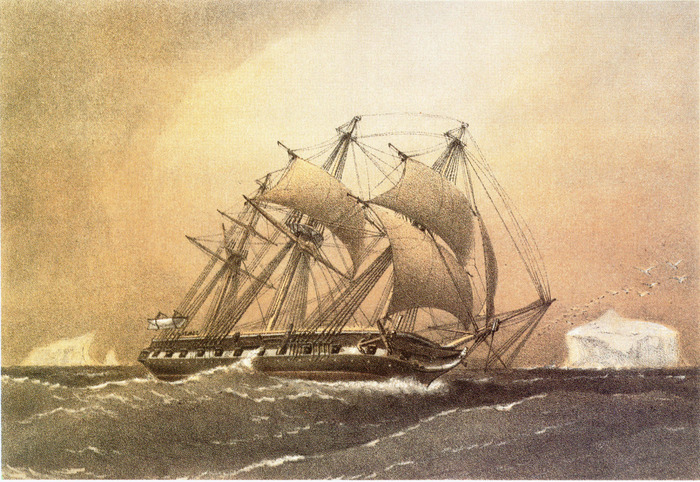
University of Washington
Author: William Frederick Mitchell
One hundred and fifty years ago, today…
The Challenger expedition of 1872–1876 was a scientific program that made many discoveries to lay the foundation of oceanography. The expedition was named after the naval vessel that undertook the trip, HMS Challenger.
The expedition, initiated by William Benjamin Carpenter, was placed under the scientific supervision of Sir Charles Wyville Thomson of the University of Edinburgh and Merchiston Castle School, assisted by five other scientists, including Sir John Murray, a secretary-artist and, a photographer. The Royal Society of London obtained the use of Challenger from the Royal Navy and, in 1872, modified the ship for scientific tasks, equipping it with separate laboratories for natural history & chemistry. The expedition, led by Captain Sir George Strong Nares, sailed from Portsmouth, England, on [December 21, 1872]. Other naval officers included Commander John Maclear.
Under the scientific supervision of Thomson himself, the ship traveled approximately 68,890 nautical miles (79,280 miles/127,580 kilometres) surveying and exploring. The result was the Report of the Scientific Results of the Exploring Voyage of H.M.S. Challenger during the years 1873–76 which, among many other discoveries, catalogued over 4,000 previously unknown species. John Murray, who supervised the publication, described the report as “the greatest advance in the knowledge of our planet since the celebrated discoveries of the fifteenth and sixteenth centuries.” Challenger sailed close to Antarctica but, not within sight of it. However, it was the first scientific expedition to take pictures of icebergs.
Wikipedia Summary
Additional:
From Deep Sea to Laboratory (The First Explorations of the Deep Sea by H.M.S. Challenger 1872-1876)/ISTE UK Website
Then & Now: The HMS Challenger Expedition & the Mountains in the Sea Expedition/NOAA Ocean Explorer/2003
HMS Challenger Expedition/Natural History Museum UK/2014 (Web Archive)
HMS Challenger/USCD Aquarium/2008 (Web Archive)
Shutterbug Saturday: Land of Oz 4.0
More from my Land of Oz photo collection. Previous posts are here, here & here. It has been over a year since I posted any of these. More to come. ~Vic
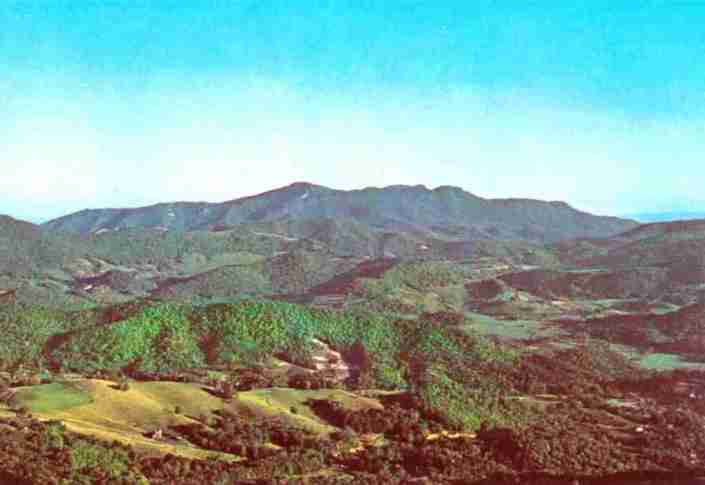
as seen from the Park.
Circa: Early 1970s
Image Credit: Emerald Mountain Realty

Circa: Early 1970s
Image Credit: Emerald Mountain Realty

It is my understanding that this bust
is missing…stolen like other artifacts.
Image Credit: Emerald Mountain Realty

Circa: Early 1970s
Image Credit: Emerald Mountain Realty

Circa: Middle 90s
Image Credit: Emerald Mountain Realty

Salvaged in the early 90s
Image Credit: Emerald Mountain Realty

Circa: Middle 90s
I swear he looks more like Stephen King’s IT
Image Credit: Emerald Mountain Realty
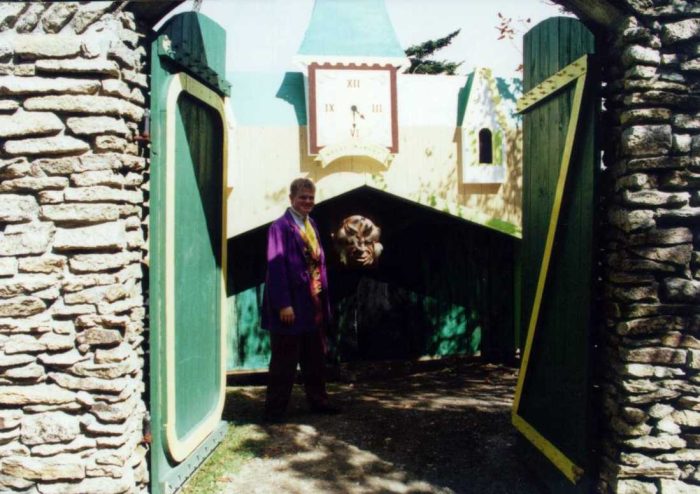
Circa: Middle 90s
Image Credit: Emerald Mountain Realty
Tune Tuesday: Tell Me Pretty Maiden 1902
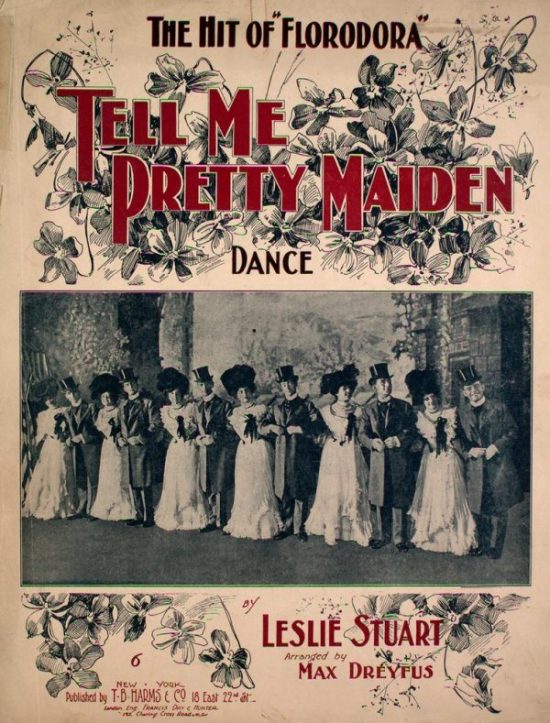
One hundred & twenty years ago, the #1 song of 1902 was Tell Me Pretty Maiden by Byron G. Harlan, whistler Joe Belmont and the Florodora Girls. According to Tsort, there are almost NO charts from before 1920. I plugged in today’s date on Playback FM and this is what I got. You can peruse Tsort’s Site Generation Page, describing source charts and consolidation. They seem to have their own method for old stuff and, apparently, Playback FM agrees.

Florodora is an Edwardian musical comedy. After its long run in London, it became one of the first successful Broadway musicals of the 20th Century. The book was written by Jimmy Davis, under the pseudonym Owen Hall, the music was by Leslie Stuart with additional songs by Paul Rubens and, the lyrics were by Ernest Boyd-Jones, George Arthurs and Rubens.
The original London production opened in 1899, where it ran for a very successful 455 performances. The New York production, which opened the following year, was even more popular, running for 552 performances. After this, the piece was produced throughout the English-speaking world and beyond. The show was famous for its double sextet and its chorus line of “Florodora Girls“.
Wikipedia Summary
It appears that the Harlan & Belmont version, with the Florodora Girls was very, very popular. Second Hand Songs also lists a Frank Stanley as part of the team. UC Santa Barbara lists Frank Banta on piano and calls the group the Edison Sextette.
Flashback Friday: St. Elizabeth’s Flood 1421
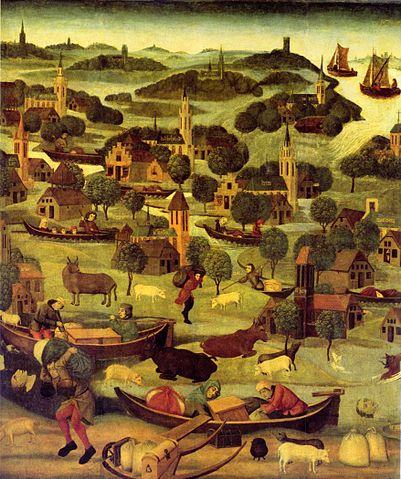
Circa 1490 to 1495
Collection: Amsterdam Museum
Source: Museum Site
Six hundred & one year, ago, today…
The St. Elizabeth’s flood of 1421 was a flooding of the Grote Hollandse Waard, an area in what is now the Netherlands. It takes its name from the feast day of Saint Elisabeth of Hungary which was formerly [November 19th]. It ranks 20th on the list of worst floods in history. During the night of [November 18th-19th] 1421, a heavy storm near the North Sea coast caused the dikes to break in a number of places and the lower-lying polder land was flooded. A number of villages were swallowed by the flood and were lost, causing between 2,000 and 10,000 casualties. The dike breaks and floods caused widespread devastation in Zeeland and Holland.
This flood separated the cities of Geertruidenberg and Dordrecht, which had previously fought against each other during the Hook and Cod (civil) wars. Most of the land remains flooded even since that day.
Most of the area remained flooded for several decades. Reclaimed parts are the island of Dordrecht, the Hoeksche Waard island and north-western North Brabant. Most of the Biesbosch area has been flooded since.
The cause of the flood was a powerful extratropical cyclone. Water from the storm in the North Sea surged up the rivers causing the dikes to overflow and break through. The flood reached a large sea arm between south Holland and Zeeland, destroying the Grote Hollandse Waard.
Wikipedia
I tried to find a video about this but, all I got was a creepy AI voice reading what I posted, above. As an interesting addendum, there was a St. Elizabeth’s flood of 1404, on or about November 19, also, affecting Holland, Zeeland and Flanders. History Calendar on Twitter posted about it, too. ~Vic
Additional:
♦ Zuiderzee Floods (Britannica/November 11, 2022)
♦ Elizabeth and the Flood (Codart/May 8, 2022)
♦ Katje the Windmill Cat (Atozmom’s BSF Blog/March 1, 2014)
Chris Thomas: Balls of Light or Orbs
A PDF Essay From: The Chris Thomas Files

We have all seen the many thousands of photographs which show the image of a Ball of Light in the finished photograph which were not necessarily visible to the naked eye. There have been numerous interpretations placed upon these BOLs but, what are they in reality?
Most people assume that these are a new phenomenon whereas, there is in fact a written history of sightings going back several hundred years. In the past, these were not called Balls of Light or Orbs but, “swamp lights”, “will o’ the wisp” and “Jack-O-Lanterns”, as well as many other names in local dialects. To understand what this phenomenon is, we need to look at the nature of the Universe, how it is constructed and how it functions.
The Nature of Our Universe
Ever since Sir Isaac Newton had an apple land on his head (figuratively speaking) 400 years ago, science has believed in gravity. It is only in very recent years that they have begun to question the role that gravity plays and even to question whether that gravity exists at all. Certainly, Double Dark Theory (Dark Matter and Dark Energy) presents considerably more questions than it answers with most cosmologists, now, believing that this theory has no validity at all.
As DDT is becoming increasingly rejected, more and more cosmologists are looking towards Black Holes as a way of explaining how the universe holds itself together. However, even with Black Hole Theory, it remains impossible to answer many of the questions. Fortunately, in recent years, some of the more aware scientists are beginning to realise that what holds the universe together is a form of electro-magnetic energy. If it is assumed that electro-magnetic energy holds the universe together, all of the unanswered questions that cosmologists fight over suddenly become answered.
In addition to the workings of the universe, electro-magnetic frequencies also seem to play a major role in life on Earth, especially when it is applied to humans and animals. But, there is another way of looking at electro-magnetic frequencies and that is, instead of electro-magnetic, substitute the word conscious-ness. There is a great deal of debate, in scientific circles, about how large an organism needs to be before it develops consciousness as well as where consciousness is located within the body. The current thinking is that consciousness is located in a region of the brain known as the amygdala. This is a region at the base of the brain and attached to the brain-stem. It would be fair to say that looking at the amygdala to see consciousness is akin to looking at Liverpool hoping to see Britain. The reality is that the scientific view is from the wrong direction.
If we look to more “traditional” sources of knowledge and, particularly the Akashic, what we find is a very different view of reality to that which scientists are currently exploring. Instead of the body becoming large enough for consciousness to develop, it is the consciousness that builds the body. In other words, life begins with consciousness and all else follows. It is the same with our Universe. Our Universe began with a consciousness, a “Universal Soul” and, everything that exists in our Universe is also a soul, or a consciousness. When scientists talk about measuring electro-magnetic frequencies, what they are actually talking about is measuring soul energy.

Gravity does not exist. What holds the Universe together, what holds humans on the Earth and what makes apples fall to the ground, is soul energy, consciousness energy. Everything that exists anywhere is a soul, a consciousness and, it is the interactions between souls which holds everything together and makes everything happen. Without consciousness, soul, nothing would exist and no events would occur.
Our Universe exists because it was Created to exist. A soul, a consciousness, exists who decided to explore the potential It contains within Itself. This Creationery-source asked Itself a question…a question along the lines of “What would happen If…?” In order to answer It’s question, this Source brought our Universe into being and peopled it with other, lesser forms of consciousness that could explore the answer to the Question on the Creator’s behalf. In this way, the Universal “envelope” is a consciousness, each galaxy is a consciousness, each solar system is a consciousness and each star is a consciousness.
In addition, we have free-moving and free-acting souls who can explore the Answers on the Creator’s behalf. These free-moving and free-acting souls take on two forms. The first do not have any physical form or physical density and the Akashic calls them the non-physical races. These souls were Created about 100 million years ago. The second have a physical form and a physical density but, are comprised of energies that fall outside of human perceptions. The Akashic calls these the semi-physical races and they were Created about 30 million years ago.
Both of these groups of races, the non-physical and the semi-physical, started their existence on a home planet but, over the millennia, have spread out throughout our Universe. But, there was another stage of development that was universally decided upon about 60 million years ago and this new development lead directly to the creation of our solar system. For many reasons (see Synthesis), once a suitable body form had been developed on Earth, those souls who came to live here are primarily made up of the non-physical races. In other words, 99.9 percent of the souls who are in human form on Earth are souls who originated with the non-physical races. The other 0.001 percent of the human population is made up of souls who originate from the semi-physical races. There are very many reasons for this division of human souls, which are outside of the scope of this essay but, see the author’s books on the subject.

The Development of Our Solar System
As with all free-moving and free-acting life throughout our Universe, a “home planet” was needed in order for human life to exist, a place where this new “experiment” in a fully physical life-form could inhabit. Throughout our Universe, many billions of solar systems exist. Usually, the solar system is comprised of one soul. This solar system soul is, normally, the solar system sun, or suns, if it is a binary system. All of the planets within this type of solar system are created by the solar system consciousness as well as all of the forms of life that exist on those planets (except for situations where the solar system supports either the non-physical or semi-physical races; in these instances, the souls of the “higher life-forms” are brought into being by the Creator).
With our solar system, the arrangement is quite different. Our solar system is unique. That means what it says. No other solar system is comparable to the one we inhabit. The reason for this is that the sun and each of the planets, in our solar system, are individual consciousnesses in their own right. This collection of souls, who were capable of building planets, was decided upon in order to maximise the potential for bringing “physical” beings to life. Originally, all of the planets in our solar system were inhabited by a huge diversity of life-forms, the likes of which do not exist anywhere else within our Universe. However, about 3.8 million years ago, a solar system-wide disaster occurred and virtually all life was wiped out except for our planet, Earth. The reasons for this solar system-wide disaster fall outside of the scope of this essay but, see The Universal Soul.
To continue reading (it’s six pages), download the PDF version HERE.
[Note: This PDF was originally posted on The Spirit Guides UK website on August 19, 2011.]
Flashback Friday: Alcoholics Anonymous 1935

Author: John Leffman
Eighty-seven years ago, today, Robert Smith drank his last drink, the date marked by AA for its anniversaries.
Alcoholics Anonymous (AA) is an international mutual aid fellowship dedicated to abstinence based recovery from alcoholism through its spiritually inclined Twelve Step program. Following its Twelve Traditions, AA and autonomous AA groups are self-supporting through the strictly voluntary contributions from members only. The Traditions also establish AA as non-professional, non-denominational and apolitical, with an avowed desire to stop drinking as its sole requirement for membership. Though AA has not endorsed the disease model of alcoholism, to which its program is nonetheless sympathetic, its wider acceptance is partly due to many members independently promulgating it. A recent scientific review shows that by many measures AA does as well or better than other clinical interventions or no treatment. In particular, AA produces better abstinence rates with lower medical costs. As of 2020, having spread to diverse cultures, including geopolitical areas normally resistant to grassroots movements, AA has estimated its worldwide membership to be over two million with 75% of those in the U.S. and Canada.
AA marks 1935 for its founding when Wall Street analyst and newly recovering alcoholic Bill Wilson, then reeling from a failed proxy fight, sought to stay sober by commiserating with detoxing surgeon Bob Smith. After leaving the Oxford Group to form a fellowship of alcoholics only, Wilson and Smith, along with other early members, wrote Alcoholics Anonymous: The Story of How More Than One Hundred Men Have Recovered From Alcoholism, from which AA acquired its name. Published in 1939 and commonly called “the Big Book”, it contains AA’s Twelve Step recovery program. Later editions included the Twelve Traditions, first adopted in 1946 to formalize and unify the fellowship as a “benign anarchy”.
Wiki Summary
Wayback Wednesday: Attilla Attacks Italy 452
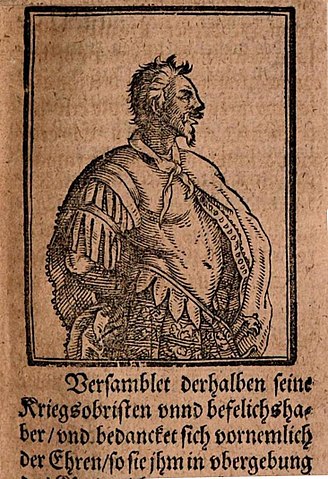
Author: Willhelm Dilich
Source: Ungarische Chronica
Image Credit: Wikipedia
Attila was the ruler of the Huns from 434 until his death in March 453. He was also the leader of a tribal empire consisting of Ostrogoths, Alans and Bulgars, among others, in Central and Eastern Europe. He is also considered one of the most powerful rulers in world history.
Attila [invaded] and [ravaged] Italy on June 8, 452, one-thousand, five hundred and seventy years, ago, today. Communities became established in what would later become Venice as a result of these attacks when the residents fled to small islands in the Venetian Lagoon. His army sacked numerous cities and razed Aquileia so completely that it was afterwards hard to recognize its original site. Aëtius lacked the strength to offer battle, but managed to harass and slow Attila’s advance with only a shadow force. Attila finally halted at the River Po. By this point, disease and starvation may have taken hold in Attila’s camp, thus hindering his war efforts and potentially contributing to the cessation of invasion.
Wiki Summary
Attila, by-name Flagellum Dei (Latin: “Scourge of God”) [ruled] jointly with his elder brother Bleda until 445. In legend, he appears under the name Etzel in the Nibelungenlied and under the name Atli in Icelandic sagas. The empire that Attila and his elder brother Bleda inherited seems to have stretched from the Alps and the Baltic in the west to somewhere near the Caspian Sea in the east.
In 452, the Huns invaded Italy and sacked several cities, including Aquileia, Patavium (Padua), Verona, Brixia (Brescia), Bergomum (Bergamo), and Mediolanum (Milan). Aetius could do nothing to halt them but, the famine and pestilence raging in Italy in that year compelled the Huns to leave without crossing the Apennines.
Attila, King of the Huns
Britannica Summary
Attila invaded northern Italy in 452 but, spared the city of Rome due to the diplomacy of Pope Leo I and the rough shape of his own troops. Legend has it that St. Peter and St. Paul appeared to Attila, threatening to strike him dead if he did not settle with Pope Leo I. Attila died the following year, in 453, before he could try once again to take Italy.
Attlia the Hun
Biography
Throwback Thursday: Rome Sacked 455

Collection: Tretyakov Gallery
Image Credit: Wikipedia
One thousand, five hundred and sixty-seven years ago, today…
The Sack of 455 was the third of four ancient sacks of Rome. [It] was conducted by the Vandals, who were then at war with the usurping Western Roman Emperor Petronius Maximus.
In the 440s, the Vandal king Genseric and the Roman Emperor Valentinian III had betrothed their children, Huneric and Eudocia, to strengthen their alliance, reached in 442 with a peace treaty (the marriage was delayed as Eudocia was too young). In 455 Valentinian was killed and Petronius Maximus rose to the throne. Petronius married Valentinian’s widow, Licinia Eudoxia and had his son Palladius marry Eudocia. [In] this way, Petronius was to strengthen his bond with the Theodosian Dynasty. Unhappy, however, with her husband’s murder and the usurpation of Maximus, Eudoxia turned to aid from the Vandals to remove Maximus from his undeserved throne. The overture was favorably met because Maximus’ revolution was damaging to Genseric’s ambitions. The king of the Vandals claimed that the broken betrothal between Huneric and Eudocia invalidated his peace treaty with Valentinian and set sail to attack Rome, landing at Ostia at the mouth of the Tiber.
Wiki Summary
On this day in 455, the Vandals sacked Rome. It wasn’t too awful, as sackings go, because the Vandal king Genseric agreed to refrain from slaughtering all the inhabitants and burning down the entire city if the Romans didn’t put up any military resistance…which, they didn’t. They just threw the gates right open. So, for the next two weeks, the Vandals merely drank all the wine, stole all the treasure, enslaved an unlucky few thousand locals and generally vandalized the place. A few hundred of the impromptu wine-tastings, as it were, got out of hand and some buildings, or some people, ended up on fire but, hey…relatively speaking, the Romans got off pretty easy.
Modern Drunkard Magazine
Today’s Reason To Drink
Frank Kelly Rich
Throwback Thursday: King James & The Virgin Queen 1603

1605
Collection: Museo del Prado
Photographer Source: Galaria Online
Four hundred, nineteen years ago, today, James Charles Stuart was crowned James I, King of England and Ireland, after the death of Elizabeth I. Though England and Scotland were sovereign, individual states, he ruled them in personal union.
He was the son of Mary, Queen of Scots and the great-great grandson of Henry VII. He was thirteen months old when his mother abdicated and he succeeded to the Scottish throne, though he had regents governing due to his minority status. He took full control of the government in 1583 and succeeded Elizabeth I, whom was childless, the last monarch from the House of Tudor, in 1603.
He ruled over all three kingdoms for 22 years during the Jacobean Era until his death in 1625 (also in March, on the 27th). During his reign, the Plantation of Ulster and the Colonisation of the Americas began.
He was the longest reigning Scottish monarch, ruling nearly 58 years, surpassed only by crazy King George III (59 years), Queen Victoria (nearly 64 years) and current Queen Elizabeth II at 70 years. He was on the throne during the Gunpowder Plot of 1605 (see my post on Guy Fawkes) and, during the Elizabethan literature Golden Age, with writers such as William Shakespeare and Sir Francis Bacon. He sponsored the English translation of the Bible, the most widely read version and was a poet, himself. He preferred peace to war, steering clear of the Thirty Years’ War that involved most of Europe. There are indications that he was bi-sexual.
He died young at the age of 58 and was succeeded by his second son, King Charles I, a poor ruler that was executed in 1649.
Who Was King James VI & I
King James I
Foto Friday: Wings Over Wayne 2.0
More photos. Previous post here. ~Vic

Click for a larger view.

Click for a larger view.

Click for a larger view.

Click for a larger view.

I climbed into this one.
Click for a larger view.

Click for a larger view.


Snapshots Sunday: Wings Over Wayne 2017
Some shots from the Wings Over Wayne Airshow that I attended with my buddy Ray in May 2017 at the Seymour Johnson Air Force Base. I’d like to return but, convid has pushed it back to 2023. *eyes rolling* ~Vic

Click for a larger view.

Click for a larger view.
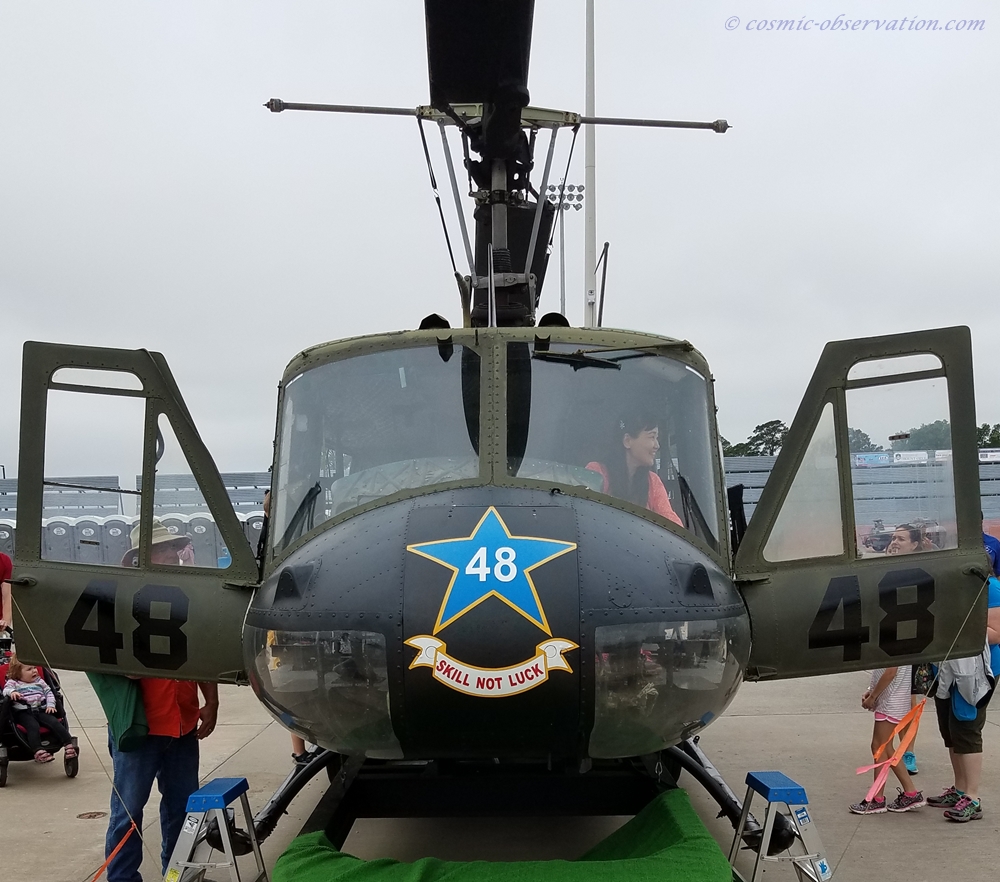
Click for a larger view.
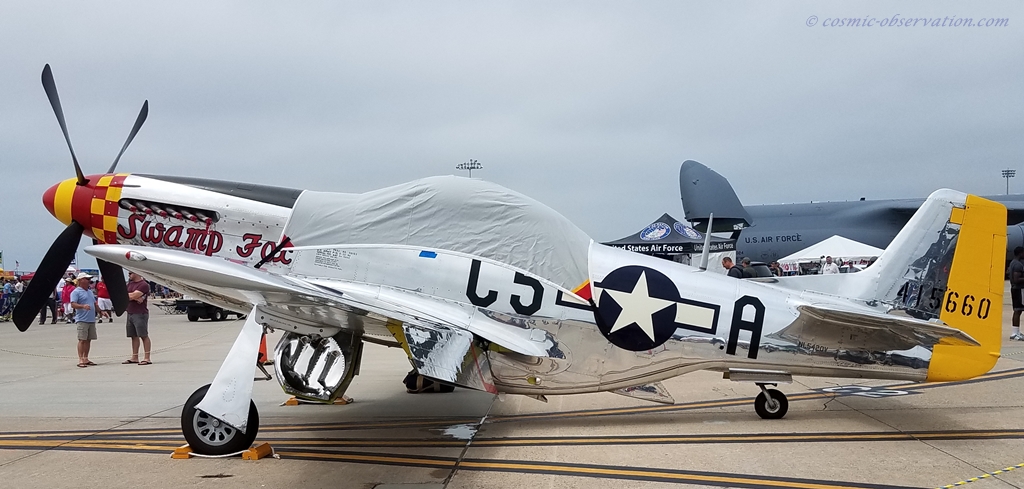
Click for a larger view.

Click for a larger view.

Click for a larger view.

Click for a larger view.

Firing up the engines.
Click for a larger view.
Flashback Friday: Jeannette Rankin 1917

Author: Adam Cuerden
February 27, 1917
Photo Credit: Wikipedia
“I may be the first woman member of Congress but, I won’t be the last.”
Jeannette Rankin was an American politician and women’s rights advocate and, the first woman to hold federal office in the United States. She was elected to the U.S. House of Representatives as a Republican from Montana in 1916 and, again, in 1940. As of 2022, Rankin is still the only woman ever elected to Congress from Montana.
Each of Rankin’s Congressional terms coincided with initiation of U.S. military intervention in the two World Wars. A lifelong pacifist, she was one of 50 House members who opposed the declaration of war on Germany in 1917. In 1941, she was the only member of Congress to vote against the declaration of war on Japan following the attack on Pearl Harbor.
A suffragist during the Progressive Era, Rankin organized and lobbied for legislation enfranchising women in several states including Montana, New York and North Dakota. While in Congress, she introduced legislation that eventually became the 19th Constitutional Amendment, granting unrestricted voting rights to women nationwide. She championed a multitude of diverse women’s rights and civil rights causes throughout a career that spanned more than six decades.
Wikipedia Summary
“I want to be remembered as the only woman who ever voted to give women the right to vote.”
Rankin was born on June 11, 1880, to John and Olive Rankin at Grant Creek Ranch near Missoula, in what was then the Montana Territory. She was the first of seven children […] in a prosperous family. Her father […] was a rancher and builder who had come to Montana from Canada. Her mother […] had moved from New Hampshire to teach before marrying John Rankin and becoming a housewife. Jeannette attended Montana State University in Missoula (now the University of Montana) and graduated in 1902 with a degree in biology. [Her] career in politics began as a student volunteer with a local women’s suffrage campaign in Washington State, preparing for a referendum on voting rights. [In] February 1911, she became the first woman to address the Montana legislature when she testified in support of women’s suffrage.
Jeannette Rankin
History, Art & Archives
United States House of Representatives
Rankin held office in her first term from March 4, 1917, one-hundred and five years, ago, today, to March 3, 1919. Her second term was from January 3, 1941 to January 3, 1943. Powerful enemies made sure she could not get re-elected. Twenty-four years later, she reclaimed her seat. She never married and passed away May 18, 1973 at the age of 92. ~Vic
Additional Reading:
Jeannette Rankin (Biography/February 27, 2018)
Montana’s Women Candidates Are Out To Set Another Record (Billings Gazette/Web Archive/October 25, 2016)
Seven Things About Jeannette Rankin (History Channel/Jesse Greenspan/September 1, 2018)
- ← Previous
- 1
- 2
- 3
- …
- 12
- Next →
 Cosmic-Observation