When Irish Eyes Are Smiling is a lighthearted song in tribute to Ireland and was very popular in June 1913. Its lyrics were written by Chauncey Olcott and George Graff, Jr., set to music composed by Ernest Ball, for Olcott’s production of The Isle O’ Dreams and, Olcott sang the song in the show. It was first published in 1912, at a time when songs in tribute to a romanticised Ireland were very numerous […], both in Britain and the United States. During the First World War, the famous tenor John McCormack recorded the song.
The song continued to be a familiar standard for generations. Decades later, it was used as the opening song on the radio show Duffy’s Tavern. The song has been recorded on over 200 singles and albums, by many famous singers, including Bing Crosby, Connie Francis and Roger Whittaker.
Wikipedia Summary
As I have stated in previous posts, Billboard’s charting abilities, in the early 20th Century, is difficult to navigate. My first stop, for these early pieces, is the Tsort site. Playback FM is very helpful, too. Digging around in the Wayback Machine can be a complete rat maze. The data is there but, how much time do you devote to searching for it.
There was a Shamrock Summit in March 1985, apparently, in Canada (which I don’t remember). Starting on St. Patrick’s Day, Prime Minister Brian Mulroney and President Ronald Reagan met & talked for two days. Remember the Acid Rain Scare back then? It was seen as a Turning Point in U.S.-Canada Relations (both Trudeaus don’t play well with others?) and the closing ceremonies were televised, with the men & their wives singing the song (Mulroney & Reagan are Irish surnames). I find the meeting in Quebec City and the singing of an Irish song, ironic and amusing. ~ Vic
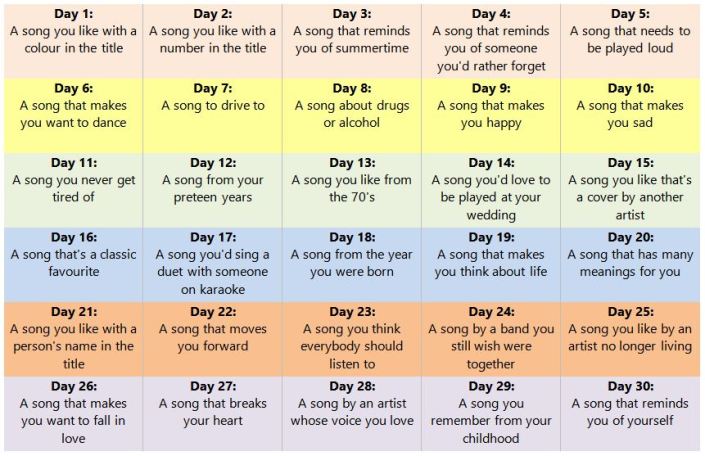
Hanspostcard has a song draft challenge. This is my Round Six pick.
Moving into 1986… My first introduction to R.E.M. wasn’t the radio or MTV. It was an odd video channel on Cablevision in the early 80s in my NC hometown (my mom only had basic cable…no MTV). I’ve talked at great length with Max (Powerpop Blogger) about this obscure video channel. I remember two VJs, one named “Dr. John” (not the musician) that wore blue scrubs and one named “Carrot Top” (not the comedian), that, of course, was a red-headed dude. I have no idea where this channel broadcast from but, it was a seriously stripped down operation. It was just rotating VJs, sitting at a desk, talking into a camera…and playing music videos. The first video I recall seeing was Radio Free Europe, the Murmur version, not the Hib-Tone single (I later found out). I was immediately hooked but, totally missed who the band was. (Interestingly, the Hib-Tone version was recorded at Drive-In Studios in Winston-Salem, NC and the Murmur version was recorded at Reflection Studios in Charlotte, NC.) Fast forward to the end of my senior year of high school and I see some of So. Central Rain (I’m Sorry) on MTV. I had no idea that this was the same band. It wasn’t until my sophomore year of college, when Driver 8 came out (another one I like), that a buddy of mine told me who R.E.M. was…a college band out of the University of Georgia (Bulldogs). Every piece of music of theirs that I was lucky enough to catch, I loved. Finally, in 1987, The One I Love broke thru to #9 on Billboard’s Hot 100 and they seemed to be everywhere. Their highest charting hit was Losing My Religion, getting to #4 in 1991. Out of their entire catalog, which is gi-hugic, Fall On Me wound up being my favorite, with my introductory piece, Radio Free Europe, coming in second. I wish I had seen them live.
Bit of odd trivia…five strange degrees of separation. R.E.M. had a manager by the name of Jefferson Holt. He was with them until 1996 when they got rid of him for sexual harassment. Jefferson Holt is from Chapel Hill and his mother is named Bertha “B” Holt. She was an NC State Rep. from 1975 to 1994, representing my home county (and another one). She was quite the pioneer, advocating for the ERA and married rape victims (which is ironic as hell considering her son’s behavior). My paternal grandmother was in Democratic politics in the 60s, 70s & 80s, running for local office, herself (and on first-names basis with several governors). She campaigned heavily for her favorites and “Bee” Holt was one of them. I met Bee Holt several times as a kid and remember all of her “Bee” 🐝 paraphernalia all over my grandmother’s house.
I guess this makes me closer to R.E.M. than Kevin Bacon! 😉 😊 ~Vic
“Of the genuinely new songs, Peter Buck’s basic music track for Fall On Me dated back to July of 1985, when Stipe had written a lyric about acid rain [but], the song had been virtually re-written, melody and lyrics, by the time it came to be recorded. Stipe, who declared in 1991 that “…this may be my favourite song in the R.E.M. catalogue…”, has described the final version as “…pretty much a song about oppression.” Trainspotters might like to know that the counter-melody used in the second verse is actually the song’s original tune.
Hanspostcard has a song draft challenge. This is my Round Five pick.
Pulling myself out of 1978, I am moving into the 1980s. ~Vic
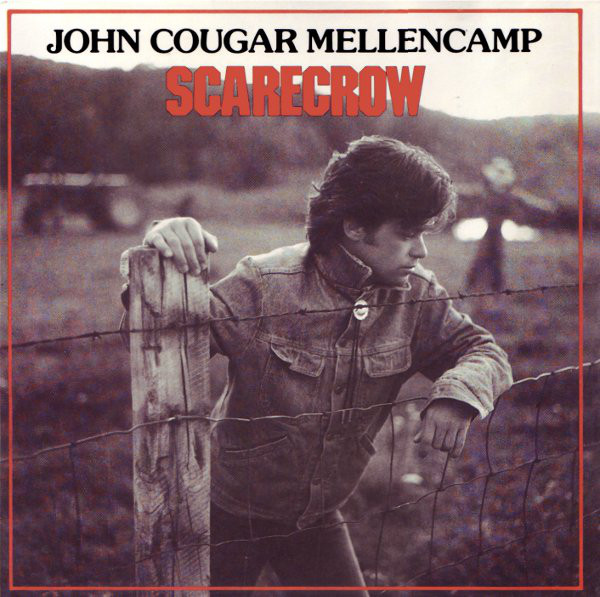
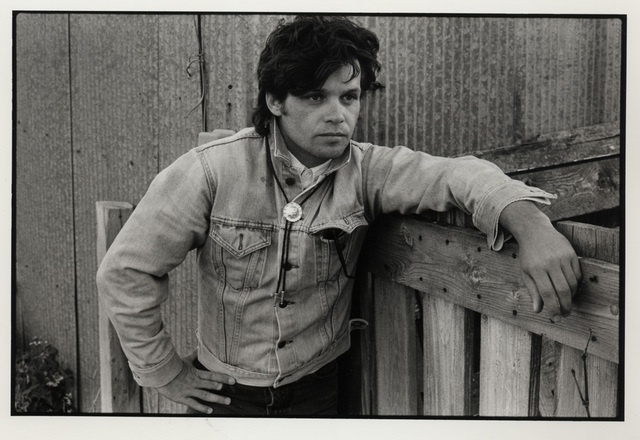
John Mellencamp‘s Scarecrow album was released on August 5, 1985, 25 days prior to my 19th birthday and six weeks before I started my sophomore year of college. God, what an album. This was Mellencamp’s version of Born In The USA (I own both albums). Roots rock/Heartland rock was the music in the background of my graduation from high school and subsequent foray into college. Minutes To Memories was not an official release from the album but, it managed to make it to #14 on the Top Rock Tracks for one week as a non-single album track. It spoke volumes to me…
“You are young and you are the future
So, suck it up, tough it out
Be the best you can.”
“I wrote a song called [You’ve Got To] Stand For Something,” [Mellencamp] explains, “but, I never did say what you should stand for…except your own truth. That song was supposed to be funny, too and, I hope people got that. But, I think that’s the key to the whole LP…suggesting that each person come to grips with their own individual truth […] and try to like themselves a little bit more. Find out what you as a person are […] and don’t let the world drag you down. People should have respect for and believe in themselves.”
A deeply felt sense of responsibility and an equally motivating need to atone for past missteps seem to define Scarecrow. On the midtempo Minutes to Memories, Mellencamp tells the story of a young boy riding home to Indiana after a trip to the South. In the next seat on the bus is a seventy-seven-year-old retired steelworker lecturing the child on how to live, backing his advice with experience. “My family and friends are the best things I’ve known,” he instructs, and the child, a budding rebel, chuckles to himself at how out of touch the old dog is.
Easing into the final verse, Mellencamp hushes his band. In a voice just above a whisper, he suddenly shifts the tale from third to first person. He’s the kid on the Greyhound and, his inability to comprehend, let alone act on, the wisdom he was given then, still haunts him… “Now that I’m older I can see he was right.” [T]hen Mellencamp reveals that he’s telling this story to his own son. He knows he’s being silently scoffed at as surely as his travel companion was two decades earlier. Still, he accepts it and the band rocks out.
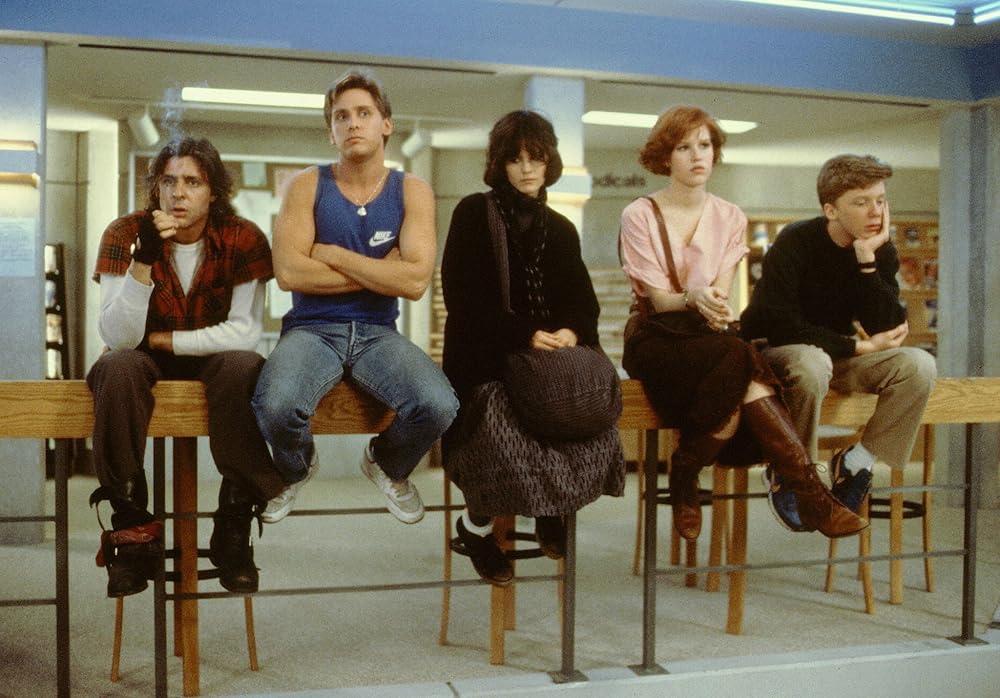
“Saturday, March 24, 1984. Shermer High School, Shermer, Illinois, 60062 (fictional town). […] You see us as you want to see us… […] You see us as a brain, an athlete, a basket case, a princess and a criminal. […] That’s the way we saw each other at 7:00 this morning. We were brainwashed.”
This is my graduating class…the class of 1984 (despite the age of some of the actors). Released February 15, 1985, I was in my freshman year of college and it was a bittersweet revisit. I knew these characters…every single one of them. My high school even had a library that resembled that set. This movie was made with only a one million budget but, brought in $51 million and, in 2016, was selected for preservation with the National Film Registry of the Library of Congress. There is no CGI or special effects. There are no sweeping views of beautiful locations. There are no “shoot-em-up-bang-bang” sequences. There is some action with the cast running through the hallways, dancing while high and Judd Nelson (John Bender/The Criminal) falling through the ceiling tiles. This is, primarily, a study of human nature, parental influence, peer influence, subtle & overt abuse and the struggle to understand. It’s heartbreaking, it’s hilarious and it is so Generation X. ~Vic
Rocky Nelson is a New York City cop who, after making a major bust and selling the rights of his story to Hollywood, decides to try his luck out as an actor. However, when he gets there, the directors think that he is too short to be an actor. He is, then, approached by someone who offers him a job at a Hollywood security agency because he would fit in there being an ex-cop and, while working there, he could come in contact with some Hollywood heavyweights who could give him the break he needs. [At] the same time, he gets to live in Dean Martin’s guest house.
Rocky Nelson is a former New York cop who is trying to make it as an actor in Hollywood. However, like most actor wannabees, he is still looking for his big break and his lack of stature doesn’t endear him to the directors. So, he is currently working for Beverly Hills Patrol, a private security agency that caters to the needs of the Hollywood elite and, who also try to keep things quiet for their clients. [Every] now and then, Rocky comes across a case which requires him to slip into his old mold of cop, which doesn’t make his boss or the police lieutenant that he encounters, happy.
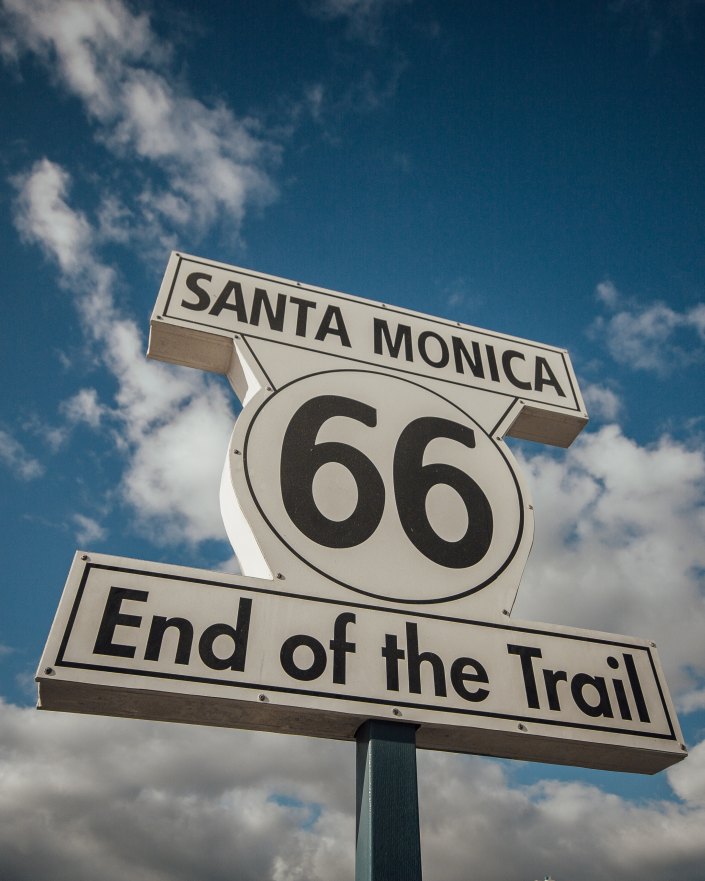
After 59 years, the iconic Route 66 enters the realm of history on this day in 1985, when the American Association of State Highway and Transportation Officials decertifies the road and votes to remove all its highway signs. Measuring some 2,200 miles in its heyday, Route 66 stretched from Chicago, Illinois to Santa Monica, California, passing through eight states. According to a New York Times article about its decertification, most of Route 66 followed a path through the wilderness forged in 1857 by U.S. Navy Lieutenant Edward Beale at the head of a caravan of camels. Over the years, wagon trains and cattlemen eventually made way for trucks and passenger automobiles.
The idea of building a highway along this route surfaced in Oklahoma in the mid-1920s as a way to link the state to cities like Chicago and Los Angeles. Highway Commissioner Cyrus S. Avery touted it as a way of diverting traffic from Kansas City, Missouri and Denver. In 1926, the highway earned its official designation as Route 66. The diagonal course of Route 66 linked hundreds of mostly rural communities to the cities along its route, allowing farmers to more easily transport grain and other types of produce for distribution. The highway was also a lifeline for the long-distance trucking industry, which by 1930 was competing with the railroad for dominance in the shipping market.
Route 66 was the scene of a mass westward migration during the 1930s, when more than 200,000 people traveled from the poverty-stricken Dust Bowl to California. John Steinbeck immortalized the highway, which he called the “Mother Road”, in his classic 1939 novel The Grapes of Wrath. Beginning in the 1950s, the building of a massive system of interstate highways made older roads increasingly obsolete and, by 1970, modern four-lane highways had bypassed nearly all sections of Route 66. In October 1984, Interstate-40 bypassed the last original stretch of Route 66 at Williams, Arizona and, the following year, the road was decertified. According to the National Historic Route 66 Federation, drivers can still use 85 percent of the road and Route 66 has become a destination for tourists from all over the world.
Often called the Main Street of America, Route 66 became a pop culture mainstay over the years, inspiring its own song (written in 1947 [sic] by Bobby Troup, Route 66 was later recorded by artists as varied as Nat King Cole, Chuck Berry and The Rolling Stones) as well as a 1960s television series. More recently, the historic highway was featured prominently in the hit animated film Cars (2006).
“One of the paradoxes of the Nazi terror was that SS officers themselves demonstrated a fondness for swing (Vogel, 1962).
Mike Zwerin (1985), in his exploration of jazz under the Nazis, described a Luftwaffe pilot who switched on the BBC hoping to catch a few bars of Glenn Miller before bombing the antenna from which these forbidden sounds were being broadcast. Allied propagandists recognised the potential for exploiting the contradictory allure that jazz possessed with Nazi society.
The sound barrier of 1944 was marked on the one hand by the music of the Nazi marches and on the other by the big band swing of Glenn Miller. The Allies attempted to exploit the popularity of swing inside Germany. On October 30, 1944, Miller’s swing tunes were aimed at German soldiers through the American Broadcast Station in Europe (ABSIE) in an effort to persuade them to lay down their arms.
Major Miller addressed German soldiers in their own language with the assistance of Ilse Weinberger, a German compere and translator. Ilse introduced Glenn Miller as the ‘magician of swing’ and, through a strange act of cultural alchemy, tunes like Long Ago and Far Away and My Heart Tells Me were rendered in German by vocalist Johnny Desmond.”
As the challenge comes to a close, this is the final post. ~Vic
I’ve covered everything in the 70s back to 1972, specific to my childhood. Rolling back a little bit more, I remember liking these though I was very young.
1970
No Sugar Tonight
1968
I just barely remember this playing. I was so little but, it is burned into my young memory.
Love Is Blue
*************
Past that, everything I know of music was learned later in life. The above are my earliest true music memories of what I liked, even as a child.
A song that reminds you of yourself…
I’ve never really found a song that reminded me of myself but, there are four songs I really identify with in terms of wandering thru life and the subsequent lessons.
The opening line to the movie:
“On a Saturday (March 24, 1984), five high school students report for all-day detention.”
This is my generation, though I was never in detention. I graduated in June 1984. Ditto Footloose.
Don’t You Forget About Me
Also released during my senior year…
Adult Education
Going Down To Liverpool
What I have turned into (tongue in cheek)…minus the nail-biting. *wink*
I have to keep in mind, for this category, that people have their own tastes in music. One man’s dream is another man’s nightmare. I’m posting these not only because I like them but, because they are fairly unknown. And, I happen to like it very much when someone else introduces me to music I’ve never heard, before. So, I hope that anyone listening to these might enjoy them.
I picked this up from a college radio station associated with the University of Texas back in 2010. It never got any regular airplay anywhere else. Billboard has no chart record of it. And, it is the only song I have ever encountered that, the live version(s) (and there are many on YouTube) is better than the studio version. I’m also fascinated with her bassist playing the drums at the same time.
In Sleep
I heard this song playing over the speaker system in a grocery store in Boone three years ago. I can’t find where it ever charted on Billboard.
“So little time to make you see…
What can’t be undone…
Was maybe never meant to be…”
“And when we’re done…
Soul searching…
And we carried the weight…
And died for a cause…
Is misery made beautiful…
Right before our eyes…
Mercy be revealed…
Or blind us where we stand…”
“wasting time…
lost my mind…
where’s the sign…
look for higher…”
“tell the sun, warn the moon…
the night and noon…
we’ve been waitin’…”
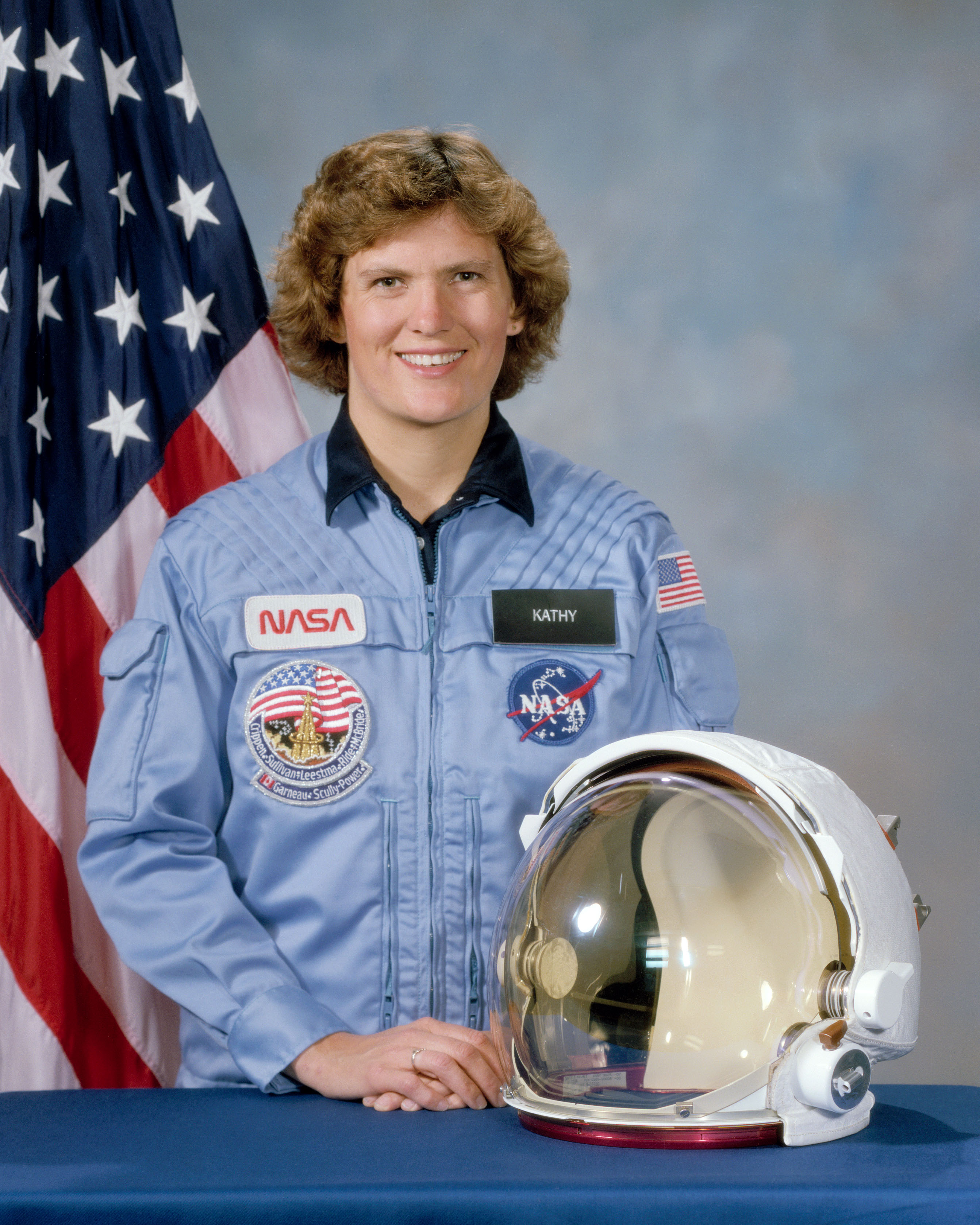
October 11, 1984, Kathryn Dwyer “Kathy” Sullivan became the first American woman astronaut during the STS-41-G mission to perform an EVA or an extravehicular activity (3.5 hours worth), which freely translates to a “space walk”. This was NASA‘s thirteenth flight in the Space Shuttle program and the sixth flight of the Challenger. She was the Mission Specialist 1 and had just turned 33 years of age eight days prior.
April 24, 1990, she served on board the Space Shuttle Discovery as a Mission Specialist 3 for the STS-31 mission that launched the Hubble Space Telescope. March 24, 1992, she served as Mission Specialist 1 during the STS-45 mission on board the Space Shuttle Atlantis. She was part of the Group 8 NASA Astronaut selection on January 16, 1978. She left NASA in 1993.





 Cosmic-Observation