Twenty-five years ago, this week (November 26/December 2, 1994) the song Bang and Blame by R.E.M.debuted on the Billboard Alternative Songs chart (Page 119/called Modern Rock Tracks in 1994), entering at #8, making it to #1 on December 17. Released October 31, it was the second single from the album Monster, their ninth studio album. Co-produced by the band and Scott Litt, all song writing credits are the band members. The song also made it to #1 in Canada on February 20, 1995, and peaked in the top ten in the Billboard Mainstream Rock chart (Album Rock Tracks in 1994), Billboard Mainstream Top 40 chart and, in Finland, Iceland and Poland.
Lyrics (from LyricFind): If you could see yourself now, baby
It’s not my fault, you used to be so in control
You’re going to roll right over this one
Just roll me over, let me go
You’re laying blame
Take this as no, no, no, no, no
You bang, bang, bang, bang, bang
Then blame, blame, blame
You bang, bang, bang, bang, bang
It’s not my thing, so let it go
If you could see yourself now, baby
The tables have turned, the whole world hinges on your swings
Your secret life of indiscreet discretions
I’d turn the screw and leave the screen
Don’t point your finger
You know that’s not my thing
You came to bang, bang, bang, bang, bang
To blame, blame, blame
Bang, bang, bang, bang, bang
It’s not my thing, so let it go now
You’ve got a little worry
I know it all too well
I’ve got your number
But so does every kiss and tell
Who dares to cross your threshold
Happens on you way
Stop laying blame
You know that’s not my thing
You know that’s not my thing
You came to bang, bang, bang, bang, bang
Then blame, blame, blame
Bang, bang, bang, bang, bang
It’s not my thing so let it go, you
Bang, bang, bang, bang, bang
Then blame, blame, blame
Bang, bang, bang, bang, bang
It’s not my thing so let it go
You kiss on me
Tug on me
Rub on me
Jump on me
You bang on me
Beat on me
Hit on me
Let go on me
You let go on me
There is very little written about this special, save a New York Times Article, written the next day (No writer credited):
ONE of the tiredest gimmicks of variety shows was coupled last night with a fresh idea on “The Robert Goulet Hour.” When the tenor turned his profile toward the sun on a southern California beach and a light wind ruffled his perfectly groomed hair as he sang “Lost in the Stars,” his program consciously aimed for the creative touch. Few singers are willing to compete with the Pacific Ocean.
But when Mr. Goulet was on the sound stage of C.B.S. Television City in Hollywood, he was engulfed in that shopworn gag of pretending to be rehearsing a musical special for TV. Leslie Caron joined him in “Call Me Irresponsible” and then said “no,” she simply would not sing on his show. Peter Gennaro demonstrated a possible dance step and Fredd Wynne [sic] agonized over material for Mr. Goulet and sketches for Miss Caron. Even the ad‐libs were planned.
Visiting the University of California at Los Angeles, Mr. Goulet and company held a press conference for tanned Tammys and Gidgets, who watched Terry‐Thomas mug shamelessly as a fine arty professor. The atypical students acted like graduates of the Hollywood Professional School.
When the script permitted Mr. Goulet to forget the script, his show had possibilities. Still, the evening’s honors must go to Miss Caron, who, impersbnating [sic] Marlene Dietrich as the Blue Angel, tackled a chair with the finesse of an Olympic champion.
IMDB states that it was filmed at the Wilshire Boulevard Brown Derby. The second video, below, appears to be from a Robert Goulet channel that was set up by his widow, Vera Novak. Written below the video:
Robert Goulet Live From Sahara Hotel In Las Vegas was filmed as part of “An Hour With Robert Goulet” TV special in 1964 and produced by our company Rogo Productions, Inc. This is a rare gem and wonderful historical footage of a remarkable entertainer showcasing live entertainment in Las Vegas during 1960s. In this clip, Robert sings a “Medley Of Old Songs” written by Jerry Bresler and Lyn Duddy, which was also recorded in 1963 on Columbia Records “Robert Goulet in Person“.
I usually do movie posts in five year increments but, this one kinda fell in my lap. Sixty-three years ago, today, Elvis Presley made his acting debut in the film Love Me Tender. Directed by Robert D. Webb, it was originally titled The Reno Brothers and was based on a story written by Maurice Geraghty. When Presley’s single Love Me Tender passed one million copies, a first for a single, the title to the film was changed. This was the only movie in which Presley played an historical figure and the only movie in which he did not receive top billing.
Elvis plays Clint Reno, one of the Reno Brothers who stayed home while his brother went to fight in the Civil War for the Confederate army. When his brother Vance comes back from the war, he finds that his old girlfriend Cathy has married Clint. The family has to struggle to reach stability with this issue. Vance is involved in a train robbery, while a Confederate soldier, of Federal Government money. There is a conflict of interest, when Vance tries to return the money, against the wishes of some of his fellow Confederates.
Trivia Bits:
♦ Originally, this movie had no singing in it. Songs were added to cash in on Elvis Presley’s stardom.
♦ Priscilla Presley reportedly copied Debra Paget’s unique hairstyle from this film to attract Elvis in 1959.
♦ According to Penny Stallings‘ “Flesh and Fantasy”, Presley developed a crush on co-star Debra Paget, which went unreciprocated because she was seeing Howard Hughes at the time.
♦ When the film played in theaters, Elvis Presley’s fans were screaming so loud that audiences couldn’t hear any of his lines.
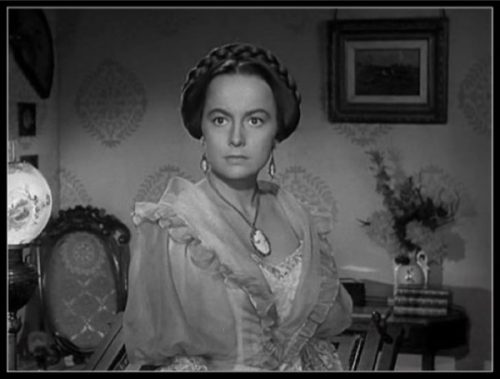
Catherine Sloper is a shy and backwards young woman who lives with her father, Dr. Austin Sloper, in 1849 New York. By all accounts, Catherine’s mother was a beautiful and graceful creature with the charm of queens. Catherine never knew her mother since she died while in childbirth but, her father often reminds her of all the things her mother was and that she is not. Catherine inherited a great deal of money after her mother passed and will inherit twice as much more at the passing of her father. So, when a poor but handsome and well-bred man, Morris Townsend, begins to court Catherine, her father becomes suspicious that he must be after her money. After all, Catherine is plain and boring. What could she possibly offer to this young man other than her money? When she refuses to give up her new beau, her father threatens to disinherit her. Will her father eventually convince her to give him up and wait for a suitable husband? Will Catherine and Morris elope and, live on the money left to her by her mother? Or, could it be that Catherine finally finds all the grace and charm of her mother only to use it against the men in her life?
Trivia Bits:
♦ Montgomery Clift was so unhappy with his performance, he walked out of the Premiere.
♦ Cary Grant was interested in playing Morris Townsend but, William Wyler turned him down.
♦ Montgomery Clift took some piano lessons for the scene where he sings “Plaisir d’Amour” to Olivia de Havilland.
♦ William Wyler wanted Erroll Flynn for the role of Morris Townsend.
♦ This movie was selected to the National Film Registry, Library of Congress, in 1996.
This sudsy made-for-TV melodrama is based on a Barbara Cartland novel and follows the romantic exploits of an American heiress who sets sail for exciting Paris at the turn-of-the-century. She is traveling there to meet her fiance but, ends up falling in love with a French journalist.
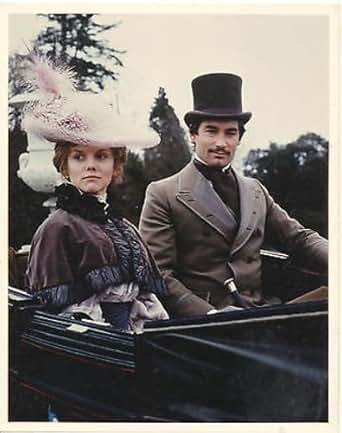
Reluctant to accept her arranged marriage to an English Duke she has never met, beautiful, young, American oil heiress, Emmeline Nevada Holtz, nicknamed “Vada” after the state, travels to Paris to buy her trousseau before meeting her husband-to-be. When her travelling companion, Nancy Sparling, has an accident and hurts her leg, Vada assumes her name to avoid unwelcome attention. [She] travels on with just her elderly maid, determined to make the most of her last chance to explore Bohemian Paris and, the wonders of the city that she had heard and read so much about. At her hotel she finds a handsome intruder in her suite, not a thief as she at first thinks but, a journalist looking to interview the famous heiress Emmeline. Smitten by this charismatic Frenchman and his talk of poetry, Vada finds herself agreeing to go with him to the Soleil d’Or, wellspring of the Symbolist movement. Soon, they are deeply and uncontrollably in love, a love that is surely doomed by her deception, her betrothal to the Duke and, now, a terrifying ordeal at a Satanist Black Mass on the dark side of the City of Light.
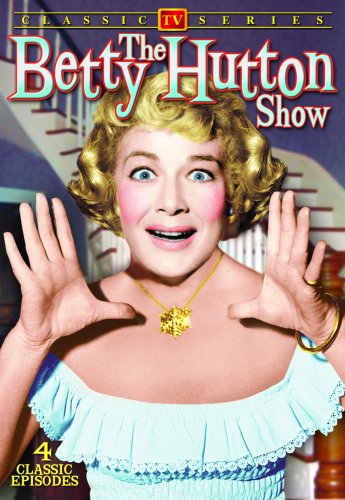
Hutton stars as Goldie, a showgirl-turned-manicurist. One of Goldie’s regular customers is a millionaire, Mr. Strickland. After he suddenly dies, Goldie discovers that he has left everything he owns, including his $60 million fortune and his three children, to her.
Although Hutton was a popular actress, the show only lasted for thirty episodes before being cancelled, mainly because it was scheduled opposite ABC‘s popular series The Donna Reed Show.
Daniel Boone was one of two significant historical figures played by Fess Parker. He previously appeared as Davy Crockett in a series of episodes of the Walt Disney anthology television series […]. Efforts had been made to secure the rights to Crockett from Walt Disney but, Disney refused to sell, so, the series wound up being about Boone instead. In contrast, Parker’s Boone was less of an explorer and more a family man than Parker’s Crockett. Parker as Crockett also generally wore a light beard, whereas his Boone was predominantly clean-shaven.
The series is set in the 1770s and 1780s, just before, during and after the American Revolution and, mostly centered on adventures in, and about, Boonesborough, Kentucky. Some aspects of the show were less than historically faithful, which, at one point, led the Kentucky legislature to condemn the inaccuracies. The series’ story line does not follow historical events. Instead, story lines run back and forth concerning historical events.
Photo Credit: imdb.com
[Ed Ames] role as Mingo led to a famous tomahawk-throwing demonstration on The Tonight Show, that was rerun on anniversary clip shows for decades afterward, in which Ames threw a tomahawk at a target of a man and the hatchet landed between the cutout’s legs, much to host Johnny Carson‘s amusement.
Trivia Bits:
♦ According to an interview with Veronica Cartwright, she left the series because the producers wanted to have her character of Jemima Boone involved in more mature situations, such as budding romantic relationships. Patricia Blair did not like this because it made her feel too old, so she threatened to leave the series if Cartwright was not let go from the series.
♦ Israel Boone was one of seventy-two killed at the Battle of Blue Licks, one of the last battles of the Revolutionary War, on August 19, 1782. He was twenty-three. His father Daniel was there and saw his son killed. Coincidentally, Darby Hinton, who played Israel, was born on the 175th Anniversary of Israel’s death, August 19, 1957.
♦ [The] Boones [actually] had ten children […].
♦ Unlike Fess Parker [6’5″ 1/2], the real Daniel Boone was only about 5’8″.
An English lady bored with London society brings her [two] children to their country home. Her servant William is also working for a French pirate who holds up with his ship and crew off the coast. They soon meet and she embarks on an adventure with the pirates!
As a beautiful, learned lady of means, Dona St. Columb had it all…and a loveless marriage. After years of being royally subjected to mistreatment, she retreats with her most prized possessions, her two children, to a secluded manor overlooking Britain’s Atlantic shoreline. [She] is enthralled with the tall tales of a scoundrel of a pirate, who has been plundering nearby coastal villages. Full of adventure and fueled by years of neglect, she sets forth to seek him out and, it is not long before she finds him…
Tagline: “A Lady of Fire and Ice…A Rogue of Steel and Gallantry”
Trivia Bits:
♦ The only film featuring Basil Rathbone and Nigel Bruce in which they do not play Sherlock Holmes and Dr. Watson.
♦ To make Arturo de Córdova appear taller than Joan Fontaine, he had to wear lifts in his shoes, causing him to teeter when he walked.
Bill Hastings works for a daily newspaper in a large city. His duties include a lonely hearts column, where he advises everyone on their problems, as “Phoebe”, while trying to deal with his own.
Photo Credit: wikipedia.org & wikimedia.org
Peter Lawford with J. Fred Muggs
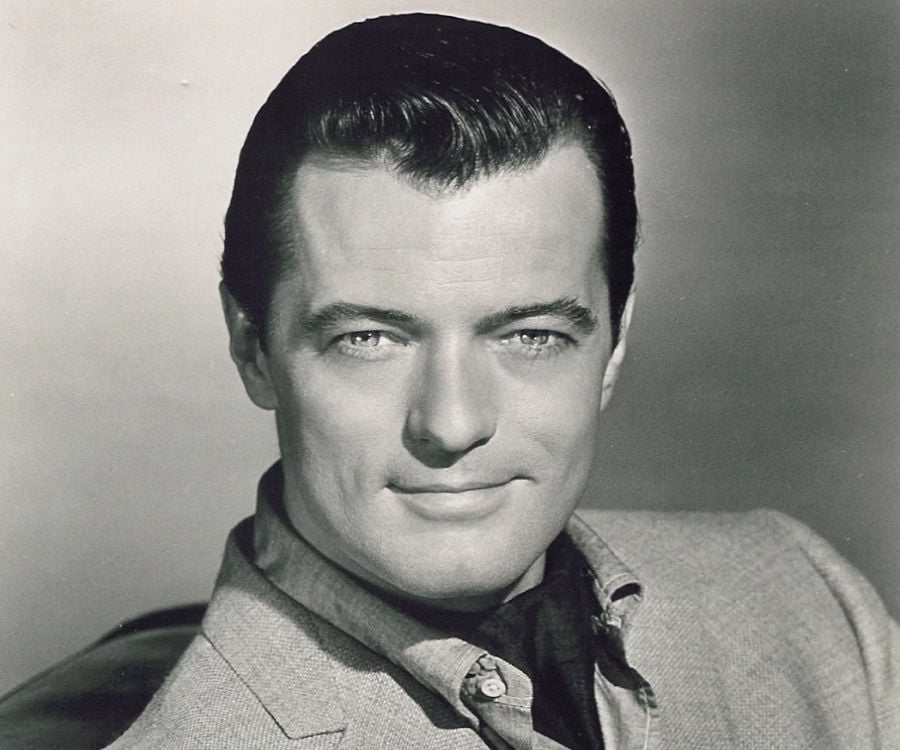
Lawford stars as Bill Hastings, a former college professor who becomes the writer of the advice-to-the-lovelorn column at the fictitious Los Angeles Daily Star. Hastings writes under the pseudonym “Miss Phoebe Goodheart”. Marcia Henderson portrayed Mickey Riley, the female sportswriter at the newspaper and Hastings’s own romantic interest. Charles Lane, who later portrayed J. Homer Bedloe in the CBS series Petticoat Junction, played newspaper boss Mr. Fosdick. Joe Corey played Humphrey Humpsteader, a copy boy trying to become a reporter.
A mad doctor named Zanoff uses a drug to bring himself back from the dead after his execution in prison. Dick Tracy sets out to capture Zanoff before he can put his criminal gang back together again.
International spy, Zarnoff, in the employ of “The Three Powers” (presumably a fictionalized reference to the Axis) is captured by Dick Tracy at the start of the serial, [then] tried and sentenced to death. However, through the use of a rare drug embedded by his agents in[to] the evening newspaper, he escapes from the gas chamber. His men pick up his “corpse” by ambushing the hearse and, administering another counter-drug. He continues his espionage plans, while taking the opportunity of revenge on Tracy.
[Dick Tracy serials were] “unexcelled in the action field” [and] “in any listing of serials released after 1930, the four Dick Tracy adventures from Republic must stand out as classics of the suspense detective thrillers and the models for many others to follow.”
In a New York hotel, the body of Steven Humbolt is discovered and Chief Inspector Decker Dawes is called to investigate. After a brief inspection of Humbolt’s belongings, Dawes and Sergeant Meed determine that Humbolt had fifteen wives, three of whom…Sybilla Crum, a well-known reformer, wealthy Carol Arnold, and Ruby Cotton…live in New York. Dawes first questions the still devoted Sybilla, then quizzes Jason Getty, a florist who had sent Humbolt a funeral wreath hours before his death was discovered. While Meed checks out Getty’s lead that the wreath was ordered in Philadelphia, Dawes interrogates Carol Arnold. Carol tells Dawes that Humbolt had robbed, and deserted her, after three weeks of marriage and, that, a year later, she had received a letter from South America informing her of his demise. Just after Carol had married wealthy Gregory Arnold, Humbolt contacted her with blackmail demands but, according to Carol, she never saw him before his murder. Although Dawes doubts Carol’s story, he leaves her to talk to a chemist about a broken glass globe that was found near Humbolt’s body.
Image Credit: imdb.com
The chemist reveals that the globe, a Helmholtz Resonator, contained a lethal dose of hydrocynanic acid gas that was released when the glass was broken. Once Dawes determines that the globe came from Philadelphia, he demonstrates how a radio performer known as The Electric Voice, whose fiancée is Ruby Cotton, could have broken the globe during a broadcast. Dawes arrests The Voice and Ruby but, returns to question Carol, who he discovers is hiding a child she had by Humbolt. Then, Dawes receives a message from Sybilla about a clue she unearthed at Humbolt’s funeral. While at Sybilla’s home, Dawes discovers that florist Getty is impersonating the reformer and that he is wearing a pair of gloves similar to a pair Humbolt was wearing in his coffin. Suspicious, Dawes orders Humbolt’s coffin exhumed, which causes Getty, who needed the gloves to hide his amputated fingers, to panic. [He] confesses that he killed Sybilla and had used The Electric Voice’s broadcast to kill Humbolt out of revenge for stealing his wife in Australia. After thwarting Getty’s escape attempt, Dawes telephones Carol, who is divorcing [Gregory] Arnold and proposes that they leave for Europe together.
Disclamer:
The Internet Movie Database (IMDB) and Wikipedia state that this film was released July 15, 1934. The American Film Institute (AFI) and Turner Classic Movies (TCM) state that it was released June 1, 1934. I have no way of verifying either. I also can’t find any video clips. ~Vic
In his third HBO stand-up special, Chris Rock brings his critically acclaimed brand of social commentary-themed humor to this 1999 stand-up comedy presentation. Also released as an album, Chris Rock: Bigger and Blacker features Rock on-stage extolling his razor-sharp wit and wisdom on such topics as gun control, President Clinton, homophobia, racism, black leaders and relationships.
Lon Chaney plays Grumpy Anderson, a railroad engineer with an obsession for running his train on time. His slavishness to promptness causes several tragedies which alienate him from his family. By the story’s end, the engineer restores their faith in him and validates his obsession by forcing his train through a flood to bring badly needed Red Cross supplies to the victims.
“Grumpy” Anderson is an old railroad engineer that is obsessed with keeping his train on schedule, no matter the cost. His two sons are also railmen but, don’t share his single mindedness, which leads to one son’s death and a fight with the other on the first son’s funeral car. [This] leads to a crash and demotion of Grumpy to mechanic in the yards. His redemption comes during the Mississippi flood when he is, again, pressed into service to pilot a relief train along with his surviving son.
This is the show that introduced the world to Elvis Presley.
Dave Marsh, in his insightful musical biography Elvis, writes about the moment Elvis Presley burst upon the American scene via The Dorsey Brothers Stage Show on January 28, 1956. “In his first appearance on the Dorsey Brothers’ TV show, the young singer rocked the world”. Marsh described Elvis’ startling rendition of Heartbreak Hotel and concluded, “He owned the song and he owned the crowd”.
March 17, 1956
Photo Credit: elvispresleymusic.com.au
After 17 months of personal appearances all over the south […], Elvis […] made his first appearance […]. Those shows were broadcast, live, from the CBS Studios in New York City. Young Elvis The Pelvis’ first appearance […] was followed by 5 others throughout the next 2 months until the 24 of March, 1956.
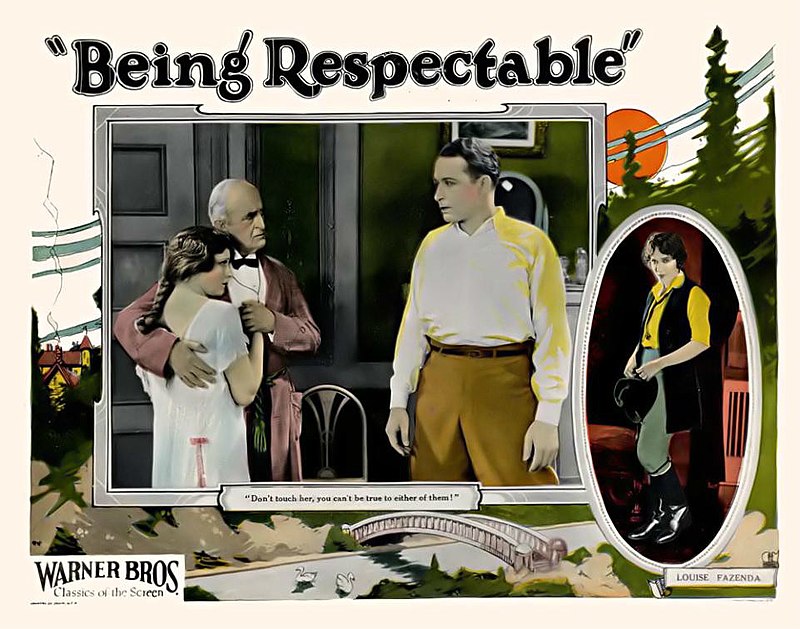
Wealthy young Charles Carpenter is pressured by his family to marry Suzanne, even though he is really in love with young “flapper” Valerie. He gives in to his family’s pressure, however and marries Suzanne, after which Valerie leaves town. Years later, after Charles and Suzanne have had a child, Valerie comes back to town and, Charles realizes he is still in love with her…and she with him. Complications ensue. [Source]
Through the scheming of his respectable, and wealthy family, Charles Carpenter is obliged to marry Suzanne, although he is in love with young flapper Valerie Winship. Years later, when Valerie is back in town, they renew the affair and, Carpenter plans to leave his wife and child for her. […] in the end, he yields to family duty and respectability. [Source]










 Cosmic-Observation