wikipedia
Hans-Quinn 2022 TV Draft: Round Two-Pick Six-Firefly (2002-2003)
Click for a larger view.
Hanspostcard/Quinn Maddux has a TV draft challenge. This is my Round Two pick.
“You can’t take the sky from me.”
Ok. I will say it. I am a hopeless Sci-Fi geek. I could easily do this TV Draft with nothing but Sci-Fi. I led with Doctor Who because it, by far, has the longest tapestry in my life. I would venture to say that Firefly was the shortest…and, yes, I am a Browncoat. I had an extensive list of Sci-Fi choices but, chose these two, only, because I also wanted to touch on other genres including law enforcement, drama, comedy and a couple of cartoons. ~Vic

When this came out, it struck me as being very close to the original description given to the first Star Trek series…a western in space. Fox had already scored big with the X-Files, running from September 1993 to May 2002. Firefly debuted September 2002 and, I was front and center. I didn’t find out until later that the first episode that aired was not the first episode of the series. You can thank Fox executives for that mess-up. It went downhill from there.
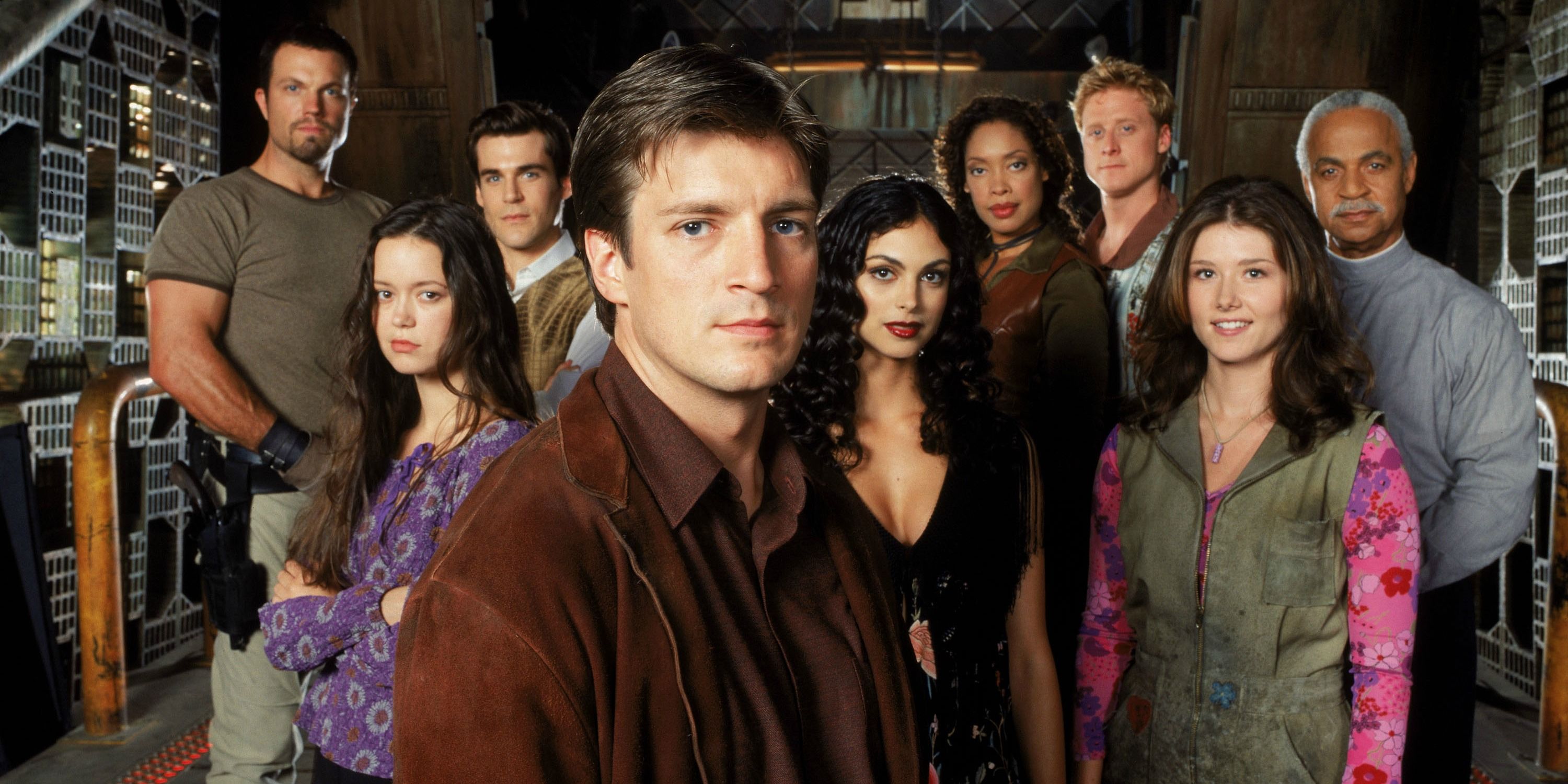
Created by Joss Whedon (Executive Producer, Writer, Theme Composter & Director of three episodes), it starred:
★ Nathon Fillion as Malcolm “Mal” Reynolds, the owner & Captain of Serenity, a Firefly-class, small transport spaceship. He is a former sergeant from the Battle of Serenity Valley, an Independent soldier in the war against the Alliance (a fusion of the last two superpowers, the US & China) in the year 2517.
★ Gina Torres as Zoë Alleyne Washburne, second-in-command aboard Serenity and Mal’s loyal corporal during the war. She is Wash’s wife.
★ Alan Tudyk as Hoban “Wash” Washburne, Serenity’s pilot and a bit jealous over his wife’s attachment to Mal. He is known for cracking jokes, even during horrible situations.
★ Morena Baccarin as Inara Serra, a Companion that is a blending of a courtesan, a geisha & a mistress. She has a very high social status and rents one of Serenity’s small shuttles. She & Mal are attracted to each other, dislike each other’s “jobs” and want to remain professional towards each other.
★ Adam Baldwin as Jayne Cobb, a 6’4″ mercenary that acts dumber than he really is. He sends much of his income back to his mother. He is excellent in a fight, has an intense fear of Reavers and has an extreme dislike of Simon and his sister, River, as she attacked him with a knife.

Deviant Art
Click for a larger view.
★ Jewel Staite as Kaywinnet Lee “Kaylee” Frye, the ship’s adorable mechanic. With no formal training, she intuitively knows mechanical equipment. She routinely talks to Serenity and has a crush on Simon Tam.
★ Sean Maher as Simon Tam, a trauma surgeon (top 3% of his class) that became a fugitive after he snatched his sister, River, out of a government research facility. He struggles with his desire for Kaylee as his life revolves around his sister.
★ Summer Glau as River Tam, an intuitive child prodigy that the Alliance experimented on, leading to psychic abilities and combat training. She suffers from PTSD and has flashbacks from the experiments. She can be delusional, paranoid and violent without warning.
★ Ron Glass as Derrial Book, commonly referred to as Shepherd Book (a 24th century version of a pastor). A devout Christian, his background is unknown but, he has much knowledge that the average pastor would not have. He has a fairly high status with the Alliance and, though he objects to violence, he is skilled in combat. Quote: “…while the Bible is quite specific about killing, it is somewhat fuzzier on the subject of kneecaps.” Book is the voice of reason, spirituality and conscience for the crew.

Fourteen episodes, with a two-hour pilot, were produced but, only 11 of them aired before being unceremoniously cancelled. The Browncoat Brigade started a postcard writing campaign to Fox, and UPN but, it ultimately failed. They continued to push for the DVD release and, in 2005, the feature film Serenity was released on September 30.
Trivia Bits:
♦ The real reason it was cancelled was that the FOX executives thought it was too dark (It was very dark).
♦ Whedon proposed a Firefly plotline in which Inara injected herself with a prophylactic solution, not a birth control but, a serum that would poison anyone who raped her. Whedon’s idea was that Inara would, then, be kidnapped and gang-raped but, that the rapes would take place offscreen and, the only sign of them would be a pile of her rapists later found dead. This plotline was nixed by the network and no version of it ever appeared on the show.
♦ Serenity’s engine room includes the center console from a Boeing 737.
♦ When Whedon created the show, he intended for it to run seven years.
♦ Between shots, the cast preferred to wait in the ship’s lounge, instead of their trailers/dressing rooms.
♦ The Alliance officer and soldier uniforms are leftovers from Starship Troopers (1997).
♦ The pistol-sized lever action gun Zoe wears on her hip is called a Mare’s Leg. It is a cut down Model 1892 Winchester, the same gun used by Steve McQueen in the TV series Wanted: Dead or Alive (1958).
♦ Astronaut Steven Swanson is a Browncoat and brought his Firefly & Serenity DVDs with him on the Space Shuttle Atlantis for the STS-117 mission in June 2007.
♦ The Shuttle crew of the Endeavour is awoken at 4:14pm ET to The Ballad of Serenity, played for astronaut Robert Behnken.
♦ The DVDs are in the media collection on the ISS.
♦ There are actual Browncoat Balls, held all over the US. The first one was in 2004.
Firefly Opening Sequence
50 Quotes
Our Witch
Too Much Hair
Reboot? Yes, Disney Sucks (Sorry for the ads)
POTD: Star Of Bethlehem
Pl@ntNet had a little trouble with this one. It didn’t show up in World Flora or USA Flora but, finally showed up in Western Europe Flora. In the Asparagaceae family (which includes asparagus…yum), its genus & species is Ornithogalum Nutans. In this case, it is a Drooping Star of Bethlehem. ~Vic

Picture of the Day
POTD: Winter Creeper
In the family of Celastraceae and the species of Euonymus Fortunei, I believe this may be a Coloratus. Also called the Spindle or Fortune’s Spindle, it is named for Scottish botantist Robert Fortune. It is native to East Asia and has become invasive here in the US. It can kill a tree, despite being very pretty. ~Vic

Flashback Friday: Jeannette Rankin 1917

Author: Adam Cuerden
February 27, 1917
Photo Credit: Wikipedia
“I may be the first woman member of Congress but, I won’t be the last.”
Jeannette Rankin was an American politician and women’s rights advocate and, the first woman to hold federal office in the United States. She was elected to the U.S. House of Representatives as a Republican from Montana in 1916 and, again, in 1940. As of 2022, Rankin is still the only woman ever elected to Congress from Montana.
Each of Rankin’s Congressional terms coincided with initiation of U.S. military intervention in the two World Wars. A lifelong pacifist, she was one of 50 House members who opposed the declaration of war on Germany in 1917. In 1941, she was the only member of Congress to vote against the declaration of war on Japan following the attack on Pearl Harbor.
A suffragist during the Progressive Era, Rankin organized and lobbied for legislation enfranchising women in several states including Montana, New York and North Dakota. While in Congress, she introduced legislation that eventually became the 19th Constitutional Amendment, granting unrestricted voting rights to women nationwide. She championed a multitude of diverse women’s rights and civil rights causes throughout a career that spanned more than six decades.
Wikipedia Summary
“I want to be remembered as the only woman who ever voted to give women the right to vote.”
Rankin was born on June 11, 1880, to John and Olive Rankin at Grant Creek Ranch near Missoula, in what was then the Montana Territory. She was the first of seven children […] in a prosperous family. Her father […] was a rancher and builder who had come to Montana from Canada. Her mother […] had moved from New Hampshire to teach before marrying John Rankin and becoming a housewife. Jeannette attended Montana State University in Missoula (now the University of Montana) and graduated in 1902 with a degree in biology. [Her] career in politics began as a student volunteer with a local women’s suffrage campaign in Washington State, preparing for a referendum on voting rights. [In] February 1911, she became the first woman to address the Montana legislature when she testified in support of women’s suffrage.
Jeannette Rankin
History, Art & Archives
United States House of Representatives
Rankin held office in her first term from March 4, 1917, one-hundred and five years, ago, today, to March 3, 1919. Her second term was from January 3, 1941 to January 3, 1943. Powerful enemies made sure she could not get re-elected. Twenty-four years later, she reclaimed her seat. She never married and passed away May 18, 1973 at the age of 92. ~Vic
Additional Reading:
Jeannette Rankin (Biography/February 27, 2018)
Montana’s Women Candidates Are Out To Set Another Record (Billings Gazette/Web Archive/October 25, 2016)
Seven Things About Jeannette Rankin (History Channel/Jesse Greenspan/September 1, 2018)
Wayback Wednesday: Great Fire Of Meireki 1657

One of the greatest disasters in Japanese history began in the Japanese capital city of Edo (original name of Tokyo) on March 2, 1657, 365 years ago, today. Legend has it that the fire was accidentally started by a priest who was supposedly trying to cremate a cursed kimono. The kimono had been owned in succession by three teenage girls who all died before ever being able to wear it. When the garment was being burned, a large gust of wind fanned the flames causing the wooden temple to ignite.
The fire spread quickly through the city, due to hurricane force winds, which were blowing from the northwest. Edo, like most Japanese cities, […] the buildings were especially dry due to a drought the previous year. [The] roads and other open spaces between buildings were small and narrow, allowing the fire to spread and grow particularly quickly.
The Great Fire of Meireki
Naked History
February 21, 2016
[The] city of Tokyo, Japan, then known as Edo, suffered a catastrophic fire that lasted three days, and killed 100,000 Japanese people, a death toll greater than either of the atomic bomb attacks on Hiroshima and Nagasaki in 1945.
The carnage caused by the Great Fire of Meireki (or sometimes known as the Furisode Fire) combined to destroy about 60% to 70% of the buildings in Edo.
[The] wind spread the flames across a city that was built almost entirely of wood and paper buildings [and], firefighters [were] unable to keep up with the rapid spread of flames caused by the wind. The fire brigade established in Edo was a novel idea but, the force was nowhere near large enough to deal with a conflagration of this magnitude.
Reconstruction of the city lasted the next 2 years.
Great Fire Kills More Japanese Than Atom Bomb
History & Headlines
March 2, 2017
Additional Reading:
Japanese Tales: The Fire of the Furisode (Elle Of A Kind Blog/01-07-2022)
Furisode Fire
The Great Fire Of Meireki/Destruction of Tokyo
POTD: Chinese Fir
Cupressaceae conifer family (Cypress) and, possibly a Cunninghamia Lanceolata, per Pl@ntnet & Wiki. ~Vic

Click for a larger view.
Picture of the Day
Hans-Quinn 2022 TV Draft: Round One-Pick One-Doctor Who (1963- )

Image Credit: YouTube
Click for a larger view.
Hanspostcard/Quinn Maddux has a TV draft challenge. This is my Round One pick.
Doctor Who…? This long running series is its own inside joke. In its entirety, it is older than I am. I was completely unaware of it until it showed up on PBS in the US in 1978 when I was in sixth grade. It was always a treat after school and my introduction to the series was, of course, the great, long-scarfed Tom Baker, the Doctor with the longest run.

Image Credit: Bing Images
For those that have no idea about this show, Doctor Who is a Time Lord, an alien from the planet Gallifrey (setting aside the recent retcon). He belongs to an ancient race of beings who time travel and have a non-linear perception of time, itself. He (and, she, now) also has the ability to regenerate, meaning, if mortally wounded, a healing process takes place with a new body created and…a new personality. The name “Doctor” is a personal, self-selected title, and his true name is unpronounceable by humans. He travels in a TARDIS (Acronym: Time And Relative Dimension In Space), a spacecraft/time machine that he stole when he fled his planet with his Granddaughter, Susan. Built with a chameleon circuit (that is stuck in one position), the Doctor’s machine looks like a 1963 blue British police box. It is dimensionally transcendental, meaning, it is bigger on the inside than on the outside. He travels all over the Universe and, sometimes, into other, parallel Universes but, he has a particular affinity for Earth.

Image Credit: Cheez Burger
Click for a larger view.
The Doctor rarely travels alone, preferring to have at least one companion. When I started watching, his companion was Sarah Jane Smith and she had been the companion of the Third Doctor (the late Jon Pertwee) prior to his regeneration. I watched the Tom Baker version for several years (with other companions Leela, Time Lady Romana & K9) and saw some of the episodes of the Fifth Doctor (Peter Davison) in the early 1980s. By the end of his run, I was a senior in high school and lost interest. Fast forward to 2005 and I’m living in Texas. The series is revived and I’m curious. My late-thirty-something self fell in love, all over again, with the Ninth Doctor (Christopher Eccleston) and, his companions Rose Tyler and Captain Jack Harkness. In his case, he became the Doctor with the shortest run and a new story-line that makes the Doctor the Last of the Time Lords due to a Time War (against the Daleks…mutant beings in metal containers that resemble salt & pepper shakers) that took place prior to the show’s revival.
I thoroughly enjoyed the new episodes when they were picked up by the Sci Fi Channel in March 2006. The return of Sarah Jane Smith and K9 in the Tenth Doctor (David Tennant) series and the return of Tom Baker in the Eleventh Doctor (Matt Smith) series was an exciting re-visit of my childhood. The introduction of the War Doctor (the late John Hurt) was an interesting addition to the story-line, born out of Eccleston’s controversial exit (and subsequent blacklisting by the BBC).

Image Credit: Flickering Myth
Then show-runner, Steven Moffat, had originally written the Ninth Doctor as the one that ended the Time War but, knew Eccleston would not return and couldn’t see the Eighth Doctor (Paul McGann) providing a proper back-story. McGann never got the opportunity to explore the character for himself in any great length, despite a television film that did well in the UK in 1996. The film was a joint venture with the BBC, Universal Studios & Fox Broadcasting but, US audiences didn’t appear to be interested and a new series was not developed. When contractual rights were returned to the BBC, the revival proceeded.
By the time the Twelfth Doctor (Peter Capaldi) showed up, I had lost interest, again, as ridiculous politics began to show up. I did, however, watch the last episode with River Song/Melody Pond, an on-again, off-again, sometime wife-companion to the Eleventh & Twelfth Doctors and daughter of Amy Pond & Rory Williams, companions to the Eleventh Doctor. Conceived in the TARDIS, River is human but, has Time Lord DNA. Other wonderful companions were Martha Jones, Donna Noble, Astrid Peth, Lady Christina de Souza, Adelaide Brooke and Wilfred Mott (Donna Noble’s maternal grandfather) (Tenth Doctor).

Silence In The Library
Image Credit: Tardis Wiki
I’ve seen a handful of the First Doctor (William Hartnell) episodes but, I’ve never seen an episode of the Second Doctor (Patrick Troughton), the Sixth Doctor (Colin Baker) or the Seventh Doctor (Sylvester McCoy). I’ve seen a few episodes of the Captain Jack Harkness show Torchwood but, didn’t really follow it. I made a valiant attempt to watch the Thirteenth Doctor (Jodie Whittaker) but, between her and show-runner Chris Chibnall, the show is unwatchable and the ratings have tanked, completely. I’m so hoping that someone, somewhere, will correct this show and, bring back the whimsy and great storytelling. Until then… ~Vic
Trivia Bits:
♦ Lalla Ward, the second Lady Romana (after her own regeneration), was once married to Tom Baker.
♦ David Tennant is married to Peter Davison’s daughter, Georgia Moffett.
♦ Georgia Moffett was Jenny in The Doctor’s Daughter, opposite her future husband.
♦ David Troughton, son of Patrick Troughton, was Professor Hobbes in Midnight.
♦ Karen Gillan’s (Amy Pond) cousin, Caitlin Blackwood, was Amelia Pond (young Amy) in The Eleventh Hour.
♦ Patrick Troughton was Father Brennan in The Omen.
♦ Bernard Cribbins (Wilfred Mott) was Tom Campbell in the 1966 film Daleks’ Invasion Earth 2150 A.D. as a companion to the Doctor (Peter Cushing).
♦ Alex Kingston (River Song) and John Barrowman (Jack Harkness) share the same birthday…March 11 (1963 & 1967, respectively).
♦ River Song is the only companion that knows The Doctor’s real name.
♦ Leela (Louise Jameson) was named after the Palestinian hijacker Leila Khaled.
♦ David Tennant was Barty Crouch, Jr., in Harry Potter and the Goblet of Fire.
♦ Rose Tyler and Jack Harkness were named after Rose DeWitt Bukater (Kate Winslet) and Jack Dawson (Leonardo DiCaprio) from Titanic. Kate Winslet was the original choice for River Song.
♦ Sylvester McCoy was Radagast in The Hobbit Film Series.
♦ Christopher Eccleston, David Tennant, Karen Gillan and Jenna Coleman (Clara Oswald, companion to the Eleventh & Twelfth Doctors) have all been in Marvel movies.
♦ Sarah Jane Smith (the late Elisabeth Sladen) had her own show The Sarah Jane Adventures.
♦ There are 97 episodes missing from the first six years due to BBC archive deletions.
♦ The theme music was composed by Ron Grainer and developed by Delia Derbyshire, with early electronics, in the BBC Radiophonic Workshop.
Original Theme From 1963
Updated Theme From 2005
Meeting Canadians
Phil suggested that I try to write more so…

I lived in Virginia Beach for a year (July 2001 – July 2002) with my, then, Marine Corps husband. I don’t remember the exact date but, one evening, we happened to be wandering the streets of Norfolk, near Norfolk Harbor. We saw a neon sign in a window of a bar: O’Malley’s. The place was full of what appeared to be sailors but, they weren’t Americans. They were busy drinking and singing Irish drinking songs. The Marine and I did manage to find a couple of empty bar stools, way at the end of the bar, deep into the establishment. The Marine took the very last stool to my left and I tried to position myself into the remaining empty stool. It was a tight squeeze and I began to think to myself… “How in the hell am I going to get my big ass thru that narrow space to get onto that stool?” For the split-second pondering it took, the full-bearded gentleman to my right, turned to me and said “Do you not want to sit next to me for some reason? I know I look rough but…” I immediately jumped in to reassure him that, that was not the case and shared my “OMG, I won’t fit…” fears, out loud, right there in front of God and everybody. He threw his head back and roared. “Have a seat, my dear…and, have drink.” He turned out to be the COTB (Chief of the Boat) of the Canadian Frigate HMCS St. John’s, that was in Norfolk for degaussing. It was a fun evening and that COTB invited us to tour the ship the next day.
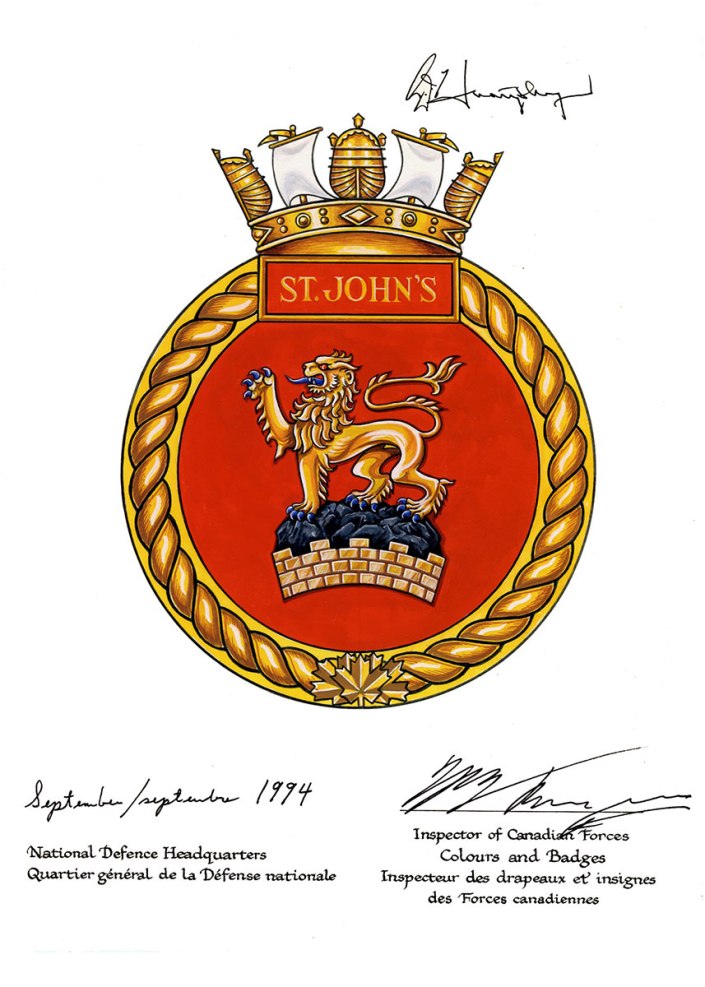
We arrived around 4:00pm and I noticed that a Canadian Frigate really stands out next to American Navy vessels. It’s an odd green color, next to the blue of the American ships and I was told that it doesn’t have any right angles on it. We boarded the ship and asked for the Chief. They retrieved him and he rolled out looking like he’d been on a three day drunk. He was clearly hung over. He called for a much younger seaman to give us the tour of the ship and joined us later.
One neat thing aboard a Canadian vessel is…the bar. They had a beautiful, stained wooden bar and, a full stock of beer and wine. They also had a few women on board, which I found odd, even though women were allowed on board American war ships, beginning in 1994. It was still a rare sight back then.
We were invited to stay for dinner. It was a simple meal for sailing men but, I’m pretty sure that, not many people can say that they dined with the entire crew of a Canadian Frigate…and not been a crew member. It was really cool. I wish I could remember the name of that COTB. He offered me a St. John’s sweatshirt and I declined because I didn’t have any money. I intended to return to the ship with money but, we never made it back. That would have been a cool souvenir.
HMCS St. John’s (Facebook)
HMCS St. John’s (FFH-340) (Military History Fandom)
HMCS St. John’s (Wikipedia)
Movie Monday: The Dying Swan 1917

One hundred, five years ago, today, the 1917 short, silent film The Dying Swan (Russian: Umirayushchiy Lebed) was released in Russia (Moscow). Starring Vera Karalli (Gizella), Aleksandr Kheruvimov (Gizella’s Father), Vitold Polonksy (Viktor Krasovsky), Andrej Gromov (Valeriy Glinskiy) and Ivane Perestiani (Glinskiy’s Friend), it was directed by Yevgeni Bauer and written by Zoya Barantsevich.
A grief-stricken ballerina becomes the obsession of an increasingly unhinged artist.
Gizella, who is a dancer and mute, falls in love with Victor, whom she met at the lake. She believes that love is mutual but, […] sees Victor with another girl after he cancels a date with her. She becomes an object of sympathy for the artist Glinsky, who sees Gizella dancing The Dying Swan and uses her as a model for a picture on the theme of death.
When Viktor meets Gizella one day beside the lake, he takes an interest in her and begins to call on her regularly. When Viktor deceives her and she finds him with another woman, she moves away and begins a career as a ballerina.

A brokenhearted dancer and an artist desperate for inspiration form a strange collaboration in Russian director Yevgeni Bauer’s psychological drama. Morbid in the best possible way.
Additional:
The Dying Swan (Century Film Project/12-10-2017)
Full Movie
Word Wednesday: Byronic
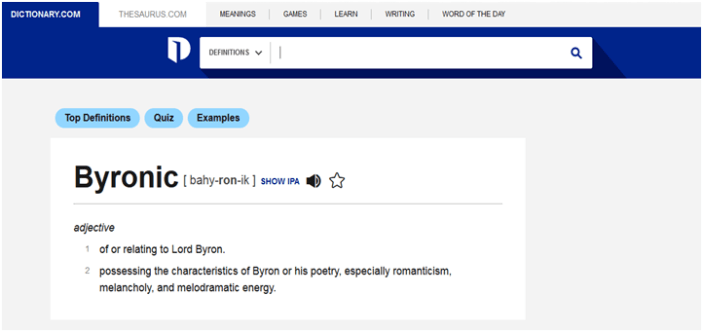
Image Credit: dictionary.com
The Byronic hero, incapable of love or capable only of an impossible love, suffers endlessly. He is solitary, languid [and] his condition exhausts him. If he wants to feel alive, it must be in the terrible exaltation of a brief and destructive action.
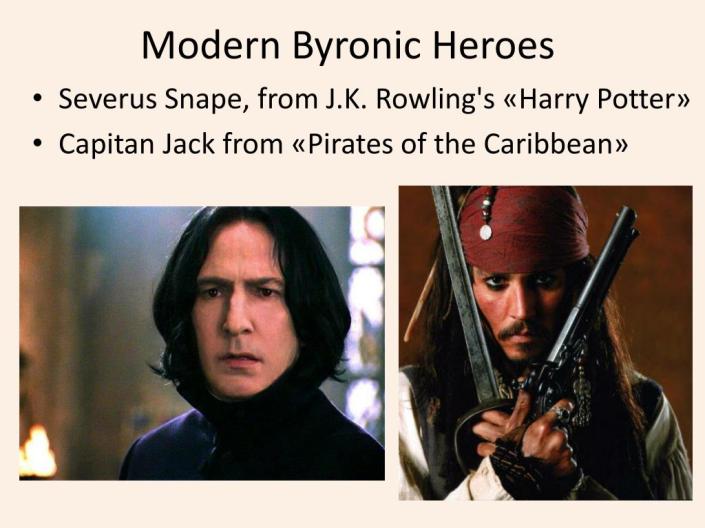
The Byronic Hero is a character notable for being sullen, withdrawn, hard to like and hard to know but, usually possessing a rich inner life and a softer side, accessible only to a special few.
Byronic Hero
TV Tropes
Foto Friday: Land of Oz 3.0
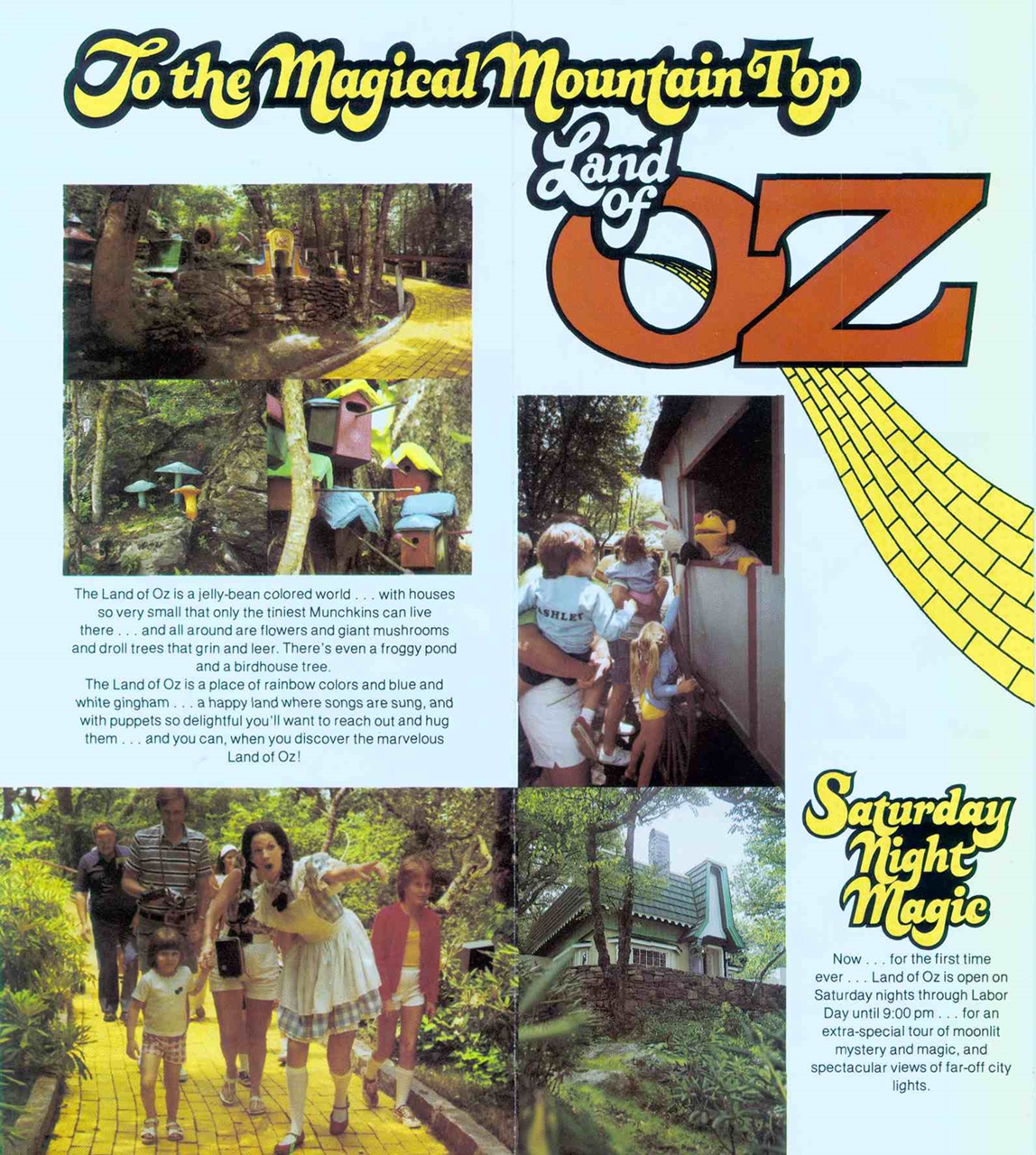
More shots from the Land of Oz in the 70s. ~Vic
Previous posts are here and here. Images are from Emerald Mountain Realty.

Click for a larger view.

The dress was stolen in the 1980s.
Click for a larger view.

Click for a larger view.
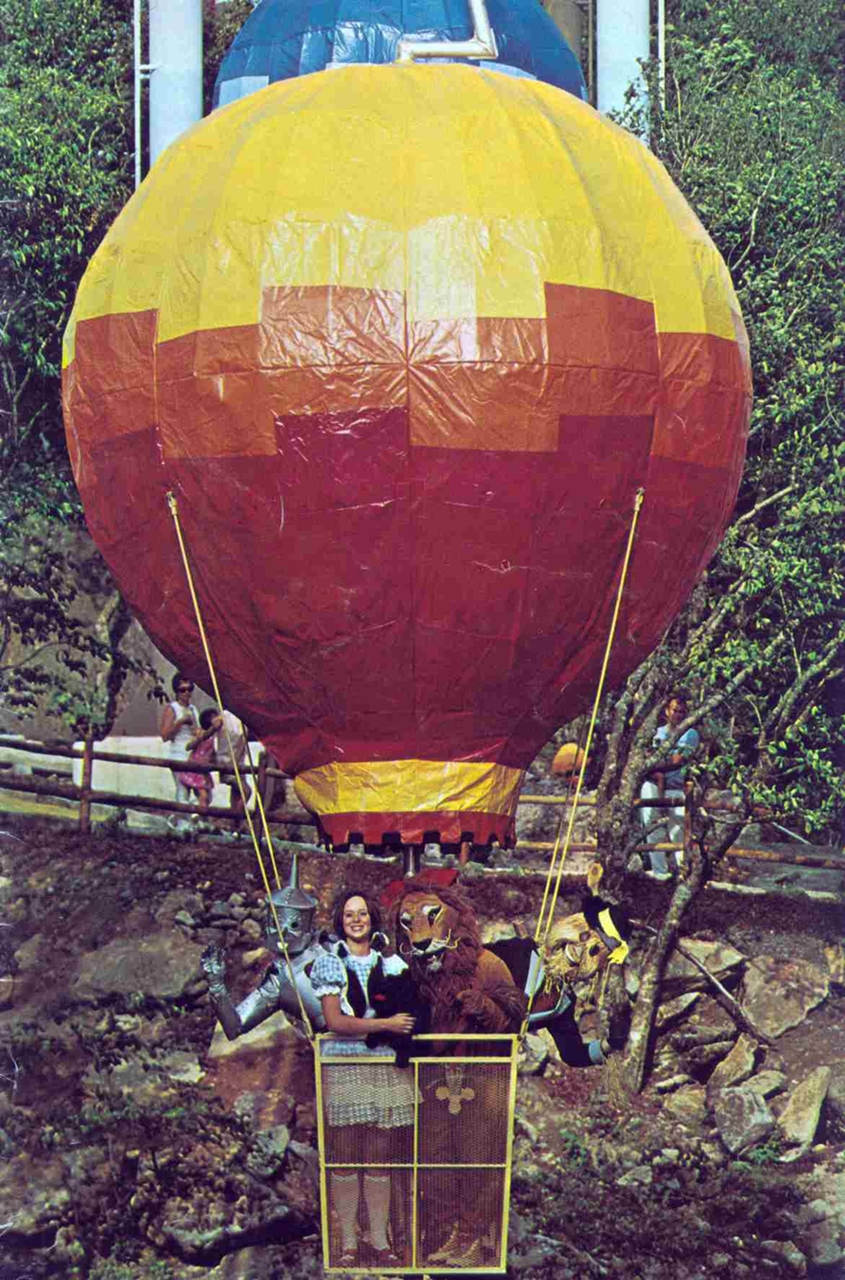
I rode it, once, with my parents in a blinding rain storm.
Click for a larger view.

Click for a larger view.
Click for a larger view.

Click for a larger view.
Additional Reading:
Land of Oz (Romantic Asheville)
Land of Oz (My Home/UNC-TV)
Land of Oz Theme Park (Wikipedia)
Music Monday: Sonata In G Minor 1721
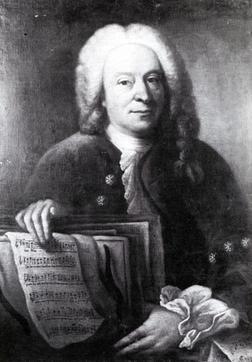
(Johann) Christoph Graupner: born January 13, 1683, in Kirchberg, Saxony and died May 10, 1760 in Darmstadt, Hesse-Darmstadt. In 1706, because of a threat of Swedish invasion, he sought refuge at Hamburg, where he was harpsichordist at the opera under R. Keiser. The most significant genres in which Graupner worked were the chorale cantata, the trio sonata and the concerto. He composed about 1,300 cantatas. His trio sonatas and concerti represent a German assimilation of these Italian forms. Characteristically, the trio sonatas are written in fugal style. Graupner also wrote several operas, many overtures and symphonies and, harpsichord partitas and sonatas.
Christoph Graupner was one of the principal German composers of the period of J.S. Bach and Georg Philipp Telemann. He was highly thought of in his day, much like George Frederic Handel or Telemann, with whom he maintained a lifetime friendship. Composers Johann David Heinichen and Johann Friedrich Fasch were also close friends of his. His first teachers were Mylius and the organist Nikolaus Küster (PDF), whom Graupner followed to Reichenbach in 1694. He entered the Leipzig Thomasschule in 1696, where J.D. Heinichen was a fellow student[…]. [H]e studied under Johann Schelle and Johann Kuhnau and befriended Telemann and his future colleague Gottfried Grünewald […]. Leaving Leipzig in 1706, […] Graupner went to Hamburg […]. [He] composed, there, his first five operas that received great public acclaim […]. In 1709, he became Vice-Kapellmeister at the court of Ernst Ludwig, Landgrave of Hessen-Darmstadt […]. He wrote many operas up to 1719, when he turned to sacred and instrumental composition. [His] remaining years of […] life were spent at the court at Darmstadt. [He] was a prolific and tireless composer. Though blind later in life, he produced immense amounts of music […].
Christoph Graupner is one of the most fascinating, yet, at the same time, underestimated composers of German baroque music: the era of Bach, Händel, Telemann and many other nearly forgotten composers.
Graupner Digital Online
Florian Heyerick
Additional:
Christoph Graupner (Music Web International/Len Mullenger)
Christoph Graupner Society Website
Complete Score Sheet Music (IMSLP/GWV 724)
Throwback Thursday: Susan B. Anthony’s Arrest 1872
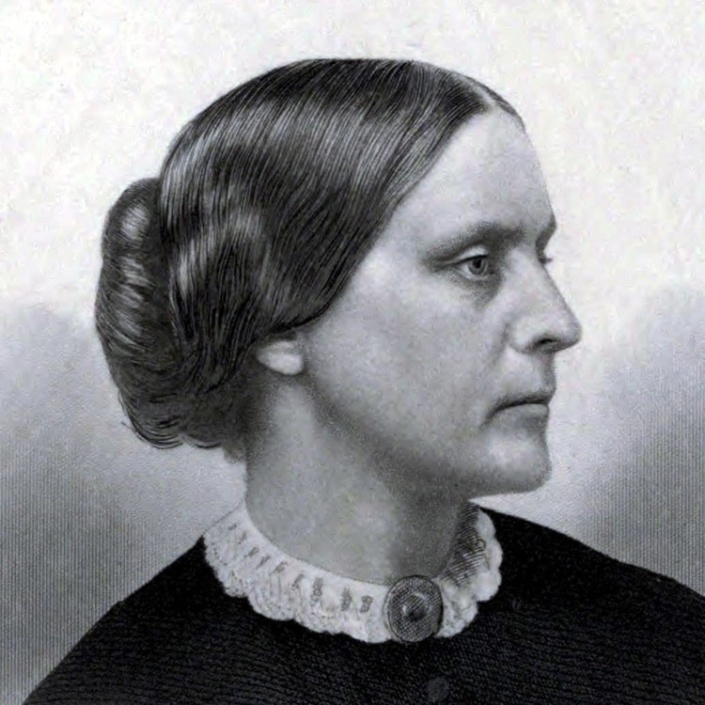
Champion of temperance, abolition, the rights of labor and equal pay for equal work, Susan Brownell Anthony became one of the most visible leaders of the women’s suffrage movement. Along with Elizabeth Cady Stanton, she traveled around the country delivering speeches in favor of women’s suffrage.
[She] was born on February 15, 1820 in Adams, Massachusetts. Her father, Daniel, was a farmer and, later, a cotton mill owner and manager, […] raised as a Quaker. Her mother, Lucy, came from a family that fought in the American Revolution and served in the Massachusetts state government. From an early age, Anthony was inspired by the Quaker belief that everyone was equal under God. That idea guided her throughout her life.
National Women’s History Museum
Susan B. Anthony
Nancy Hayward
2018
On November 1, 1872, Susan B. Anthony and [three] other women attempted to register to vote in the U.S. presidential election. When registrars hesitated, Anthony overwhelmed them with legal arguments and the men relented. On Election Day, November 5, Anthony voted for Ulysses S. Grant. She was one of fifteen women from her Rochester ward to cast a ballot. Attempting to vote was actually a common tactic among suffrage activists. Anthony’s action commanded outsized attention because she and her colleagues actually voted.
Anthony was arrested on November 18, 1872, for violating the federal Enforcement Act of 1870 […].
Freethought Trail
The Arrest of Susan B. Anthony
Robert Green Ingersoll Memorial Committee
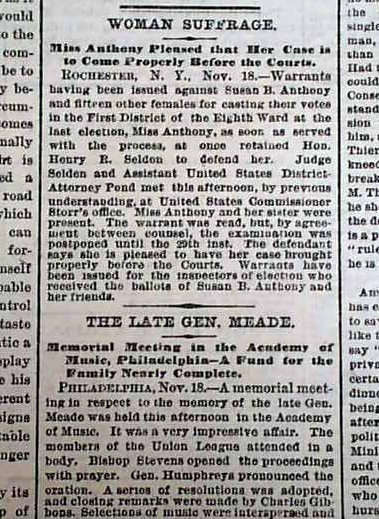
Nine days after the election, U.S. Commissioner William C. Storrs, an officer of the federal courts, issued warrants for the arrest of Anthony and the fourteen other women who voted in Rochester. Three days later […] a deputy federal marshal called on Anthony. He asked her to accompany him downtown to see the commissioner.
Anthony’s trial began in Canandaigua, New York, on June 17, 1873. Before pronouncing the sentence for her crime, Justice [Ward] Hunt asked Anthony if she had anything to say. She did. In the most famous speech in the history of the agitation for [women’s] suffrage, she condemned [the] proceeding that had “trampled under foot every vital principle of our government.” She had not received justice under “forms of law all made by men…” “…failing, even, to get a trial by a jury not of my peers.” Sentenced to pay a fine of $100 and the costs of the prosecution, she swore to “never pay a dollar of your unjust penalty.” Justice Hunt said Anthony would not be held in custody awaiting payment of her fine.
The Trial of Susan B. Anthony
Federal Judicial Center
Web Archive
May 31, 2010
A month after the trial, a deputy federal marshal was dispatched to collect Anthony’s fine. He reported that a careful search had failed to find any property that could be seized to pay the fine. The court took no further action.
Hans 2021 Song Draft: Round Ten-Pick Seven-Bad Weather-Emily Hackett (2014/2015)

Hanspostcard has a song draft challenge. This is my Round Ten and final pick.
Back in 2014, I happened to catch a wonderful song that played during a commercial on HDNET (movies). HDNET didn’t have normal commercials, they just had clips from movies that it was showcasing, changing each month. I loved the song but, had no idea what the name of it was, other than what I could glean from the lyrics. I desperately wanted to know who the singer was because she had a beautiful voice. I could find nothing, so, I contacted HDNET for help. Her name? Emily Hackett. The song? A Heart Worth Saving (and I wasn’t the only one asking). It is the third track from a short compilation album called Girl Electro Pop, released July 11, 2014 (as best as I can tell). There is no chart information on the album or the song and what lyrics that are on the Internet do not match all of the words she sings. That being said, I was overjoyed to find it and download it.
That brings me to Bad Weather (no chart information on it, either). In digging around for data on Emily, I found a demo video of her singing the song with a guitarist. Then, I found the album it was on…The Raw EP, released July 24, 2015. It’s a beautiful, sad song that reminds me of a stripped down Carrie Underwood piece.

“I started this song in California when I was making lunch one day at my parent’s house. My boyfriend, Mikey, was goofing around on the guitar and I stopped him like, “What is that? We are writing that. It’s awesome.” It wasn’t until we got back to Nashville, a couple months later that we sat down with our friend Adam James and poured out this song in a couple of hours. It felt so right, we just went with it. It’s one of my favorites I’ve ever written.”
Daily Discovery: Emily Hackett
Songspace
American Songwriter
2014
She was born in Cleveland, Ohio and was in high school in Georgia when she took off with a friend to visit Belmont University. Headed for the University of Georgia, she fell in love with Nashville and interned in the music industry:
“Here I was in Nashville at school. I had no idea that there was this whole world of music where you could have careers. I didn’t realize there was so much to it. It was cool to be studying the music business at college. I thought I could always be a writer and in Nashville, writers actually get to perform.”
Music Spotlight: Emily Hackett
Bethany Bowman
The Tennessee Star
October 17, 2018
Some months ago, I commented on one of Music City Mike‘s blog posts, regarding interviews of local musicians in Nashville. I told him about Emily but, I don’t know if he ever got the chance to chat with her. Give her a listen. She is a different genre from Lissie but, just as talented.
Thanks, Hans, for the invite to participate. Much like the movie draft, picking favorites is a tough go. There is SO much good music out there. I look forward to sharing more in the upcoming 2022 Draft. ~Vic
Official Website
Bandcamp
Reverbnation
Soundcloud
Additional:
Emily Hackett Looks To The Past & Future On “Nostalgia” (Taste of Country/Sterling Whitaker/08-10-2017)
CMT’s Next Women Of Country (People Magazine/Katie Kauss/11-16-2018)
Cleveland Native Emily Hackett Comes To Beachland (Cleveland Scene/Jeff Niesel/12-04-2019)
Emily Hackett Releases Heartfelt “Handle” (The Virginia Star/Bethany Bowman/05-29-2020)
Emily Hackett Is Creating Magic (The Aquarian/Debra Kate Schafer/05-31-2020)
Demo In The Attic
HDNET Commercial
Royals Cover With Megan Davies
Happy Christmas Cover
Flashback Friday: Ellis Island 1954
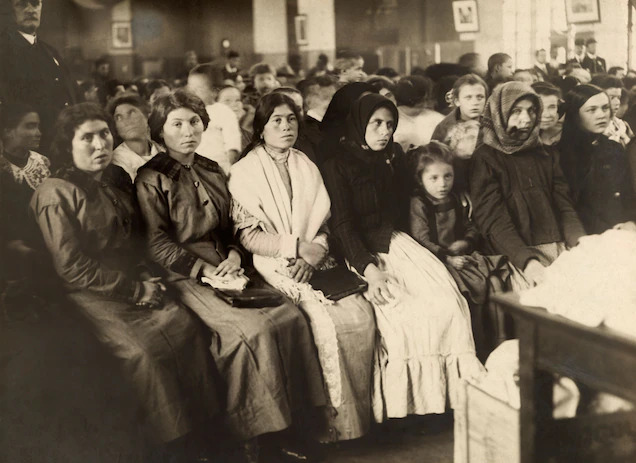
when they first entered the building on Ellis Island.
Photograph by Paul Thompson
Credit: National Geographic
Sixty-five years ago, [today] on November 12, 1954, a Norwegian merchant seaman named Arne Peterssen became the last immigrant to pass through Ellis Island. Later that month, the ferry Ellis Island made its final stop at the island in New York Harbor and the immigration facility closed for good, ending its run as a gateway to the United States for generations of immigrants.
These days Ellis Island is a national symbol remembered in sepia tones but, while it was in active service, the station reflected the country’s complicated relationship with immigration, one that evolved from casual openness to rigid restriction. “It was not a great welcoming place for immigrants but, it was not a place of horrors either,” says Vincent Cannato, author of American Passage: The History of Ellis Island.
Until the end of the 19th century, individual states handled immigration with rules varying by jurisdiction. [T]hen, immigration soared. In light of the influx, the federal government decided in 1891 that it had to take charge.
New York was immigration’s epicenter. Some 75 percent of the country’s steamship traffic came through New York Harbor and so did 75 percent of the nation’s immigrants, according to Cannato. New York state ran an immigration facility called Castle Gardens at the tip of Manhattan but, the new federal Office of Immigration wanted an intake and inspection station in a more controlled location. It selected Ellis Island, a three-acre spot of land in the harbor between New York and New Jersey […].
The immigrants who eventually passed through Ellis Island started their journey by buying passage on a steamship, usually sailing from Europe. Between 1892 and 1924, 12 million people successfully traversed this highly efficient conveyor-belt immigration system. Most immigrants were processed through Ellis Island in a few hours and only 2 percent that arrived on the island were prevented from entering the United States.
[T]his era of mass immigration came to an end with the passage in 1921 and 1924 of new laws that severely limited immigration by establishing quotas for individual countries and requiring immigrants to obtain visas from American consulates. Since most official immigration screening now happened at U.S. consulates abroad, Ellis Island became increasingly irrelevant. The facility, which had once teemed with thousands of hopeful immigrants, transformed into “a major center for deportation and for holding enemy alien spies,” says [Barry] Moreno. “It was like night and day.” President Eisenhower quietly closed Ellis Island in 1954.
How Ellis Island Shepherded Millions of Immigrants Into America
Rachel Hartigan
National Geographic
November 13, 2019
 Cosmic-Observation